Cities are full of stories that never get written down.
They appear in overheard conversations, fading posters, train rides, neighborhood walls, and moments most people walk past without noticing.
Some artists spend their lives learning how to pay attention to those things.
Before a wall ever gets painted, before color meets concrete, something quieter happens first. Someone has to notice. Someone has to slow down long enough to register the small details that make a city feel alive. That noticing, that habit of paying attention, is where the real work begins.
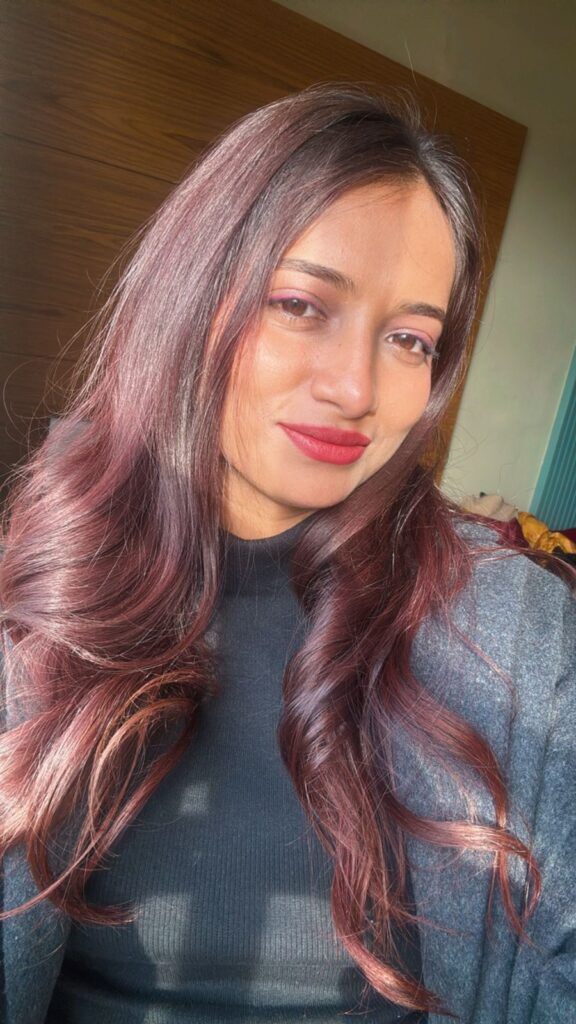
Before The Art Comes The Observation
Most people move through their days on autopilot. They walk the same routes, hear the same noise, and tune most of it out. Artists tend to do the opposite. They linger. They watch. They collect.
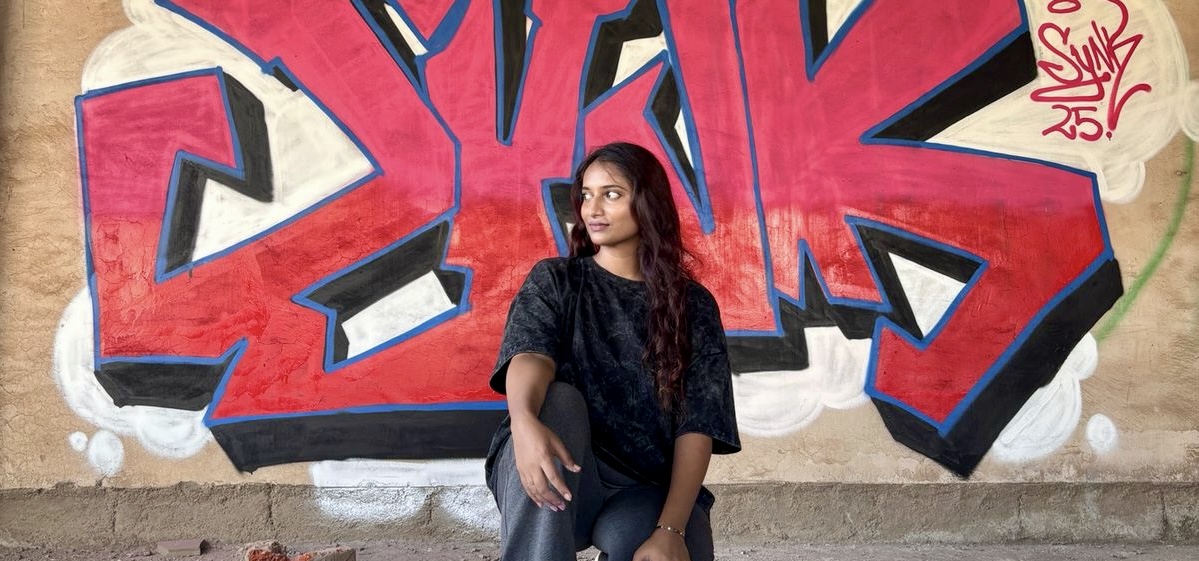
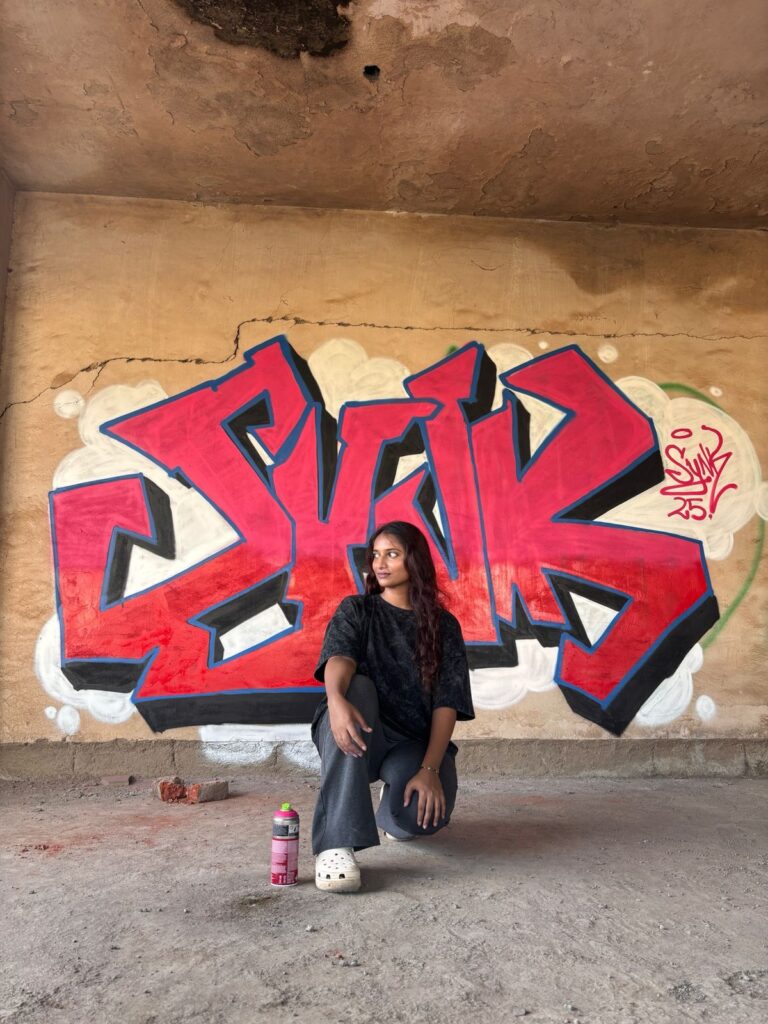
“When I’m not creating, I’m still observing,” says Srushti Bansode, a visual artist based in Mumbai.
That kind of attention is not passive. It is a practice, a way of being in the world that treats ordinary moments as worth keeping.
“A big part of who I am comes from noticing small things,” she adds.
The art comes later. First comes the looking. And what an artist looks at shapes everything they eventually make.
Mumbai As A Creative Education
Every city teaches its artists something. Some teach patience. Others teach speed. Mumbai teaches both at once, plus a few lessons in survival.
“Creating in Mumbai has shaped everything,” Srushti says.
The city is not a backdrop for her work. It is a participant, pressing in from all sides, refusing to stay quiet.
“This city is chaotic, layered, and constantly moving,” she explains.
You learn to work within that chaos rather than against it. The crowd, the heat, the constant motion, all of it seeps into the work. A city like Mumbai does not just give an artist a place to create. It becomes a kind of collaborator, shaping the rhythm and the boldness of whatever comes next.
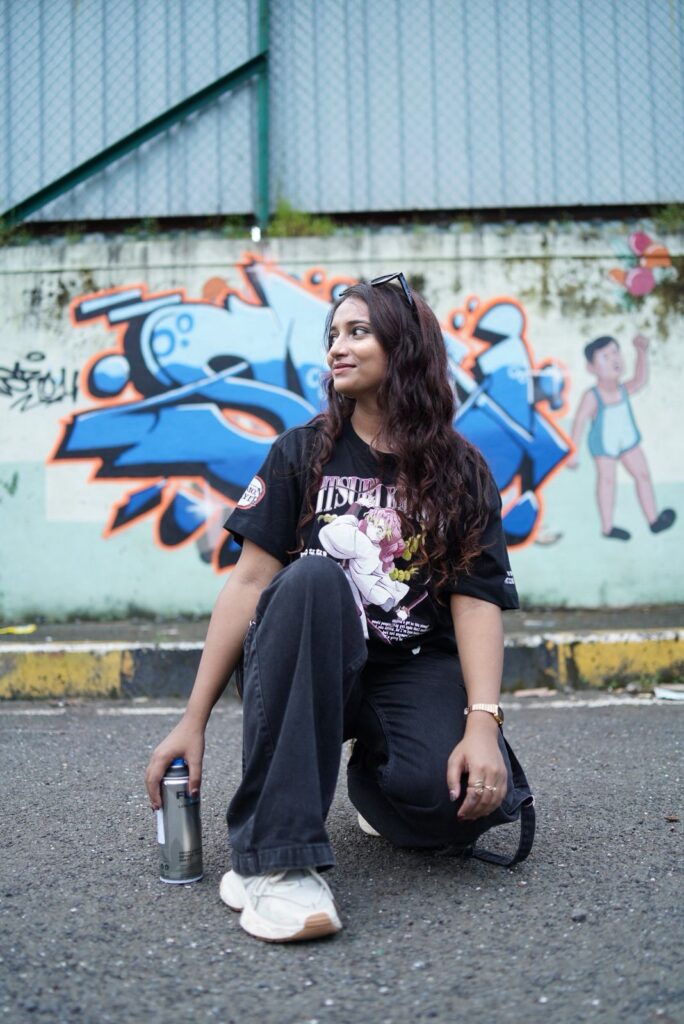
Why Street Art Felt Different
Galleries have walls and doors and opening hours. Streets have none of that. For some artists, that openness is the entire point.
“Street art felt raw and honest to me,” Srushti says.
There is something about work that lives outside, exposed to weather and traffic and strangers, that changes its meaning. It belongs to whoever happens to pass by.
“It wasn’t confined, it existed for everyone,” she says.
Accessibility shifts the relationship between art and audience. When a piece lives on a public wall, it does not wait for people to seek it out. It meets them where they already are, in the middle of their ordinary day.
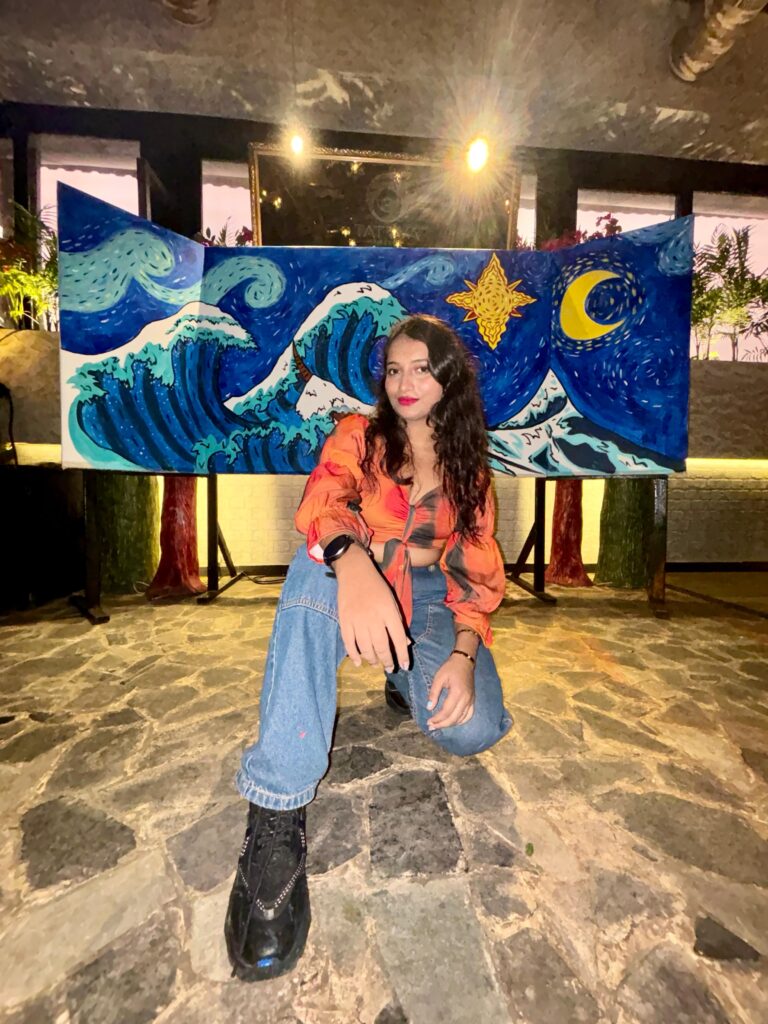

One Voice Across Many Mediums
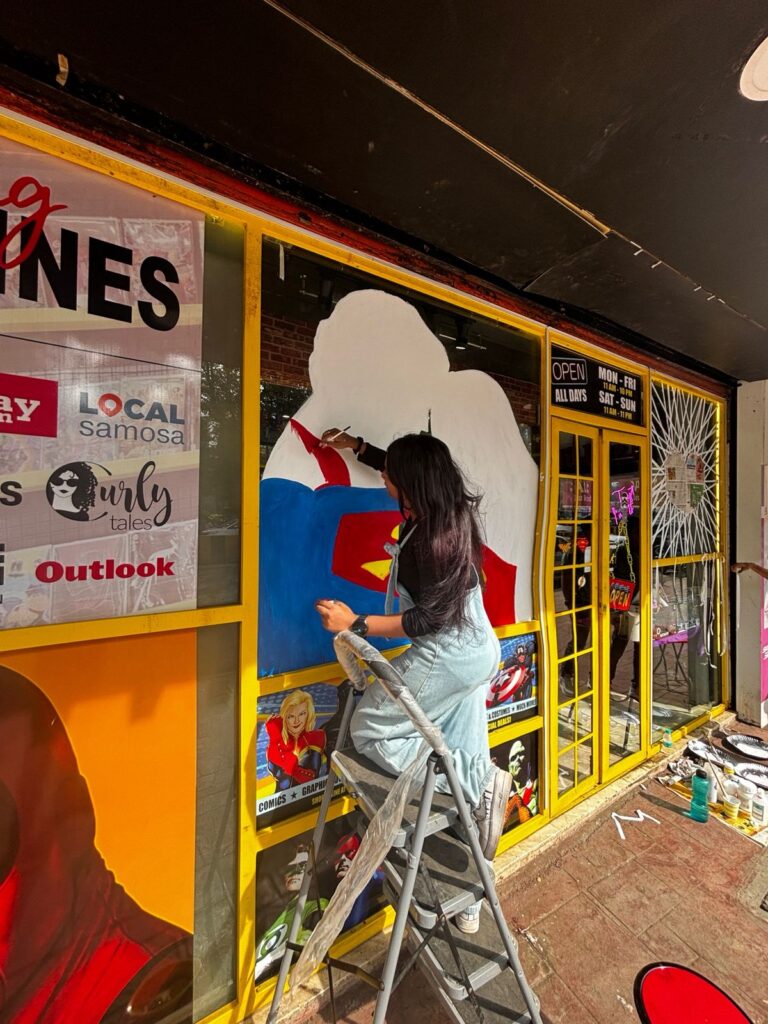
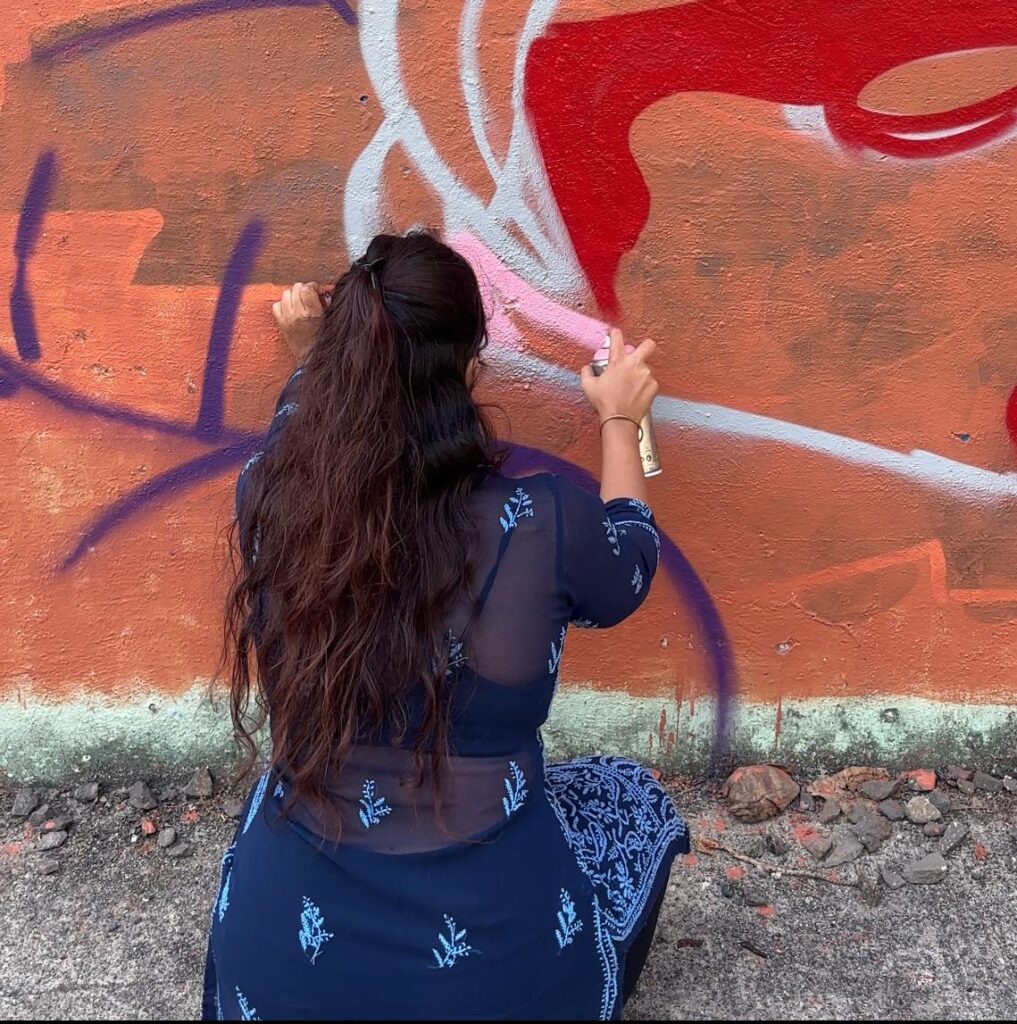
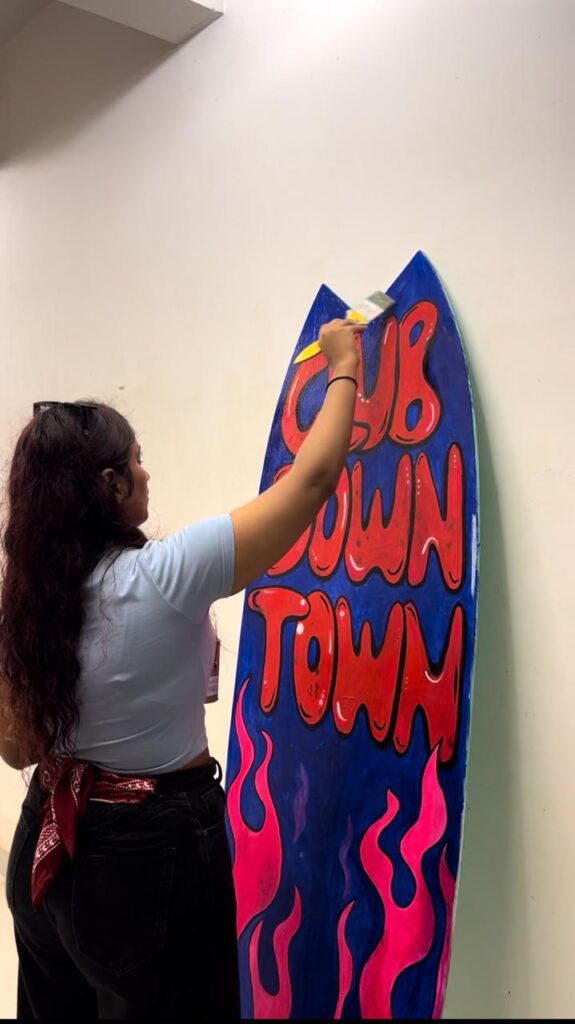
Srushti works across graffiti, murals, illustration, and digital media. The tools change. The hand behind them does not.
“The mediums don’t change who I am as an artist,” she says.
It is tempting to think of each format as a separate skill, a different identity. For her, they are closer to dialects of the same language.
“They just give me different ways to say the same thing,” she explains.
Mediums shift. Surfaces change. The core idea, the thing the artist actually wants to communicate, stays steady underneath all of it.
The Stories Hidden In Everyday Life
Ask where the ideas come from and the answer is rarely a single dramatic moment. More often, it is everything at once.
“My surroundings influence everything,” Srushti says.
Her sources are not exotic. They are the textures of regular life, the kind most people overlook. The heat of the streets. The people she meets. Moments like teaching kids or painting in public spaces. All of it filters into the work.
This is what it means to treat observation as raw material. Art does not arrive from somewhere far away. It starts with paying attention to what is already here.
Planning Versus Spontaneity
There is a myth that creative work is either fully planned or fully improvised. The truth tends to sit somewhere in between.
“It usually starts with a feeling or a visual that sticks in my head,” Srushti says.
From there, an idea takes rough shape. But the wall has its own opinions. Scale, texture, and environment all push back, and the work bends to meet them.
“The final artwork always evolves in the process,” she says.
That willingness to let a piece change is not a flaw in the plan. It is part of the plan. The best creative work leaves room for surprise.
What People Get Wrong About Street Art
Public art carries a reputation it did not entirely choose. People assume chaos where there is actually intention.
“A lot of people think it’s just random or rebellious for the sake of it,” Srushti says.
The reality is more deliberate. There is style behind it, technique, identity, a point of view.
“It’s not just about painting walls,” she says.
So what is it about, then? Her answer reframes the whole thing.
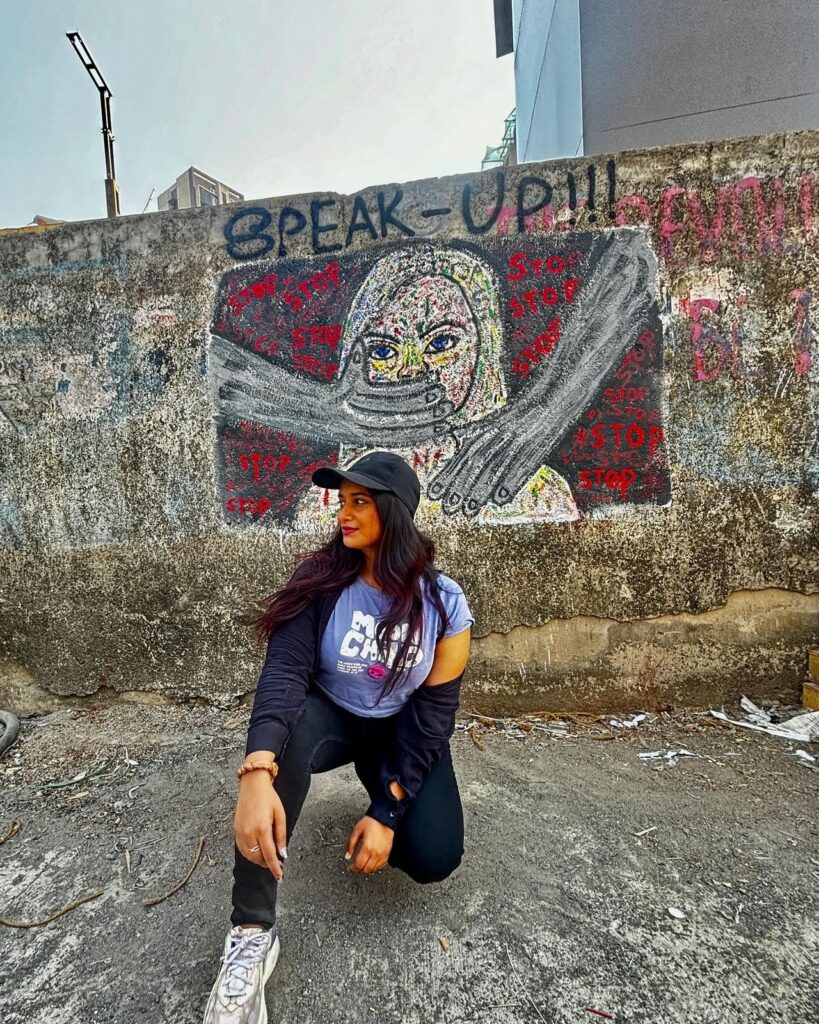
“It’s about claiming space and telling stories,” she says.
Seen that way, public art stops being vandalism in the popular imagination and becomes something closer to communication. A wall becomes a sentence. A neighborhood becomes a conversation.
Inspiration Beyond Artists
Creative influence rarely travels in a straight line from one master to one student. It pools together from dozens of small sources, most of them unglamorous.
“Comic books, storybooks, school textbooks, advertisements, packaging, album covers…” Srushti lists, naming the everyday visuals that shaped her eye long before any formal idea of art took hold.
There is something honest in that list. It refuses the tidy story of a single inspiration. Instead it points to a childhood spent absorbing color and character from whatever happened to be within reach.
Freedom As A Creative Thread
If there is one constant in her work, it is not a style or a subject. It is a feeling.
“My inspiration keeps changing and evolving constantly,” Srushti says.
Trying to pin her influences to one name or one movement misses the point. The thread running through everything is harder to label.
“It’s more about the overall energy of expression and freedom in art,” she says.
Creative identity, in her telling, is not fixed. It stays fluid, open to whatever pushes it somewhere new.
Building Bigger Conversations
When she talks about the future, the language is not about fame or scale for its own sake. It is about reach.
“I want to keep pushing scale and impact,” Srushti says.
Bigger work, yes, but bigger in a particular direction. She is drawn toward the kind of projects that pull other people in.
“Projects that involve community,” she says.
Growth, here, is measured less by size and more by participation. The question is not just how big a piece can get, but how many people it can include.
The Future Of Public Space
What lies ahead is more murals, more public spaces, more collaborations. The shape of it points outward, toward shared ground rather than personal showcase.
The most meaningful public art tends to work this way. It does not just decorate a space. It invites people into the process, turning a wall into a meeting point and a city into something a little more conversational.
Cities never stop speaking.
The difference is that some people learn how to listen closely enough to answer back.
Follow Srushti on Instagram

Yohaan Joseph is a 23-year-old creative shaped by experiments and unconventional ideas. Each episode in his life is shaped by sheer enthusiasm. Though not a writer by profession, he is drawn to stories and the people who carry them. His journals in this magazine reflects a simple philosophy : the right question can reveal something extraordinary.