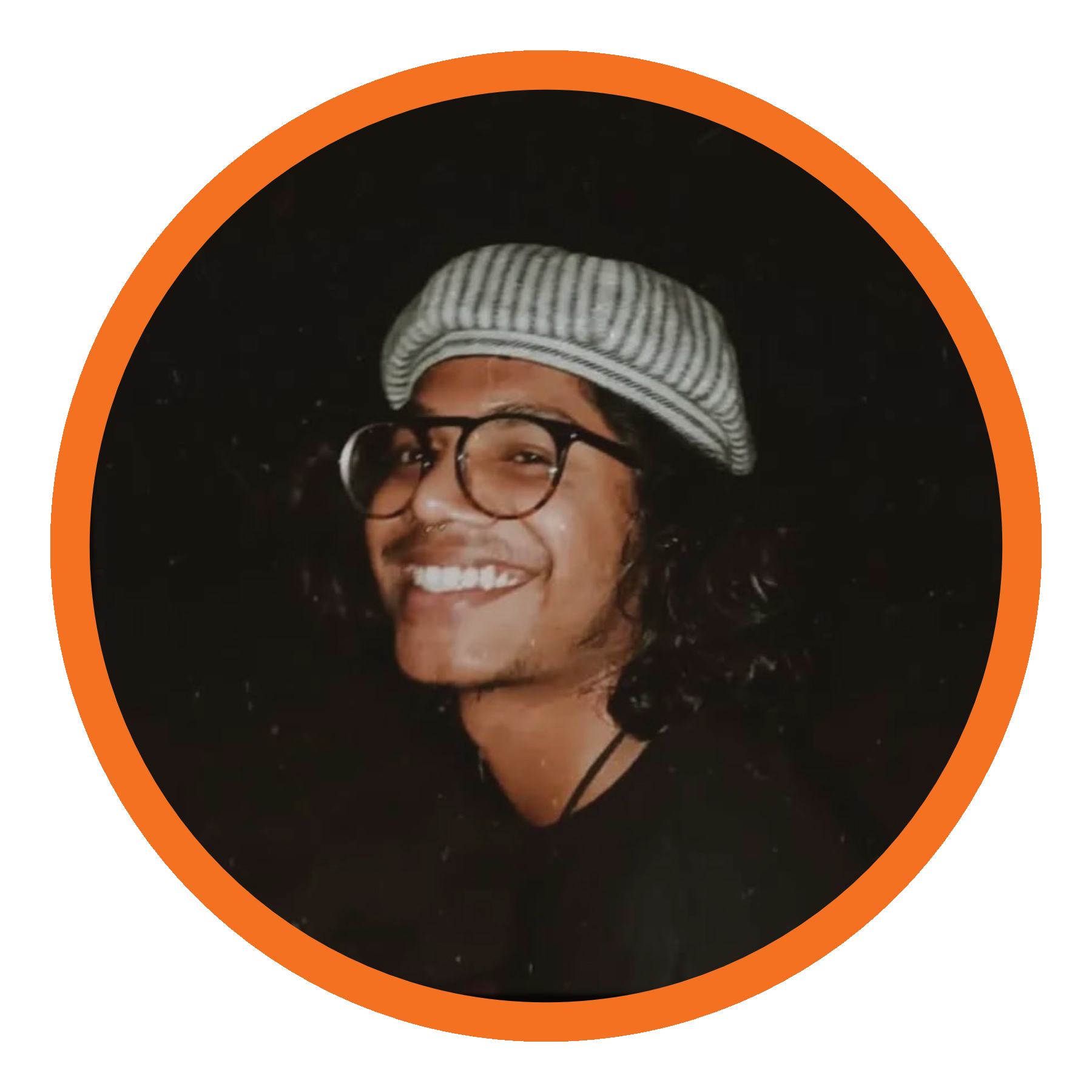
Sanjeev T is a third-culture kid who grew up between Kuwait and Kerala before Madras became home for most of his adult life. He’s best known as the guitarist behind years of work and world tours with A.R. Rahman, but he sees himself as something broader: an artist in music who produces, performs, records, and runs a creative and educational space for musicians. His new album, Comfortably Dumb, was recorded in six days with close friends including Sid Sriram, Baiju Dharmajan, Rithu Vysakh, and Mylai Karthikeyan. The mistakes, the spontaneity, and the chemistry in the room were all left in. In a world built on algorithms and polished perfection, it’s a record that chooses to feel something real, and here he talks about why, in his own words.
Q: You’ve spent years working alongside some of the most influential names in Indian music, while also building your own identity as an artist. Before we get into the music, tell us about Sanjeev T, where you come from, what shaped you, and how you arrived at this point in your journey.
A: I’m a third-culture kid, born and raised mostly in Kuwait until my teens, with some time spent in Kerala during the Gulf War. Most of my adult life was spent in Madras.
My love for music was discovered by my dad, who has always been my biggest supporter. But it was in college that I decided I wanted to become a professional musician. College introduced me to the experience of being on my own. Rock music enthralled me, and being part of college festivals, hanging out with artists and musicians, and discovering the stage helped me find my love for performing.
The stage inspired me to be brave, to be completely unapologetic about my state of mind. I’m an introvert in real life, but the stage became my space to let go and express myself in whatever way I felt necessary.
Music has taught me so much about life that I wouldn’t have it any other way. My journey today is very different from when I started, but my willingness and curiosity towards music and the scene are still what keep me fulfilled.


Q: You’ve worked across rock, jazz, Indian classical, film music and experimental spaces. What has the guitar taught you about music that you could never have learned from studying music theoretically?
A: The guitar is an extension of me.
I’m probably best known as a guitarist because of my associations with some incredible artists, but I don’t consider myself just a guitarist. The guitar has definitely been one of the biggest vehicles of expression in my career, and it’s something that has stayed with me with as much vigour as ever.
More so today, I see myself as an artist in music, someone who enjoys dabbling in different areas of creativity, whether it’s producing, performing, recording, or even running a creative and educational space.
Although I was formally taught music in my earlier years, I initially depended heavily on my ears for expression. It was through the school that I reconnected with learning theory and harmony, while also figuring out ways to understand and communicate those ideas simply to my students and teachers.
There is so much information about music theory available today that it can almost feel like a scary task to conquer. I do believe that knowing the rules gives you an advantage when you want to break them and keep growing. But when it comes to finding your true voice, no theory can do that for you.
To find your voice, you first need to know where you want to be. And that’s something people spend their whole lives searching for.
Q: A lot of your career has involved collaboration with very strong personalities and musicians. How do you retain your own artistic voice when you are constantly entering someone else’s musical world?
A: Whoever you collaborate with, you always retain your own unique essence. But it’s your collaborator’s energy that brings a new flavour and a new experience into the music.
Music is all about these unspoken experiences that we express through this beautiful language, a language so vast that it is always left to the imagination of the listener. And in many ways, that’s exactly how life is. There is no one path, no one truth, and no absolute right or wrong.
At this stage of my life as a musician, it is the collaboration of real people in a live situation that truly pushes me creatively. I feel that this connection is being taken for granted today, and I think it’s something we need to get back to: feeling something real.
Of course, there’s nothing wrong with sitting alone with your creativity in a bedroom. But that doesn’t move me in the same way anymore.
Your voice is always evolving the more you put yourself in these situations. It’s a little like travelling outside your home. You learn and understand the world much faster when you place yourself in unfamiliar spaces.
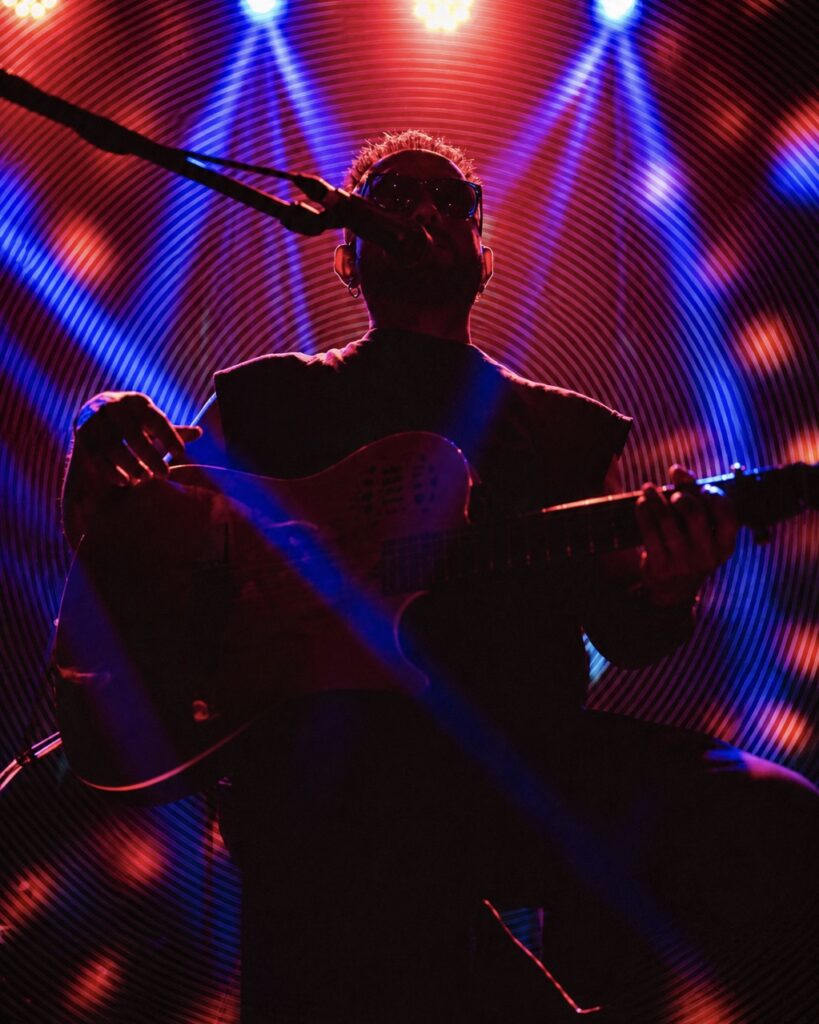
Q: You spent a significant part of your career playing with A. R. Rahman. What did working at that level teach you about discipline, musicality and the difference between being technically good and actually being useful to a piece of music?
A: I’ve never been a technical geek when it comes to music. I’ve always worked on instinct, trusting my ears and my heart more than my research and learning.
For someone who was brought up on Western pop and rock, A. R. Rahman introduced me to Indian music at its highest level. It was something I needed at that point in my life; it brought a certain reverence towards the music.
His compositions and his way of working inspired me to look at Indian music as more than just a genre. It became a new dimension for me, a way of looking at classical and contemporary Indian styles and bending them towards new frontiers. That truly opened my mind.
To witness and spend time with all his collaborators, and to tour the world with him, elevated my experience and understanding to an entirely new level. It showed me the possibilities of where music could take you.
Technicality definitely has its place, and it’s amazing to have a certain level of technical prowess. But at the end of the day, you need to know how much of it to use depending on the situation you are in.
Working for a composer and working for yourself are two very different worlds. I feel lucky to have had great teachers like Rahman in my life.
Q: With Comfortably Dumb, you seem to have deliberately moved away from the idea of a perfectly controlled studio recording. You’ve allowed interaction, mistakes, spontaneity and the chemistry between musicians to remain audible. Why has imperfection become important to you at this stage of your career?
A: Being human is being imperfect. The sooner we accept that, the more we can remain unique, or at least strive to.
As artists, we are our own biggest critics and are constantly looking for perfection. But ultimately, I feel that perfection can become a road to disappointment.
With the amount of music being created in the world today, the pressure is unbelievably stressful. And increasingly, it’s not even just about the music.
But at this stage of my career, that’s all I care about: the music.
Not the industry procedures. Not social media engagement. The time I spent with these wonderful musicians is what I cherish the most.
What happens to the art afterwards is not really my concern anymore.

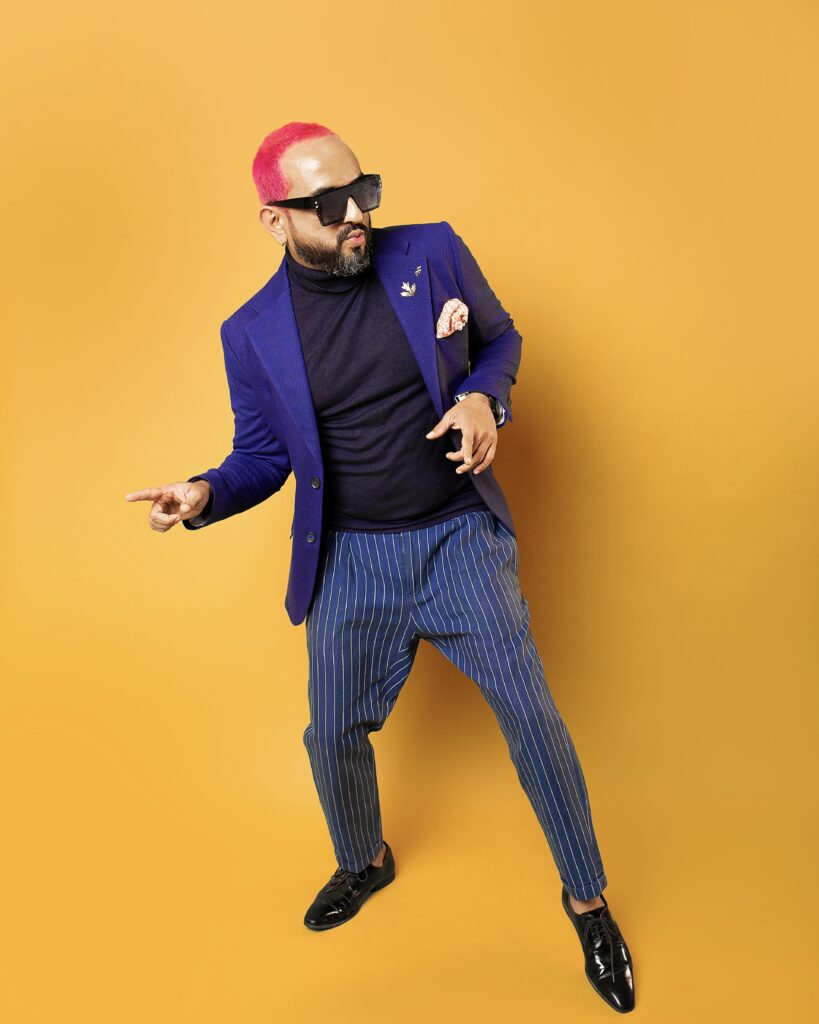
Q: The title Comfortably Dumb feels almost like a critique of the way we consume music today, constantly fed algorithms, technically perfect productions and increasingly predictable sonic formulas. What exactly were you trying to push against with this record?
A: Being comfortably numb was the culture of a certain time. Today, I feel that being dumb, or acting dumb, can give you a comfortable life.
Comfort has become the cornerstone of an all-consuming culture. We are selfish, we are destroying nature, and this reflects itself in almost every walk of life, even in art.
We are moving into a world where dedication and curiosity are seen as a waste of effort, while hacks, reels and prompts are becoming the new standard of excellence.
This record is a memory of our time spent creating, sharing and expressing ourselves in real terms. The experience and the journey are what matter most to me here.
And that journey eventually culminated in a live performance, which is something we hope to take to more audiences this year.
Q: The album brings together musicians from very different musical worlds. When you put someone like Sid Sriram, Baiju Dharmajan, Rithu Vysakh and Mylai Karthikeyan into the same musical ecosystem, how much of the music is composed beforehand and how much is discovered in the room?
A: We recorded this album over six days. Two of those days went into setting up and some initial rehearsals, leaving us with four days of recording, with the aim of recording two songs a day.
Of the eight songs we recorded, two were completed voice notes that I had sent to our WhatsApp group. The rest began as small one-minute ideas. And on the last day, we actually created two songs from scratch in the room.
Every collaborator brought a different energy and flavour each day. Sonically, nobody was afraid to experiment or to go in directions that helped us achieve what we wanted to feel in that particular moment.
I’m still amazed that we actually pulled this off.
There is something beautiful that happens when creativity and relationships come together to create music. And this wouldn’t have been possible without the personal connection I have with these guys. Some of them are among my closest musician friends in the business.
That familiarity allowed us to take risks, trust each other and just see where the music would take us.

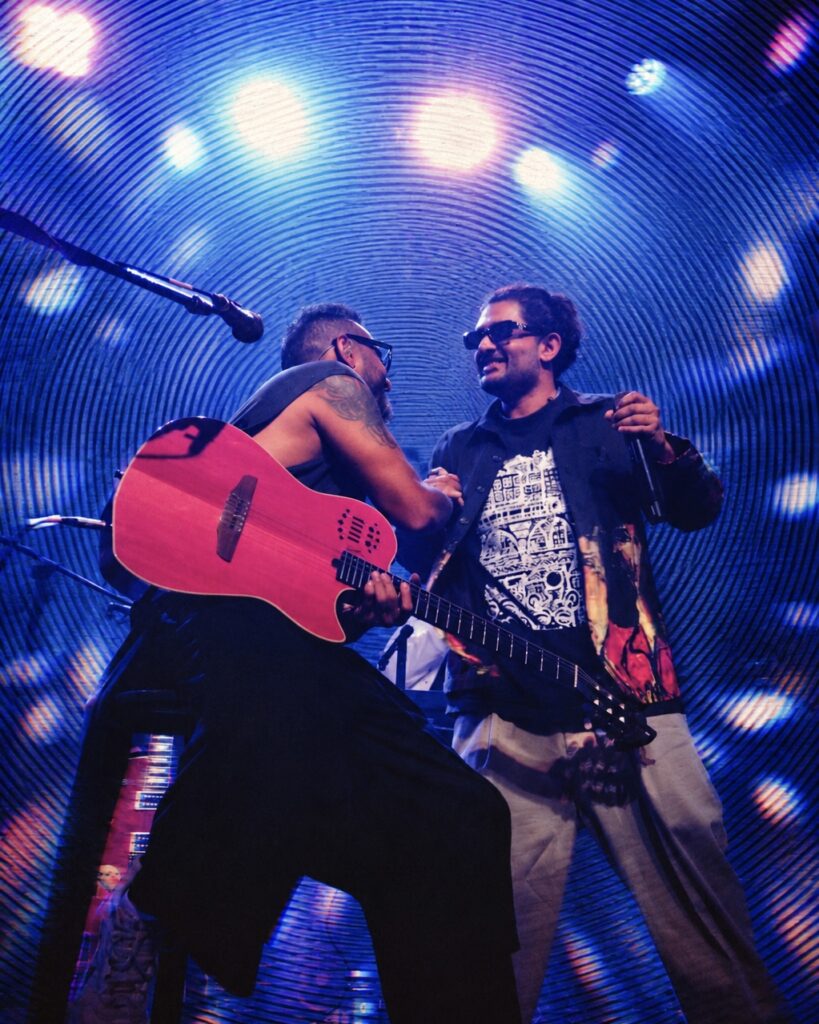
Q: You’ve also spent years nurturing musicians and creating spaces for music through your work beyond performing. What do you think young musicians today misunderstand about building a sustainable artistic life?
A: Making art out of necessity, and finding ways to survive through it, is perfectly fine. In fact, it’s often necessary if you want to sustain a life in music.
Today, you need to develop many different skills if you want longevity. Covid was a big revelation for musicians, especially those in the live music scene. It forced many of us to look at other areas of music, and sometimes even other jobs, to sustain the passions that truly matter to us.
But having said that, there are no shortcuts here.
There is no replacement for hard work and practice. You can learn many things quickly today, but you cannot shortcut the experience of actually becoming a musician.
Q: After everything you’ve explored so far, what are you looking forward to exploring next, both as a musician and as an artist?
A: I’ve found my love for music again through live music, through live recording and, most importantly, through a truer interaction with my audience.
That is what truly keeps me going as a musician now.
I want to keep exploring new sonic frontiers, but on my own terms, in my own spaces, and with real people in real time.
That interaction keeps me inspired. It gives me hope for creating art from a place of genuine connection and shared experience.
Follow Sanjeev T on Instagram
Lubdhak Biswas is a musician, entrepreneur and a tattoo artist based out of Kolkata (India).
He documents underground culture at the crossroads of tattooing and music.
His work focuses on craft, tools, ethics and the real working realities of creative industries.