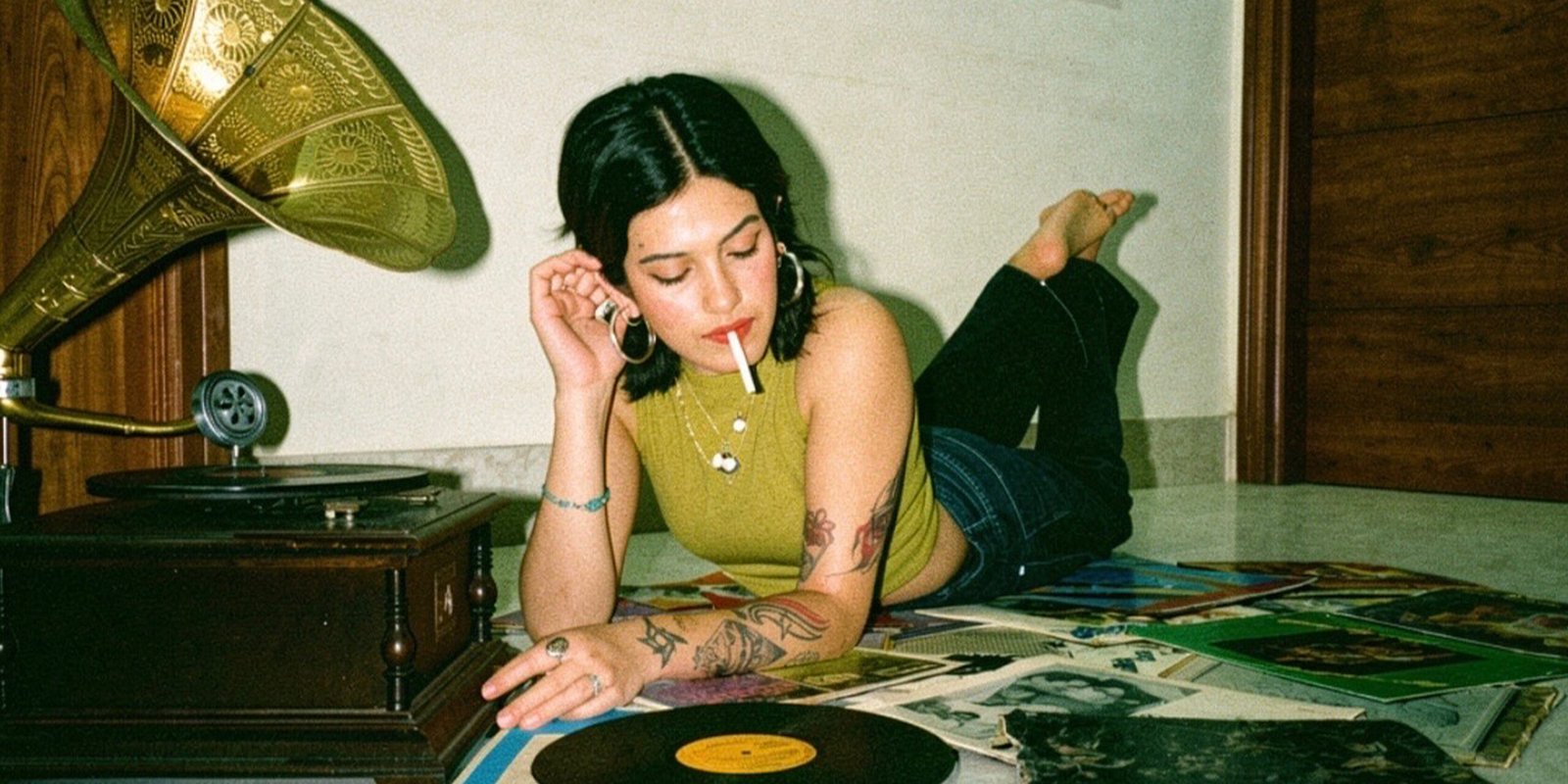
Some artists write songs to be heard. Others write them to be felt. The distinction matters more than it might seem. Songs written to be heard follow structures, chase approval, and arrive dressed for whatever room they are entering. Songs written to be felt carry something older and harder to explain. They find you in the quiet moments. They stay.
Hemanshi is that second kind of artist.
The self-taught singer-songwriter, composer, and multi-instrumentalist from Shimla has spent her creative life building a body of work that resists easy categorisation. Her music sits somewhere between dreamy atmospheric textures and the heavier, more restless edges of progressive and grunge-influenced sound. But genre is almost beside the point. What defines Hemanshi’s music is not what it sounds like. It is what it remembers.
A Childhood Surrounded by Sound
Shimla gave Hemanshi something most artists spend years searching for: a genuine and varied musical education before she ever sat down to write a note of her own. Coming from a family who loved music, she grew up surrounded by rock, metal, classical, and other genres that moved through her formative years not as background noise but as a shared language that shaped how she heard the world.
That breadth of early listening did not produce a confused artist. It produced a flexible one. The textures she absorbed, the dynamics of music that could be both tender and brutal, atmospheric and visceral, became the raw material of a sound that would eventually emerge as distinctly her own. The grunge-inflected heaviness and the dreamlike quality in her compositions are not stylistic choices borrowed from a mood board. They are the natural residue of a childhood spent listening deeply.

Every Song Begins with a Guitar and an Emotion
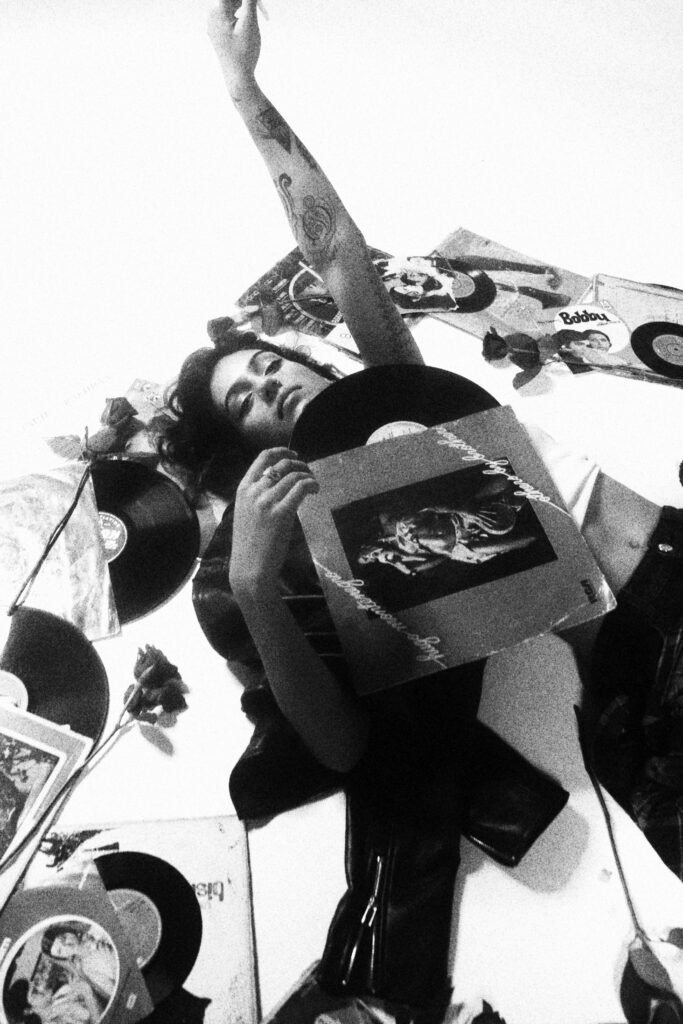
Ask Hemanshi about her creative process and the answer is deceptively simple. A guitar. An emotion. What follows is not engineered but discovered.
“I naturally follow a very organic process that I never planned, which is the same for all my music,” she explains. “I start with my guitar, focusing on the emotion I want to convey, and build chords, riffs, and melodies around that feeling while writing lyrics alongside. The entire track is fully composed on the guitar first.”
After that foundation is laid, the production work begins. But even there, the original emotional impulse remains the guide.
“I am very particular of the fact that each sound that leads to the final recording and the song should resonate with the emotions that led to me picking up the guitar on that one random day,” she says. “It’s never a forced effort. The process just flows like a river.”
This is a more radical approach than it might first appear. Much of contemporary music production begins with strategy, with reference tracks, target audiences, and release windows calculated against streaming data. Hemanshi begins instead with feeling, and allows every chord, melody, lyric, and production choice to serve that original emotional impulse rather than override it.
The result is a body of work where nothing feels forced. Each composition arrives with its own internal logic, its own emotional temperature. Hemanshi does not impose a structure on a song. She follows it until the song reveals its own shape.
Authenticity as Artistic Survival
The pressure on independent artists to be legible, to produce work that travels well across algorithms and playlist placements, has never been more acute. Hemanshi is not unaware of that pressure. She has simply decided it has no place in her creative process.
“Music will always serve as a means for me to channelise my emotions into beautiful sounds that may resonate with other individuals on a deeper level,” she says. “Because as a child growing up, that’s how I felt, and I still do when I hear music from other amazing legendary artists who never really cared about trends but just made music because they loved music. That’s what I try to do every day.”
For Hemanshi, protecting the purity of that process is inseparable from protecting the integrity of the work. “I don’t tamper with the purity of that process, and that’s what keeps my individuality alive, be it as a human or as an artist.”
Commercial trends shift. Algorithms evolve. But a song that is genuinely true to the feeling that created it carries a kind of permanence that strategically assembled music rarely achieves.



Hiraeth and the Emotional Landscape of Her Work
There is a Welsh word, hiraeth, that has no direct English equivalent. It describes a longing for something that may never have fully existed, a homesickness for a place or a time that lives somewhere between memory and imagination. It is a feeling that resists explanation but is immediately recognisable once named.
Hiraeth is perhaps the closest single word to the emotional landscape Hemanshi’s music inhabits.
When asked about the themes she keeps returning to, her answer opens rather than closes the question.
“It is an endless ocean of themes or emotions that are a consequence of me experiencing this life,” she reflects. “Every song is a consequence of a new life experience, or maybe something new that I learnt or felt.”
Her songs return again and again to longing, growth, reflection, and emotional discovery. Not as repetition, but as evolution. Every new life experience becomes another entry point into the same essential territory: the complicated, beautiful, sometimes painful work of understanding who you are and who you are becoming.
What is remarkable is that this emotional consistency never produces sameness. The feeling shifts with each composition, shaped by the specific experience that inspired it. Hemanshi is not writing the same song repeatedly. She is exploring the same country from a different direction each time.
Growing Recognition, Unchanged Purpose
Recognition has come for Hemanshi. Audiences have found their way to her music, and that growing awareness has brought with it the kind of external validation that many artists spend years working towards.
It has not changed her.
“No, it has not and will never change,” she says plainly. “I am in constant evolution as an artist so it will only evolve. I don’t think I am successful yet because the learning as an artist never stops, but with more listeners discovering my music I only feel grateful and loved, nothing beyond that.”
That sense of gratitude without pressure is telling. She continues:
“The way I make music is who I am as a person, my values, my learnings, my emotions and so on, which will only evolve with time.”
This reflects a genuine belief that an artist is always in a state of becoming. No single achievement marks the completion of that process. Hemanshi holds her growing audience with appreciation rather than pressure, and continues to make music by exactly the same principles that guided her before anyone was listening.



That steadiness is its own kind of artistic statement. In a climate where visibility can so quickly distort an artist’s sense of purpose, remaining grounded in the original reasons for making music is neither simple nor guaranteed. For Hemanshi, it appears to be non-negotiable.
The Legacy of Feeling
When Hemanshi looks ahead, she does not describe commercial milestones or accolades. The legacy she hopes to leave is a quieter and more durable one.
“I receive such powerful and emotionally overwhelming texts from listeners through social media of how my music helped them surf through the difficult times in their lives,” she says, “where they actually mention some experiences. So probably I would want to be remembered as an artist whose work resonated and stayed with them. Rest I’ll leave it to the future to decide.”
That response says everything about what kind of artist she is. The goal is not to be remembered for what she achieved. The goal is to create something that genuinely accompanies people through their lives.
Music That Stays
There is a particular test that only certain music passes. It is not about chart performance or critical reception or the number of times a song has been streamed. It is simpler, and harder to manufacture than all of those things.
The test is whether the music stays.
Not in the sense of earworms or algorithmic recirculation. In the sense of genuine emotional residence. The kind of staying where a song becomes associated with a specific feeling, a specific memory, a specific version of yourself that you carry quietly forward.
Hemanshi is building that kind of catalogue. One song at a time, one honest emotion at a time, she is creating music designed not to impress but to endure. In a creative landscape crowded with noise, that remains the most meaningful thing an artist can offer.
Follow Hemanshi on Instagram

Lubdhak Biswas is a musician, entrepreneur and a tattoo artist based out of Kolkata (India).
He documents underground culture at the crossroads of tattooing and music.
His work focuses on craft, tools, ethics and the real working realities of creative industries.