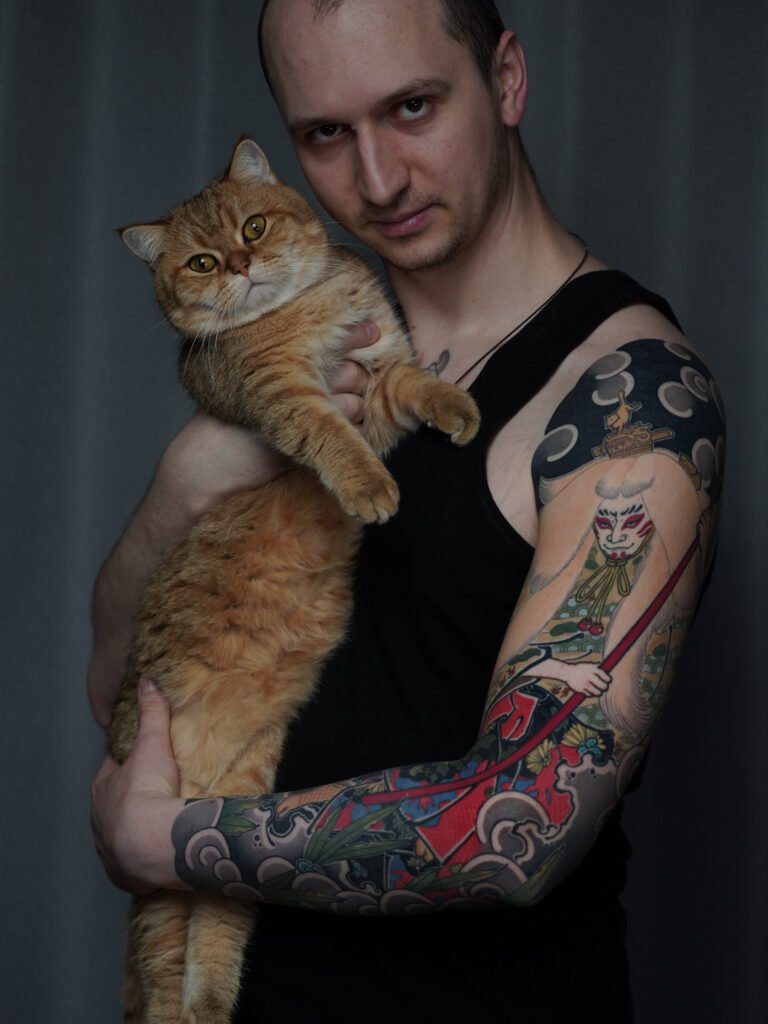
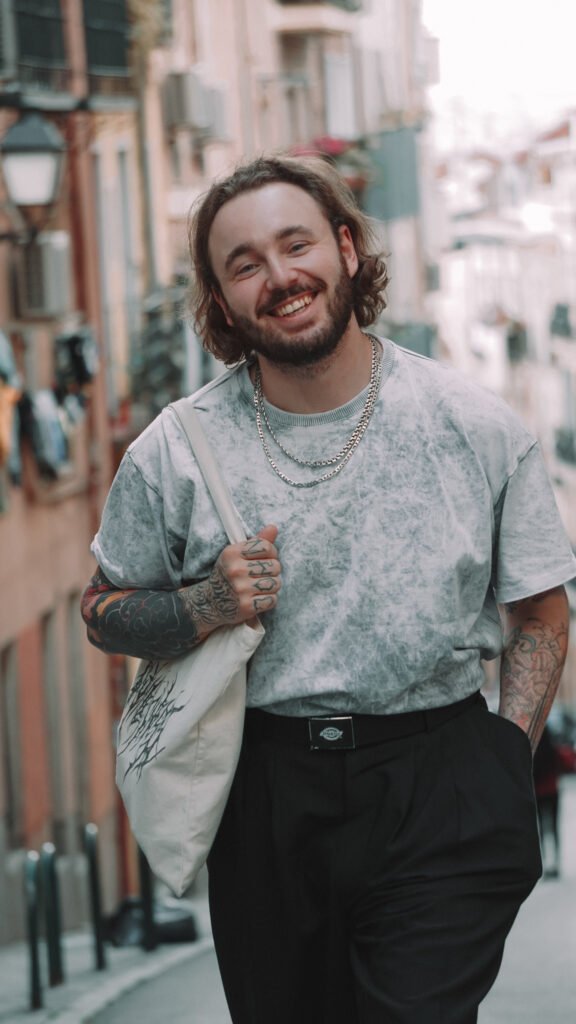
There is a particular kind of craftsman who measures success not by the applause in the room, but by what remains long after everyone has gone home. A tattoo, unlike a painting or a photograph, cannot be stored in a drawer or hung behind glass. It lives on a body, moves with it, ages with it, and ultimately reveals everything about the hand that made it. For Evgeny Lazurin, the Moscow-based tattoo artist known professionally as John Trad, this is precisely the point.
“I think true mastery is not evident in a photograph taken on the day of the session,” he says, “but rather in how the tattoo looks on the client years later.”
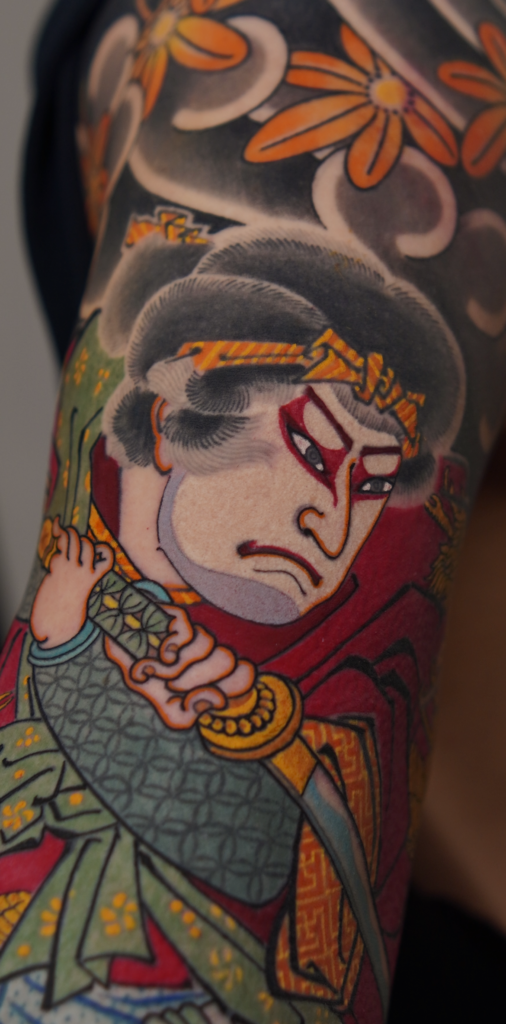
It is a deceptively simple statement. And yet, in an industry increasingly shaped by social media feeds and the pressure to produce striking content at speed, it carries genuine weight. Lazurin has built his reputation not on volume or viral moments, but on the kind of precision that reveals itself slowly: in the healed skin of a completed sleeve, in the density of a wash that has not faded, in a background that still reads clearly five years after it was finished.
His journey to this point was neither linear nor conventional. It began, as so many do, with a flash of adolescent desire.
From a Homemade Tattoo to a Lifelong Craft
Lazurin was fifteen when he first encountered a tattoo that stopped him in his tracks. A stranger passing by on the street, a Gothic script inscription on his arm, and something clicked.
“I thought to myself, ‘Wow, I want a tattoo like that!'” he recalls. His parents, to his surprise, did not object. His first tattoo, the words “GOOD LUCK,” was applied not in a studio but on an ironing board at a friend’s house. “I remember we listened to the song ‘Dragostea Din Tei’ by O-Zone all evening. It was awesome!”
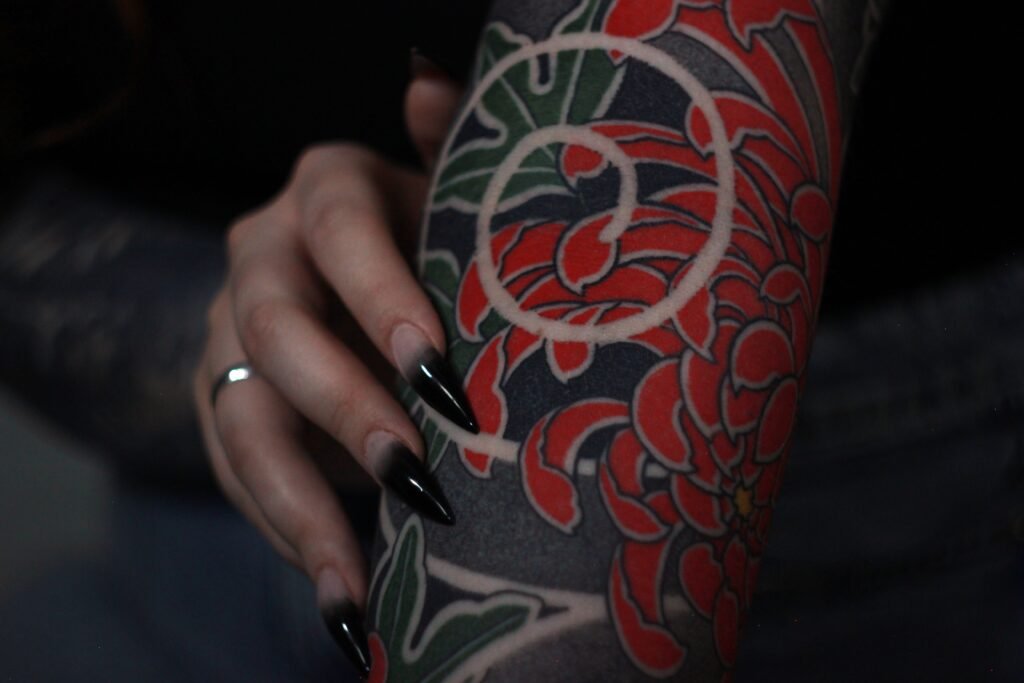
The experience was, by his own admission, not technically impressive. But it opened a door. He began researching, exploring, and eventually discovering irezumi, the traditional Japanese art of tattooing that would come to define his aesthetic sensibility. When he entered military service at eighteen, he brought that curiosity with him, tattooing a comrade using a homemade machine built from necessity rather than expertise.
The real turning point came later, through an unlikely chain of events. After leaving the army and working briefly as a cook, Lazurin came across a former comrade posting drawings on social media.
“At that time, I didn’t realise they were dotwork tattoo sketches, but they really impressed me.” When he discovered the man had become a tattoo artist, something shifted. “I understood how cool it was — I wanted to be part of this community.”
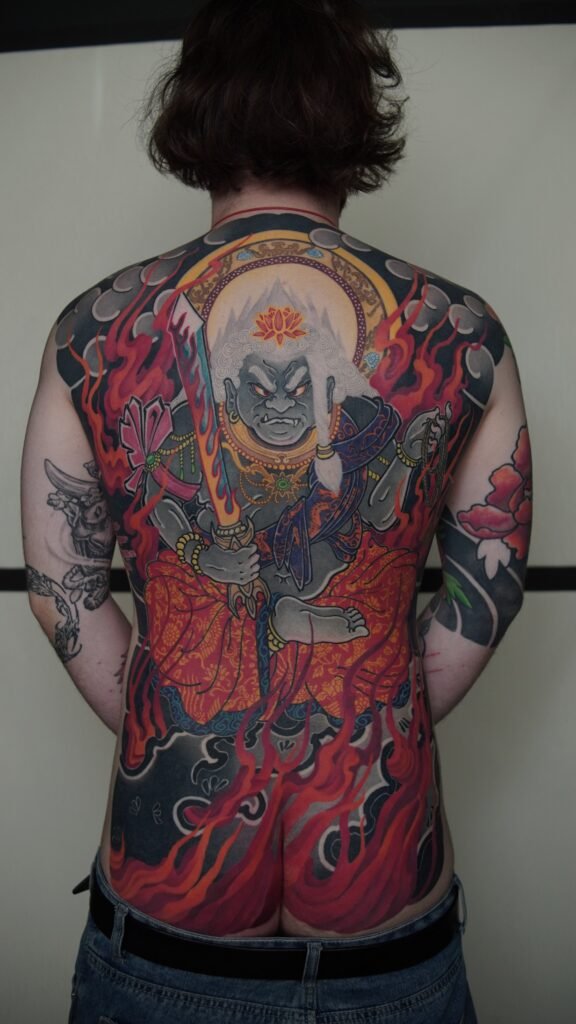
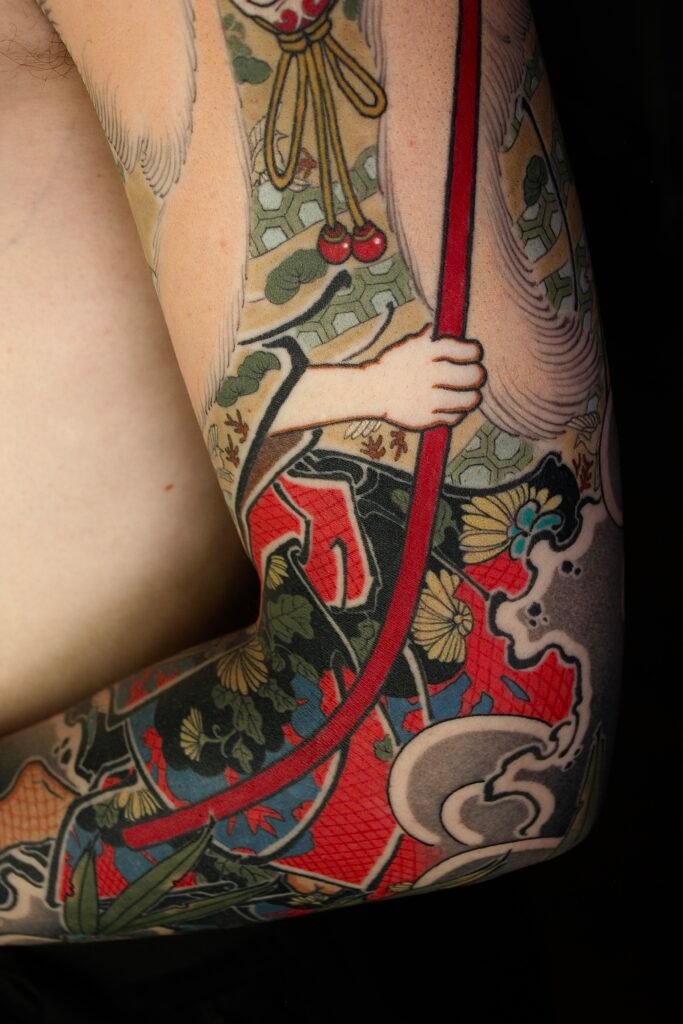
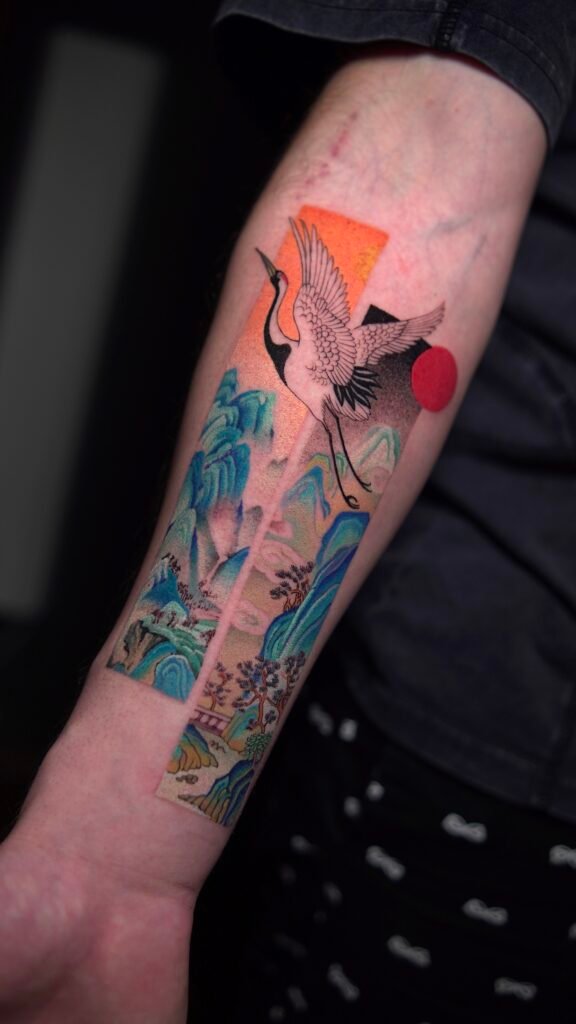
That comrade became his first mentor, sharing equipment knowledge and the discipline of daily drawing. The name “Trad” came from his early work in traditional tattooing before he transitioned into the graphic style he is now known for. But it was a geographical shift that truly accelerated his development. Moving from a provincial Russian town to Moscow exposed him to a wider professional world: new artists, new events, new ambitions.
“The big city opened up a world of new acquaintances, opportunities, motivation, tattoo events, and so much more.”
Why Precision Became the Goal
The technical foundation that defines Lazurin’s current practice was not something he arrived at gradually. It entered his life as a single, catalytic moment.
In 2019, a major tattoo festival in Moscow brought together artists from China and Korea. Lazurin attended not just to observe their work but to absorb it. A lecture by Chinese masters left a lasting impression.
“They discussed the 3RL technique,” he says, “and from that moment on, I began studying this approach.”
The 3RL technique, tattooing with a configuration of just three round liner needles, is technically demanding in ways that extend well beyond needle size. Lazurin’s explanation of why it appealed to him immediately draws on a historical parallel.
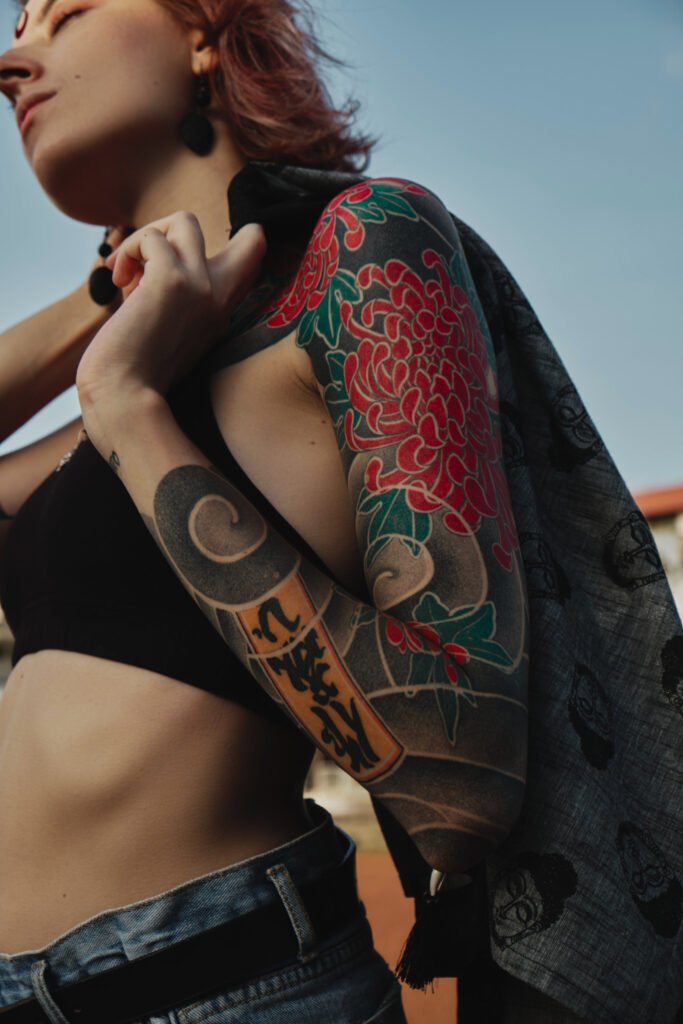
“This technique is akin to tebori. Tattoos done using tebori always appear dense due to the specifics of the application.” The hooking motion involved in both methods expands the channel in the skin, enhancing what he describes as capillary absorption. “This allows for greater channel expansion in the skin, enhancing capillary absorption and filling the cavity with the maximum amount of pigment.”
The results are visible in the healed quality of the work. The 3RL configuration produces what Lazurin calls a “velvety texture” in grey washes, the kind of finish that does not arrive through broader needle groupings. “Regarding the use of the 3RL needle, it ensures ideal skin healing and uniform shading, especially for gray washes, resulting in an interesting and velvety texture. This is a narrow needle, which means high pressure per unit area and low skin trauma.”
The deeper advantage is longevity. Because the pigment is inserted at a more localised angle and the channels sit more horizontally within the skin, layering produces dense coverage while generating less lymph fluid. Less disruption means less mixing, which means the pigment holds.
“This technique is genuinely fascinating and requires high levels of diligence, concentration, and patience. If everything is done correctly, the result will be a very long-lasting tattoo.”
Patience Hidden Inside Every Needle Stroke
Consistency at this scale is not simply a matter of willpower. It is a physical and cognitive discipline built through repetition over years. Working with tight liner configurations across large surface areas means every variation in depth, angle, or pressure is immediately legible in the finished work. There is no room to hide behind a wide needle’s forgiveness.
Lazurin is direct about this. “I work quite quickly with the 3RL technique,” he says. But he is equally clear about how that speed was earned: “Of course, it took me some time to achieve this level of speed. Like everything else, it all comes down to experience.”
That economy of explanation reflects something essential about how he approaches his craft. Speed is not a goal in itself. It is a natural consequence of accumulated practice — the point at which technical knowledge has become physical memory, when the hand no longer needs to deliberate before it moves.
Designing Tattoos That Age Beautifully
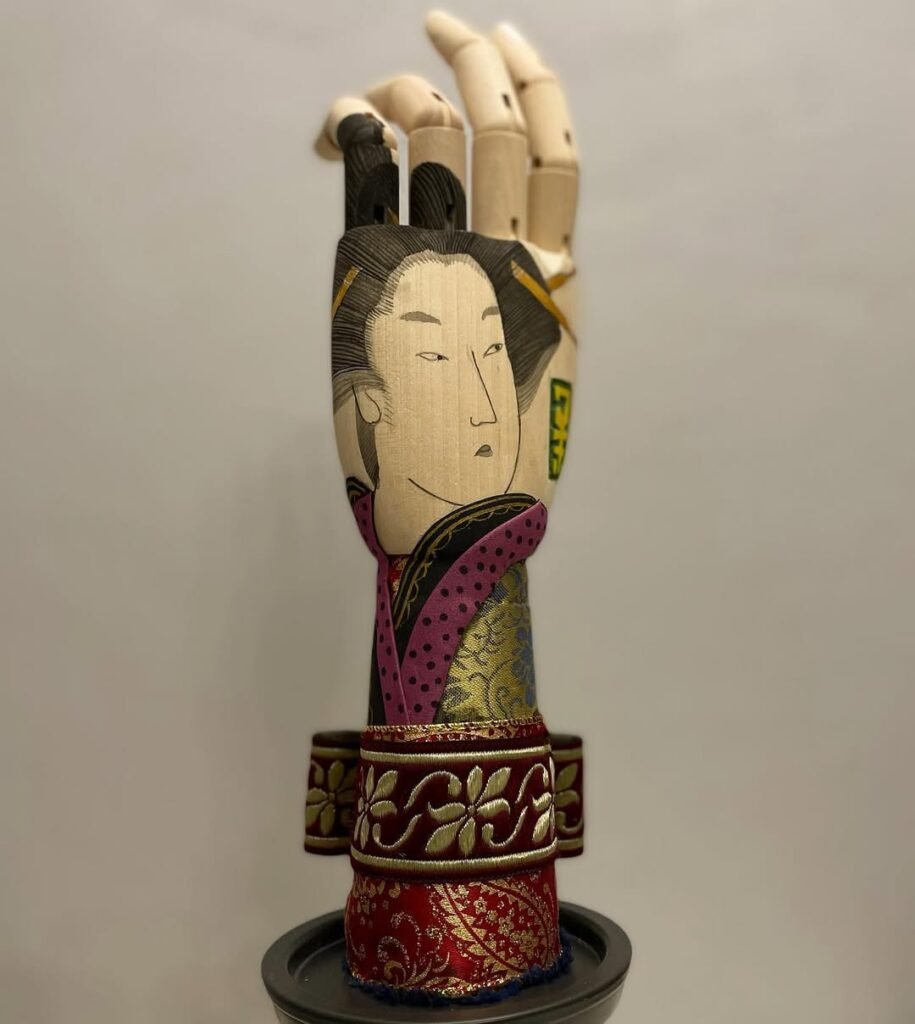
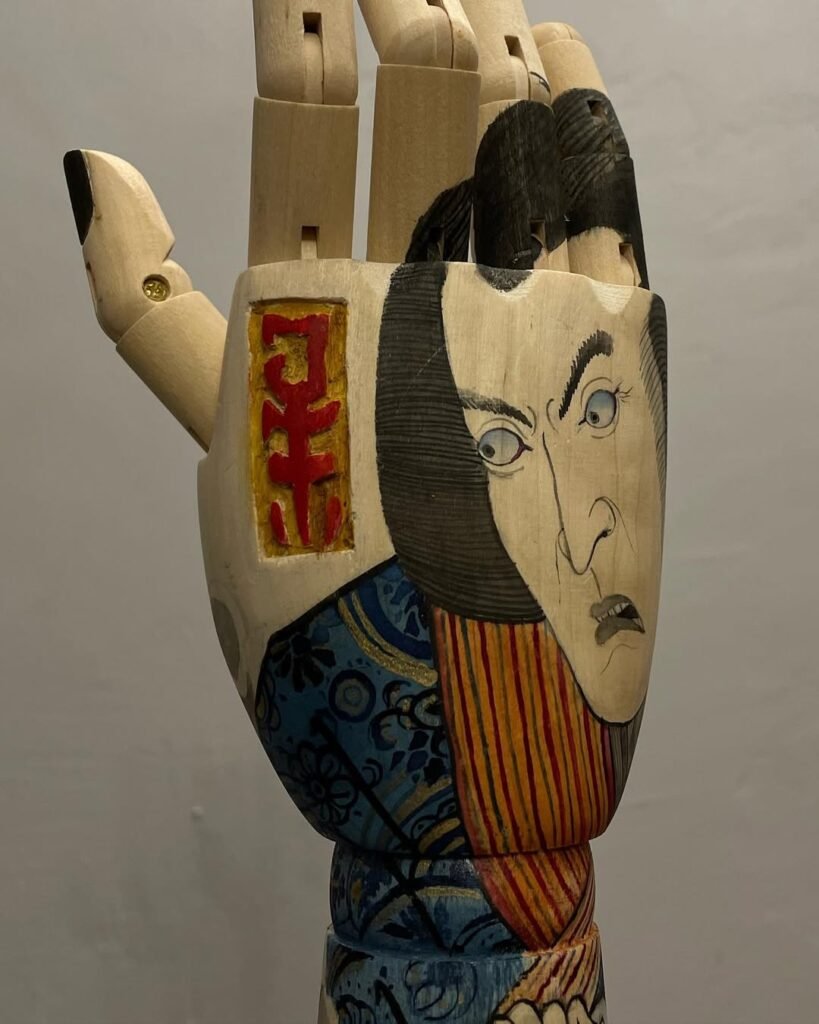
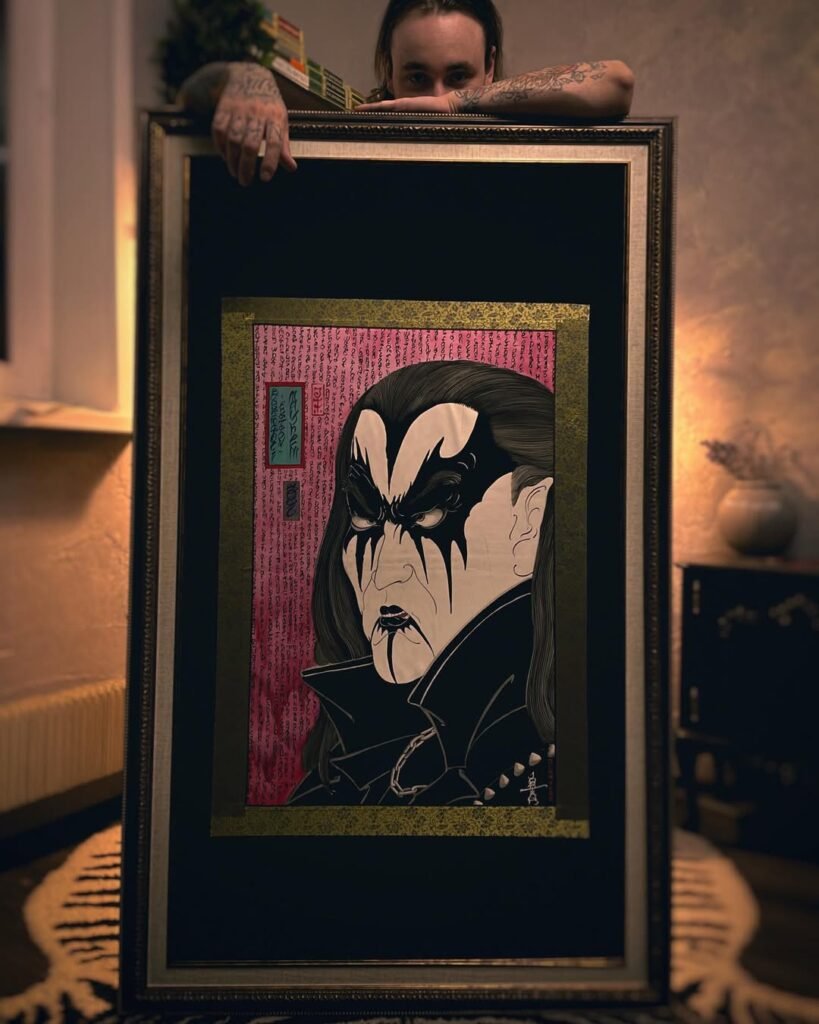
Lazurin’s compositional intelligence is as carefully developed as his needle technique. Building a large-scale Japanese piece across a body is not simply a matter of placing subjects and filling space. Every element must earn its position.
His process begins with the primary subject.
“First and foremost, I consider the main subject or subjects, especially if they interact with one another. I strive to make them as readable as possible and to position them organically on the body.”
Readability from a distance, the way a figure or creature carries weight against its surrounding environment, these considerations come before any decorative decisions are made.
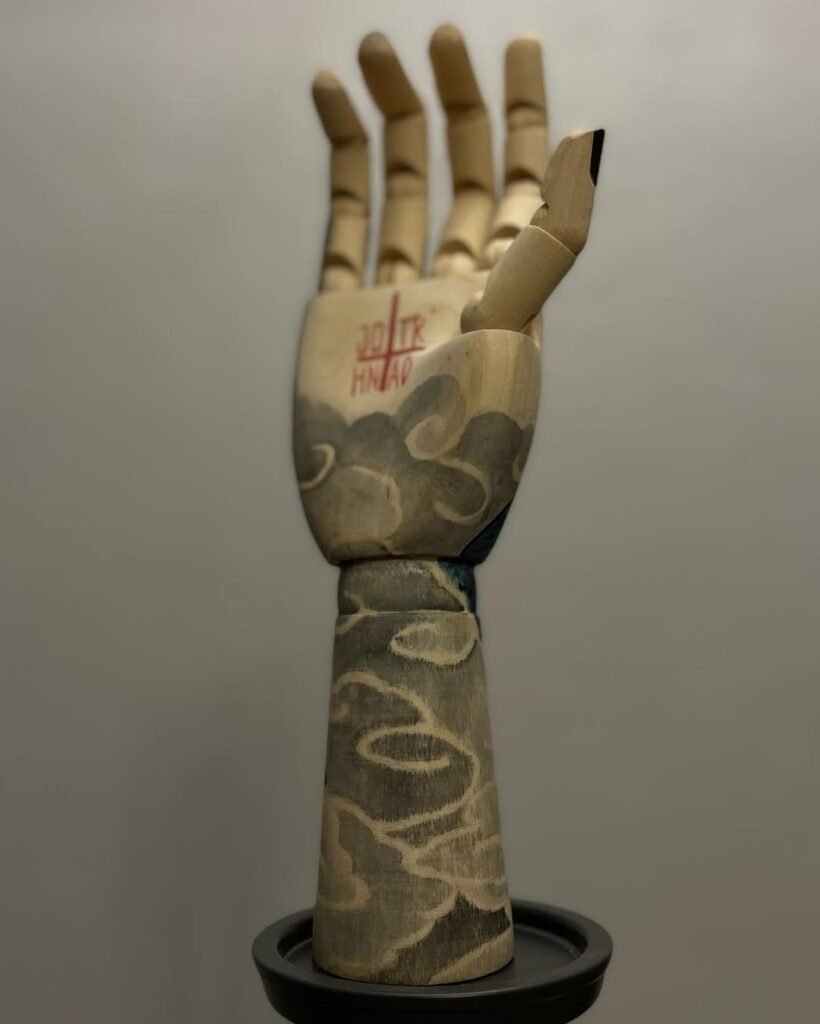
The background presents its own particular challenge in Japanese tattooing, where it functions less as scenery and more as structural support.
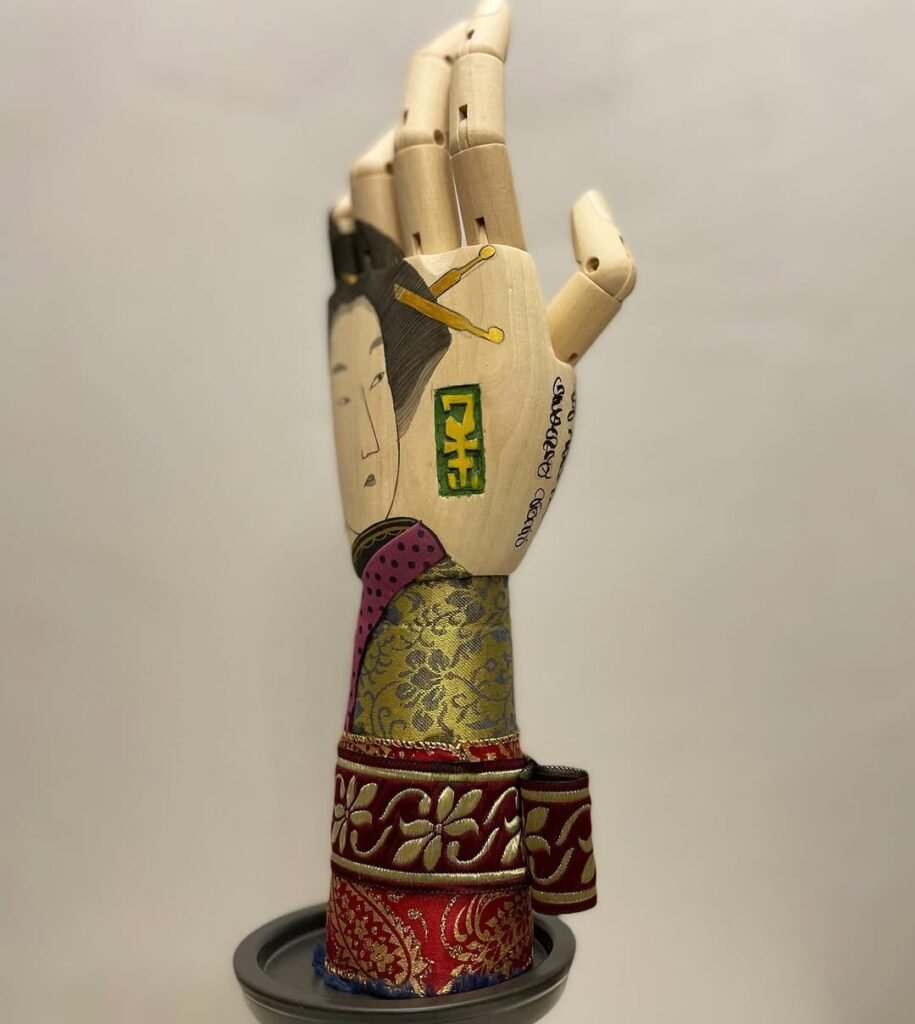
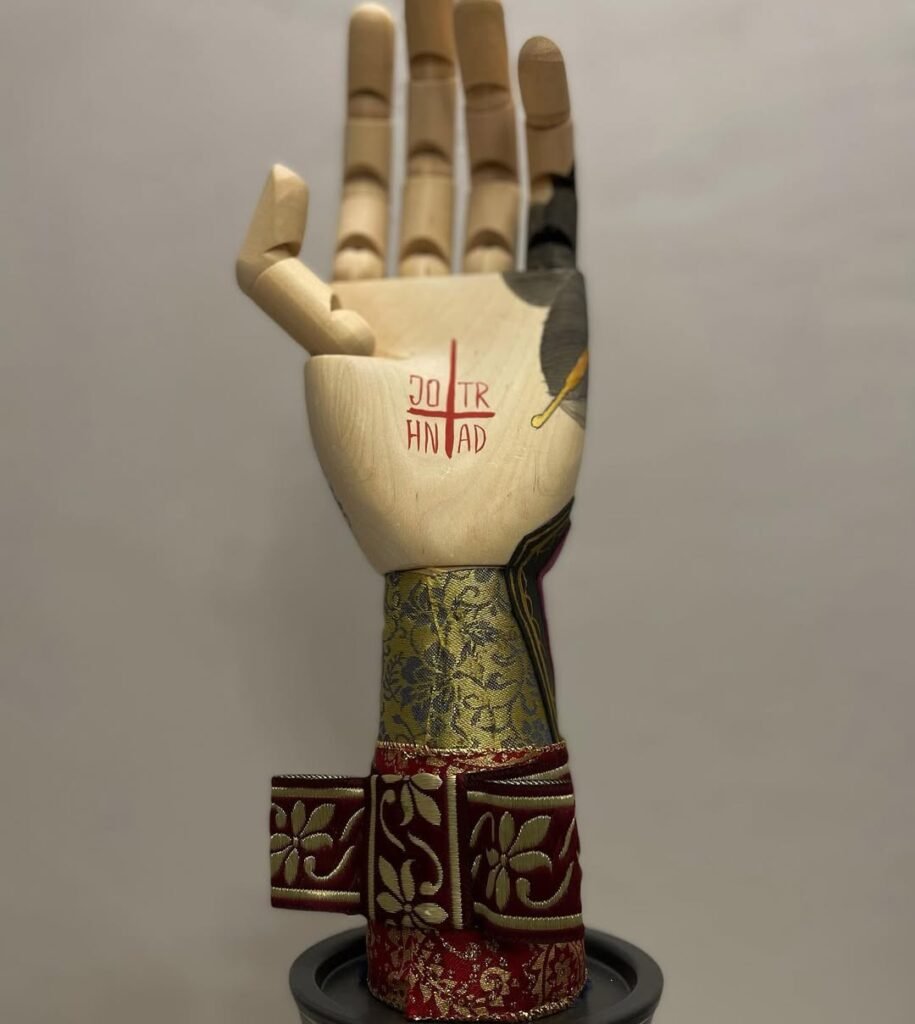
“When it comes to Japanese tattooing, I pay particular attention to the background. The background serves as a foundation, but it should not overshadow the main subjects.” Lazurin always draws backgrounds by hand during the session itself, working directly from observation rather than transferring a pre-drawn design. “This way, I can see from all angles how the background element will be positioned.”
Secondary elements (leaves, flowers, moss) follow only after the background has been resolved. The final layer is micro-detailing: patterns and surface decoration that add depth without distracting. “I add various patterns, designs, and micro-detailing, making sure that these do not distract the viewer’s attention.” The hierarchy is deliberate and consistent. Nothing competes. Everything serves.
The Discipline Nobody Talks About
Technique, in tattooing, tends to be discussed in terms of style, equipment, or the visual qualities of finished work. What rarely surfaces in public conversation is the physical discipline required before any of that becomes possible: the positioning of the hand, the control of angle and movement, the way voltage interacts with depth.
Lazurin teaches workshops, and it is there that the gap between knowledge and embodied skill becomes most visible.
“Even my students during workshops encounter the same issue, the positioning of the hand. I try to demonstrate the correct hand position for the 3RL technique, but almost no one can work in that position right away. Everyone has their own habits, and retraining someone in just 1-2 days is nearly impossible.”
Working at a low angle, essential to the 3RL approach, is particularly challenging for artists accustomed to different configurations. The adjustment cannot be rushed. For Lazurin himself, years of practice have transformed this physical discipline into something almost contemplative.
“For me, however, it has become almost meditative: during the process, I don’t think about tattoos; instead, I reflect on my problems, my affairs, life, and so on (laughs).”
His machine settings reflect the same philosophy of restraint.
“I usually use low voltage — around 2-2.8 volts, sometimes up to 3 volts.” The primary hand movement is circular, a specific choice with direct consequences for the shading that follows. Skin tension and needle depth are controlled continuously throughout, variables that, as Lazurin notes plainly, “unfortunately is difficult to explain verbally.” Some things cannot be taught through description alone. They require years of patient repetition before the body simply knows.
Learning to Trust Slow Craftsmanship
Working at this level of deliberateness presents a psychological challenge that is rarely acknowledged in a professional culture where output is visibility and visibility is opportunity. Social media rewards the frequent and the immediate. It has little patience for the artist who spends six hours on a background that most viewers will never isolate or appreciate.
Lazurin’s response to this tension is characteristically honest.
“I honestly don’t know. Perhaps I’ve simply learned to enjoy the tattooing process itself.”
There is no manifesto here, no performance of principled resistance. He has simply found meaning in the act itself, in the physical concentration that the work demands.
He is equally candid about the professional reality. “I do make an effort to regularly maintain my social media presence, it’s part of my job and is essential.” The discipline of slow craftsmanship and the necessity of digital visibility are not opposites to be resolved. They are parallel responsibilities, each requiring its own form of attention.
Building a Body, Not Individual Tattoos
For Lazurin, a large-scale project is never a collection of separate tattoos. It is a single evolving design that happens to be installed across multiple sessions. This perspective shapes everything from the initial consultation to the way he responds when a client approaches a decision without sufficient clarity.
“I believe that the most important aspect for the client is the initial idea. They need to approach this matter with awareness, as our collaboration depends on it.”
The permanence of the work is never abstracted or softened in how he presents it. “A tattoo is permanent, and the sketch I create becomes a part of their body once approved. After that, it will be too late to make any changes.”
When a client is uncertain, he does not simply proceed. He engages, helping them consolidate their thinking, developing a design that genuinely reflects their intentions. And when uncertainty persists, he is prepared to step back entirely. “There are situations where I have to decline requests because I sense that they are not yet clear on what they truly want. I encourage them to reconsider their decision to avoid hasty choices.”
This is not inflexibility. It is respect: for the client’s body, for the permanence of the work, and for the integrity of the finished piece.
Mastery That Outlives the Session
Every principle that guides Lazurin’s practice (the 3RL technique, the compositional hierarchy, the hand discipline, the patience in consultation) converges on a single idea. A tattoo is not finished when the artist sets down the machine. It is finished years later, when the skin has fully settled, when the pigment has found its permanent depth, when the composition reads across every angle of the body it inhabits.
“I think true mastery is not evident in a photograph taken on the day of the session, but rather in how the tattoo looks on the client years later.”
The photograph, for all its usefulness, captures only one moment in a piece that will continue to be worn for decades. What it cannot capture is what Lazurin has spent eleven years learning to build into his work: the structural density, the healed texture, the compositional restraint that allows a large piece to remain legible long after the novelty of newness has faded.
Precision, in his hands, is not an aesthetic preference. It is an act of responsibility: to the client, to the body, and to the craft itself. The best evidence of that responsibility is not found in a studio or on a screen. It is found on the skin of someone going about their life, years later, still wearing the work exactly as it was meant to be worn.
Follow John Trad on Instagram
Lubdhak Biswas is a musician, entrepreneur and a tattoo artist based out of Kolkata (India).
He documents underground culture at the crossroads of tattooing and music.
His work focuses on craft, tools, ethics and the real working realities of creative industries.