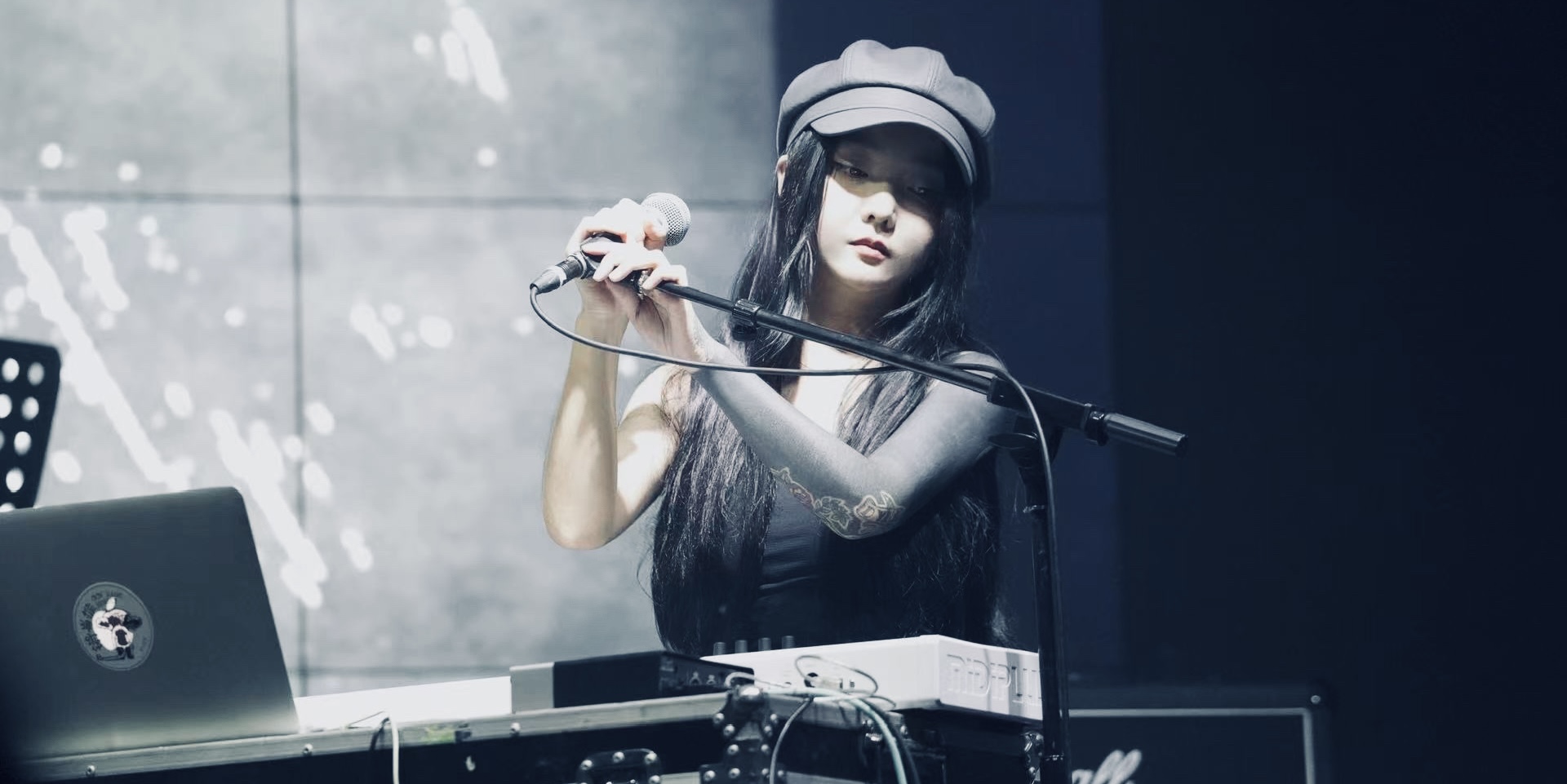
Avivi is a self-taught guitarist, musician, and content creator from northern China who has moved through bands, bar gigs, and big stages without ever letting a single label stick. Her story is a case study in creative freedom, rejecting the idea that what you do today has to define who you are tomorrow.
What does it actually mean to be a musician today? For most people, the answer gets tangled up in identity. You pick an instrument, find your sound, build your brand, and become that thing. The world rewards consistency. It rewards staying in your lane. But what happens when the lane stops feeling like yours?
Avivi has worn every one of those labels, and she has let go of each of them without apology. She left not because she stumbled, and not because something more exciting pulled her away. She left because staying would have meant performing a version of herself she no longer recognized. For a self-taught guitarist and independent music creator building her own path online, that kind of clarity is rare. And it changes the way you hear everything she has to say.
Avivi’s path as a self-taught guitarist and independent music creator doesn’t follow the script. No single breakthrough. No carefully managed personal brand. No fixed destination she’s racing toward. What you find instead is something far more compelling: an artist who keeps showing up for what genuinely moves her, without needing it to mean something forever. That kind of creative honesty is hard to fake, and even harder to find.
Keep reading. This is the story of a self-taught guitarist who chose authenticity over applause, and what that choice looks like in real life.
From Accidental Singer to Self-Taught Guitarist: How It Started
Avivi didn’t set out to be a musician. “I started singing completely by accident,” she says. The guitar came second, picked up as a practical tool so she could accompany herself when she sang.
The real foundation came in 2016, when a local band in her city in northern China was looking for new members. She had some basic piano skills from childhood, which was enough to get her in the door. She started on simple MIDI keyboards and rhythm guitar, and eventually became one of the singers too.
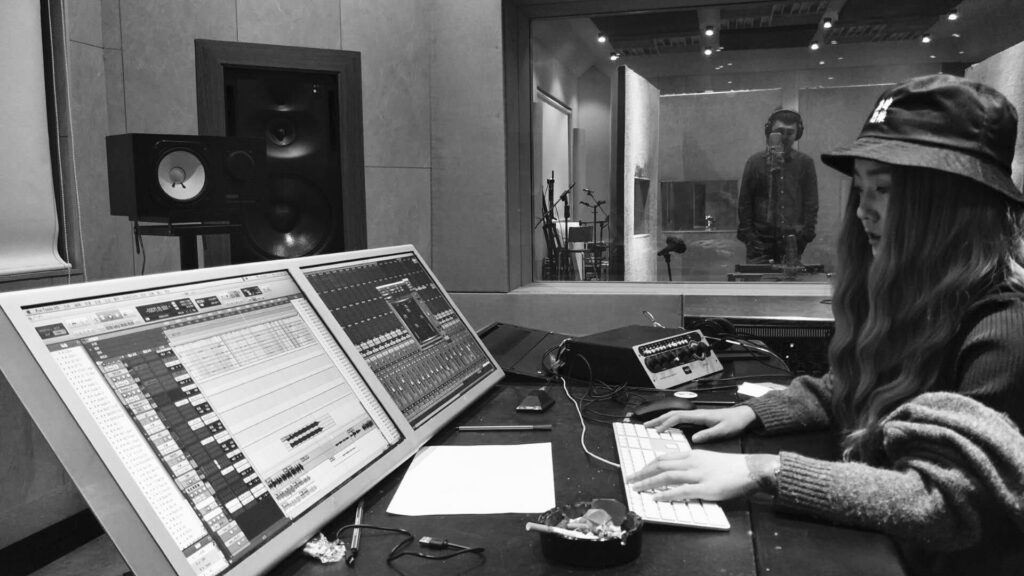
“We wrote songs and made music together. I learned so much and grew really fast alongside them. Those were amazing times for me.”
That kind of environment, where you’re creating alongside people, learning by doing, and building something together, tends to shape you in ways that formal training doesn’t. It’s messy and exciting in equal measure. For Avivi, it was where her instincts as a musician developed.
She eventually split up with the band. Music couldn’t pay the bills, and that’s a reality most independent musicians bump into sooner or later. Rather than stopping entirely, Avivi took her guitar on the road and traveled across China, singing in bars for a living. It wasn’t glamorous, but it was hers.
Life on the Road and the Big Stages
The next chapter brought a different kind of experience. An independent musician reached out and invited Avivi to join his live band. Her role was primarily performance: guitar, keyboards, and backing vocals. The music itself belonged to him. Her job was to get her parts right and deliver them night after night.
As the musician’s audience grew, so did the scale of the gigs. Bigger venues. Larger crowds. More performances. For many people, that trajectory would feel like success. For Avivi, something else was happening.
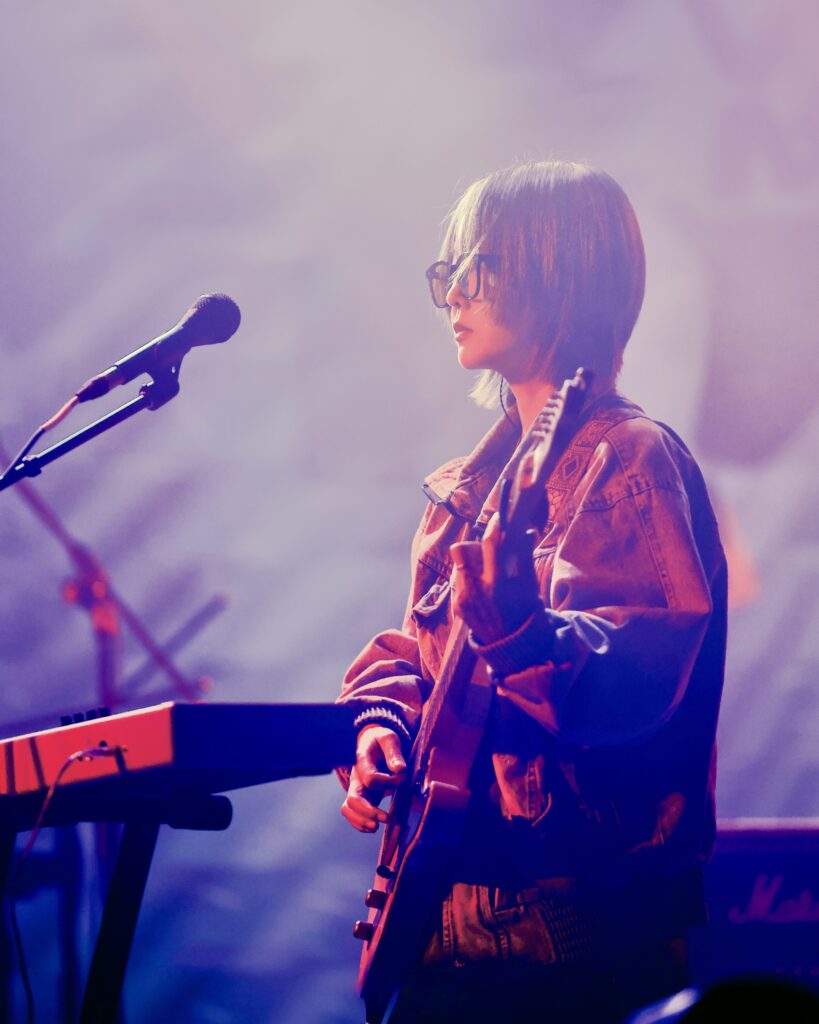
“Strangely, the bigger the stages got and the more I performed, the more I lost that sense of purpose about being on stage,” she says. “I began to rethink where I stood. From the audience’s perspective, and also my own, why exactly was I up there?”
It’s a question that takes courage to sit with. Most people, having invested the time and effort to reach a bigger stage, would push that feeling down and keep going. Avivi didn’t.
Why She Walked Away, and What Came After
She left the band. And she’s refreshingly honest about what that decision actually looked like from the inside.
“It wasn’t quite that romantic,” she says. “I decided to leave mainly because I no longer liked that kind of life — constantly performing and being onstage — not because I had found some better way to be creative.”
There was no epiphany. No clear next step waiting in the wings. “After I left, I honestly didn’t know what came next. I didn’t have a new plan waiting for me.”

What followed was gradual. She started posting guitar and music content online more consistently. She wrote songs occasionally, recorded some of her own music when the feeling was right. Nothing was mapped out in advance, and she’s comfortable saying she still doesn’t know exactly where it’s heading.
That kind of honesty is rare, especially from someone creating in a space where the pressure to project a clear vision is constant. Avivi’s version of moving forward doesn’t require a destination.
On Identity: Labels Are Things You Do, Not Things You Are
Ask Avivi what has driven her to keep evolving, and she’ll push back on the framing.
“I’m not sure if something drives me to keep evolving. Maybe it’s the other way around. I just quickly lose interest in a fixed identity.”
Singer, guitarist, band member, content creator. She has been all of these. But she never wanted any one of them to become a permanent descriptor. “For me, they are things I do in different phases, not identities I must keep.”
She also challenges the idea that past investment is a reason to keep going. “When something no longer suits me, I won’t force myself to carry on, even if I’ve invested lots of time in it. Past effort is not a reason for me to keep going.”
This is a quiet but radical stance. So much of how we talk about commitment, especially in creative fields, is built around the idea that quitting is failure. Avivi separates the act of stopping from the act of failing. Leaving something that no longer fits isn’t giving up. It’s paying attention.
Being a Female Guitarist: The Problem With Lowered Bars
Avivi is clear-eyed about her skill level. “I know my skills are fairly average, and I’m fine with admitting it.” What she’s less fine with is the way being a woman shapes how that skill gets perceived.
“What truly bothers me isn’t being underestimated for being a woman. Sometimes it’s the reverse. As a female guitarist, I receive extra attention, praise and opportunities beyond my actual skill level.”
She puts it simply: “I’d rather hear ‘You play like shit’ than ‘Not bad for a girl.'”
The first is honest feedback. The second sounds like a compliment, but it operates by shrinking the standard first. It judges the performance against a lower bar before the playing has even been heard on its own terms.
She notices this in smaller ways too. Comments asking why she doesn’t smile in her videos. Why she looks so serious. “To me it’s simple: I’m just focused on what I’m doing. Why must I smile?”

Male guitarists, she points out, are almost never told to look more approachable while performing. “If a woman likes smiling while playing or performing, that’s totally valid. It’s her personal style. But this shouldn’t turn into a rule every woman has to follow. I won’t put on fake expressions just to seem more likable.”
She’s not rejecting her identity as a woman. She’s rejecting the idea that it should set the terms for how her work is judged. “Gender is part of me, yet it shouldn’t pre-set standards for what I can do.”
The ‘Avivi Universe’ That Was Never Intentionally Built
From the outside, Avivi’s creative output looks cohesive. Guitar content, original songs, recordings, a distinct visual sensibility. It feels like a world with its own internal logic.
She didn’t plan it that way.
“I never intentionally tried to build some kind of ‘Avivi universe,'” she says. “Of course I care about how my videos look, because I have my own sense of what looks good and what doesn’t. I write songs because sometimes I have something I want to write down. Recording is just a natural part of making music, and guitar happens to be the instrument I’m most familiar with.”
None of it was engineered to feel unified. “Maybe they feel connected simply because they all come from the same person.”
There’s something worth sitting with in that. A lot of creative advice focuses on building a brand, defining your niche, making your work recognizable. Avivi’s approach suggests that coherence can be a byproduct of genuine creative expression, not a strategy imposed on top of it. When everything comes from the same honest place, it tends to feel like it belongs together.
Leaving Room to Change Your Mind
So is the refusal to be defined part of who Avivi is? She catches herself in the question.
“I don’t know if ‘not defining myself’ is part of my identity, because once I define ‘not defining myself’ as an identity, it kind of becomes another definition, LOL.”

It’s funny, and also genuinely thoughtful. She’s aware of the trap. Turning “I don’t like labels” into a label of its own is its own kind of box.
What she lands on instead is softer and more livable: “I just want to leave myself some room to change my mind. If one day I no longer enjoy what I’m doing now, I hope I can freely step into something new.”
That’s it. No manifesto. No philosophy to protect. Just a decision, renewed quietly each day, to stay open.
What Avivi’s Story Says About All of Us
Most of us have been told, at some point, that consistency is the goal. Pick a lane. Build a brand. Stay the course. The pressure to become a legible, stable version of yourself is real, and it comes from everywhere.
Avivi’s story doesn’t tell you to quit everything and start over. It tells you something more nuanced: that you’re allowed to notice when something stops fitting, and you’re allowed to act on that. That past effort doesn’t obligate you to a future you no longer want. That the things you do don’t have to become the things you are.
There’s a kind of freedom in that, and also a kind of discipline. It takes real self-awareness to know when to stay and when to leave. It takes honesty to admit you don’t have a plan yet. It takes confidence to keep creating without knowing exactly what you’re building toward.
Avivi is still figuring it out, and she’d be the first to say so. That might be the most relatable thing about her.
Follow Avivi on Instagram

Lubdhak Biswas is a musician, entrepreneur and a tattoo artist based out of Kolkata (India).
He documents underground culture at the crossroads of tattooing and music.
His work focuses on craft, tools, ethics and the real working realities of creative industries.