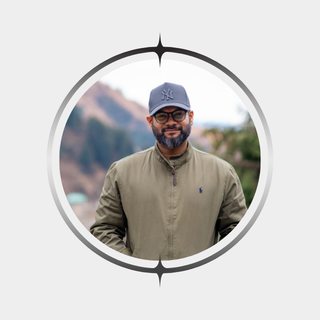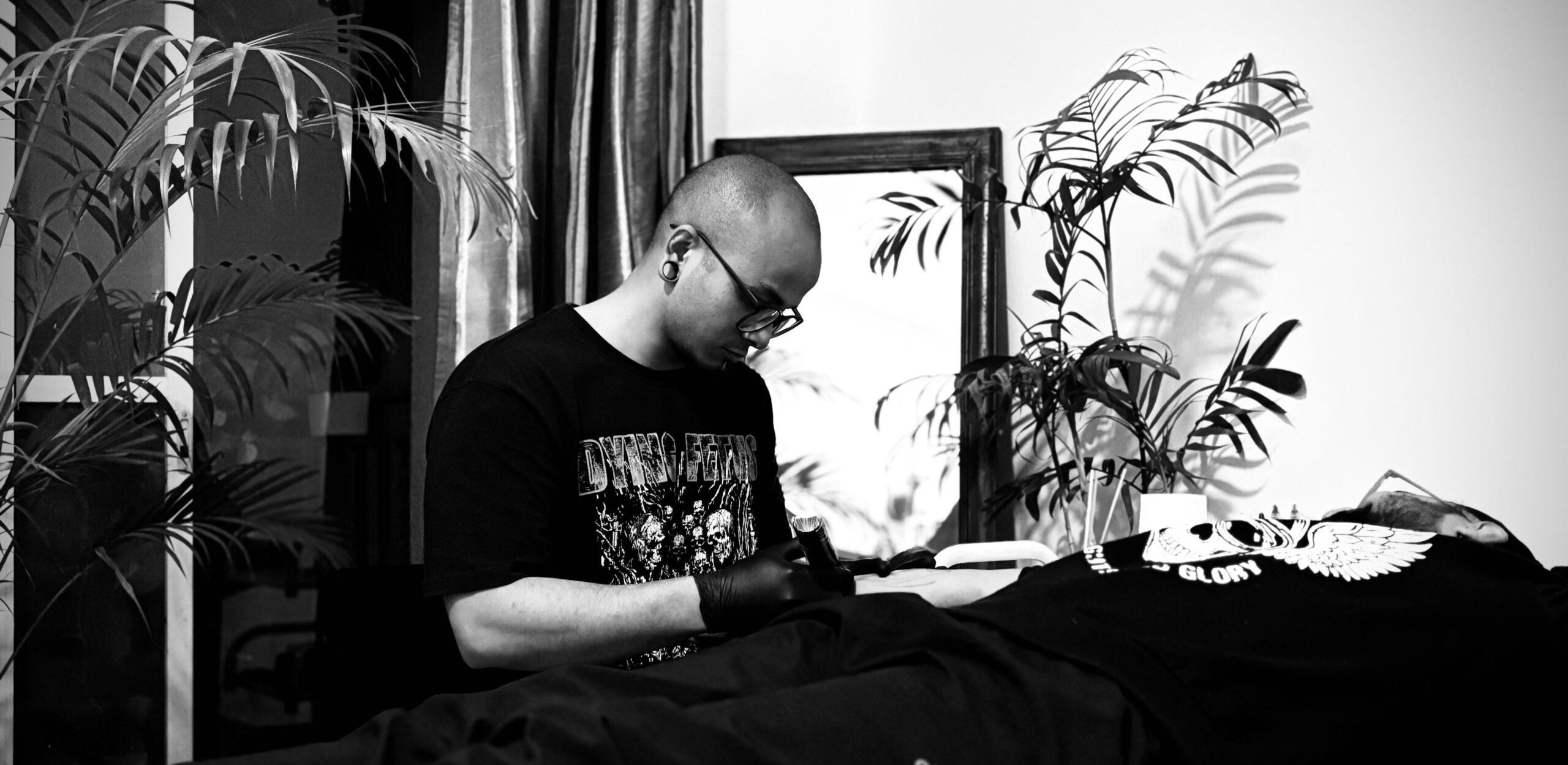
Moving to a massive, chaotic city often strips away your sense of belonging. The crushing weight of urban lifestyle pressure, the endless hustle, and the hyper-curated masks people wear can make you feel entirely invisible. For many creatives, this intense culture shock becomes a breaking point. But for the visionary founder behind Delhi’s Rhyhorn Tattoo, that exact feeling of displacement sparked a magnificent, 15-year artistic journey.
We sat down with this remarkable artist to explore his transition from the quiet hills of Assam to the competitive streets of the capital. We discussed his deep fascination with dark surrealism, the gritty realities of running an independent studio, and how the Indian tattoo scene finally learned to respect true craftsmanship. If you want to step outside societal expectations and find your authentic voice, be inspired by real stories of resilience like his.
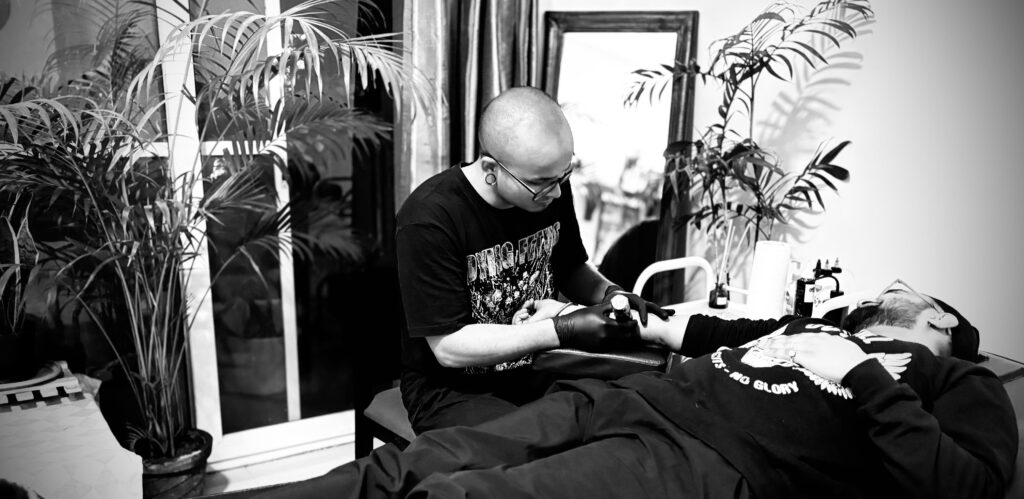
The Culture Shock That Birthed a Sanctuary
Growing up in the remote areas of Northeast India, life moved at a completely different rhythm. Because his father served in the military, his childhood was relatively laid back and deeply rooted in community. In Assam, people actually knew their neighbors. Happiness meant having people around you, and sharing was the ultimate expression of love.
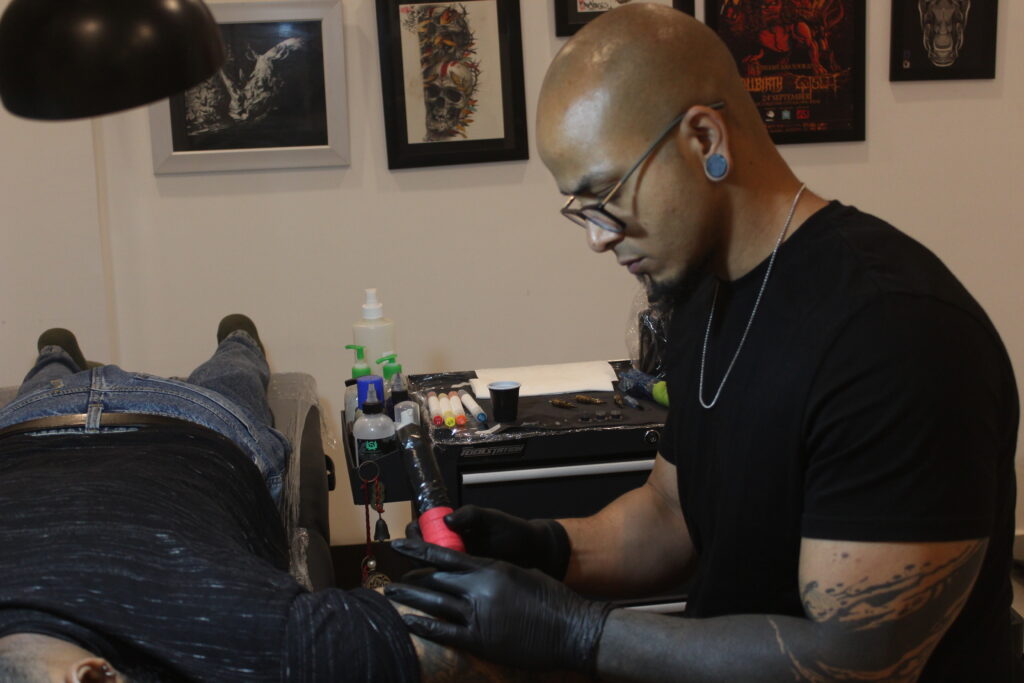
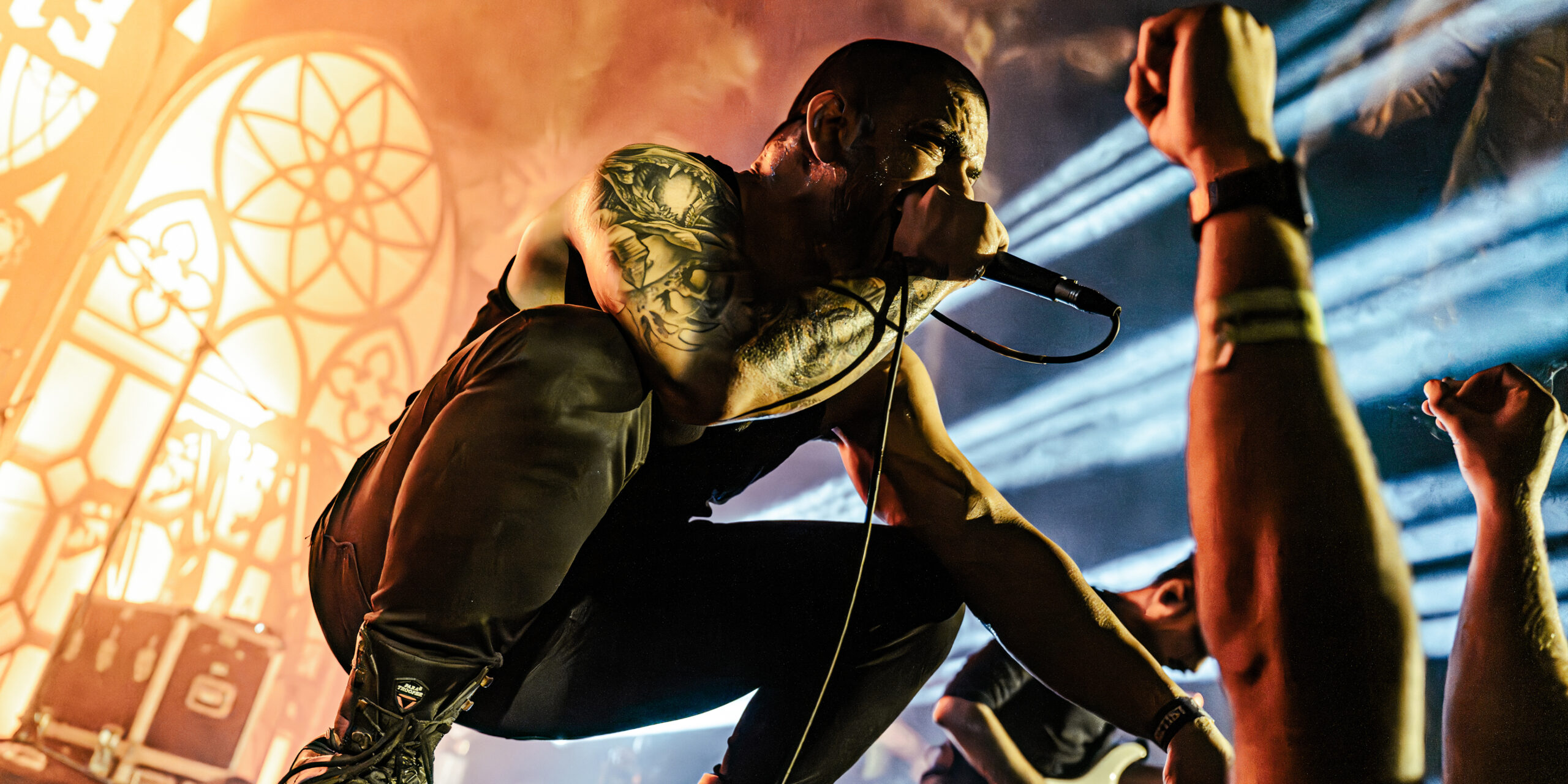
During these formative years, Western influence seeped into his world and fundamentally shaped his artistic vision. He discovered heavy bands like Linkin Park, Limp Bizkit, and Slipknot. He studied their tattoos and the aggressive, raw elements they portrayed. Simultaneously, he observed tribal elders in his community who wore traditional tattoos. Those marks were not just decorative trends. They held heavy history. Each line told a specific story about their lives, their massive achievements, and their deepest failures.
He also watched his friends get tattooed in the most crude, organic ways possible. They grabbed whatever tools they could find just to look cooler. He was exposed to the raw culture of body modification from a very young age.
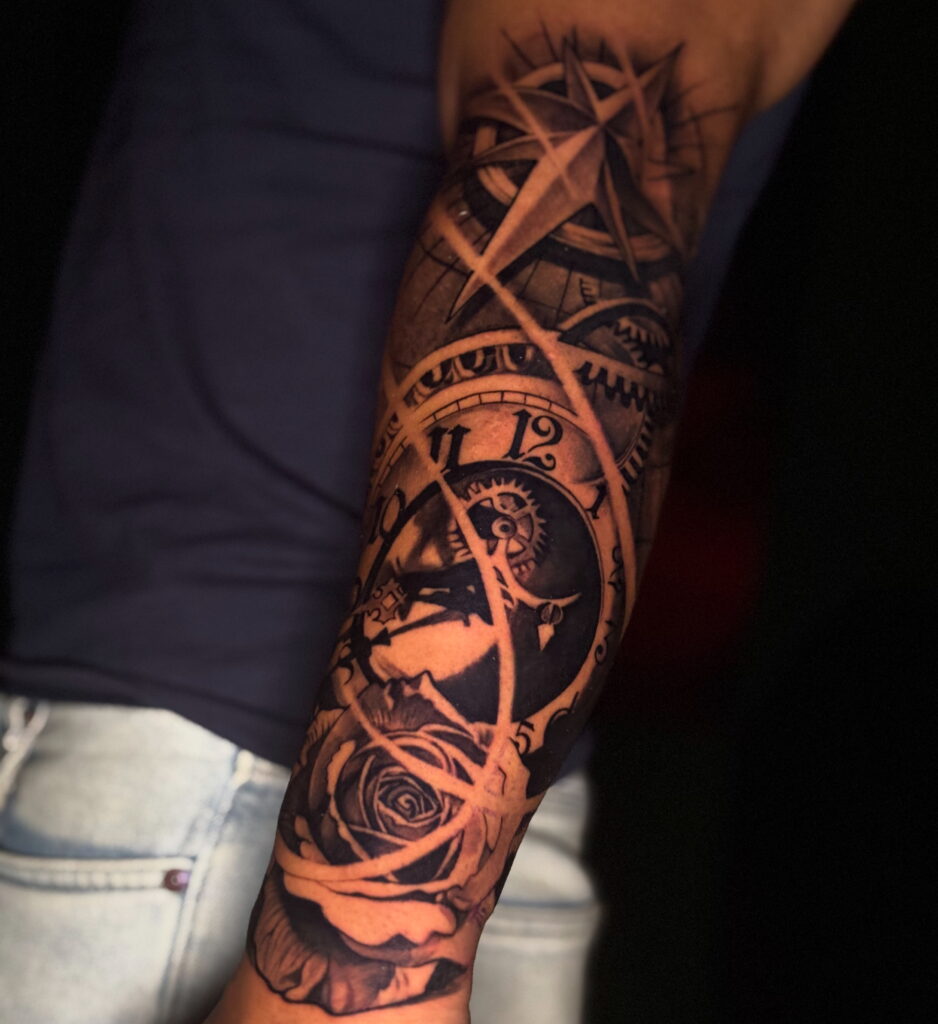
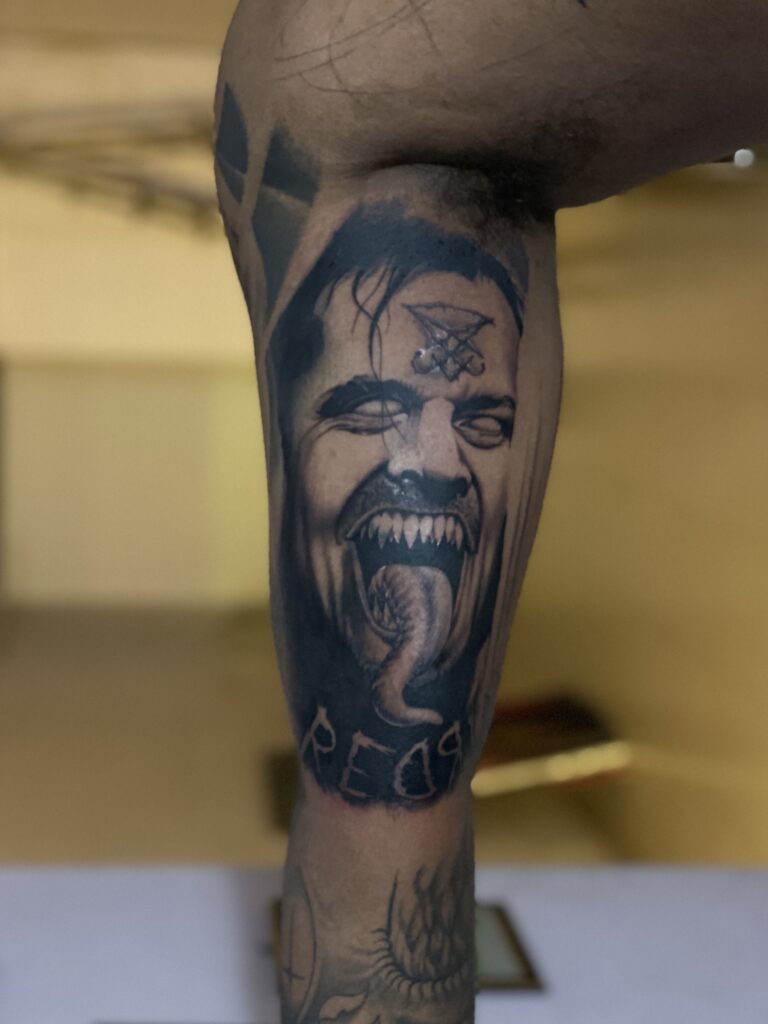
Everything changed when he relocated to Delhi. The transition delivered a brutal cultural shock.
“I was an alien here and that made me miss home,” he recalls. The city felt isolating. To cope with this heavy disconnect, he decided to carve out his own space. When someone offered him a small room to work from, he named it Rhyhorn Tattoos, honoring the magnificent one-horned rhino that serves as the crown jewel of Assam.
Rhyhorn was never meant to be a heavily commercialized business. It started as a pure feeling. It was a physical manifestation of missing home and a desperate need to create a sanctuary. By building a space that reflected his true roots, he found a way to connect with like-minded souls in a city that originally felt entirely foreign.
The Mirror of Dark Surrealism
When we hear the phrase “dark art,” we usually picture meaningless, scary images. But for the artist behind Rhyhorn Tattoo, dark surrealism is deeply profound. It carries immense character. It speaks volumes about the hidden, messy reality of the human condition.
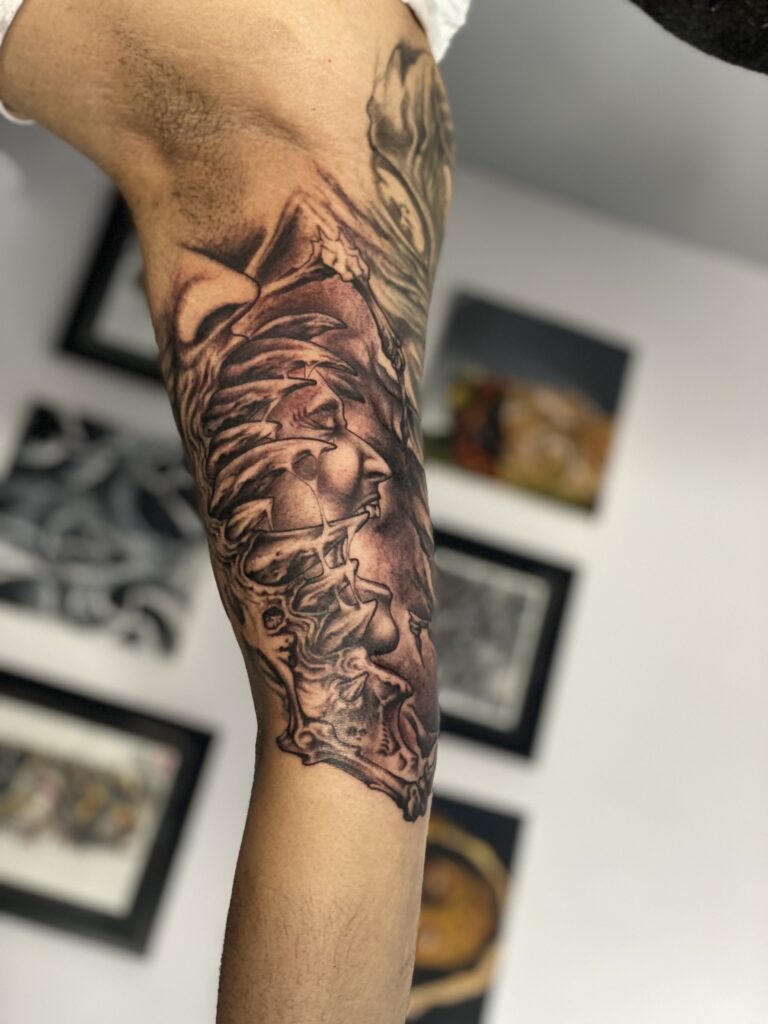
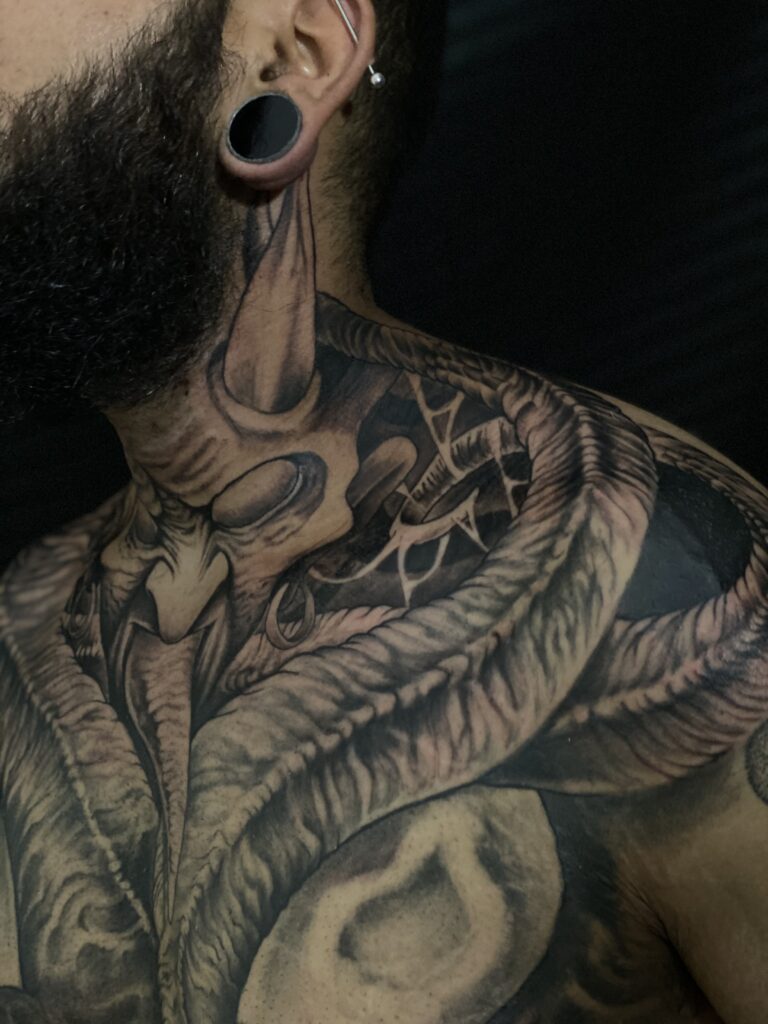
His exposure to the fast-paced reality of city life completely shifted his perspective on humanity. Leaving his communal upbringing behind, he witnessed a society where greed, lust, gluttony, envy, and anger were entirely normalized. He openly admits that he acquired those traits himself, and he absolutely hated it. That intense internal conflict encouraged him to draw the dark, surreal pieces he creates today.
“My art is only a mirror that reflects what we all ignore,” he explains. He plays heavily with the ugly, complex human emotions that get people into trouble. To him, those dark elements are undeniably beautiful because they are real.
His clients fully understand this philosophy. They do not walk into his studio asking for basic mountains or pretty rivers. They arrive carrying powerful, motivating stories. Often, they carry heavy emotional baggage they desperately want to get rid of. This is where his art serves a vital purpose.
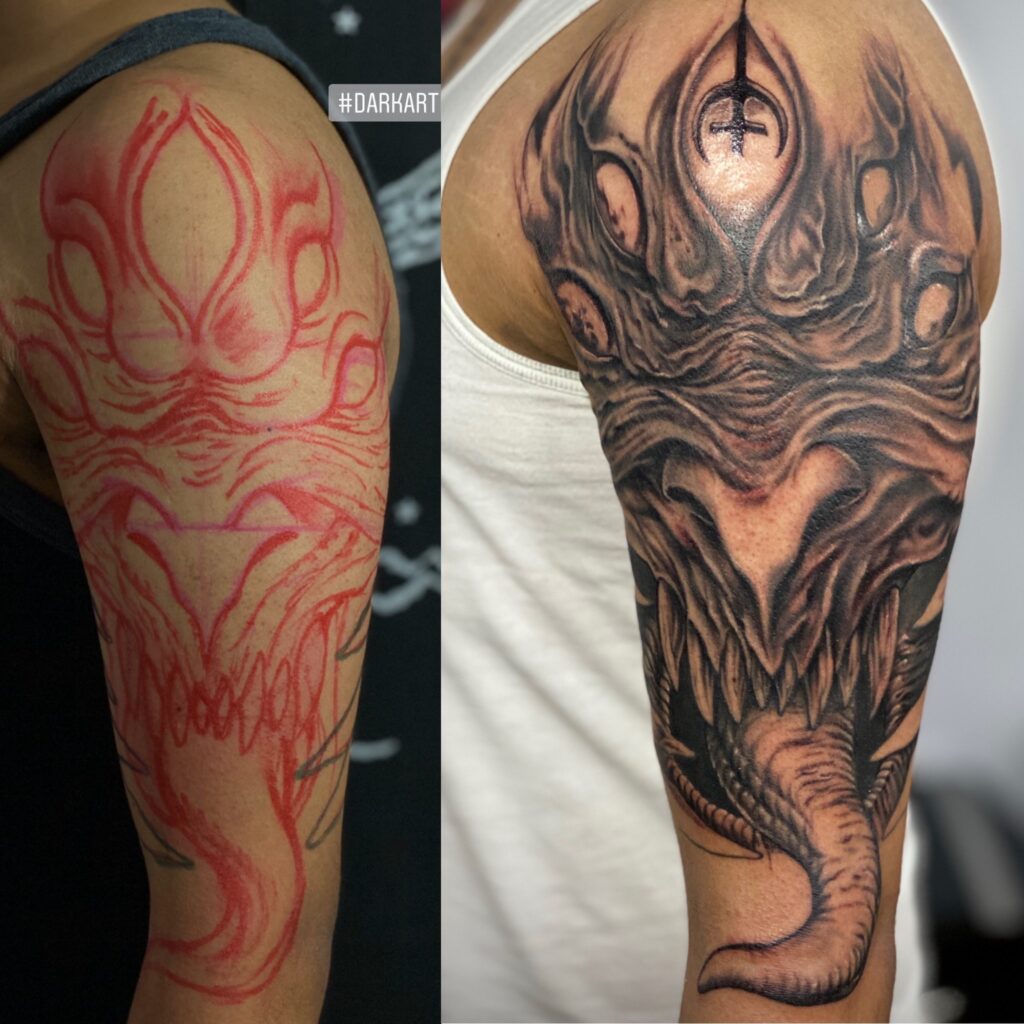
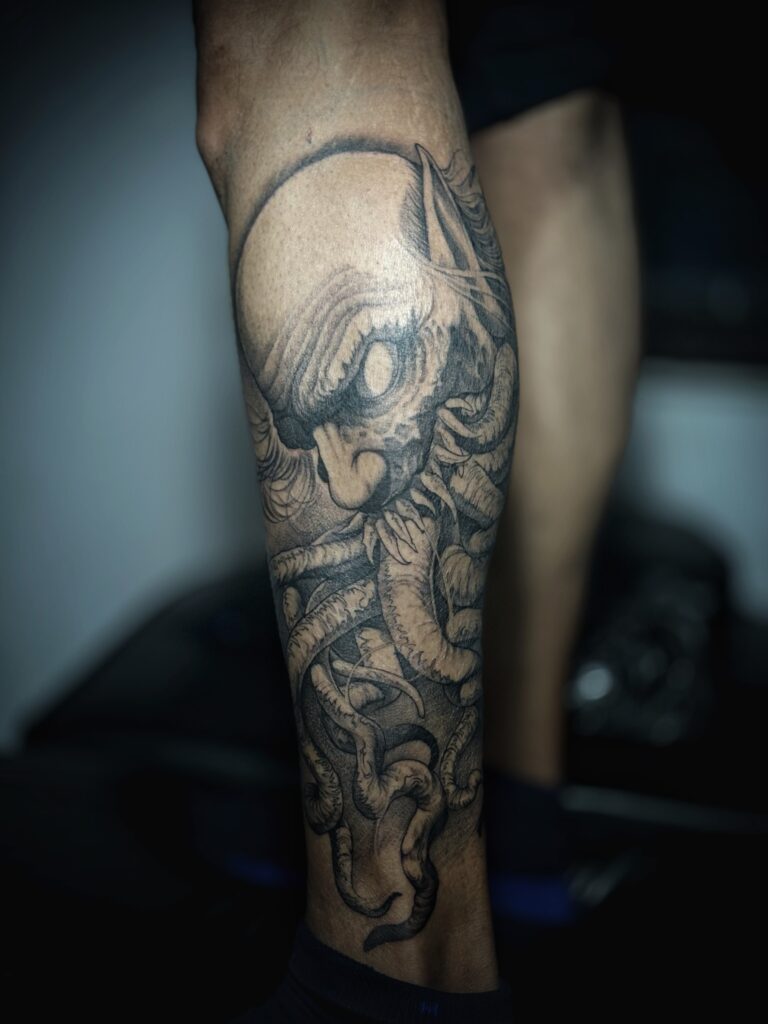
Balancing storytelling, symbolism, and technical realism, he designs pieces that speak the client’s truth in its absolute darkest form. By externalizing that pain onto the skin, he empowers the individual to finally embrace it. This process is a profound way to unlock your true potential and reclaim your narrative.
Navigating the Hustle of a Competitive City
Creating brilliant art is only half the battle. Running a sustainable independent studio in a highly competitive metropolis requires massive emotional and mental fortitude. Selling an unconventional, dark style of tattooing is a significant hurdle. Not everyone understands it, and not everyone wants to buy it.
Beyond finding the right clientele, there is immense pressure to stay on top of your craft. The tattoo industry frequently attracts people who view it as an easy way to print money. But tattooing is a grueling discipline. When the easy money inevitably stops flowing, those individuals drop out of the industry entirely. The pressure breaks them.
The founder of Rhyhorn Tattoo has watched many talented artists surrender to addiction and burnout. To survive 15 years in this demanding space, remaining mentally and emotionally sound is his ultimate priority. You cannot pour from an empty cup, and you cannot guide a client through a transformative tattoo session if your own mind is falling apart.
The global pandemic forced another massive pivot. Following COVID-19, the market crashed and commercial rent prices skyrocketed. Instead of quitting, he moved his studio into a private space. While he lost a few casual walk-in clients, he gained something far more valuable: the time to work with people on a deeply personal level. By stepping away from the commercial noise, he elevated his craft.
The Evolution of Indian Ink
If you look back a decade ago, the Indian tattoo scene was practically unrecognizable. The founder remembers a time when clients only cared about the price tag. People wanted a tattoo for 500 rupees, completely ignoring basic hygiene standards or artistic quality. Artists did not bother to draw custom designs, and clients certainly did not care about originality. It was a race to the bottom.
Today, the culture has completely transformed. Artists have evolved brilliantly, exploring niche styles that were previously unknown to the masses. They spend hours studying, practicing, and refining their unique aesthetics. While they still take on standard requests to pay the bills, they actively lean toward tattooing the things they actually love to draw.
Clients have also changed their approach entirely. The casual “walk-in” culture is fading. Now, people take the time to heavily research a studio before ever stepping foot inside. They study portfolios online. They read reviews. They actively interact with their chosen artist and demand high-quality, custom designs.
This shift makes the industry incredibly competitive, but it is a thoroughly positive evolution. It forces everyone to step up. When standards rise, the art form finally gets the respect it deserves. We still have a lot to learn, but the trajectory is beautiful.
Embrace Your Full Story
The journey of Rhyhorn Tattoo is a masterclass in authentic living. It proves that you do not have to conform to the shiny, curated expectations of a big city to succeed. You can build a brand around the exact things that make you different. You can take your culture shock, your dark emotions, and your struggles, and turn them into undeniable art.
If you are currently hiding parts of yourself to fit into a mold, take a lesson from this journey. Join the journey of self-discovery today. Look into the mirror, confront the shadows you usually ignore, and express exactly who you are. The right people will always find you.
Follow Ryhorn on Instagram
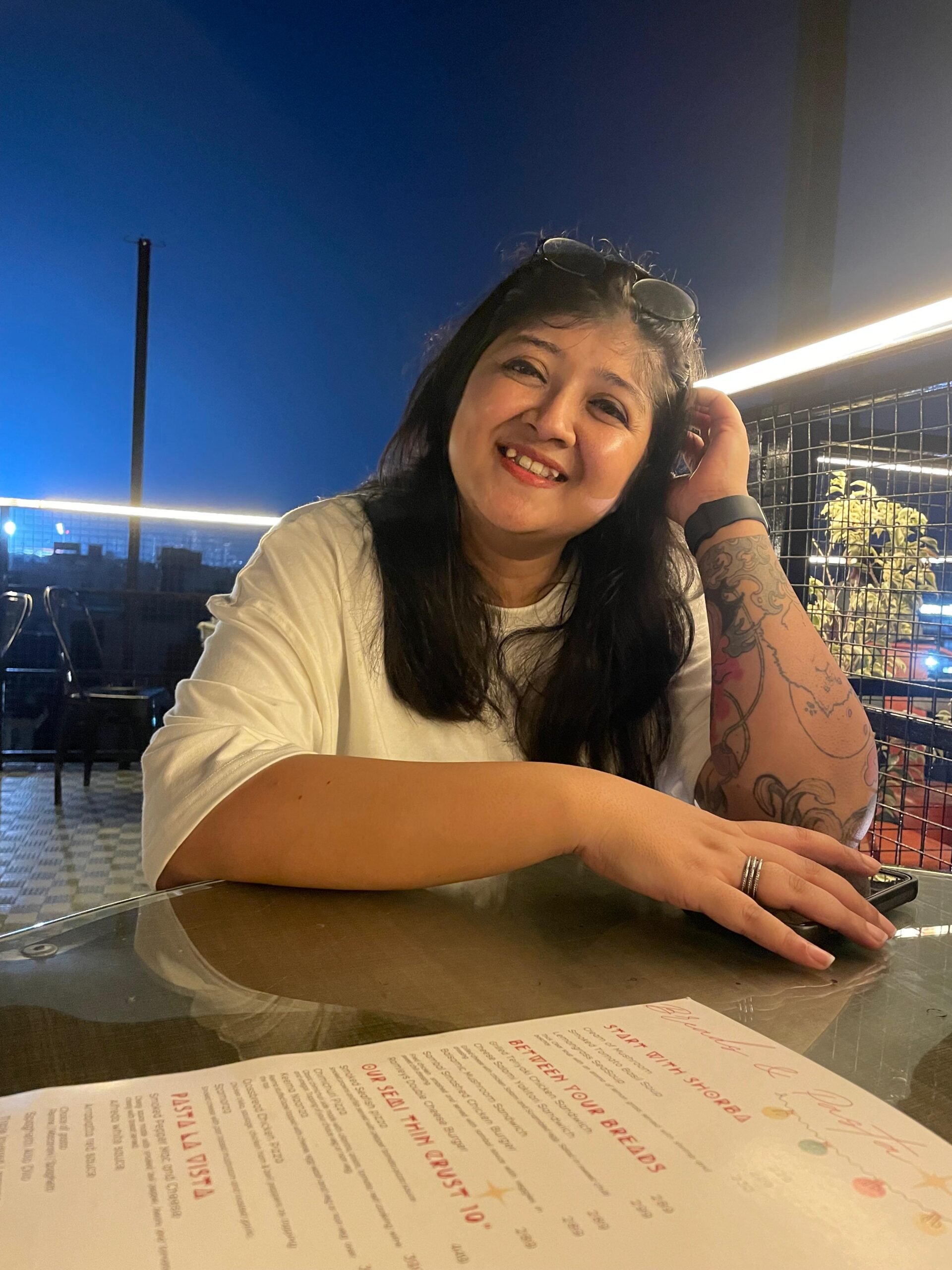
Oeshi B Lyndem is a visual artist, tattoo artist, graphic designer, and entrepreneur with a foundation in graffiti and street culture. Rooted in hands-on craft and making, her practice moves fluidly across illustration, street art, design, and experimental creative processes. With lineage from Shillong—often regarded as India’s rock capital—she carries a distinct cultural influence into her work. At Goofy Owl, she curates and leads the street and hip-hop culture segment through an intuitive, deeply creative, and entrepreneurial lens.