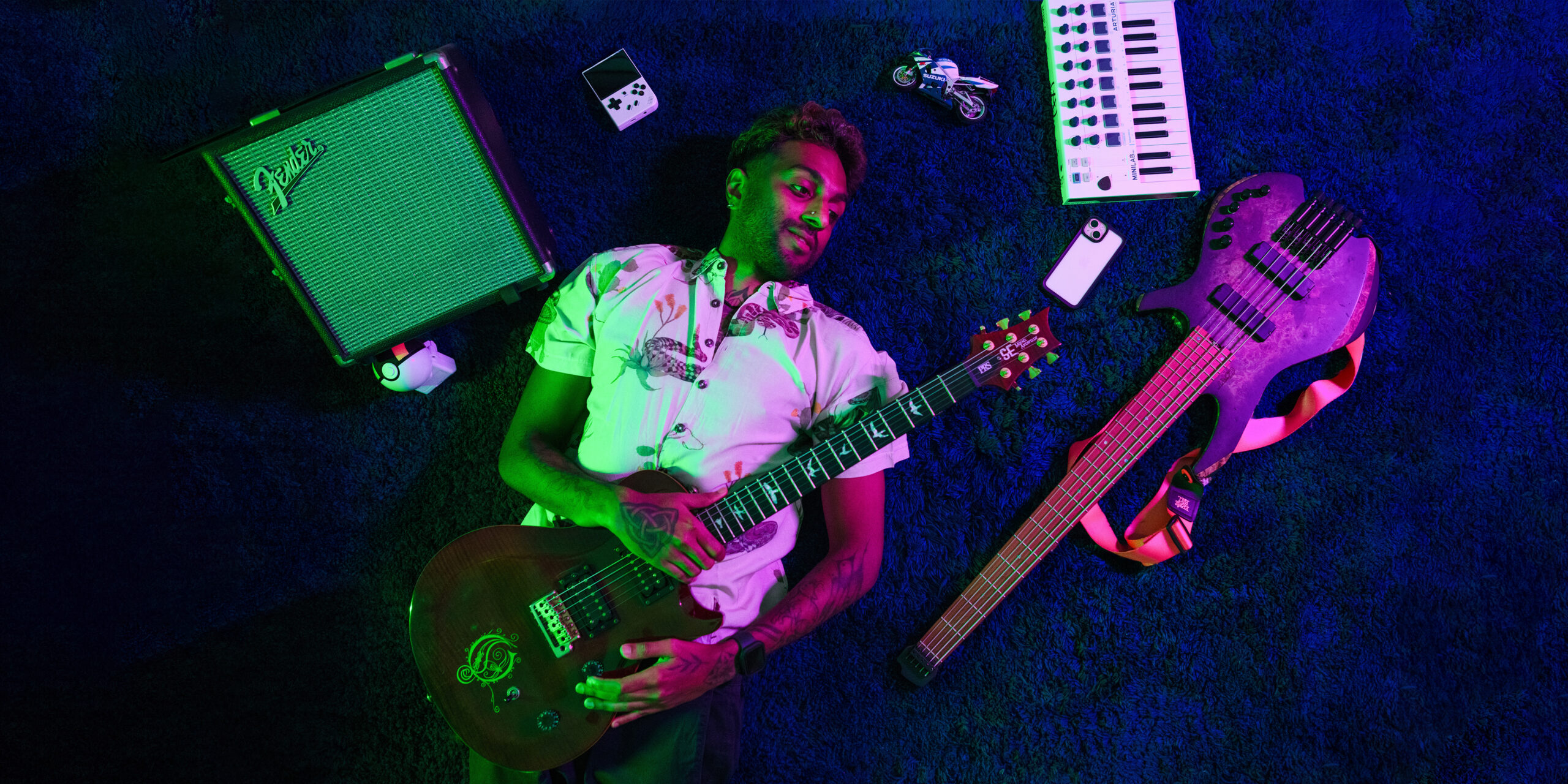
Some leaps are planned for years. Others arrive as a layoff notice. In April 2025, after years spent building a career in corporate design, Sai Sanjit lost the job that had been quietly holding him in place. For a long time he had wanted to walk away and pursue music full time, but the comfort of a steady paycheck kept winning. When that safety net disappeared, he chose not to rebuild it.
His story starts well before that moment. He grew up learning tabla, then taught himself guitar, and eventually found his home on the bass. He also made Retrograde, an album that brought together musicians from different parts of the world to explore technology, isolation, chaos, and the strange way humanity seems to move forward while slipping backward. His work sits where sound and image meet. Ideas often begin as pictures in his head before they become parts on an instrument, and his album artwork, branding, and production all come from the same visual instinct.
Now, with Weightless as his first major release since choosing music as a full-time path, he talks about fear, freedom, collaboration, and what it means to finally live life on his own terms. Here is the conversation, in his own words.
Q: You spent years building a career in design before stepping away from the corporate world to pursue music full time. What finally made you decide that it was time to make that jump?
A: To be brutally honest? I really wanted to quit for a long time, but I didn’t have the balls (pardon my French) to do it. I’d gotten too used to the comfort of having a salary hit my account on the first of every month.
In April of 2025, I like to think the universe gave me the nudge I needed, I got laid off. Part of me felt like everything was falling apart, but the artist in me saw it as a sign to finally do what my heart always wanted. So, I decided to remove the safety net, and here I am, trying to make it work one day at a time.
There’s nothing else I’d rather be doing. I’m living life on my terms, making a lot of music, and spending hours getting better at my craft.
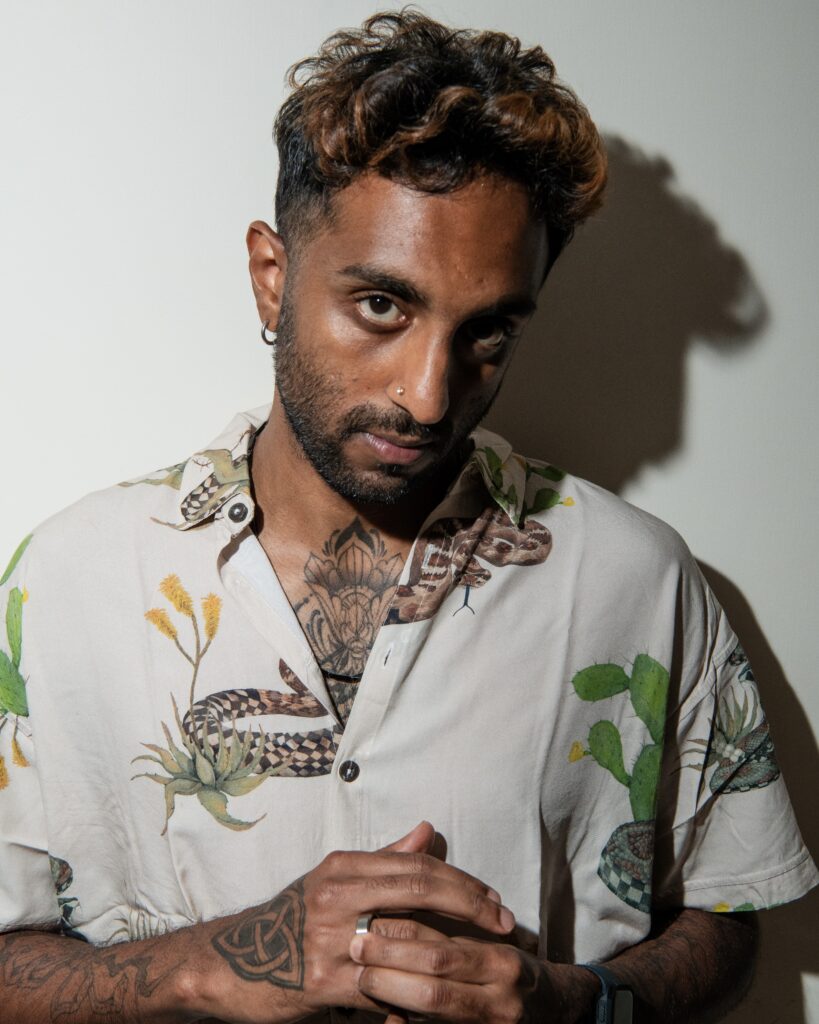
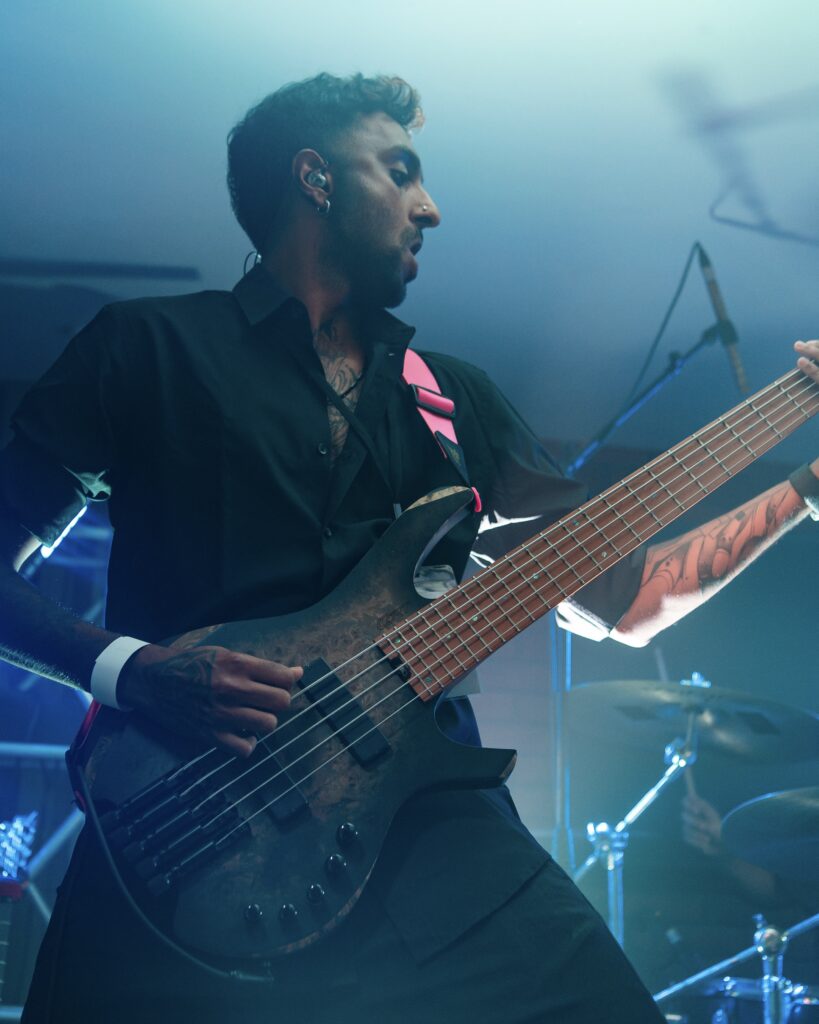
Q: Retrograde brought together musicians and collaborators from different parts of the world. What did working with such a diverse group of artists teach you about making music independently?
A: It taught me, first and foremost, to shoot your shot, to put your head down, write honest music, and have a clear vision for what you want that music to be.
It also showed me the level of professionalism these world-class musicians possess, the mastery of their craft, and the maturity in their playing and writing. It was deeply inspiring and definitely shone a light on how I want to carry myself as an artist.
Beyond that, I really enjoy giving these artists absolute freedom in what they want to bring to my music, intentionally leaving space in the arrangements for them to do their thing. It’s an incredible feeling every time they send their parts back because it adds a whole new dimension to the song that I couldn’t have foreseen, and it almost always elevates the track.


Q: Retrograde explores technology, isolation, chaos and humanity moving forward while somehow regressing. Two years later, has your understanding of the album or its central idea changed?
A: I think two years later, the core theme of the album is more relevant than ever. With the rapid development of AI, we’re more connected than ever through technology, yet deeply disconnected from each other.
It’s made me realize how important it is to unplug from the matrix, for lack of a better phrase, and sit down to literally touch grass, as the kids say haha.
Q: Your work exists at the intersection of music and visual design, from album artwork to branding and production. How naturally do these two creative worlds influence each other?
A: Oh, it helps for sure. I’ve always been an extremely visual person, and that helps me not only with the artwork, but also in terms of explaining how a certain sonic idea looks to me. A lot of times, the ideas behind the sound actually start off as an image or a feeling in my head, which I then try to translate onto an instrument. I’ll even give my engineers visual cues for how I want certain effects to make the listener feel.
When it comes to the visual assets, I have the absolute privilege of working with Venky on all my artwork, and he’s an absolute beast of an illustrator and animator. He has this innate ability to catch the vision, add his own flavor to it, and elevate it into something better than anything I could’ve come up with on my own.
Q: You started with tabla, moved to guitar and eventually found your voice as a bassist. How has that journey shaped the way you approach composition and arrangement today?
A: I think the way I approach music is very abstract. I really can’t tell where the ideas or words come from most of the time. Usually, I just wake up with an idea, and given my insanely short attention span, I NEED to finish the structure of the song as soon as possible.
I think being completely self-taught when it comes to guitar, bass, and Western music in general has had its benefits with my songwriting, especially when it comes to straying away from the general guidelines of music theory. Although I am actively trying to learn as much as I can now so I can start taking up more work as a session musician.
As for tabla? Learning that from when I was 5 all the way until I was 13 gave me a very groove- and rhythm-based approach to music. Especially as a bassist, where you have to tie the rhythm and melody sections together, it really helps in terms of thinking rhythmically and feeling the pulse of a song or an idea, rather than just counting or being bound by a few comfortable time signatures.

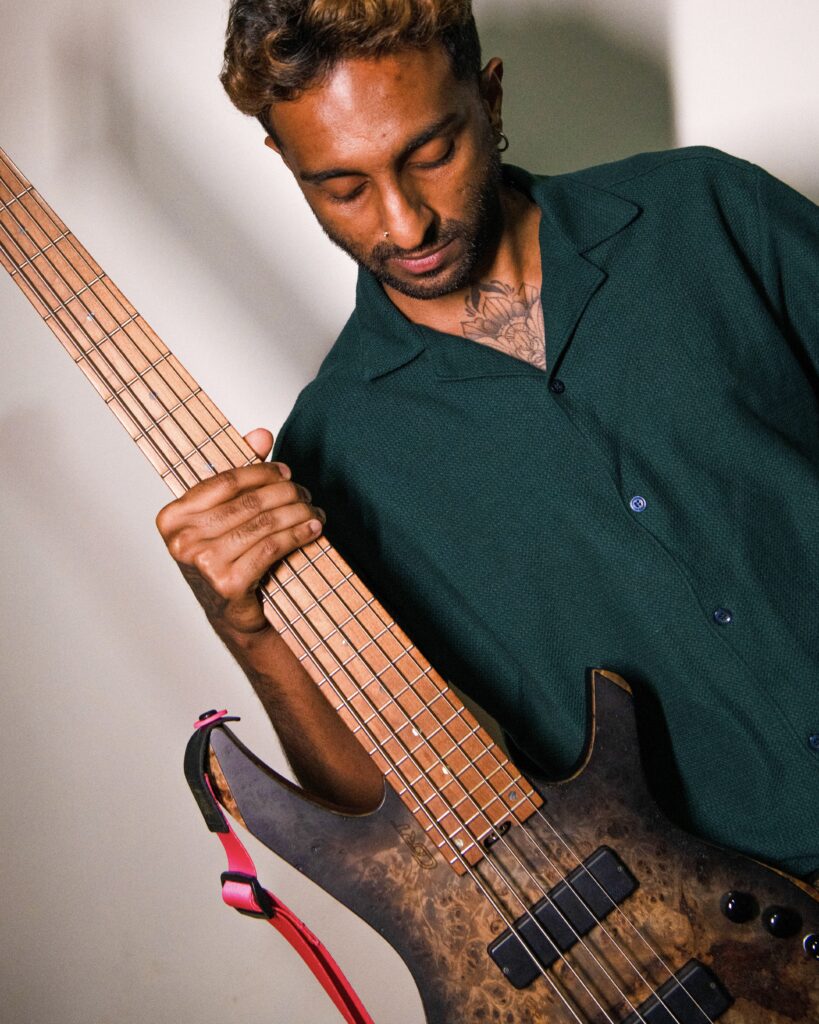
Q: Weightless marks your first major release after choosing music as your full-time path. What does this track represent for you that Retrograde couldn’t?
A: Weightless represents a sense of freedom to me, having the invaluable asset of time on my hands. I was in a similar space when I wrote and conceptualized Retrograde, but I dived into the deep end of corporate in order to fund it.
I think Weightless represents a side of me that tried the corporate world and came away knowing for sure that I was put on this earth to make music. It’s the conviction of knowing I’m on the right path, as opposed to the shaky confidence I had when I put out Retrograde, which was originally supposed to be my goodbye to music. Weightless marks the beginning of who I am as an artist in all my glory.
Q: With the corporate chapter behind you and new music, live performances and a solo show ahead, what are you most looking forward to exploring next as an artist?
A: I think what I’m looking forward to the most is finding myself in rooms with the best musicians in the country, getting to watch and observe how the very best in the business go about their work, and emulating that for myself. I want to take my live act to the biggest stages in the country, and abroad as well, hopefully.
But overall, the most incredible thing has been getting to slow down, soak in each day, and enjoy being able to live life on my own terms, taking the time to work on myself physically, mentally, and in my craft as well.
Follow Sai Sanjit on Instagram
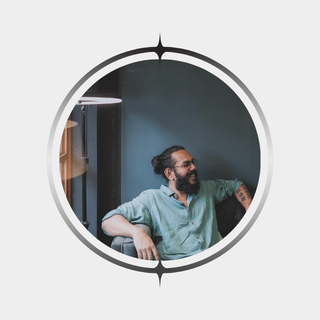
Lubdhak Biswas is a musician, entrepreneur and a tattoo artist based out of Kolkata (India).
He documents underground culture at the crossroads of tattooing and music.
His work focuses on craft, tools, ethics and the real working realities of creative industries.