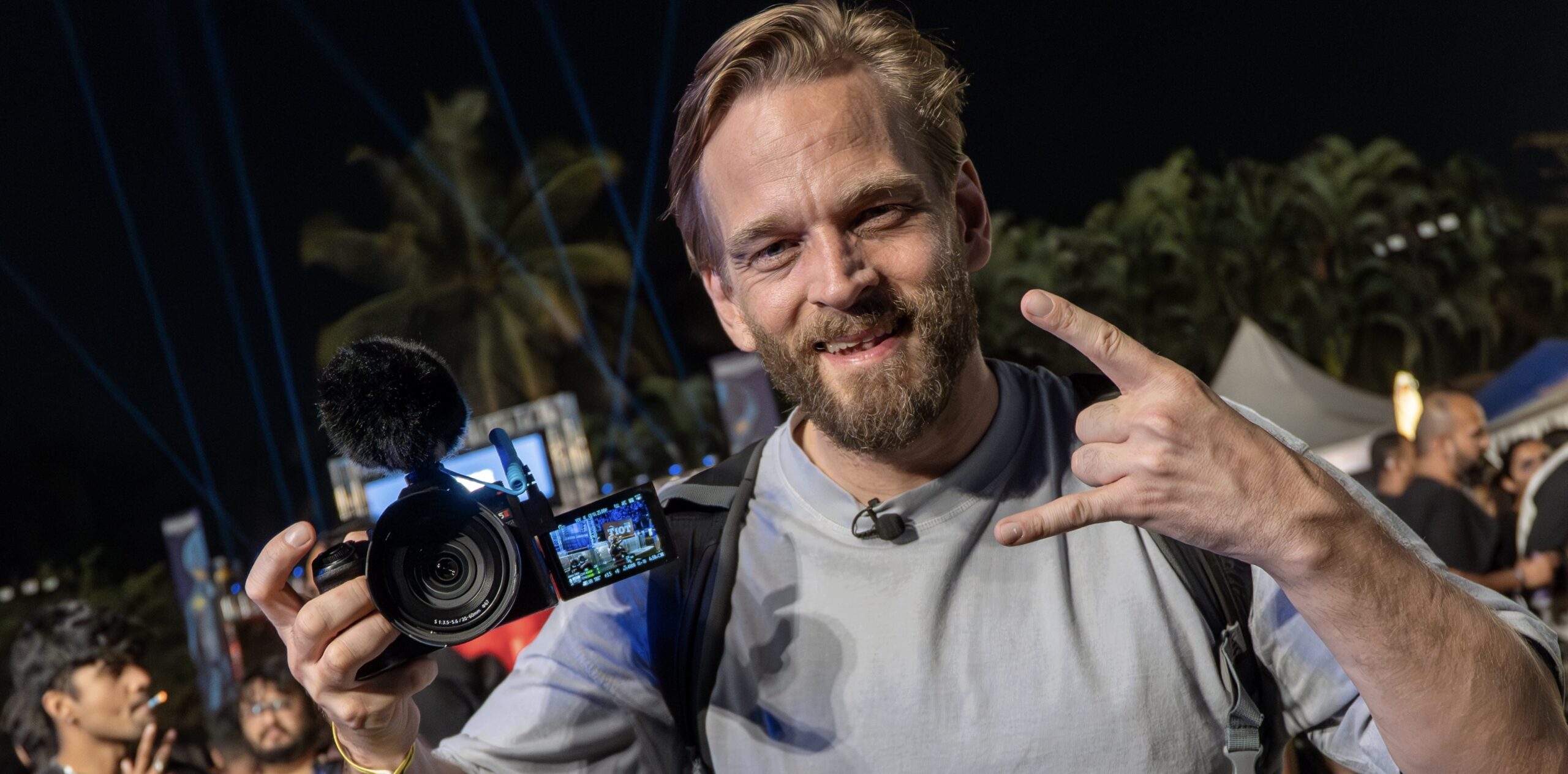
Karl Rock is a New Zealand-born travel filmmaker, author, and YouTuber who has spent years living in India, building one of the most distinctive outsider-insider perspectives on the country. Known for his YouTube channel and his book Being Indian, Karl has long moved beyond the role of cultural commentator. Through his deep ties to India’s underground rock and metal communities, he has become a genuine advocate for the artists, promoters, and community builders who keep the scene alive. We sat down with Karl to talk about authenticity, algorithms, and what it really takes for Indian heavy music to find its place in the world.
If a foreigner asked you to explain modern India through the history of Delhi’s rock and metal scene, which three people, places, or moments would you point to, and what larger story about India do they tell?
I can’t explain modern India through the history of Delhi’s rock and metal scene. I have another method.
India is incredibly complex, so rather than trying to explain it, I think it’s better to show it. When a foreign guest visits, I try to show them at least three sides of India.
First, we head to Cyber Hub in Gurugram. Their mind usually gets blown because it’s a glimpse of what India is becoming. I’ll try to book a comedy show and take them somewhere like SodaBottleOpenerWala so they can experience some excellent Parsi cuisine.
Next, they come back to my wife’s family home in Pitampura. There they get to experience middle-class life, see a normal Delhi neighbourhood, and witness Indian family values first-hand — along with some of the best “Chole Bhature” in the city.
Then we head into the chaos of Old Delhi: the Red Fort, Chandni Chowk, and Jama Masjid. If time permits, I’ll also take them to my “susuraal” — a Tier 3 city in Haryana — and to my wife’s tiny farming village where she was born.
This is exactly what my audience sees on my YouTube channel as well. By the end of it, most visitors have a much deeper appreciation for the scale, diversity, and complexity of India and Indian culture.
If they’re into metal, I’ll also point them towards three songs from some of my favourite Indian artists. Bloodywood’s “Gaddaar” is a great entry point for foreigners. Then I’d recommend Godless’ “Infected By The Black.” Finally, I’d send them something heavier and sludgier, like Midhaven’s “Mahakaal.” If they’re interested in Bollywood too, I’d put on Rockstar (2011), which combines a great story with an incredible soundtrack.
You’ve watched the Indian underground evolve from an era of physical gigs, magazines, and word-of-mouth communities into one shaped by algorithms and content creation. What has this shift fundamentally changed about what it means to be a musician today?
I think it’s a very strange state of affairs.
Imagine if I, as a YouTuber, had to make music in order to promote my videos. That’s essentially what musicians face today. They have to become reel creators to promote their music. There’s nothing wrong with that — it’s now part of the job — but I’m sure most musicians would rather spend that time making music.
There’s also the risk of becoming more famous for your content than for your actual art. Big social media numbers don’t always translate into streams, ticket sales, or a sustainable career. So musicians have to be smart and use social media in a way that drives people towards their music, gets them to shows, or helps build a genuine connection with fans.
It gets harder every year, too.
Not long ago, social media platforms would show your content to most of the people who chose to follow you. Now the algorithm decides who sees your posts. So creators and musicians alike find themselves trying to appease an algorithm just to reach the audience that already subscribed or followed them in the first place.
Many Indian artists wrestle with a difficult question: should they sound more Indian, or should they sound more universal? Looking back at the artists and movements you’ve followed, who do you think solved that problem most elegantly, and how?
Ideally, artists shouldn’t be worrying about these kinds of questions at all. You should be yourself and create the kind of music that’s true to you.
Take Rammstein as an example. Which version of “Du Hast” was embraced around the world — the English version or the German version? Did you even know they recorded an English version? If you’re trying too hard to be something you’re not, audiences can usually tell. If you’re being genuine, people are far more likely to connect with and accept what you’re doing.
Godless sing in English and play traditional death metal. Bloodywood mix Hindi, Punjabi, and English, while incorporating instruments like the Tumbi and Dhol into metal. Midhaven play sludgy, heavy music with strong Indian mythological themes. They’re not making those choices because they’re trying to sound more Indian or more universal. They’re doing it because it genuinely represents who they are. They’re living embodiments of their art.
The same applies to popular music. Diljit Dosanjh is loved because his passion for Punjab is infectious. He isn’t trying to be anyone else. The same goes for Amit Trivedi. His enthusiasm for exploring India’s diverse regional musical styles shines through in his Bollywood soundtracks.
If you don’t yet know who you are as an artist, keep experimenting until you find it. Eventually, you’ll stumble across something that feels authentically you.
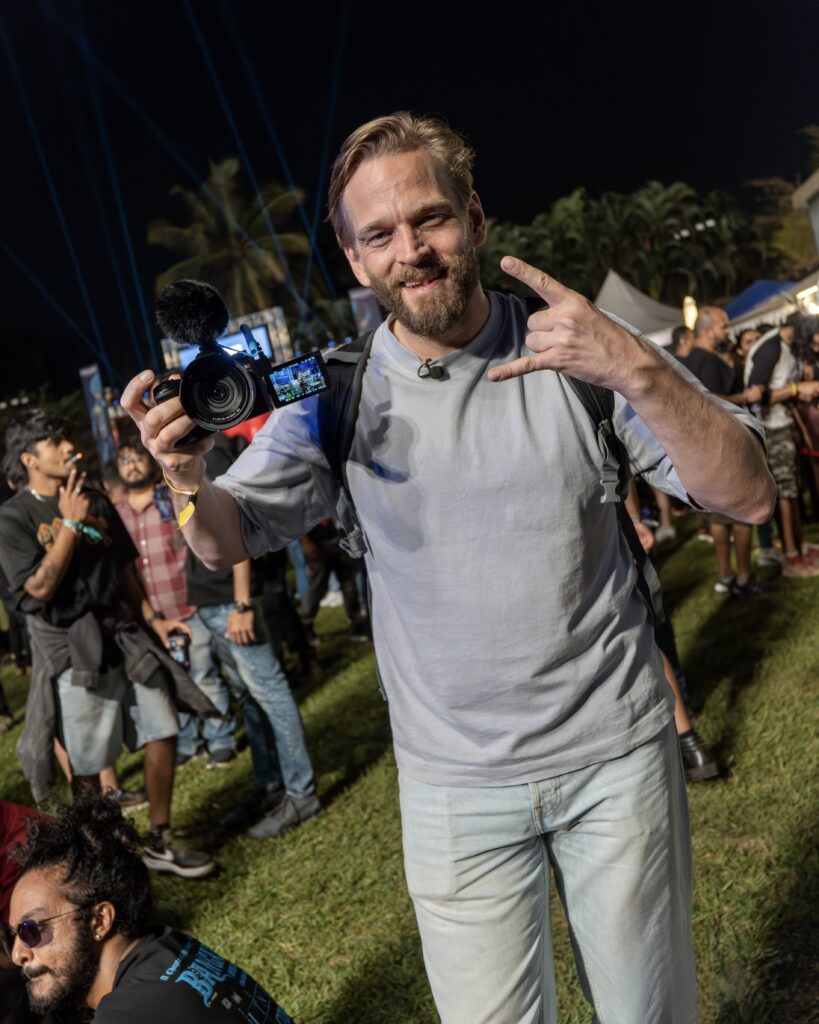
Image Credits: Goblin Somnia
You’ve experienced underground music cultures across different countries. What traits separate scenes that become cultural movements from those that remain collections of talented but disconnected bands?
I’ve only really explored the local New Zealand and Indian music scenes in-depth. So I don’t have much of an opinion on this question.
When people talk about the growth of a music scene, they usually focus on the bands. In your experience, who are the less visible people — the venue owners, journalists, promoters, photographers, community builders — without whom the story of Indian rock and metal would look very different?
Musicians, photographers, and YouTubers get most of the attention. But the real unsung heroes are the concert promoters.
People like Salmaan U. Syed, who runs Bangalore Open Air, and Karan Mehta, who runs Outrage Festival in Delhi. Promoters organise the heart of the scene: the concerts themselves. Without live shows, what do we really have? A music scene can’t exist without places for artists and fans to come together.
They’re a special type of person because they’re willing to take enormous financial and logistical risks to make those events happen. When a show goes well, they rarely get much credit. When something goes wrong, they’re crucified. Most fans never see the years of work, stress, and service that go into building and sustaining a music community. So I have a lot of respect for them.
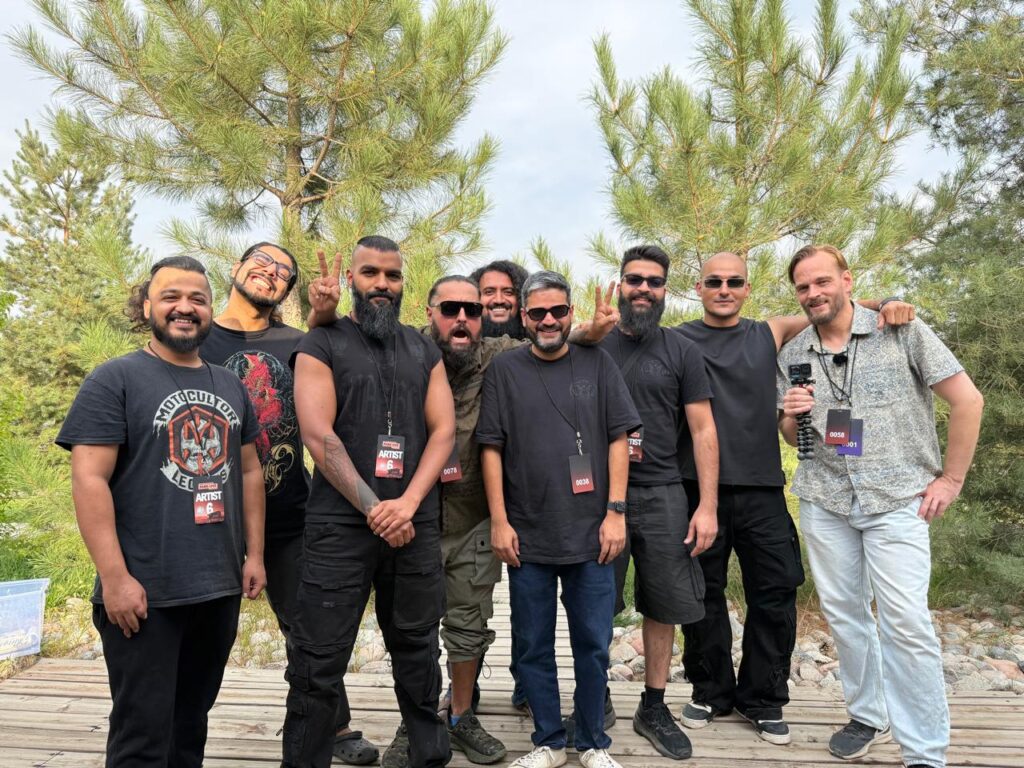
As someone who has spent years interpreting India to the outside world, do you think Indian rock and metal have developed a distinct cultural identity of their own, or are we still searching for a voice that is unmistakably ours?
Indian artists already have a voice that’s unmistakably their own. I don’t think they’re still searching for it. The bigger question is when the rest of the world will fully recognise it.
India is waiting for its breakout moment in rock and metal, much like Rammstein helped bring German metal to a global audience, or how K-pop exploded internationally in recent years.
You can already see that momentum building with Bloodywood. I’ve seen them perform in the U.S., Germany, and Kazakhstan, and they were playing to mostly non-Indian audiences. Very few people of Indian origin were in attendance. It’s clear their appeal goes far beyond the diaspora.
More importantly, they’ve opened a gateway for international listeners to discover other Indian artists. In that sense, they’re not just a successful band — they’re ambassadors for India and Indian culture.
The talent, identity, and originality are already there. I think global recognition will follow.
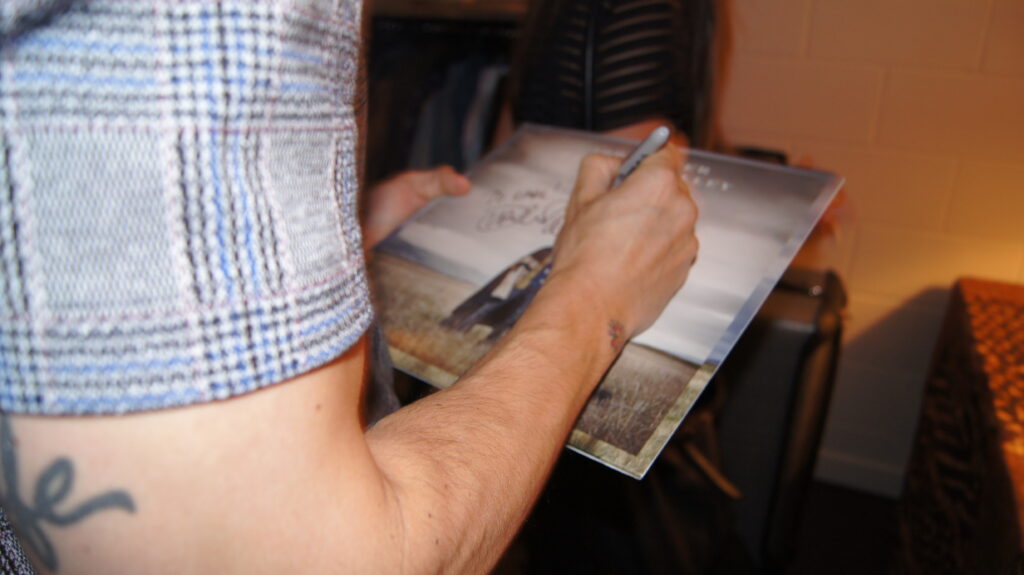
Having seen musicians navigate creative ambition, financial reality, and social expectations in India, what pressures do you think today’s independent artists face that previous generations did not?
You’d have to ask a musician this question.
If you had to make a documentary about one overlooked chapter, person, or phenomenon from India’s independent music culture, what story would you choose — and why does it deserve to be remembered?
The documentary I would’ve wanted to make has already been made. It’s called “Raj Against the Machine,” and it tells the story of Bloodywood.
What I love about it is that it’s not really a music documentary. It’s a story about perseverance, self-belief, and building something from nothing. It follows a group of guys from India who refused to accept the limits other people placed on them and ended up creating a global phenomenon.
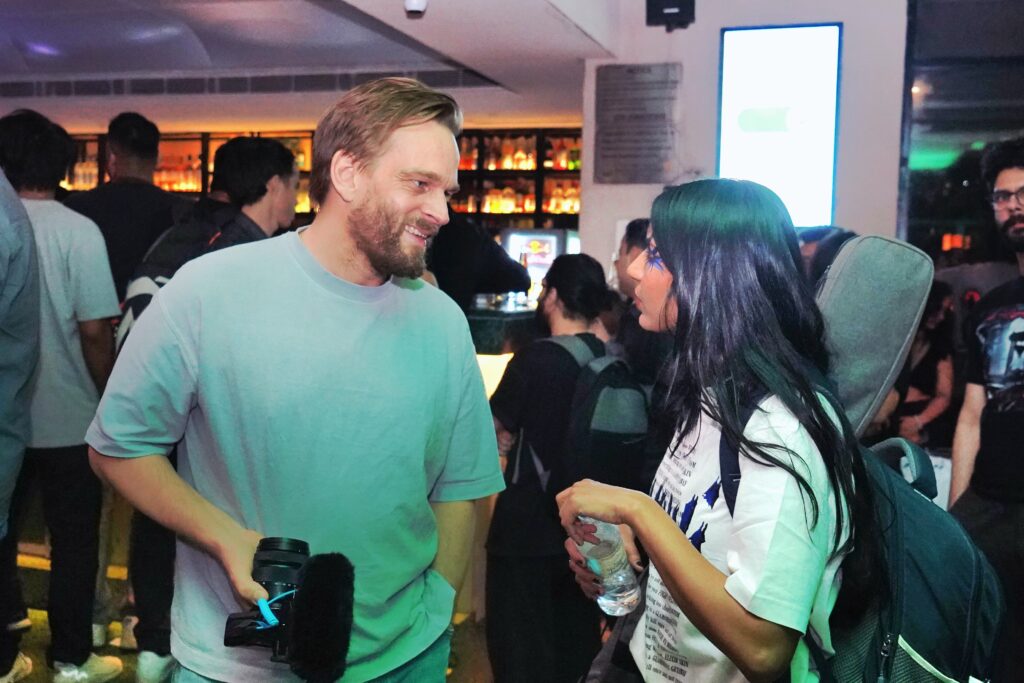
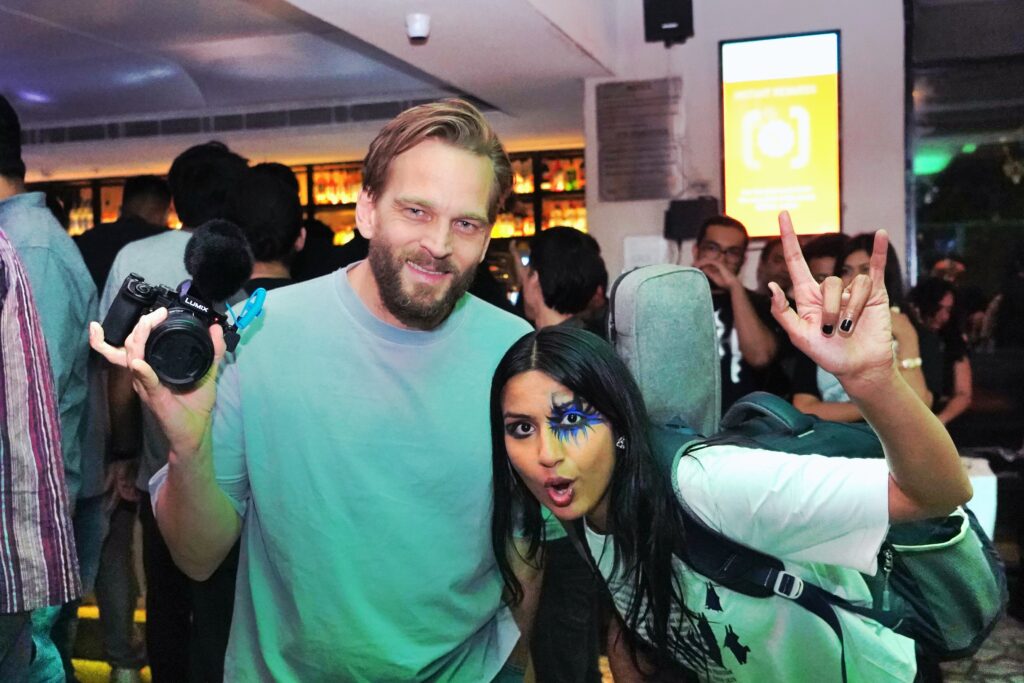
[Karl with singer-songwriter Jahnvi] Image Credits: Amal Prakash
That’s why it deserves to be remembered. Even if you’ve never listened to metal in your life, the story is inspiring. It shows what’s possible when talented people stay true to themselves, work relentlessly, and keep going despite the odds.
What comes through most clearly in Karl Rock’s perspective is something the music scene itself keeps proving: authenticity is not a strategy, it’s a starting point. Whether it’s a band forging its sound in a Delhi rehearsal room or a promoter betting their savings on a show nobody else believed in, the Indian underground has always been built by people who refused to perform a version of themselves for approval. That, more than any algorithm or genre label, is what makes it worth paying attention to.
Image Credits: Jishnu Chakraborty

Lubdhak Biswas is a musician, entrepreneur and a tattoo artist based out of Kolkata (India).
He documents underground culture at the crossroads of tattooing and music.
His work focuses on craft, tools, ethics and the real working realities of creative industries.