Nobody wakes up one morning and loses themselves.
It happens quietly.
A notification here.
A validation there.
A version of yourself built for everyone else.
Another opinion that slowly becomes your own.
The erosion is almost invisible.
Most of us sense it eventually. That creeping feeling that the person looking back in the mirror has been assembled, piece by piece, from other people’s expectations. That the things you believe, the image you project, the version of yourself you’ve been maintaining, were never entirely yours to begin with. We live inside systems designed to keep us reaching outward, and somewhere in that constant reaching, something essential gets left behind.
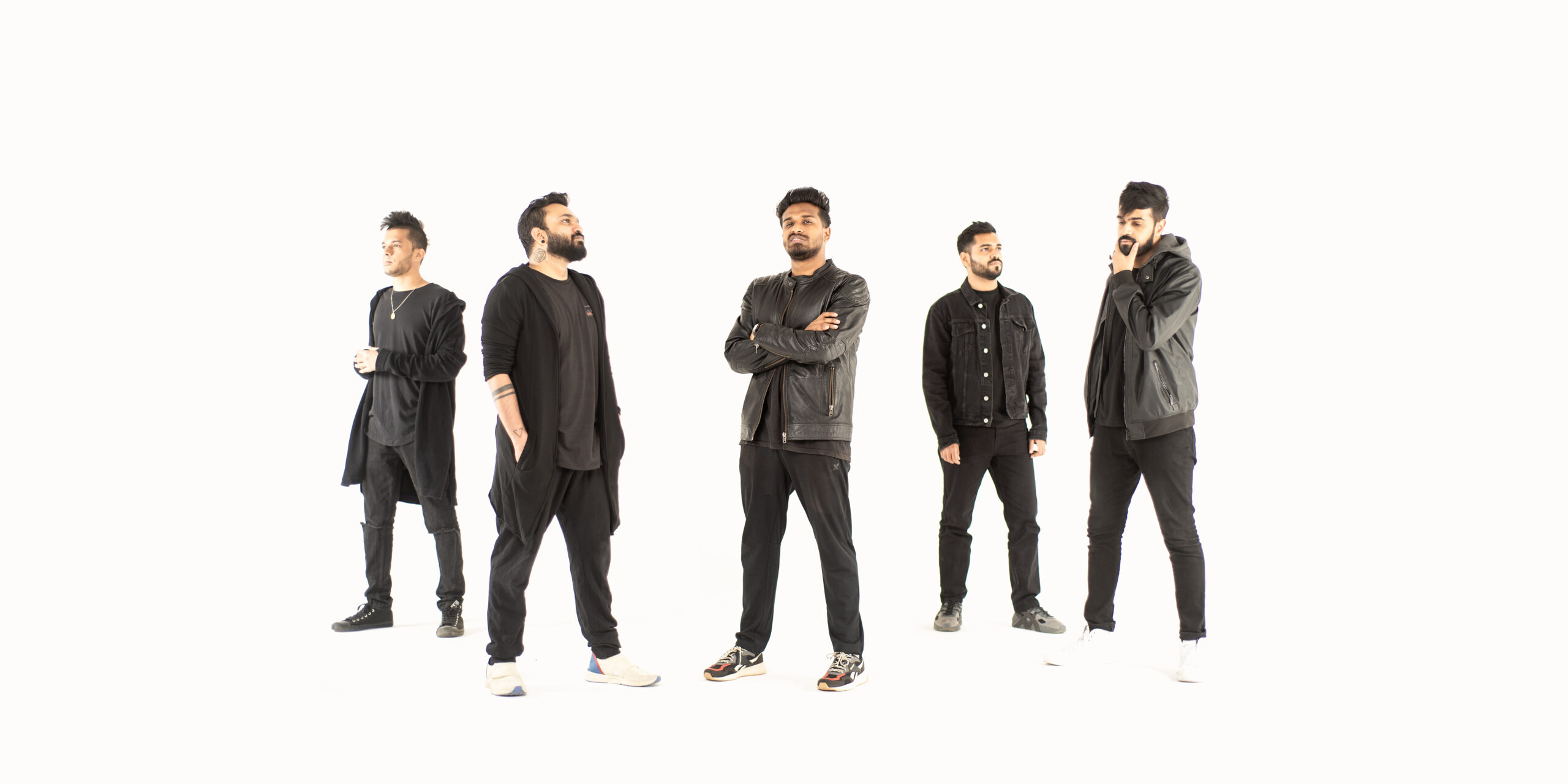
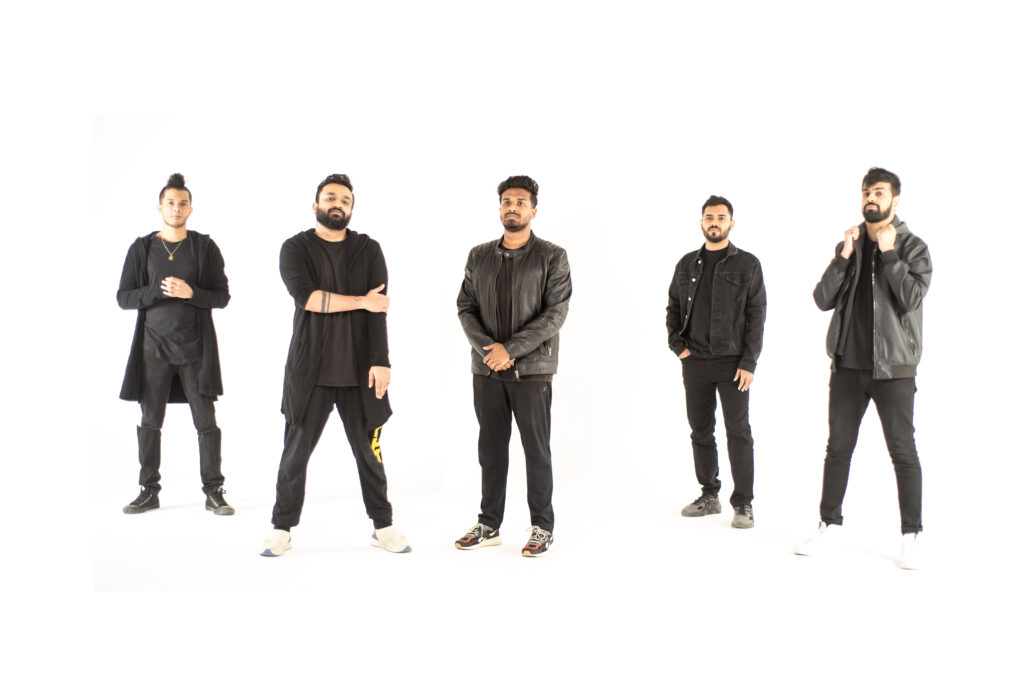
It’s into this tension that Space Is All We Have arrive.
Before The Album, There Was A Question
SIAWH are not interested in easy answers. Their new album, Kill Konscience, doesn’t arrive with the weight of a manifesto. It arrives with the weight of a question that most people are too distracted to sit with.
“It’s not about killing your conscience,” they explain, “it’s about everything out there quietly trying to kill it for you.”
That reframing matters. The record is not about destruction. It’s about erosion. It’s about the slow, almost imperceptible process by which modern life chips away at the self, not through dramatic rupture, but through accumulation. A thousand small surrenders that, taken together, amount to something much larger.
This is not an album about a crisis. It’s an album about the silence before you realize one has arrived.
The Noise We Stop Hearing
There’s a particular kind of numbness that comes from constant stimulation. The noise doesn’t disappear. You simply stop registering it.
SIAWH are acutely aware of this. When they describe the forces working against modern consciousness, they are precise: “Social media, technology, the constant noise, the need to be validated.”
What makes that list unsettling isn’t that any single item on it is new. It’s that together, they form an environment so total, so ambient, that resistance feels almost absurd. You don’t fight noise that has become the baseline. You absorb it.
And in absorbing it, you change.
“You hand pieces of yourself away every day without even noticing,” the band says. That phrase carries real weight. Not a dramatic transaction. Not a conscious choice. Just a gradual dispersal of self, so slow that by the time you look down, there’s less of you than you remember.
Looking Inward Instead Of Outward
Something shifted betweenSIAWH’s first record and this one. The direction of gaze changed.
“Our first record looked outward,” they reflect. “This one looks inward.”
That pivot is harder than it sounds. Outward is easier. Outward gives you targets, systems to critique, structures to push against. Inward is where the real difficulty lives. It requires sitting with the parts of yourself you’ve been too busy, or too afraid, to examine.
The band drew on Carl Jung and Dostoevsky as reference points during the making of this record. Not as academic exercises, but as companions in a conversation about what it actually means to confront yourself honestly. Both figures understood that the hardest reckoning is always internal. That the self is not a refuge but a territory that also needs to be explored, mapped, and at times, challenged.
Kill Konscience exists somewhere in that territory.
Chaos As A Creative Method
SIAWH did not arrive at their sound through a single shared blueprint. The diversity in the room was always part of the process.
“We all come from completely different music,” they say. And rather than treating that difference as an obstacle, the band leaned into it. “We all come from a place of chaos.” The result is a creative method that resists neat categorization, not because the band is trying to be difficult, but because the music genuinely reflects the multiplicity of its makers.
“We never landed on one way of doing it.”
That admission is quietly radical. So much of modern creative work, especially within industry frameworks, moves toward consistency, toward a definable product that can be pitched and packaged. SIAWH chose something messier, and more honest. Identity, on this record and in their process, is something that emerges from diversity rather than being imposed from above.

One Album, Not A Collection Of Singles
The way SIAWH talk about Kill Konscience makes clear that they were never building toward a playlist.
“They were always part of one bigger body of work,” the band explains of the individual tracks. That might sound like a minor distinction, but it isn’t. An album that functions as a conversation asks something different of its listener. It asks for time. It asks for sustained attention. In a moment when attention has become one of the most contested resources in human experience, that is a meaningful ask.
Some records are made to be consumed in fragments. This one was built to be held whole.
The Lies We Tell Ourselves
There is a particular kind of exhaustion that comes from maintaining a version of yourself you no longer believe in.
SIAWH address this directly. They describe “the version of yourself you build for everyone else until everybody knows it’s a lie.” What strikes about that line is the final clause. Not just that it becomes a lie, but that it becomes a known lie. A performance so sustained that it loses even the dignity of a convincing facade.
Validation, clout, the performance of identity for external audiences. These are not just personal struggles. They are cultural conditions. Social media didn’t create the human need for acceptance, but it did build an infrastructure that monetizes and amplifies it in ways that can warp the self beyond recognition. You optimize the version of yourself that gets the response you want, and over time, the optimized version starts to feel more real than the original.
This is the quiet crisis the album keeps returning to.

Art Under Pressure
Creative work does not exist outside of power structures. SIAWH know this.
When they speak about exposure, industry relationships, and the moment an artist is asked to make compromises they didn’t anticipate, the language they reach for is stark: “Being asked to sign your soul on a dotted line.”
That image is old, almost mythological. But its persistence is telling. The conditions under which art is made, the pressures that come with visibility, the negotiations between creative integrity and commercial reality. These don’t disappear because we have new platforms and new distribution models. In some ways, they have multiplied. The band’s awareness of this is not cynicism. It’s clarity. And clarity, in any form, is a kind of resistance.
Collaboration Without Ego
Good collaboration rarely announces itself. It tends to be quieter than that.
SIAWH speak about working with collaborators including Munz and Shashank in terms that say something true about what creative partnership actually requires. “It was never about slapping a name on a track,” they reflect. The work came from a place of shared ideas, of people who could recognize each other’s language and trust what the other was building.
That trust is not common. Most creative environments are shaped by hierarchy, by competition, by the need to claim ownership over ideas. What SIAWH describe is something different. A space where the music mattered more than the credit. Where the shared idea was the point.
Building A Sound From Everywhere
The band’s musical vocabulary is genuinely wide. Linkin Park. Hip-hop. Metal. Motherjane. Avial. These are not adjacent reference points, and that’s precisely what makes the combination interesting.
“We all grew up on completely different music,” the band says, and you can feel that in the record. Identity, as Space Is All We Have understand it, is not inherited from a single source. It’s assembled. Gathered from disparate places, filtered through individual experience, and shaped over time into something that, eventually, becomes recognizably yours.
That process of assembly, of pulling from many places and slowly finding what holds together, mirrors the larger themes of the album. We are all, in some sense, assembled. The question is whether we’re doing the assembling ourselves, or whether we’re letting the algorithm do it for us.
Homebound
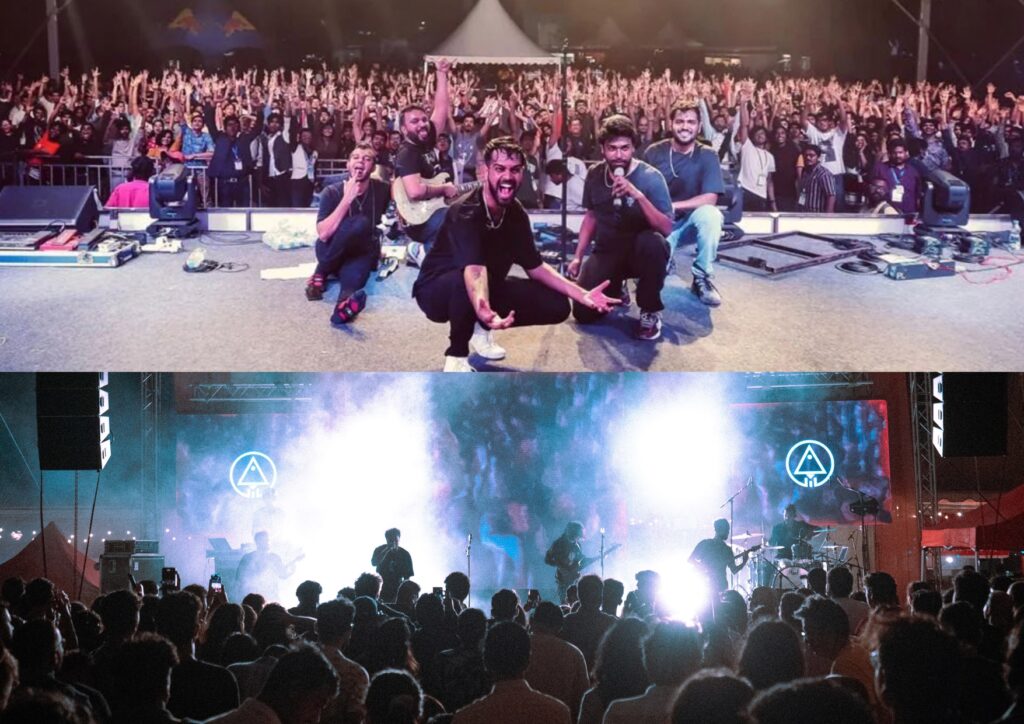
There is something the band are calling Homebound, and the way they describe it resists easy definition.
“Homebound is exactly that,” they say. “A place where you belong.”
Belonging is one of those words that gets used so often it starts to feel hollow. But SIAWH are pointing toward something specific. Not a geography. Not a city or a venue. A feeling. The feeling of being somewhere, or with someone, or inside a piece of music, where you don’t have to perform. Where you can simply be present.
That is rarer than it should be.
What The Band Wants You To Leave With
When SIAWH are asked what they want from their audience, the answer is disarmingly simple.
“We just want people to show up and be there in the moment with us.”
Presence. Not a review, not a share, not a metric. Just attention. Just the willingness to be somewhere fully, without the part of the brain already composing the caption.
That request, in the current moment, is almost countercultural. Full presence has become one of the rarest experiences available. We attend things while simultaneously documenting, evaluating, and broadcasting our attendance. The experience and the record of the experience happen simultaneously, and somewhere in that split, the rawness of actually being there gets diluted.
SIAWH are asking you to resist that.
What Gets Lost Before We Notice
Maybe SIAWH aren’t asking listeners to escape the modern world.
Maybe they’re asking something much harder.
To notice what’s quietly disappearing before it disappears completely.
Follow Space is All We Have on Instagram

Souvik Dey writes at the intersection of music, memory, and modern life.
A consultant by training and a storyteller by instinct, he explores how culture shapes identity and longing.
His work blends introspection with sharp observation, often lingering in silences others overlook.
When not writing, he is usually reading, listening, traveling or gaming.