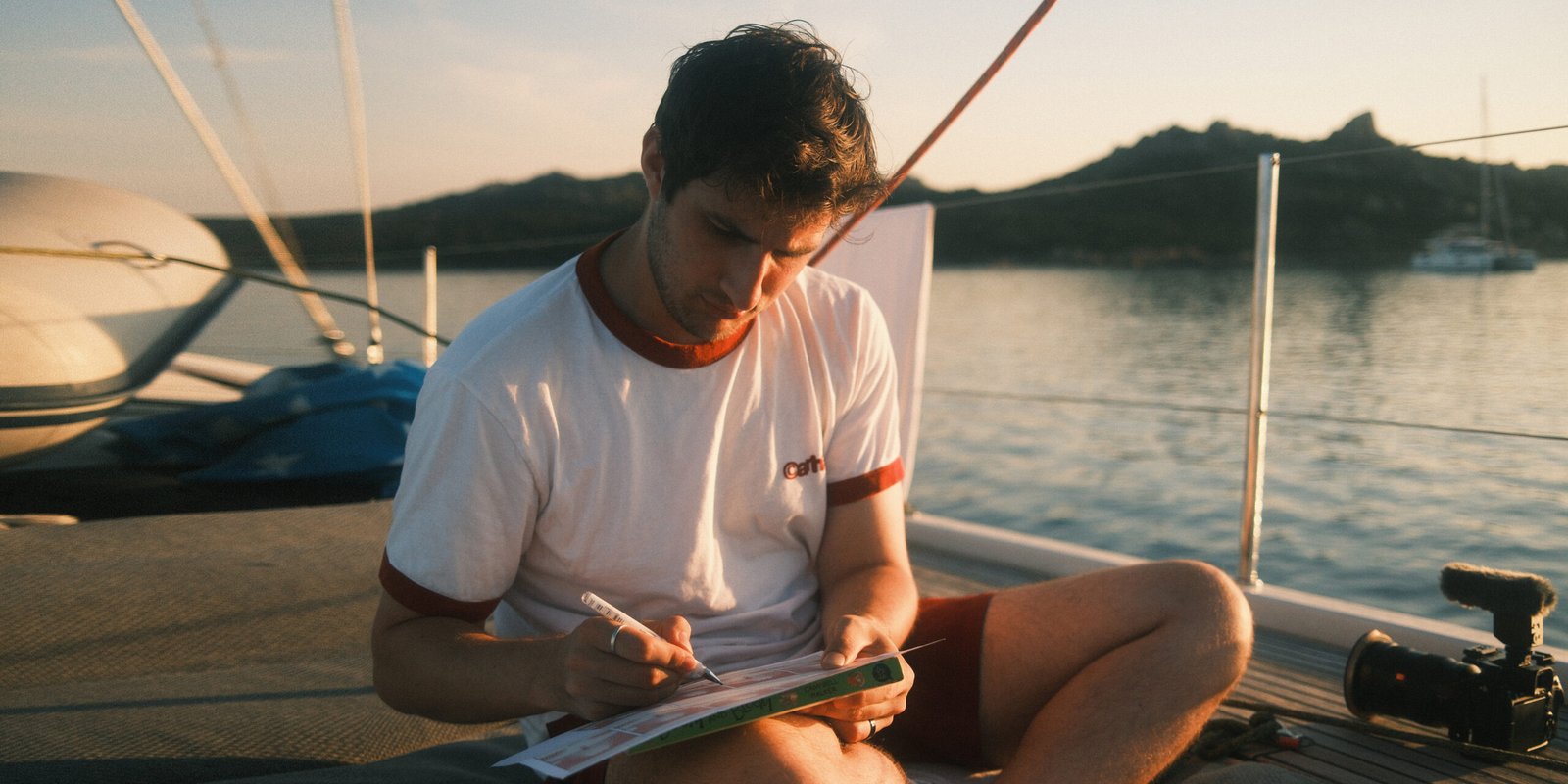
The most subversive creative act of the moment might not involve a manifesto, a movement, or a viral campaign. It might simply be taking your time.
Simon is a 28-year-old director, mixed-media animator, musician, and sound designer whose work arrives at an unusual angle to the cultural moment. His paper animations, sound compositions, and handcrafted film edits exist at a deliberate remove from the scroll, the algorithm, and the churn of contemporary content production. He makes things slowly, by hand, and with visible effort. Increasingly, that feels like a provocation.
“I’d want them to understand that what they are about to see is the opposite of the current media bubble. Today, the media landscape is often obsessed with speed and cutting corners to get fast results. My work is the exact opposite. It’s slowing down, getting my hands dirty, and taking my time. It’s basically an invitation to slow down and take some time to hopefully enjoy handcrafted art.”
That invitation is genuine. Simon’s behind-the-scenes videos often run longer than the finished animations themselves, a curatorial decision that says something about where he places value. Process, for him, is not a prelude to the work. It is the work.
Crafting a Rebellion Against Speed
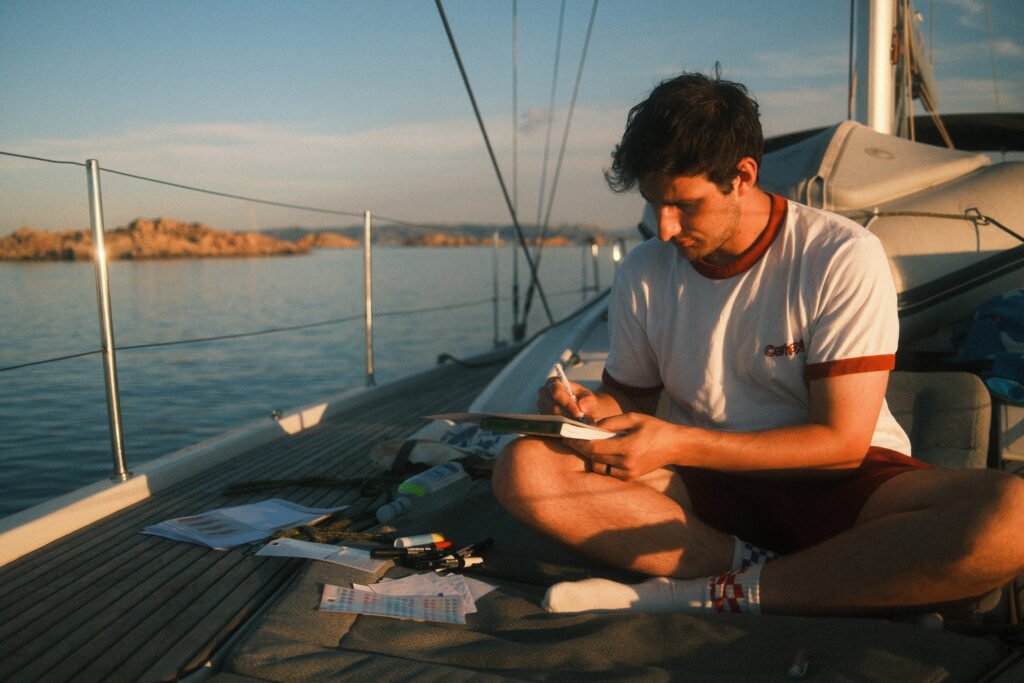
Simon arrived at mixed-media paper animation not through a grand plan but through circumstance. During a period of transition into freelancing, with too much time and too little work, he picked up the practice as a hobby. What began out of necessity gradually became something closer to a philosophy.
“I tend to make the behind-the-scenes longer than the actual result. Some might think it’s kind of boring, and I think that’s a valid claim. After all social media is build to keep attention through fast cuts, flashy edits, etc. I just don’t really see myself doing that.”
The refusal is clear-eyed, not naive. Simon understands the grammar of social media; he simply chooses not to speak it. Where platforms reward brevity, immediacy, and polish, his practice leans into patience, visibility, and the handmade. The question is not whether audiences will follow but whether they will allow themselves to.
The Medium Is Part of the Message
Part of what makes Simon’s work distinctive is his refusal to treat medium as incidental. For many animators, the tools are a means to an end. For Simon, they are inseparable from what is being communicated.
“I never really stopped thinking about mediums. I think the media itself sends the message.”
It is a deceptively compact statement, and one that carries real weight when you look at his output. Paper tears differently to pixels. Paint bleeds in ways code cannot predict. Physical materials introduce an unpredictability that digital workflows are specifically designed to eliminate. In choosing analogue methods, Simon does not simply accept these qualities. He works with them, allowing the material to participate in the storytelling rather than merely carry it.
The Beauty of Imperfection
The commitment to analogue craft leads naturally to a commitment to imperfection. Simon rarely redoes frames. Most of his animations are completed on the first attempt, with all the irregularities that entails.
“For me, committing to analog paper animation is basically a rebbellion against the future we are heading towards. I don’t want it to look perfect. In fact, most of my animations are done on the first try and I rarely ever go back and redo frames.”
This is not carelessness. It is a considered stance against a creative culture increasingly oriented around refinement, iteration, and the elimination of the human trace. The imperfections in Simon’s work are evidence of a hand, of a body, of time spent. They are, in his view, the point.
“Sharing the behind-the-scenes process on social media is just as important to me as the final piece. I want to show the actual labor and effort, hopefully inspiring other creators to value the joyful, tedious process of making things rather than just chasing a quick result and calling it a day.”
The word “joyful” matters here. Simon is not advocating for difficulty for its own sake. He is advocating for presence, for the particular satisfaction that comes from making something with your hands, frame by frame, over hours or days.
Homage Rather Than Collaboration
Much of Simon’s output consists of what he describes as fan edits: personal reimaginings of liveshows, music videos, and films he genuinely admires, made entirely for the love of it. These are tributes rather than commercial transactions.
“I mean, most the projects I do are not really collaborations, but rather fan edits. I take liveshows, musicvideos and movies I truly love and admire and work on them for fun. It is my way of giving a little homage to all these amazing artist.”
Paid commissions, when they arrive, introduce a different kind of pressure. Suddenly the process becomes visible to someone else, and the internal balance between creative freedom and professional anxiety shifts.
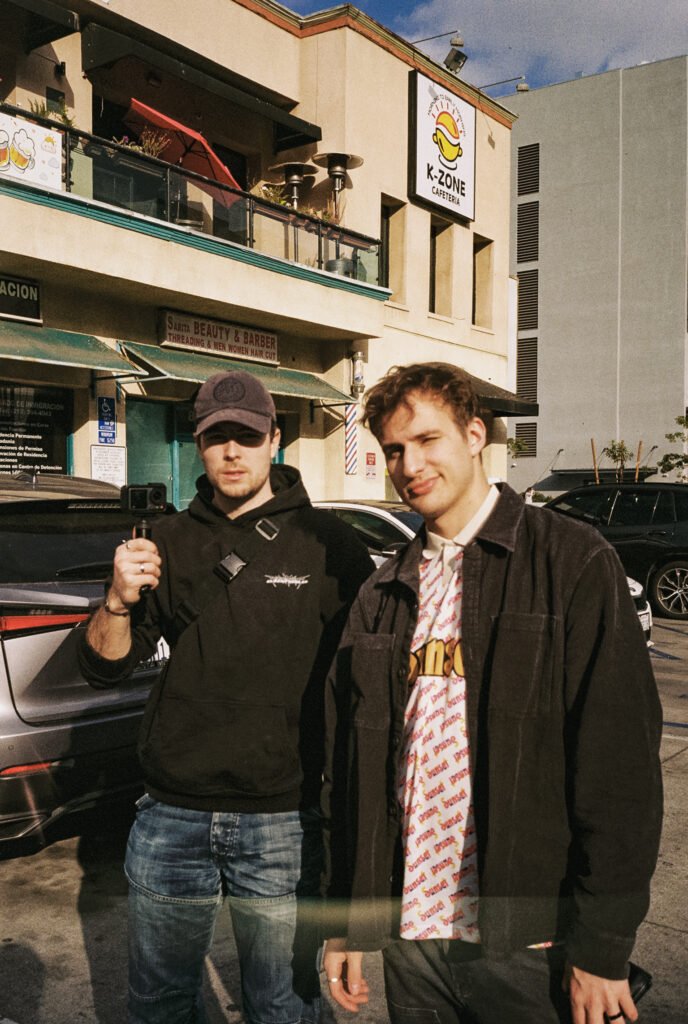
“Although lately I had some pretty cool opportunities and it turns out that if a project is paid, it makes it pretty hard for me to shut off that perfectionism, even though I know they chose me because they like my imperfect style and don’t expect something polished. So the biggest challenge for me right now is trusting myself and trusting my proccess.”
There is an honesty here that many creators avoid. The tension between instinct and expectation is rarely acknowledged so plainly.
Finding Magic in Ordinary Materials
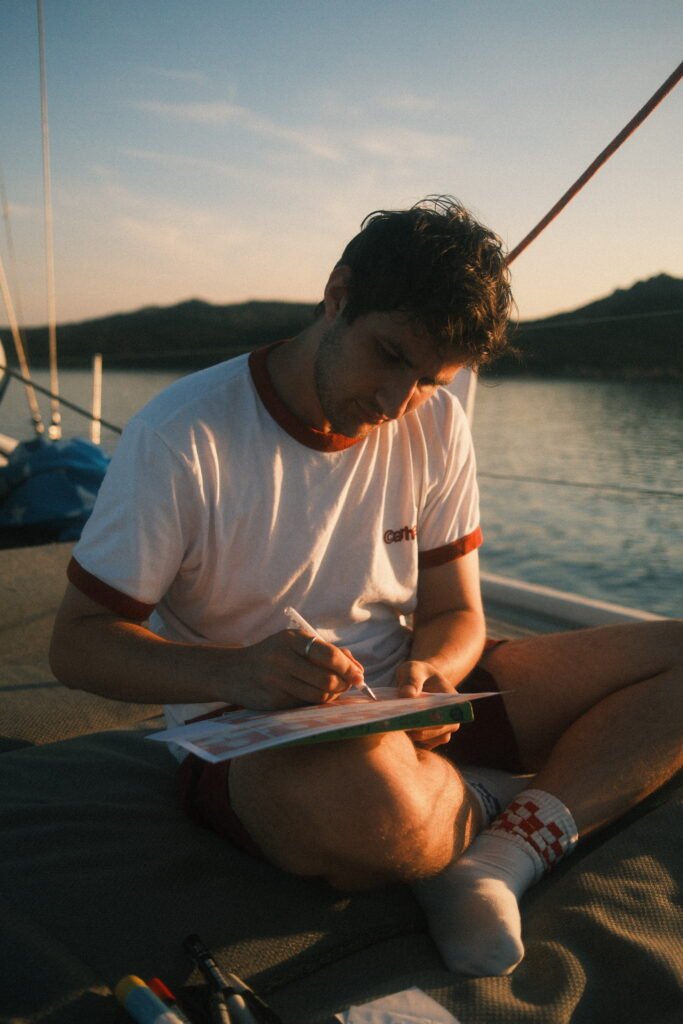
A plotter knife. A sheet of paper. Some paint. A few stickers. Simon’s material list is deliberately unspectacular, and that is precisely the point.
“For me, there is something incredibly grounding about taking everyday materials. It forces you to interact with the physical world. In a culture where digital tools can generate entire hyper-realistic worlds with a single text prompt, finding magic in a plotter knife, paper, paint, and a few stickers feels almost like a radical act. It’s about proving that you don’t need high-tech things to create something. you just need patience and a little bit of insanity.”
The phrase “a little bit of insanity” lands with characteristic lightness, but the argument beneath it is serious. When any aesthetic can be generated on demand, the act of making something by hand becomes a statement about what creativity actually is. Simon’s practice insists that imagination, patience, and physical engagement still count for something. Possibly more than they ever have.
Beyond the Algorithm
Simon is wary of the concept of a fixed creative identity. Ask him about his visual language and he reframes the question entirely.
“No, and I would not describe my style as ‘my style’. My visual language consist of different obsessions. Right now I am in love with more ‘minimal’/duo-tri-tone animations. But this can change anyday. In fact, I don’t want to do something because I feel like I have to.”
The platforms he publishes on operate according to a different logic. Content that falls outside an established niche tends to underperform, and Simon is direct about what that means for work that does not fit neatly into the mixed-media category.
“I notice how everything that I create that is not ‘my niche’ will basically be ‘unsuccessful’ on social media. Like the shortfilms I do, talking heads, or any other idea that is not mixed media. And while this can feel very demotivating, I won’t let that stop me from creating what I want.”
The tension between making for yourself and making for an audience is familiar to most creators. Few resolve it as directly.
A Lifetime of Experimentation
Simon does not describe his creative development in terms of breakthroughs or defining moments. There was no single project that crystallised his voice, no turning point that made everything click into place.
“It is more a matter of trying out new things and adding more tools and techniques to my inventory.”
The inventory metaphor is telling. Rather than building towards a fixed destination, Simon accumulates. Every technique, every material, every new challenge adds to a growing range of possibilities. The work changes because he changes, and that, for him, is entirely sufficient.
The Focus That Patience Revealed
The most personal thread in Simon’s story concerns the gap between who he was told he was and who he discovered himself to be.
“It taught me that I possess patience I didn’t know I had. I was diagnosed with ADHD as a child (by now probably subclinical). So as a child it felt like I had a huge disadvantage compared. Trouble sitting still, trouble learning stuff, etc..”
Music came first. Then mixed-media animation. Then scriptwriting. Each practice revealed the same thing: that focus, for Simon, was never absent. It was simply waiting for the right conditions.
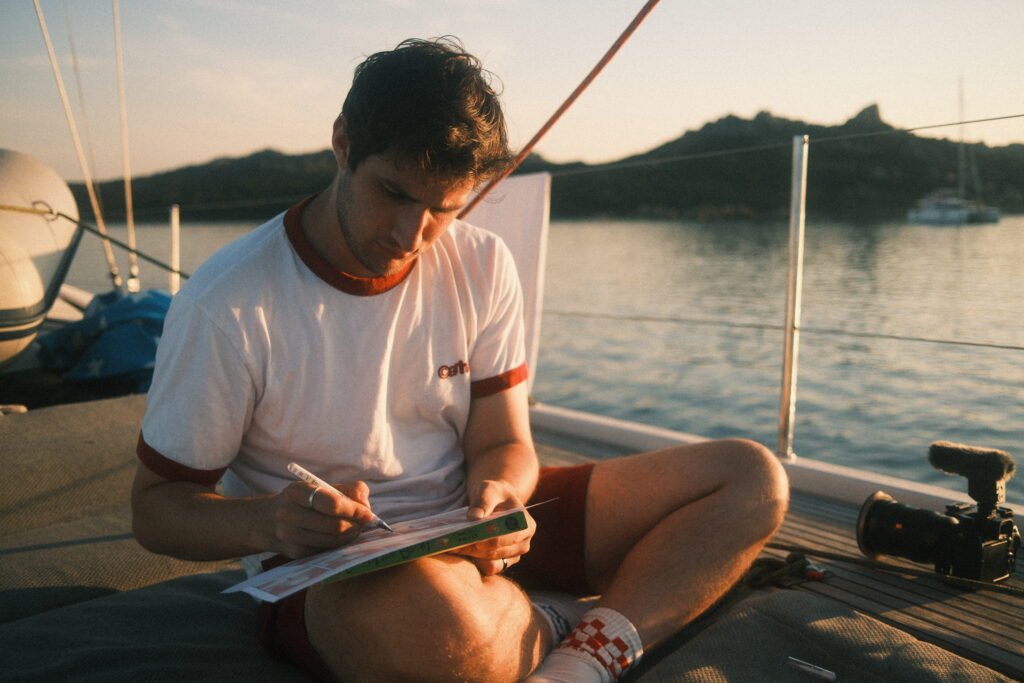
“Then I started doing music and I noticed that maybe as long as I do something that I truly love, my brain queits down for a little, and I can actually focus. The same happened when I started doing mixed media or writing scripts. I can sit down for twelve hours straight, doing the exact same repetitive task over and over, and feel nothing but joy.”
Twelve hours on a single repetitive task, sustained by genuine interest rather than obligation. For someone told as a child that sustained attention was beyond them, that detail is remarkable. And it points towards something important about what handcrafted creative work actually offers: not just a product, but a state of being.
“The process of creating my art is mine. Nobody can feel the way while whatching the results, that I felt while working on it.”
That feeling is the thing. Not the finished frame, not the view count, not the platform’s verdict. The private, irreducible experience of making something slowly, carefully, and entirely by hand. In a creative culture that rewards speed above almost everything else, that quiet insistence might be the most radical position of all.
Follow Simon on Instagram
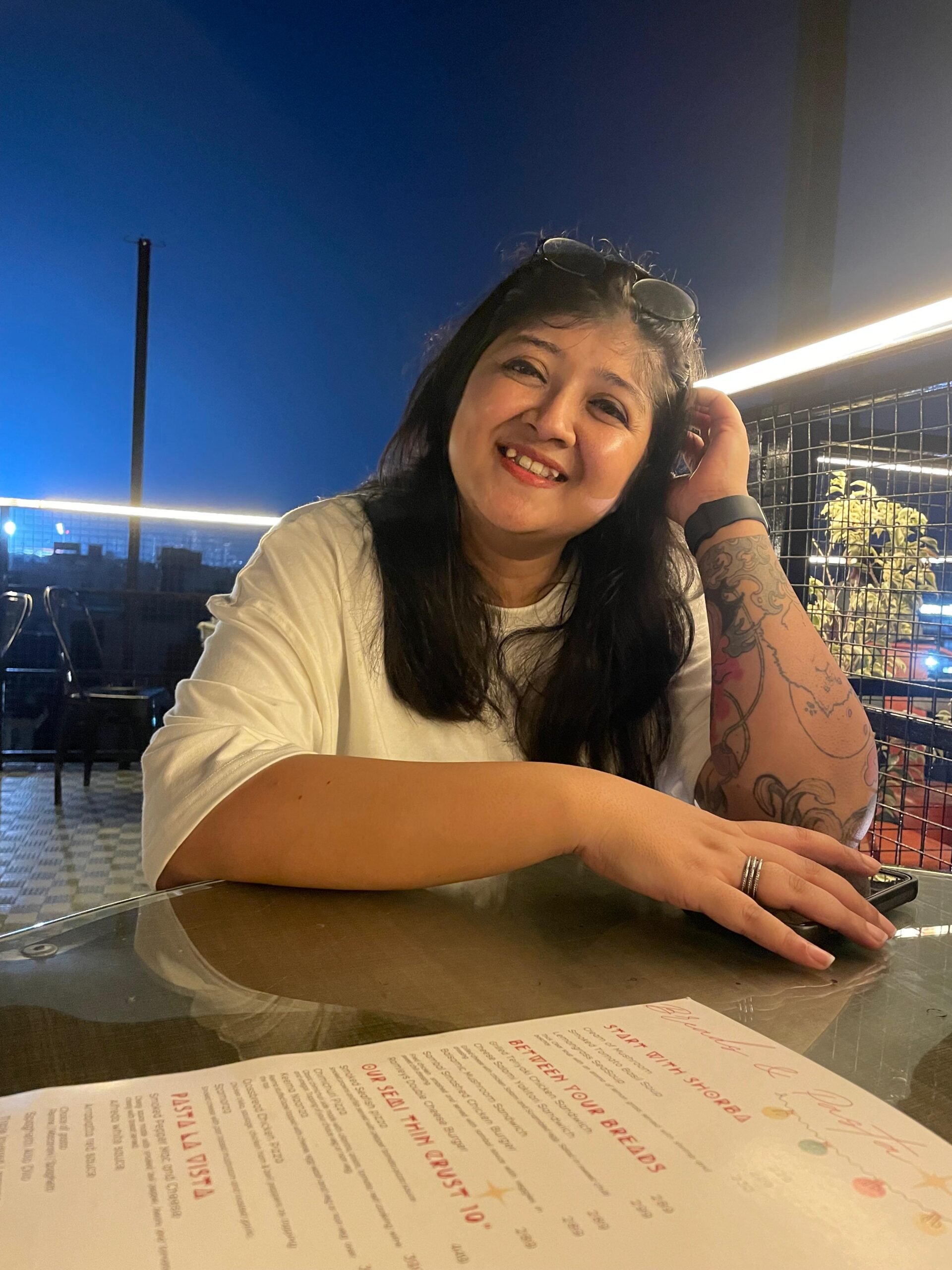
Oeshi B Lyndem is a visual artist, tattoo artist, graphic designer, and entrepreneur with a foundation in graffiti and street culture. Rooted in hands-on craft and making, her practice moves fluidly across illustration, street art, design, and experimental creative processes. With lineage from Shillong—often regarded as India’s rock capital—she carries a distinct cultural influence into her work. At Goofy Owl, she curates and leads the street and hip-hop culture segment through an intuitive, deeply creative, and entrepreneurial lens.