Artists spend years trying to find their style.
The irony is that style usually appears the moment they stop chasing it.
There is something almost paradoxical about originality. We treat it like a destination, a thing to be hunted down and captured, when in truth it tends to arrive unannounced, often after we have given up looking. The artists who feel most like themselves are rarely the ones who set out to be different. They are the ones who kept showing up, kept paying attention, and let identity gather quietly around the work.
This is a story about that slow accumulation. About influence, patience, and the difference between borrowing and understanding. It is also about a person who spent years building a visual language without realizing that the building itself was the point.
Before Tattooing, There Was Defiance
Long before needles and skin, there was simply a kid who refused to blend in.
“I always did something unique, something different,” he says, describing his early years in a creative community where he never quite fit the mold. That refusal eventually found a name.
“That’s when ‘UncleDefy’ was born, as my protest against the mainstream.”
Identity often begins as resistance. Before we know what we are, we tend to know what we are not. For UncleDefy, the name came first as a stance, a small act of rebellion against the expectation to follow the crowd. The art would catch up to the attitude later.
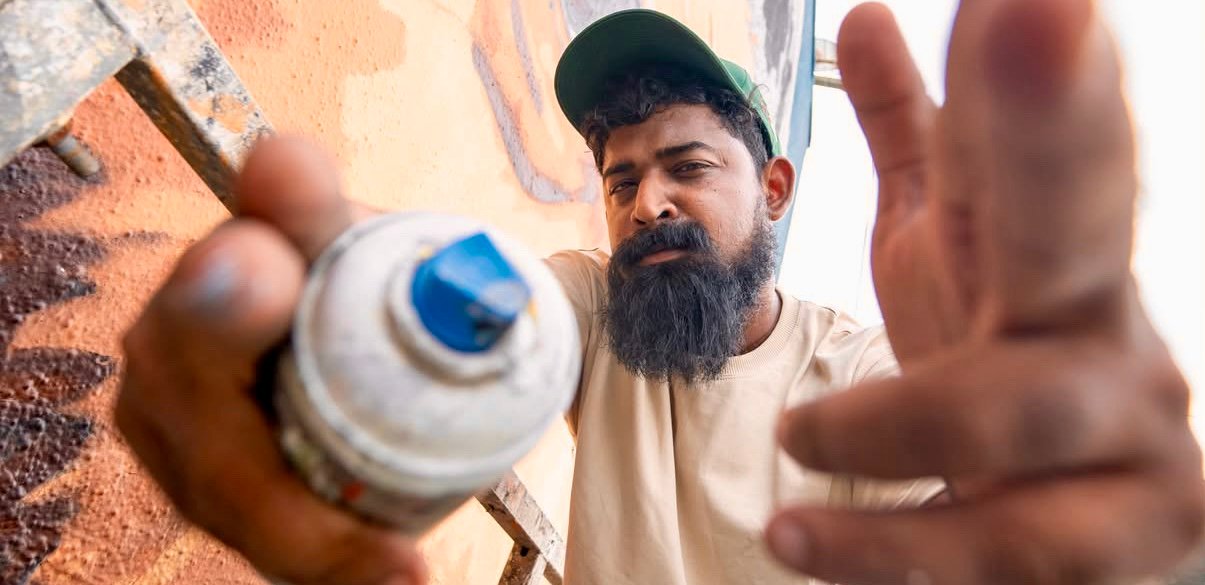
Graffiti As A First Language
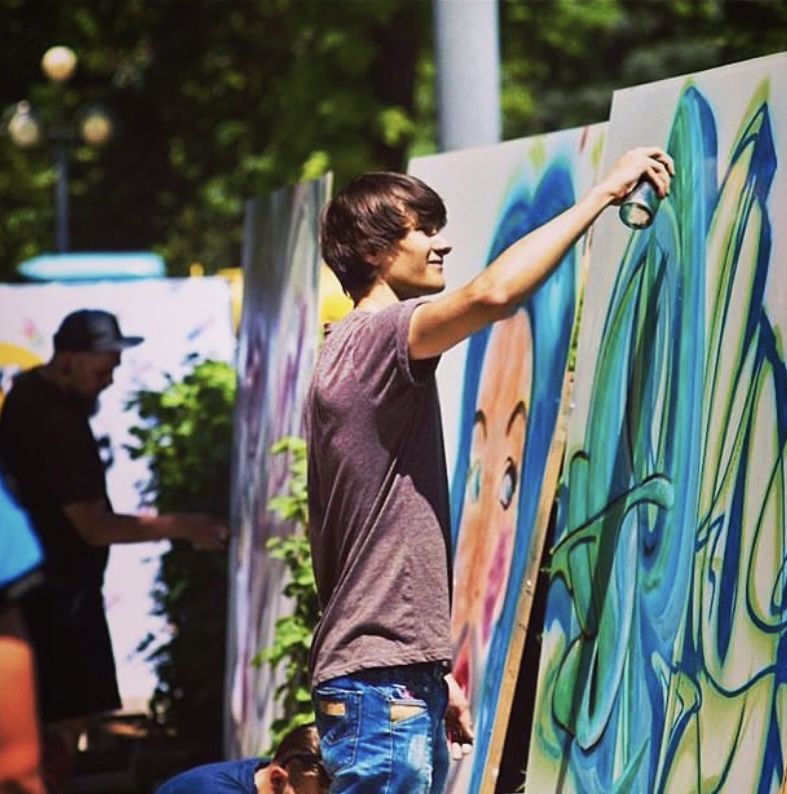
His earliest classroom had no walls, or rather, it was made entirely of them.
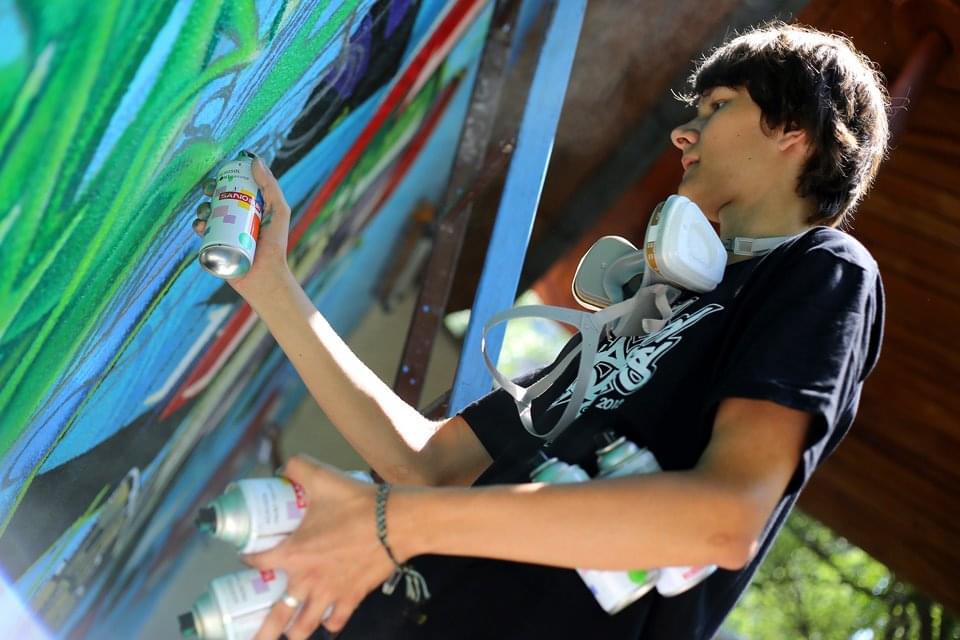
Drawing alone reached only a handful of people, so he turned to the streets to be seen. Graffiti gave him a community, a rush of adrenaline, and the occasional run-in with the police. It also gave him an education that no studio could replicate. Public art teaches you to communicate quickly, to make an image land before a passerby looks away.
Yet even in that world, he stood apart. He did not follow the trends that bound the community together. The outsider feeling that would later define his work was already there, quietly setting him on a different path.
Darkness And Bright Colours
Where you grow up seeps into everything you make, whether you invite it or not.
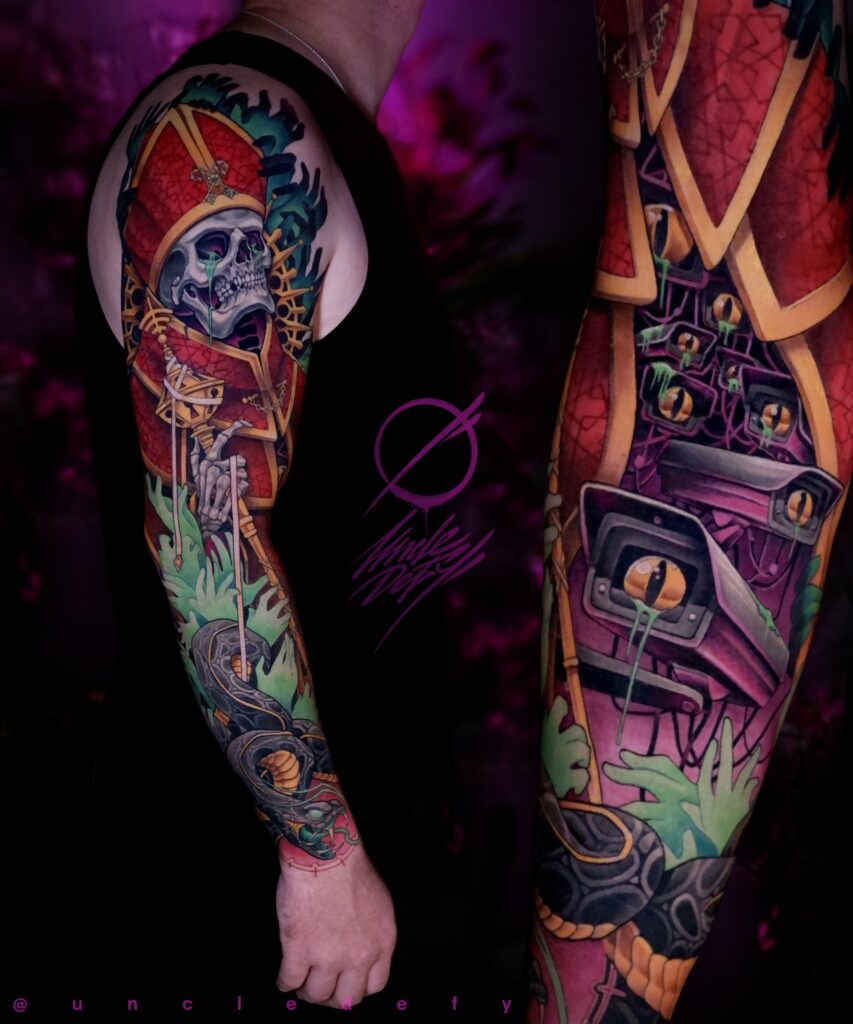
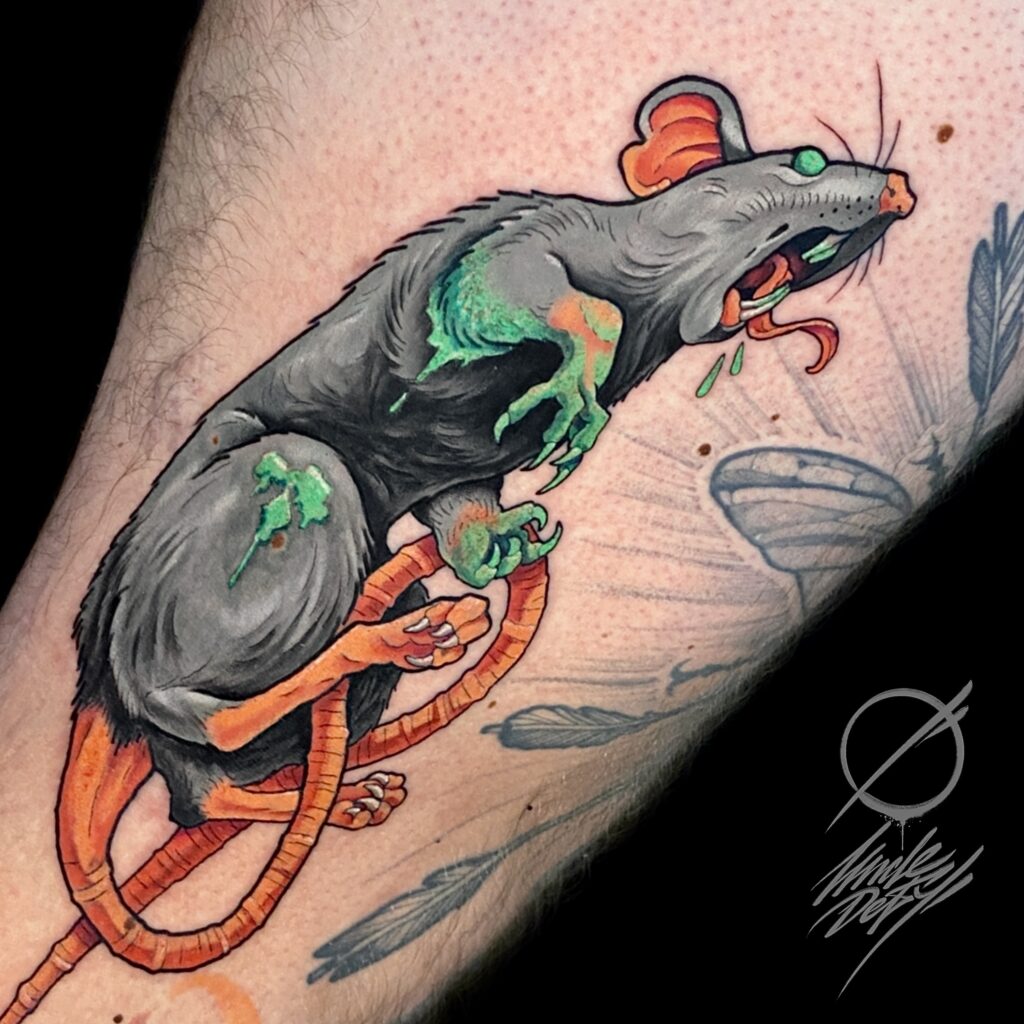
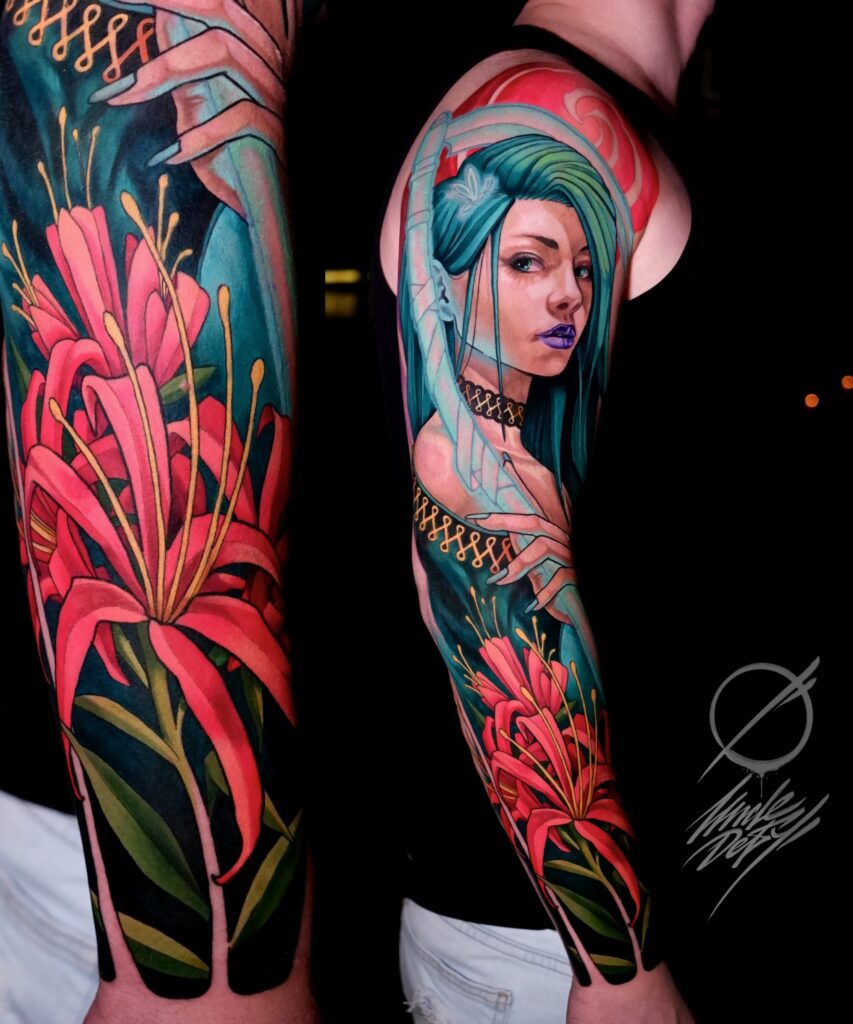
Ilia spent his formative years in Bishkek, living through revolutions, riots, and pillaging over the course of fifteen years. Those events left a mark on an entire generation of local artists. At the same time, he describes himself as a relentlessly positive “MTV-era punk,” shaped as much by music and energy as by upheaval.
“All of this blended within me and resulted in dark stories packaged in bright colors.”
Artists rarely create from a single influence. The most distinctive voices are usually the result of contradictions sitting side by side, in this case, hardship and joy, darkness and color, refusing to cancel each other out.
Emotion Before Design
Ask many artists where a piece begins, and they will point to composition or symbolism. For Ilia, the starting point is feeling.
“First of all, I focus on the emotional perception of the future work.”
He thinks not just about how a piece looks today, but about how it will live with a person over time.
“What emotions a person will experience throughout their life.”
The emotional afterlife of an artwork matters as much as its creation. A tattoo, after all, does not end when the session does. It travels with someone, ages with them, and gathers new meaning along the way. Designing for that long horizon requires a different kind of attention.
Building A Visual Language
Influence, for Ilia, is not a list of favorite names. It is a slow process of absorbing and rethinking.
He speaks about following the illustrator Mike Mignola, drawn to his sense of shadow and his stylized, simplified forms. He pulls oppressive atmospheres from the paintings of Francis Goya and the engravings of Gustave Doré. He admires the form and stylization of Russian Orthodox iconography.
What links these references is not a shared look but a shared depth. Influence becomes useful only when it turns into understanding, when an artist stops admiring the surface and starts asking how the effect was achieved.
Why Imitation Fails
There is a quiet warning running through the way Ilia talks about learning.
“It’s important not to copy the final product.”
The finished image, he suggests, is the least useful thing to imitate. What matters is the machinery behind it.
“Understand what tools and techniques the creator used.”
Learning requires analysis, not replication. Copying a result teaches you nothing about how to arrive there yourself. The work happens underneath, in the study of method, where the real lessons hide.
The Difference Between Influence And Copying
This is where influence and theft part ways.
“This will give you the foundation on which to build your own visual language.”
Originality is built from understanding rather than invention. It is less about conjuring something from nothing and more about gathering enough knowledge that your own voice has somewhere solid to stand. The foundation comes first. The signature comes after.
The Body Changes Everything
A drawing on paper and a drawing on skin are not the same thing, and pretending otherwise leads to weak work.
“The body is much more complex than a sheet of paper.”
Ilia talks about anatomy, movement, and the specific rules of composition that the body demands. A flat surface forgives. A living one does not. It curves, shifts, and ages, and any image placed on it has to account for all of that.
Every medium demands its own language. What works on a wall or a canvas has to be relearned for the body, which behaves according to its own logic.
Social Media As Another Art Form
For an artist surrounded by pressure to post constantly, Ilia takes an unusual position.
“I view social media not as a tool for advertising and making money.”
Instead, he treats his feed with the same care as the work itself.
“As creating another art object.”
Presentation is part of creative practice. The way work is shared, sequenced, and framed becomes its own form of expression. He refuses to post until a piece has healed and sits right alongside the others, treating the grid as a portfolio rather than a billboard.
Why Young Artists Get Style Wrong
Much of Ilia’s thinking circles back to a single misunderstanding among younger artists.
“It’s impossible to invent your own style.”
Style, in his view, is not a thing you decide on and then perform.
“Style isn’t what you do, but how you do it.”
The search for style often delays its arrival. Chasing uniqueness as a goal tends to produce something forced and self-conscious. The how, the way an artist naturally moves and chooses, is where real character lives, and that cannot be manufactured on demand.
Patience As A Creative Skill
If style cannot be forced, then what is left is patience.
“Style will come on its own when you stop thinking about it.”
He frames this not as passive waiting but as active commitment.
“You need to be patient and embrace routine.”
Consistency shapes identity. The unglamorous part, showing up day after day and doing the work without obsessing over the outcome, is exactly what allows a recognizable voice to form. Routine is not the enemy of originality. It is the soil it grows in.
The Principle That Matters Most
When asked what he would want future artists to carry forward, Ilia does not mention recognition or success.
“Love the process.”
Everything else, he believes, is secondary and ultimately fragile.
“If you don’t enjoy the process… sooner or later you’ll burn out.”
Process sustains creativity longer than recognition. Applause fades, trends move on, and money comes and goes. What remains is the daily relationship between an artist and the act of making. Protect that, and the rest has a chance to follow.
What Originality Really Asks Of Us
Listening to UncleDefy, you start to suspect we have been thinking about originality backward. It is not a prize for the boldest or the loudest. It is a byproduct of attention, patience, and an honest love for the small, repetitive parts of a craft.
Maybe originality was never something to be found.
Maybe it was something that quietly appeared after years of paying attention to the work itself.
Follow Ilia UncleDefy on Instagram
Lubdhak Biswas is a musician, entrepreneur and a tattoo artist based out of Kolkata (India).
He documents underground culture at the crossroads of tattooing and music.
His work focuses on craft, tools, ethics and the real working realities of creative industries.