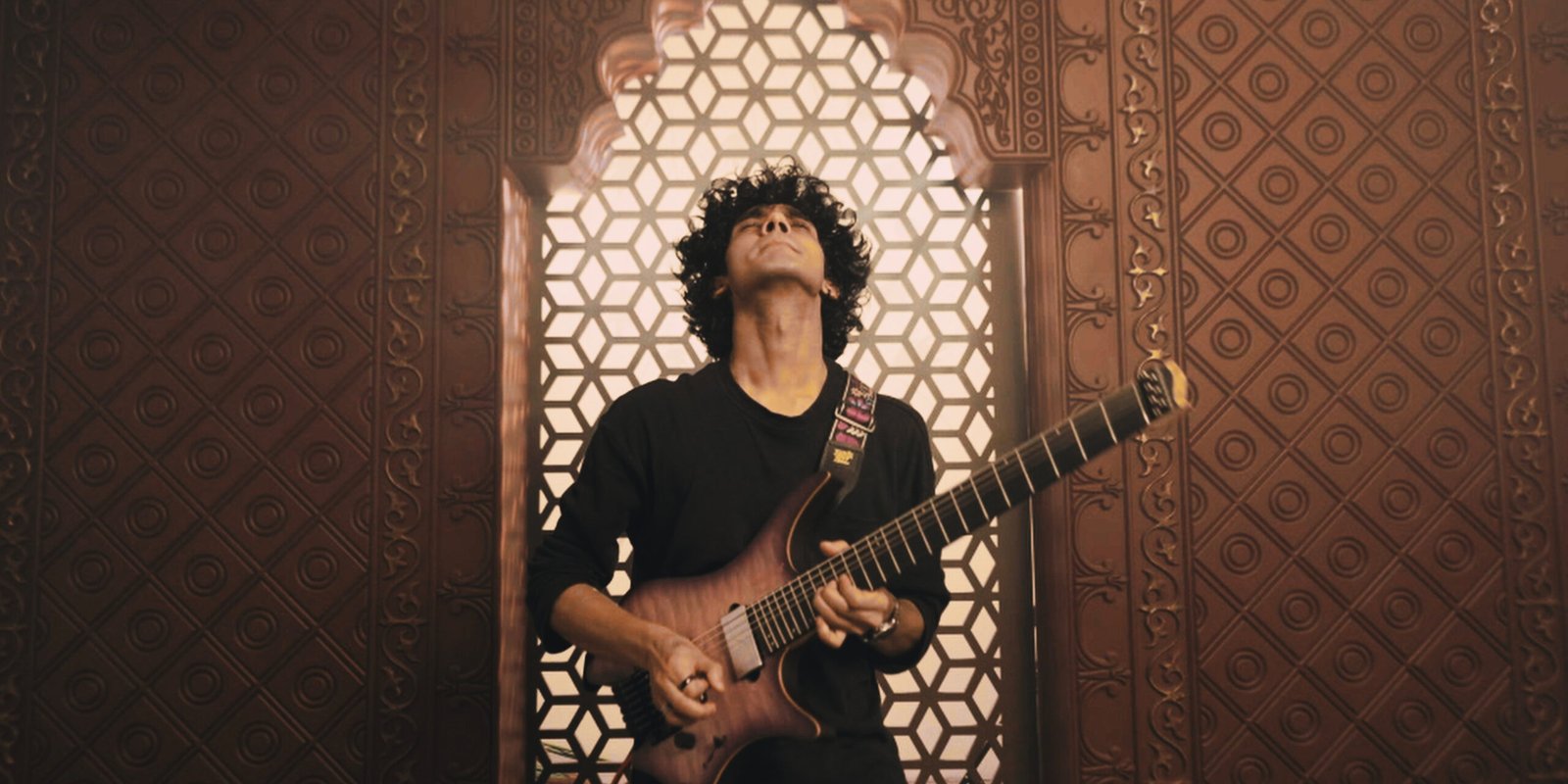
Some musicians don’t play to be seen. They play so others feel less alone. Anubhav Silas, guitarist, composer, producer, vocalist, and songwriter based in Delhi, belongs to that rare category. His technical ability is not in question. But technique, for Anubhav, has never been the point. What drives him is something harder to quantify: the belief that a song, at its best, can hold space for someone in their darkest moment and remind them they are not alone.
This is not a biography of a musician climbing a ladder. It is something closer to a portrait of an artist who has chosen emotional honesty as his north star, even when the journey to get there required him to walk through his own pain first.
How a School Music Club Changed Everything
Anubhav’s relationship with music began the way many great ones do: quietly, almost accidentally. Growing up in Delhi, he was 13 years old when a school music club first opened the door.
“I was always fascinated by the guitar,” he recalls. “I would spend a lot of time watching other students play, and something about the instrument just drew me in. It wasn’t only the way it sounded, but also the balance between technicality and emotion. I felt like it was an instrument I could truly connect with.”
His brother introduced him to the instrument by teaching him his first few chords, and from that modest beginning, Anubhav largely taught himself. That self-directed approach shaped not just his technique but his entire philosophy. Without a teacher dictating what was correct or incorrect, Anubhav learned to trust his own instincts. He learned to listen to what a song needed rather than what convention prescribed. About seven years ago, when the search for a band proved elusive, he did not wait. He began writing and producing his own music, turning solitude into creative agency.
It is worth pausing on that detail. The decision to go independent, to build something alone without an institutional framework behind you, requires a particular kind of conviction. For Anubhav, that conviction was rooted not in ego but in urgency.
“I wanted to pour my emotions into my songs and let the music say the things I couldn’t always express in words.” He had things to say, and he was not willing to leave them unsaid.
The Moment Music Became Something Larger
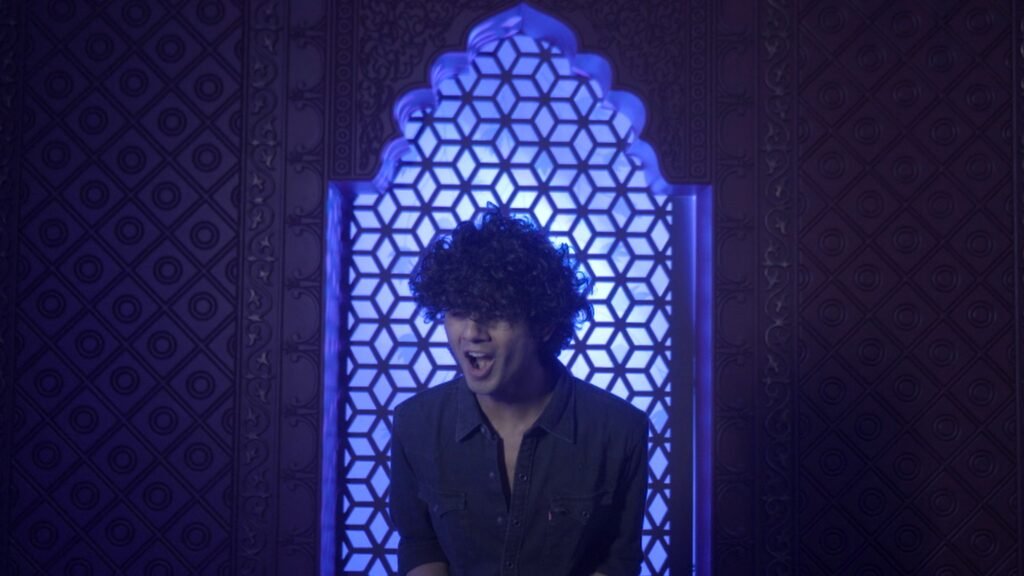
For a long time, creating music was primarily a form of personal expression for Anubhav. That changed when listeners began writing to him. Strangers told him that his songs had helped them through grief, through loss, through periods of quiet desperation.
“The turning point came when I started seeing people connect with my music,” he says. “Reading messages from listeners who related to the emotions in my songs made me realize that music could be more than just self-expression. It could be a source of comfort.”
The music they were responding to was music he had made to process his own interior life. Yet somehow, that very personal quality was what made it feel universal. This is one of the central paradoxes of emotional songwriting: the more specific and honest an artist is about their own experience, the more deeply others recognize themselves in it. Anubhav understood this not as a strategy but as a responsibility.
“Since then, my goal has been to create music that people can feel deeply, whether it brings them hope, helps them process difficult emotions, or simply reminds them that they’re not alone. If my music can become a form of therapy for someone, then I’ve achieved something meaningful.”
That sense of responsibility now shapes everything he makes.
Solitaire: A Song Born in Darkness
No single work captures Anubhav’s artistic philosophy more completely than Solitaire. The song did not emerge from a period of creative comfort. It came from one of the most difficult stretches of his life: a convergence of illness, heartbreak, emotional exhaustion, and spiritual doubt. The kind of period that does not lend itself to easy resolution or tidy narrative.
“The initial scratch was created almost five years ago during one of the darkest periods of my life,” he says. “At the time, I was dealing with medical issues, heartbreak, and a lot of internal struggles. I didn’t fully understand what I was going through. I just remember becoming very quiet and feeling emotionally numb. I had reached a point where I felt like I had lost hope.”
What is striking about Solitaire is what Anubhav chose to do with that material. He did not write a song about despair. He wrote a song about the word “eventually.” “One word stayed with me throughout that journey: eventually. Eventually, the pain becomes easier to carry. Eventually, healing begins. Eventually, you realize that even when you can’t see Him working, God has never left your side.”
This distinction matters enormously. There is a difference between music that documents suffering and music that transforms it. Solitaire belongs to the second category. It asks the listener not to wallow but to hold on, and it does so with the kind of emotional credibility that only comes from having genuinely lived through the thing you are singing about.
Faith, in both the spiritual and human sense, is woven throughout the song.
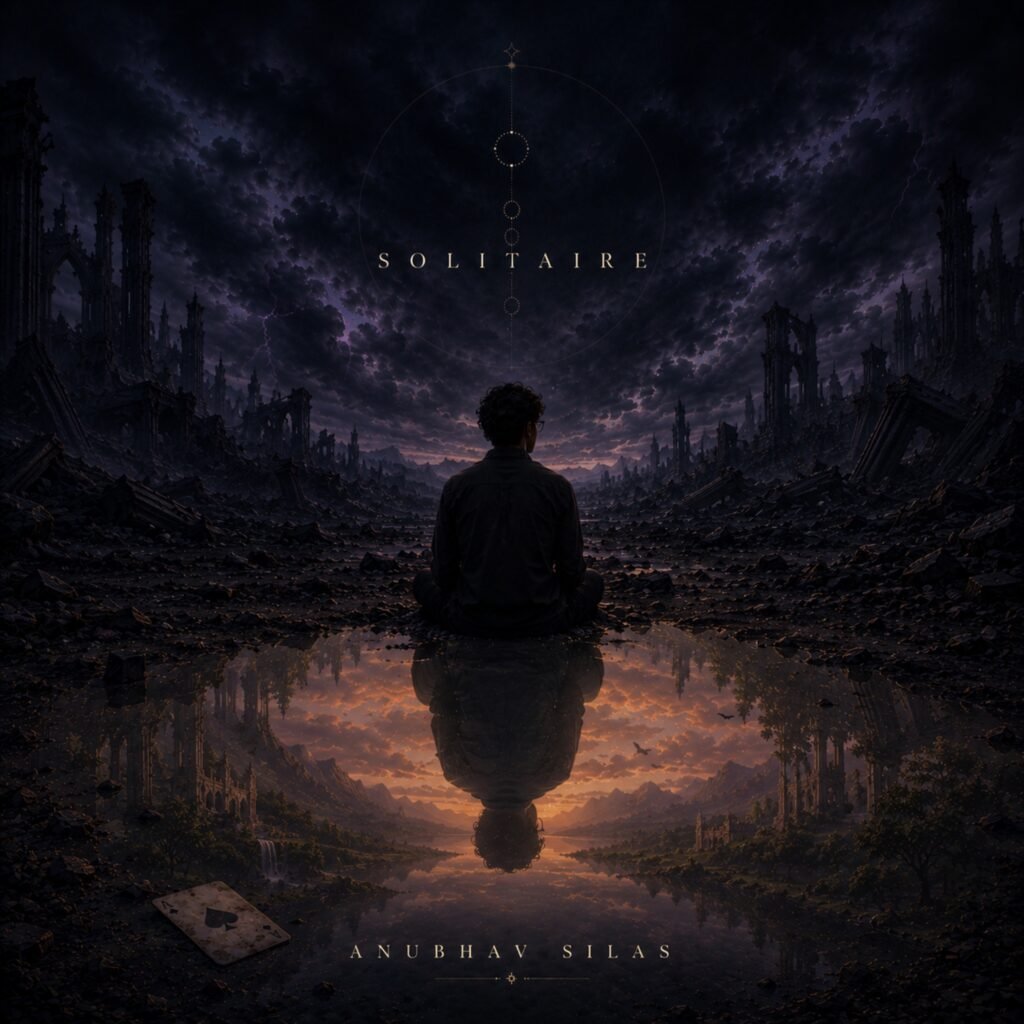
“The lyrics reflect what it feels like to be spiritually and emotionally exhausted,” he explains. “But at its core, the song is about hope. It’s about discovering that no matter how alone you may feel, God is always present, always watching over you, and always giving you the strength to keep moving forward.”
Musically, Anubhav wanted the song to mirror that emotional journey.
“It begins in a darker, more introspective place and gradually grows into something more expansive and hopeful. Every guitar melody, vocal line, and production choice was made to support that progression, allowing the music to tell the story just as much as the lyrics do.”
Collaboration as Emotional Service
Solitaire was not made alone. Ankit Silas, Paul Maben, and Kabeer Ali each brought their own strengths to the project. What is notable about how Anubhav speaks of their contributions is the clarity and generosity of the framework he uses to describe them.
Ankit Silas played a central role. “His keyboard solo added a completely different emotional dimension to the song, creating a moment that beautifully complements everything happening around it. He also mixed and mastered the track, and his attention to detail helped translate the emotion and dynamics exactly the way I had imagined them.”
For the heavier sections, Anubhav wanted something specific.
“I wanted vocals that felt raw, powerful and authentic. I’d been following Paul Maben’s work for some time, and the intensity and emotion in his performances immediately stood out to me. When I heard his work, I knew his voice was exactly what Solitaire needed. His growls brought a level of weight and conviction that perfectly matched the song’s emotional journey.”
Every collaboration on the track came from the same place. “Even though I wrote and produced the foundation of Solitaire, having talented musicians contribute their own strengths made the final result far more complete than I could have achieved on my own.”
Collaboration of this quality is genuinely rare. It requires not just compatible skills but compatible values.
Why Emotion Always Comes Before Technique
Spend any time exploring Anubhav’s work and a consistent philosophy emerges. Complexity is not something to be avoided, but it is also not something to be pursued for its own sake.
“For me, everything starts with emotion,” he says. “I don’t usually sit down thinking about writing something technical. I start with a feeling, and then the music naturally follows. Whatever I’m experiencing at that moment becomes the foundation of the song.”
There have been moments where technical demands conflicted with that emotional clarity.
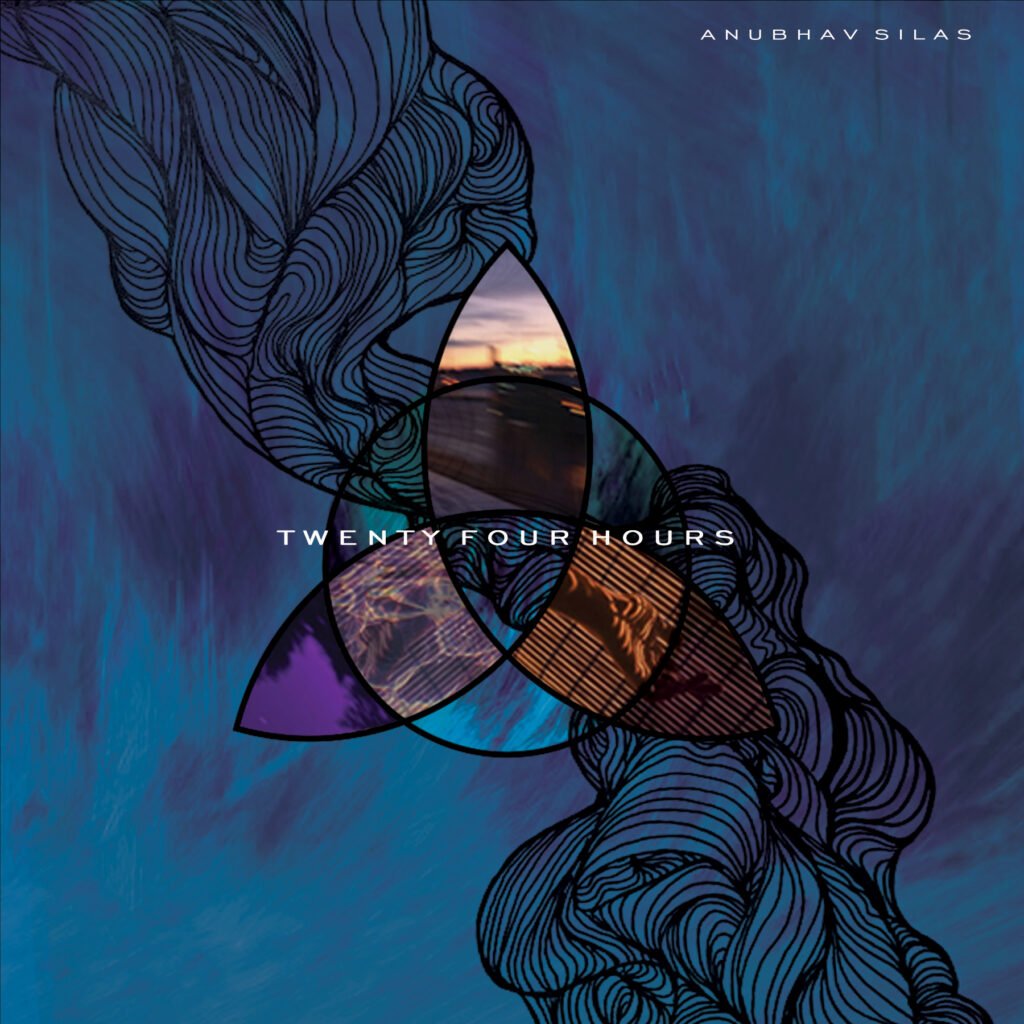
“There have been plenty of times where I’ve written technically demanding parts and later removed them because they distracted from the emotion I was trying to convey. As musicians, it’s easy to want to showcase what we’re capable of, but I’ve learned that if a part doesn’t serve the song, it doesn’t belong there, no matter how impressive it is.”
This places Anubhav at a thoughtful distance from a certain strain of progressive musicianship that prizes difficulty as an end in itself. He is not uninterested in craft. But craft, for him, is always in service of something true. His relationship with the guitar reflects this directly.
“When it comes to guitar solos, I see them as another way of telling the story. My guitar is my voice, and I try to speak emotions through it. Technique is still an important part of my playing because it helps express certain ideas and adds excitement, but it’s never the destination. It’s a tool that supports the melody and the emotion.”
This is why his music so often lands the way it does. “I want listeners to appreciate the technical side of my playing, but more importantly, I want them to remember how the music made them feel. If someone connects with the emotion first and then discovers the technical details along the way, that’s the perfect outcome for me.”
What Comes Next
Anubhav is currently working on an instrumental EP, a project that will foreground the expressive capacity of the guitar without the scaffold of lyrics.
“I’m planning to release an instrumental EP later this year,” he says. “Even though Solitaire features vocals, I’ve always believed that music itself can communicate emotions in a way that words sometimes can’t. With this EP, I want to explore that idea further and let the instruments tell the story.”
For an artist who has spoken so movingly about the power of music to carry feeling beyond words, an instrumental body of work feels like a natural and courageous next step. Beyond the EP, he is looking toward future collaborations and live performances.
“I’m also open to collaborating with other artists whenever the opportunity feels right. I enjoy seeing how different creative perspectives can shape a song, so it’s definitely something I want to continue exploring.”
The Indian progressive and metal scene has been developing in remarkable ways, and Anubhav has spoken openly about wanting to be part of that growth. “One of my biggest goals is to perform live and connect with people through my music in a completely different way. Beyond my own journey, I’d also love to contribute to making the metal scene in India more active and help bring more attention to the incredible talent that already exists here. If my music can inspire listeners while also playing a small part in helping the scene grow, that would mean a lot to me.”
Music as a Reminder That You Are Not Alone
What stays with you after engaging with Anubhav Silas’s music and the story behind it is not any single song or technique. It is the underlying conviction that music has a purpose beyond entertainment.
“More than anything, I hope people who hear Solitaire walk away knowing that difficult seasons don’t last forever,” he says. “Healing takes time, but with faith and perseverance, hope always finds its way back.”
At its most powerful, music is the thing you reach for when everything else has failed. It is the companion that does not flinch from the difficult material, that sits with you in the darkness and does not rush you toward the light. Anubhav has built his practice around that belief, and in doing so, he has created something genuinely valuable: an artistic voice that people can turn to when they need to feel less alone.
The fact that Solitaire was forged in one of his darkest periods is not incidental to its effect on listeners. It is the source of its power. Suffering, when transformed with honesty and craft, becomes something that can be shared. And in being shared, it becomes a little lighter for everyone who carries it.
That, finally, is what Anubhav Silas is making. Not just music. Something more like company for the hard nights.
Follow Anubhav on Instagram

Lubdhak Biswas is a musician, entrepreneur and a tattoo artist based out of Kolkata (India).
He documents underground culture at the crossroads of tattooing and music.
His work focuses on craft, tools, ethics and the real working realities of creative industries.