Most people inherit language quietly. Others fight to make it visible.
Language shapes how we understand ourselves and the communities we inhabit. Yet, the physical spaces of our cities rarely reflect the dialects of the people who walk their streets. Public space serves as an unspoken battleground for expression, dictating whose identity gets acknowledged and whose remains hidden.
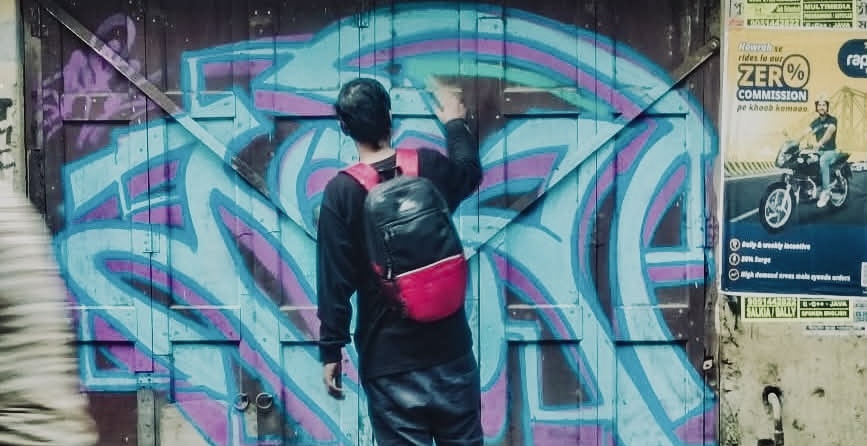
Graffiti often enters this dynamic as a raw form of communication. It bypasses formal institutions to speak directly to the public, forcing conversations about visibility, belonging, and the politics of representation. When a person steps up to a concrete wall with an aerosol can, they are engaging in an act of claiming space. For Kolkata-based street artist NAMI, this practice has become a way to anchor his mother tongue firmly within the urban landscape.
Why the Streets Matter
Public spaces often become the first gallery for people excluded from traditional ones. Institutional art scenes can feel walled off by privilege, requiring a specific background or formal education just to enter the room. The urban environment operates under a completely different set of rules.
Speaking about his early days exploring the medium, NAMI notes, “Walls didn’t ask for permission or background, they only demanded honesty.” When traditional avenues are closed, the concrete environment offers an immediate, unfiltered canvas.

The Meaning Behind “NAMI”
Identity is often built through work, not recognition. In a hyper-curated culture that constantly demands self-promotion, choosing to labor quietly feels like a rare approach to personal growth. A chosen name can carry the weight of a person’s entire artistic philosophy.
““NAMI” comes from the Bangla word NAMI, which loosely means “one whose name becomes known” or “defined by their name.” For me, it represents people who work in silence, without privilege or spotlight, yet still leave a mark,” the artist explains.

Reclaiming Bangla Through Graffiti
Language becomes resistance when it enters spaces it was excluded from. As global aesthetic trends spread, local cultures can sometimes fade into the background. In many urban centers, the visual vocabulary of street art leans heavily on Western typography.
NAMI noticed this gap in his own environment.
“Bangla is my mother tongue, but I rarely saw it represented in graffiti the way English or Western styles were. I wanted to reclaim that space,” he says. Writing in a regional language forces the surrounding culture to acknowledge its own roots.


When the Street Entered the Gallery
Street art challenges who gets considered “serious” within cultural institutions. Historically, museums and galleries have drawn a hard line between fine art and urban expression. But as subcultures mature, those boundaries begin to blur, allowing raw street elements to enter formal conversations.
NAMI experienced this shift during a centenary project honoring filmmaker Ritwik Ghatak. He created multiple works, including a reverse graffiti portrait and Bangla political-style pieces.
“Coming from outside the traditional fine arts community, it meant a lot to be invited to represent the raw language of the streets within an institutional art space,” he reflects. “What made the experience memorable was not just the work itself, but the recognition that street art, in all its rawness and honesty, deserves a place in serious cultural dialogue.”

Kolkata as a Visual Language
Cities shape artists emotionally before stylistically. The environment you grow up in bleeds into your creative output, offering a specific texture and rhythm to your thoughts. A city with a deep, complex history provides endless source material for those willing to observe it closely.
“Kolkata is layered, visually, culturally, emotionally. You’ll find decay next to poetry, chaos next to calm,” NAMI observes. The heavy contrast of his surroundings deeply informs how he constructs his pieces.
Structure vs Spontaneity
Street art is a collaboration with the environment itself. While a painter in a studio has complete control over their canvas and lighting, an urban artist must contend with unpredictable variables.
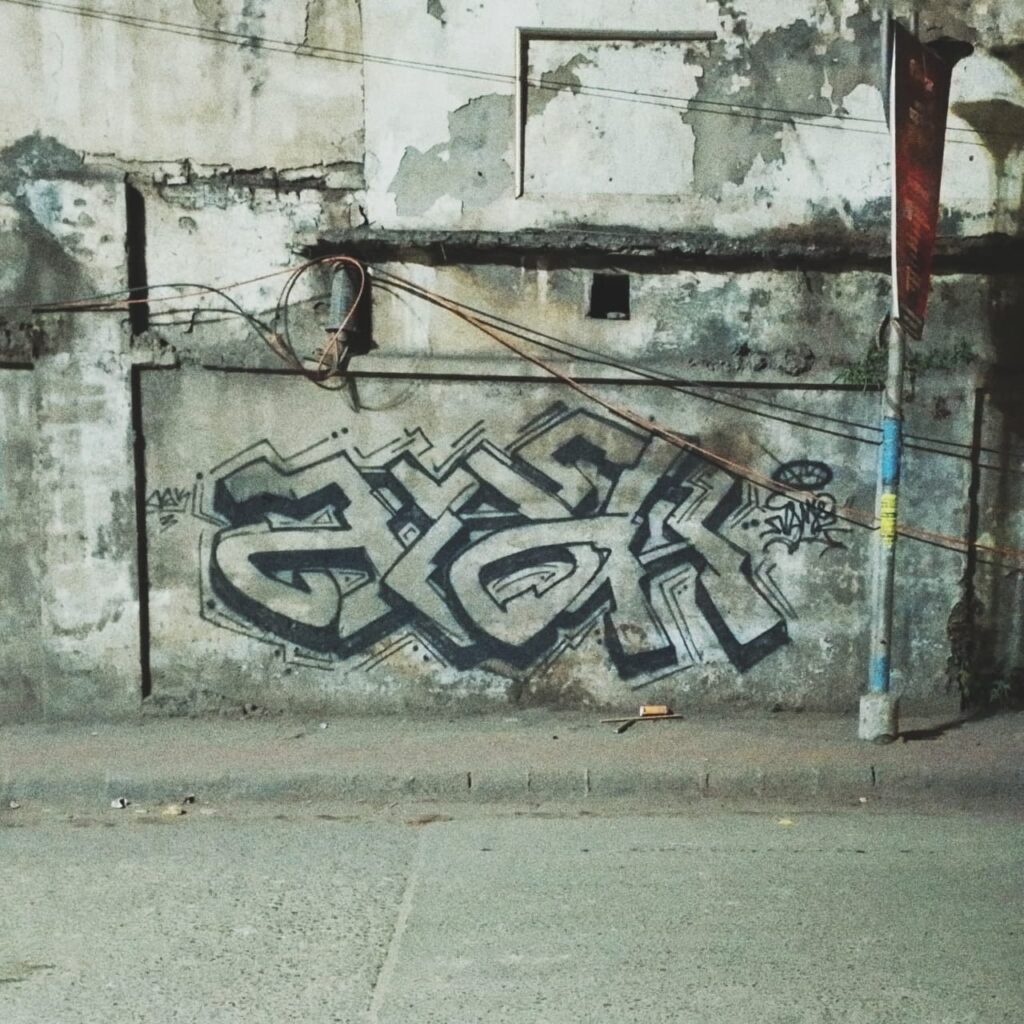
NAMI prepares diligently, but he remains open to the moment.
“The wall, the surroundings, and even the people passing by influence the final outcome. The street always has a say in the process,” he explains.
Painting in Public
Street art exists in tension with authority. Operating in public view means navigating a complex web of reactions, ranging from curious onlookers to strict law enforcement.
“Challenges are part of the process, time pressure, legal risks, and public scrutiny,” NAMI shares.
However, this friction is balanced by the human connections forged on the pavement. “Public reactions are mixed, but when someone stops and genuinely connects with the work, it reminds me why I do this.”
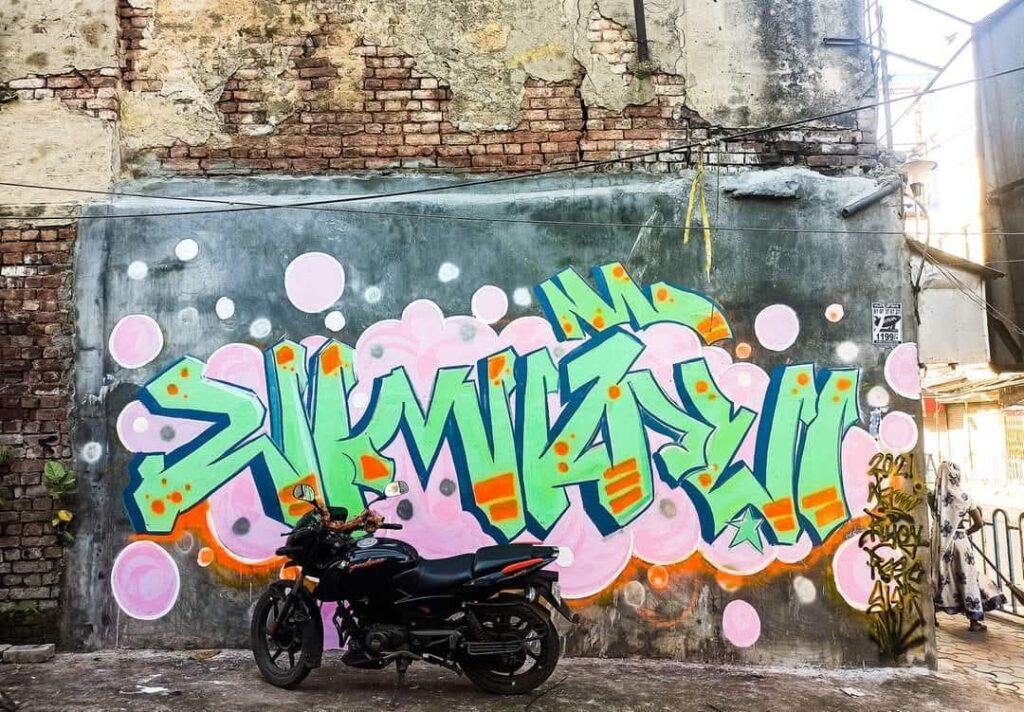
The Slow Growth of Kolkata’s Graffiti Scene
Scenes survive through passion before support systems exist. Building an underground culture from scratch requires immense patience. Before brands sponsor events or galleries host exhibitions, small groups of dedicated individuals must keep the momentum alive purely out of love for the craft.
Looking at his city’s current landscape, NAMI notes, “It’s growing slowly but surely. There’s more awareness now, and more young artists are experimenting with the medium. At the same time, there’s still a lack of infrastructure and understanding around graffiti culture. But the hunger is real, and that’s always a good sign.”
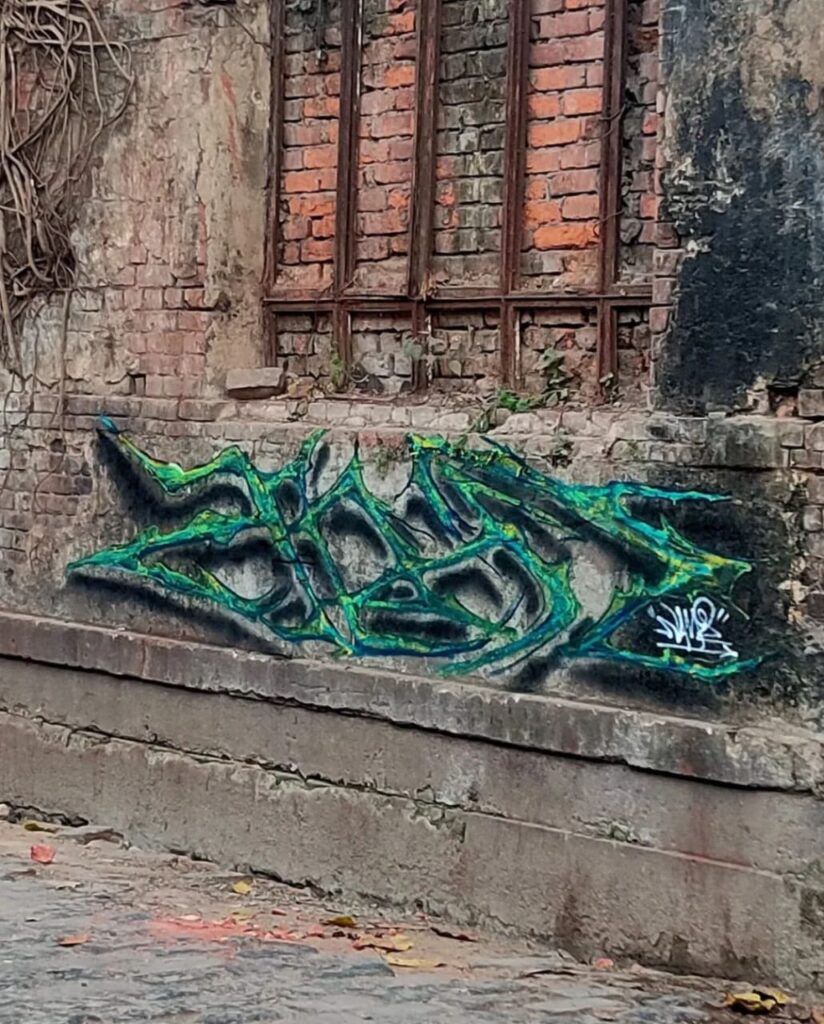
Graffiti as Community
Graffiti culture grows collectively, not individually. It is easy to view street artists as solitary figures working in the shadows. In reality, the most vital movements rely heavily on shared knowledge and mutual support.
NAMI has sought out these connections across borders. “From 2020–2021, I was part of Renegades, the first graffiti crew to represent writers from both sides of Bengal, India and Bangladesh,” he recalls.
He later spent time with the German crew OGK and currently works as an Art Director with filmmaker Qaushiq Mukherjee (Q). “Those experiences constantly remind me that street art grows through shared energy, conversations, and collective expression.”

Staying Rooted Through Visibility
Growth means little if identity disappears with it. As artists gain visibility, the pressure to conform to broader market expectations intensifies. Staying true to your origins requires a conscious, daily effort.
“I constantly remind myself why I started. I come from a lower-middle-class background, and that reality keeps me grounded. Growth is important, but not at the cost of identity,” NAMI says.
Can Street Art Create Change?
Art rarely changes systems instantly — it changes perception slowly. We often expect creative works to spark massive, immediate shifts in society. In truth, the impact of a mural or a piece of public writing is usually much quieter, settling into the subconscious of the people who walk past it every day.
“Street art may not change the world overnight, but it can plant a thought. I’ve seen people pause, question, and start conversations because of a wall. Even that brief moment of reflection is powerful. Change often begins quietly,” he reflects.
The Purpose of Public Expression
Real culture is built through patience, not attention. In an era where digital clout is often mistaken for genuine influence, true mastery requires slowing down and respecting the foundation of the craft.

NAMI offers a grounded perspective for those eager to leave their mark: “Respect the culture. Learn the roots before chasing visibility. Don’t wait for validation, paint because you have something to say.”
Maybe graffiti was never just about painting walls.
Maybe it was always about proving that certain voices deserve to be seen.
Follow NAMI on Instagram
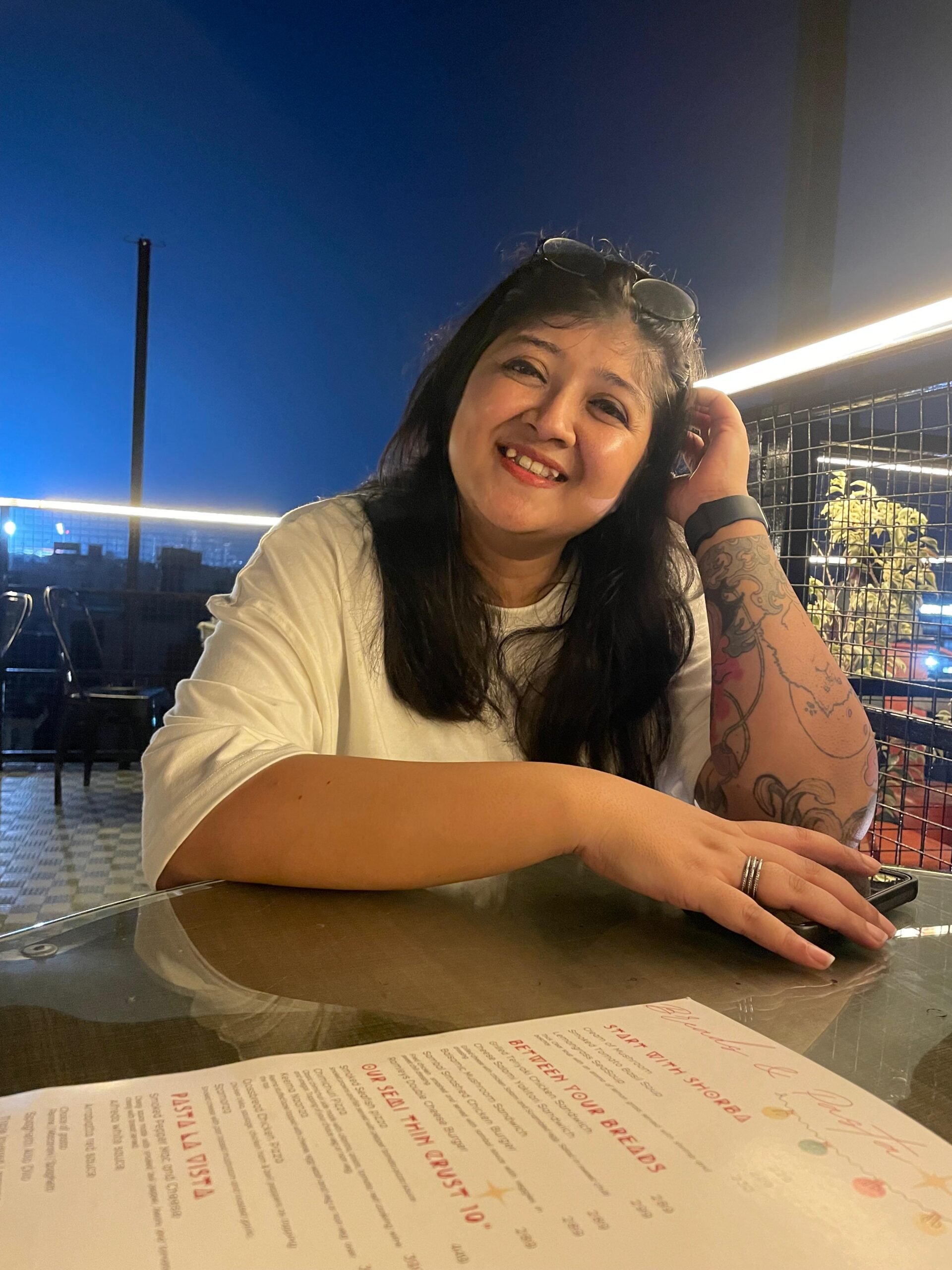
Oeshi B Lyndem is a visual artist, tattoo artist, graphic designer, and entrepreneur with a foundation in graffiti and street culture. Rooted in hands-on craft and making, her practice moves fluidly across illustration, street art, design, and experimental creative processes. With lineage from Shillong—often regarded as India’s rock capital—she carries a distinct cultural influence into her work. At Goofy Owl, she curates and leads the street and hip-hop culture segment through an intuitive, deeply creative, and entrepreneurial lens.