Most people see the performance. Very few see the discipline required to survive it.
We often look at artists on stage and assume they have always lived in that elevated space. We see the lights, hear the roaring crowd, and imagine a life built entirely on raw talent and adrenaline. But underneath that visible spectacle lies an invisible architecture of immense pressure, endless repetition, and brutal adaptation. True musicianship is not just about mastering an instrument. It requires the emotional endurance to navigate the demanding space between who you are and what the stage demands of you.
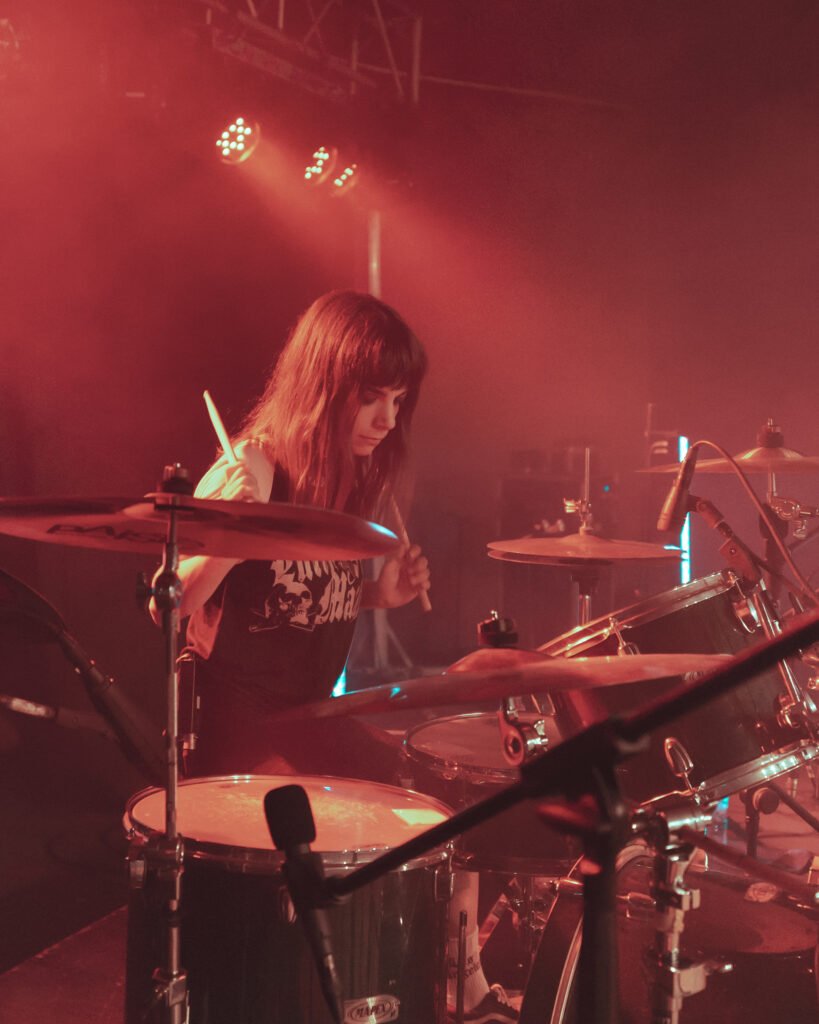
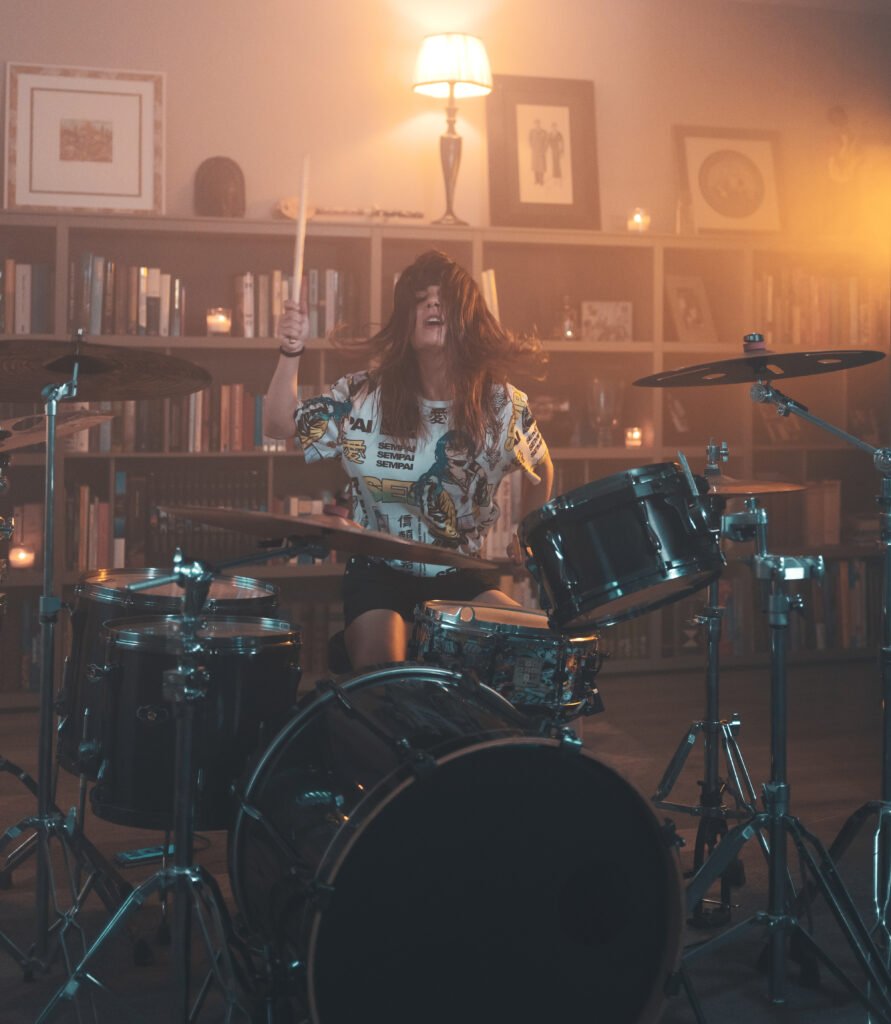
Eleni Nota understands this quiet reality. As the drummer for Ankor and formerly of Nervosa, she has built an international career that balances heavy technical precision with intense emotional release. But her journey from a small town in Greece to massive global stages was not a sudden explosion of luck. It was a methodical process of finding her identity, pushing through physical limitations, and learning how to communicate deeply with thousands of strangers every single night.
By looking closely at her progression, we can understand the actual mechanics of an authentic creative life.
The Internet Changed Geography
There was a time when physical location determined your destiny. If you were born far away from a thriving industry hub, your talent often remained trapped within your city limits. But the digital era completely fractured that boundary. Talent alone is no longer enough to build a career. Visibility has fundamentally changed the structure of opportunity.
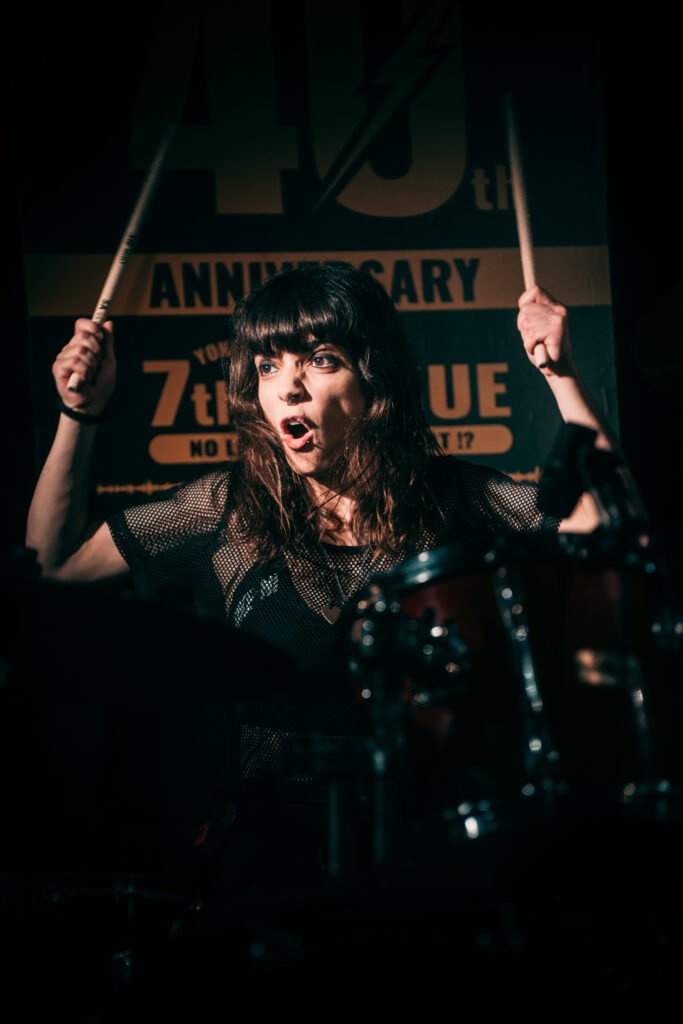
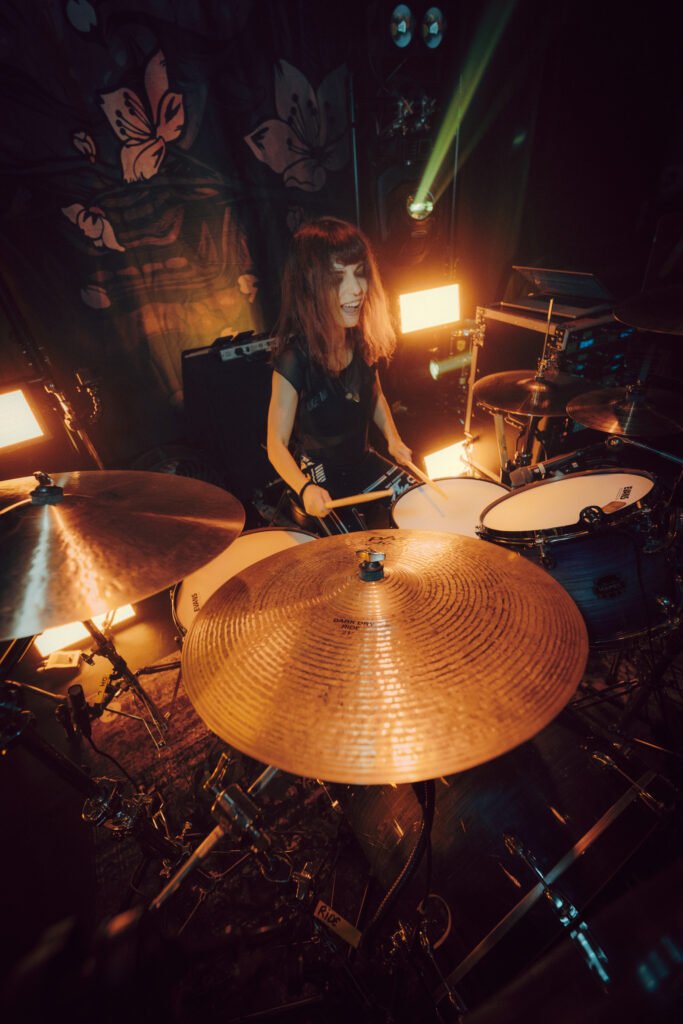
For Eleni, breaking into the global circuit required overcoming a deep hesitation about digital exposure.
“If I had to pick one defining factor that played a role in me stepping into the international scene, I would say it was social media,” she explains.
“I come from a very small country so for me it was harder to naturally build contacts that lead to international touring compared to someone who lives in countries with a bigger and more active music industry. I was quite hesitant in making online content for the first decade of my drumming journey. But when I finally started making drum covers, things happened pretty quickly. In less than a year, I was contacted by Nervosa and then that was it…”
From Local Shows to Global Pressure
Stepping onto a massive stage does not necessarily change the physical act of playing an instrument. The muscle memory remains the same. What changes is the psychological weight of the moment. Scale alters pressure far more than it alters performance.
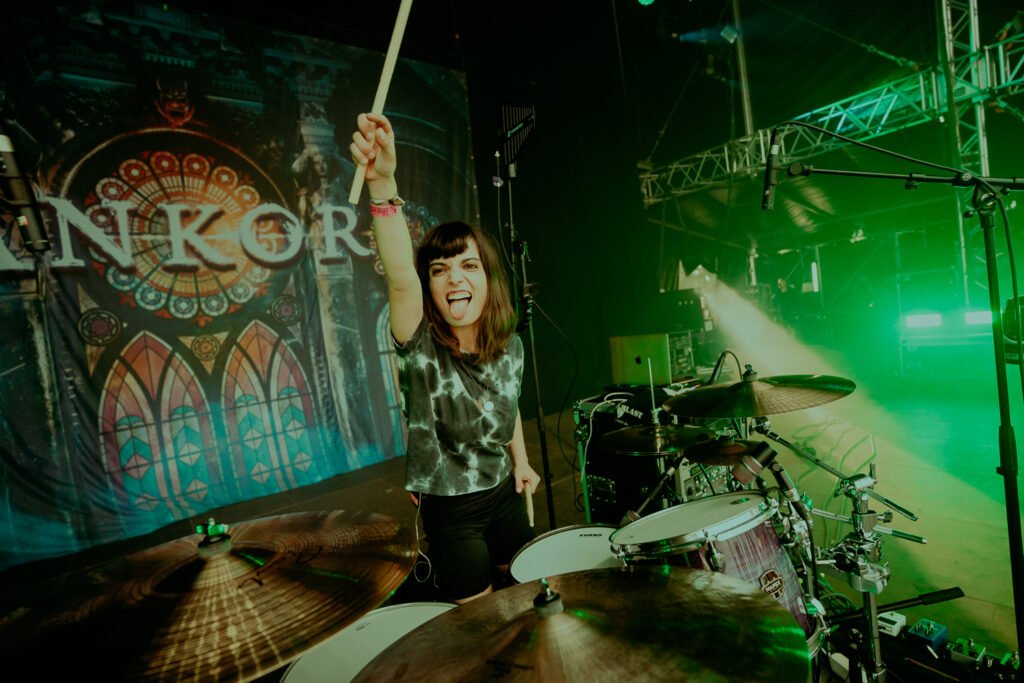
When Eleni made the jump to international touring, her foundational skills kept her anchored. The real test was the environment.
“I had already played loads of shows with local bands by then so it didn’t feel much different,” she notes. “The only big difference was that, all of a sudden, I was touring instead of playing locally and the crowds were way bigger so the pressure felt more intense.”
Preserving Identity Inside an Existing Band
Joining an established project can easily trigger an identity crisis. The temptation to bend your personal style to fit a predefined mold is strong. But true evolution happens when an artist leans into what already feels honest. Evolution works best when it aligns perfectly with instinct.
When Eleni joined Ankor, she did not have to fabricate a new persona. She found a space that resonated with her core musical vocabulary.
“Actually, metalcore is my favorite music style to listen to and play so, whenever I write new drum parts for Ankor, they come pretty naturally,” she shares. “It’s like they already exist in my head.”
The Problem With Overplaying
When we finally get the chance to express ourselves, we often want to show everyone everything we can do all at once. We mistake complexity for depth. But maturity in art almost always requires restraint. Knowing what to leave out is far more difficult than knowing what to add.
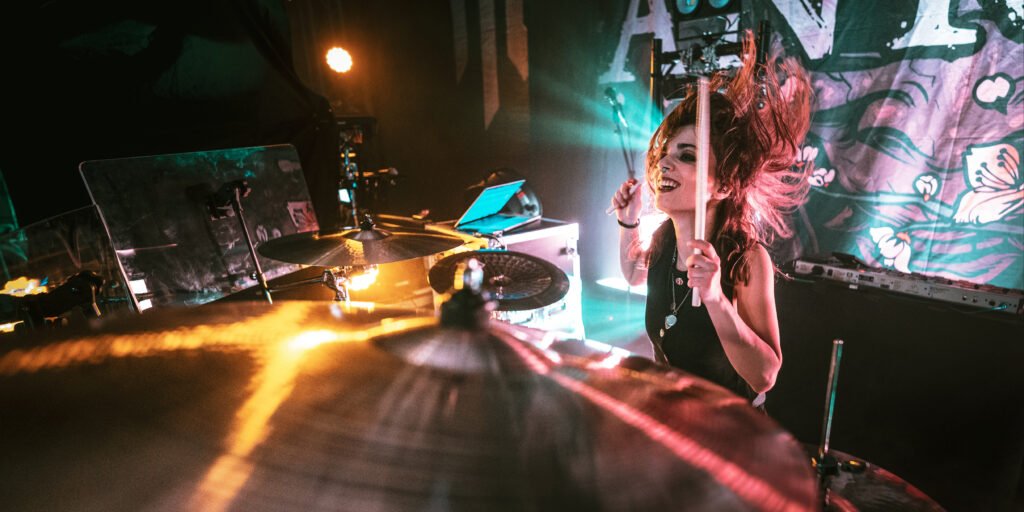
For a highly skilled drummer, pulling back the technical aggression requires deep self-awareness.
“The -not overplaying- part is the toughest to be honest,” she admits. “I have the tendency to overplay and I’ve definitely done it in the past.”
Precision vs Emotion
Technicality only matters if it serves the human experience. If a performance becomes too clinical, it loses its soul. Finding the balance between intense precision and emotional resonance requires stepping outside of the musician’s ego and listening from the crowd’s perspective.
Eleni developed a specific system to keep her playing honest.
“The approach that works the best for me is to write midi drums first and put the drum track over the demo track of the song that the guys send me. And then I just listen to it on repeat to see if something bothers me,” she explains. “I try to experience the track as a random listener and not as the drummer of the band so I can feel if some drum parts or fills are a bit over the top. And in general, I like paying attention to detail. I can spend 10 minutes overthinking what cymbal I should use in just one hit.”
Music as a Universal Language
Touring forces a musician to confront a wide spectrum of cultures. You quickly realize that while geography changes our daily habits, it rarely changes our baseline emotional responses.
“Having played for so many different crowds and cultures, I would say that audience psychology is pretty much the same across the world,” she observes. “Music is a global language and it definitely unites people. I see the same joy in the faces of people in Germany as in Japan.”

Learning to Be Seen
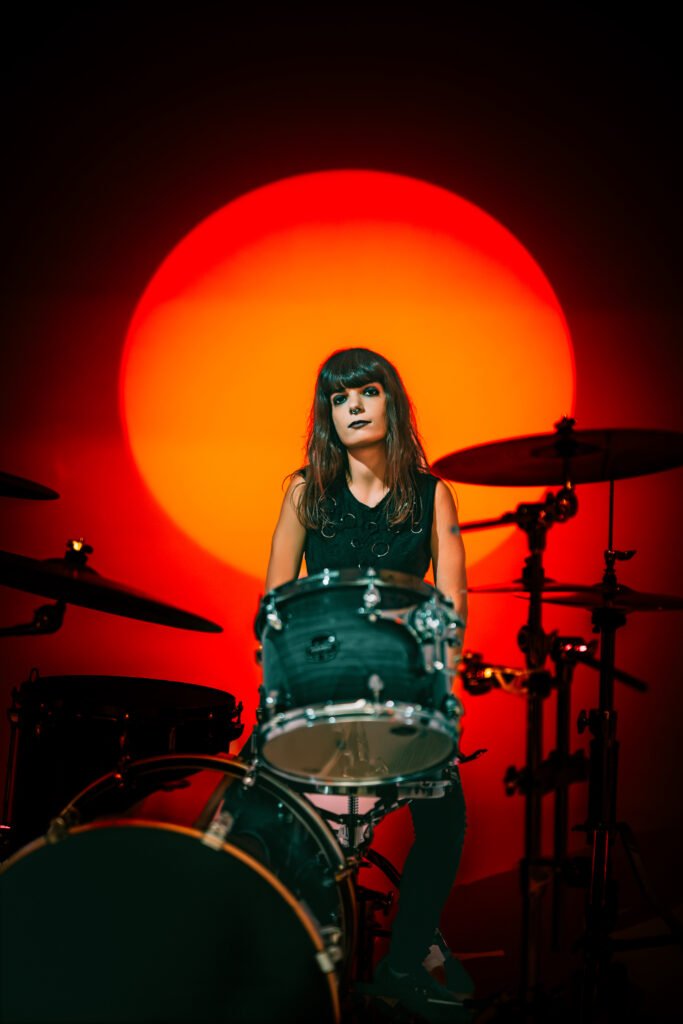
Playing an instrument brilliantly is only half the job of a touring musician. Performance is an act of emotional communication. You cannot simply execute parts perfectly in the dark; you have to connect. For a naturally quiet person, learning to engage a massive crowd is a learned survival skill.
“When I clap (in parts that I don’t play) along with the crowd or smile at people during the show, I see that they respond to it. And that’s so cool, I love it when it happens!” she shares. “I’m a bit of an introvert so I had the tendency to be more laid back while playing shows, but I’ve pushed myself to be more comfortable with exposure and now I really enjoy it when I interact with the crowd during a show.”
The Reality of Touring
We romanticize life on the road. We see the curated photos of sold-out venues and assume it is a permanent vacation. The truth is far more grueling. Touring is physically demanding, emotionally draining, and entirely lacking in basic comforts.
“The number one is missing loved ones,” Eleni says of the hardest parts of the job. “Apart from that, I would say it’s the lack of some comforts you have at home… And the last thing is that you can’t just take a sick day so easily. Unless you need to be hospitalized, you have to play the show no matter how sick you feel.”
Instinct vs Technical Skill
You can practice a song a thousand times in a sterile studio, but the live stage is an organism that breathes and makes mistakes. Wires fail, monitors break, and tempos shift. In those moments of chaos, perfectionism is useless. Experience creates the adaptability required to survive.
“I think instinct and experience in playing shows are the most important things,” she asserts. “Because things don’t always go as planned during a show and you need to have strong reflexes to react and adapt to the situation.”
Respect Through Skill
In a culture obsessed with aesthetics and fleeting digital clout, it is easy to assume you need a carefully crafted gimmick to be taken seriously. But long-term credibility is built through relentless consistency, not presentation. You earn respect by simply being undeniable at your craft.
“I didn’t do much apart from trying to be as much of a good drummer as I can be,” she states. “I was never much into selling my image anyways so I just focused on making music content and that worked out for me in the end.”
Rebuilding From Zero
Careers are rarely built on sudden miracles. They are constructed through quiet repetition, local connection, and putting your work into the world without expecting an immediate return. When asked how she would rebuild her entire career from nothing, Eleni maps out a strictly grounded approach.
- I would start releasing drum covers and instagram reels…
- I would go to jam sessions as much as possible…
- I would join one or more local bands.
The Enduring Truth of the Stage
In the end, musicianship isn’t just about playing well. It’s about surviving the repetition, pressure, distance, and uncertainty long enough to become undeniable.
Follow Eleni on Instagram

Lubdhak Biswas is a musician, entrepreneur and a tattoo artist based out of Kolkata (India).
He documents underground culture at the crossroads of tattooing and music.
His work focuses on craft, tools, ethics and the real working realities of creative industries.