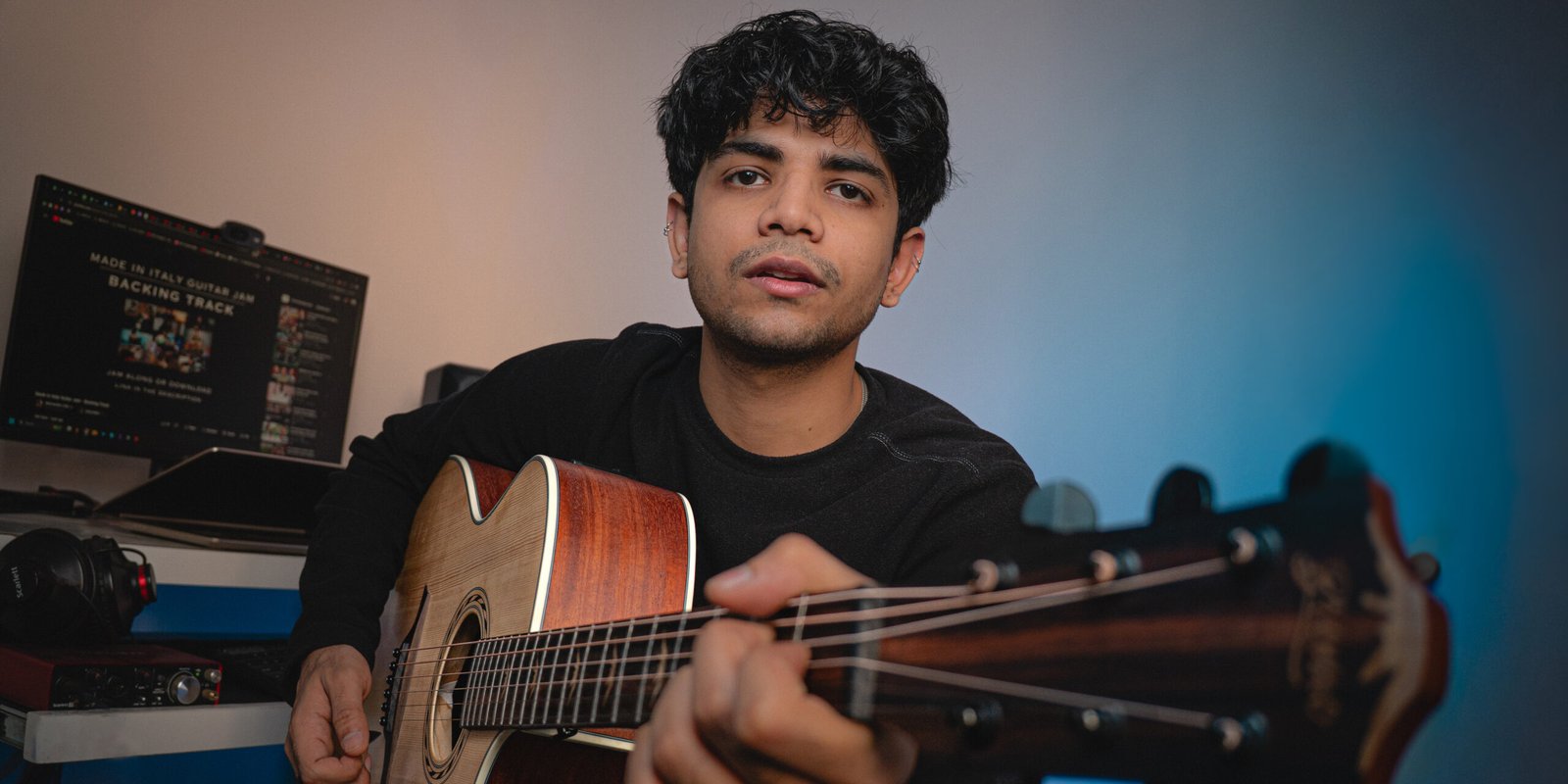
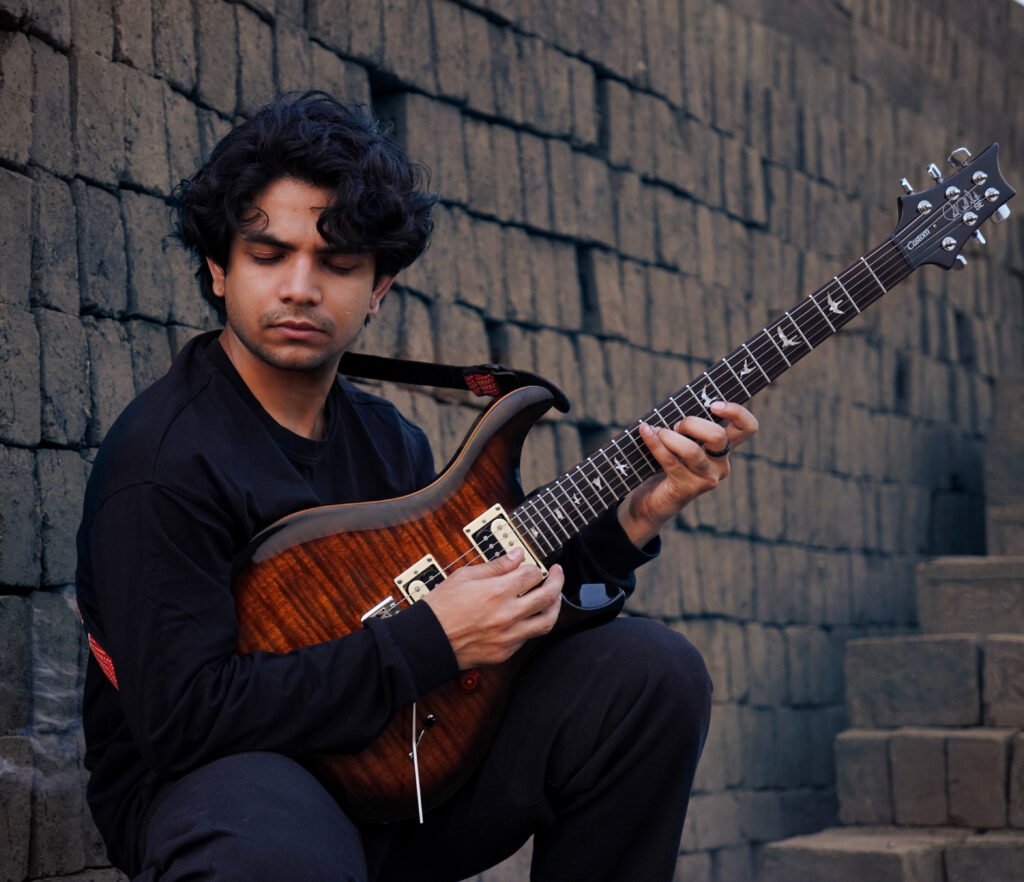
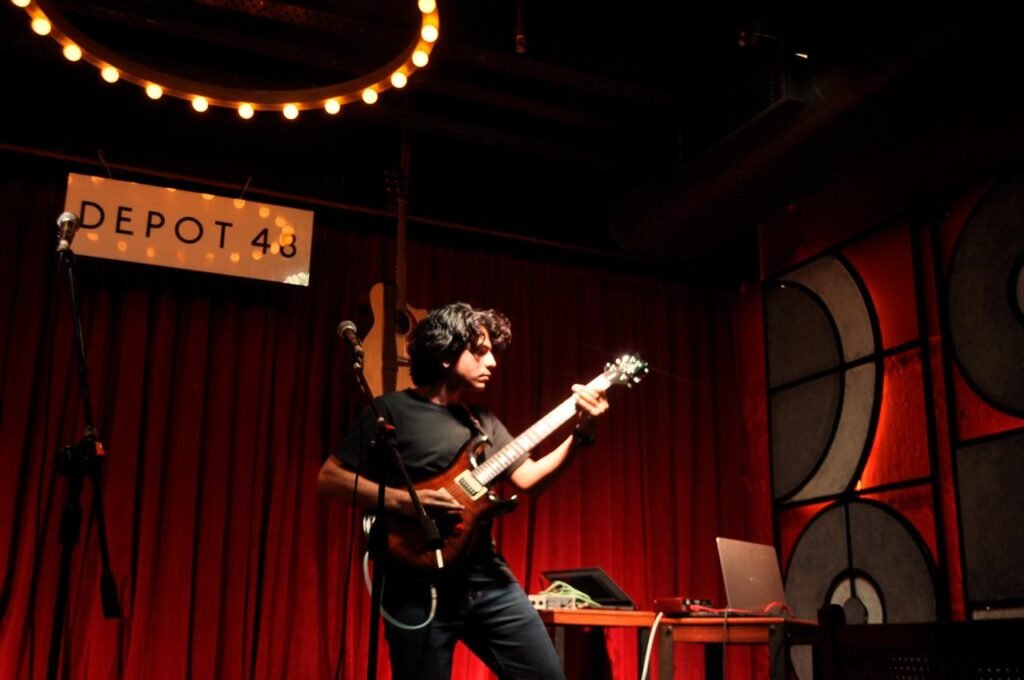
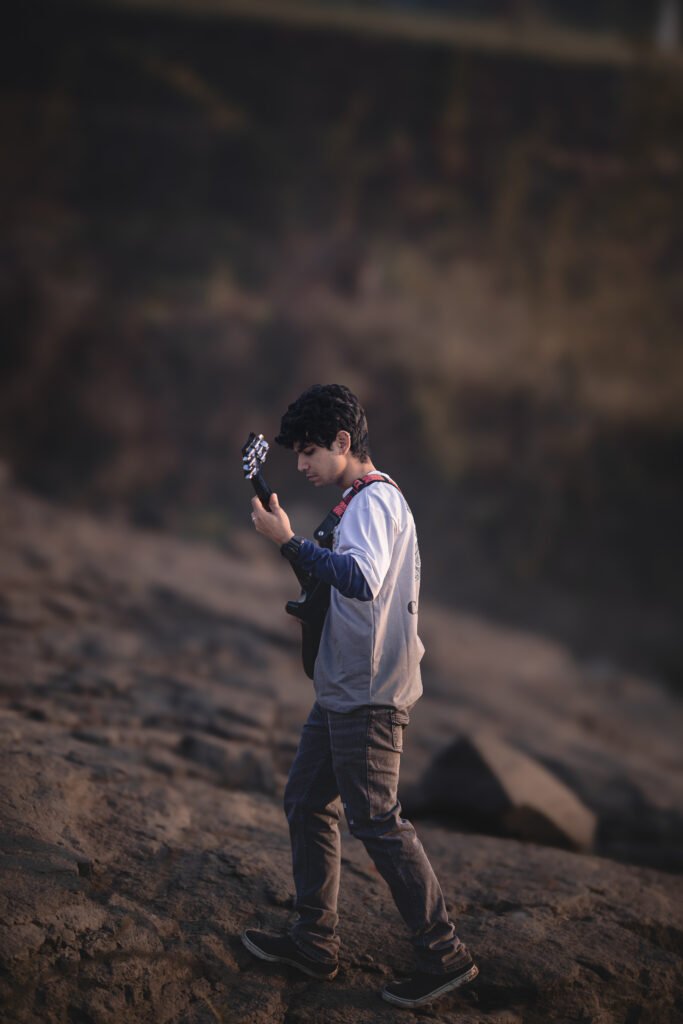
Some musicians wait for a scene to emerge around them. Priyanshu is not one of them.
The guitarist, educator, and composer from India has spent years dedicating himself to a genre that most of his peers dismissed as commercially unviable. Not out of stubbornness, but out of a quiet conviction that music with genuine artistic intent will always find the people it is meant for. Progressive rock in India is not a guaranteed path to recognition. It demands patience, technical discipline, and a willingness to operate at the margins of an industry built around different priorities. Priyanshu understood all of this before he committed, and he committed anyway.
His story is not really about genre. It is about what happens when a musician decides that authenticity matters more than strategy, and then spends years proving it.
A Musical Education Without a Curriculum
Priyanshu grew up surrounded by music in a way that resists easy categorisation. His father taught him guitar, and that early instruction opened a door to a listening diet that ranged widely.
“My dad taught me guitar, and the first song I learned was Blowing in the Wind by Bob Dylan,” Priyanshu says. “Then one day I went to a music store and saw someone shredding, and I was completely blown away. I wanted to play like that. From there my ears went everywhere. Metallica, then Ed Sheeran, hip-hop, rap, pop, EDM. Nirvana, Foo Fighters, Slayer, Michael Jackson. I never thought of those as contradictions. They were just music.”
What this kind of eclectic upbringing tends to produce is a musician who does not hear genre boundaries as walls. Priyanshu absorbed melody, rhythm, aggression, tenderness, and technical ambition from entirely different corners of the musical world. When he eventually encountered progressive rock, it did not feel like a departure from everything that had come before.
“My dedication to prog rock mainly came from the insane amount of metal I listened to,” he says. “The heavy distorted guitars, the heavy drums, and specifically that drop kind of music where there’s a build and then this thing just hits. I really liked that. And then mixing emotional and technical elements together is what I love most about prog rock. It felt like the place where all of that could live at once.”
Choosing the Difficult Path
The commercial reality of progressive rock in India is not a secret. It occupies a niche that does not guarantee large audiences, reliable festival slots, or the kind of algorithmic visibility that sustains independent artists in the streaming era. Priyanshu was aware of this when he made his choice, and it shaped how he thought about the work from the beginning.
His confidence came partly from observation. Artists such as Plini had demonstrated that instrumental progressive music, built on genuine craft rather than compromise, could build a devoted international following. Closer to home, guitarists like Sutej Singh reinforced the idea that India’s progressive scene was not static.
“I really like creating music and playing live, so even if the scene is small, I have to find a way out,” Priyanshu says. “I firmly believe that if the music is really good, it can create a scene and you will have people following you and looking forward to your music. Acts like Plini and Indian acts like Sutej Singh gave me a lot of hope that we can create a scene here.”
That patience is not passive. It is grounded in a belief that exceptional music builds its own community, and that producing work of genuine quality is the only strategy worth committing to, even without a clear sense of when the audience will arrive.
What Teaching Gave Back
Becoming a guitar educator changed Priyanshu in ways that extended well beyond the classroom. Teaching forces a kind of accountability that performance alone does not always demand. When you are responsible for helping someone else understand music, clarity becomes non-negotiable.
“Teaching changed the way I approach my playing and songwriting,” Priyanshu says. “Now I don’t just create technical riffs or solos. I also try to see how the music can become relatable, where students are able to understand it even if they are at a different level compared to any other player they look up to. I’ve also learned the ability to keep the music fresh with a less is more approach.”
The principle of less is more, which can feel counterintuitive to a technically accomplished guitarist, became something he embraced with increasing confidence. Not because technical ability became less important, but because he came to understand it differently. Technique is most powerful when it serves emotion rather than displaying itself.
“I’ve also learned the ability to keep the music fresh with a less is more approach,” he says.
Honesty Over Curation
Priyanshu’s approach to social media and independent musicianship runs against a great deal of received wisdom about how artists should present themselves online. The dominant logic of content creation rewards polish, consistency of image, and the careful management of what audiences are allowed to see. Priyanshu chose a different approach.
“Because I know it’s short-lived,” he says. “Especially in today’s time where social media is just a pair of glasses. Once it’s removed, people can already tell what is going on in everyone’s life. Deep down they know what is real and what is not, but the glasses are making them feel quite different about the other person. The crux always goes back to the music, the good music because of which I got into playing. So the content should also highlight the music and the story that I’m trying to tell through the music.”
This was not a calculated strategy. It reflected a genuine belief that audiences are more perceptive than they are often given credit for, and that the connection formed through authenticity is more durable than the one formed through image management. For an independent musician operating in a niche genre, that trust is not a soft asset. It is foundational.
Emotion Before Complexity
Ask Priyanshu about songwriting and the answer consistently returns to the same point.
“It’s always the emotional part that I focus on,” he says. “The technical complexity is something that comes natural to me, so both of them naturally blend.”
For musicians with serious technical ability, that temptation is constant. The instrument is capable of extraordinary things, and the desire to explore those capabilities is part of what drives serious musicians forward. But Priyanshu has arrived at a clear position. Technical ability should arise organically from emotional necessity. A song’s complexity should feel earned rather than imposed, the result of following an emotional idea to its logical conclusion.
“It’s always the emotional part that I focus on,” he says, “and the technical complexity is something that comes natural to me, so both of them naturally blend.”
Building Something That Lasts
Priyanshu’s long-term ambitions for India’s progressive music scene are structural as much as they are artistic. He wants to elevate the guitar as a lead instrument, to increase the visibility and credibility of instrumental music in a landscape that still tends to prioritise vocal-led work.
“I would like guitar to be at the forefront in the next 5 to 10 years, where guitar is not seen just as a rhythm instrument, but more of a lead instrument, and where instrumental music also takes the spotlight,” he says. “I also would like the scene and the community to give back to musicians in terms of financial stability and education in music, so that a lot of people and especially youth can pursue it as a career. The dream should not look impossible to achieve.”
This means thinking about the scene as a whole, not just his own output. The work is patient, long-term, and driven by a belief that the progressive music community in India has the capacity to grow into something genuinely sustainable.
A Scene Built Song by Song
What Priyanshu represents is something specific and valuable: the willingness to build before the conditions for building are guaranteed. India’s progressive rock scene is growing, but that growth does not happen automatically. It happens because musicians like Priyanshu make work of genuine quality, share knowledge generously, and treat community as something to be created rather than waited for.
“The dream should not look impossible to achieve,” he says.
The next generation of progressive musicians in India will inherit a scene that is more developed, more visible, and more credible than the one Priyanshu entered. That inheritance will not have come from a single breakthrough moment or a shift in commercial winds. It will have come from years of honest work, patient education, and exactly the kind of quiet conviction that makes a scene real.
Mishuk is a digital marketer by profession and a storyteller at heart. He crafts narratives through content marketing, blending strategy with culture. When he’s not building campaigns, you’ll find him immersed in music, martial arts, and all things creative. Yes he also designed the website you’re reading right now.