Most industries reward speed.
The people who create the most meaningful work often move in the opposite direction.
There is a kind of discipline that doesn’t announce itself. It doesn’t post metrics or publish milestones. It shows up quietly, day after day, in the repetition of small acts done with full attention. A dot placed carefully. A line drawn slowly. A choice made, again and again, to resist the pressure to rush.
This kind of commitment is harder to sustain than it looks. It requires a person to know, with unusual clarity, what they actually value. And it requires them to keep returning to that knowledge when the world suggests otherwise.
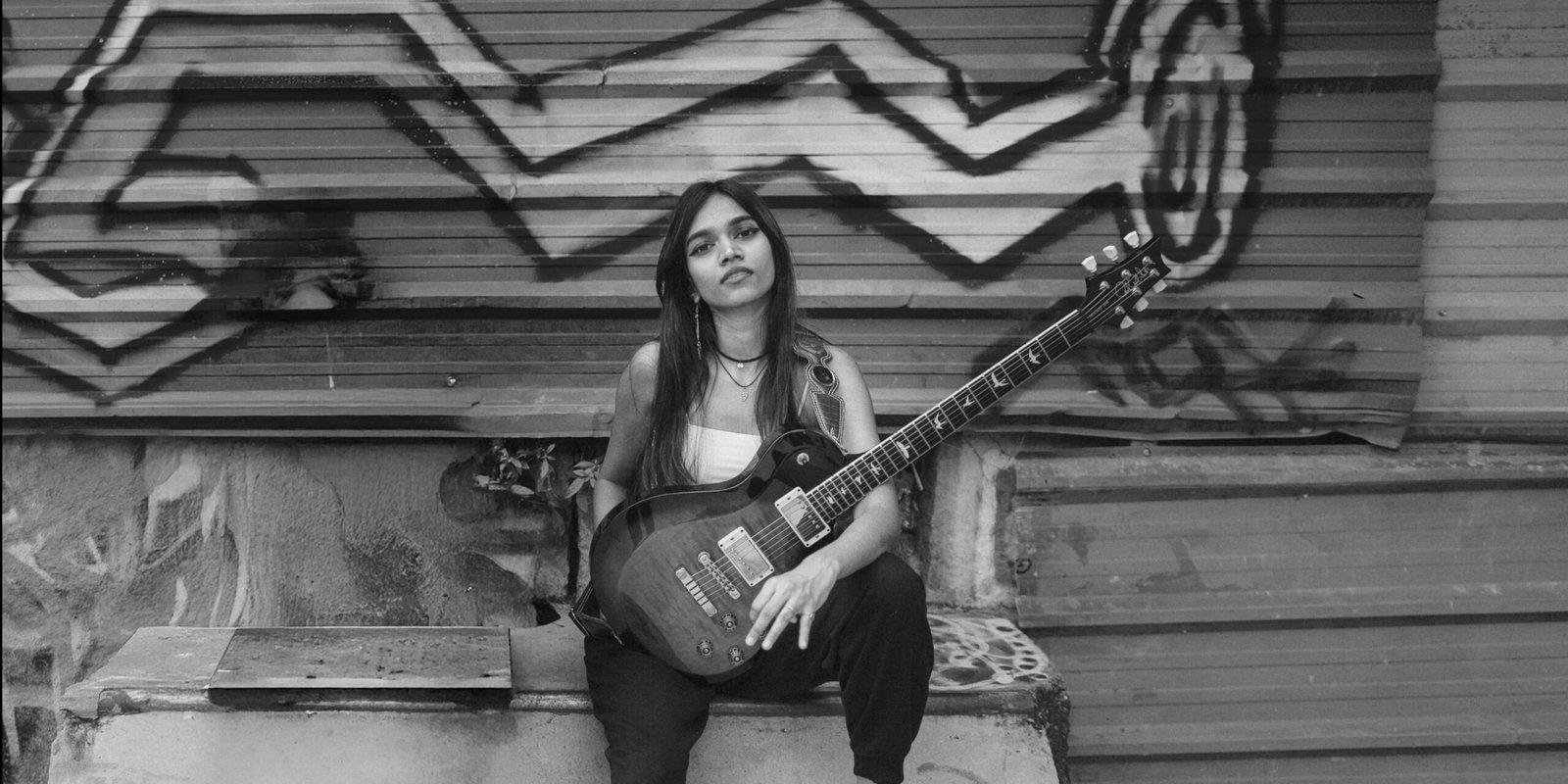
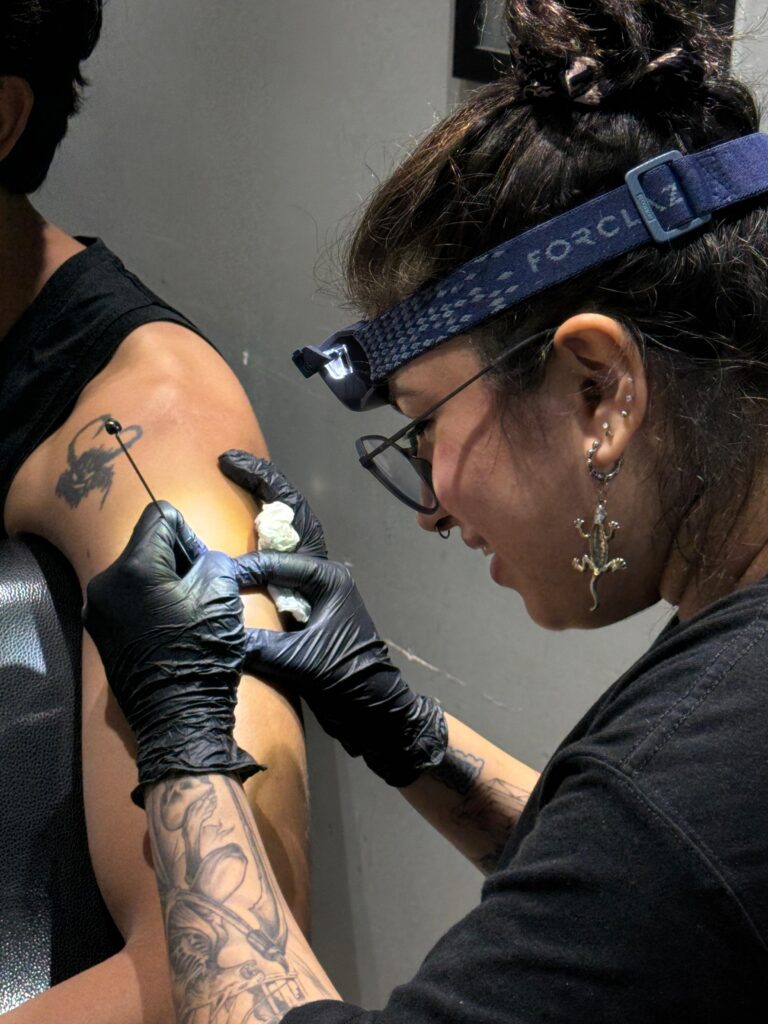
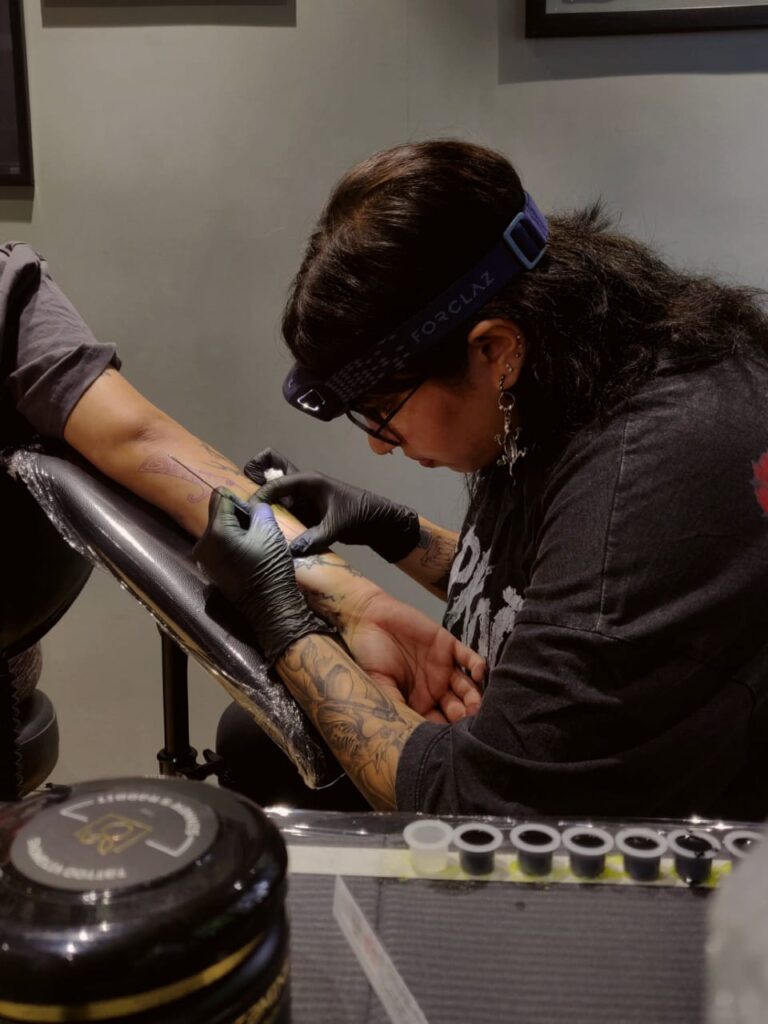
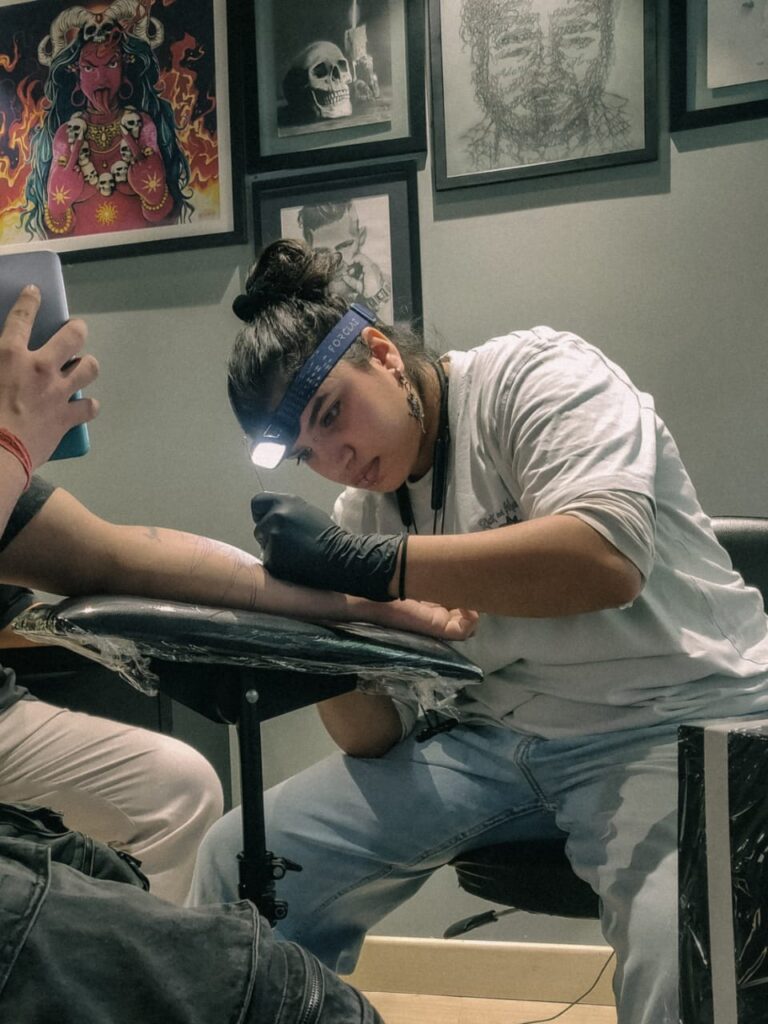
Jessica Rachel Tauro, a self-taught handpoke tattoo artist based in Mumbai, has been doing exactly that for nearly five years.
Before Tattooing, There Was Community
Identity is rarely built from one pursuit.
Before Jessica committed fully to tattooing, her life held many textures. She coached football to children between the ages of five and fifteen. She completed a degree in interior design. She cooked. She played football. Each thread contributed something to the person she was becoming, even when the connection wasn’t immediately obvious.
Interior design sharpened her eye. It made her work precise. But something was missing.
“I unfortunately didn’t fully resonate with it,” she says. “I felt like I wasn’t able to express my work or myself through the designs.”
Football coaching offered a different kind of lesson. Being a tattooed, pierced coach was, as she puts it, “a bit unorthodox.” The children, though, loved her for it. She still keeps in touch with some of them today.
“Community is everything as human beings,” she says. “Otherwise is there truly a purpose?”
It’s a question worth sitting with. Not as a rhetorical provocation, but as a genuine organizing principle. For Jessica, the meaning behind any practice has always been relational. The work matters because people matter. The craft exists inside a web of connection.
Learning Through Unexpected Places
The lessons that shape artists often arrive outside of art.
Coaching children was not an obvious path toward becoming a tattoo artist. But the two experiences share more than they might appear to. Both require attention. Both require the ability to hold space for someone else’s process. Both demand patience as a daily practice, not a personality trait.
“It taught me patience, a different perspective and to give 100% in everything I do,” Jessica says of her time coaching.
That phrase, “give 100% in everything I do,” carries weight precisely because it isn’t specific to any single discipline. It describes an orientation toward work itself. A commitment to showing up fully, regardless of the medium.
The First Encounter
Some creative paths begin as fascination before becoming purpose.
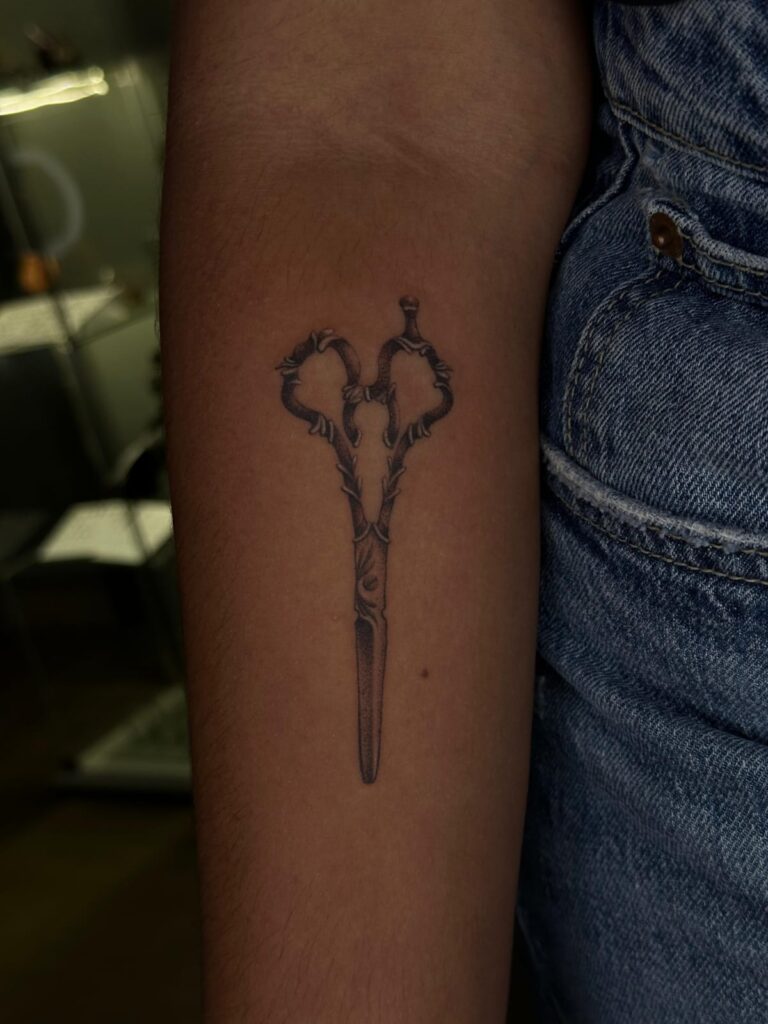
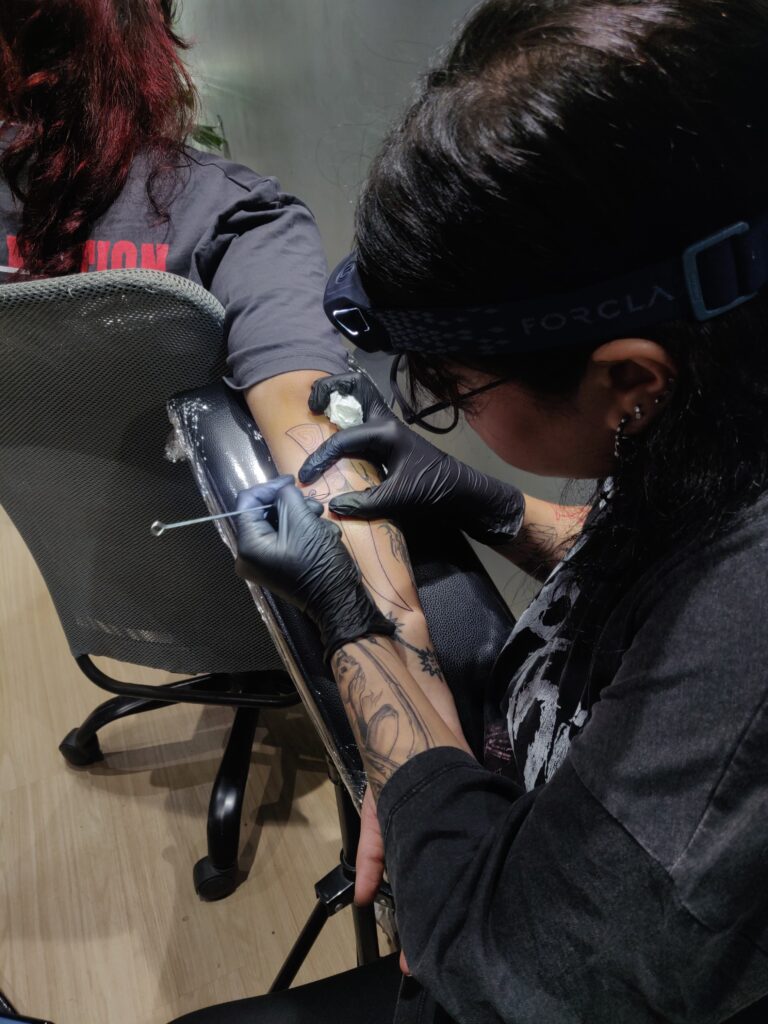
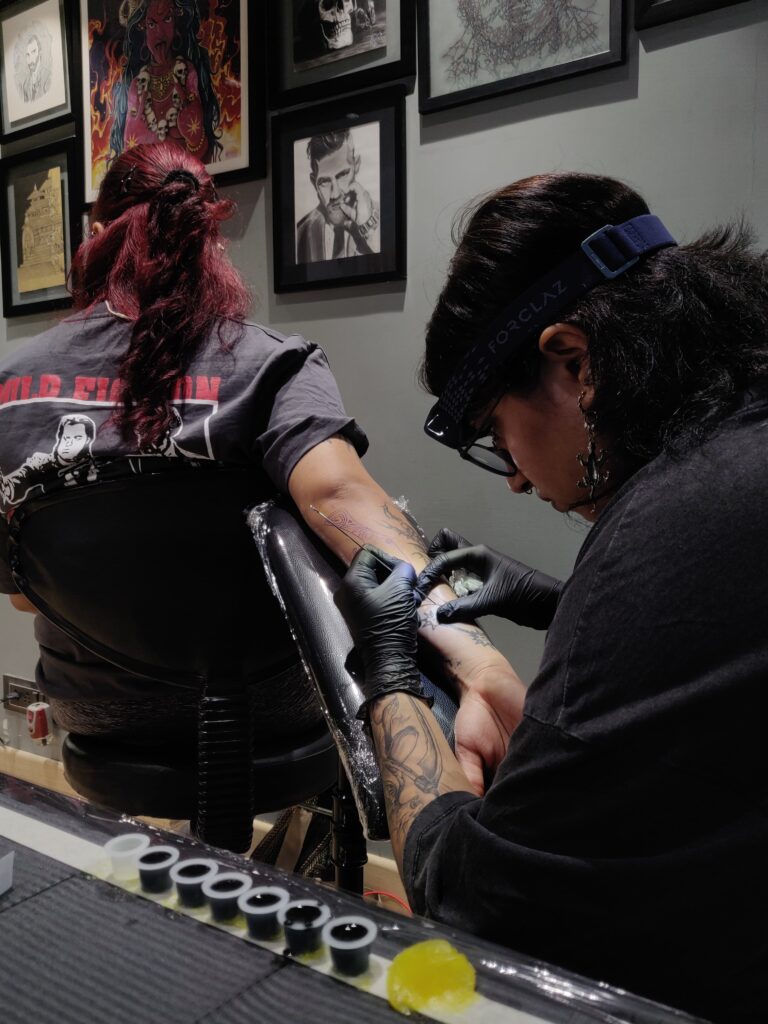
Jessica was seventeen when a friend started doing handpoke tattoos. Her sister was getting one done, and Jessica decided, out of curiosity, to come along and watch.
“I was mesmerized,” she says. “I was immediately invested and I wanted to know more about it.”
That initial encounter moved quickly. She got her first tattoo shortly after. Then eight more in the same month. Then, with whatever savings she could pull together, she bought her own supplies and started teaching herself.
There was no mentor. No formal training. Just curiosity following itself forward.
Why Handpoke Stayed
Sometimes people choose a medium because of what it does to them, not only what it produces.
Jessica has been asked, more than once, why she hasn’t switched to machine tattooing. The question tends to come wrapped in the assumption that cleaner results would follow. Her work is precise enough that people frequently mistake it for machine work. By that logic, why stay with the slower method?
The answer, for Jessica, has never been purely technical.
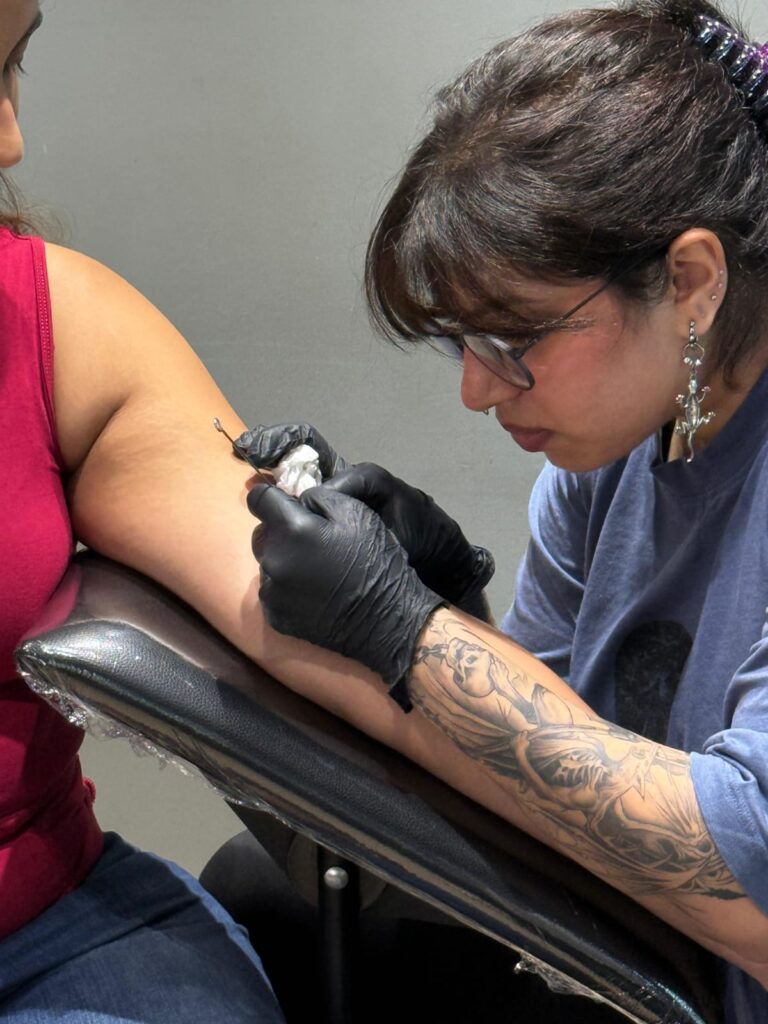
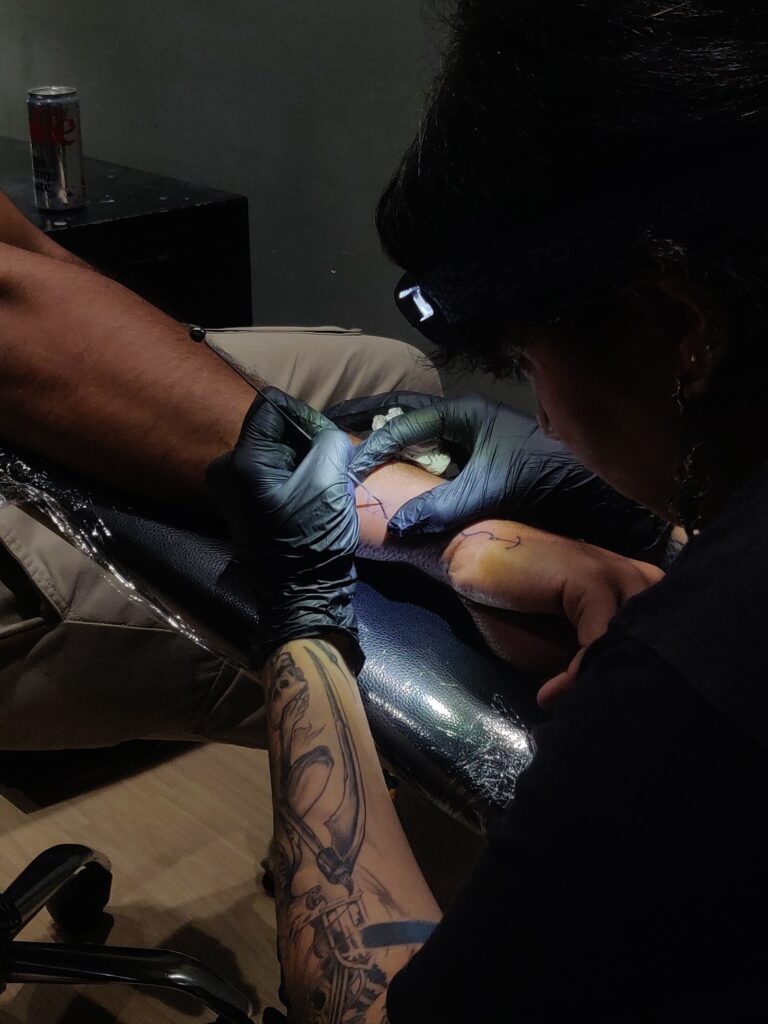
“Right from the beginning, it brought me a sense of peace,” she says. “It made me focused, calm and centered.”
This is something distinct from aesthetic preference. It describes a psychological state that the practice itself creates. Handpoke tattooing isn’t just what Jessica does. It’s what handpoke tattooing does to her.
Choosing the Slower Method
Attention reveals itself through detail.
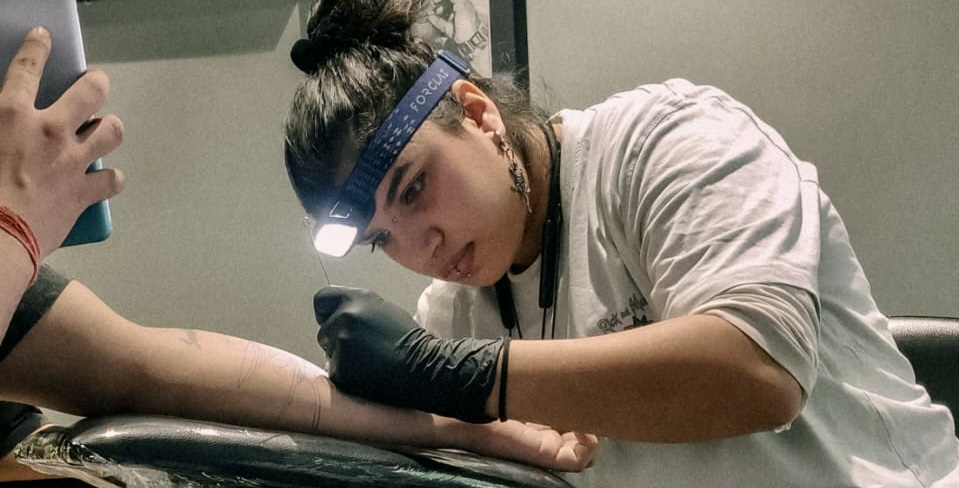
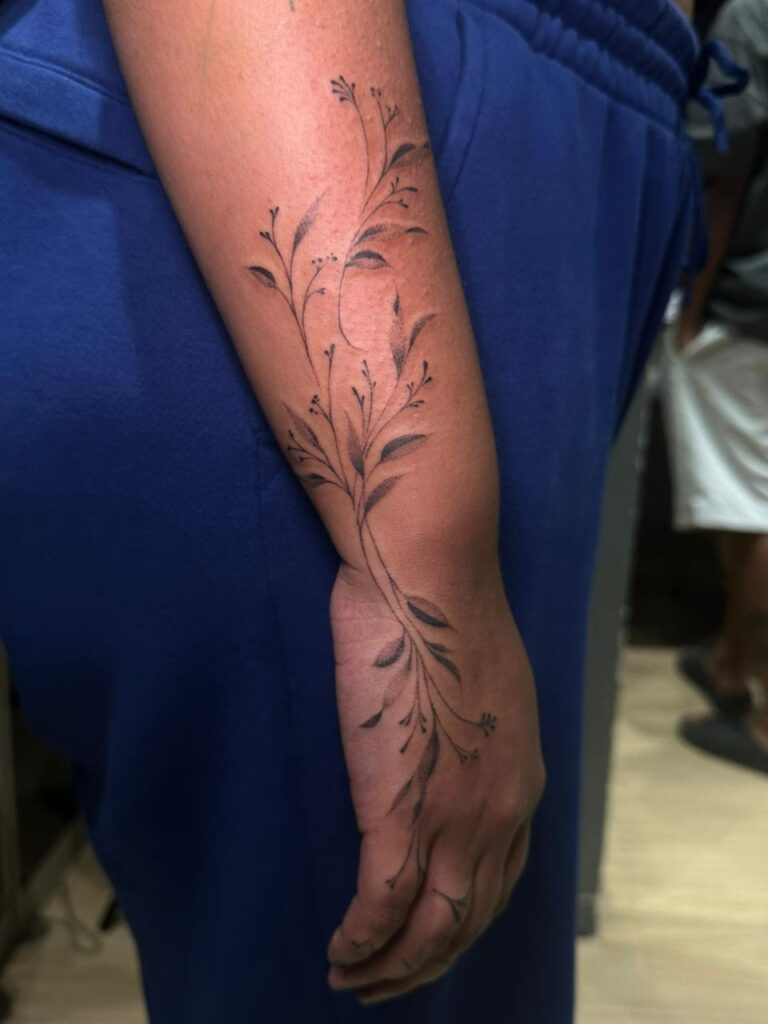
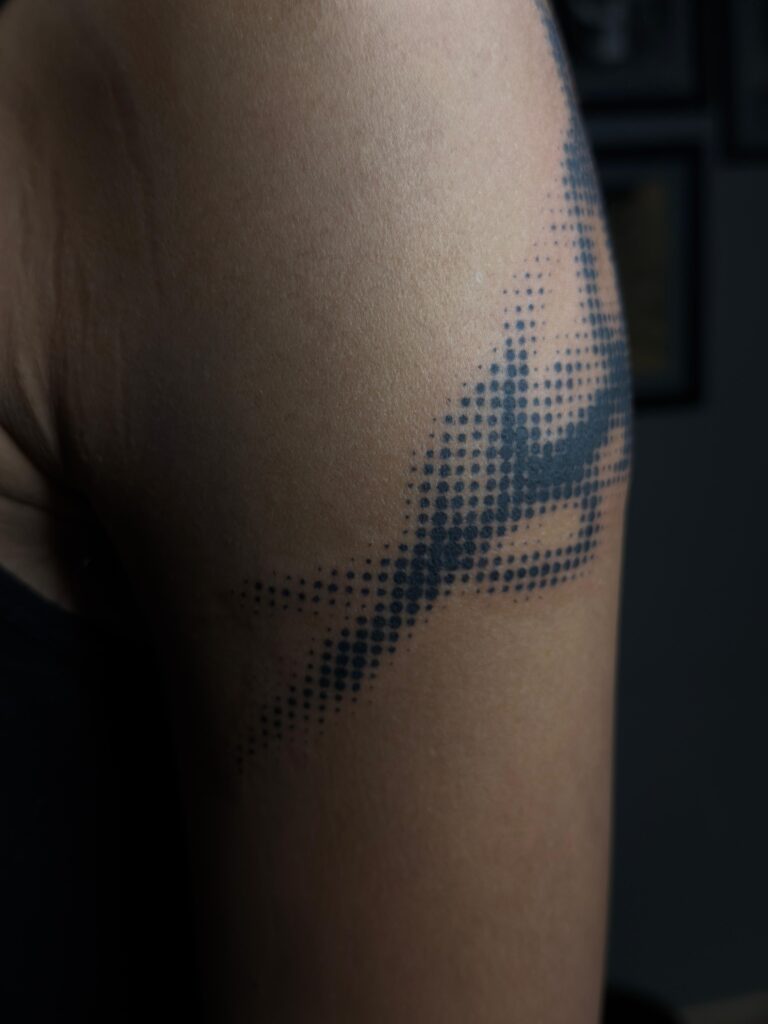
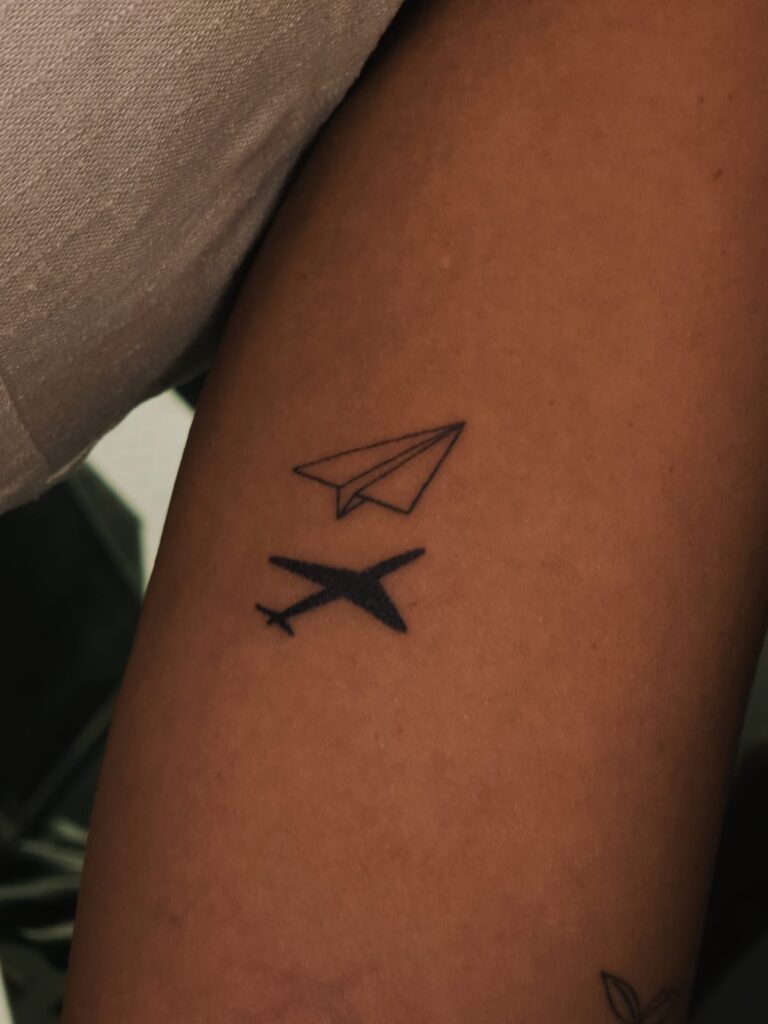
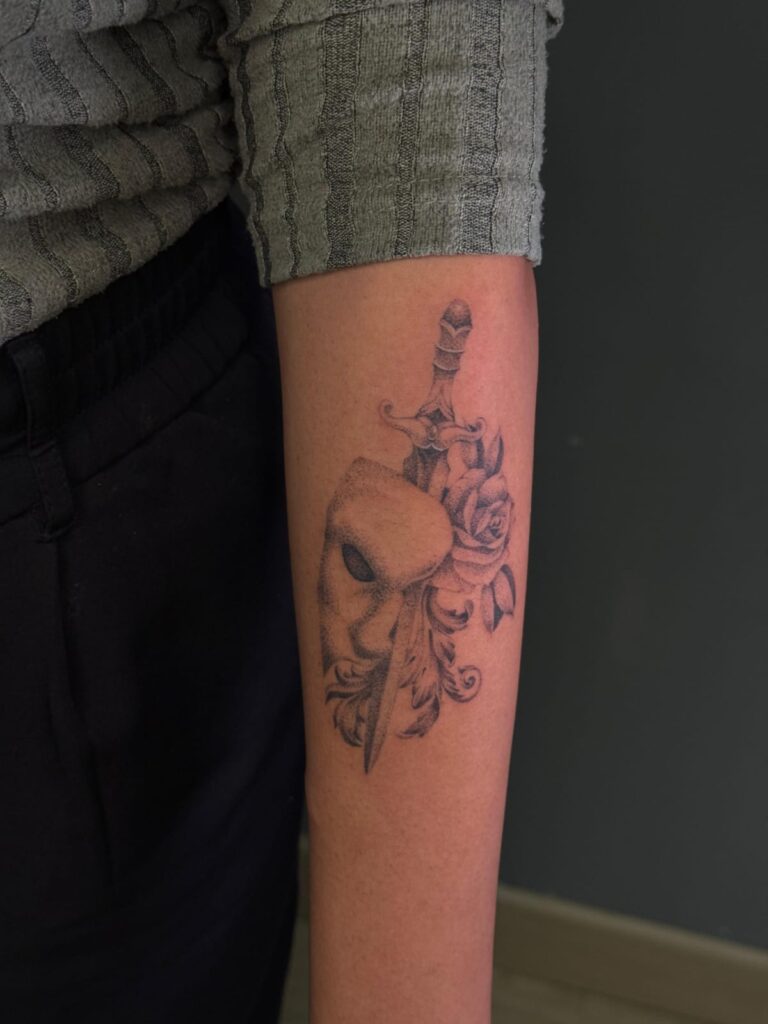
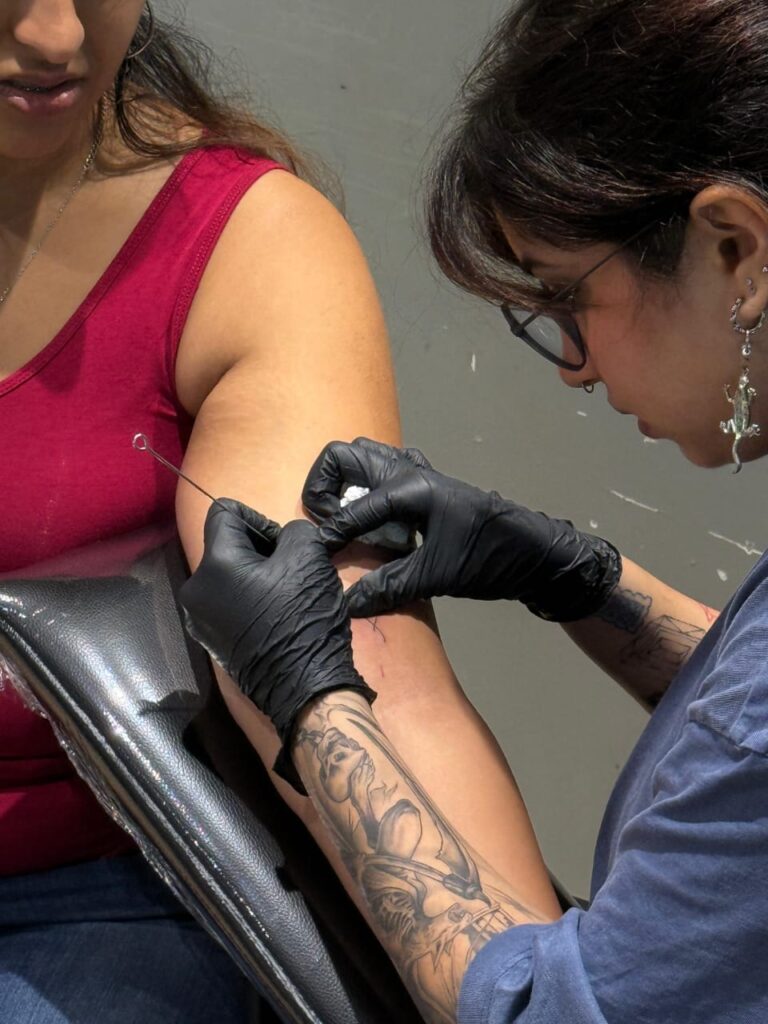
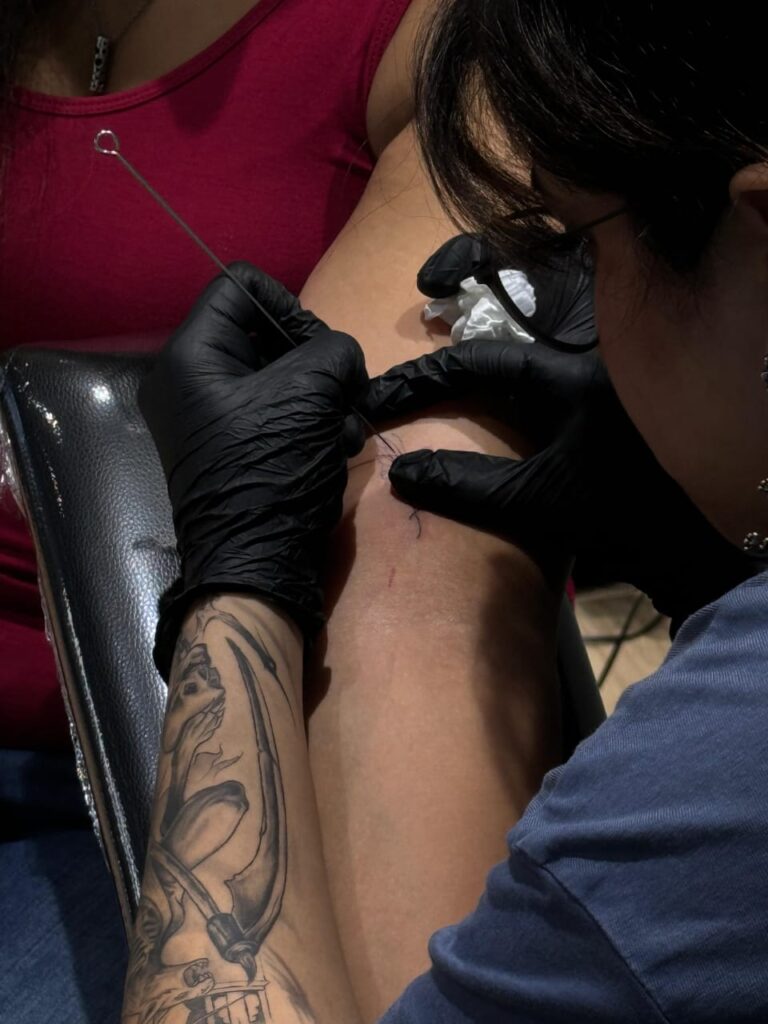
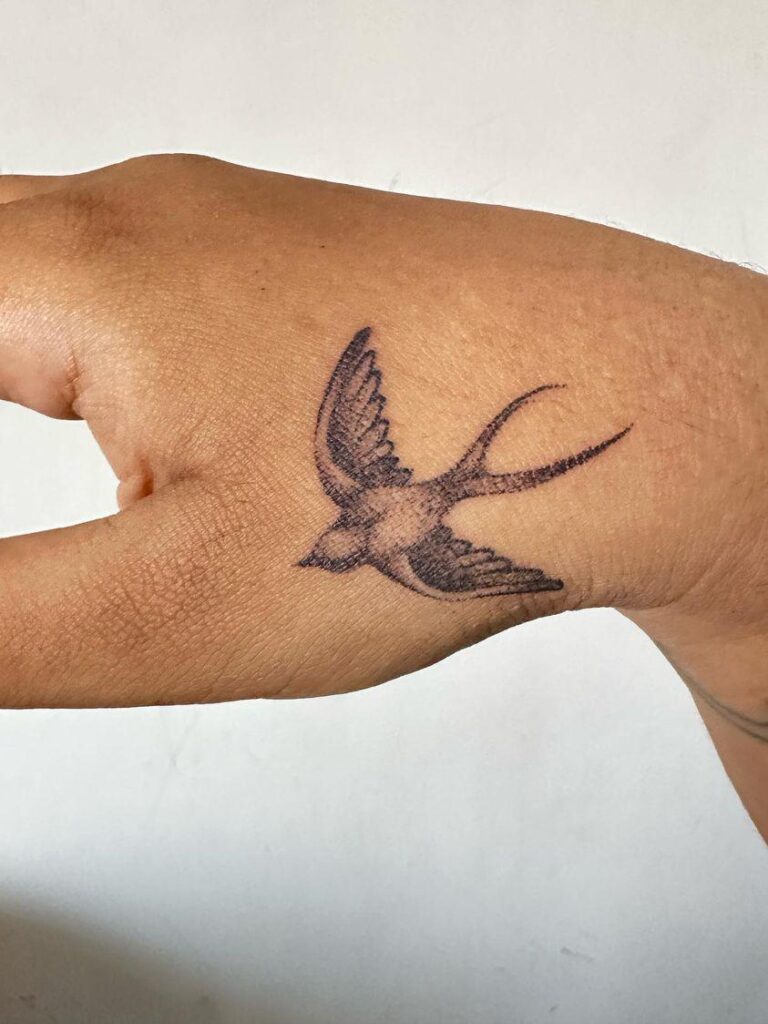
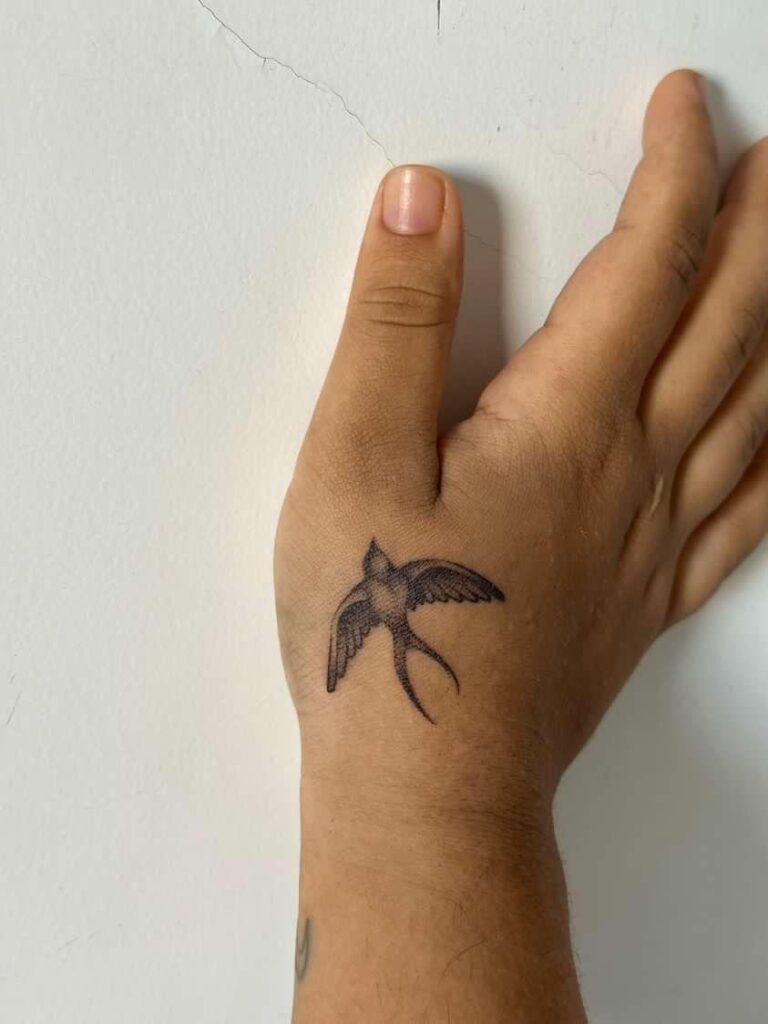
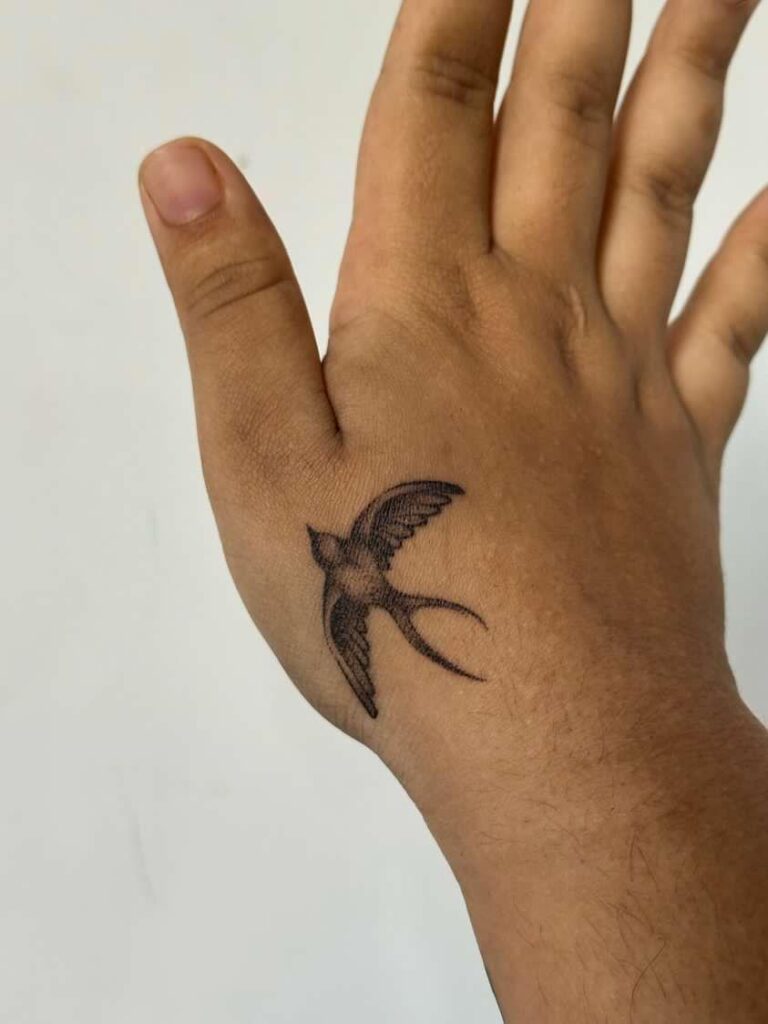
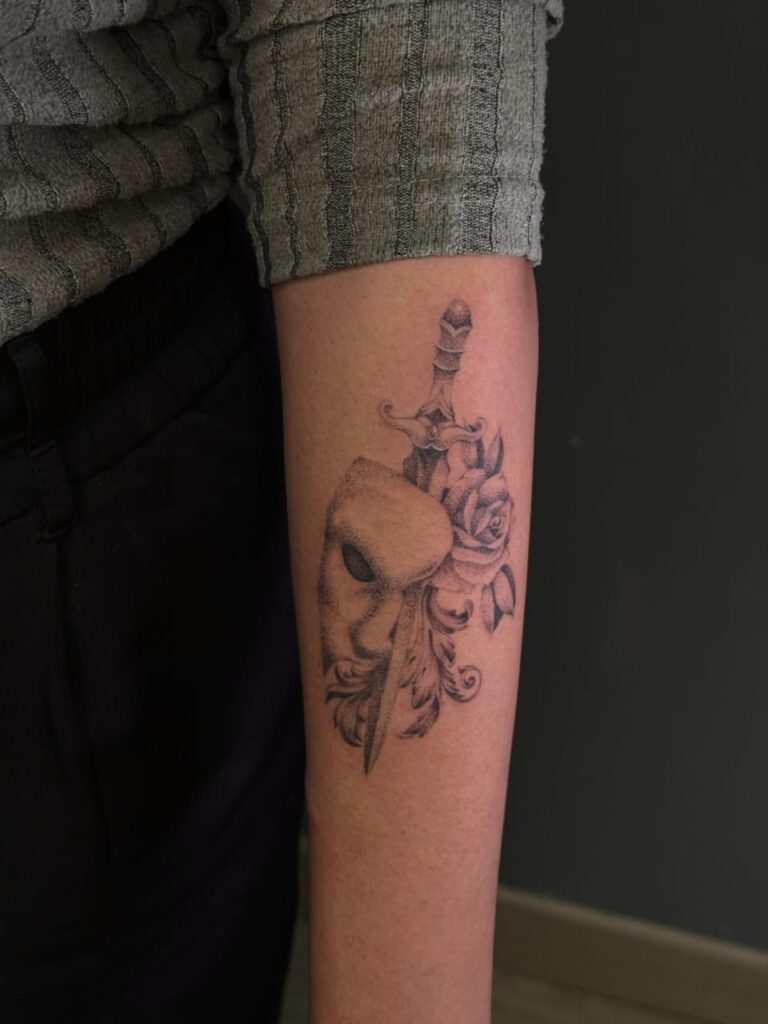
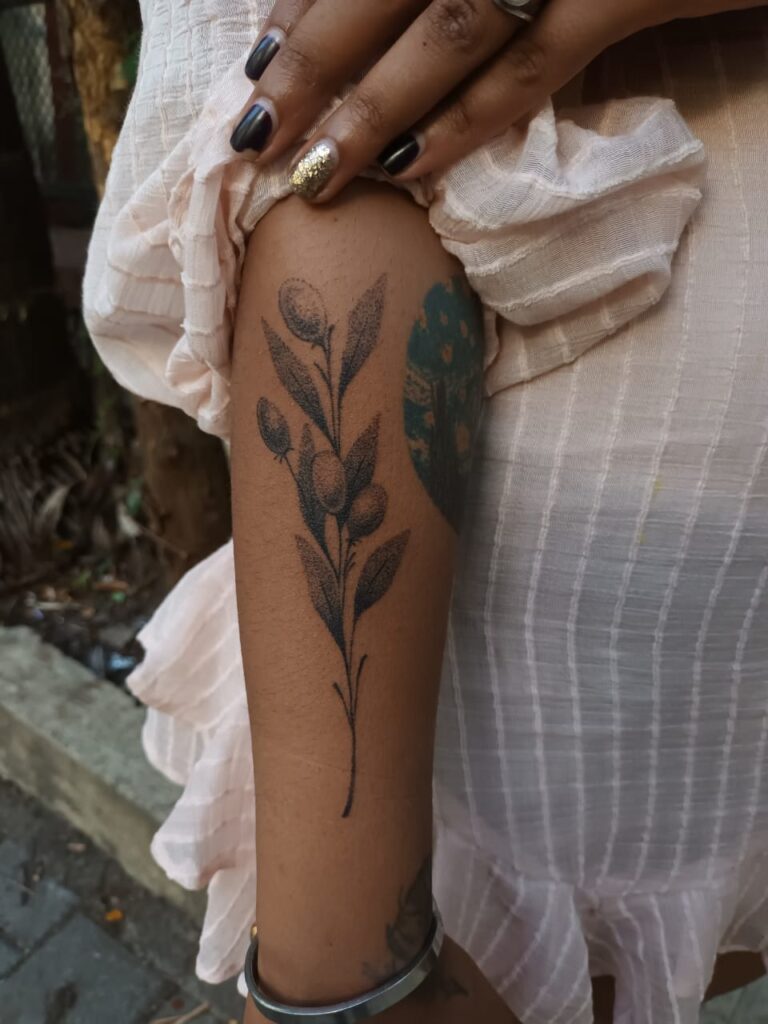
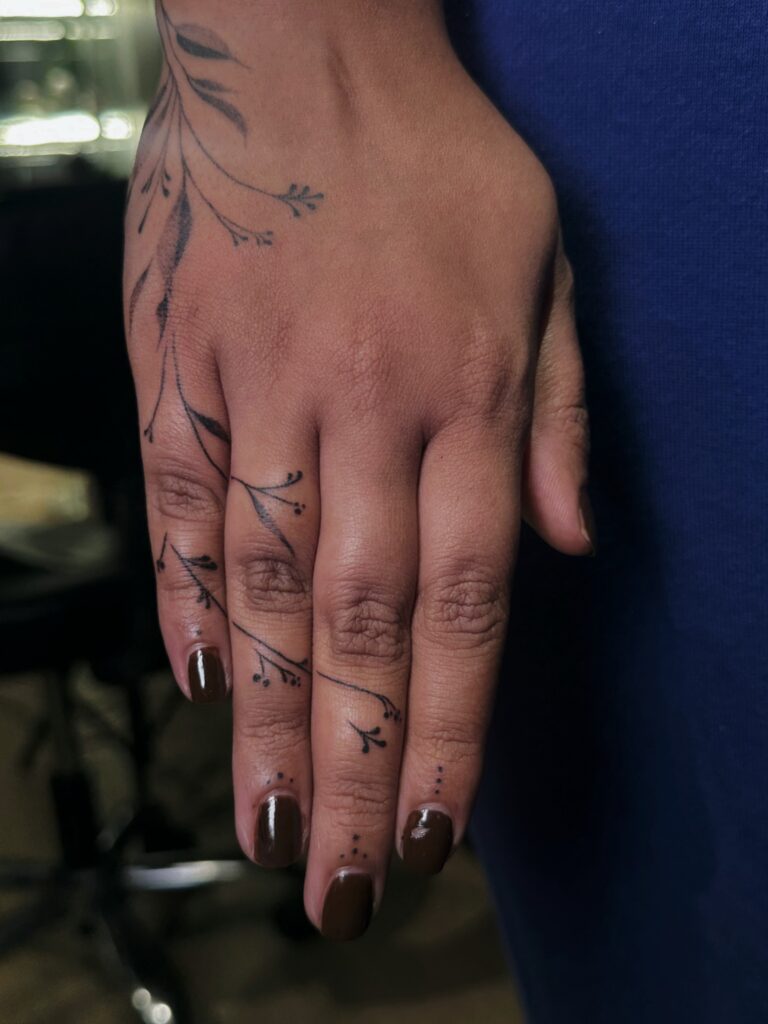
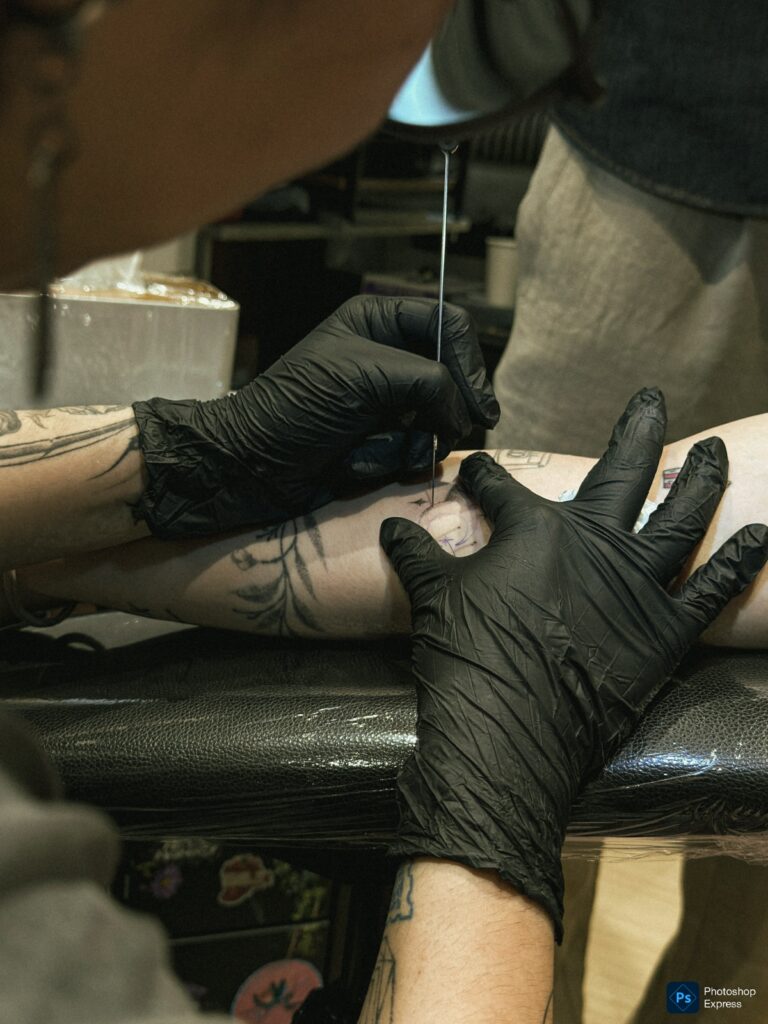
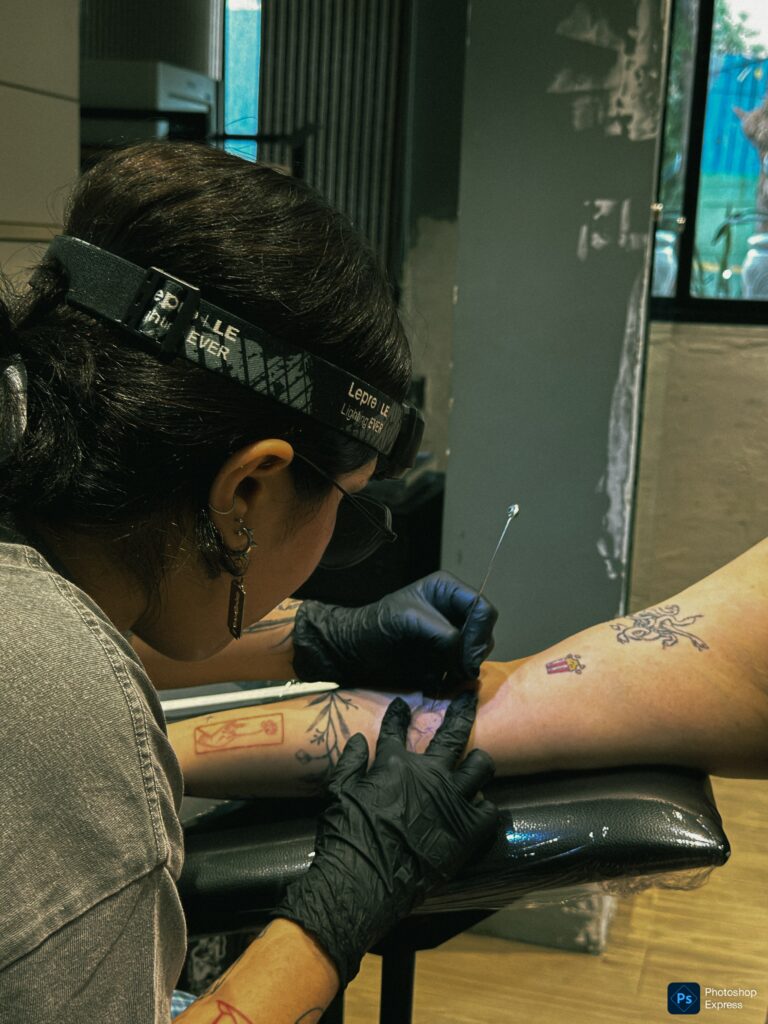
Every finished piece Jessica produces is the result of individual, deliberate marks. No shortcuts. No automation. Each dot placed by hand, each line built through repetition and care.
“In order for your work to be clean, it must be intentional,” she says. “When you love your work, it shows. In the small details and the patience to create each dot.”
This intentionality isn’t a stylistic choice layered on top of the work. It is the work. Removing it would change not just the outcome but the entire nature of the process.
The Value of Taking Time
Speed and permanence rarely belong together.
There is an obvious tension in tattooing between efficiency and quality. Clients have schedules. Artists have bookings. Time is always a consideration. Jessica is direct about where she stands in that tension.
“I don’t like to rush my process,” she says, “because if I’m doing my job, I like to do it to the best of my ability and that does take time.”
The stakes justify the pace. “The result is a permanent one and a clean one at that.”
Permanence changes the calculus. When something will last a lifetime, the extra hour spent getting it right is not inefficiency. It is the point.
Flow State
Craft often becomes meditation.
There is a quality of experience that skilled practitioners describe when they are deep inside their work. A kind of absorption where time changes shape and the gap between intention and action narrows to almost nothing.
Jessica knows this feeling well.
“I feel I have more control over lines because of poking,” she says, “because you can feel the skin push back ever so slightly and then you go into a flow state.”
That physical feedback loop, the skin responding, the needle meeting resistance, creates something more than technique. It creates presence. Full attention, moment to moment, dot to dot.
Resisting External Pressure
Conviction matters more than trends.
Five years into her practice, the advice hasn’t stopped coming.
“I still constantly get advice on whether I should quit handpoke,” she says. The reasoning tends to follow the same logic: her work is clean enough for machine, so why persist with the harder path?
Jessica’s response is not defensive. It’s grounded.
“I knew what I wanted to do 5 years ago at 17. And if that girl was brave enough to take that risk all those years ago, then this girl can definitely make it.”
There is something clarifying about that kind of self-knowledge. Not certainty about outcome, but certainty about direction. She chose her path with full awareness of what it was, and she has continued to choose it every day since.
Why Community Matters
Creative independence still requires support systems.
Choosing a niche path is one thing. Sustaining it over years, through criticism and pressure and self-doubt, is another. Jessica is honest about what has made that possible.
“My loved ones and fellow artists overtime have all been so encouraging,” she says.
That encouragement doesn’t dilute her independence. It makes it viable. The people around her haven’t asked her to become more commercially legible. They have seen what she is building and believed in it alongside her.
Discipline Before Talent
Mastery is usually invisible work.
There is a tendency, when looking at finished work, to assume the quality arrived naturally. That some people are simply gifted and others are not. Jessica pushes back against this quietly but firmly.
“Every good artist has discipline,” she says. “People think the work just became clean automatically but it took 30 free practice pieces and a lot of trial and error without a mentor to get here.”
Thirty free pieces. No formal guidance. Sustained effort before there was any external validation to sustain it. This is what the finished work doesn’t show: all the work before the work.
The Privilege of Being a Beginner
Growth requires humility.
One of the more striking qualities in Jessica’s reflection on her own journey is the way she frames mistakes. Not as failures to be minimized, but as experiences to be honored.
“Throughout my journey, I always told myself, what a privilege it is to make mistakes and learn from them,” she says. “What a privilege it is to have once been a beginner.”
That reframe is not small. It turns the most uncomfortable parts of learning into something worth protecting. Mistakes become data. Inexperience becomes a particular kind of freedom.
Looking Back
Legacy is often found in process rather than achievement.
When asked what she would want someone to understand about her work, looking back ten years from now, Jessica doesn’t reach for recognition or reputation.
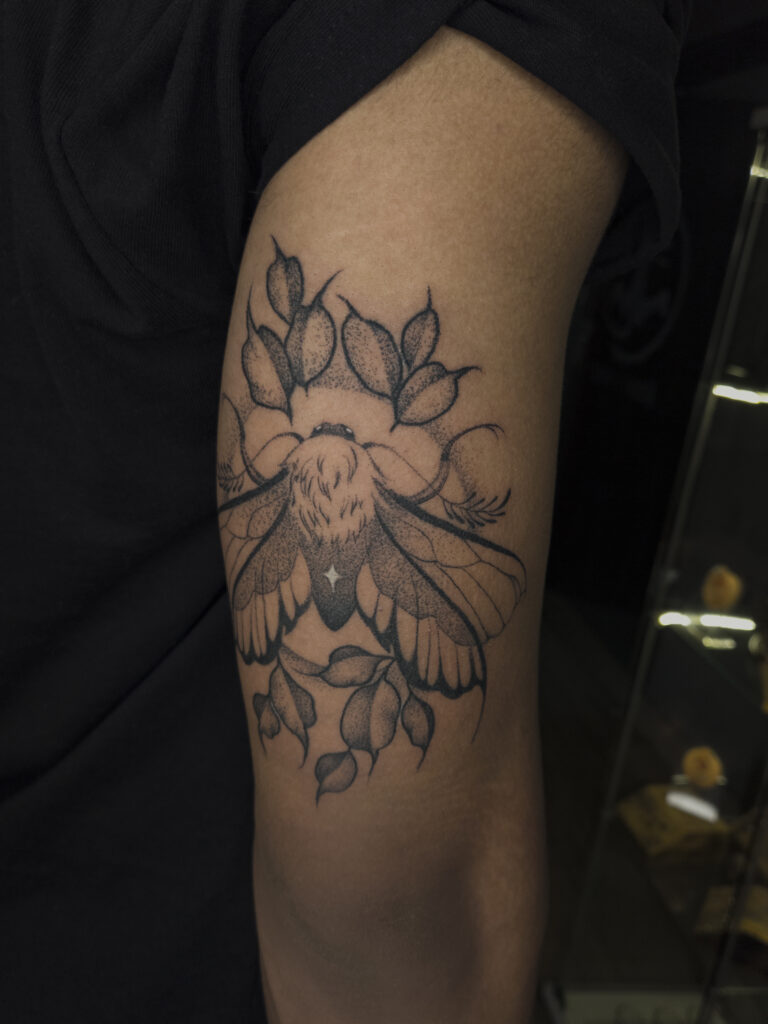
“I would love them to see the thought, sentiment, intention and attention to detail in every single dot,” she says. “I would want them to see the love I had all those years ago and only how much more it grew as I kept at it. I would hope it inspires others to take that risk and make something beautiful out of it no matter what others have to say.”
Not the accolades. Not the milestones. The love, visible in the dots themselves.
In a culture that constantly asks people to move faster, there is something quietly radical about choosing to slow down.
One dot at a time.
Follow Jessica on Instagram
Lubdhak Biswas is a musician, entrepreneur and a tattoo artist based out of Kolkata (India).
He documents underground culture at the crossroads of tattooing and music.
His work focuses on craft, tools, ethics and the real working realities of creative industries.