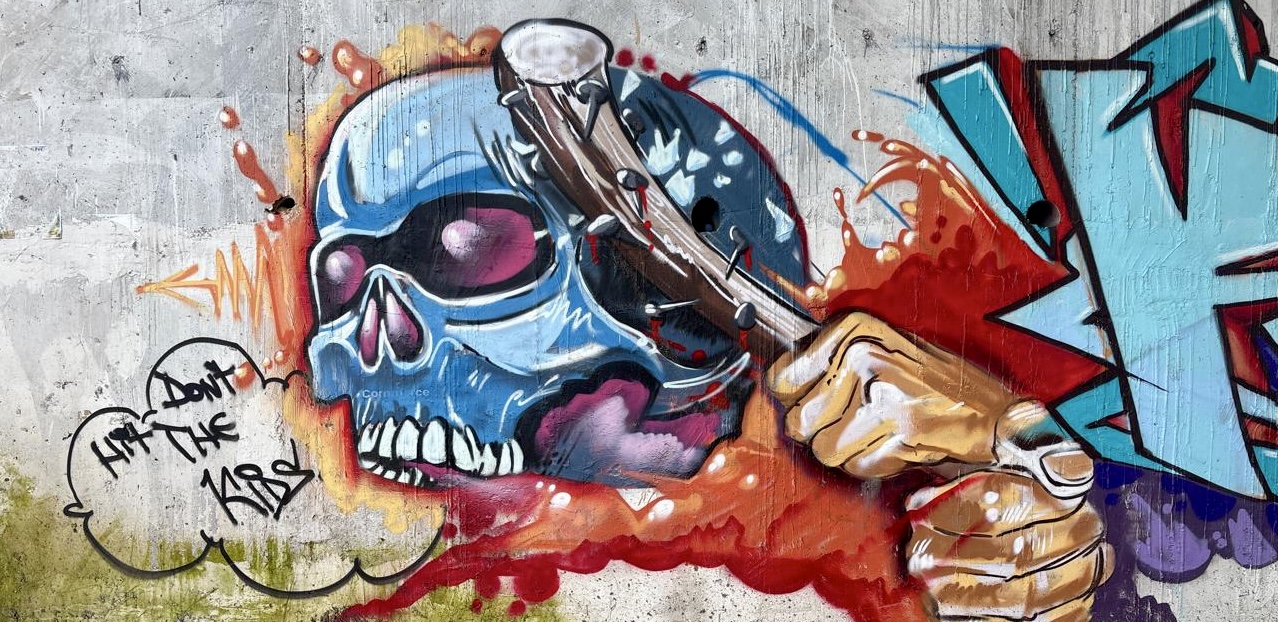
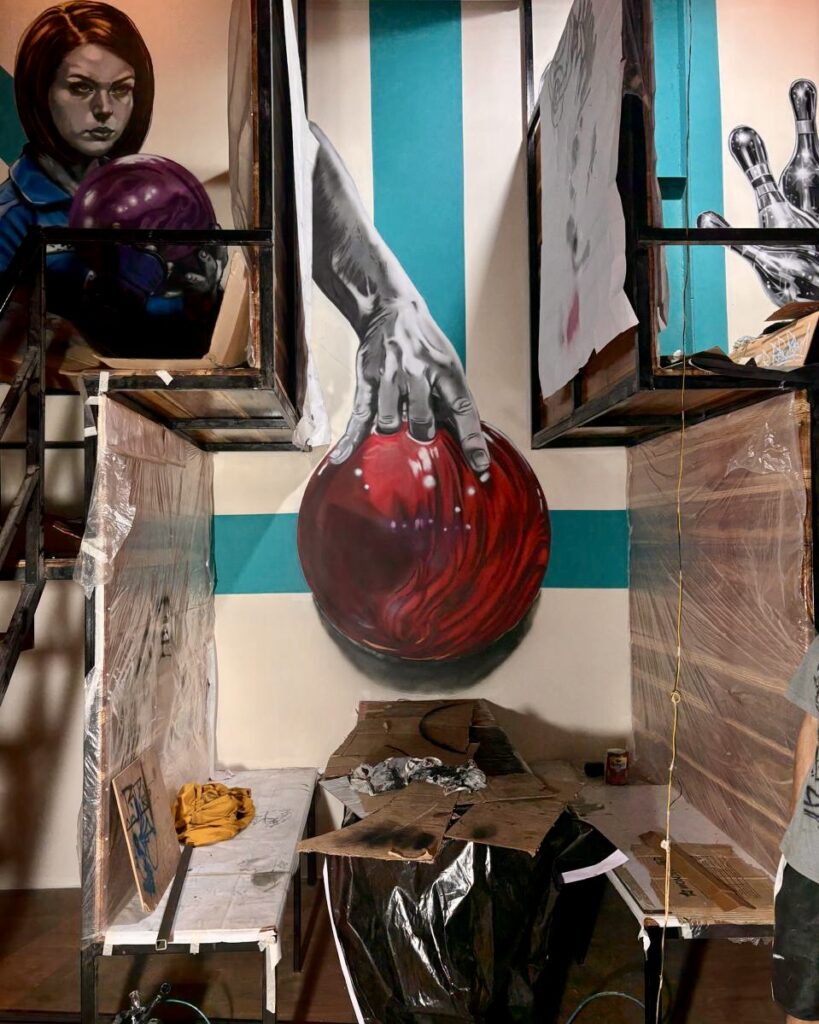
Some artists have studios with big windows and quiet afternoons. Oliver W. Lyndem has ambulance shifts, three kids, bamboo scaffolding, and a sketchbook he opens after midnight once the house finally goes quiet.
He is a muralist and graffiti artist from Shillong. He is also a husband, a father, and a man who drives an ambulance for a living. On paper, those lives look like they should be fighting for the same hours. In practice, Oliver has found a way to make them hold each other up.
His walls tell stories. His life tells a slightly different one: about stubbornness, about joy, and about a kid who got into serious trouble for loving colour too much and never really stopped.
Three Letters on a Wall
Start with the name, because in graffiti, the name always comes first.
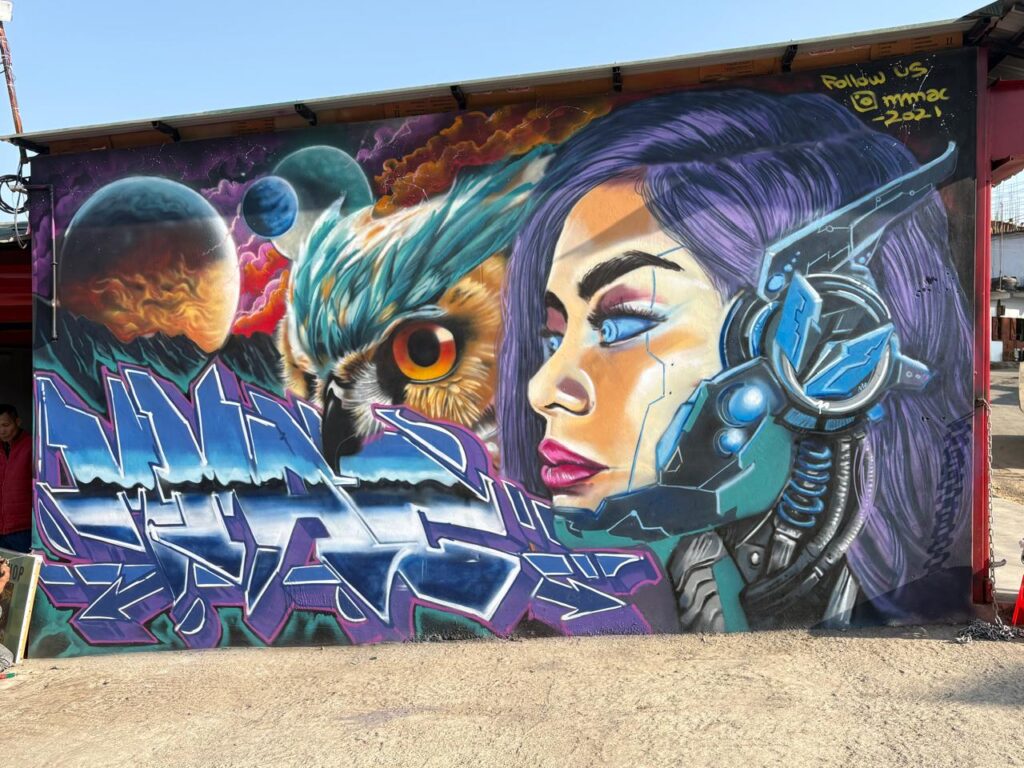
“The name is Oliver W. Lyndem OWL in short which is also my tag/Artist name as a street Artist I focus more on murals and Graffiti founder of mixed media Art crew also known as MMAC I work with several mediums as well”
OWL. Three letters pulled straight from his initials. It is the kind of tag that feels like it was waiting for him all along. Owls watch quietly. They stay up late. They see what everyone else misses in the dark. For an artist who does his sketching at midnight, it fits almost too well.
Then comes the part of his introduction that most artist bios would leave out.
“Happily married for eight years father of three beautiful angels balancing work driving an ambulance because of shifts I’m able to access on focusing on my career and passion. I am very driven and feel blessed to have such gifts which I feel separate me from the rest”
Read that again. The ambulance job is not a sad detail he hides. It is the thing that makes the art possible. Shift work gives him gaps in the week, and he pours his passion into those gaps.
A lot of us are told that a creative life needs to be all or nothing. Quit the job. Chase the dream. Burn the boats. Oliver’s story is quieter and more honest than that. He holds the steady job, he raises his kids, and he paints anyway. The art does not need to replace his life. It lives right inside it.
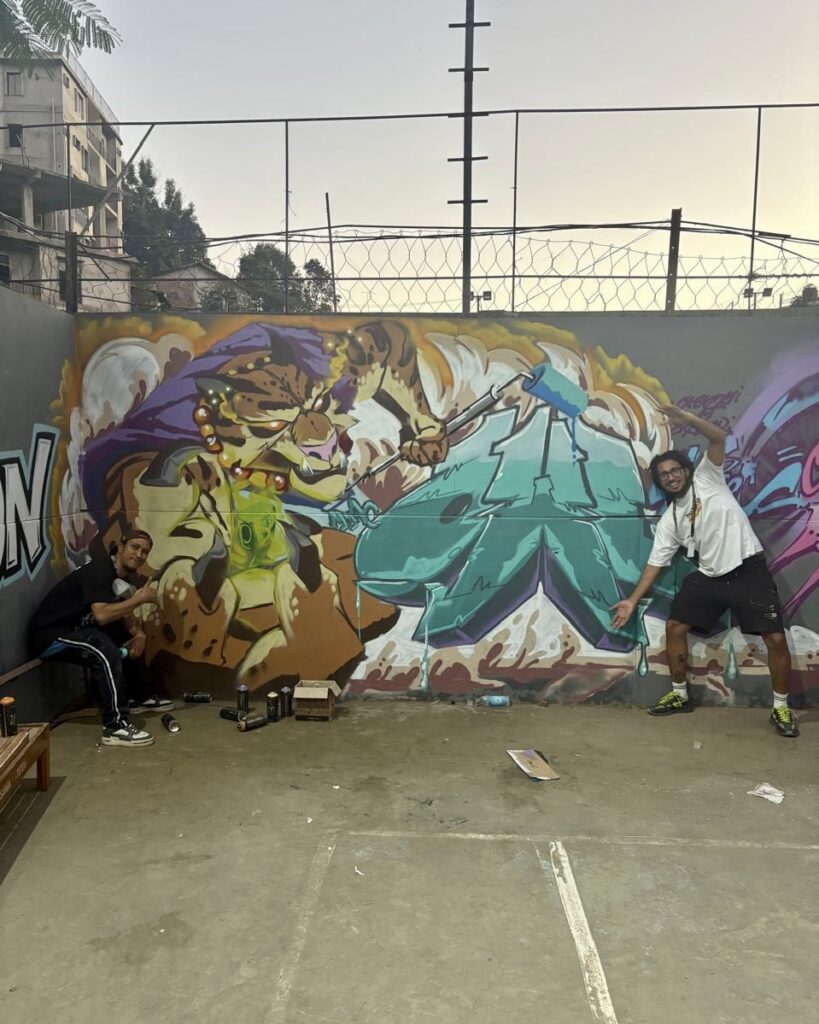
Not Just Paint
Ask Oliver what art means to him and he does not talk about technique or career moves. He keeps it short.
“Art to me it’s not just painting or earning from it. It’s therapy.”
Therapy. Coming from someone who spends his working hours in an ambulance, that word lands with real weight. You can imagine what a day on those shifts might carry. The urgency. The strangers on their worst days. The things you see and cannot unsee.
A wall, a can, a sketchbook: these become the places where all of it gets worked out. Not for an audience. For himself.
That is something many of us are still learning. The things we make do not always have to be products. Sometimes they are just how we stay okay.
The Streets Belong to Whoever Paints Them
Oliver is closing in on forty. In a scene often imagined as a young person’s game, he has no plans to slow down.
“I am soon going to be 40, but I still keep my grind on bombing and painting the streets of Shillong like I own them still keeping the code and culture up and running.”
There is a whole worldview in that sentence. “Bombing” is graffiti slang for painting fast and often, getting your name up across a city. “The code and culture” is the unwritten rulebook that writers pass down: respect, history, knowing whose wall is whose. Oliver is not just painting. He is keeping a tradition alive in his hometown.
And his hometown is the point.
“Shillong home is where the heart is and since I enjoy painting publicly portraits I feel like the walls are my canvas so sometime when I see a good spot I can’t help myself. I just paint don’t care whether it’s legal or not.”
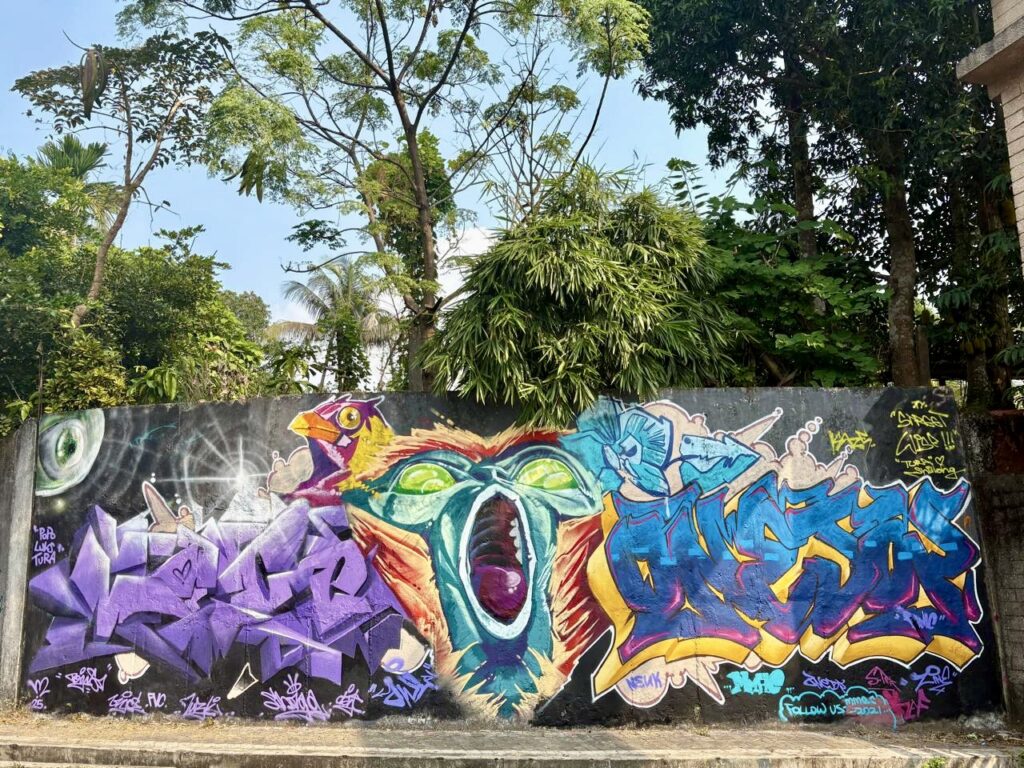
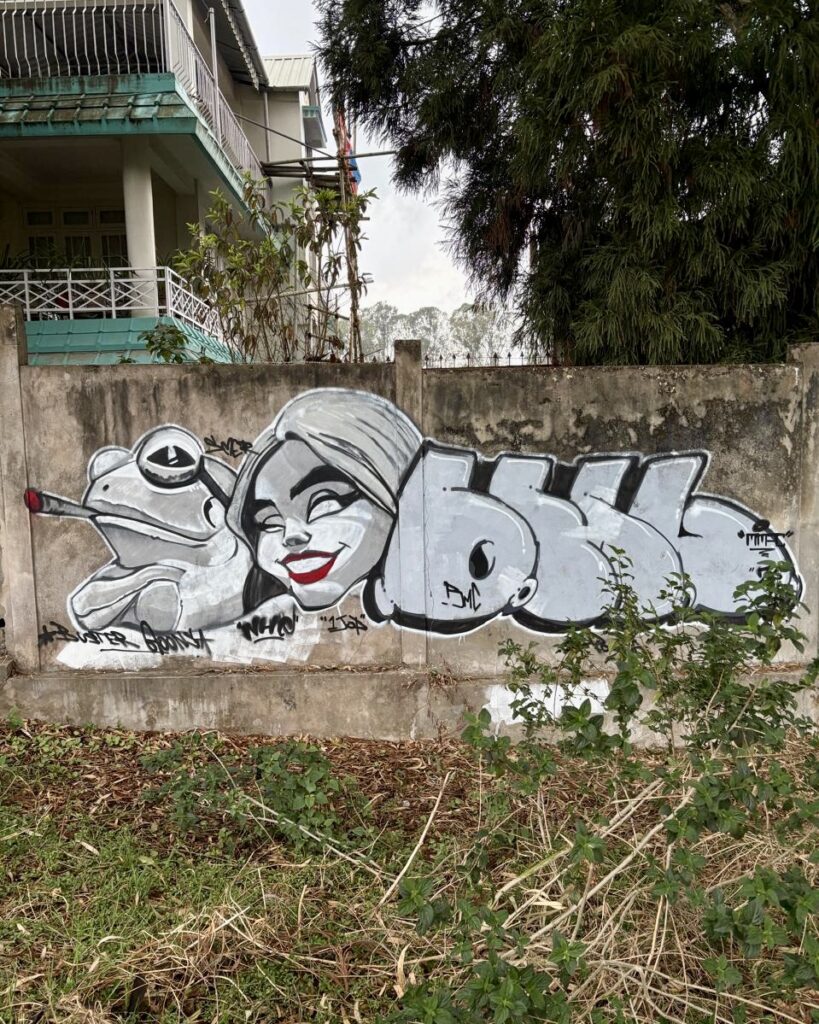
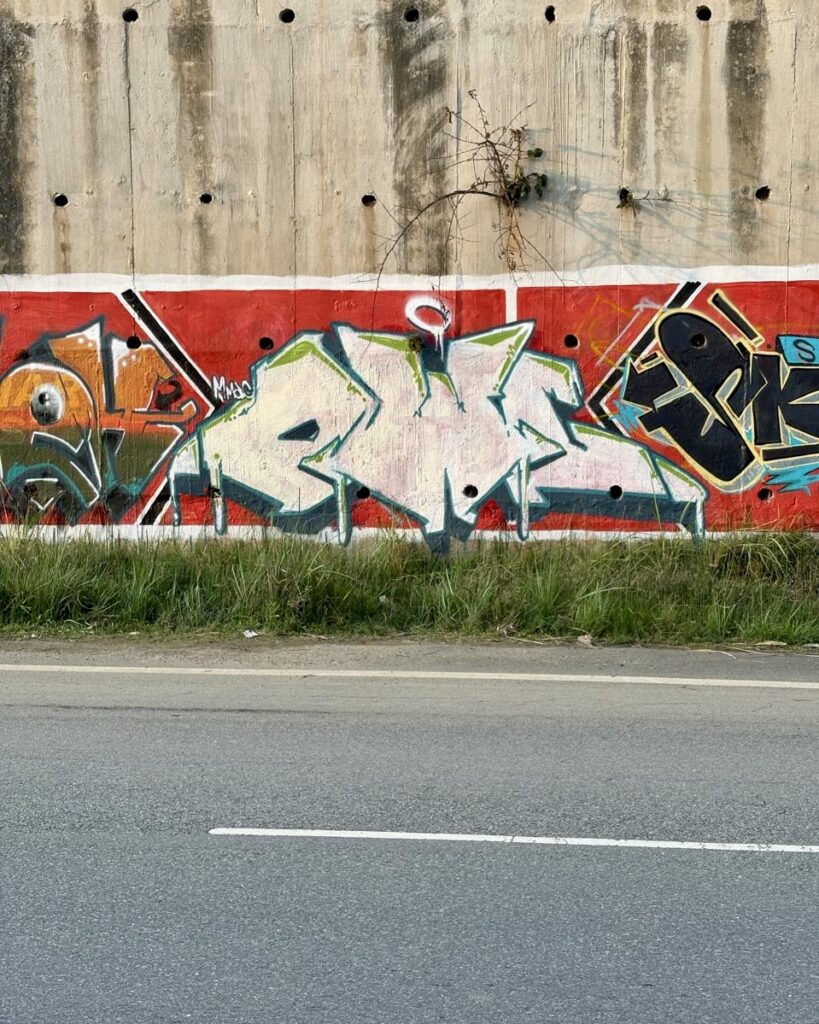
That last line is pure street art honesty. No polish. No careful PR phrasing. When he sees a good spot, the urge wins.
You can argue about the rules of public space all day. What is harder to argue with is the love underneath that urge. Oliver looks at Shillong and sees a city worth decorating, worth telling stories on, worth claiming. Not to own it in the property sense. To own it the way you own a place that made you.
Worth the Beating
Every artist has an origin story. Oliver’s involves a crime, a victim, and a punishment he still says was worth it.
“Painting I guess was always in my blood since day one once when I was in kindergarten my elder sister got some school project from school. I saw those colouring materials and I went bonkers and fell in love with them when my sister was about to wake up in the morning. I had already scribbled her Drawing book and painted on her school project. When she woke up and all hell broke lose and Mum beat the shit out of me but it was still worth it.”
Picture it. A kindergartener up before everyone else, surrounded by someone else’s colouring supplies, going absolutely to town on his sister’s homework. Then the sister wakes up. Then Mum finds out.
It is funny. It is also kind of perfect. Oliver’s first piece was painted on a surface that did not belong to him, without permission, by a kid who simply could not help himself.
Some things really do start early.
The Long Road to Seven Storeys
The path from that kindergarten scribble to paid murals was not a straight line. It was a long, uneven road with big moments separated by long stretches of waiting.
The first big moment came in school.
“I represented the stage in 2003 when I was in the ninth standard. The Megha arts and culture selected me to go and paint at Victoria Memorial in Kolkata”
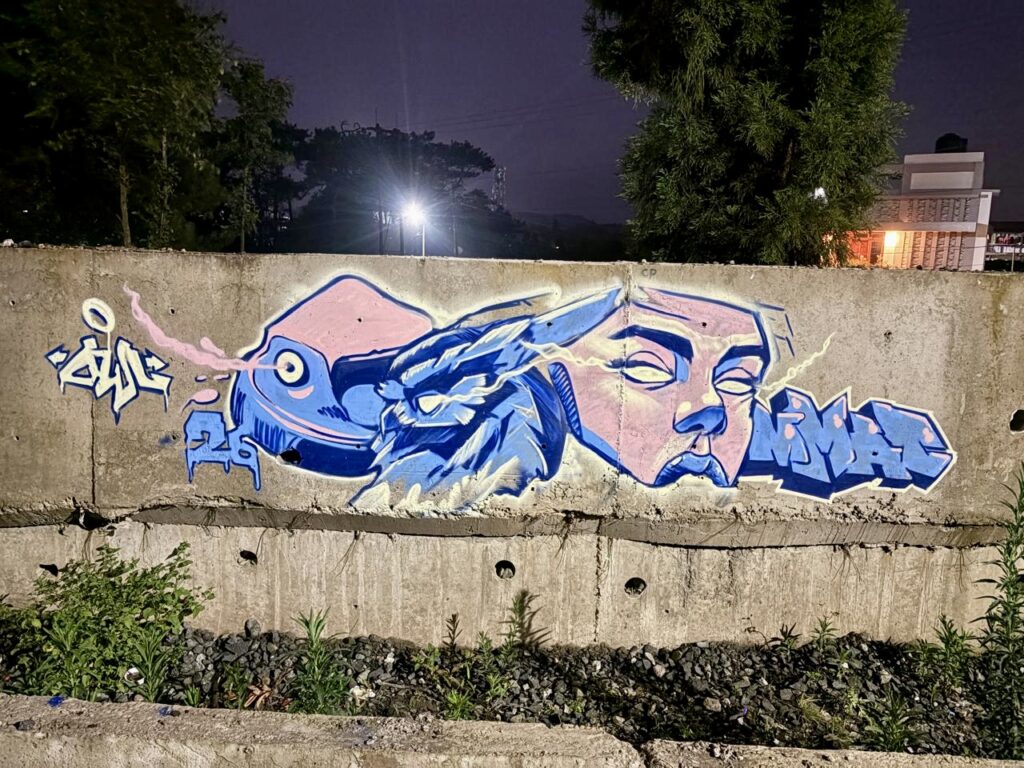
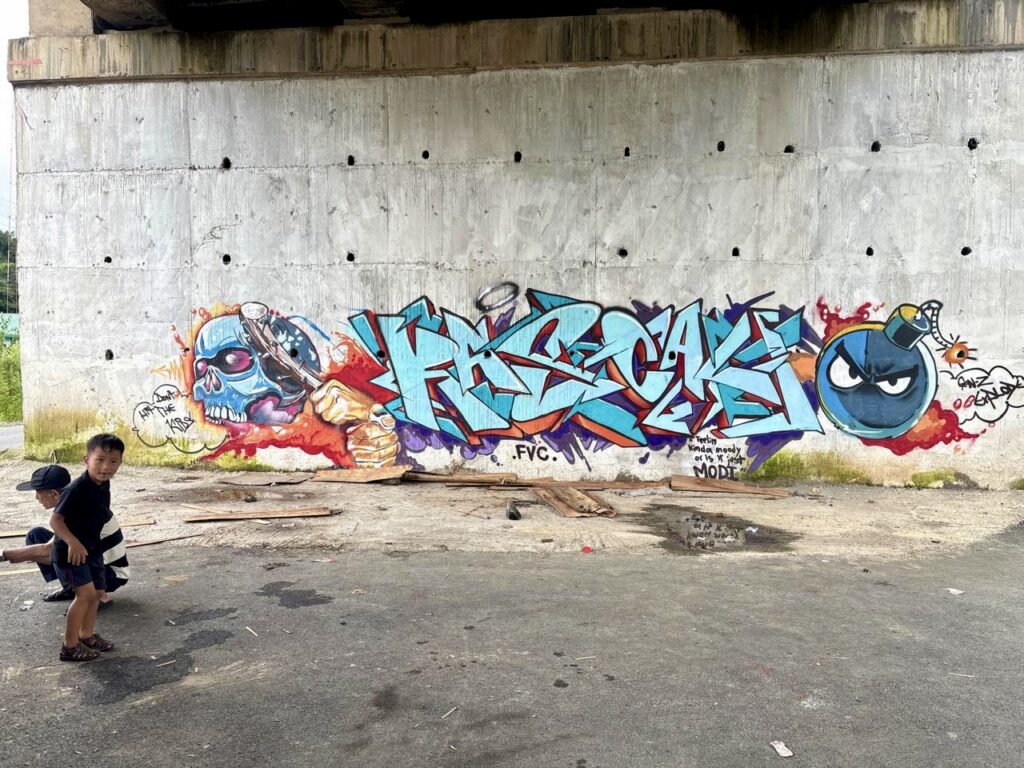
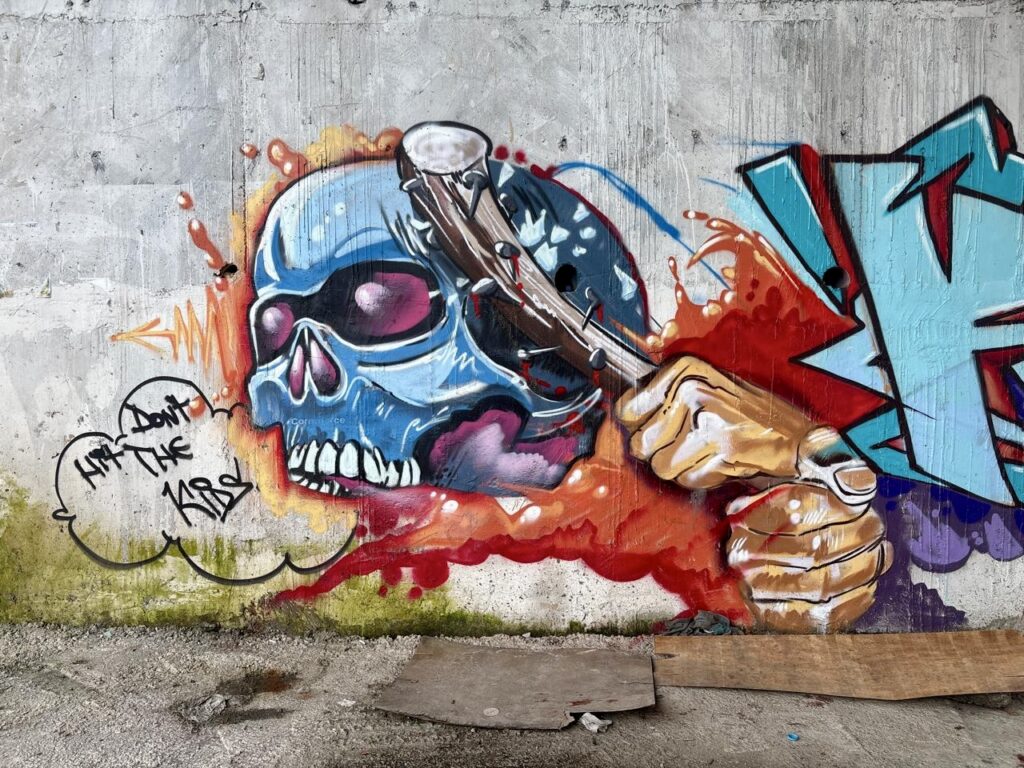
A ninth grader from Shillong, picked to paint at one of the most famous landmarks in Kolkata. That is the kind of experience that plants a seed. Somebody saw something in him early.
Years later, after graduation, came his first truly large-scale piece.
“then after graduation I got a chance to paint my first large scale painting in in 2011 it was for a school theatrical at Pine Mountain School where I had to paint a backdrop. The stage was 15 x 30‘. I painted I was burnt out.”
Fifteen by thirty feet. For someone used to paper, that is enormous. “I was burnt out” is a refreshingly real way to describe it. Big work takes everything out of you, especially the first time.
And then, the quiet years.
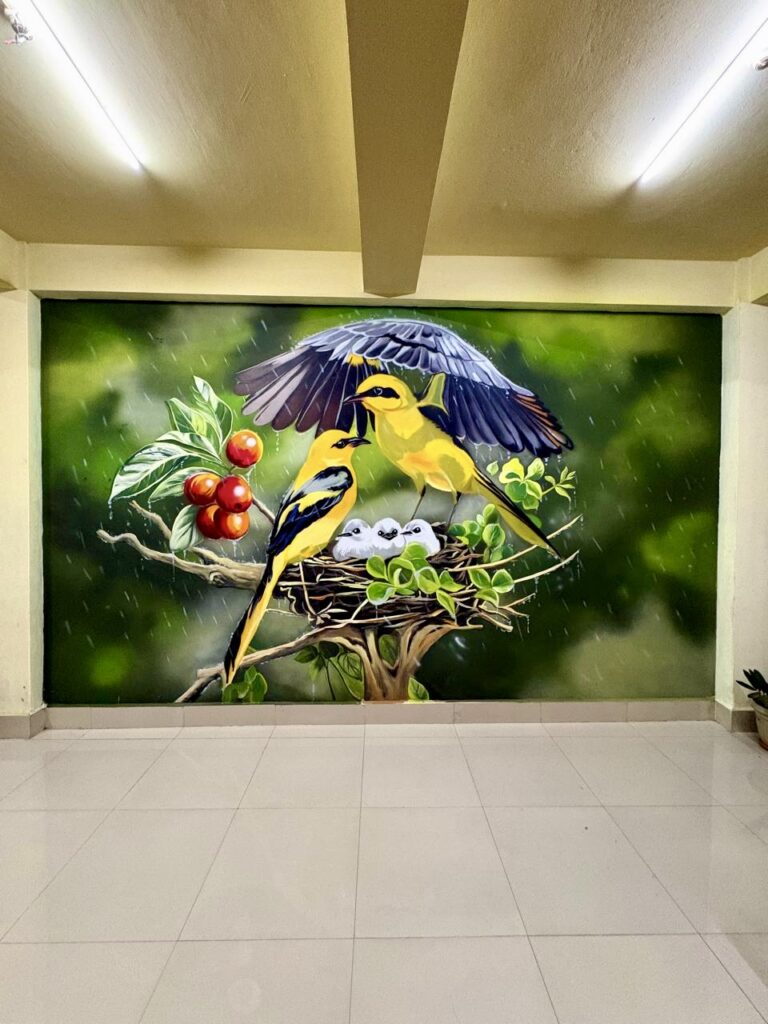
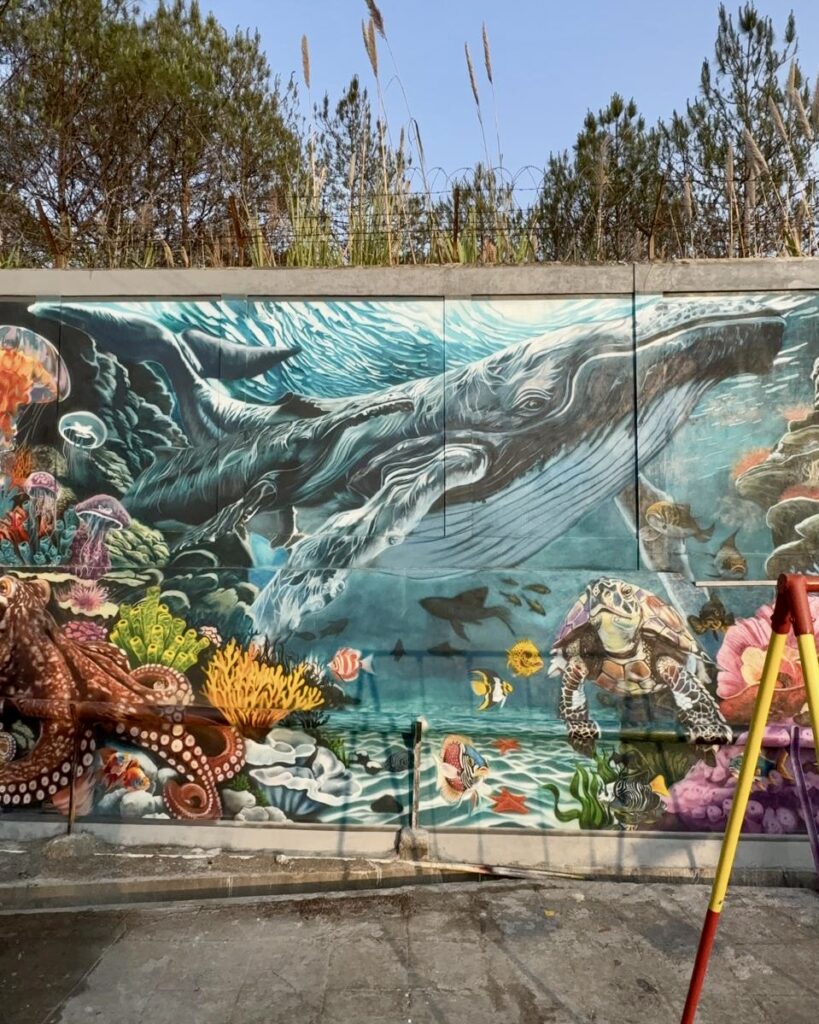
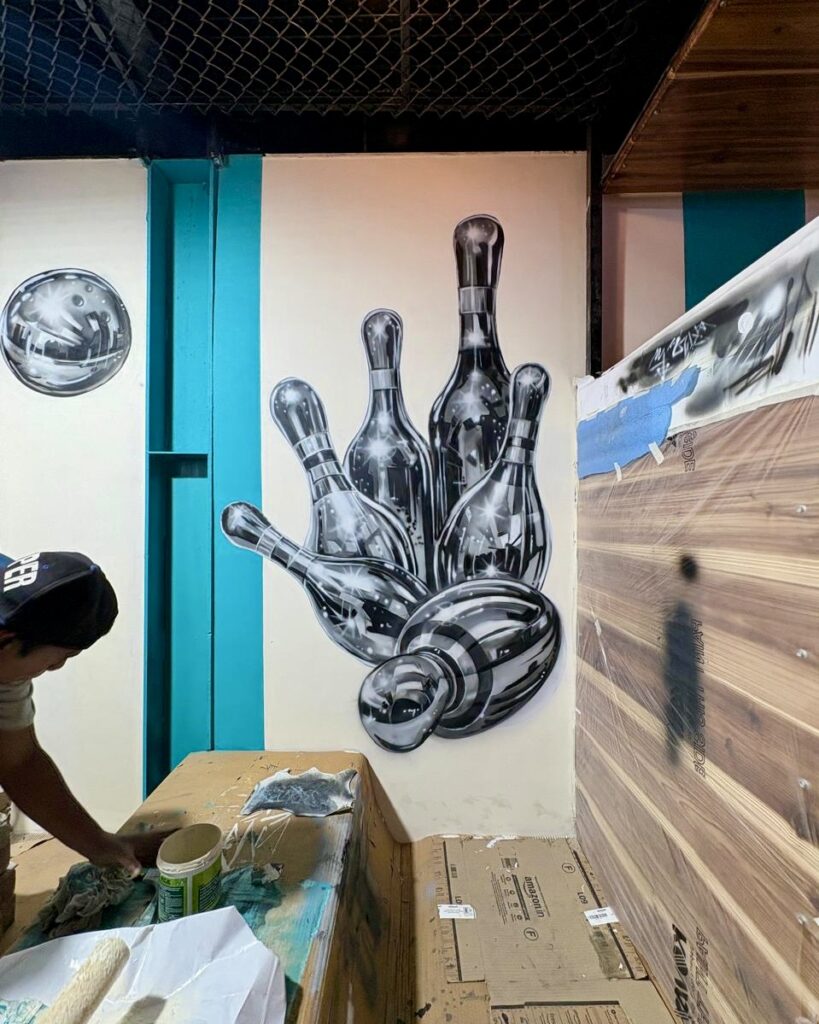
“It was a café small shop back then not much opportunity until 2018 a game changer did mural on three buildings and from there I know I was destined for this and now I get paid doing what I love and it’s the best job ever.”
Seven years between that backdrop and the breakthrough. Seven years of small opportunities and not much else. Then, in 2018, three buildings, and suddenly the whole picture came into focus.
There is something comforting in that timeline. We live surrounded by stories of overnight success, people who seem to have figured it all out by twenty-two. Oliver’s story says something different. Sometimes the right moment takes years to show up. Sometimes you keep going through the slow part simply because you cannot imagine doing anything else. And sometimes, eventually, you get to say the best job ever and mean it.
Why the Box Never Fit
During the lean years, Oliver did what working artists do. He found other ways to use his hands.
“during those times when there was lack of opportunities for murals I had to do something. I paint canvases and I even got into tattoos. Yes I do enjoy doing them but I don’t get much pleasure out of it cause I just felt stiff.”
Stiff. It is a body word, not an art word. The problem was never the work itself. It was the stillness.
“I am a very restless person and couldn’t stay. Put I don’t like to sit too much in one place and get frozen shoulder and back and backache and surrounded by a box.”
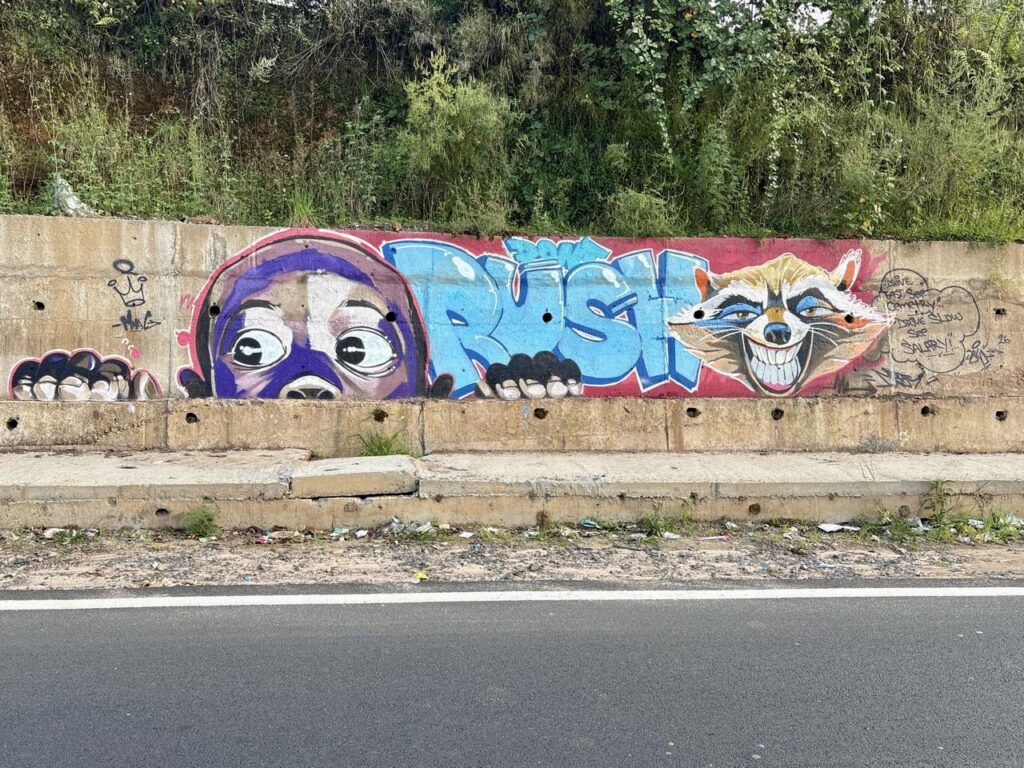
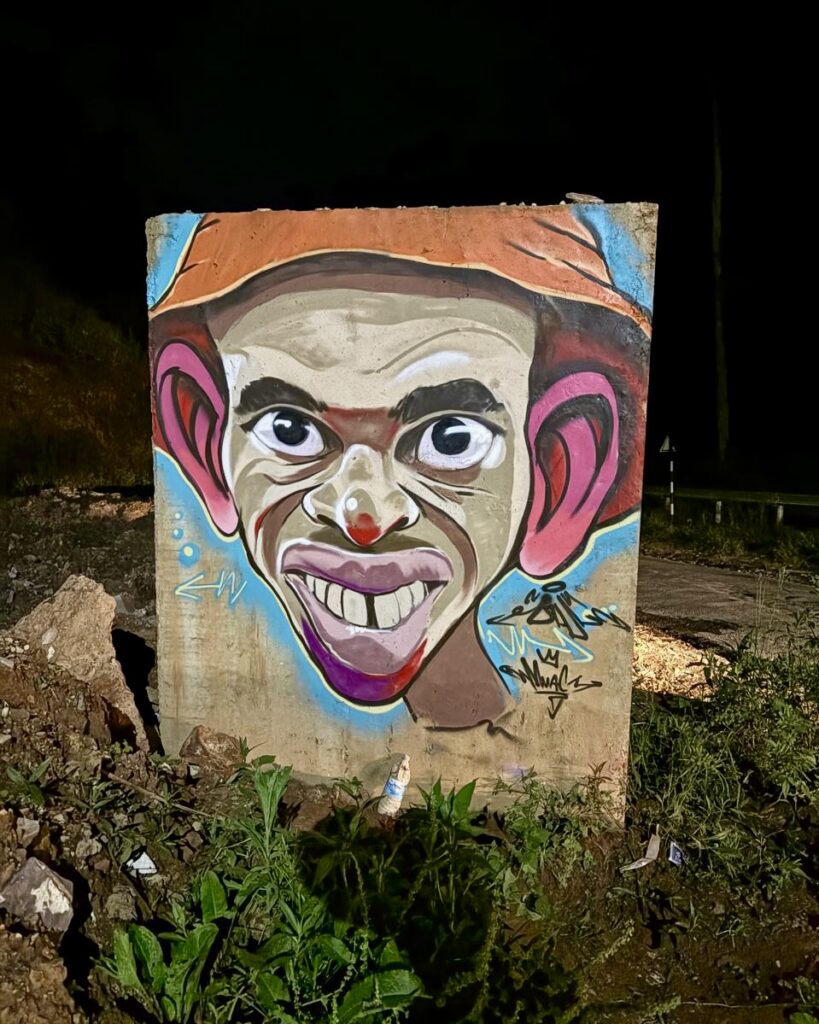
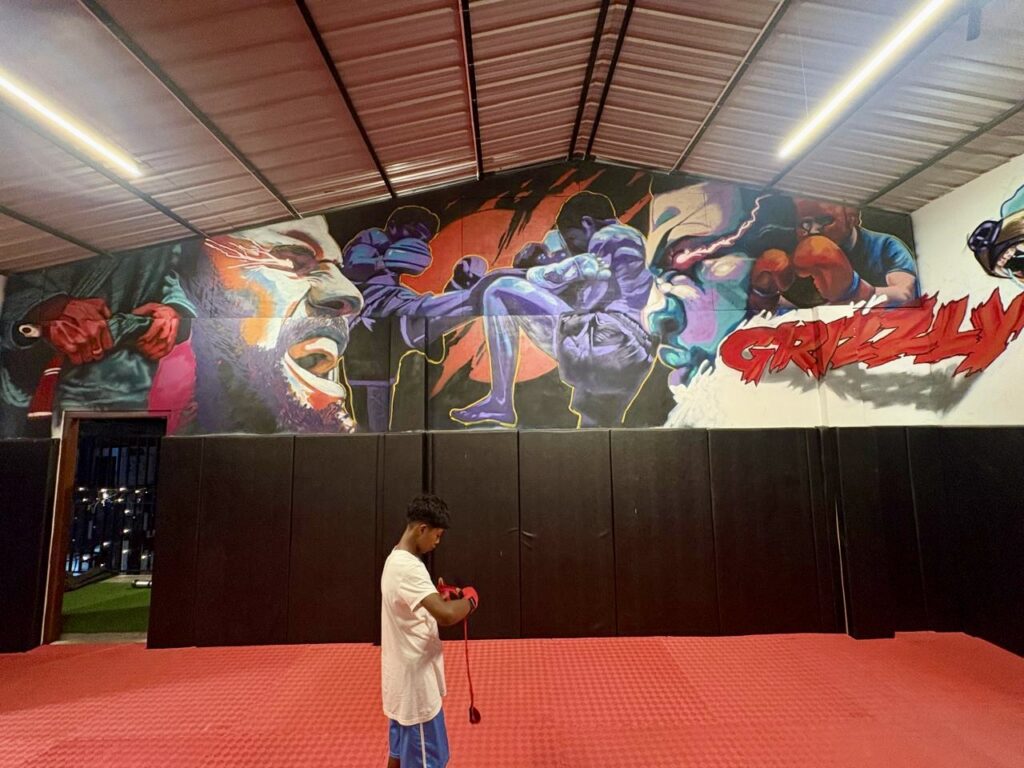
Surrounded by a box. Anyone who has spent too many hours at a desk knows that feeling exactly. The aching shoulders. The walls closing in. The sense that your body was built for something else.
For Oliver, that something else was the wall.
Dance With the Can
When he talks about why walls win, Oliver does not give one reason. He gives a whole list, and each one says something about who he is.
First, the challenge.
“first of all it’s very challenging, You don’t know what you’re doing”
Not knowing what you are doing sounds like a problem. For Oliver, it is the appeal. A wall is unpredictable. The surface, the weather, the scale, the people walking by. Every piece is a bit of a leap.
Second, the movement.
“the freedom to move is like exercise specially when holding a can there is saying dance with a can you need to move your body when doing can control”
Dance with a can. Writers really do say this. Good can control is not just in the wrist. It runs through your arm, your shoulders, your hips, your feet. A clean line on a big wall is a full-body movement. For a restless man who hated feeling stiff, that is freedom.
Third, the climb.
“climbing up and down bamboo scaffolding it’s a hell of a workout.”
Forget the gym. Shillong’s bamboo scaffolding does the job.
Fourth, and maybe most moving, the fear.
“are used to have this fear of height but after I have climbed and painted on a seven story building, I was able to conquer that fear”
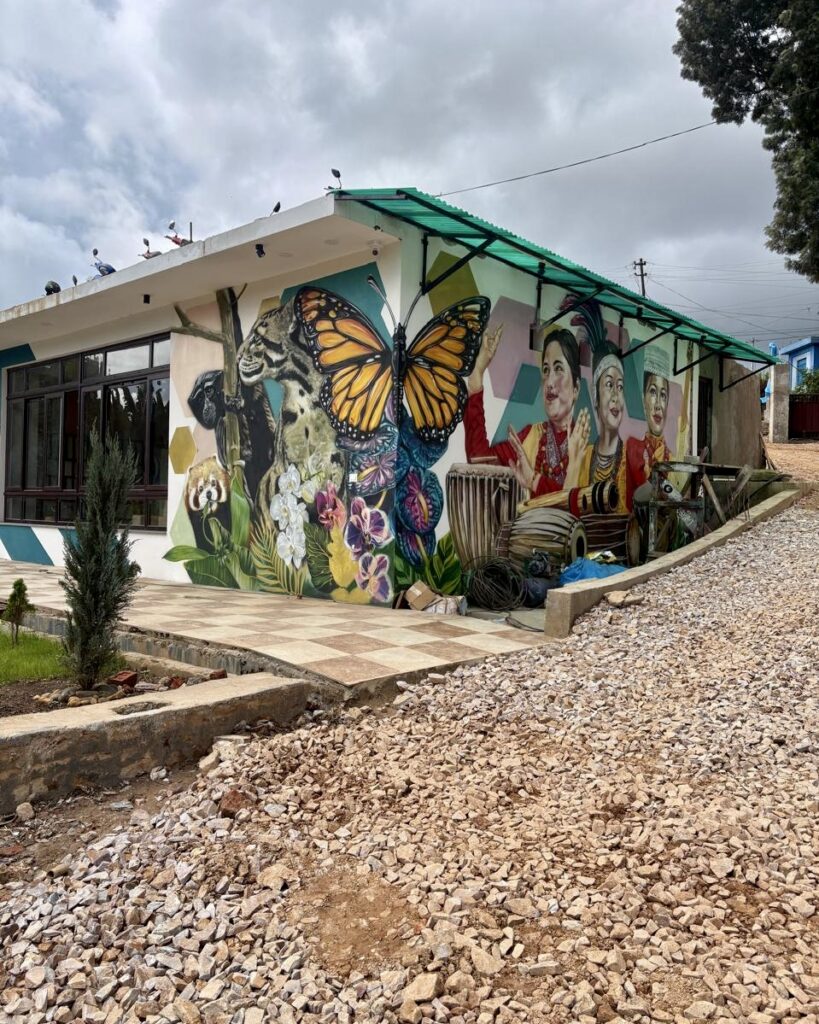
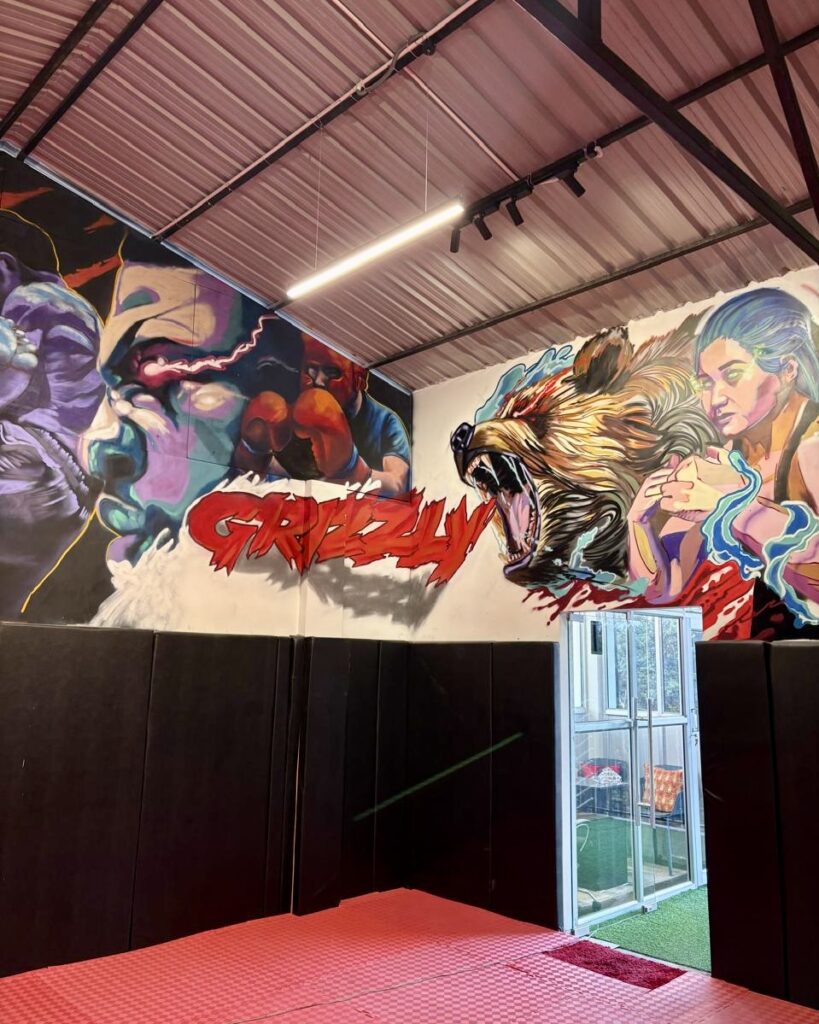
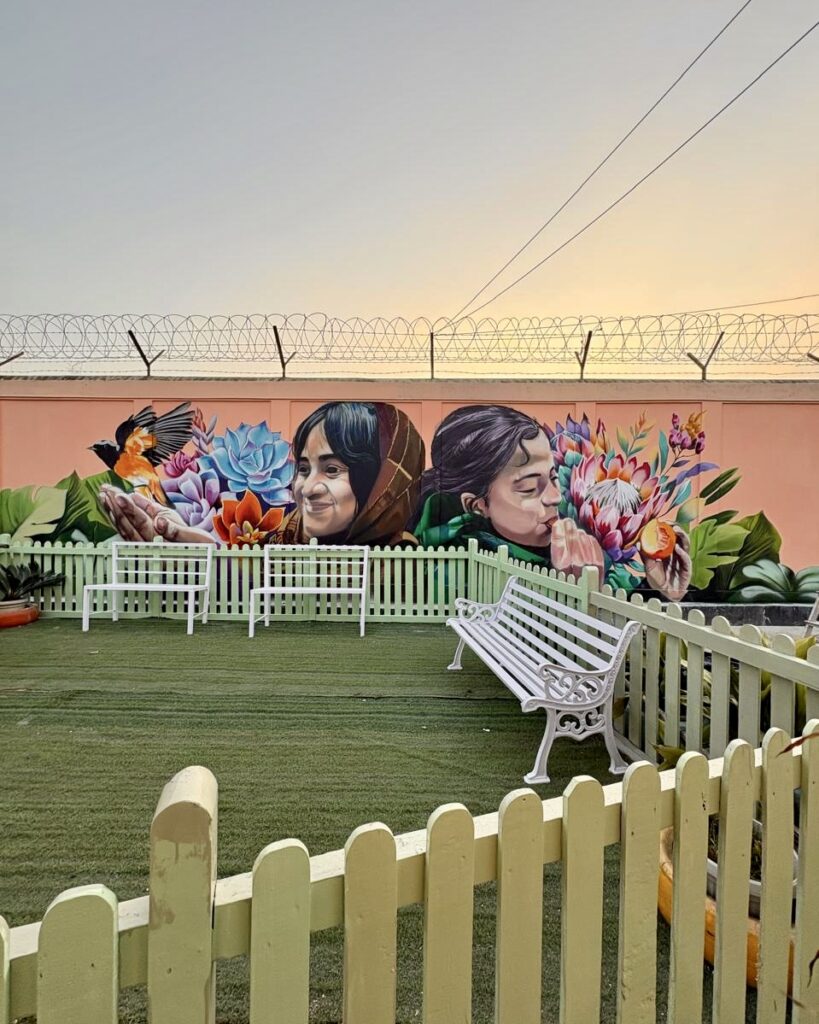
A man who was afraid of heights painted a seven-storey building. He did not wait for the fear to leave before he climbed. He climbed, and the fear left on its own. That is a lesson that works far beyond walls. Sometimes the thing you love is bigger than the thing you are scared of, and the only way through is up.
Fifth, the people.
“painting publicly gives access to showcase to the public and interactions commissions critics and the energy is just wild and fun”
A canvas sits in a room. A wall talks back. Passersby stop, ask questions, offer opinions, sometimes offer work. The critics show up in real time. The energy is, as Oliver puts it, wild and fun. Street art is a performance as much as a painting, and he clearly loves the stage.
The Sketchbook After Midnight
For all his love of walls, there is one medium Oliver always comes back to. It is the smallest one he uses.
“I like to exercise my skills if I’m not doing any murals of Graffiti I do random sketching. I always carry my sketchbook and sketch where I am going on a stroll and when it gets quiet at night when the kids are asleep I would sketch till midnight, so I always come back to sketching.”
This might be the most tender image in his whole story. The big murals get the attention. The seven-storey buildings get the photos. But late at night, after the ambulance shift, after the kids are tucked in, the OWL sits up with a pencil and keeps practising.
No audience. No commission. Just a man and a sketchbook and the quiet.
It is a reminder that the work you see is built on hours of work you do not. Every confident line on a wall started as a hundred uncertain ones on paper, drawn by someone who could have gone to bed and chose not to.
Pure Genius
Graffiti is rarely a solo sport. Writers jam together, paint side by side, push each other. Oliver has painted with plenty of people, but two names come up first.
“there are quite a number of artists I jam with but my all-time favourite to date our rims and POGISA, they have very interesting taste and have very unique styles and I respect them a lot of what they can do their pure genius”
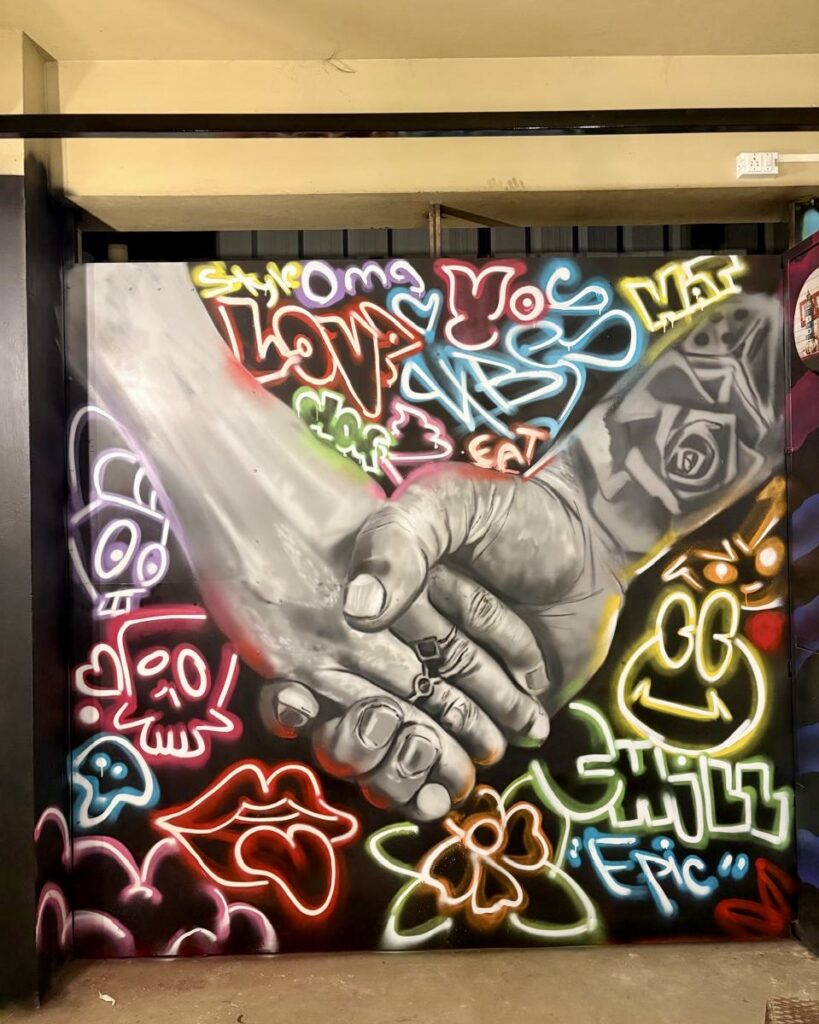
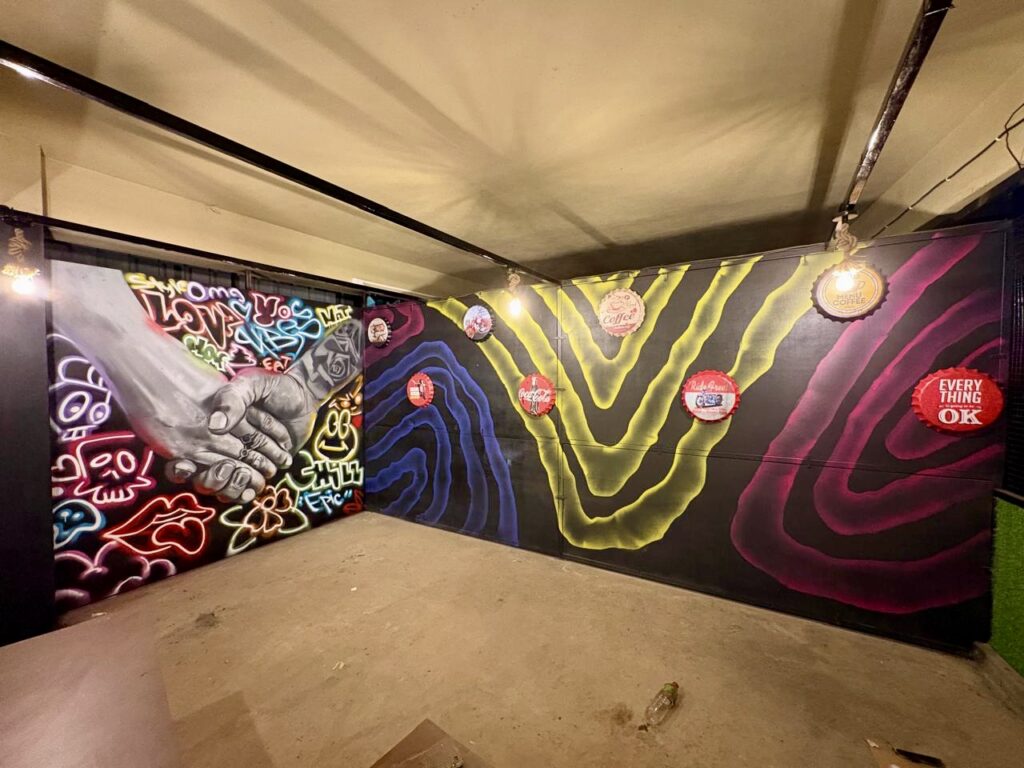
Rims and POGISA. He does not hedge his praise. Interesting taste. Unique styles. Pure genius.
There is real generosity in that answer. A lot of artists get guarded when you ask about peers. Oliver goes the other way. He lights up. He respects them, he says so plainly, and he clearly loves being around people who can do things he finds exciting. That openness is the beating heart of any healthy scene.
Still Looking for the Signature
Here is where Oliver gets most honest. After all these years, all these walls, all these midnight sketches, he still does not think he has fully arrived.
“I do look up to many artists and all of them are unique in their own way and they create beautiful works and honestly I’m trying to live up more and try to find a style that would create a kind of signature and since I’m more of a visual artist surrounding environment people there are my inspirations.”
He is still searching for his signature. At almost forty. With a crew he founded and buildings he has painted.
That admission is quietly powerful. So many of us feel like we are running late on figuring out who we are. Like everyone else found their voice years ago and we are still flipping through drafts. Oliver’s answer says that the search does not have an expiry date. You can be skilled, respected, paid, and still looking. The looking is part of the work.
And where does he look? Not in galleries or feeds. Around him. The environment. The people. Shillong itself. The same city he paints is the city that keeps teaching him what to paint.
Shared, Not Spared
Ask Oliver what comes next, and he does not talk about bigger walls or bigger names. He admits he is not sure about the future at all. What he is sure about is what to do with what he has.
“I don’t know what the future goals for me ahead but I don’t know what to do with my gift and that is to share my knowledge.”
He shares it first with his own children. Then, for years now, he has shared it with kids who rarely get handed anything.
“teaching the underprivileged The dropouts misled kids who are very interested and come from poor backgrounds and to those who are hungry for what I do”
Dropouts. Kids who got pushed off course. Kids from families without much. Kids who are hungry. Oliver sees them, and he sees something in them, the same way somebody once saw something in a ninth grader and sent him to paint in Kolkata.
Go back to that kindergartener, up before dawn, wrecking his sister’s school project because the colours were just too good to ignore. He got punished for that hunger. Now he spends his free hours feeding it in other kids.
That is the full circle of the OWL. An ambulance driver who paints to heal. A restless body that found its rhythm on scaffolding. A father who sketches at midnight. A street writer who still keeps the code. And a teacher who believes that a gift you keep to yourself is barely a gift at all.
“with this I conclude that knowledge is to be ‘shared not to be spared’.”
Follow Oliver W. Lyndem on Instagram
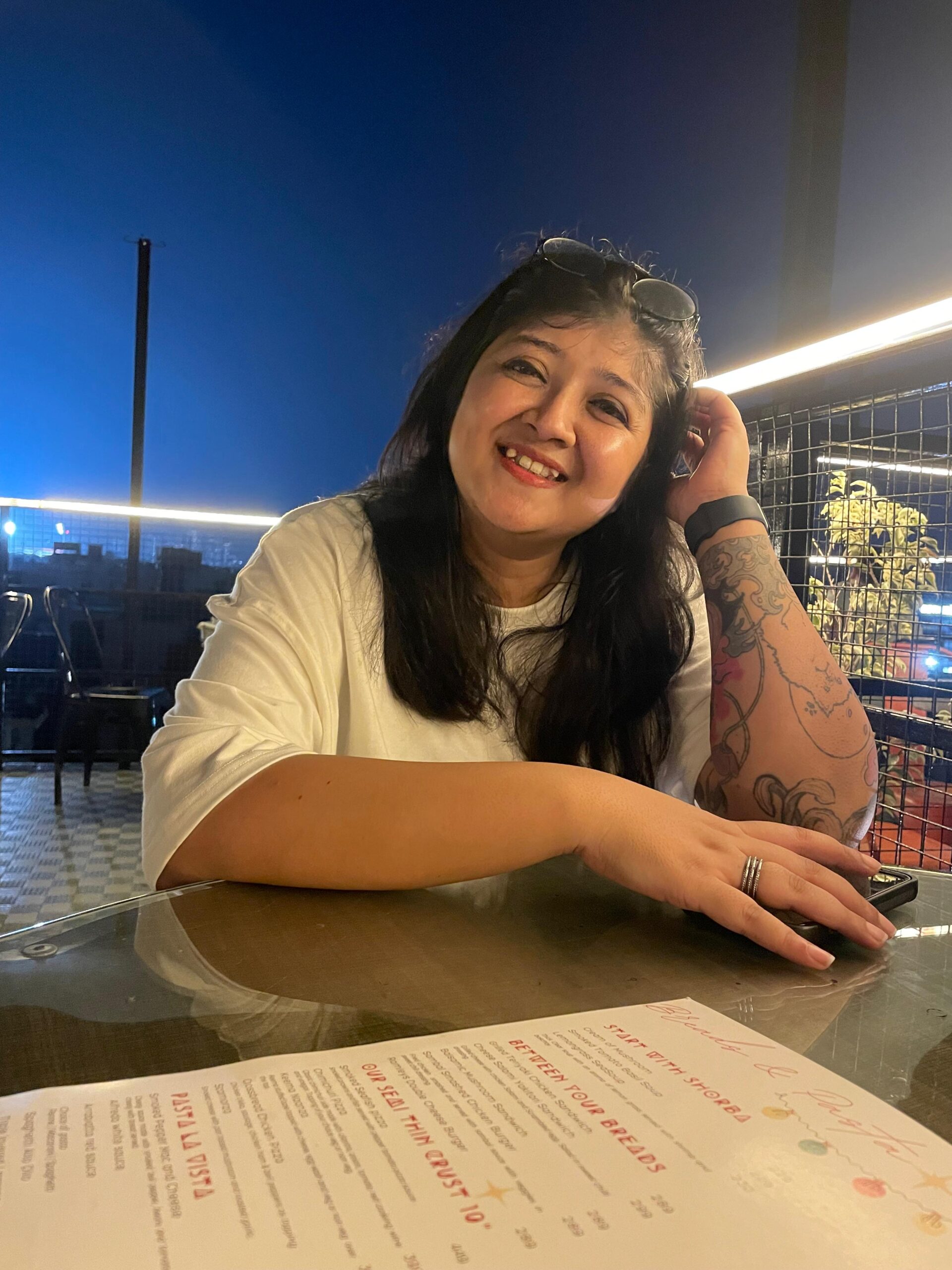
Oeshi B Lyndem is a visual artist, tattoo artist, graphic designer, and entrepreneur with a foundation in graffiti and street culture. Rooted in hands-on craft and making, her practice moves fluidly across illustration, street art, design, and experimental creative processes. With lineage from Shillong—often regarded as India’s rock capital—she carries a distinct cultural influence into her work. At Goofy Owl, she curates and leads the street and hip-hop culture segment through an intuitive, deeply creative, and entrepreneurial lens.