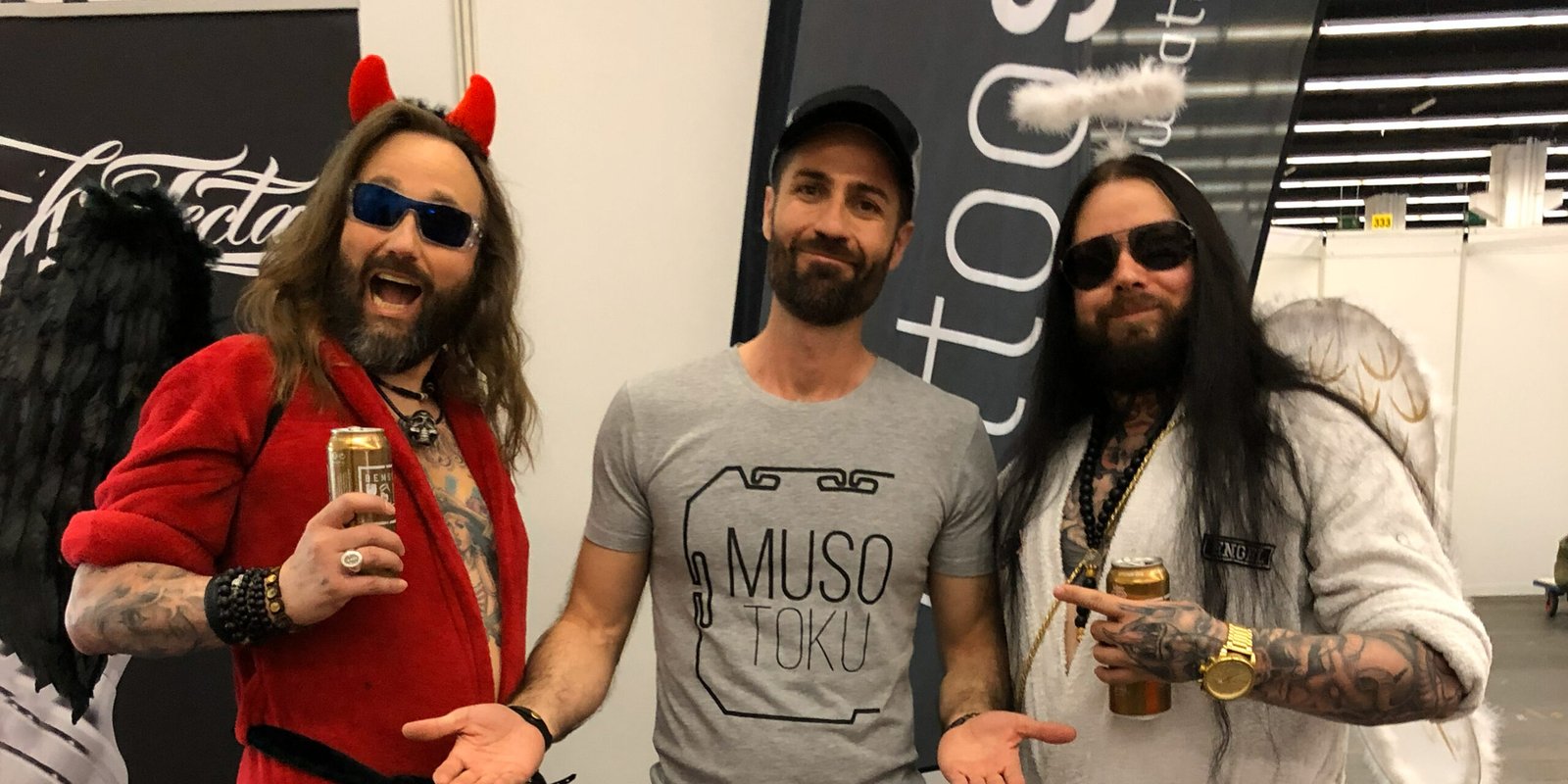
There is a particular kind of person who builds things not because they have identified a market gap or written a five-year business plan, but because they cannot help themselves. Invention, for this person, is less a career choice than a condition. David Barroso, founder of MUSOTOKU, electronics engineer, and former aerospace engineer, is that kind of person.
His story does not begin with tattoo equipment. It begins, as most genuinely interesting stories do, somewhere much more ordinary: with a six-year-old boy, a broken flashlight, and the quiet revelation that being useful to other people might be the finest thing a person can do with their life.
Engineering Where Failure Was Never an Option
Before MUSOTOKU, before the tattoo industry, there was Siemens R&D and then Airbus Military. Two institutions defined by the same unforgiving principle: the work must not fail.
Barroso’s early fascination with electronics was total.
“I’ve always been an electronics geek,” he says. “When I was 18, I used to spend my summer holidays volunteering at an electronics magazine in Madrid just so I could take the magazines home for free.”
That self-directed curiosity carried him from university into Siemens, where he designed electronics for high-speed trains, and then onward to Airbus Military, where the stakes grew considerably higher.
Designing systems for military aircraft is not like designing for other industries. There are no acceptable margins for complacency.
“When you design equipment that people’s lives depend on, you become extremely demanding with everything you create,” Barroso explains. “The design process is very particular because every decision you make has to be followed by the question: what could fail, and could that failure cost someone their life?”
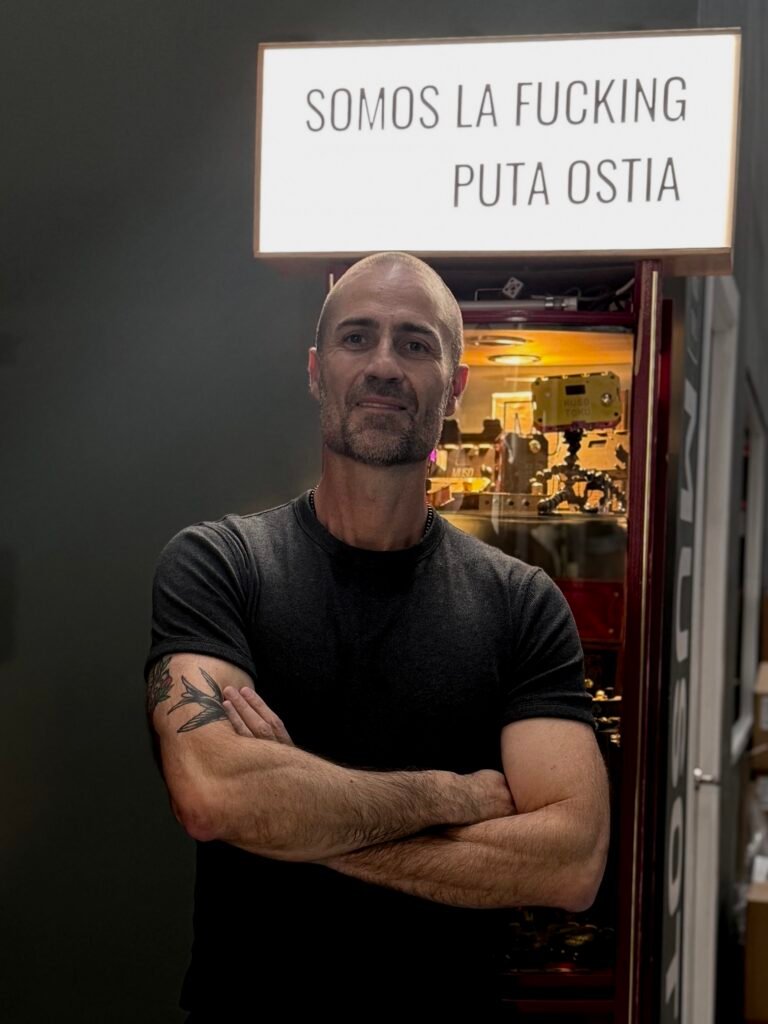
That question never left him. Long after he departed the aerospace industry, it continued to shape how he approached every circuit, every component, every product. The standards forged in those years were not professional habits so much as permanent instincts. They became the invisible architecture of everything MUSOTOKU would eventually build.
The Child Who Wanted to Build Things
The professional biography is only part of the picture. To understand what drives Barroso, it helps to go back further: past Siemens and Airbus, past university, to a summer camp in Spain where an unlikely story began.
“When I was six years old, my parents sent me alone to a summer camp,” Barroso recalls. “Before I left, my father taught me how to repair a flashlight.” It was a small thing. A practical skill passed from parent to child. But what happened next revealed something about who he already was.
“As soon as I arrived, I realized I was the youngest kid there. I thought everyone would pick on me and that nobody would want me on their team for the games.” The anxiety of being the smallest, the youngest, the outsider, is something most people recognize. What happened next is less predictable. “But before the first day was over, I had already repaired the flashlights of two boys who were sharing my tent. Word spread quickly, and the next day another five kids came asking me for help.”
By the end of the camp, the youngest child had become one of the most sought-after. “By the time the camp ended, I had become one of the most popular kids there. I loved it because, for the first time, I felt useful.” That word, useful, appears again and again in conversations with Barroso. It is not a word associated with ambition or ego. It is quieter than that, and more durable.
A few years later, a film gave shape to the feeling.
“When I watched The Goonies, I became fascinated by Data, the inventor of the group,” Barroso says. “Data was my childhood hero. That was the moment I knew I wanted to become an inventor when I grew up.”
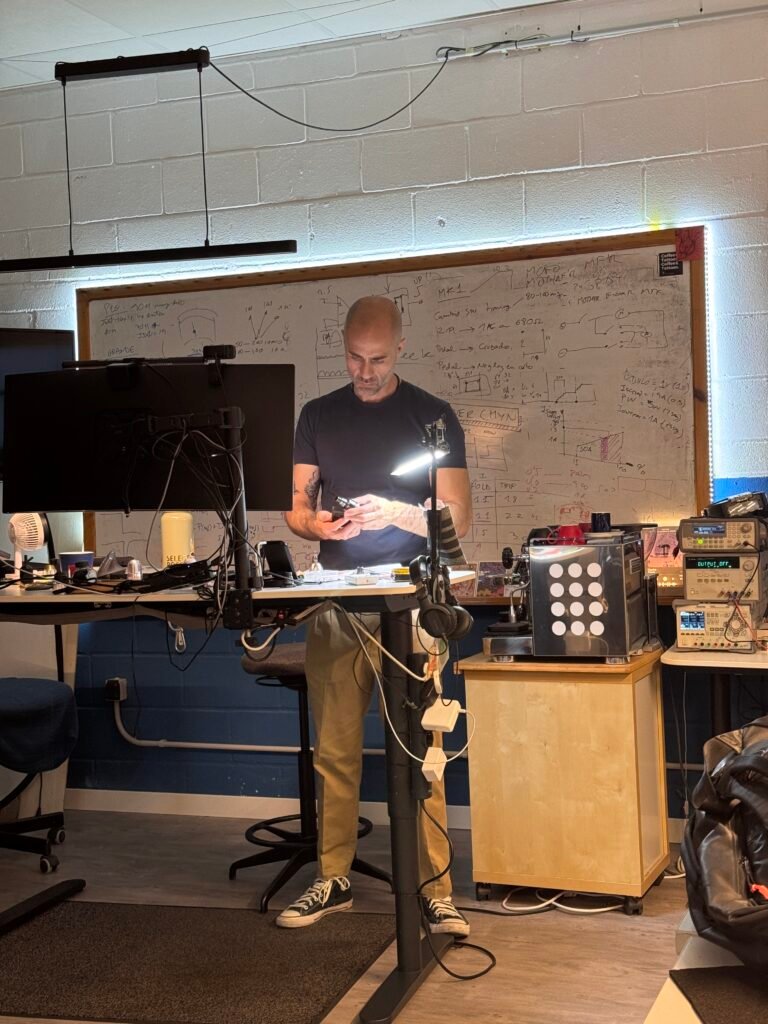
The image of Data, resourceful, inventive, solving problems with whatever was at hand, aligned perfectly with everything that summer camp had already confirmed. The seeds of MUSOTOKU were planted long before its founder knew what tattooing was.
Finding MUSOTOKU by Not Looking for It
The founding of MUSOTOKU did not follow any conventional entrepreneurial logic. There was no pivot, no funding round, no calculated entry into a growing market. The first MUSOTOKU power supply came into existence because Barroso enjoys solving problems. That was essentially the entire business strategy.
“I always wanted to have my own company, and I knew I would eventually make it happen,” he says.
But the product itself emerged organically, driven by the same curiosity that once sent him to an electronics magazine simply for the pleasure of reading it. He designed the power supply because the problem interested him. The tattoo industry provided the context. His engineering instincts provided the solution.
The moment the company crystallized into something real came at the Barcelona Tattoo Convention. “At the Barcelona Tattoo Convention, a French tattoo artist bought the very first MUSOTOKU power supply,” Barroso says. “In that moment, I realized my childhood dream had come true.” The simplicity of that realization is striking: not a business milestone, not a revenue target, but a childhood dream. A connection drawn directly back to the boy with the flashlight. “I couldn’t stop anymore. I had found my path.”
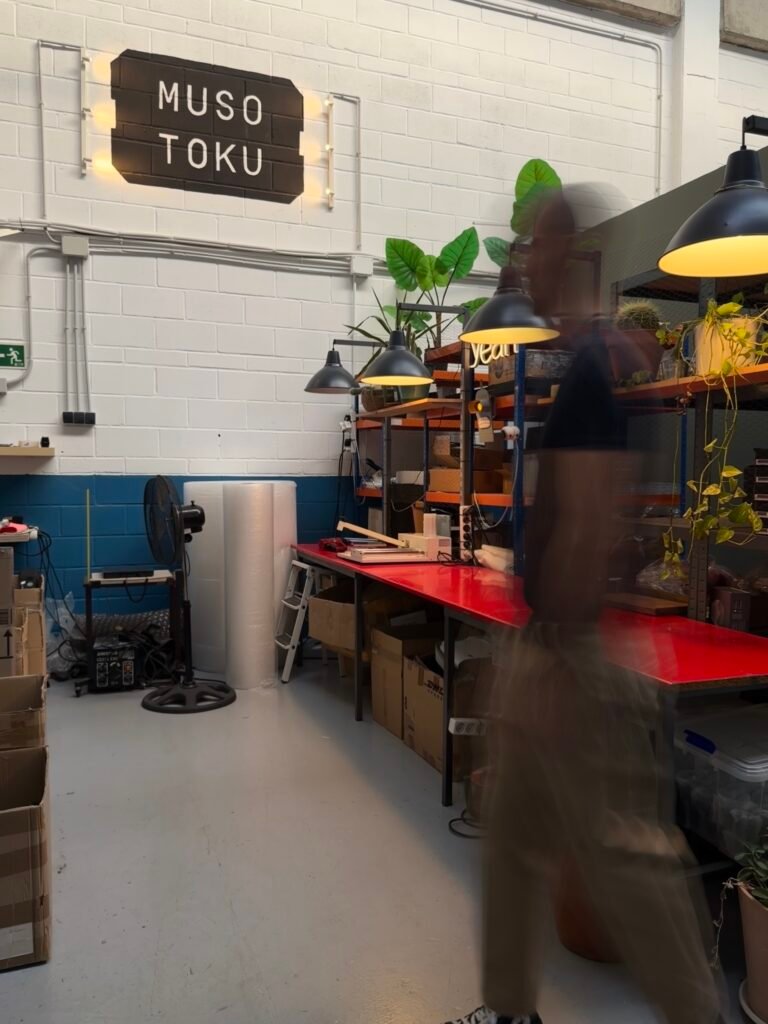
The Zen Philosophy Behind the Brand
The name MUSOTOKU is not a piece of invented branding. It is a philosophy that Barroso has lived by since he was eighteen years old.
“When I was 18, I became deeply involved in Zen meditation, and I was eventually ordained as a Zen monk.”
During those years at the dojo, one idea distinguished itself from everything else he was learning.
“The nun who led the dojo spoke about the concept of mushotoku: practising without expecting anything in return.” The principle was demanding in its simplicity. “She used to tell us that we shouldn’t meditate in search of enlightenment. We had to let go of the goal itself.”
The relevance to how Barroso built his company is not incidental. “When I designed the original power supply, I did it simply because I enjoyed the process. I wasn’t looking for customers or trying to build a brand. Yet that’s exactly what happened.” Mushotoku, practiced faithfully, has a way of producing the very outcomes it asks you to stop pursuing.
For Barroso, naming the company MUSOTOKU was both an acknowledgement and a commitment.
“I think naming the company MUSOTOKU was my way of reminding myself that the company is simply the by-product of a certain way of living and working.”
The name is not decorative. It is a daily instruction, pressed into every product shipped, every decision made, every temptation to compromise resisted.
Design That Refuses to Shout
Walk into any conversation about MUSOTOKU products and the word “timeless” appears quickly. The industrial design language is precise, restrained, and unmistakable. To understand where it comes from, Barroso points not to the tattoo industry but to a vehicle built for utility rather than admiration.
“I’m a huge fan of the classic Land Rover Defender,” he says. “To me, it’s an iconic vehicle. It’s well built, understated, and yet it has a presence that still outshines many modern off-road vehicles.”
The Defender’s power comes from its refusal to perform. It does not need to announce itself. Its presence is a consequence of what it is, not of how it looks.
“The industrial design language of MUSOTOKU is inspired by that same philosophy: a brutalist yet restrained aesthetic, free from unnecessary decoration.”
Where competitors add features, MUSOTOKU removes them. Where the market chases novelty, MUSOTOKU pursues permanence. The result is equipment that looks exactly as purposeful as it is, which, in Barroso’s view, is the only honest way to design anything.
Designing Products Across Decades, Not Seasons
The tattoo equipment industry, like most creative industries, is not immune to the pressure of constant newness. Fresh releases sustain visibility. Frequent launches signal relevance. MUSOTOKU, almost defiantly, does neither.
“Absolutely. That approach is completely intentional,” Barroso says when asked about the company’s restrained release schedule. “We try to build an ecosystem that makes sense.” The logic behind this is not caution but ambition of a different kind. “Every time we think about developing a new product, we first ask ourselves how it fits with everything we’ve already created, and then we project five to eight years into the future. We always ask ourselves: what comes next?”
The implications of this approach run deeper than release schedules. “That means we don’t just design a product, we design its evolution.” When MUSOTOKU develops a tattoo machine, the first version is only the beginning of the thinking. “We’re already thinking about Version 2 and Version 3, and how they’ll evolve over the coming years. We think about which accessories will make sense, the right order in which they should be introduced, where the industry is heading, and how our ideas fit with the problems the tattoo community is actually trying to solve.”
This is what Barroso means by an ecosystem: not a product range, but a living system with its own internal logic, its own trajectory, its own sense of where it is going. “It’s the reason why you don’t see us launching new products every few months.” The restraint is evidence of the ambition, not a limitation of it.
Building Tools Artists Can Trust
There is a particular weight that comes with making things other people depend on. Barroso knows this better than most. His career was built in sectors where the consequences of failure were severe and irreversible. That sensibility did not soften when he moved into the tattoo industry. If anything, the intimacy of the relationship between artist and tool made it feel more personal.
“It makes me incredibly proud to see one of our tools in the hands of an artist,” he says. “As someone who sees himself as an inventor, that makes me genuinely happy.” The pride is real, and so is the responsibility behind it. “Working for years on equipment where people’s lives depended on getting every detail right trained me to be extremely rigorous and demanding. That’s simply the way I’m most comfortable working.”
Tattooing is not aerospace. But the hours an artist spends with a machine, the trust placed in the equipment during a session that cannot be undone, creates its own form of dependency. Barroso treats that dependency with the same seriousness he brought to Airbus. The standards travel with him.
Serving Excellence Instead of the Market
Spend enough time with Barroso’s thinking and a consistent picture emerges. MUSOTOKU is not trying to serve the entire tattoo market. It is trying to serve a specific kind of artist: one who refuses to settle, who approaches their craft with the same uncompromising standards Barroso brings to engineering.
“As the owner of a company that designs and manufactures tools for tattoo artists, I feel more useful and more focused than ever,” he says, and that word, useful, resurfaces again, carrying the same weight it did in childhood. The mission remains unchanged. “Our challenge is to remain visible to the artists who pursue excellence and refuse to settle for ‘good enough.'”
That challenge is real. Remaining visible without chasing trends, maintaining integrity without obscuring the product, serving a discerning audience without compromising to reach a broader one: these are tensions that every serious brand navigates. For MUSOTOKU, the answer lies in the work itself. The products either earn the trust of serious artists or they do not. There is no middle position.
The Courage to Build a Meaningful Life
Legacy is a word that invites grandiosity. Barroso approaches it differently. When asked what he hopes people will remember about him, he does not reach for industry impact or market position. He returns, as he always does, to the fundamentals.
“I think about this a lot,” he begins. “Once I heard someone say that an inventor is simply a child who managed to survive.” The image is arresting, and Barroso sits with it. “I often think about that six-year-old boy repairing flashlights, and I wonder whether he’d be proud of the person I’ve become.”
There is something quietly radical about using a six-year-old as your moral compass. It strips away professional achievement, status, and reputation, and asks the only question that cannot be gamed: would the child recognize you?
Barroso has developed two tests for the decisions he faces. One looks backwards to the child with the flashlight. The other looks forward. “I also think about what I’ll regret not having done during the last moments of my life.” Two perspectives from opposite ends of a life, both pointing in the same direction. “When I compare those two tests, they both lead me to the same conclusion: I want to be brave.”
Courage, for Barroso, is not the dramatic variety. It is the quieter, more consistent kind: the courage to keep building things that matter rather than things that sell, to design for decades rather than seasons, to name a company after a Zen principle rather than a trend. “Every time I’ve chosen courage over comfort, both versions of myself have been happy.”
MUSOTOKU is the outcome of that choice, made repeatedly over a lifetime. Not a company built on ambition alone, but a life built on curiosity, rigour, philosophy, and the simple conviction that useful work, done without attachment to reward, eventually finds its place in the world.
The six-year-old with the flashlight would recognize him.
Follow David Barroso on Instagram
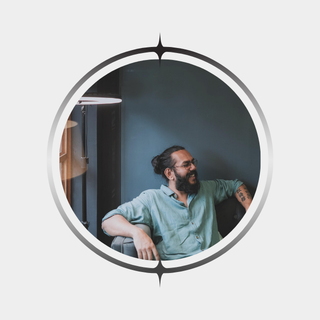
Lubdhak Biswas is a musician, entrepreneur and a tattoo artist based out of Kolkata (India).
He documents underground culture at the crossroads of tattooing and music.
His work focuses on craft, tools, ethics and the real working realities of creative industries.