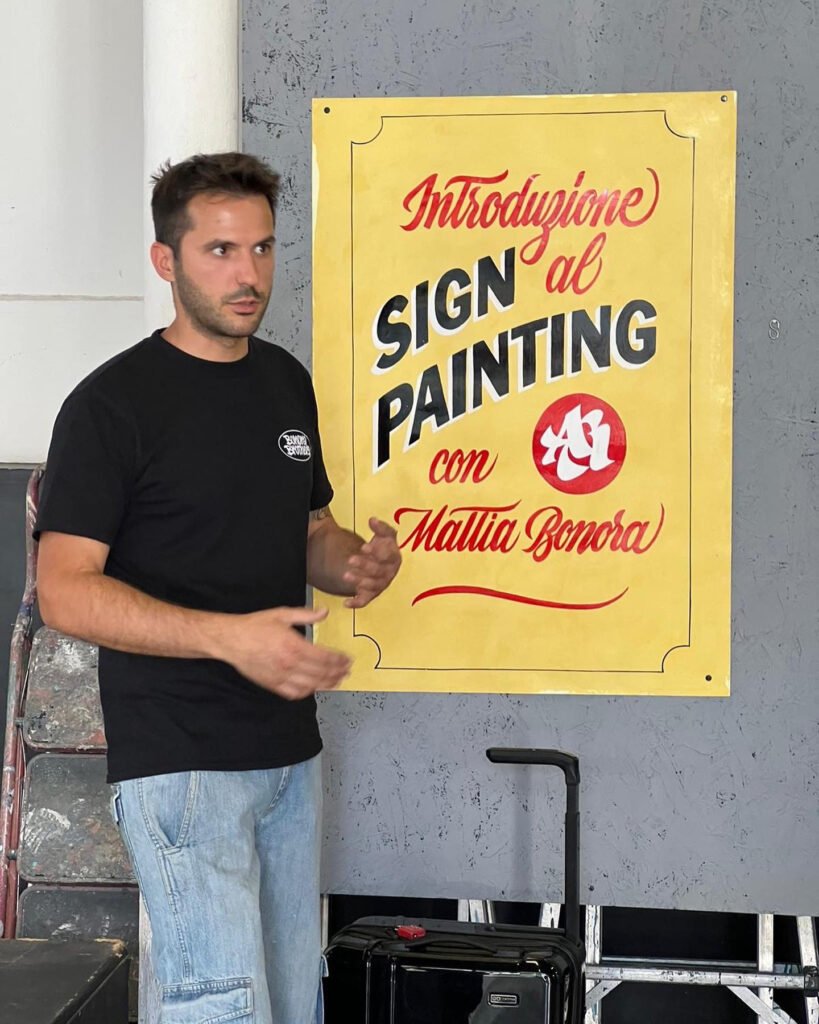
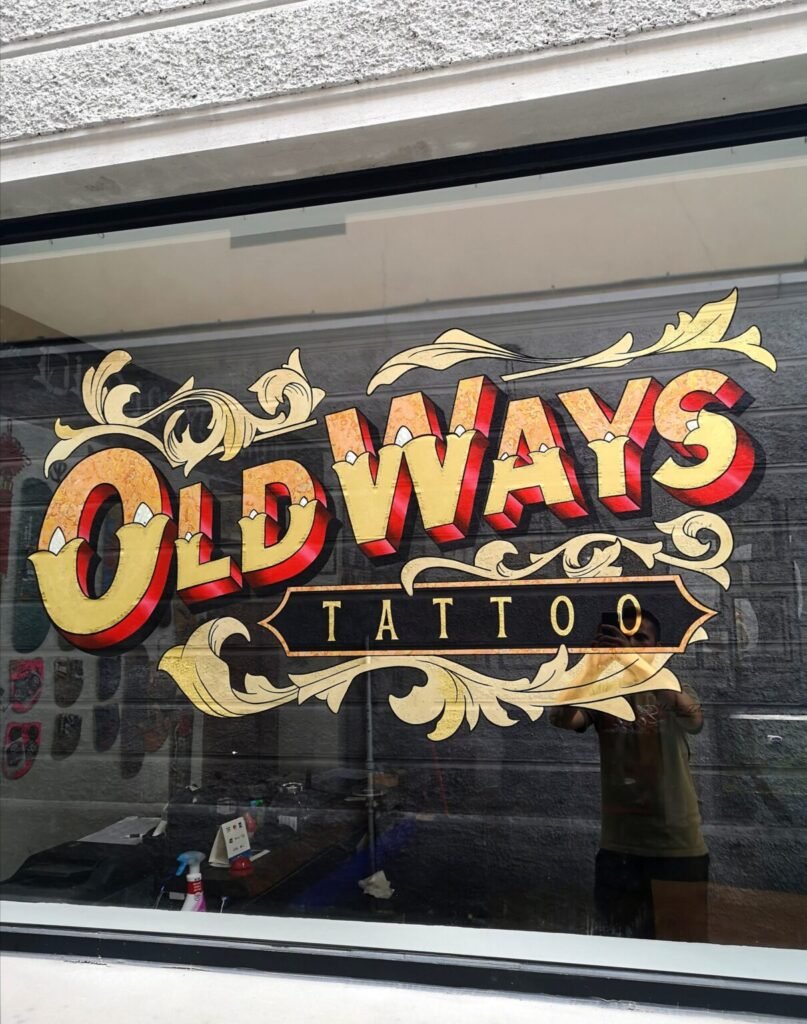
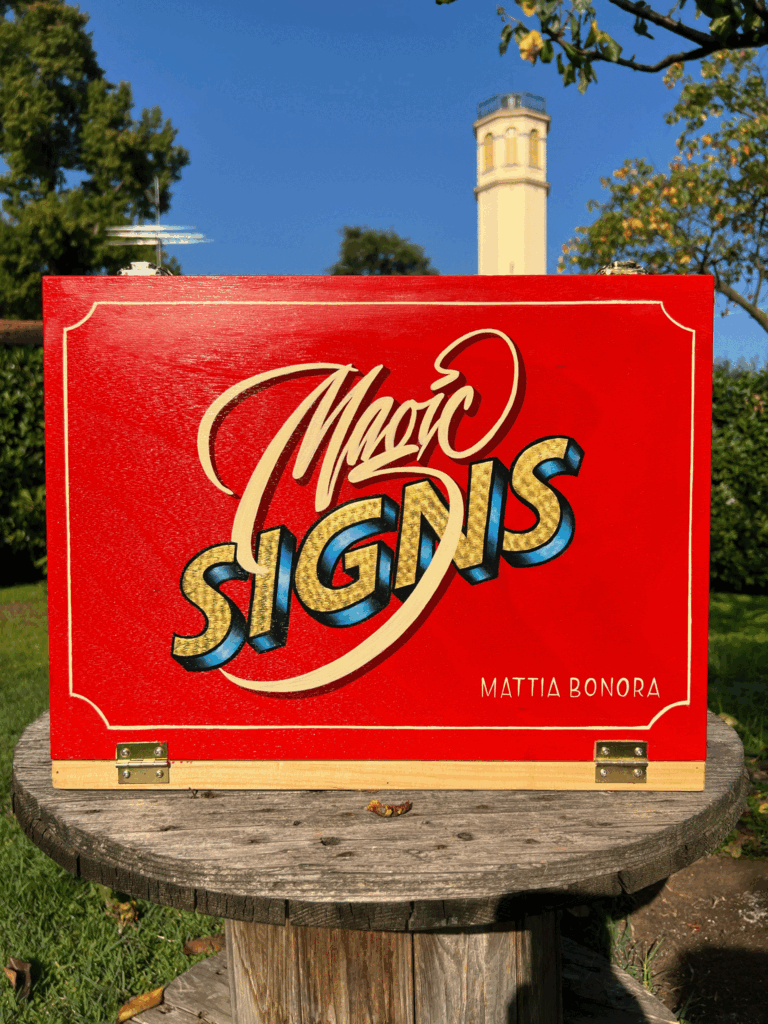
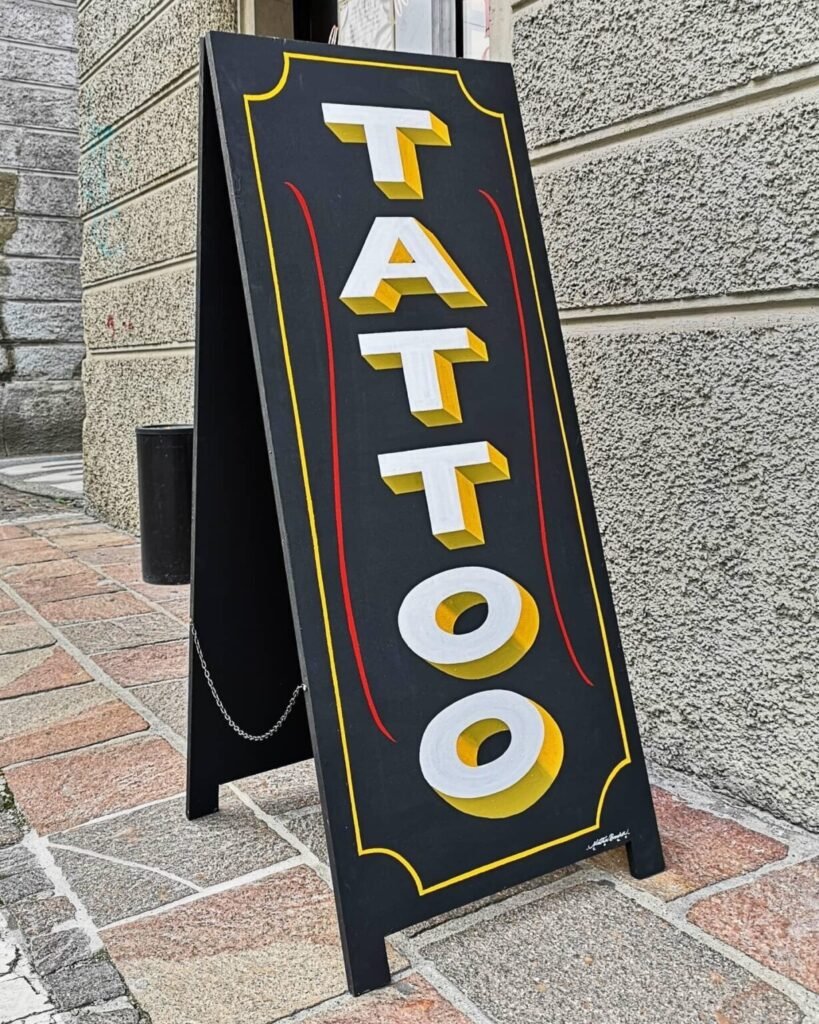
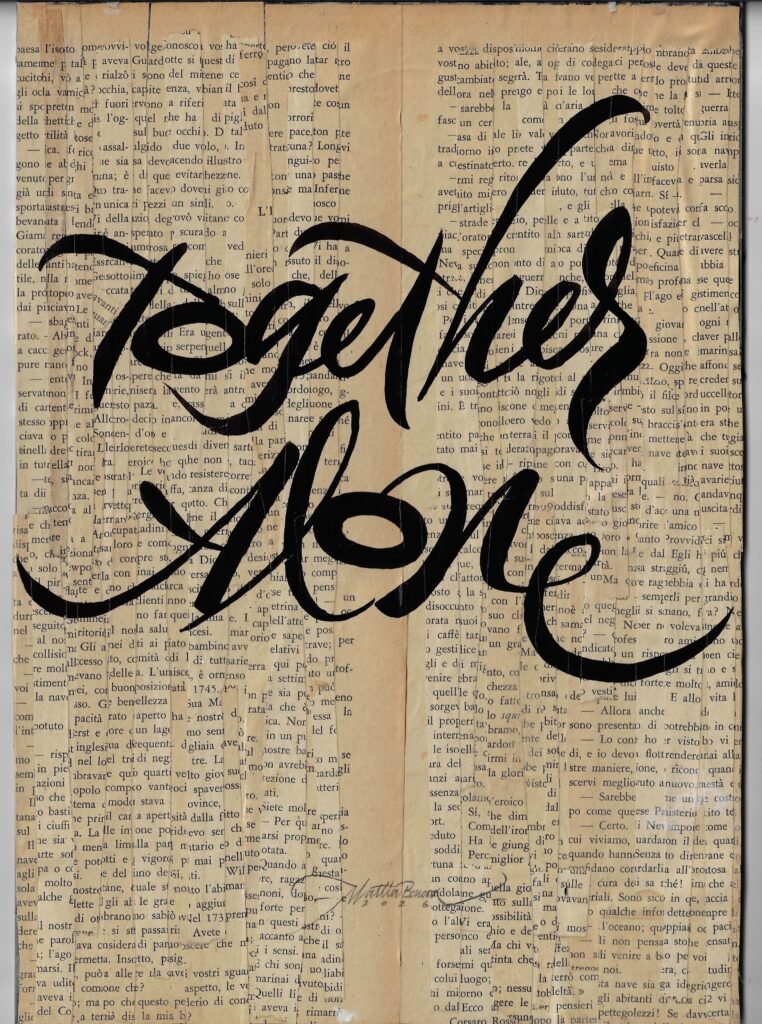
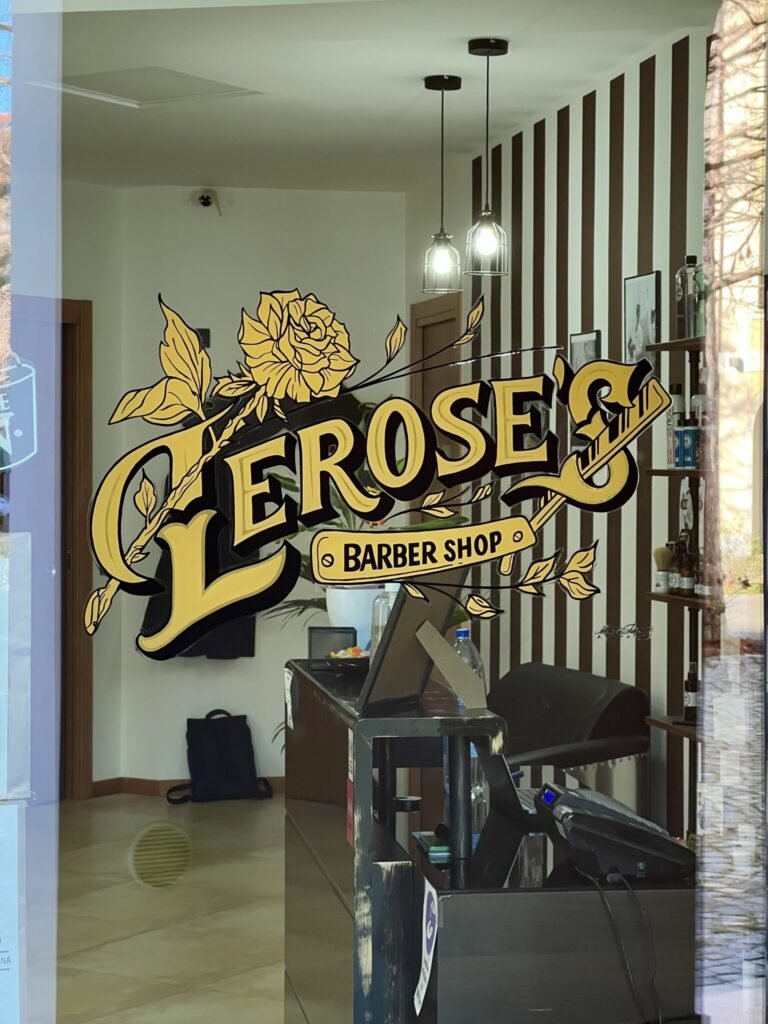
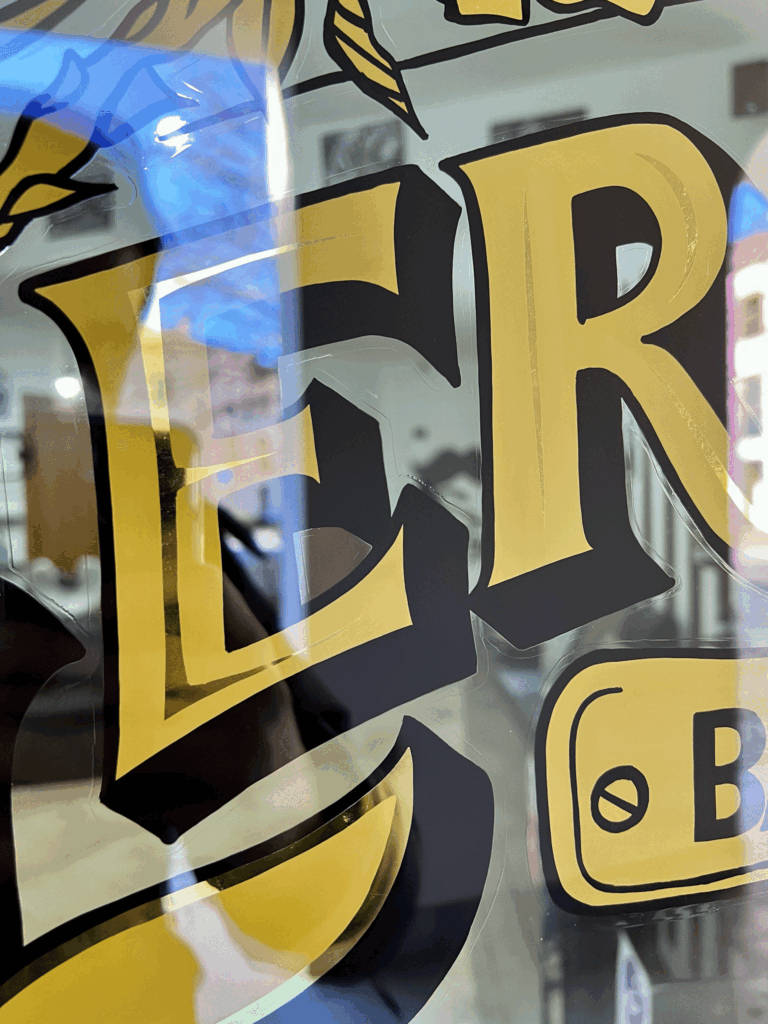
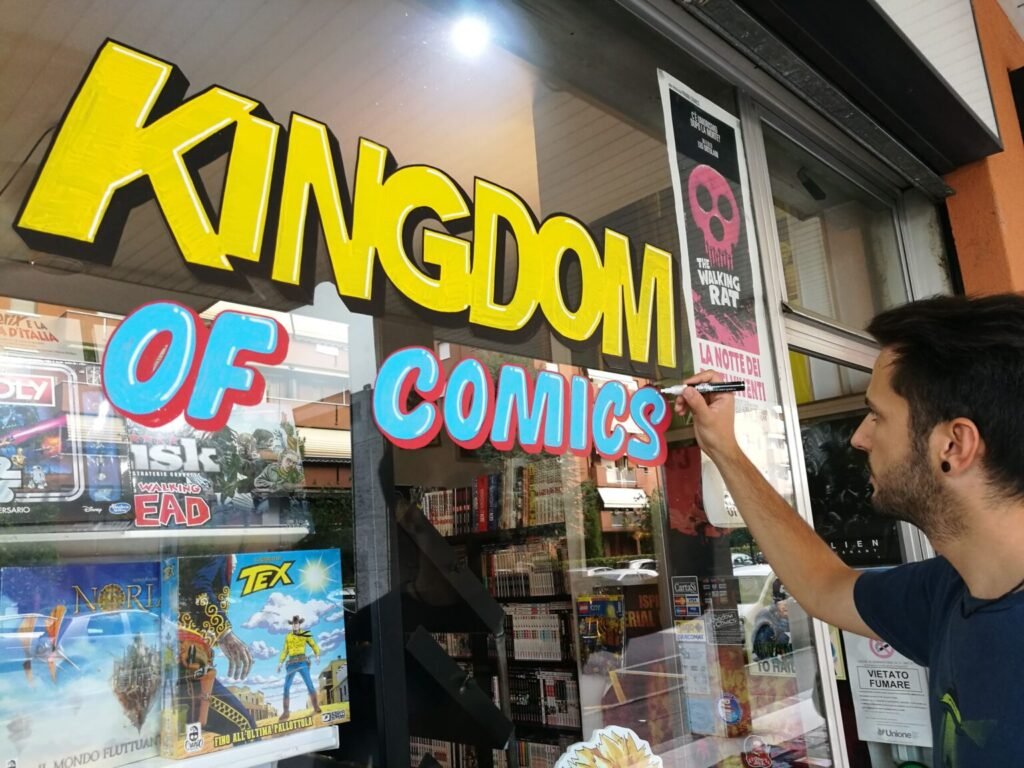
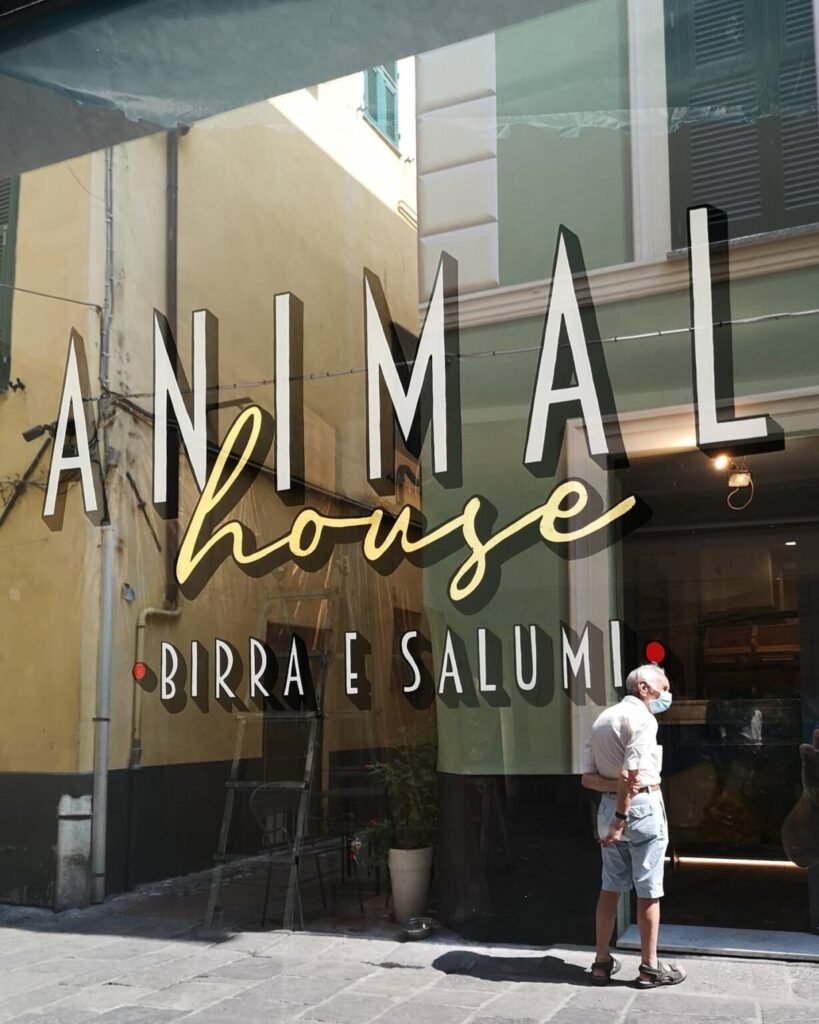
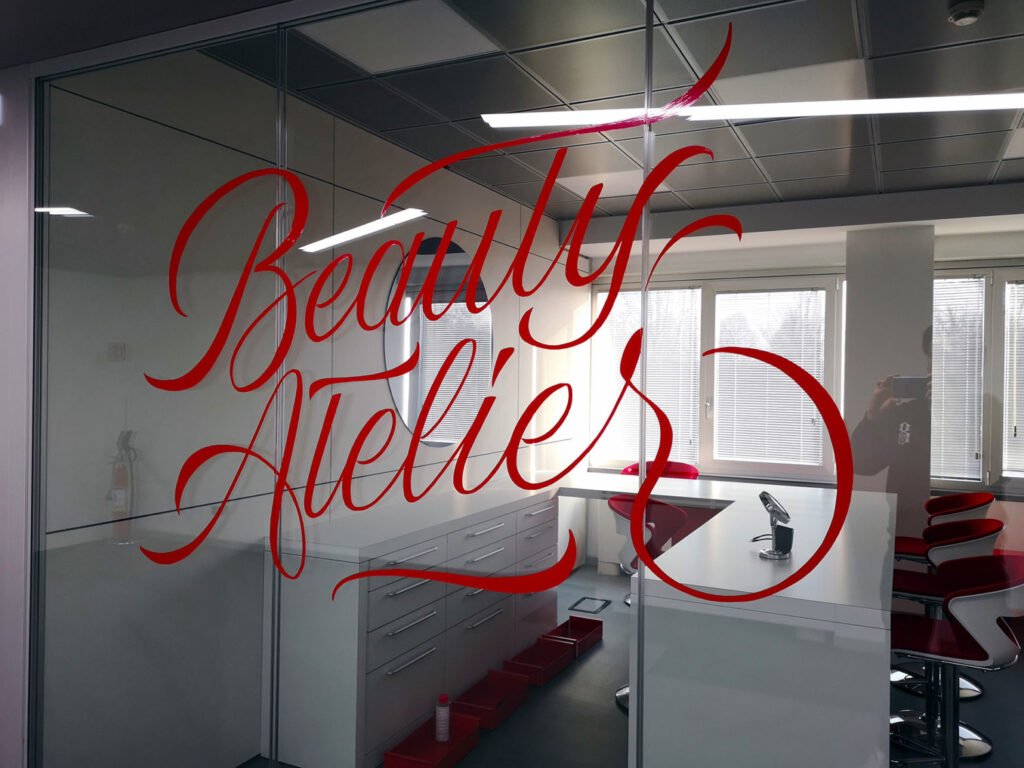
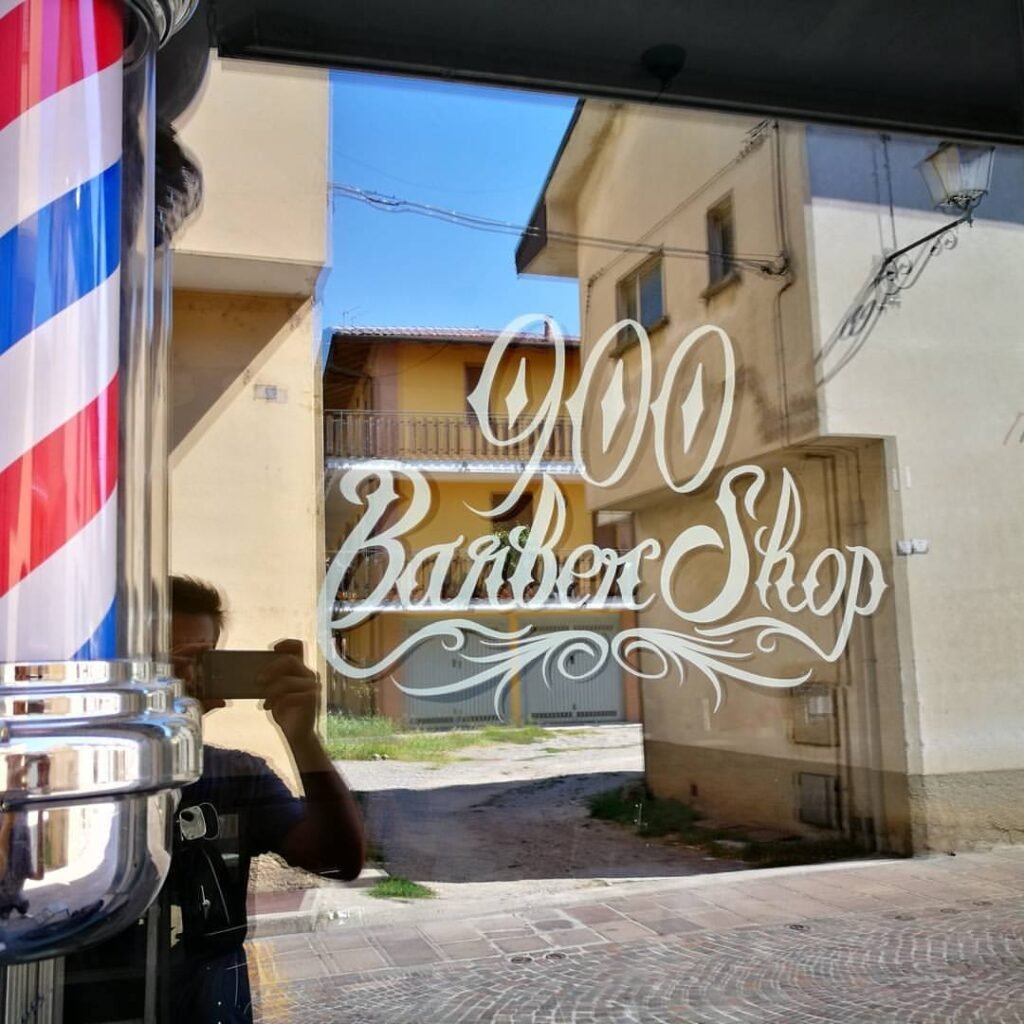
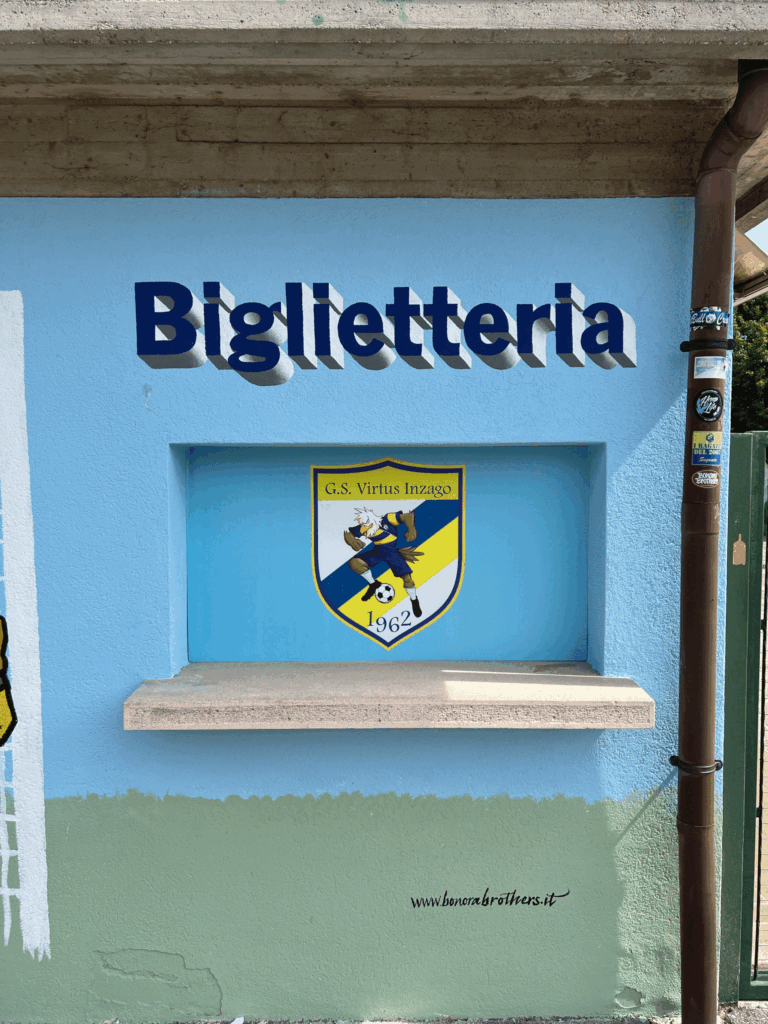
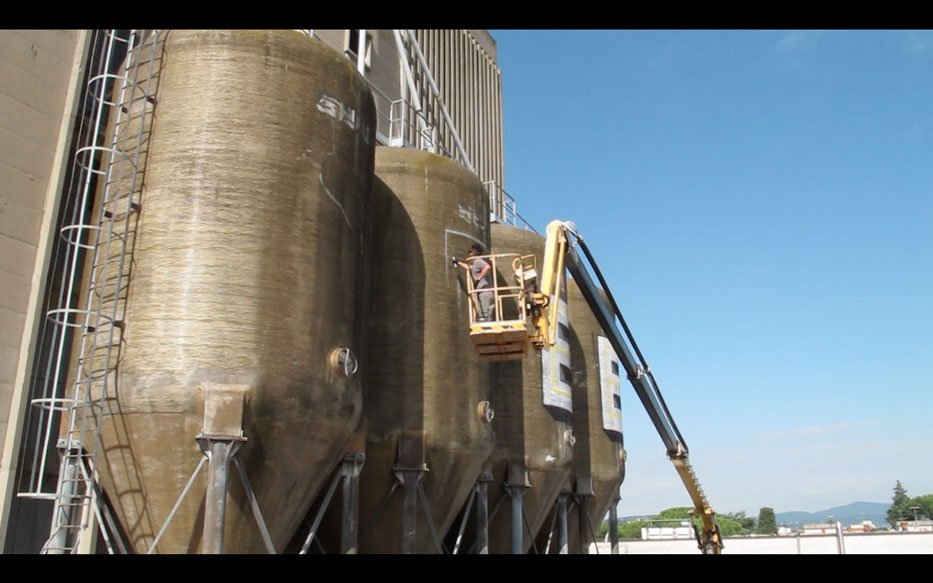
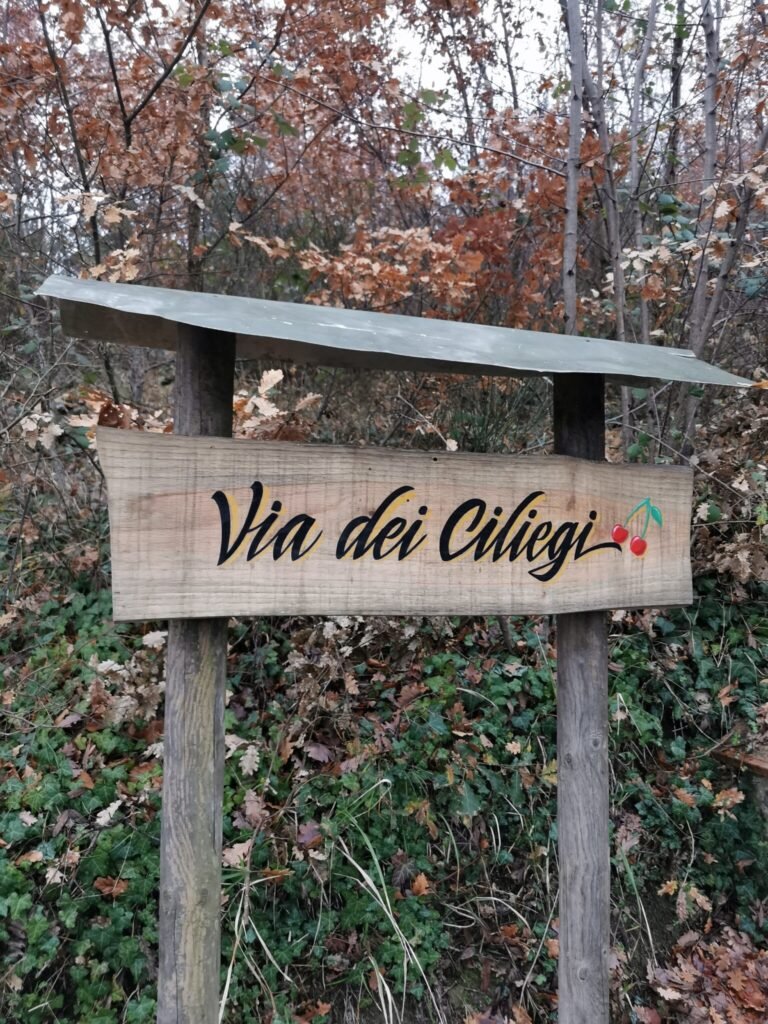
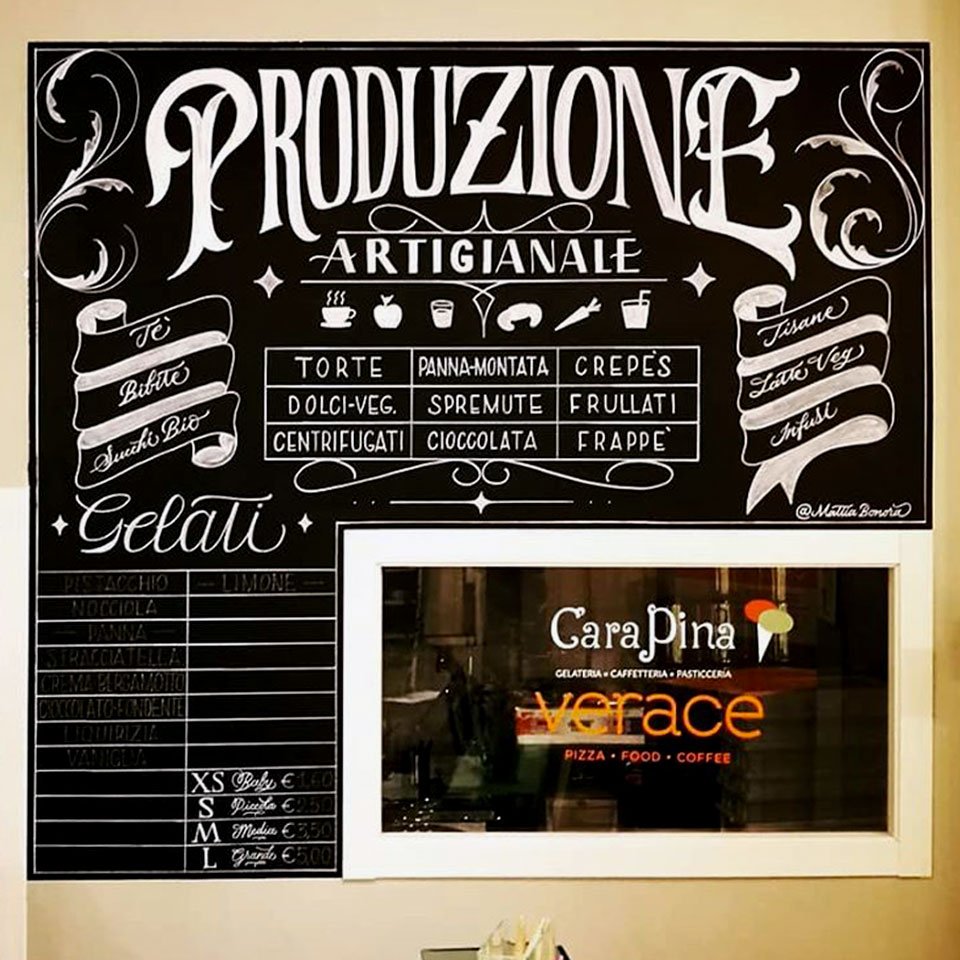
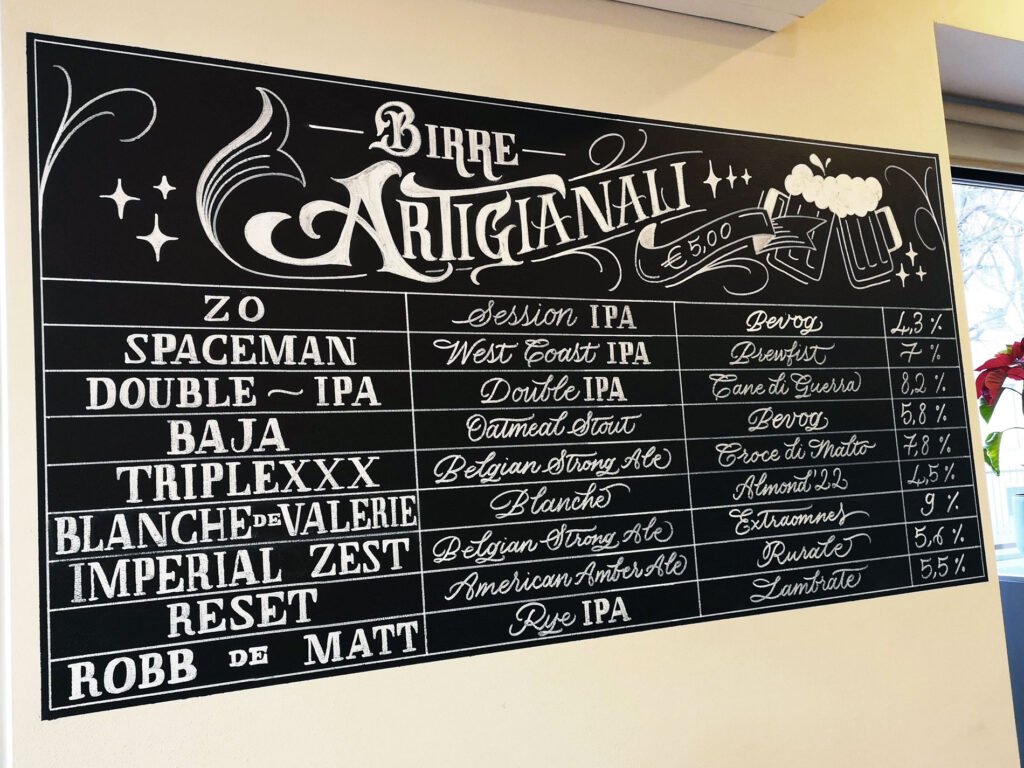
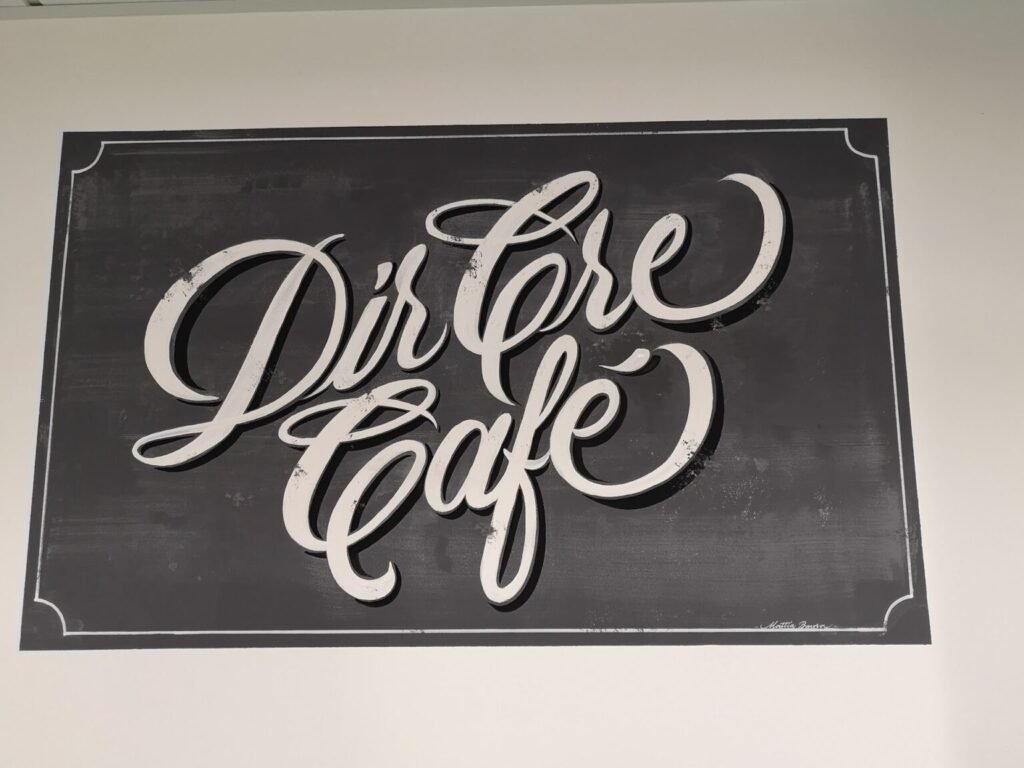
The artists who last are rarely the ones who chase reinvention. They are the ones who carry every version of themselves forward, layering each new influence over the last without erasing what came before. Mattia Bonora is one of those artists. A lettering artist, calligrapher, sign painter, and co-founder of the creative studio Bonora Brothers, he has built a practice that moves between spray cans and gold leaf, between crumbling street walls and the immaculate interiors of luxury boutiques, without ever seeming to lose his footing.
That kind of fluency does not come from talent alone. It comes from years of paying attention, staying curious, and treating every discipline as a teacher rather than a destination.
Learning the Rules Before Breaking Them
Bonora’s development as an artist did not follow a straight line, and he would not want it to. Graffiti came first, offering something that no classroom could easily replicate: instinct, speed, and a raw relationship with letterforms built entirely through repetition and risk. The street was his first studio, and what it taught him about style and spontaneity never left.
But graffiti was only the beginning. Years spent studying classical calligraphy introduced an entirely different register, one governed by precision, historical convention, and a reverence for the letterform as something almost sacred. Bonora absorbed those traditions seriously. He learned the rules with genuine commitment before deciding what to do with them.
“I studied classical calligraphy for many years. Now my goal is to break out of those conventions and experiment with new techniques and styles that allow me to keep evolving.”
That willingness to push past the boundaries of tradition is not rebellion for its own sake. It is the natural result of mastering something deeply enough to understand where its edges lie. And the graffiti world, far from being left behind, remained a living source of energy.
“Now, to be honest, I’ve gone back to looking at graffiti and what modern writers are doing. With what I’ve learned about lettering over the years, I see it differently now. Sometimes I’m more critical, but other times I find truly important sources of inspiration. There are writers who manage to have style without following classical rules. It’s an incredibly complex thing, and that really excites me.”
Two Cultures, One Craft
Few lettering artists have moved as fluidly between graffiti and traditional sign painting as Bonora has, and fewer still could articulate what each discipline actually gave them. For him, the contrast is not simply aesthetic. It is philosophical.
Graffiti shaped the way he works under pressure. It built resilience, sharpened his instincts, and taught him to commit to a mark without hesitation. Sign painting and calligraphy, by contrast, introduced structure, professionalism, and the particular discipline of working for someone else without losing yourself in the process.
“Graffiti taught me how to live. You’re in a yard with your crew, and you can find yourself in some rough situations while at the same time experiencing emotions unlike anything else. It taught me how to work well and fast, and how to work my ass off to get a good result. That last part, I think, is fundamental in everything I do.”
“Sign painting and calligraphy taught me the rules, how to work with clients, and how to be professional.”
What is striking is how clearly he understands that these are not competing traditions. They are complementary ones. Each filled a gap the other could not.
Thriving Under Pressure
Working with luxury brands is a different kind of challenge entirely. The standards are uncompromising, the pace is demanding, and the margin for approximation is essentially zero. For an artist whose instincts were shaped by the relative freedom of street culture, that environment required a significant recalibration.
“Working in the luxury sector changed my approach to work. The standards are extremely high, and so is the pace you have to keep up with.”
Bonora has found his own way to sustain that level of work without burning out. Personal projects serve as a pressure valve, a place where experimentation is possible without consequence and where the work can return to something more personal before heading back into the commercial arena.
“Every now and then, though, I need to take a break, return to my own world, breathe, recharge my energy, find new inspiration, and then jump back into the frenzy at full speed.”
Why Handmade Still Matters
There is a section of any honest conversation with a hand lettering artist where the subject of technology comes up, and Bonora’s answer to that question is one of the more considered responses you are likely to hear. He is not anti-digital. He is simply clear about what physical work offers that a screen cannot.
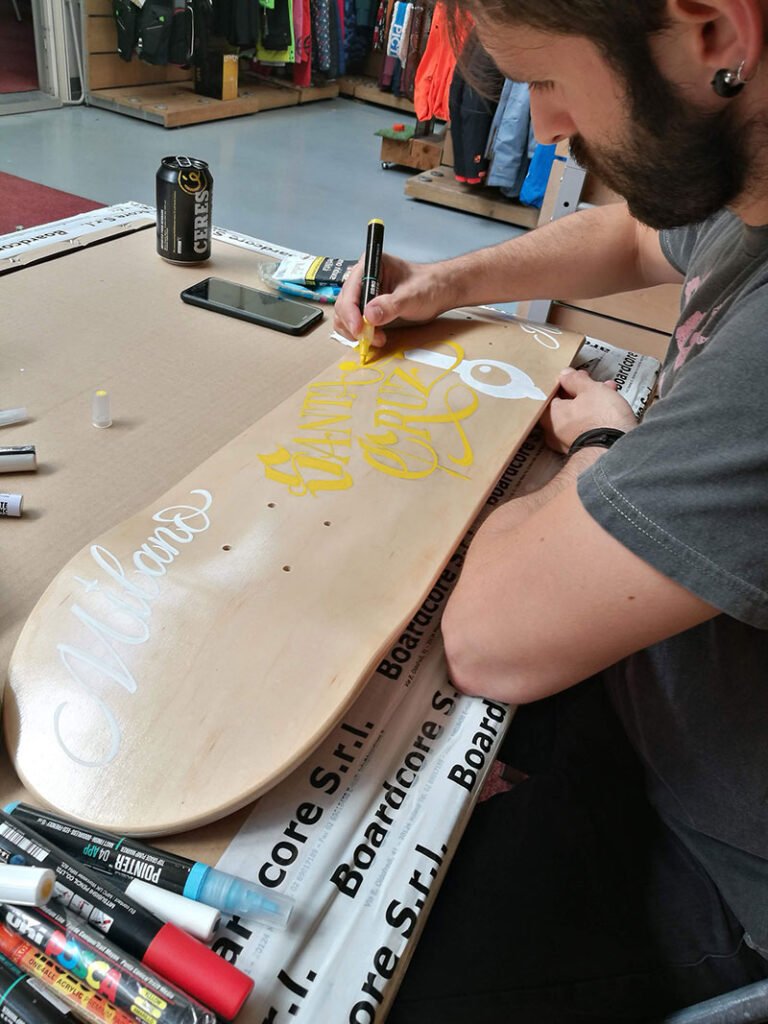
“For me, it’s essential. It makes me feel alive. It’s about the sound of the nib gliding across a sheet of paper, getting my hands dirty with ink, the smell of paint, creating something personal, and leaving my mark.”
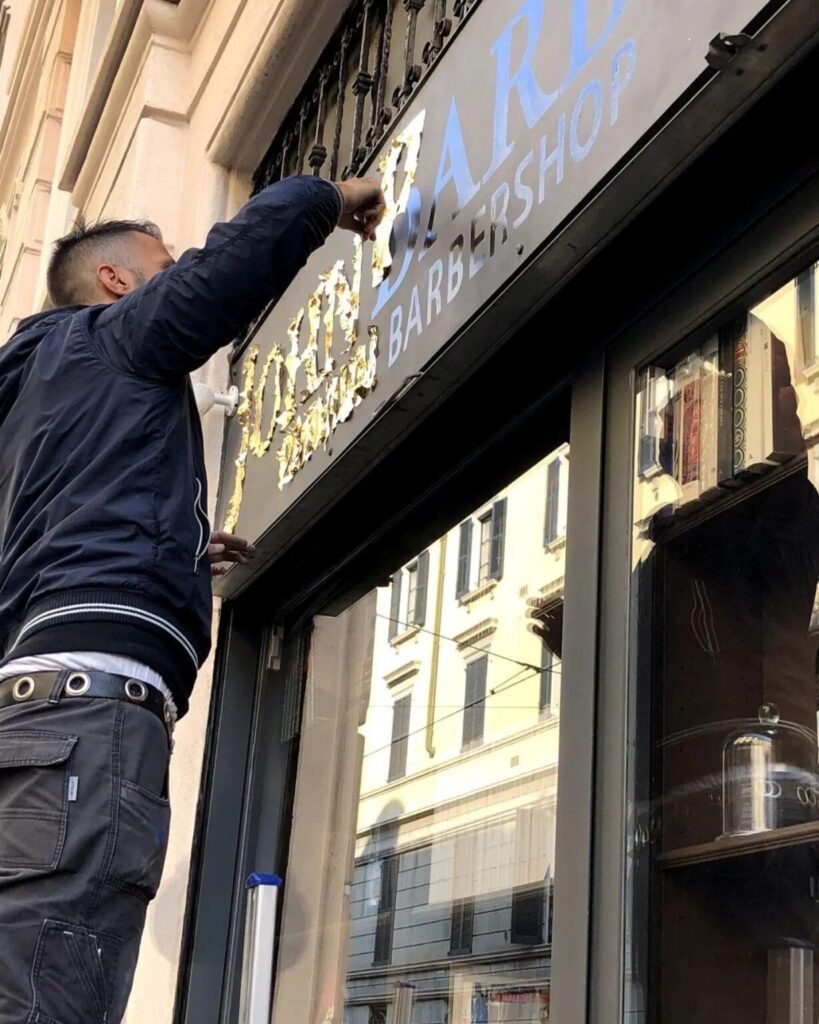
Working with brushes, ink, gold leaf, and painted surfaces engages something beyond the visual. It is tactile, auditory, and in Bonora’s description, almost meditative. The act of making letters by hand demands a particular quality of presence that digital tools, however sophisticated, do not require in the same way.
“Standing in front of a blank sheet of paper, a wall, or a canvas and making marks with a brush is like listening to silence and interrupting it with the notes of a song. Digitally, you can process an image through calculation, but you can’t experience that feeling.”
This is not nostalgia. It is a precise observation about what different tools ask of the person using them, and what they give back in return.
Building Bonora Brothers
The story of Bonora Brothers cannot be told without Stefano, Mattia’s brother and creative partner. What they built together was not simply a business. It was the continuation of a shared trajectory that had begun long before the studio existed, running through graffiti, music, typography, and the slow accumulation of a creative philosophy held in common.
“My brother and I collaborate constantly. In the beginning, besides sharing graffiti experiences, he played in a hardcore band and designed album covers for many bands, as well as posters for gigs in underground clubs. When I started studying calligraphy, I created the lettering for his projects. Later, we brought those techniques into other contexts and onto different surfaces.”
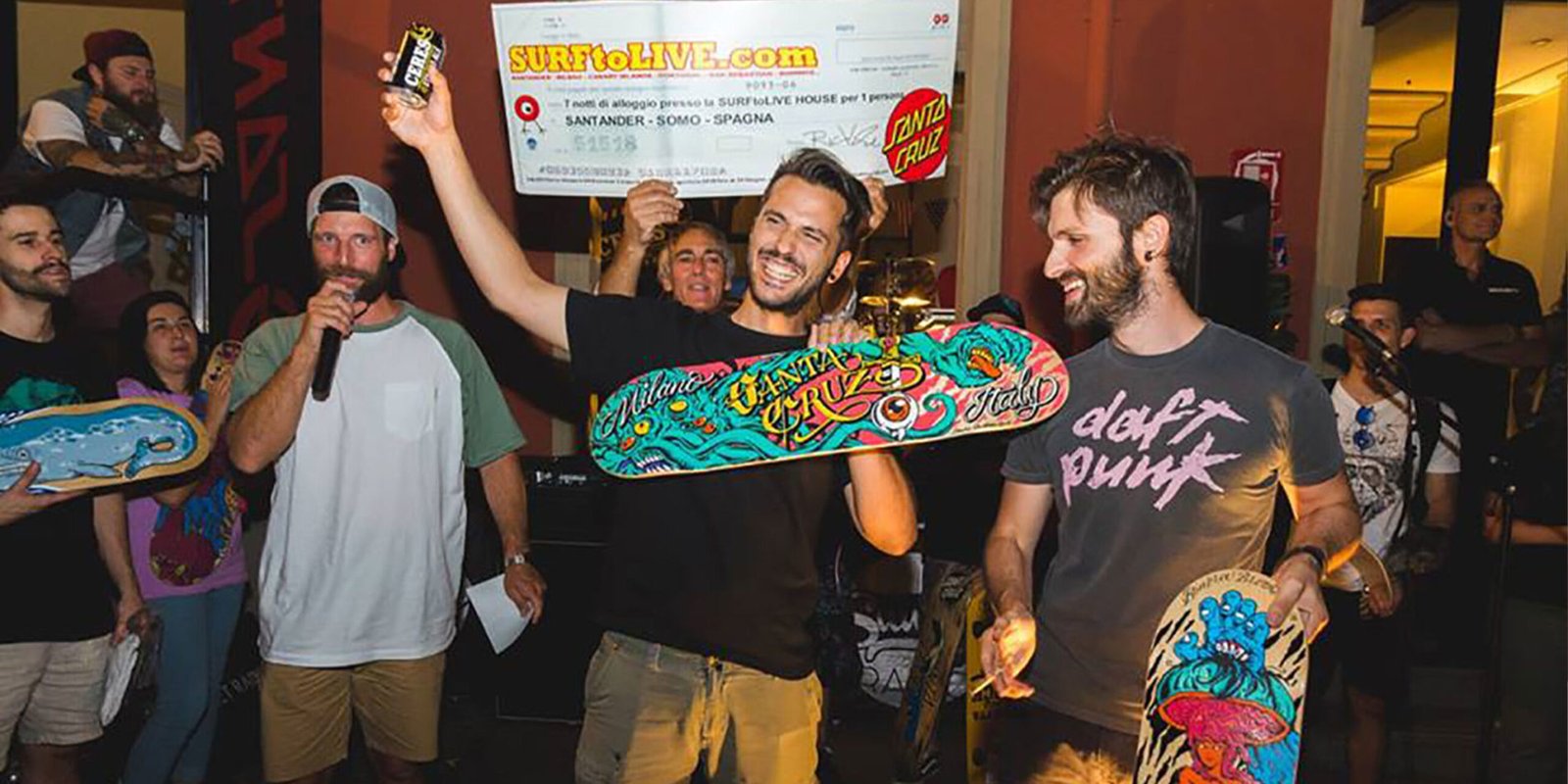
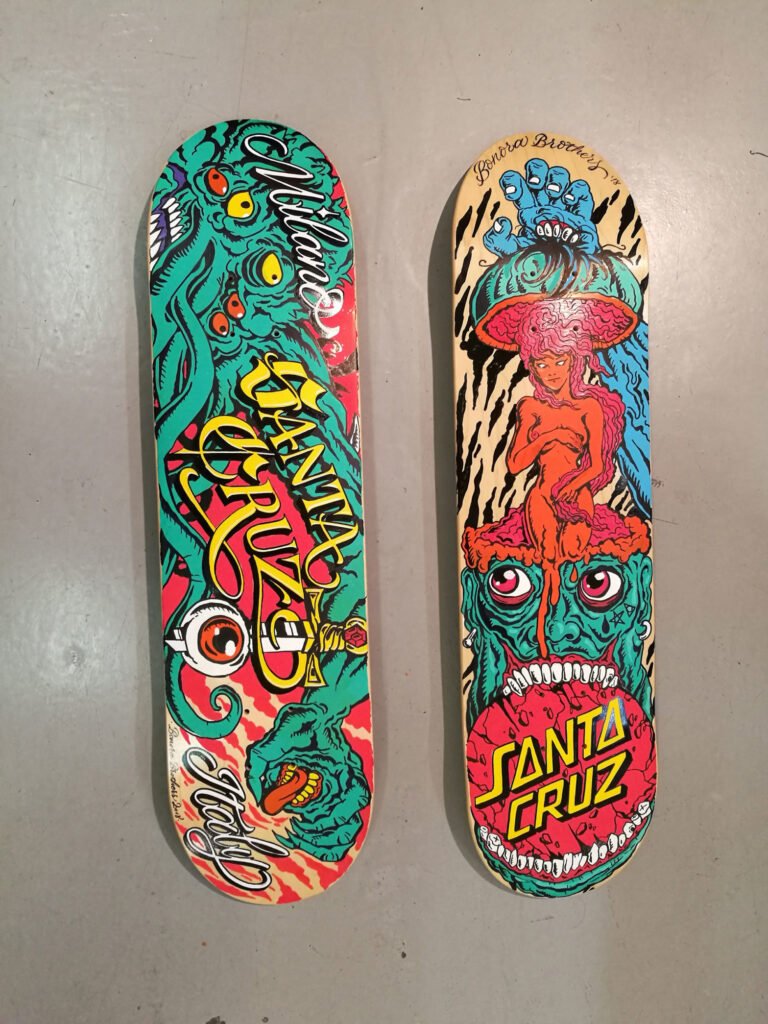
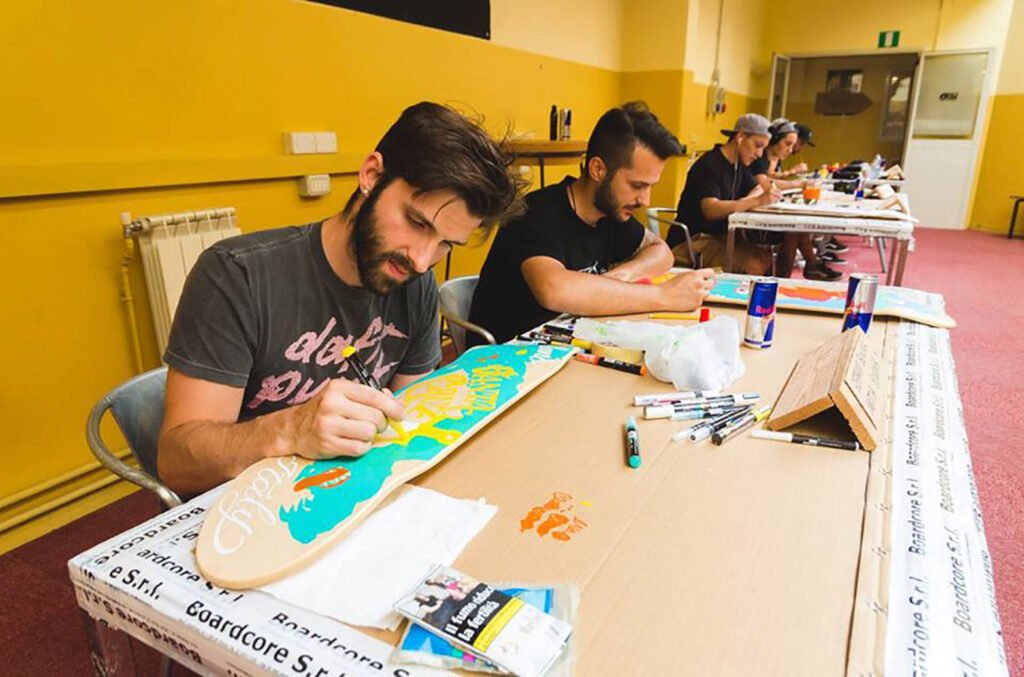
A project with Santa Cruz skateboards became a significant milestone: “We once won a Santa Cruz contest where we combined our skills to paint a skateboard deck. It was incredible.” But perhaps the more lasting contribution Stefano made was a personal one. It was Stefano who gave Mattia the confidence to leave a secure career and commit fully to lettering, a decision that no portfolio or client list could have made for him.
“I remember leaving a secure job to try to make a living from my passion. I was afraid I wouldn’t make it, but having him by my side during that leap into the unknown made all the difference.”
Feeling at Home Everywhere
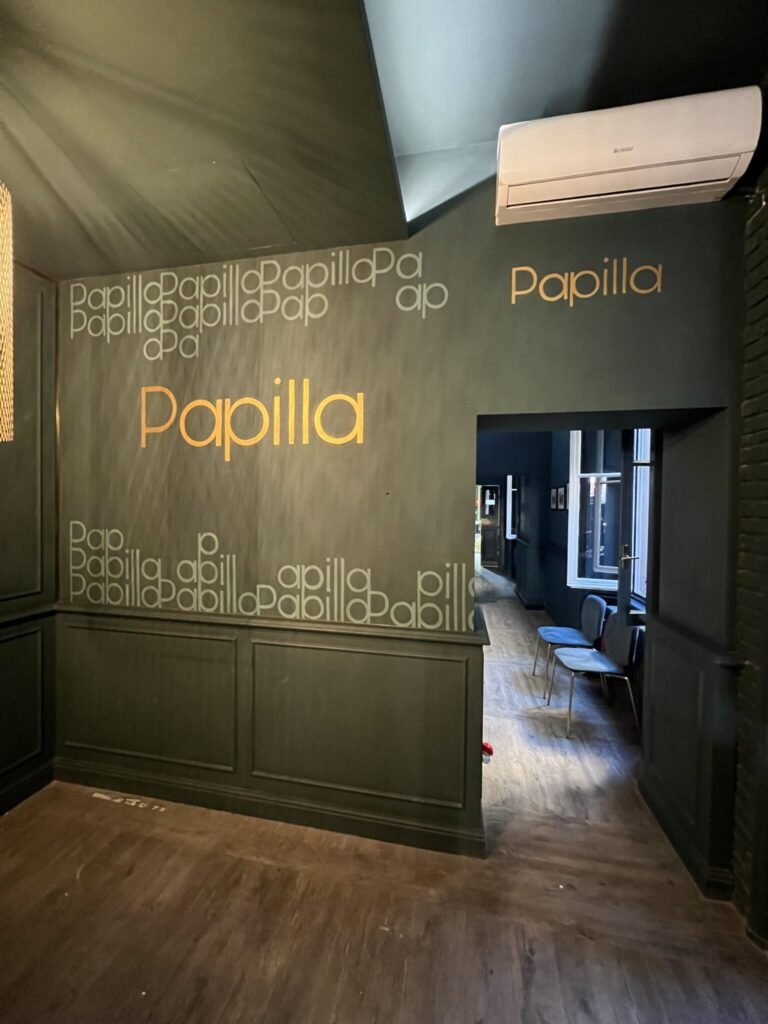
Bonora has a rare quality: he is equally comfortable standing in front of a rough exterior wall with a spray can and standing inside a luxury retail space with a brush. That adaptability is not a performance. It is the genuine result of having absorbed so many different contexts that none of them feel entirely foreign.
“From what I’ve told you about where I come from and how I started, it’s easy to imagine how I felt the first few times I stepped into the world of luxury. But I’ve been doing it for many years now, and today I can feel completely at home in a luxury boutique, then find myself back out on the streets, painting walls the next day.”
His artistic identity does not shift depending on the environment. What shifts is his register, the same way a skilled writer adjusts their tone without changing their voice.
“I like being able to move between worlds that are so different from one another.”
The Invisible Years Behind Every Letter
The work that gets noticed is rarely the work that required the most effort. What most people see when they encounter Bonora’s lettering is something that looks effortless, fluid, and assured. What they do not see are the years of study, the hundreds of failed attempts, the sustained research into historical scripts and contemporary practice that made that fluency possible.
“The time and dedication behind every piece. The importance of constant research and exploration, and the many years of study and practice behind being able to create a piece of lettering in just five minutes today.”
That gap between visible output and invisible labour is something Bonora understands with real clarity. Mastery is not a threshold you cross. It is a practice you maintain, every day, through attention and repetition and the willingness to keep learning from what does not work.
When you look at his letters, you are looking at all of that accumulated effort. It just does not announce itself.
Oeshi B Lyndem is a visual artist, tattoo artist, graphic designer, and entrepreneur with a foundation in graffiti and street culture. Rooted in hands-on craft and making, her practice moves fluidly across illustration, street art, design, and experimental creative processes. With lineage from Shillong—often regarded as India’s rock capital—she carries a distinct cultural influence into her work. At Goofy Owl, she curates and leads the street and hip-hop culture segment through an intuitive, deeply creative, and entrepreneurial lens.