Prey (Prerak Joshi) is an India-based progressive guitar artist blending metalcore, pop punk, and prog rock into high-energy music that prioritizes feeling over technical display. A Strandberg-partnered musician who has collaborated with David Maxim Micic, hosted nearly 450 people at his first hometown show, and hosts the podcast “Beyond Time Signatures,” Prey is building a career that geography simply cannot contain.
There’s a version of the progressive guitar world that exists almost entirely in technique.
Sweep arpeggios filmed at 60fps. Time signatures explained in a YouTube thumbnail. Fretboard acrobatics performed for an audience of other fretboard acrobats. It’s impressive. It’s also, more often than not, kind of cold. Prey is doing something different.
The Indian guitar artist, born Prerak Joshi, makes progressive guitar music that hits you before you have a chance to analyze it. His sound pulls from metalcore, pop punk, and prog rock, and the result feels like emotional acceleration. You don’t need to understand odd meters to feel what he’s playing. That accessibility, that commitment to feeling over display, is the through
line connecting everything Prey does: his records, his handmade CDs, his podcast, his live shows, and his growing body of collaborative work with some of the genre’s most respected names.
This is a profile of an artist who started as a bedroom listener and built, note by note, a career worth paying attention to.
How Does Prey Approach Progressive Guitar Without Letting Technique Take Over?
Progressive guitar has a well-documented ego problem. The genre rewards complexity, and complexity, when chased for its own sake, can produce music that sounds like a math exam.
Prey grew up listening to artists who understood the difference between technical mastery and emotional intelligence, and that distinction runs through every creative decision he makes.
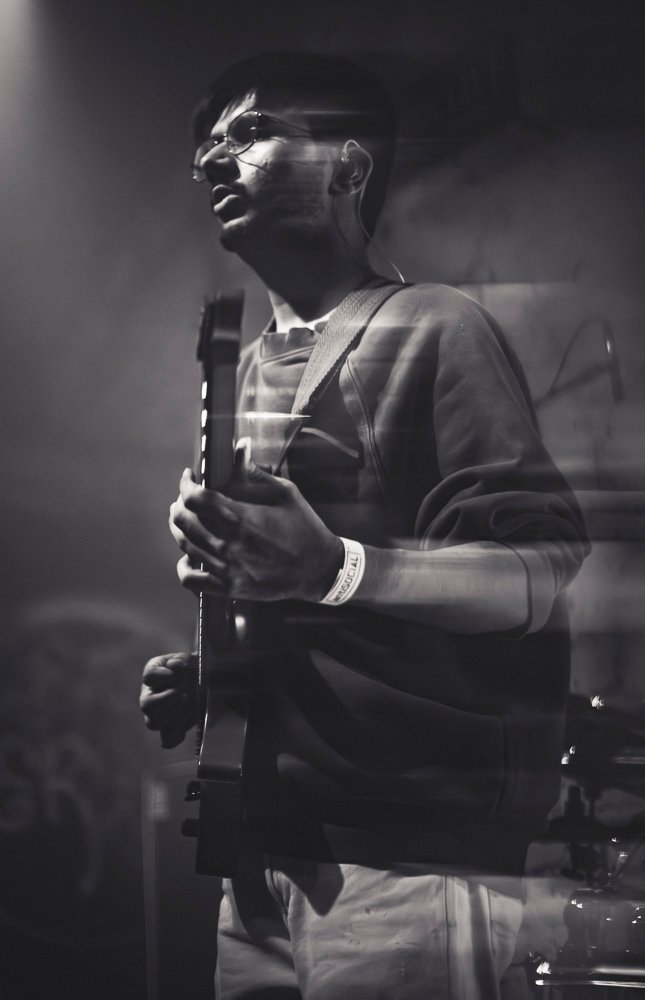
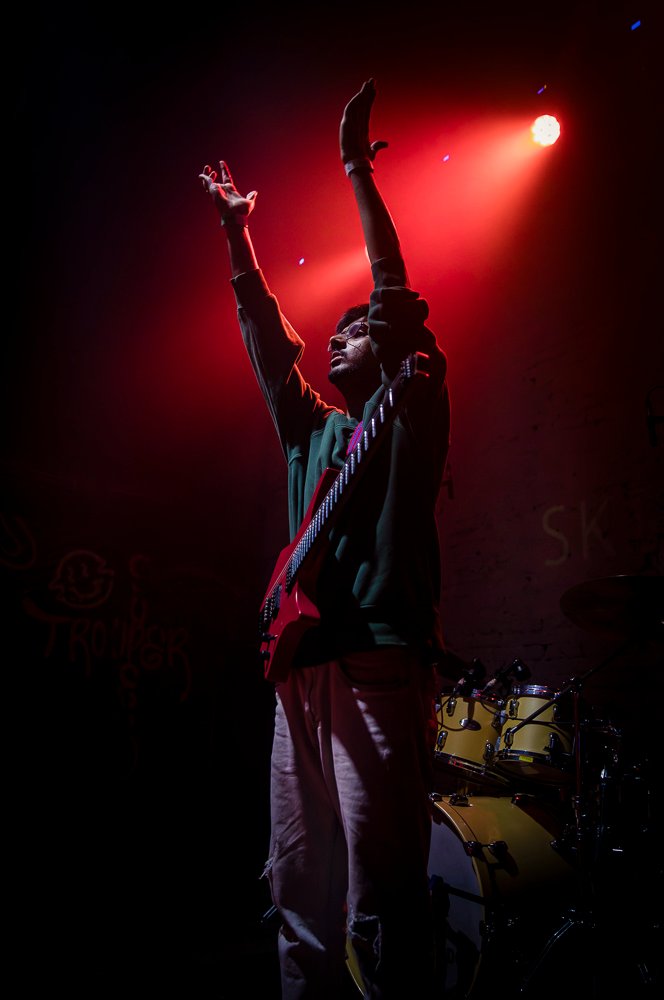

Image Credits: Dagmar Urlbauer | Manav Chawla
His music sits at the intersection of metalcore’s aggression, pop punk’s melodic directness, and prog rock’s structural ambition. None of those three genres traditionally share much space. Blending them requires not just technical skill but a clear sense of what the music is supposed to feel like.
For Prey, the answer is always feeling first.
“I want people who don’t even know prog or metal or guitar to be able to listen to my music and feel things,” he says. “The barrier to entry should never be technique driven, because in that way you’d be gatekeeping your own genre.”
That last line hits harder than it first appears. In a space where technical ability is often treated as the entry ticket, Prey is actively pushing the door open wider. Technique serves the song.
The song serves the feeling. The feeling is the point.
What Did Plini and David Maxim Micic Teach Prey About Building a Creative Life?
Prey’s most significant influences are not just technical reference points. They are models for how to build a creative life with integrity.
Plini, the Australian guitarist who has become one of progressive music’s most beloved figures, demonstrated that warmth and complexity are not mutually exclusive. What Prey took from him went beyond the music itself.
“He’s worked with almost the same people for over a decadeand in the process everyone has grown into becoming the best current versions of themselves,” Prey reflects. “Letting go of the control and watching something bigger than you unfold is really a beautiful feeling.”
David Maxim Micic offered a different kind of gift: permission. During a conversation on Prey’s own podcast, Micic told him, “First two records, you can do whatever. Don’t worry about having a developed sound.” Prey describes that advice as genuinely liberating. He had been quietly carrying the pressure of needing to stand out in a niche genre. Letting go of it, he says, led to some of his best music.
Prey’s relationship with Micic eventually extended beyond influence. The two have collaborated directly, a detail that speaks to how seriously Prey has been taken by the artists who shaped him. Jakub Zytecki rounds out Prey’s core trio of inspirations, and his influence is felt in Prey’s willingness to let pop sensibility and prog ambition coexist without forcing them to resolve into something tidier.
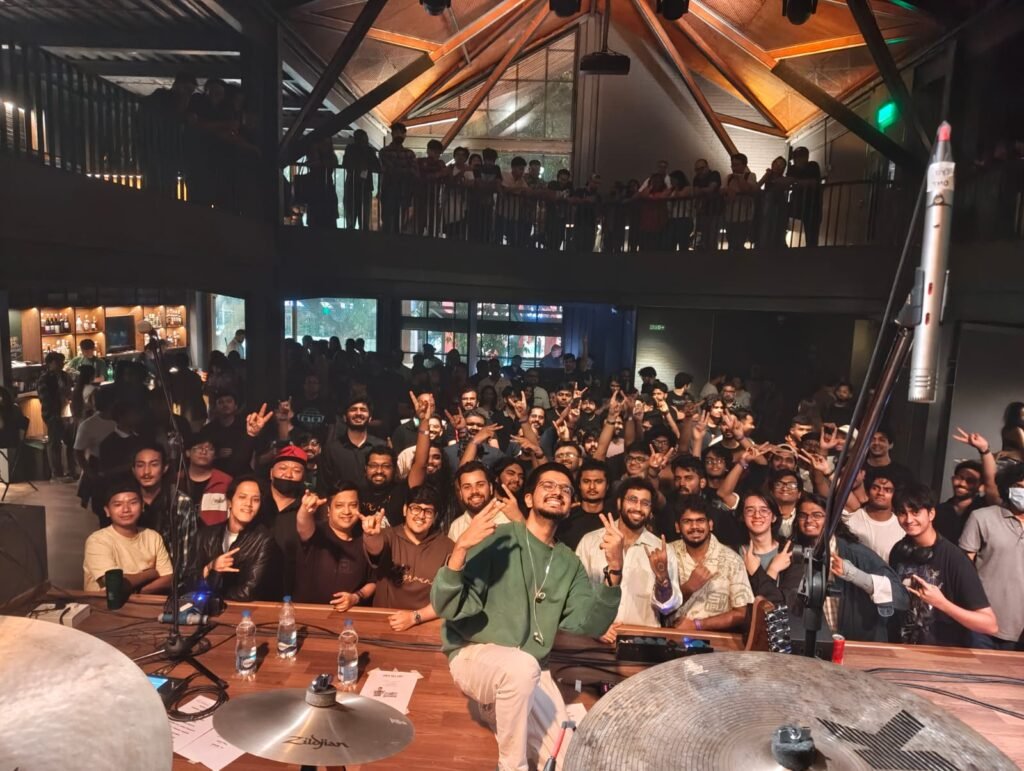
Image Credits: Kiran Vincent
What connects all three is a sense that music is a long game. You build slowly. You build honestly. And you build something that reflects who you actually are, not who you think the genre wants you to be.
Does a Strandberg Partnership Prove That Geography Won’t Limit a Musician’s Career?
Strandberg Guitars is one of the most respected names in the progressive and extended-range guitar space. Their headless instruments are built for players who are serious, specific, and technically exacting in their demands. Earning recognition from Strandberg is not something that happens by accident or geography.
For Prey, based in India, the partnership carries a particular weight. The global progressive guitar scene has historically centered around Europe, Australia, and North America. Artists
from outside those regions often face the double challenge of building an audience while also fighting the quiet assumption that serious work doesn’t come from their corner of the world.
Prey sees the partnership as proof of something larger.
“It’s opened a possibility and proof that your geo-location doesn’t limit your dream,” he says. “It takes time, effort, resilience, but it is very very doable.”
Getting closer to his musical heroes also changed how he sees them.
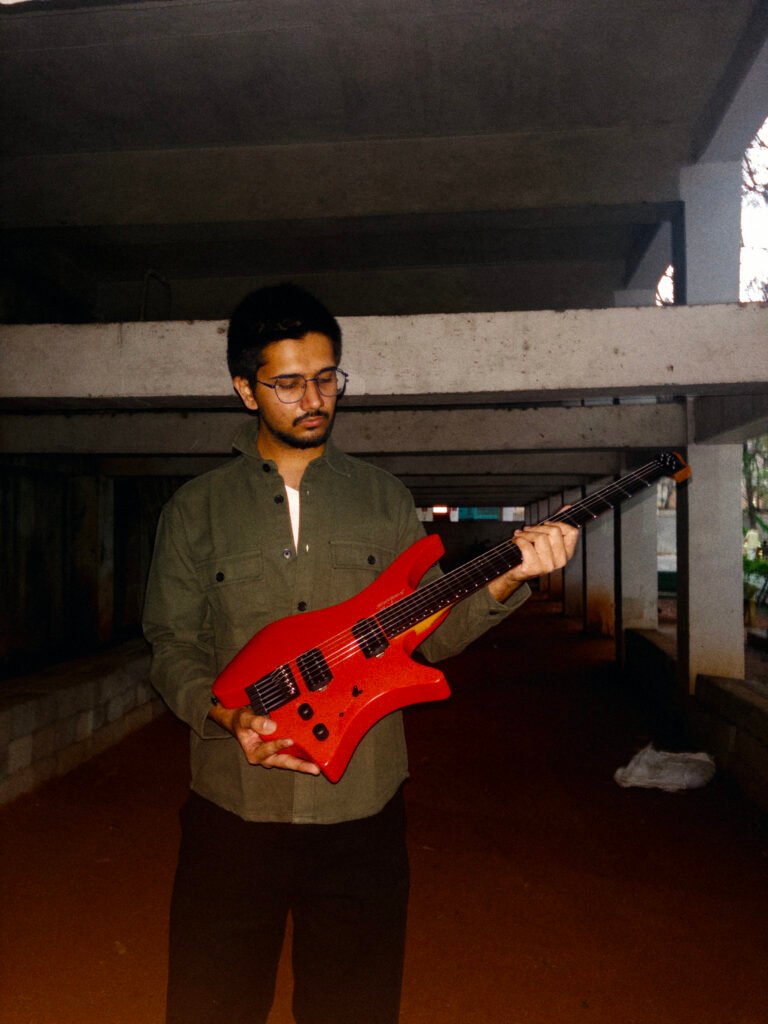
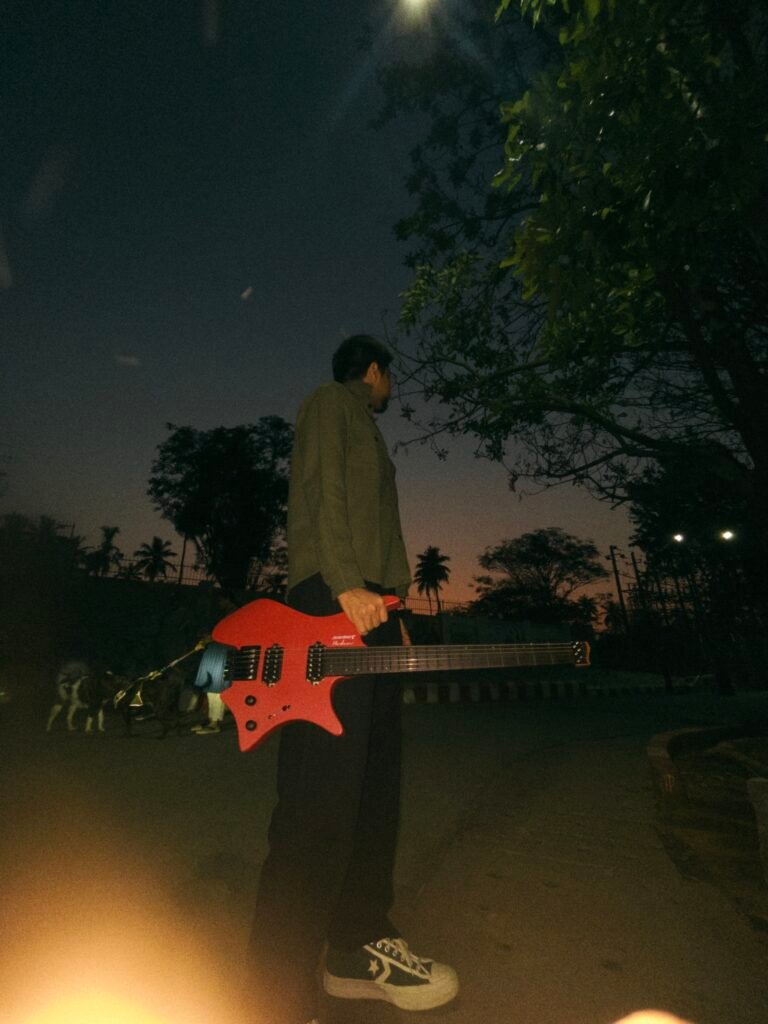
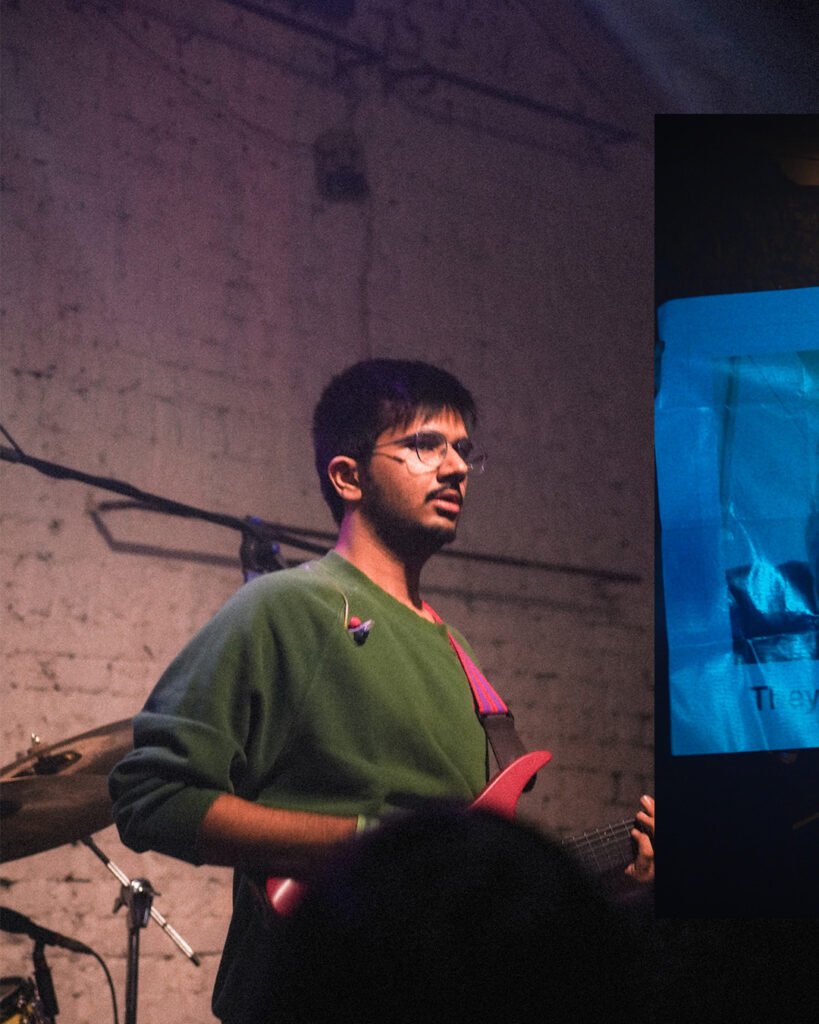
Image Credits: Vallabh Sivaprasad | Manav Chawla
“Forming a deeper relationship with my idols have made me realise the similarities we have. They have the same insecurities, fears, things that make them happy.” That kind of grounded perspective is rare.
The distance between admirer and peer collapses, and what replaces it is something more honest: mutual respect between artists working through the same creative challenges from different corners of the world.
What Is the “Beyond Time Signatures” Podcast and What Has It Revealed About Creativity?
Prey hosts “Beyond Time Signatures,” a podcast that takes its name seriously. The show moves past the technical surface of progressive music to ask larger questions about creativity, process, and what it actually takes to build a life around making art.
For Prey, the podcast exists because he sees something at stake.
“I feel it’s really important to understand, acknowledge, and nurture artistry in a time where everything is a distraction,” he says.
That conviction shapes who he invites onto the show and what they talk about.
The patterns that emerge across those conversations are consistent.
“Almost always, the core of the conversation comes down to not comparing, start doing more. Learning more and being open to newer things. Following what the heart wants and not caring what your fans or peers think about it.”
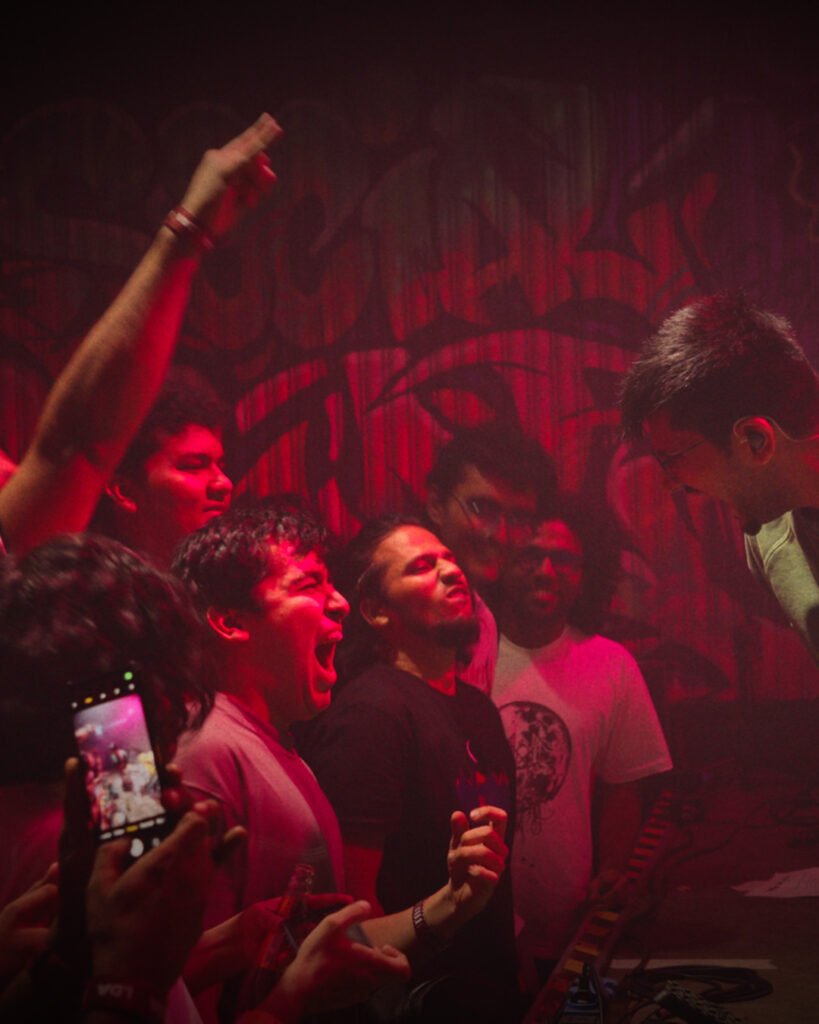

Image Credits: Manav Chawla
In a genre literally called progressive, he finds it almost ironic when artists edit themselves to fit an existing mold. “Art is good when it stems from necessity. If whatever you’ve made feels necessary for your life, then it doesn’t matter what anyone says about it.” That’s the kind of thinking that’s easy to agree with and genuinely difficult to live by. Prey is building a body of work around trying to live by it.
Why Does Prey Make Handmade CDs When the Rest of the Industry Has Gone Fully Digital?
At live shows, Prey sells handmade CDs. Each one comes with exclusive bonus tracks unavailable anywhere else in the streaming ecosystem.
This is a deliberate choice, and it runs counter to almost everything the modern music industry recommends. Streaming is the dominant format. Physical media is expensive to produce, difficult to distribute, and largely invisible to the algorithms that drive discovery. And yet Prey makes them by hand and sells them at shows.
His reasoning is clear. “A bonus track means an artist cares about you enough to share more than what the record promises. You also fully own a copy. Digital doesn’t always allow you to own.” He goes further: “The memorabilia compounds and certain emotions and memories get attached to that item every time you look at it.”
For a fan who attends a Prey show and buys one, it is a record of an experience, not just a
transaction. Prey works in music video editing, color grading, and creative direction alongside his music career. He thinks visually and materially. The handmade CD is consistent with that sensibility: a physical object crafted with intention, not just a product shipped to fill a demand.
What Did Prey’s First Hometown Show of Nearly 450 People Actually Mean to Him?
Numbers tell part of the story. Nearly 450 people attended Prey’s first hometown show. That is a significant figure for any independent artist, and a remarkable one for a progressive guitar musician in India, where the genre’s live footprint is still developing.
But the number that matters most in that evening’s story is two: the number of parents who saw their son perform live for the first time.
Prey doesn’t intellectualize what that night meant. He just describes it.
“I saw friends who I hadn’t seen in years be there. My parents saw me play for the first time. Sharing a night with friends, family, Plini and his band was beautiful. For a brief moment it truly felt like the whole city had gathered for a night of celebration and fun. Easily the best time of my life.”
Opening for Jack Gardiner and Plini before that hometown show gave Prey direct experience of what a well-developed live act looks like at scale. Those shows were apprenticeships in stagecraft, in audience management, in the specific discipline of performing progressive music
in a way that translates to a room full of people who might not know what a time signature is but can absolutely feel when something is landing.
The hometown show was the test of everything he had learned. Nearly 450 people in a room, in the city where he grew up, watching him play music he made because he had to make it. By any measure, it landed.
Making Art That Feels Necessary
Prey is currently working on a new record and building a live act with international stages in
mind. Both of those projects are extensions of the same core commitment: to make music that feels necessary, not just impressive.
Progressive guitar has always attracted artists with something to prove. The genre rewards mastery, and mastery is satisfying to demonstrate. What separates the artists who last from the ones who plateau is the ability to move past demonstration and into communication. The question shifts from “can you hear what I can do?” to “can you feel what I’m trying to say?”
Prey made that shift early. And he’s clear about what comes next.
“I will always make sure meaning and intent comes above speed.”
From a bedroom listener absorbing the records of Plini and David Maxim Micic to a Strandberg-endorsed artist who has collaborated with one of those same influences, Prey’s trajectory is not a story about being in the right place at the right time. It is a story about building something worth finding, and finding the people who were looking for it.
The next chapter, a new record and a live act aimed at global audiences, is already being
written. Based on everything that has come before it, the people who find it will be glad they did.
Follow Prey on Instagram

Mishuk is a digital marketer by profession and a storyteller at heart. He crafts narratives through content marketing, blending strategy with culture. When he’s not building campaigns, you’ll find him immersed in music, martial arts, and all things creative. Yes he also designed the website you’re reading right now.