
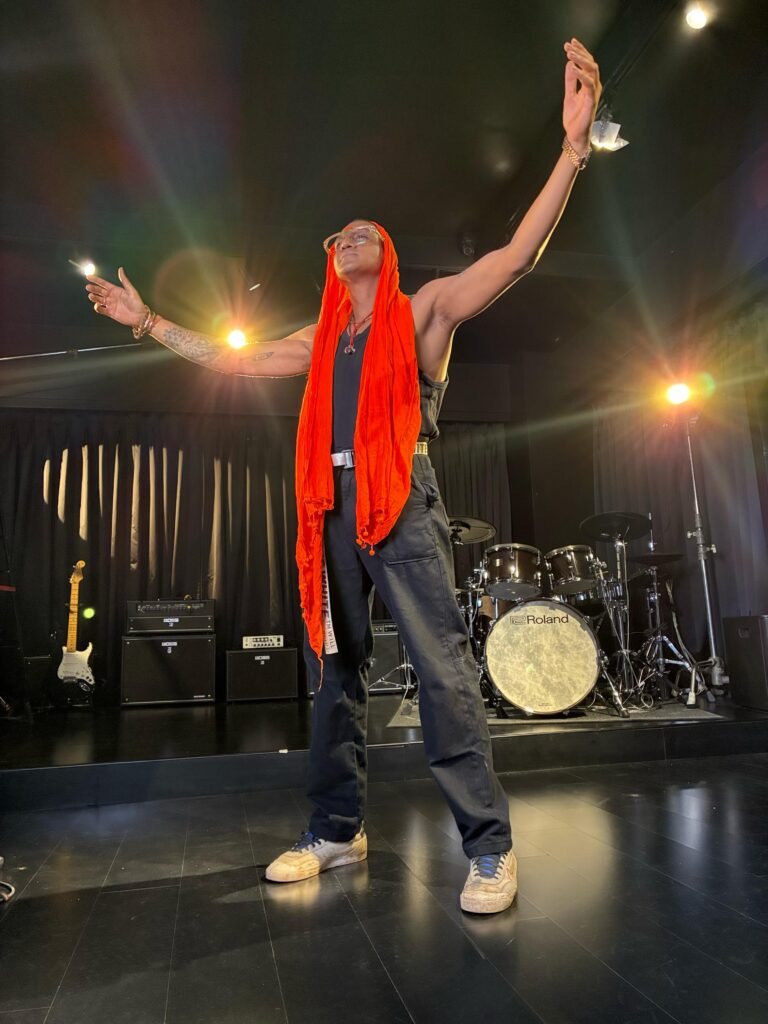
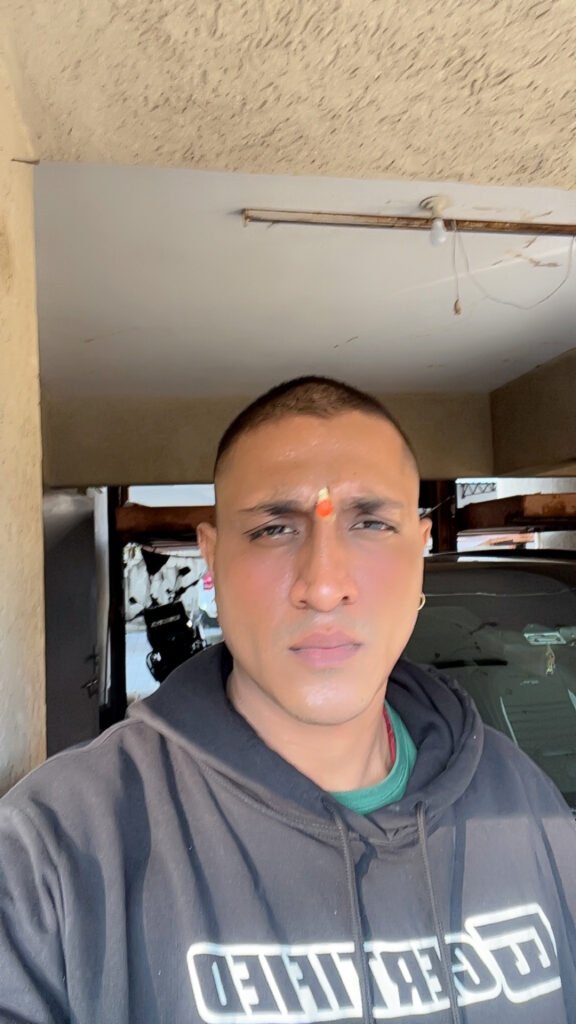
Before the audience believes, before the algorithm notices, before the one song changes everything, the artist has to believe first. Indian rapper and hip-hop artist Xxxifou has built his creative identity around exactly that idea, and he is still in the middle of proving it.
He describes himself, without hesitation, as “a simple down to a guy who is an introvert and a forced extrovert during certain arrangements.” That contradiction sits at the centre of who he is. The music is confident, layered, and restless. The person making it is someone who thinks carefully, believes deeply in his own ability, and has spent years developing the internal discipline to keep going before the external reward arrives.
Xxxifou, also referred to as Z-Foo in conversation, releases music under titles including “JHOL,” “BASTI,” “CHABOOK,” and “PYAARKIMKC.” He has not made it in the conventional sense, and he says as much himself. But the question this feature is really asking is not whether he has arrived. It is how much belief a person needs to keep creating before arrival becomes relevant.

It Started With 50 Cent and a Ferrari
The story of how Xxxifou got here is not glamorous. It is better than that. It is funny, honest, and almost accidentally human.
He was in seventh grade, flipping through channels, when he landed on a music video. 50 Cent. “Candy Shop.” A Ferrari somewhere in the frame.
“I was surfing through channels and I happened to stumble upon a 50 Cent music video, Candy Shop, and that kind of held my attention as a child,” he recalls. “For me, it was just too cool that, you know, somebody is just singing his way out and, you know, he’s driving that Ferrari and all that fancy shit.”

The charm of this moment is precisely how uncomplicated his thinking was. A child sees something appealing and decides, with very little hesitation, that maybe he could try it too. No grand artistic calling. No single devastating experience that demanded expression. Just curiosity and a Ferrari.
“I did my little research. I found out more about 50 Cent. As a kid, I thought, okay, if he can make money by doing this, I think we can do.”
That research led to poems. The poems led to music. The music led to years of practice and experimentation that gradually built something much harder to arrive at than a catchy first verse. It built confidence.
“And that’s how I started writing poems initially.”
Learning to Sound Like More Than One Person
Xxxifou picked up music young. That head start gave him something most artists in a crowded independent scene have not had the time to develop: the freedom to keep experimenting long after other people have settled into a sound.
“At this point today where we stand, I have 5 to 6 different vocal tones that I can make songs in. That makes me stand apart because if there’s a 1st time listener and if you make him listen to all my songs, probably he won’t believe that it’s been done by the same artists.”

He takes clear pleasure in that possibility. The idea that someone could listen across his catalogue without recognising the same artist throughout. Creative unpredictability, used deliberately.
“I feel that artists have just restricted themselves to 2 or 3 tones, like the standard tone. They might have an auto tune and they might have a melodic, but that’s it. People don’t want to explore different horizons that they can actually conquer.”
That word “conquer” matters. He is not describing experimentation as a risk. He is describing it as territory that is already available, if an artist is willing to go there.
English First, Hindi Later
Before Xxxifou believed in Hindi music, he practised in English. Not because English came more naturally, but because Hindi felt too close. Too exposed. English provided a degree of creative distance that made building confidence feel safer.
“Earlier I used to do English music. I did not believe in Hindi. So I used to practice my flows in English, write verses in English, do freestyles in English.”
He remembers his first recorded track as landing somewhere around 2013 or 2014. He offers the timeline with the easy uncertainty of someone recalling a childhood detail that was not yet weighted with significance. The Hindi shift came later, in 2019, with a track he released cautiously and watched with attention.

“I released my 1st Hindi track in 2019, that was short kit, my buddy, and I think the song went mad. Everybody loved it around. And even I kind of built that confidence that, okay, and these also my shit, I shouldn’t be running away from it.”
The word “running” is doing real work there. He is describing a creative instinct, not a language choice. Hindi was not a limitation he overcame. It was a direction he approached carefully and then stepped into when the evidence told him he could. That is a different thing, and it is a more honest account of how creative confidence actually builds.
Carry the Whole Song Yourself
Of everything Xxxifou discusses across the interview, this section carries the most distinctive weight. His argument about creative self-sufficiency is not simply advice. It is a philosophy with a very specific shape.
The starting point is confidence, or the lack of it. His observation is that many artists, uncertain about whether what they are making is good enough, reach for features and collaborations not because collaboration serves the song, but because it relieves the pressure of having to carry it alone.
“A lot of people, since they have low confidence, they feel that they’re writing too much, if they don’t know if what they’re writing are making sense. They want to get features, they want to get collabs on it. And I feel that gradually breaks a person’s confidence down.”

He is not dismissing collaboration as a concept. He is diagnosing a particular use of it: collaboration as escape rather than addition. The distinction matters to him because he believes that finishing a song entirely, writing every verse, every hook, every structural variation, is precisely the process through which confidence gets built.
“Because the less features you have, the more confidence you have that, you know, you’re gonna pull off this song or you’re gonna work excellent on this song, write an amazing hook, give it a good body, good structure, write crazy verses.”
The internal battle involved in that process is something he describes with real specificity. Staying with a song when you are bored of the beat. Refusing to settle for the easiest version. Forcing yourself to solve the creative problem rather than distributing it across other people.
“You should be good enough to carry the whole song ahead. You know, beat your brains out. Think of how you can bring changes and change of beat, change the flow, do different things on the track.”
“Only when you believe 100 in yourself. That’s how others gradually start believing in you.”
It is a circle, not a shortcut.
Collaboration Without Outsourcing Creativity
The natural question that follows is how Xxxifou reconciles this emphasis on self-reliance with the obvious reality that independent music is built on collaboration. Producers, photographers, designers, friends, other artists; the infrastructure around any release involves other people.
His answer is careful and specific. “Collaboration is definitely an important part of the scene, but I would say that photographers, friends, producers, everybody, I mean, whatever they help me in regards to projects or anything, it’s not helping me evolve creatively because I feel creatively a person involves himself.”
“Everybody around is just here to morally support you, push you.”
Where he does want the people around him involved is in the project itself. Not as shortcuts to his own creative development, but as participants who will care about the outcome the way he cares about it. “If I’m executing a project, I would try to bring in my people, my friends, as much as I can, because they will consider it as their own project and give 100%, just like us.”
The distinction is clear enough once he draws it. Creative evolution is private work. The project, once it exists, is shared.
Content Without Becoming Content
The pressure to feed algorithms is not something Xxxifou pretends does not exist. He acknowledges it plainly and then explains, with equal plainness, why he refuses to be controlled by it.
“The pressure of constantly feeding the algorithm is there, but I feel a person should not be a slave to it.”
His alternative is not to disengage from releasing music. It is to reframe what releasing music is actually for. Not for the algorithm. Not for a single moment of visibility. For the cumulative weight of a body of work that builds until something connects.
“The best one can do is keep improving and keep improvising and whatever they do and keep releasing music because it’s not that a person is magically just going to get famous one day or the other. But it’s that one track out of those 150 tracks that really makes a difference and then eventually every other track blows up.”
There is something genuinely disciplined about this position. The one-in-150 idea is not pessimistic. It is a reframing of what consistency is actually building toward. Not visibility for its own sake. A catalogue large enough that when the moment arrives, it arrives with weight behind it.
“Stressing about the algorithm is not something one should do, rather stay content, stay happy, stay peaceful and write your verses one.”
Leave Room for Human Error
Xxxifou’s view on imperfection is short, direct, and more interesting than a longer answer would be. He does not romanticise flaws or theorise about rawness in independent music. He simply states something true and moves on.
“Flaws definitely make art more believable, and flaws is a part of the system, I feel. I mean, we humans are full of flaws. We do mistakes. So there should be always room for human error.”
He connects this, without labouring the point, to the impossibility of perfect execution. “I feel a person cannot always do 100% execution. Human error is bound to happen. And I feel that’s the beauty of it.”
That phrase, “the beauty of it,” is doing quiet but real work. He is not arguing that imperfection is acceptable despite its downsides. He is arguing that imperfection is part of what makes the thing feel alive.
Underground Is Just a Word
Xxxifou does not accept the underground versus mainstream framing, and his reasons for rejecting it are worth following closely. He is not simply performing an “I make music for myself” stance. He is making a more precise argument about how creative categories become creative restrictions.
“I personally feel there’s nothing as underground and mainstream because at the end of the day, you’re just creating something. These barriers are just something that people have in mind.”
His example is Auto-Tune, and the way he uses it reveals the wider point. “Oh, if I use Auto-Tune, it’s going to be new school. I mean, you can also take it this way that, okay, I’m not melodic. I want to sound melodic. Let’s try Auto-Tune.”
A tool is a tool. The moment it becomes a badge of belonging to a particular category, it stops being something an artist can use freely. Xxxifou is resistant to that logic across the board, which is consistent with everything else he says about vocal experimentation, language choices, and refusing to settle for familiar creative territory.
“People should keep their options open.”
No Beef With the Scene
Asked for a controversial opinion about the current underground and independent scene, Xxxifou declines to provide one. Not evasively, but with the easy certainty of someone who genuinely does not have a grievance to air.
“There’s nothing that I would have to say against the current underground scene. I feel the audience is evolving, the artists are evolving, and nobody is as low as how they were a couple of years back.”
This is worth sitting with. His refusal to manufacture criticism says something about where his attention actually sits. He is not watching other artists closely enough to resent them. He is too busy watching himself.
“I think everybody’s just doing great and it should be that way.”
Peace in the Middle of the Grind
Xxxifou is not where he wants to be yet. He says this clearly.
“I’ve not made it made it and I come from a very humble background, middle class family. I’m still paving my way through.”
What follows that admission is the more interesting part. Not anxiety. Not forced optimism. A genuine-sounding account of how he manages the uncertainty of building something whose outcome is not yet visible.
“Nothing really stresses me because I feel God has a plan for everyone. And we should believe in his plan regardless, because if he thinks that we’re worthy of something, definitely gonna get it, regardless, we have to keep going, be disciplined, and be consistent.”
Faith and discipline appear together here, and that pairing is not accidental. His contentment is not passive. It is sustained by the active choice to keep moving, to remain consistent, and to refuse the kind of spiral that turns uncertainty into paralysis.
“The more you stress about anything, it gets more into your head and then you see yourself trying to have like a little battle with that thing out. So eliminating stress is number one.”
He holds uncertainty and ambition at the same time, without letting either cancel the other out. That is harder to do than it sounds.
The Version of Yourself Before Everything Changes
When asked what he might miss about this chapter if his ambitions eventually materialise, Xxxifou gives an answer that is bittersweet in a way that does not feel performed.
“I think the carefree version of myself is what I’ll miss once this chapter is over and I achieve everything that I wanted.”
He does not get abstract about it. He gets specific. His hood. His friends. The places he can move through now that he will not be able to pull up to at will once the context around him changes.
“I’m gonna miss my hood. Because as I mentioned, we come from humble background, so everybody around me is humble, quite humble enough.”
There is a particular awareness embedded in that answer. Not sadness about the future, but a clear-eyed recognition that success does not only add things to a life. It also alters a person’s relationship to what was already there. The places that currently feel ordinary will eventually feel like something he had to leave behind, even if he never physically leaves.
“I’m going to miss my hood. But for good, not bad.”
What the Kid Who Started Writing Poems Would See Now
Return to the seventh-grader, briefly. The one who saw a Ferrari in a music video and decided, with entirely reasonable logic, that this seemed like a worthwhile direction to explore.
Xxxifou does not express disappointment in who that child has become. The question invites conflict, and he does not manufacture it.
“I wouldn’t be disappointed at all looking at myself today because when I started doing music, I didn’t even know half of what I know right now.”
What he offers instead is something simpler and more durable than a complicated reckoning with his past.
“I’m quite proud as a child, I did great. I wrote poems until 12, started writing songs after 12. So yeah, life has been great with me. I cannot complain.”
The child who began with poems could not have anticipated five or six vocal tones, a first Hindi track that connected, or a creative philosophy built around finishing your own songs and believing in your own ability before anyone else confirms that you should. The current artist holds all of that. And he is proud of it. Without qualification.
Hear the Struggle, Hear the Dream
Ten years from now, someone might find Xxxifou’s music without knowing anything about this period. No context about the independent scene, no knowledge of the years of English freestyles before the Hindi confidence arrived, no awareness of the internal battles over hooks and verses and refusing to settle. Just the music.
He knows what he hopes they hear.
“They definitely hear the struggle of a person who’s trying to make it, hear about aspirations and dreams that a person holds and what they want to achieve and do everything crazy in life.”
He wants the persistence to be audible. The refusal to stop.
“Never give up energy, that’s massive on me. As a child, I’ve learned this that giving up is not something one should be okay with. Either you got to keep going ahead and keep focusing.”
Faith runs through that, the way it runs through everything he says.
“God’s working in your will. So everything works in your favor. That’s just how life is. If you are positive and open, you get anything.”
The seventh-grader who saw a Ferrari on television and started writing poems could not have known exactly where curiosity and consistency would take him. The artist he has become still cannot know which song, which moment, or which listener might change everything. What connects those two versions is the willingness to keep going before the outcome is certain.
Before the audience believes. Before the algorithm notices. Before the one track out of 150 does what one track eventually does. The artist has to believe first.
Xxxifou does.
Follow Xxxifou on Instagram

Yohaan Joseph is a 23-year-old creative shaped by experiments and unconventional ideas. Each episode in his life is shaped by sheer enthusiasm. Though not a writer by profession, he is drawn to stories and the people who carry them. His journals in this magazine reflects a simple philosophy : the right question can reveal something extraordinary.