Artists spend years learning the rules. The most interesting ones spend the rest of their lives figuring out which rules to forget.
There is a quiet tension at the heart of every creative life. We are taught to study, to practice, to master form before we dare to bend it. We collect technique like currency, believing that one day it will buy us something close to originality. But somewhere along the way, the most compelling artists realize that knowledge alone never made anyone interesting. What makes a voice unmistakable is the willingness to let go of the very structures that built it.
This is a story about that letting go. It is about rhythm before it becomes genre, imagination before it becomes a category, and the strange freedom that arrives only after years of discipline. It is about what happens when an artist stops trying to belong to a scene and starts trying to belong to themselves.
Before Fusion, There Was Groove
Long before anything gets a name, there is feeling. A pulse. The internal sense of time that lives in the body before it lives in theory. Groove is not something you can fully explain to someone. You either feel the pocket or you do not. And that feeling, that internal clock, exists in every musical tradition whether or not it shares a vocabulary.
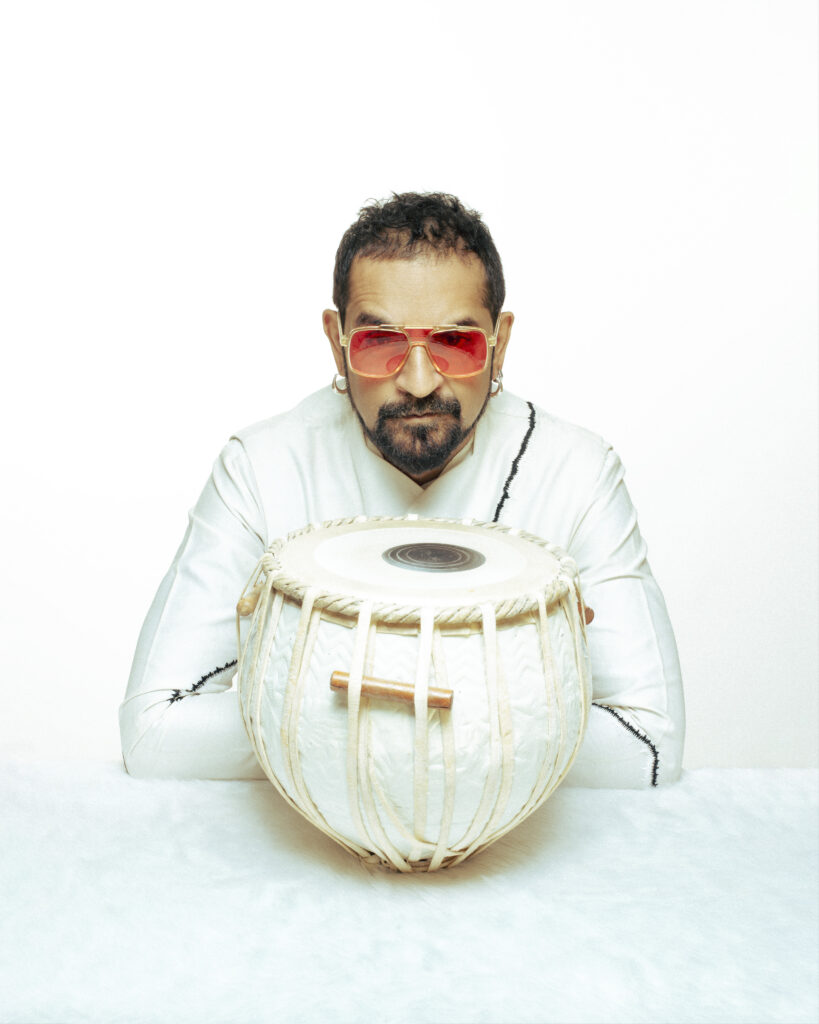
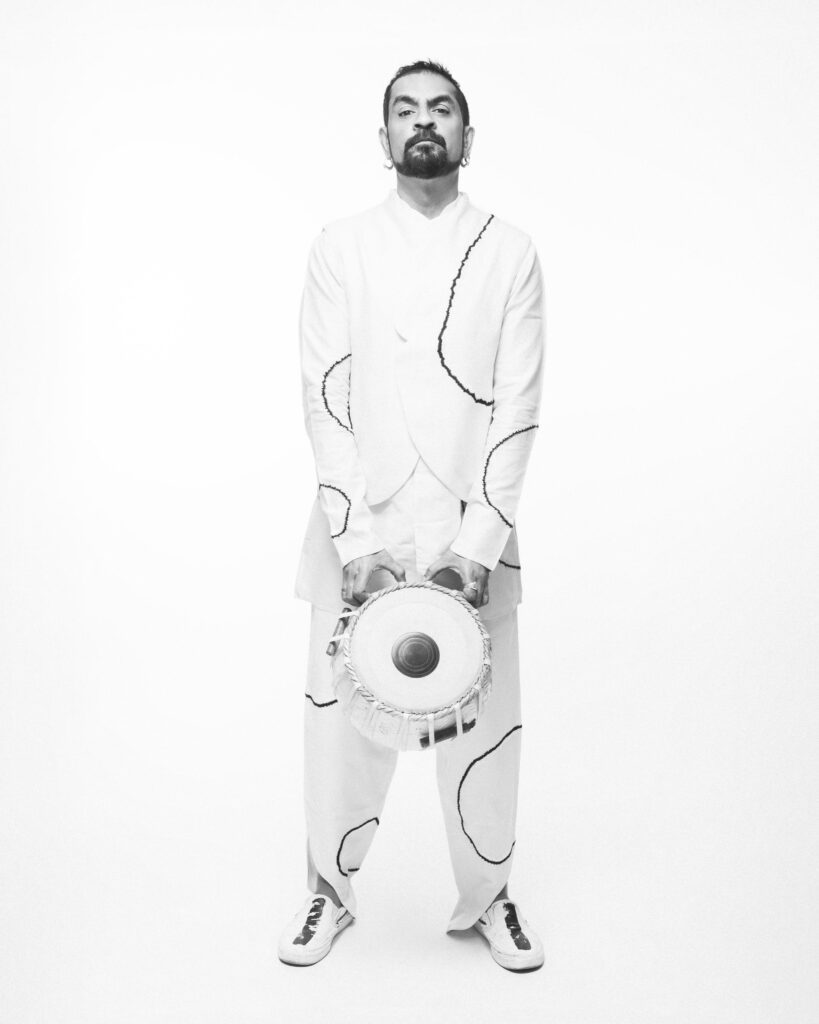
For Karsh Kale, an Indian-American musician and producer known for his experimental tabla playing, rhythm was never about the labels we attach to it. As he puts it,
“Indian classical drumming is not different as its the internal clock of the accompanist that drives the music.”
Rhythm, in other words, begins long before genres do. The clock is human first.
Two Different Roads to the Same Summit
We tend to imagine precision and feel as opposites. The machine versus the hand. The grid versus the breath. Electronic timing promises perfection, while classical timing carries the warmth of human imperfection. But the more closely you listen, the more these two roads seem to lead toward the same destination.
A drummer locked into a groove and a producer aligning sounds to a grid are both chasing the same thing, which is a sense of time that feels alive. Precision and groove are not enemies. They are simply different languages describing the same heartbeat.
Why Fusion Often Fails
So much music marketed as a blend of cultures feels exactly that, marketed. It announces itself before it earns the right to. It treats combination as a strategy rather than a consequence. And listeners can usually tell when two traditions have been bolted together rather than allowed to breathe.
Karsh is refreshingly direct about how he avoids this trap.
“Firstly, I do not work with concepts,” he says. And then, more pointedly, “Fusion is not a style of music.”
That distinction matters. The strongest hybrid art is almost never the result of someone deciding to make hybrid art. It happens sideways, unintentionally, when an artist simply follows what moves them.
Creating Without Categories
There is a moment in an artist’s development when the mental filing cabinet finally breaks. The neat drawers labeled this genre and that tradition stop opening separately. Everything spills together, and that spill becomes the work.
Karsh describes this beautifully. “When I make music, my inspirations no longer sit in my head as Indian, or jazz, or electronic.”
This is what creative maturity actually looks like. Not the mastery of many styles, but the disappearance of the boundaries between them. When the labels go quiet, the voice gets loud.
Building A Sound That Didn’t Exist
Originality rarely begins as a plan. More often it begins as an itch, a feeling, an obsession with a sound that does not yet exist in the world. Something you can hear in your head but cannot point to anywhere else.
For Karsh, that pursuit started impossibly early.
“The sound I have been chasing came from my imagination when I was a child,” he says. And crucially, “It was not a concept or an established style.”
Originality often begins this way, as a private obsession nobody else quite understands yet. You are not chasing a trend. You are chasing a memory of something you have never actually heard.

Trial, Error And Discovery
The romantic myth of the artist suggests that vision arrives fully formed. The truth is far messier. A personal sound is not designed on paper and then executed. It is stumbled into, refined, abandoned, and rediscovered through endless repetition.
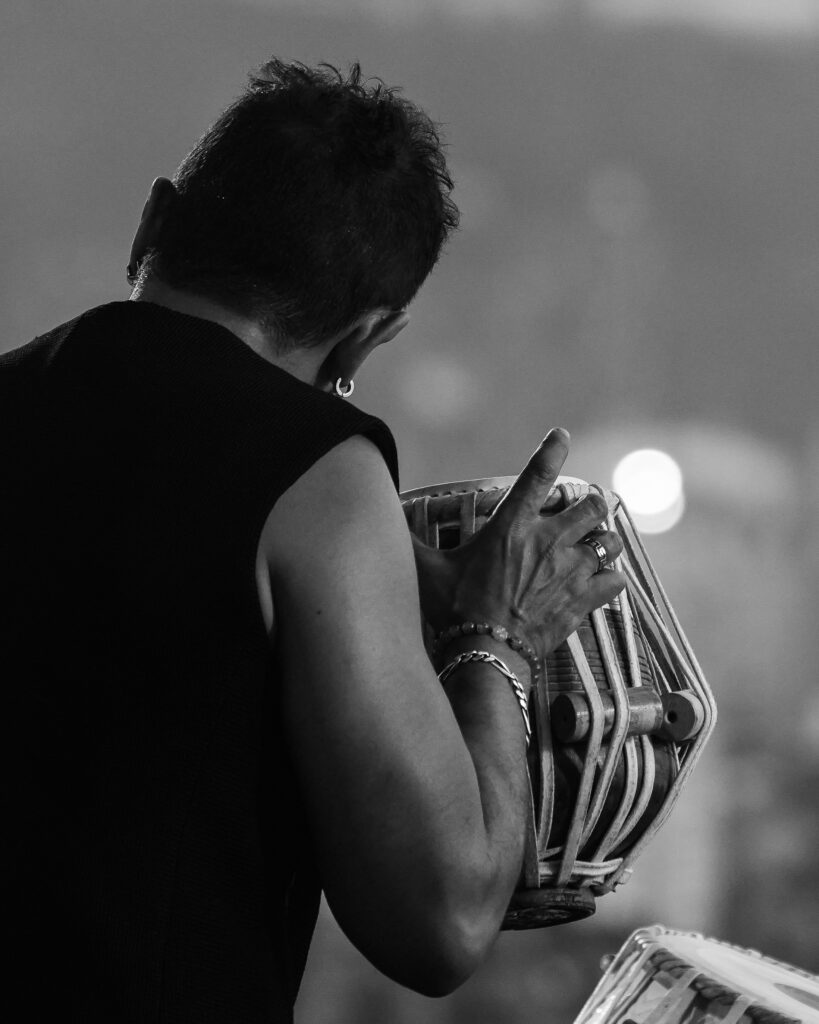
“Only through trial and error and experimentation did I arrive at a sound that I can call mine,” Karsh explains.
Identity, then, is not engineered. It is discovered. You do not decide who you are as an artist so much as you find out, slowly, through the doing.
Escaping The Boundaries Of Scenes
Every artist emerges from somewhere. A city, a moment, a movement. Scenes give young creators a sense of belonging and a language to share. But the same scene that nurtures an artist can quietly become a cage if they let its expectations define the edges of what they are allowed to make.
For Karsh, the point was never to represent a movement. It was to represent himself.
“It was important for me to create something unique that represented my own personal journey as an artist,” he says.
Scenes can inspire artists. They should not define them. The trick is learning to take what a community offers without inheriting its limitations.
Why Knowledge Isn’t Enough
There is a paradox buried inside every discipline. The more you learn, the more tempted you are to follow what you have learned. Rules accumulate. Form becomes habit. And mastery, if you are not careful, can quietly turn into a set of handcuffs you forgot you were wearing.
Karsh flips this paradox on its head.
“The more theory and form one learns, the more one has in their pallet to then throw those concepts in the garbage and break all those rules.”
Knowledge, in this light, is not the destination. It is the raw material. It becomes truly useful only at the moment it stops being a limitation and starts being a tool you are willing to discard.
The Difficulty Of Starting Today
It is tempting to assume that creative freedom is easier now than ever. Anyone can record, release, and reach the world from a bedroom. But abundance brings its own problem. When everyone can be heard, being heard becomes its own impossible challenge.
Even an established artist feels this.
“I do honestly wonder if I’d be able to cut through the noise today if I were an emerging artist,” Karsh admits.
Technology solved distribution. It did not solve attention. The barrier moved from getting in the room to being noticed once you are there.

The Principle That Matters Most
Strip away the techniques, the traditions, the scenes, and the theory, and what remains is a single guiding idea. Not a method. A permission.
Karsh names it plainly.
“Freedom to use and take everything that inspires you and create a unique voice and output.”
That is the whole thing. The goal was never mastery of a genre. The goal is mastery of self, which is a far stranger and more personal pursuit. A genre can be studied. A self can only be uncovered.
What We’re Really Learning When We Learn
Maybe the purpose of learning isn’t to become an expert. Maybe it’s to build a vocabulary large enough that imagination can finally speak without translation.
Follow Karsh Kale on Instagram

Lubdhak Biswas is a musician, entrepreneur and a tattoo artist based out of Kolkata (India).
He documents underground culture at the crossroads of tattooing and music.
His work focuses on craft, tools, ethics and the real working realities of creative industries.