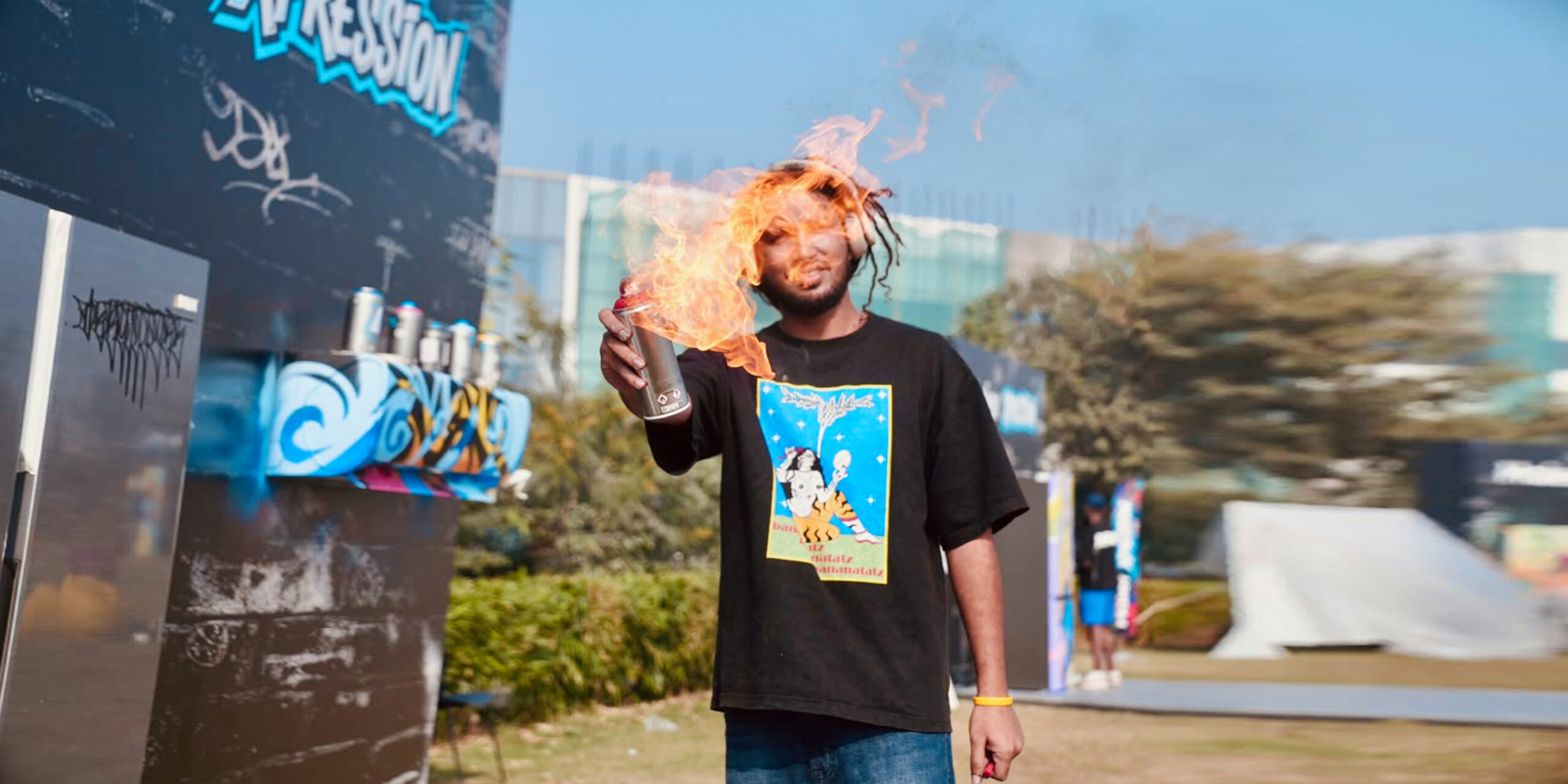
There is a version of this story where everything goes to plan. A Mumbai kid from a family full of computer people gets his degree, takes the stable job, and spends his life in front of a screen, solving problems someone else hands him.
Dkrypt got halfway through that version and walked out.
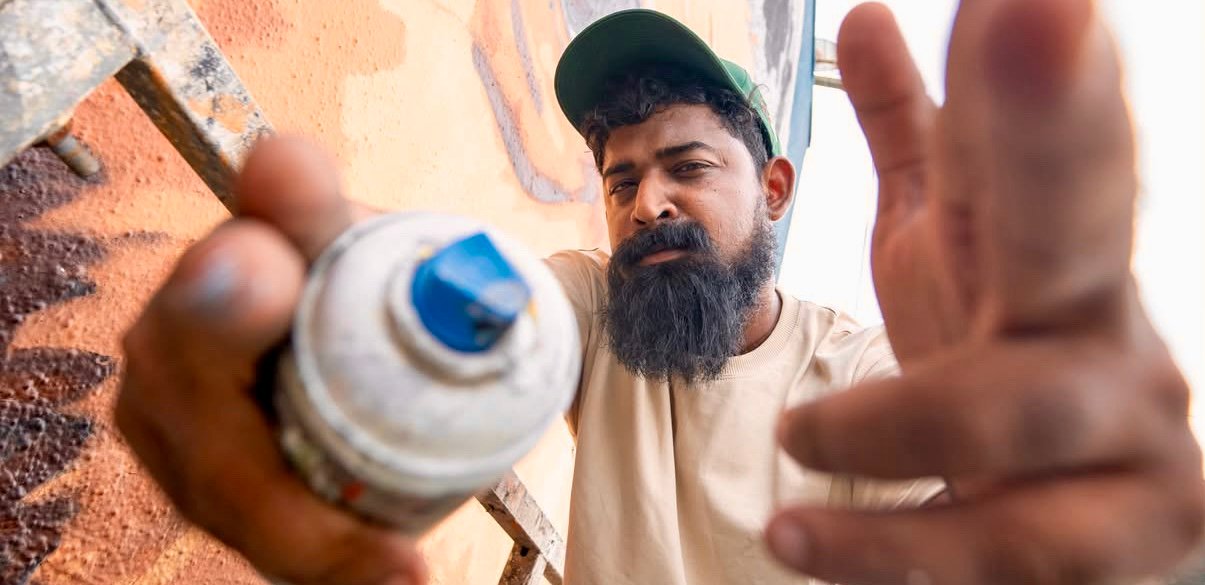
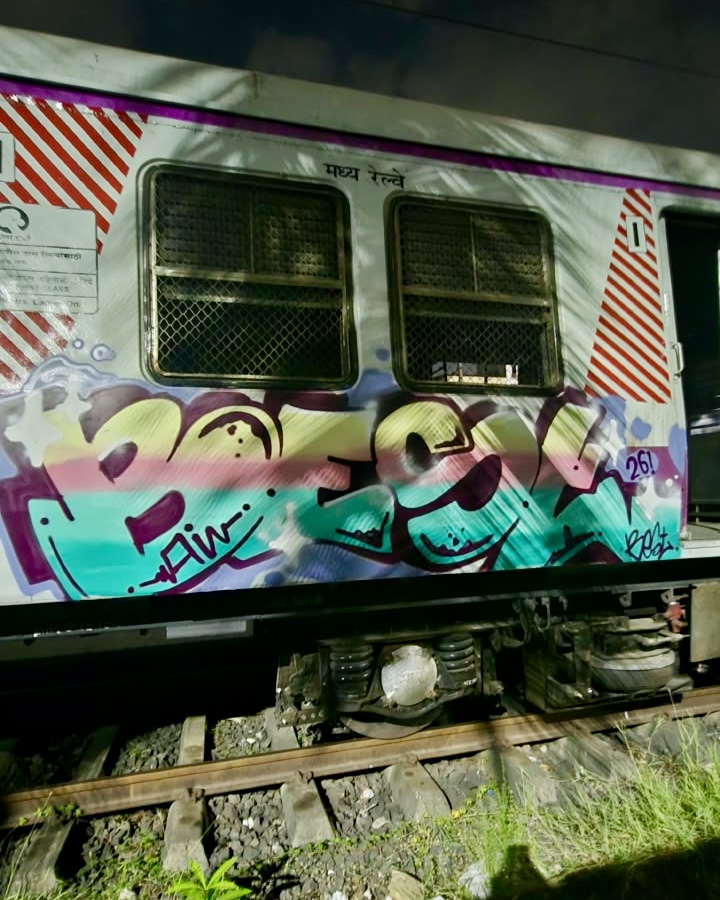
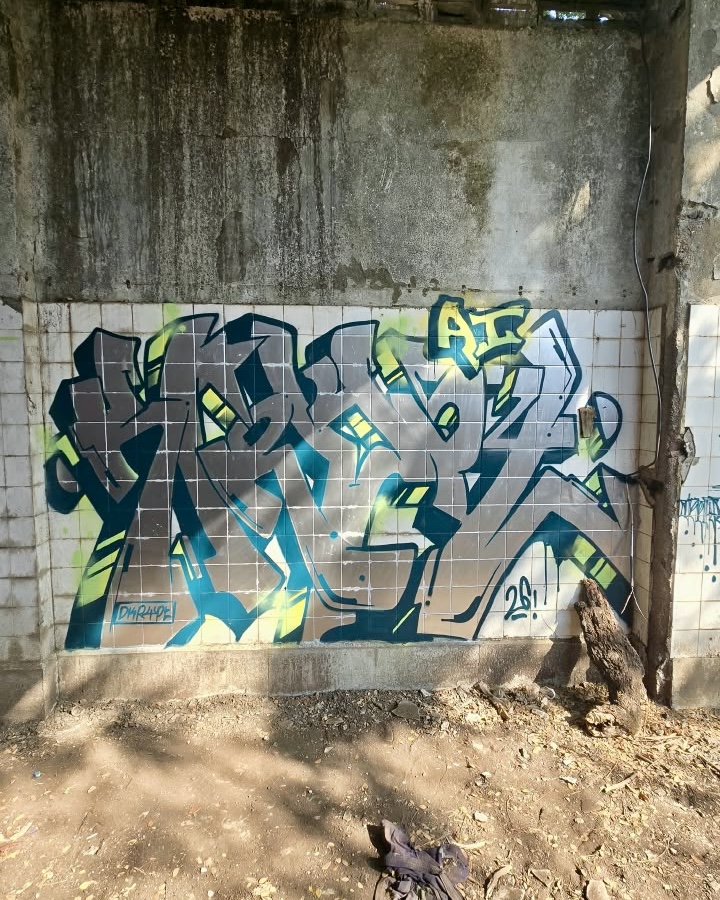
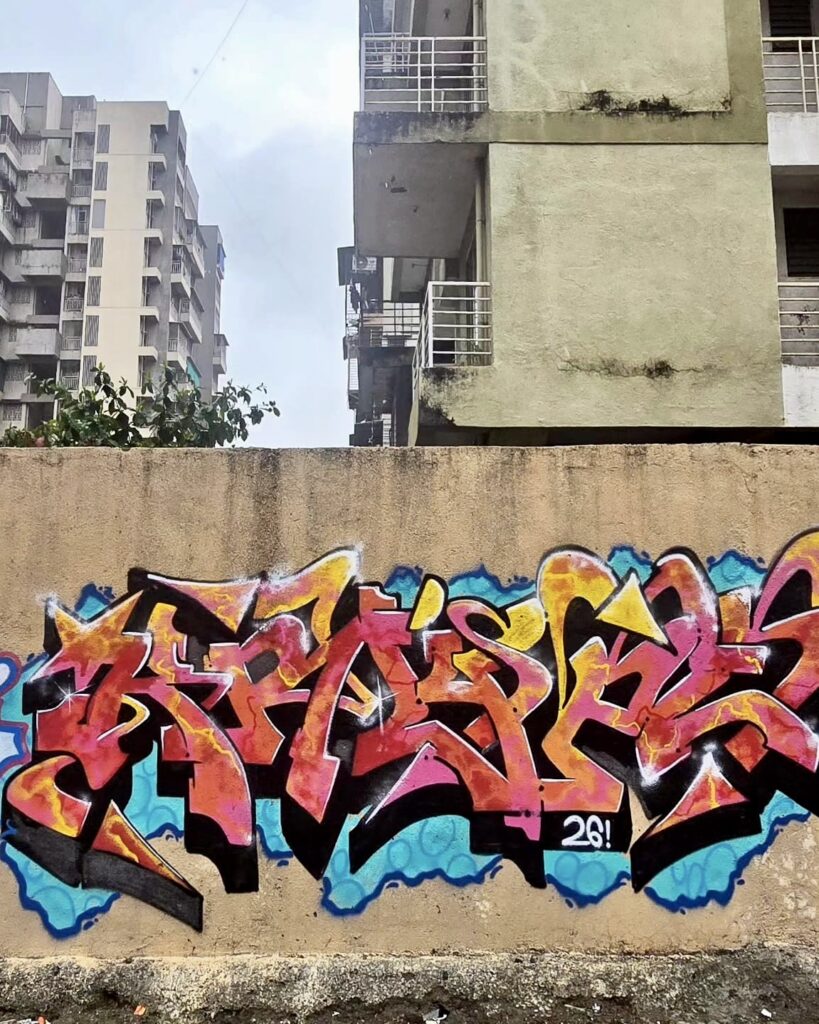
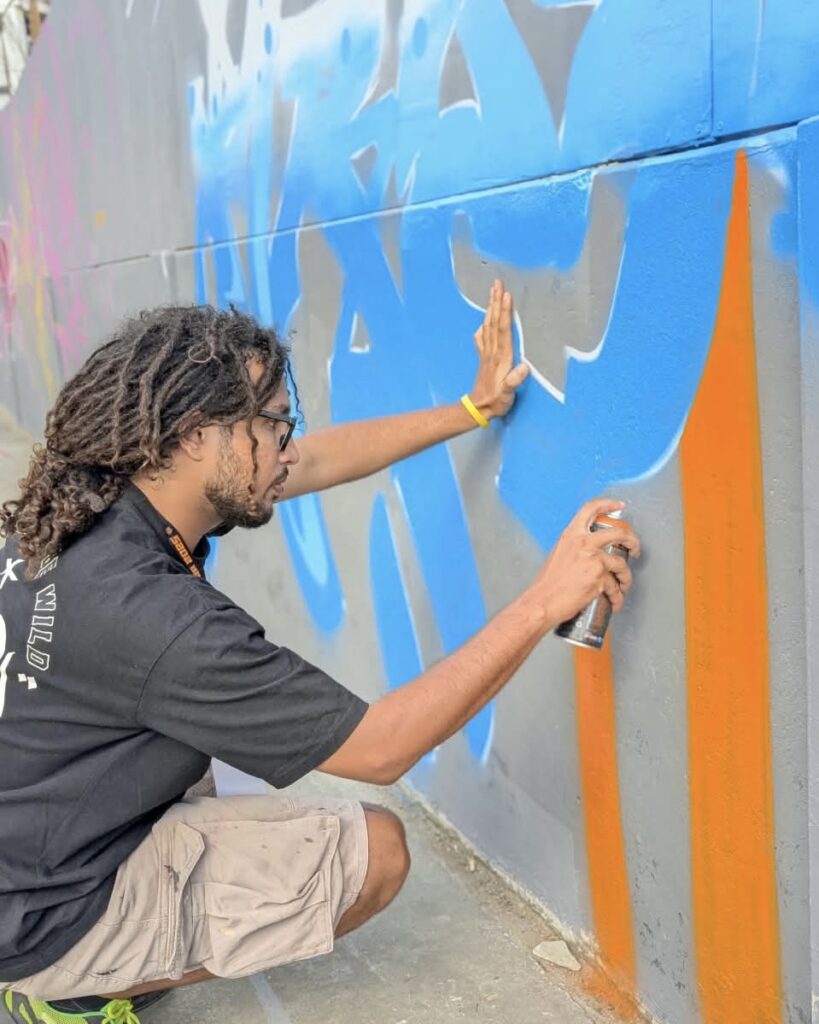
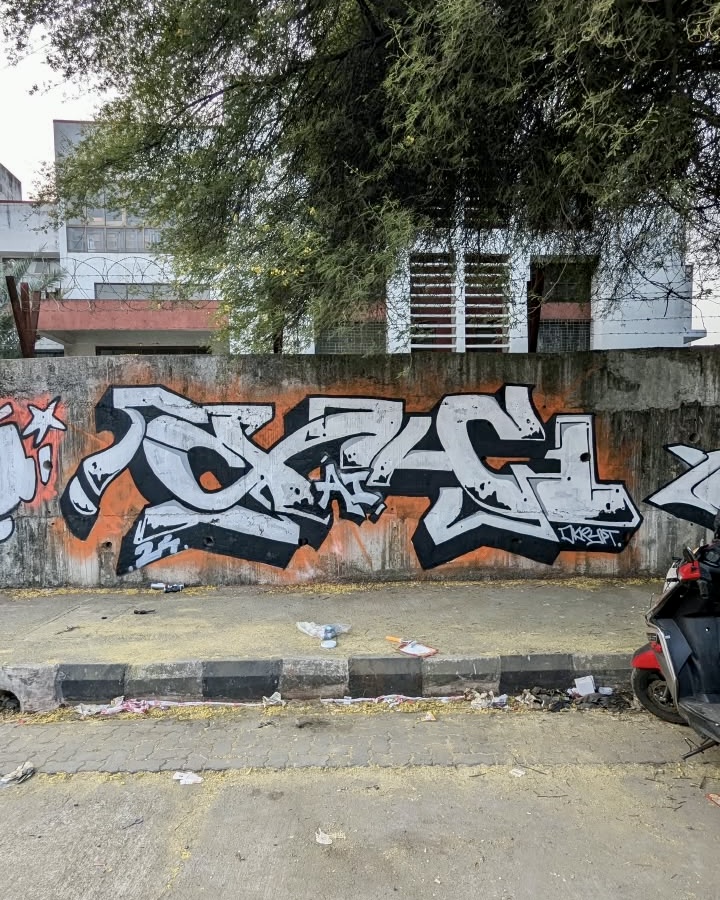
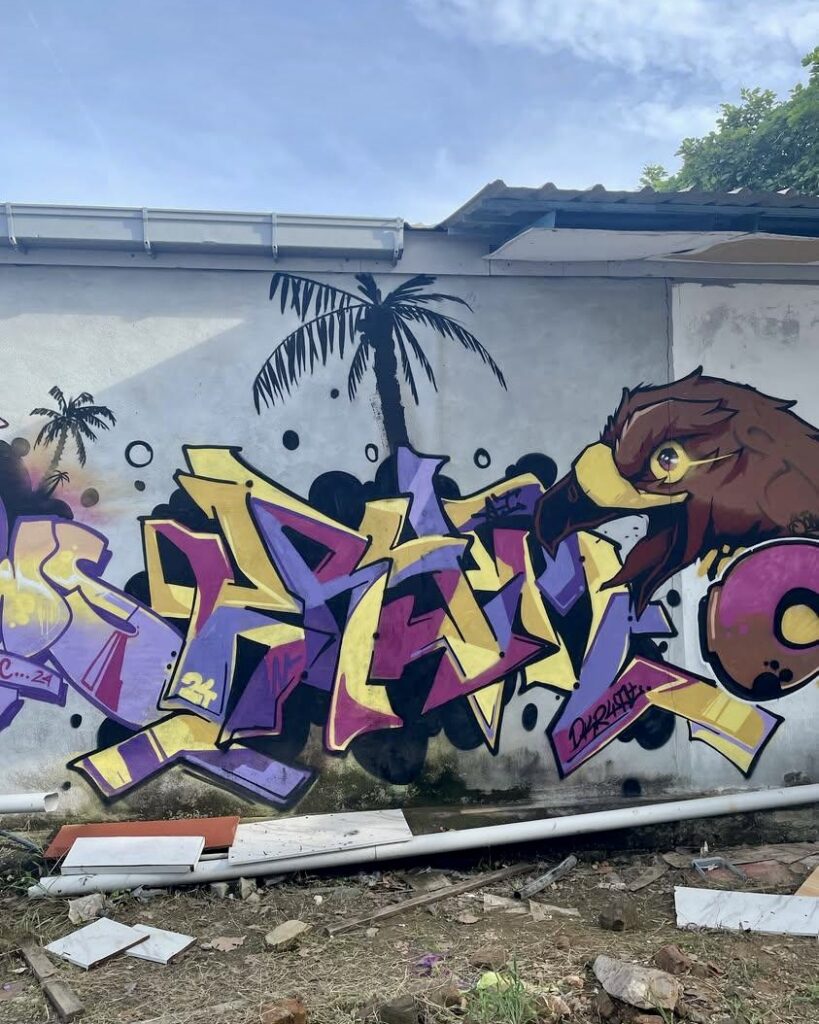
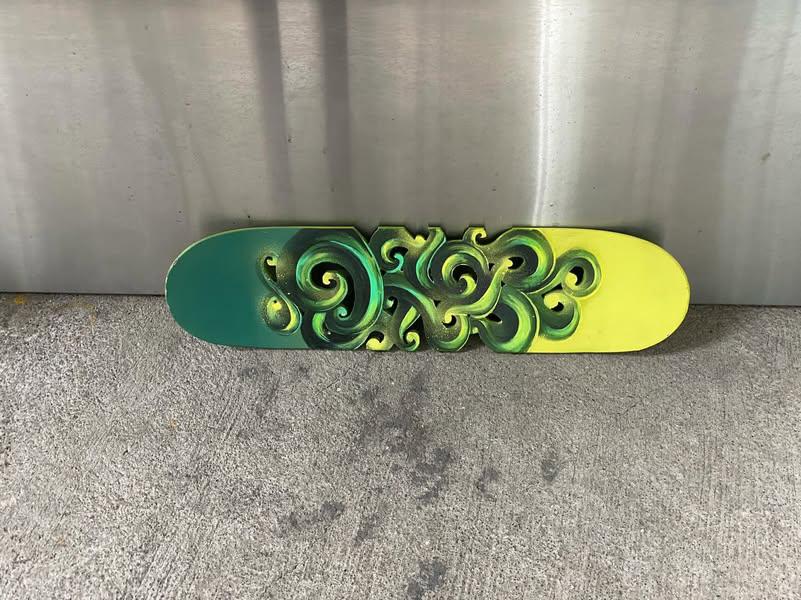
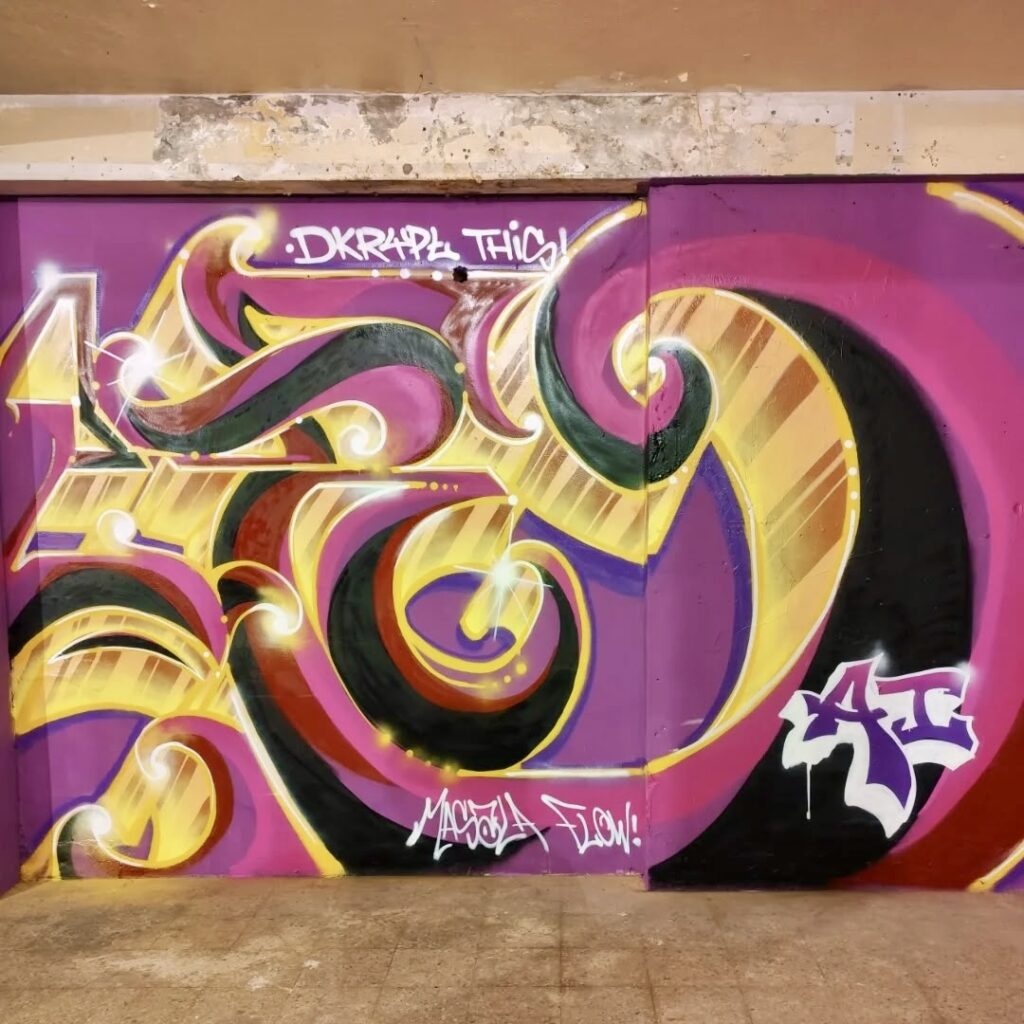
Today he is known in Mumbai’s graffiti community and beyond for “Masala Flow,” a style built on Devanagari lettering, curving forms, loud colour, and a joyful refusal to keep things tidy. He paints walls. He paints skateboards. He has painted in Jakarta. He has carved graffiti into wood. He never went to art school, and he talks about that less as a gap and more as the reason he learned to figure everything out for himself.
But before any of that, there was a name. And the name, it turns out, explains almost everything.
A Name Built for Decoding
Say “Dkrypt” out loud and it sounds like decrypt. That is not an accident.
“Decrypt.one decrypt means decoding. The name came from my background and computers as any other Indian family. My family too wanted me to be an engineer, basically, because a lot of people in my family were into the computer field”
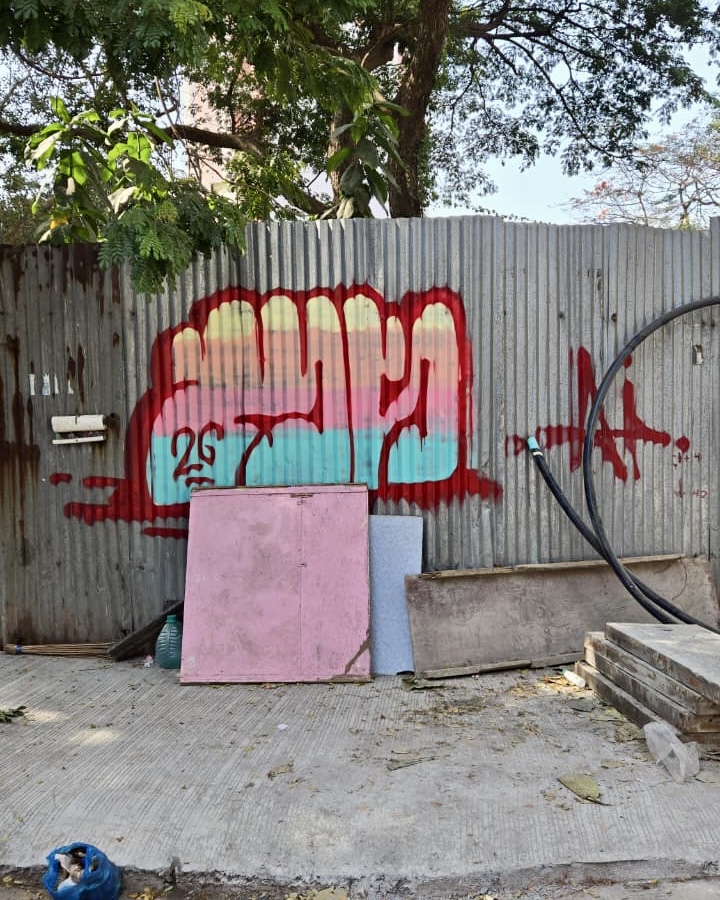

The logic was simple and familiar to millions of young Indians. Follow the family path. Get into the field where people can help you. Everything will be sorted. He did the degree, three years of it. Then, somewhere in the middle, a different truth started getting louder.
“I did 3 years of degree. I have a computer’s degree also, but midway through college. I realize this is not the kind of shit that I want to do, and I realize I can’t sit in one place. And how important my freedom is. I can’t go and work for someone else.”
A couple of internships confirmed it. He was not built for a desk.
What he kept from that world was the way of thinking. The name holds both halves of his story: the technical background he came from, and the restless search for meaning he carried out of it.
“it comes from my background and computers and also this urge to figure out what is life in my own way. And you know, experience this game of life, you know, as a single player who’s just going on about like in an open world and figuring out everything out on the growth.”
A single player in an open world. Anyone who has ever felt boxed in by a life someone else designed for them will recognise that image. No map. No tutorial. Just the freedom to wander and the responsibility of figuring it out alone.
The shorter name came later, and for a very practical reason.
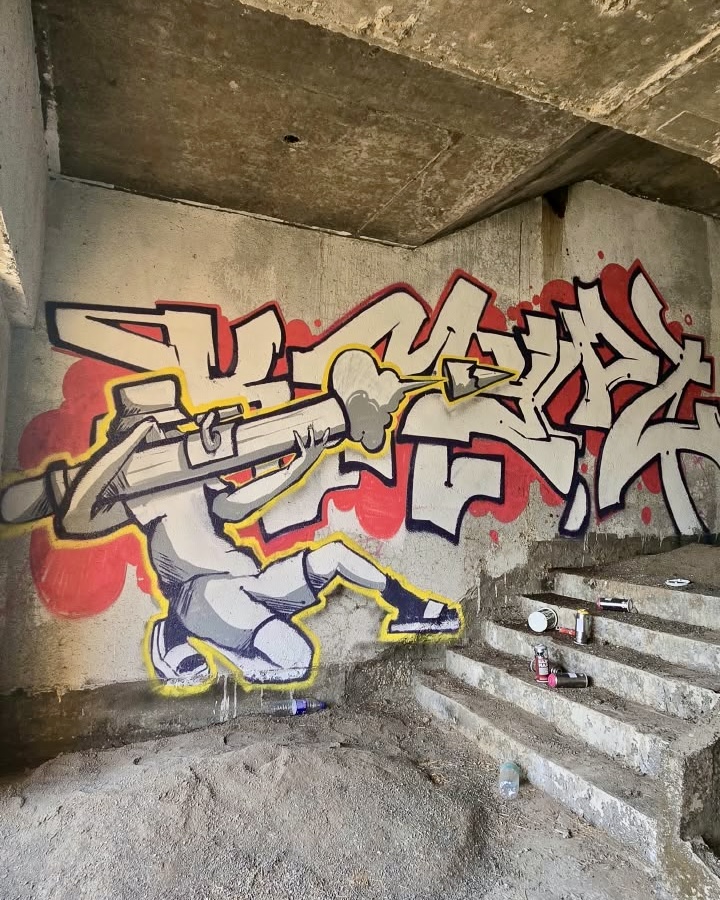
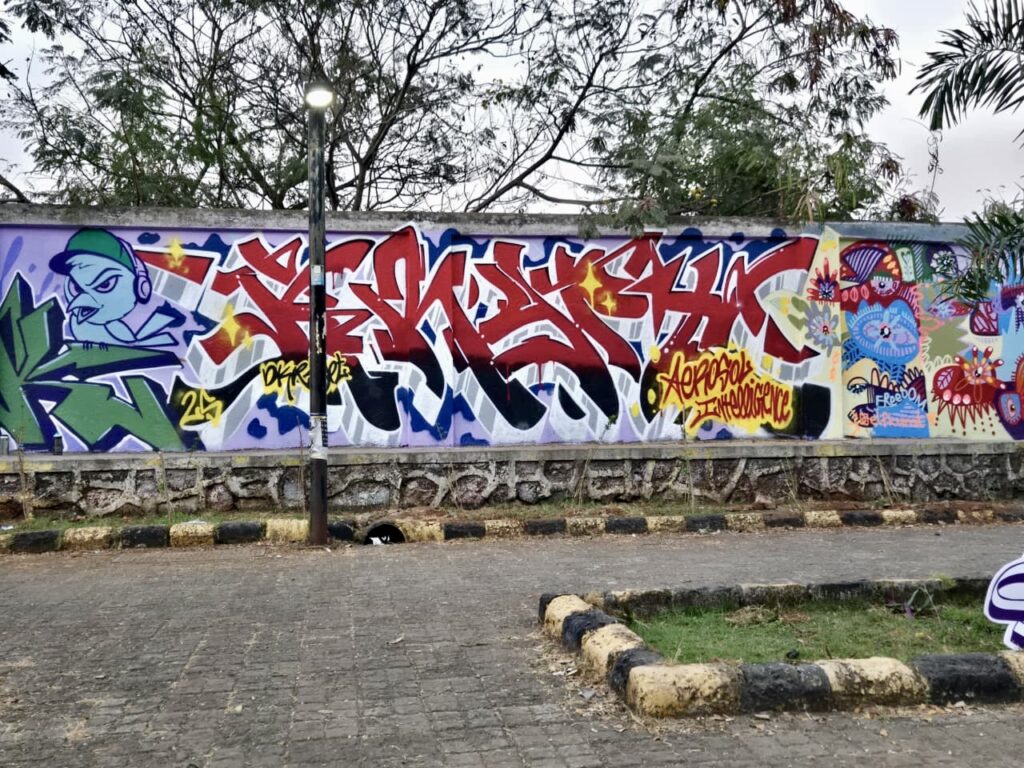
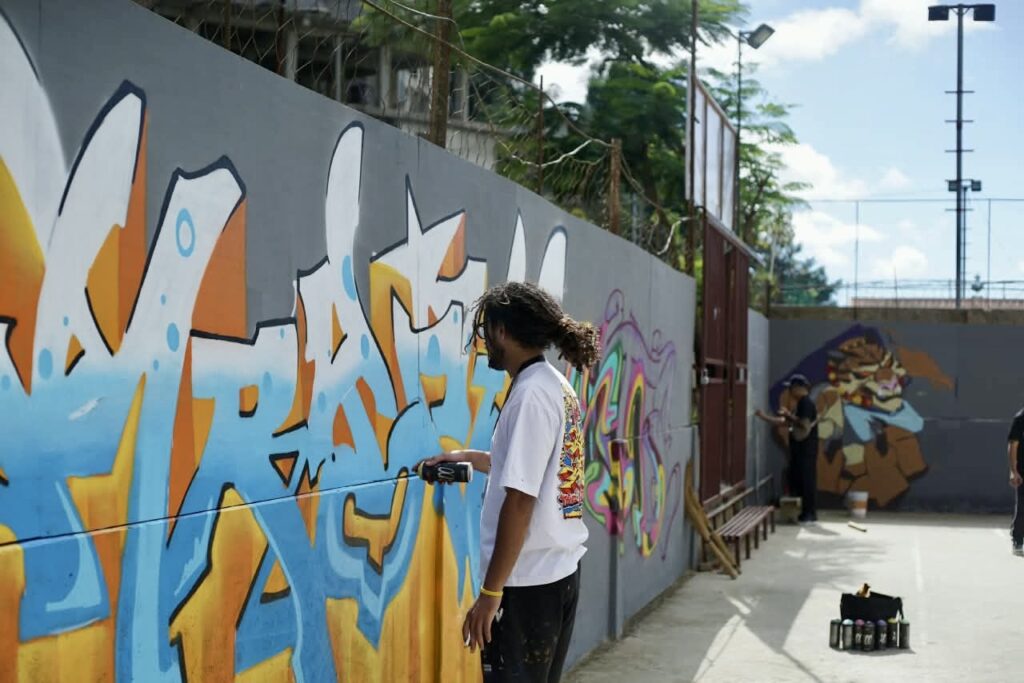
“when I write DKRYPT, I use a lot more paints and I have to write one extra letter. So and people also, you know, it’s not easy for them to call me decrypt. So my boy started calling me crypt and it just ended up being that”
Fewer letters, less paint, easier for friends to shout across a wall. Krypt stuck. Graffiti is an art form, but it is also a budget.
The Mural That Opened the Black Hole
Art had always been there, sort of. He liked colours and cartoons as a kid and could draw well enough. Then school happened, football happened, friends happened, and he drifted away from it.
College gave him something he had not had in years: free time. And then, in his first year, he saw a wall in the city that stopped him cold.
“I saw a mural in, uh, Bombay by this artist called Cobra Street art, and I was like flabbergasted, bro. And when I saw it, I was like, okay, this is the kind of shit that I wanna do.”
What followed was a familiar internet rabbit hole. YouTube videos of people working spray cans. The slow realisation that if he wanted to learn the can, he would have to learn the culture it came from. He knew the word graffiti, but only the surface of it.
He went in anyway, and he never came back out.
“So yeah, that’s how I got into it and it’s a black hole, bro.”
Once he felt the thrill of painting, and saw how much was possible, there was no turning around.
A German Stranger Named the Masala
Some styles take years to name. Dkrypt’s got its name in a single afternoon, from a stranger, on the other side of the world.
He was in Indonesia, hanging out after a festival at a paint jam, where artists gather and paint side by side. He was working on a piece in Hindi, all loose curves and wild loops. Then someone walked up.
“And I was doing a piece. It was in Hindi, it was curvy, like, you know, crazy flowy letters, and this one, uh, German guy, he comes and he’s like, bro, like, oh, wow, uh, is giving me this masala feeling, like, I was telling him how I wanted it to be more spicy and stuff, and he tells me masala, and I was like, what the fuck? And the name comes from there.”
There is something wonderful about that. A Mumbai artist, a German painter, an Indonesian paint jam, and one Hindi word that suddenly made sense of everything he had been reaching for.
Because Masala Flow is not just a cute label. For Dkrypt, it is a way of describing the country he lives in.
“Think about how incredible is this place that we stay in, how flavorful this is. You know, we have like in a span of one kilometer in any place in India, you will get 10,000 things that you can’t even, you know? That your brain can’t fathom, bro. So I want to integrate all this craziness and uh, The masala, the spices of life into my pieces.”
Ten thousand things in one kilometre. Anyone who has walked a busy Mumbai street knows exactly what he means. The noise, the signboards, the food stalls, the temple bells, the traffic, the colour on every surface. Masala Flow tries to pack that sensory overload into letters.
It also comes with a small, recurring party trick.
“And also it’s fun to tell people, oh, dude, this is in Hindi. And when I actually show them, they flip.”

Rangoli, Textiles, and a Mother’s Colours
Dig a little deeper and the masala has older roots than that paint jam. Long before he picked up a can, colour was already part of home.
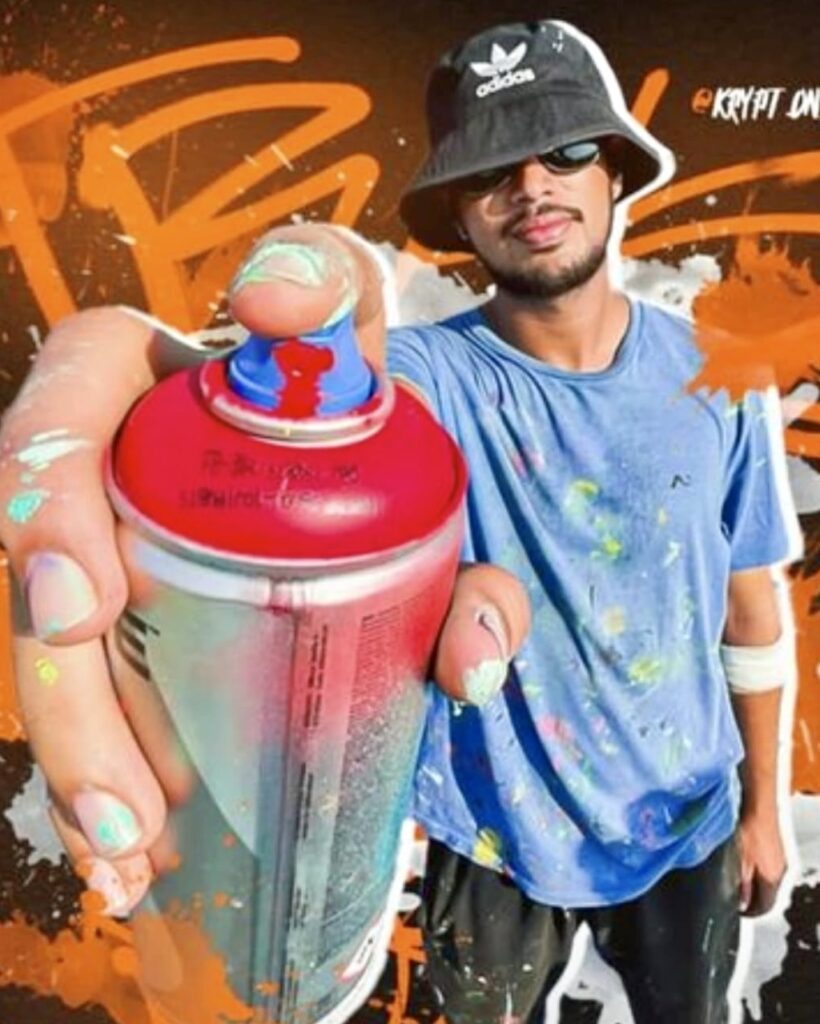
“My mom was a textile designer, so I’ve seen the colors. I seen her do rangoli, mani, all this has been around us, and I think, It’s just coming to me now when I’m nearly 29 and I’m just trying to incorporate it in the best possible way that I think of.”
That line carries a quiet kind of honesty. The influences we grow up with do not always announce themselves when we are young. Sometimes they sit in the background for years, waiting until we are ready to see them. For Dkrypt, the patterns on his mother’s floor and the fabrics she worked with only started showing up on walls as he approached thirty.
It is a reminder that finding your voice is rarely a single moment. Often it is a slow return to things that were always yours.
From Lost to Flowing
Back in 2020, Dkrypt was still figuring out what kind of artist he was. He says so plainly.
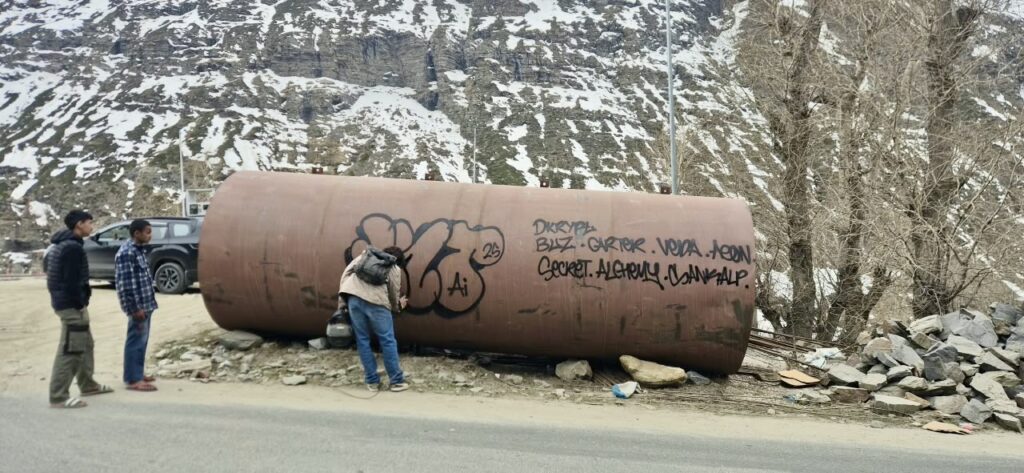
“back in 2020, when I was just starting out, I didn’t know what to do, which direction I wanted to go, what are the things that I actually liked?”
The answer arrived the way most things do for a self-taught artist: through doing, and through people.
“I like curvy lines more than straight lines, but there are days when I like straight lines more. And I’m kind of a guy who never went to art school. So everything that I have learned is on the go.”
He credits luck for the people he met along the way, artists who introduced him to other artists, a chain of connections that worked as his classroom. Today he describes his work as a blend of abstract and realism. He can execute a wide range of things. But when he freestyles, when nobody is giving him a brief, he gravitates to the same shapes.
“I like to go more curvy, more flowy.”
Lately, something new has crept in.
“But lately, I have started uh, you know? Embracing my dark side, not the dark side, but the fun side, the crazy side, and now I’m trying to put more funk in my pieces or my artwork and let myself be more free and not constrained basically.”
Not the dark side. The fun side. There is a real difference, and it says a lot about where he is now. Less trying to prove something. More letting himself play.
Devanagari Is a Box Full of Toys
Most graffiti grew up in Latin letters. The tradition, the famous styles, the vocabulary of the form: almost all of it was built around the English alphabet. Dkrypt chose to paint in Devanagari partly to step away from that Western default. What he found was not just a different look. It was a completely different set of possibilities.
It starts with the matras, the vowel marks that attach above, below, and around the letters.
“Dev Nagri letters, bro, like firstly, because of the matras and how, There’s so much… Variant, so many variant uh, letters and so many different uh, permutations and combinations of letters that you can go with to create just a sound that even writing my name crypt becomes very intense.”
Compare that with the struggle he had painting his name in English. KRYPT is a tricky word for a writer who loves flow.
“With KRYPT, all my letters are open-ended. They open at the bottom. They are not like O or B or D where they connect and let me take my style to the next letter. So I had to figure out a way to transfer my flow to the next letter and connect them, you know, harmonically, uh, in a harmony basically.”
English, for him, means fighting the alphabet to make it move. Devanagari moves on its own.
“But with Indian letter, the flow and the weightage of letters and the amount of things that I can do and are possible is insane. And I can actually bend them, move them, they are curvy. They are round shaped, straight shapes. So it’s very fun and you know, it’s just like me getting a lot of toys to play around with.”
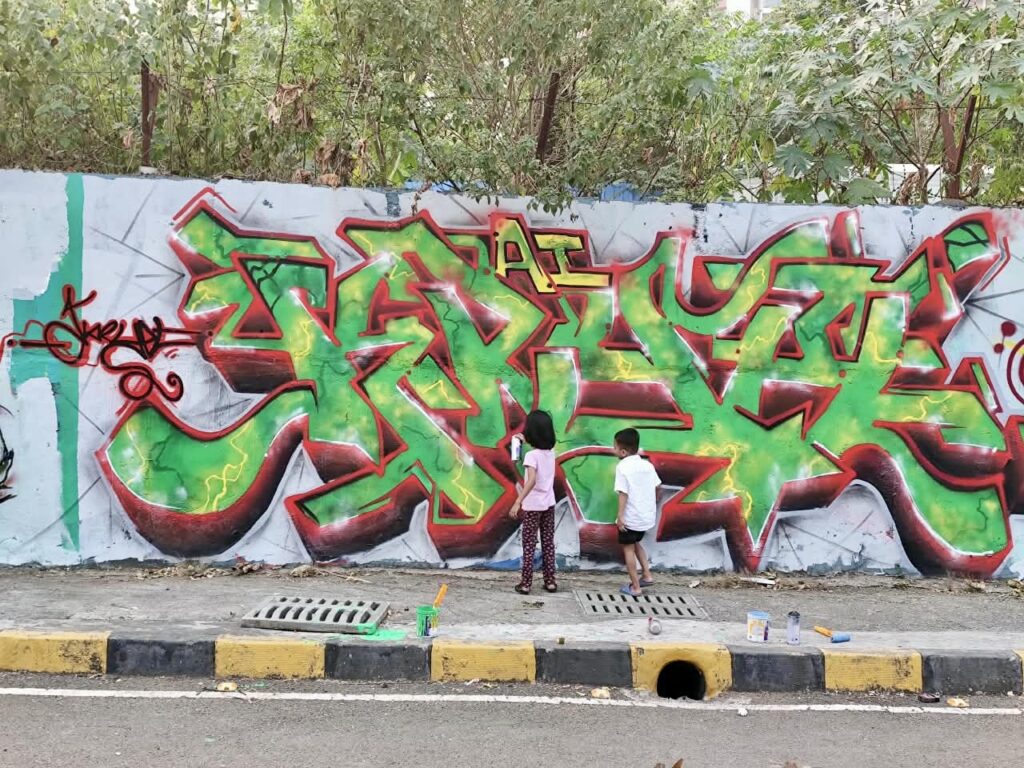
A lot of toys. That is the heart of it. Where English hands him a fixed set of building blocks, Hindi hands him a toy box.
“And whereas in English, they are just like, okay, these are the blocks, you are always gonna play with this. But with Hindi, I can just fuck around and go crazy and still it will end up, uh, giving me a great result.”
There is a bigger idea tucked inside that answer. So many of us learn to express ourselves in borrowed forms, styles, and languages that were never really built for us. Dkrypt went back to the script he grew up around and discovered it gave him more freedom, not less.
Learn the Rules, Then Break Them
The engineer never fully left. He just found a new problem to solve.
“So I have a very technical mind. I like to approach things as a problem that I can solve if I follow a certain pattern and I try to make those patterns. That’s why the name decrypt. I try to figure out patterns and art is nothing but just solving things creatively.”
Art as creative problem solving. It is a surprisingly practical way to describe something most people think of as pure instinct. But it also explains why he never sees a piece as truly finished.
“Graffiti is always going to be an experimentation. There’s no end product.”
Some pieces come out well, and he sets them aside as good results. The experiment itself, though, does not end.
“that experiment just keeps on going until the day I die or I’d stop doing this.”
What keeps it exciting is the culture’s relationship with rules. There are fundamentals you have to learn, and then there is everything you do after.
“there’s a few rules which you learn and then you just try to break them. There’s no thing as like bad graffiti, good graffiti.”
He grew up, like most of us, being told what had to be done and how. Graffiti flipped that. Once you know the rules, the limit is only you.
“how crazy and how far you want to go totally depends on your own self”

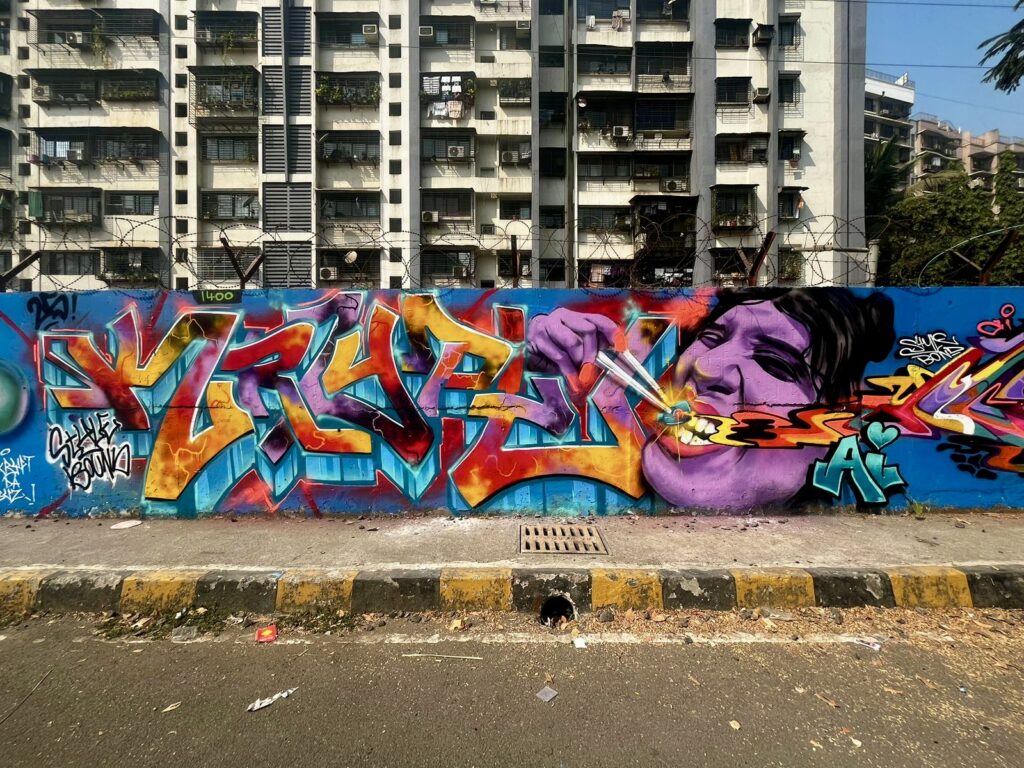
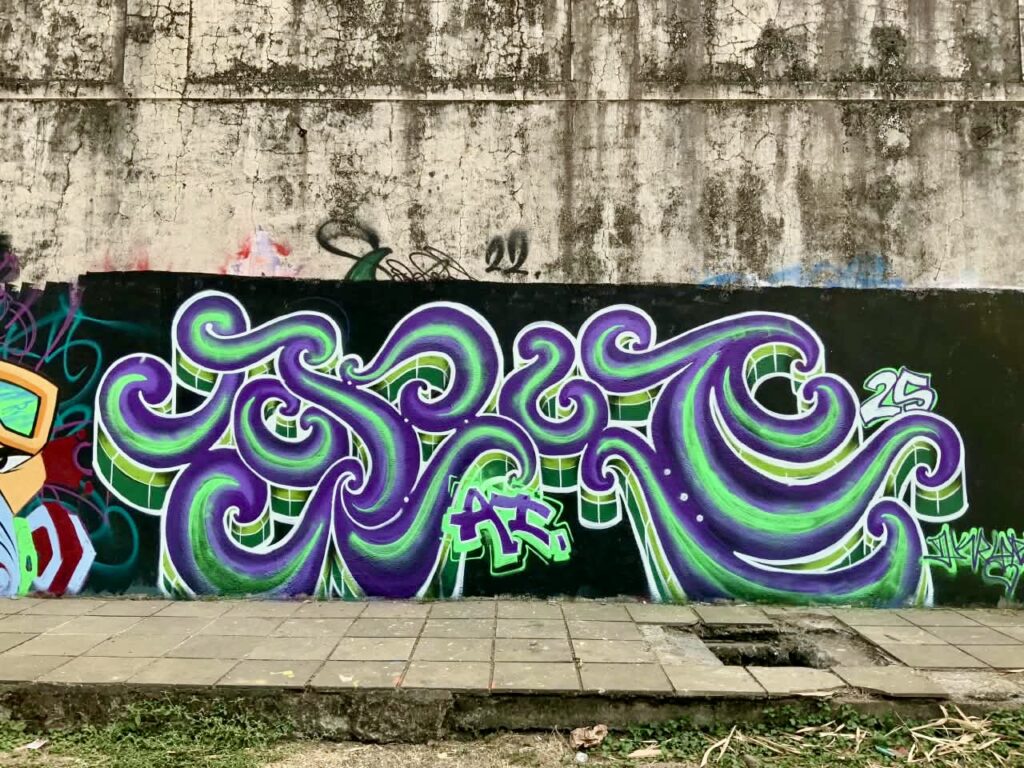
And the lesson has spilled well beyond the wall.
“I’m glad I started with graffiti because now with anything I see a lot of possibility and it has kind of creeped into my life where nothing actually, you know, fucks me up a lot because I know there’s a way to do this”
That is the decoder at work. Every problem has a pattern. Every wall has a way through.
Forget the Plan
Ask Dkrypt how it feels to paint a wall now, years into doing it professionally, and the answer is not jaded. It is still a ride.
“Like still every piece, every other piece, you start excited, like you are excited when you’re starting out. You are, you have a plan, you follow it till a point, then you are like, fuck the plan”
The plan gets you started. Then memory kicks in, something you saw while travelling, some idea that arrives mid-stroke, and the improvising begins. Somewhere in the middle, the panic usually shows up too: the moment where it feels like everything has gone wrong and the piece is not turning out the way he wanted.
He has made his peace with that.
“After so many years, I have realized that when artists tell you, just keep doing it, just keep at it. Now I think, yeah, that is the only way of doing things.”
And then comes the payoff, the moment he once called addictive and still clearly treasures.
“after this whole roller coaster of emotions, when you finally get done with it and you are like, oh, yes, I killed it and then you just sit, take a step back, sit, and just look at your art piece and you can feel all that emotions that you had gone through and suddenly the art becomes more important and closer to you.”
Anyone who has ever made anything will know that feeling. The work becomes precious not because it is perfect, but because you lived through every doubt it took to finish it.
Pre-Indonesia, Post-Indonesia
Travel did more than name his style. It rewired how he sees graffiti entirely.
In Indonesia and Malaysia, he found scenes that had been running for a long time, deep enough that graffiti is not a niche interest. It is simply part of life.
“But it’s a whole culture and the culture is so strong that everyone knows about graffiti, even the layman. And uh, how they approach our graffiti is totally different. It’s like the religion.”
The contrast with home was sharp.
“Living in Mumbai. We run behind money to do so that we can actually do this and that. But over there, it’s insane.”
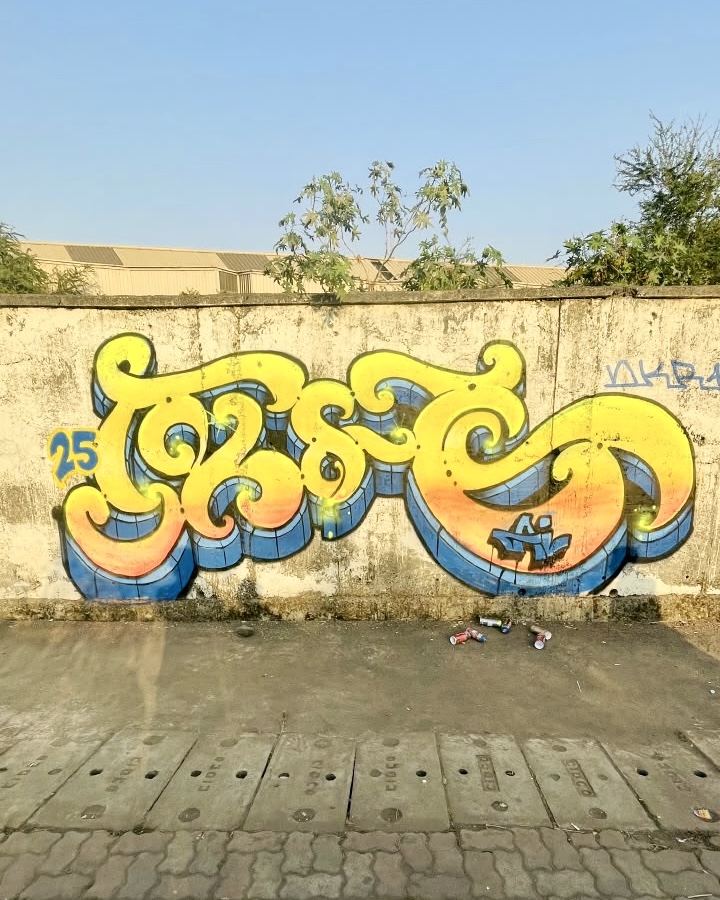
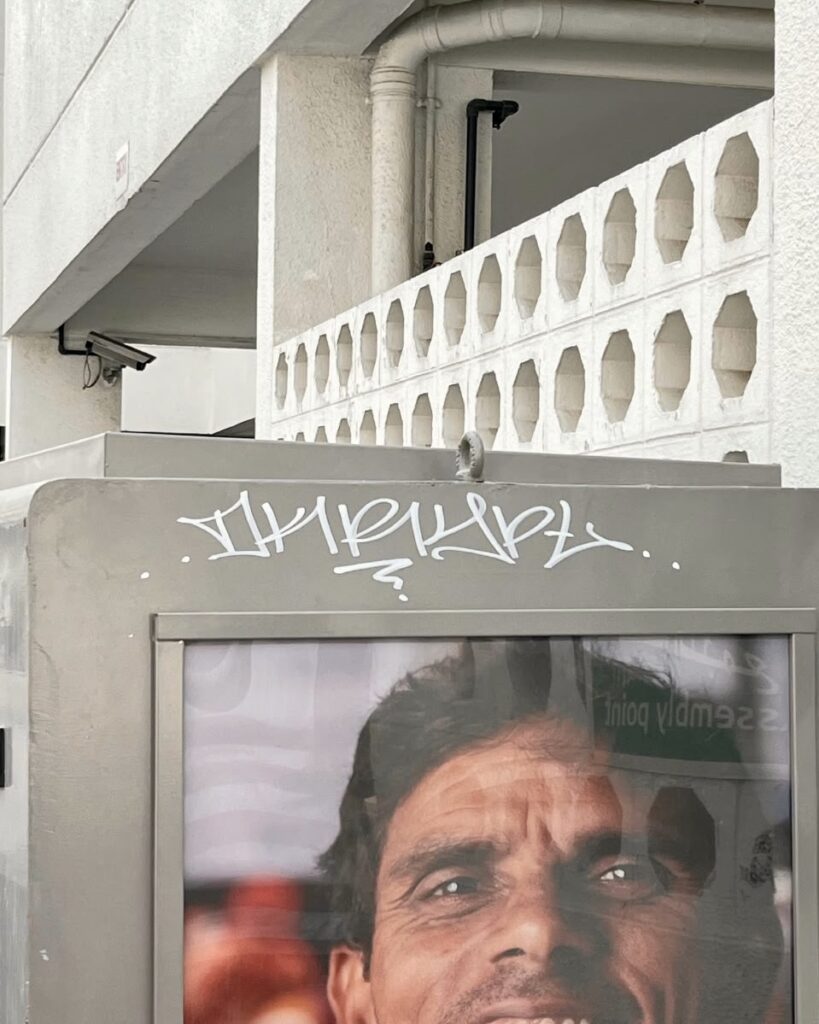
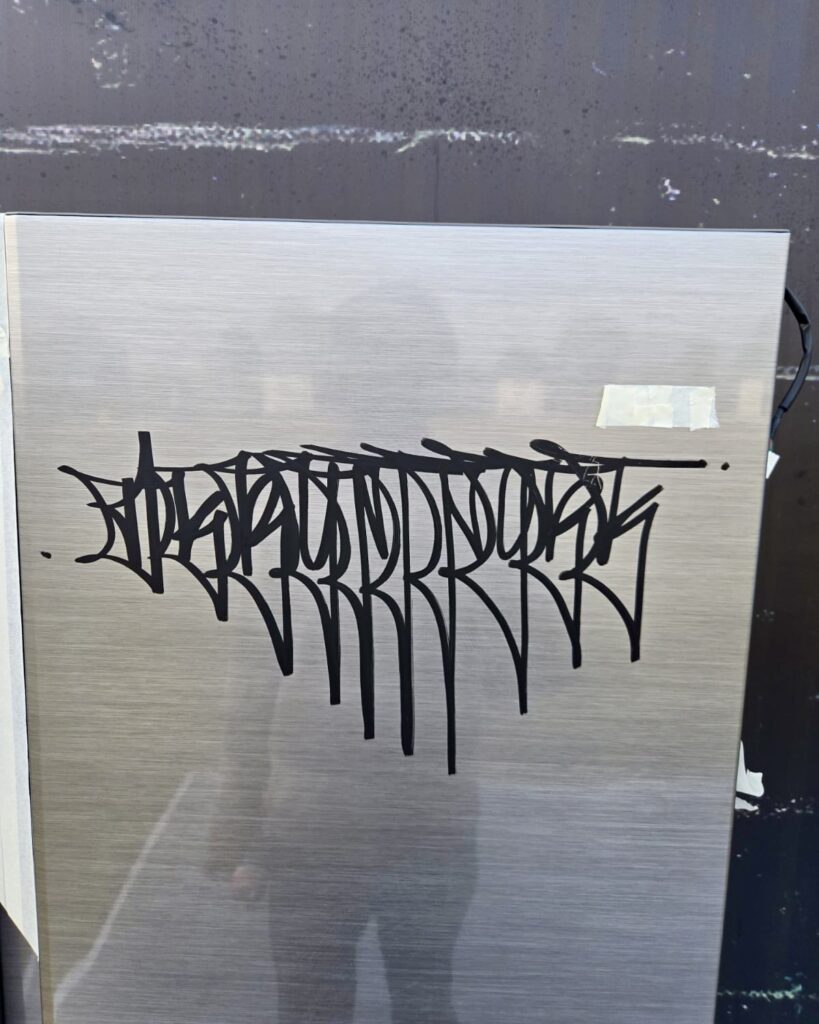
With thousands of writers on the streets, the sheer range of styles was overwhelming in the best way. You can have personal preferences, he says, but when you are surrounded by that much variety, you start wanting to try things.
“the amount of styles that you see on the street is madness.”
He came home changed, and the walls show it.
“you can actually see in my pieces from pre-Indonesia and post-Indonesia, there’s a big difference in what I do.”
It is a quietly powerful idea. Sometimes you have to leave home to understand what you bring from it. In Jakarta, surrounded by a culture where graffiti was everything, the most distinctive thing he had to offer was the script and the spice of where he came from.
A Plus B Equals Something New
Dkrypt has painted with a lot of people. More than he can easily count. And he is clear that this is not optional.
The reason is simple. Only other artists really get it.
“those are the only people who will understand what you are doing at a totally different level, because I, me sharing my things with my friend who’s a lawyer, will never have that intensity if I share it with my crewmate who has, who’s an artist, who goes through the ups and downs of being an artist every day.”
Friends outside the scene can cheer you on. But a crewmate knows the specific weight of a piece that is not working, the specific joy of one that finally does.
Being around artists with distinct styles also changes what you are capable of. You watch their process. You try a piece of it yourself. You see what happens when their way of thinking collides with yours.
“when these A plus B happens and stuff like this happens, then a new thing is born”
That new thing becomes the next experiment. The style evolves. And the process of figuring out how your style gels with someone else’s is, in his words, something special.
“It’s really fun and a different kind of experience.”
Beyond the Wall
Spray cans and pencils remain home base.
“pencil and spray can are still my favorite, uh, mediums”
But the self-taught path has taken him in strange and wonderful directions, mostly thanks to the people around him.
“I’ll call myself lucky that though I did not end up in an art school, I have met so many crazy people, I have gotten the chance to hang out with so many crazy people that I have tried charcoal, I have tried watercolors, I have tried, uh, you know, whittling. I have tried making graffiti with wood. I have actually carved wood to make my graffiti”
Graffiti, carved into wood. It is exactly the kind of thing you only try when nobody has told you it is not done. He has also taught himself digital illustration, a way to get ideas out of his head when he cannot get them onto a wall. Oil paints are still on the list.
And a plain rectangle of canvas? It rarely satisfies.
“So normal canvas doesn’t fill my, you know, uh, thirst.”
Skateboards, surfboards, whatever object is lying around. He is not anti-canvas, to be fair.
“anything is better than a normal canvas, but yeah, canvas is nice.”
Instagram as a Logbook, Not a Stage
Years ago, Dkrypt said Instagram was about documenting moments, not chasing fame. That has not changed, though he did briefly test the other road.
“I think my relationship with Instagram is still the same. I have tried to make a different profile to do the influencing bit, but I kind of just lost touch after a while.”
In a culture that constantly pushes creators to become content machines, there is something refreshing about someone who tried it, felt it was not him, and simply stopped. His main profile stays focused on the work. Sometimes clients find him through it, which he finds kind of amazing. But the goal is somewhere else entirely.
“fame is not something that I want from Instagram, but yeah, I would still like to continuously put my work out there and try to show it to as many people as I can. And, you know, maybe influence other kids to start doing graffiti art and just tell them, okay, you just have to keep at it and, you know, continuously do it.”
He was once a college kid who stood in front of someone else’s mural and felt something shift. Now he hopes his walls might do the same for someone else.
Vinyls, Surfboards, and a Big Procrastinator
So what comes next? A lot, honestly.
He is working on a set of vinyl records as canvases, a project rooted in his love for music. A medium that fell out of fashion and somehow never really left feels like the right surface for it. There are also surfboards waiting, a follow-up to a skateboard he painted a while back.
“I have like a couple of surfboards that I have to paint like I had a masala skateboard that I had made like a couple of years ago. So now I have to do it with a surfboard. It’s been at my place for like a year”
This year, he has made a deliberate choice to step back and finish the projects he has been carrying around in his head.
“I’ve taken this year as an off and just trying to do all of this.”
There are illustrations of his own ideas, new illustration techniques he has figured out, and one more experiment on the horizon.
“So maybe try that out, try some stop motion animation.”
He is also refreshingly upfront about how long all of this might take.
“So yeah, man, a lot of things, but I am a big ass procrastinator. So all of this is going to take some time, but Hell yeah, this is what we got to do.”
It might be the most relatable thing he says in the whole conversation. Big dreams, a long list, a slightly chaotic relationship with deadlines, and total conviction that it will get done anyway.
Still Decoding
Go back to the student halfway through a computer degree, realising he could not sit in one place and could not work for someone else. He did not have a plan for what came next. He had a name that meant decoding and a feeling that life was something he needed to figure out for himself.
That is still exactly what he is doing.
The difference is that he now has tools. A spray can. A pencil. A script full of curves and matras that bends however he needs it to. A crew who understands the ups and downs. A mother’s colours finally surfacing on the wall. A stranger’s word, masala, that gave the whole thing a name.
Every wall is a puzzle. Every piece is an experiment. Every finished mural is just a result worth keeping before the next attempt begins. There is no final answer, and that is the point.
“Graffiti is always going to be an experimentation. There’s no end product.”
The code never fully cracks. Dkrypt just keeps decoding.
Follow Dkrypt on Instagram
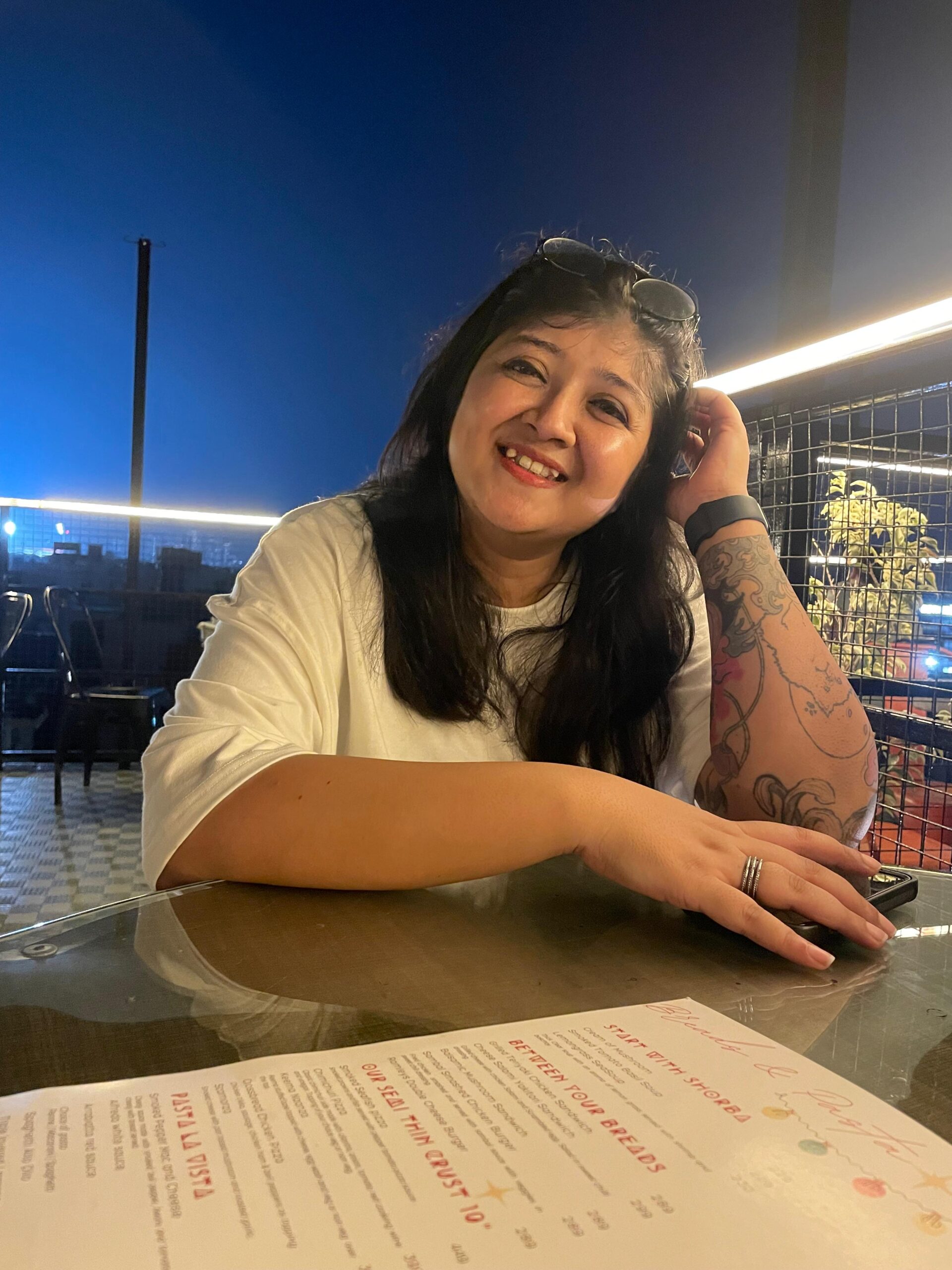
Oeshi B Lyndem is a visual artist, tattoo artist, graphic designer, and entrepreneur with a foundation in graffiti and street culture. Rooted in hands-on craft and making, her practice moves fluidly across illustration, street art, design, and experimental creative processes. With lineage from Shillong—often regarded as India’s rock capital—she carries a distinct cultural influence into her work. At Goofy Owl, she curates and leads the street and hip-hop culture segment through an intuitive, deeply creative, and entrepreneurial lens.