Some bands spend years trying to figure out what they sound like. AIYANA spent those same years just playing what felt right and letting everyone else argue about the label. There was no mission statement, no calculated bid for a particular scene. Just five people in a room, chasing whatever sounded true, and trusting the rest would follow.
That instinct carried them from local gigs in Cavite to Spotify’s All New OPM playlist, and into a new chapter with Project Fort and Numinous Philippines. But ask any member of AIYANA to define the band, genre-wise, and you’ll get something closer to a shrug than a pitch. For a generation constantly asked to package itself into a bio or a searchable tag, there’s something quietly radical about a band that simply refuses.
No Boundaries: AIYANA’s Genre-Less Philosophy
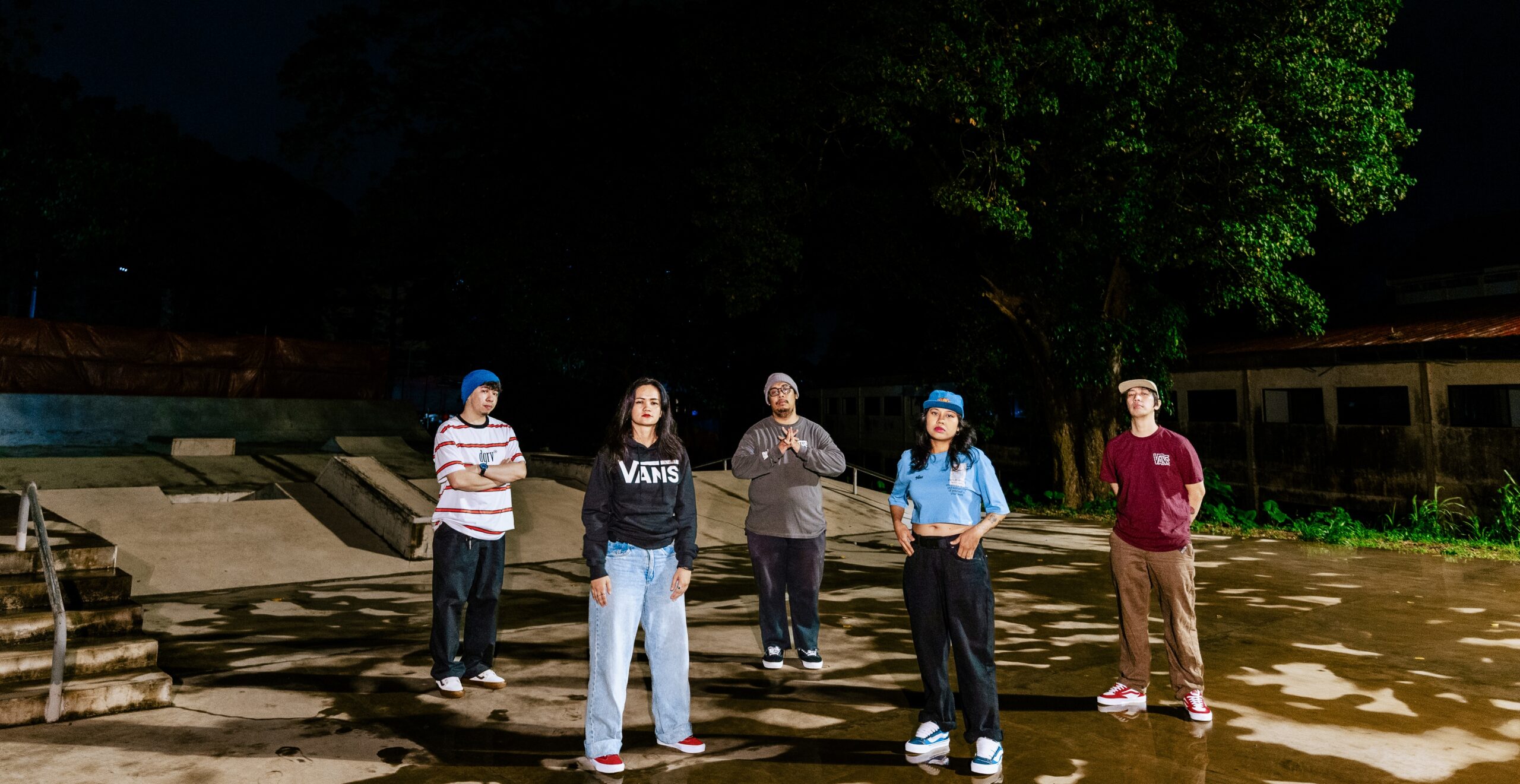
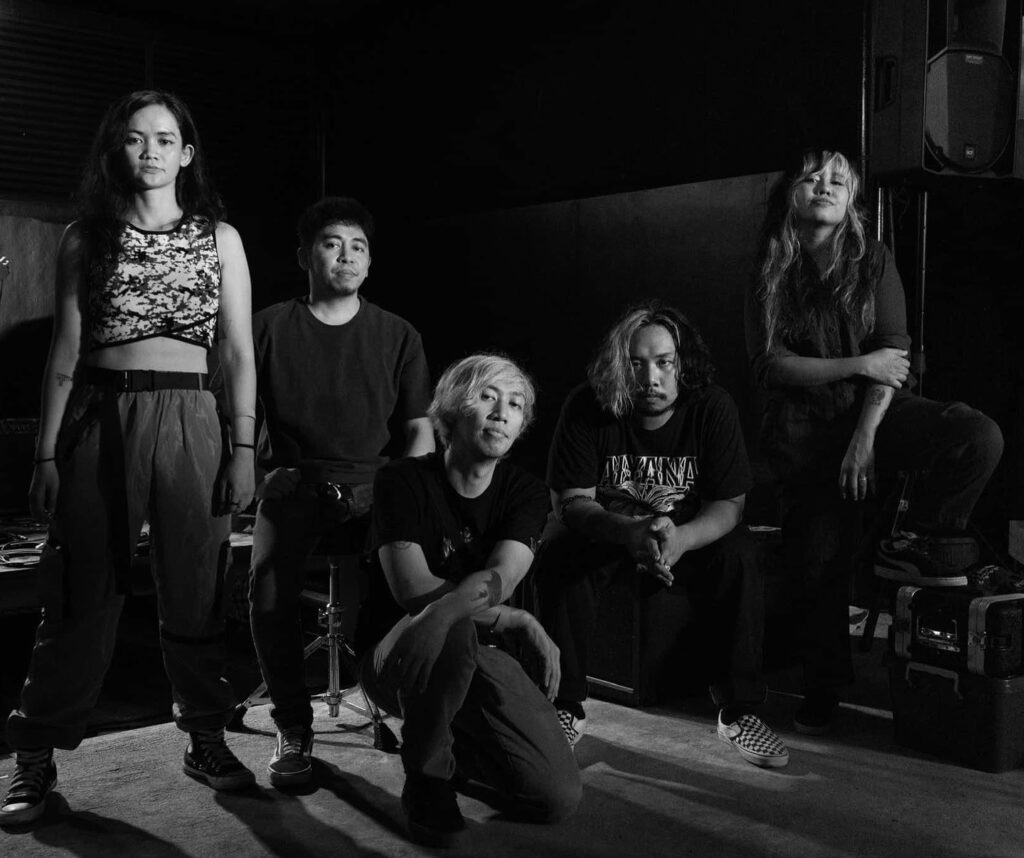
AIYANA is a five-piece out of Tagaytay City and Cavite: Jayce on vocals, Jec and GB on guitars, Jing on bass, and Justin on drums. Their sound moves through pop-punk hooks, math rock’s angular structures, and the emotional weight of Japanese rock, sometimes all within the same song. Ask them to categorize it and they’ll hand the question right back.
“We write what sounds good to us regardless of what genre it was influenced from,” the band says. “Our sound is our sound and it’s up to the listeners where they think we belong.”
That’s not evasiveness. It’s a philosophy. In an industry obsessed with algorithmic tags, AIYANA has decided that the mood of a song gets to shape its direction, not the other way around. “It’s the mood that defines what comes out,” they explain, “so we could write a song that is mostly pop punk again.” Nothing is off limits. Nothing is permanently closed.

From Cover Band to Original Artists
Every band has an origin story, and AIYANA’s begins the way many do: playing other people’s songs in front of small, familiar crowds. Formed around 2021, they cut their teeth as a cover act inside Cavite’s close-knit music scene, where pop-punk runs through local lineups like a shared language.
That early world shaped their first original material, which leaned hard into the pop-punk sound they’d grown up playing. Then something shifted. “Some people still categorize us as pop punk,” the band says, “but we try to veer away from all that and create our own sound, something that will set us apart from all the other bands.”
The evolution wasn’t a rejection of their roots. It was an expansion. The pop-punk bones are still there if you listen closely, but they’re now layered with math rock’s unpredictability and lyrics that feel more like diary entries than verses. It’s the sound of a band that outgrew its starting point without ever disowning it.
Breaking Into the OPM Indie Scene
The moment that pulled AIYANA into wider conversation was the release of “Space” and “Sa Panaginip Lang.” Both tracks caught the attention of Tower of Doom Music, and “Sa Panaginip Lang” landed on Spotify’s All New OPM playlist, the kind of placement that turns a band’s name from word-of-mouth into something people actually search for.
For a group outside Metro Manila’s industry center, that visibility carries real weight. AIYANA didn’t relocate toward the opportunity. They built something real where they were, and the opportunity eventually found them.
The Cavite Advantage
There’s a common story about bands from outside the capital having to fight twice as hard just to be seen. AIYANA’s perspective on their own geography, though, is surprisingly grounded. “The music scene here has been more active than the scene in Metro Manila since the pandemic,” they note, without needing to prove it.

They never treated Cavite as a disadvantage to overcome. It was simply where they built. “We just want to write songs, play gigs, and get our music out there,” they say. There’s real honesty in that simplicity. Ambition doesn’t always look like a plan to conquer the capital. Sometimes it just looks like showing up to rehearsal every week until people start paying attention.
The Filipino Rock Lineage
AIYANA is clear-eyed about the tradition they belong to. They trace the roots of Filipino rock back to Pinoy Rock, built on classic rock and blues, and then to the 1990s, when The Eraserheads, Rivermaya, and Parokya ni Edgar shaped what became known as “Tunog Kalye,” the sound of the streets, lyrics about everyday Filipino life that only locals would fully feel.
That lineage sounds different depending on where you stand. “These distinct sounds come from different regions in the Philippines,” the band points out, citing Urbandub’s unmistakably Cebu-rooted identity as an example. Filipino rock isn’t one sound. It’s a map of regional voices, and AIYANA is carving out Cavite’s corner of it.
Signing With Project Fort and Numinous Philippines
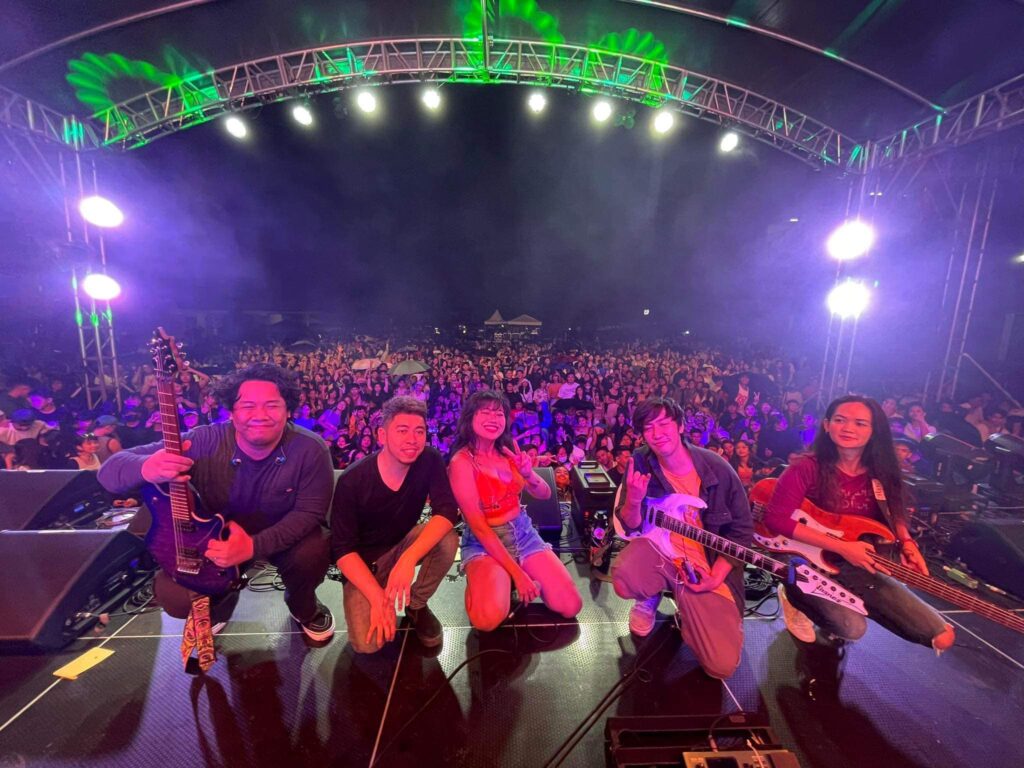
Every independent band eventually hits the moment when independence meets infrastructure. For AIYANA, that arrived with their signing to Project Fort, the label led by Greyhoundz frontman Reg Rubio, with management from Numinous Philippines. In many stories, this is where everything gets rewritten.
For AIYANA, it reads differently. “Not much has changed with the band’s routine,” they say. “We are still rehearsing weekly, writing songs, creating content, but now we have Project Fort and Numinous behind us to help us get our music out there.” The support system grew. The creative process stayed intact.
Five Opinions, One Band
Five musicians means five sets of instincts, and inevitably, five opinions about what a song should become. AIYANA’s answer is less rock mythology and more functional teamwork: when disagreements come up, they vote. Majority rules.
When guitarist Jec wrote a solo the rest of the band felt ran too long, they didn’t scrap it. They worked through it together. “We just compromised and rewrote the parts to make it shorter and still make it work,” the band explains. “In short, we usually talk things through.” It’s might seem like an unglamorous answer, but that’s probably why it works.
What’s Next: Soul, Synths, and a New Direction
Ask AIYANA what they’d explore with no expectations attached, and the answer arrives quickly. Soul. More keyboards. More synths. A warmth that could soften their edges without erasing what makes them distinct.

“We are actually into soul right now and we want to incorporate that into our sound but still have that distinct AIYANA sound,” they say. It fits a band that has always led with feeling over formula. Soul isn’t a departure. It’s just another thread being pulled into something that was never meant to sit still.
Keep Listening
AIYANA’s story keeps circling back to the same question: what does it mean to sound like yourself? They haven’t landed on a permanent answer, and they may never. But in a world obsessed with curated identities and tidy labels, there’s something worth paying attention to in a band comfortable staying a little unresolved. The search is the work. The sound is the search.
Follow AIYANA on Instagram
Image Credits: Miggy Balasbas | Fatti Abi | Don Kaiju | Jecht Photography

Lubdhak Biswas is a musician, entrepreneur and a tattoo artist based out of Kolkata (India).
He documents underground culture at the crossroads of tattooing and music.
His work focuses on craft, tools, ethics and the real working realities of creative industries.