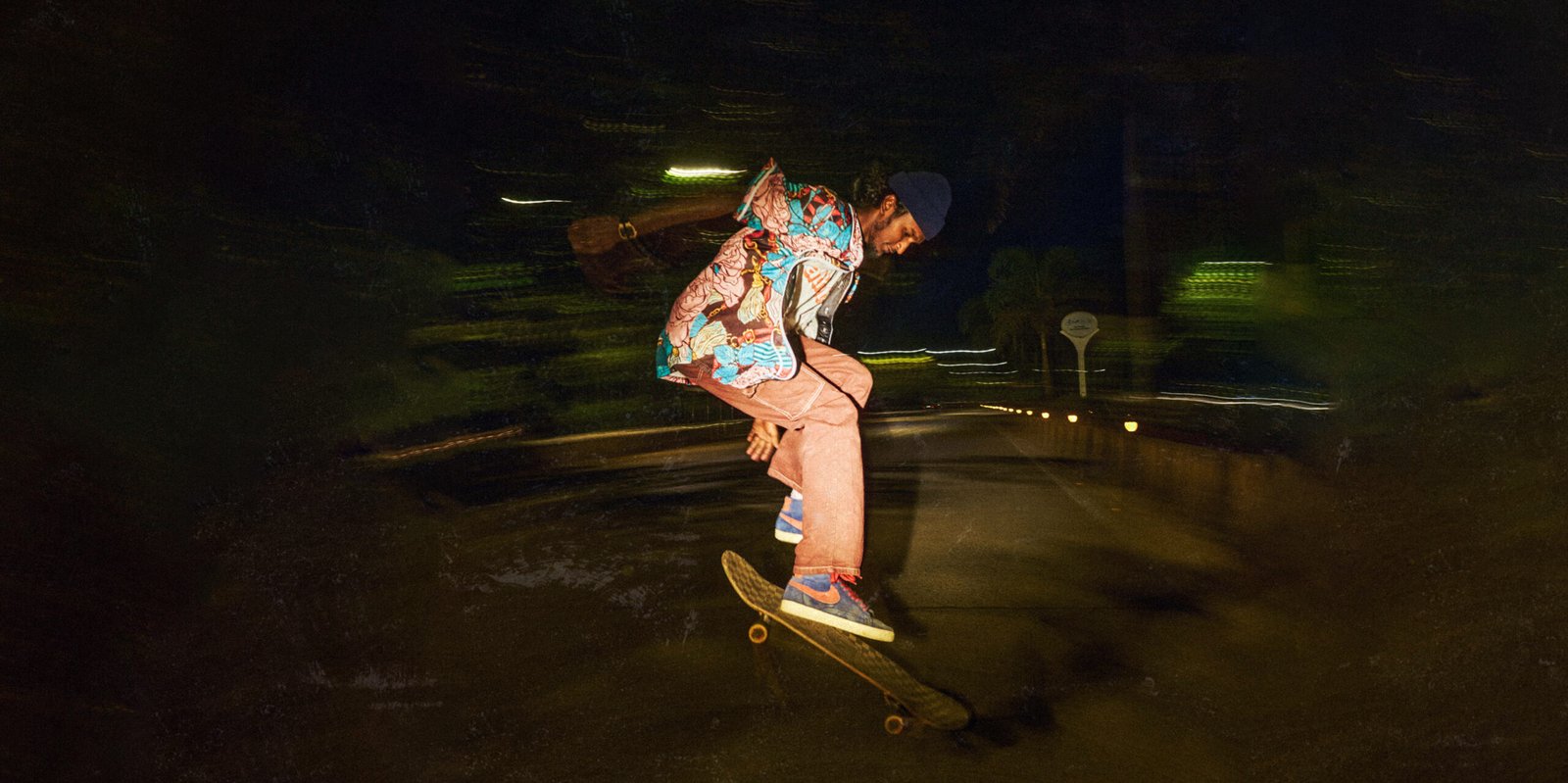
Before Formiga was an academy, it was a name. Before it was a name, it was a feeling.
“Most people know Formiga as our academy,” Sameer Ansari says, “but for me, it was my identity long before it became a company.”
That identity has its roots not in a skatepark but in a neighbourhood in Govandi, in a martial art from Brazil, and in a moment during a Capoeira class in 2012 when a French master pointed at a thin young boy and gave him a word he did not yet understand. The word was Formiga. In Portuguese, it means ant. A symbol of hard work, discipline, and teamwork. But for Sameer, the word quickly grew into something harder to translate: the feeling of being seen, named, and welcomed into something larger than yourself.
Mestre Chicote led the project, called Familia de Ouro — Golden Family — through Lok Seva Sangam, an NGO in Baiganwadi. Sameer had joined through his neighbourhood connections, alongside a few friends, with no particular plan. What he found was more than a sport.
“I can’t describe how happy I felt that day,” he recalls of the moment the name was given. “It wasn’t just a nickname — it felt like I had become a part of the Familia de Ouro.”
That sensation, belonging offered freely and without condition, became the quiet blueprint for everything Sameer would later build.
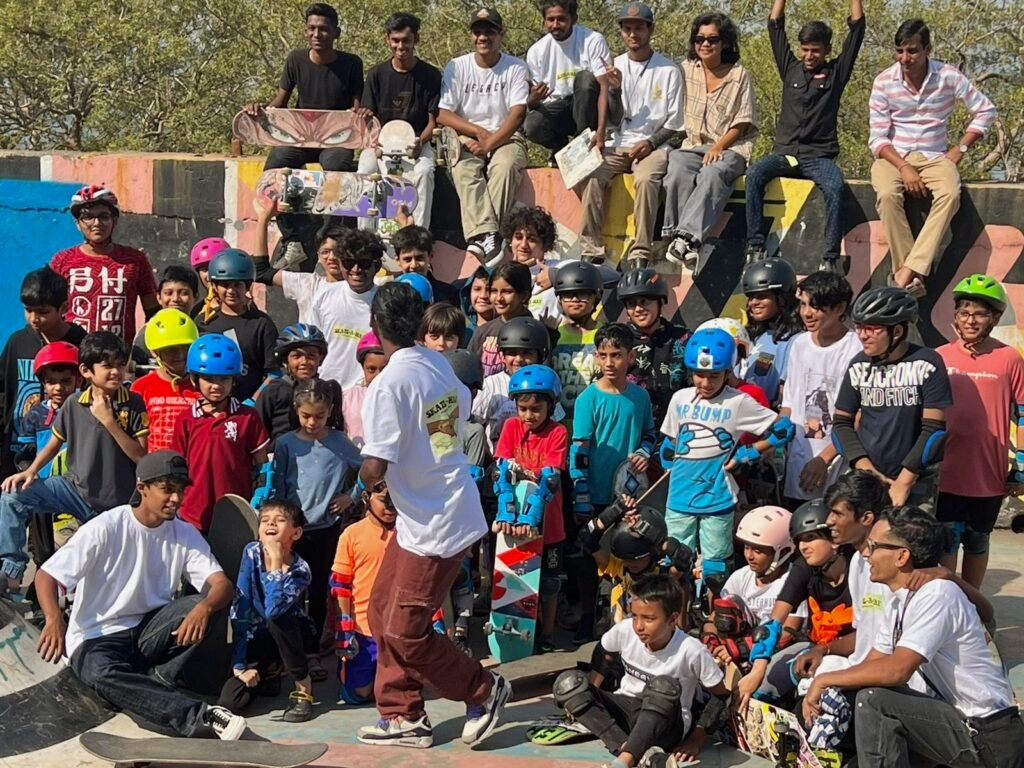
The Community That Came First
Capoeira did not just give Sameer a nickname. It gave him a way of moving through the world.
Through Familia de Ouro, he met people who became lifelong friends. He encountered teachers and masters from different countries, all of whom, as he remembers it, shared a quality that struck him deeply: they led through respect rather than fear or anger. He was young enough for that distinction to land clearly, and old enough to understand it mattered.
“It gave me confidence, opportunities, lifelong friendships, and most importantly, a mentor who always reminded us, ‘Never forget where you come from.'”
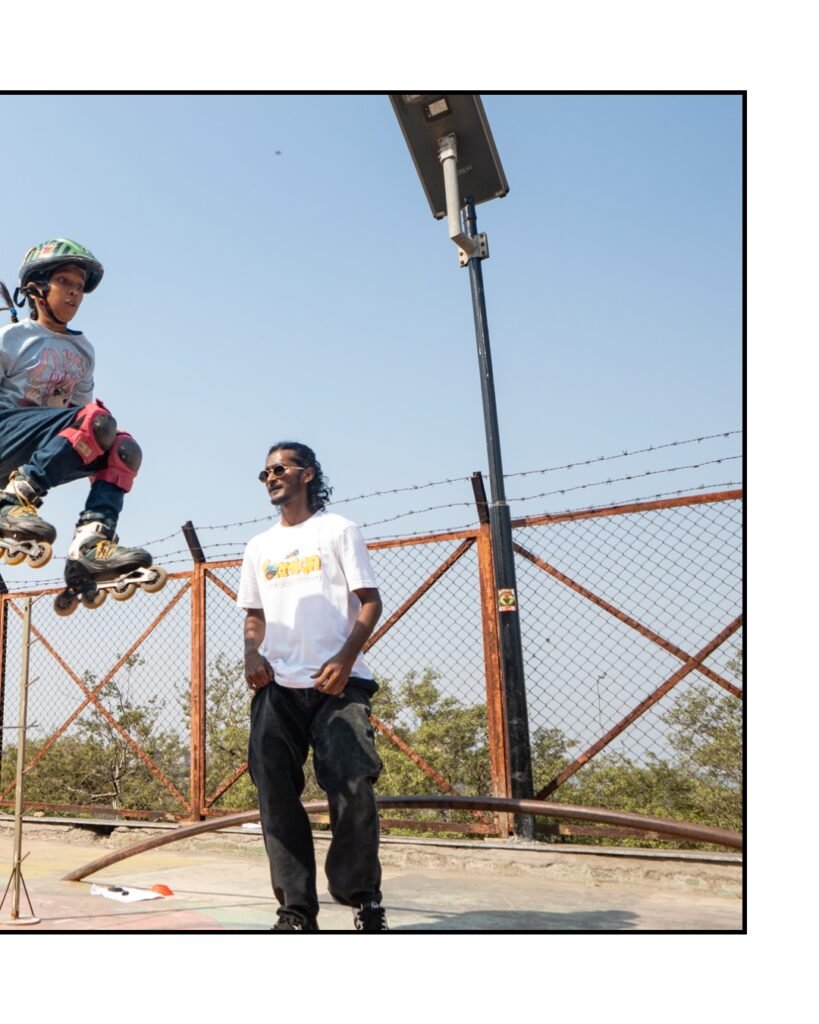
That instruction from Mestre Chicote is not a piece of motivational phrasing Sameer keeps in his back pocket for interviews. It is, by his own account, the lens through which he now watches every student who walks into Formiga Roller Sports Academy. The values he absorbed through Capoeira, discipline, humility, the importance of community, the understanding that a good coach leads by example, predate his discovery of skating by several years.
“My goal is not just to teach skating,” he says, “but to create the same sense of belonging, passion, and opportunity that Capoeira gave me.”
This is the part of Sameer’s story that resists the conventional arc of the sports entrepreneur. Formiga was not built on a business plan. It was built on a feeling he had first experienced as a teenager in a Capoeira class, one he has been trying to recreate for others ever since.
Finding Skateboarding By Accident
Roller sports entered Sameer’s life sideways, through a connection that itself traced back to Capoeira.
“My journey into roller sports happened in an unexpected way,” he explains. “Through Capoeira, our Mestre connected a few of us with an opportunity to work at Decathlon, where they were looking for sports enthusiasts.”

He joined the fitness department. But during lunch breaks and the hours after his shifts, he kept gravitating toward a different section of the store: roller sports, where he learned from teammates, picking up roller skating and then skateboarding with the casual, unhurried attention of someone discovering a preference rather than chasing a career.
After almost two years, the preference had become something more definite.
“I realised that this was the sport I genuinely enjoyed the most. I approached my manager and asked if I could move to the roller sports department.”
The manager agreed. There was one condition attached: Sameer would have to teach children.
He said yes. He was nervous. He had no formal coaching certification. What he had instead was the memory of people who had once invested their time in him without asking for anything back, and a quiet instinct that he could offer the same.
The Reluctant Coach
The first sessions were weekend batches, slotted in before his regular shifts. Small groups, modest expectations, a young man working out in real time what it meant to stand in front of students and take responsibility for their learning.
“To be honest, I was nervous,” Sameer says plainly. “I didn’t have an official coaching certification at the time.”
But Decathlon had trained its sports leaders to teach the fundamentals of every sport in the store, and Sameer drew on that, alongside everything he had absorbed from watching coaches operate in the Capoeira world. Within six months, those small weekend batches had grown into a community of nearly 100 to 150 active students.
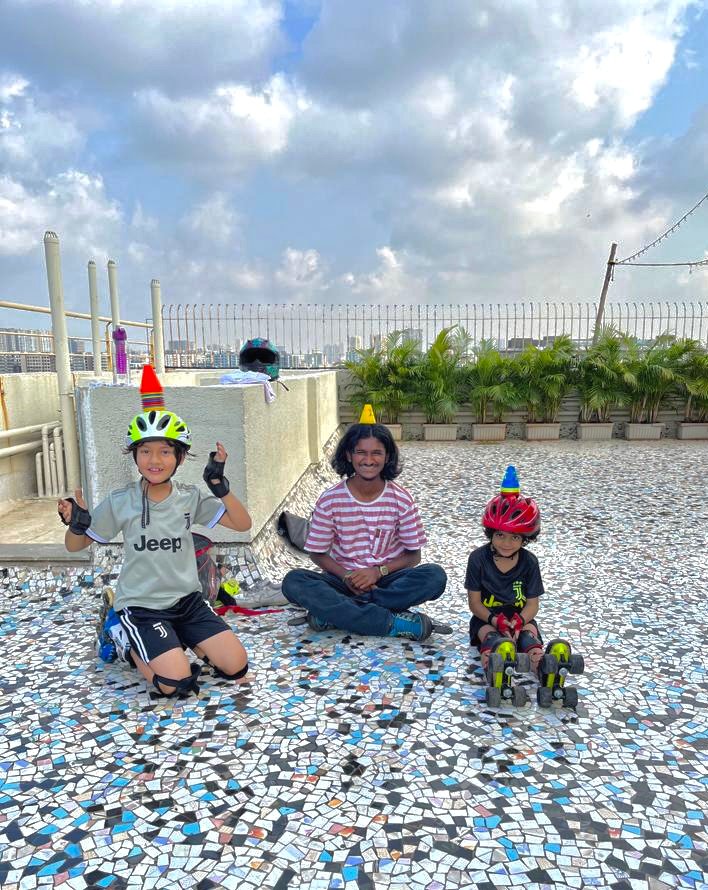
The numbers, though, are not really the point. What shifted something in Sameer was what arrived alongside the numbers: handwritten letters, drawings, and thoughtful gifts from students and their parents.
“Seeing their progress and appreciation made me realise that coaching was more than just teaching a sport; it was about making a lasting impact.”
That realisation, arriving not through ambition but through the accumulated weight of small, human moments, was what eventually led him to pursue coaching full-time in 2021. Not a calculated pivot. A response to what he was actually experiencing.
A Coach Doesn’t Just Teach Tricks
There is a distinction Sameer draws carefully, and it has shaped the entire culture of Formiga.
“Being a skateboarder teaches you how to overcome your own fears and challenges,” he says. “Being a coach teaches you how to help someone else overcome theirs. That’s a whole different journey.”
The difference is not technical. A skateboarding coach can teach grip tape and foot placement and how to distribute weight on a board. But the students arriving at Formiga come with different personalities, different histories, different fears, and different relationships with the idea of failure. The coach’s job, as Sameer understands it, is to read all of that before deciding how to teach anything.
“Every child and every adult learns differently. Some pick up a skill in one session, while others may need weeks or even months to build the confidence to try. As a coach, I’ve learned not to compare progress but to celebrate every small milestone for every student.”
He has also learned that the language matters as much as the lesson. Sometimes changing a few words, or demonstrating something from a different angle, opens a door that technical repetition cannot. “Coaching has made me a better listener,” he says, “because understanding how a student thinks is just as important as teaching the technique itself.”
The Student Who Taught the Coach Patience
Among the lessons Sameer names most readily, the one he returns to came from an adult student named Rashi Mal.
After one of their sessions, she told him something he has not forgotten: that his patience, his refusal to show frustration when she could not perform a skill, had made her feel safe. That safety, she explained, was what allowed her to trust him throughout her skateboarding journey.
The observation recalibrated something in how Sameer thought about his role. He already understood, intellectually, that adults learning a new physical skill face specific challenges that children often do not. The self-consciousness, the accumulated fear of looking incompetent, the awareness of other people watching. What Rashi made concrete was how much a coach’s manner, rather than their instruction, determines whether a student feels able to try at all.
“That conversation made me realise how intimidating it can be for adults to try something completely new.”
Patience, in this reading, is not passive. It is the active choice not to signal disappointment, not to rush, not to compare. It is the thing that makes the space feel safe enough for someone to take a risk they might not take anywhere else.
Success Can Be Standing on a Skateboard
Formiga does not measure itself by competition results. Sameer is consistent on this, and specific.
“The biggest lesson, though, is that success isn’t measured by how many advanced tricks a Formiga student can do. It’s the smile on someone’s face after standing on a skateboard for the first time, the confidence they gain after overcoming a fear, or a parent telling me their child has become more confident because of our classes.”
He recalls one parent’s message, arriving with an emoji and a kind of quiet pride: “Sam, my child can ride a cycle without supporting wheel because he’s not scared of the falls now.” A child who learned, through skateboarding, that falling is survivable. That knowledge transferred. A fear released in one place meant fewer fears everywhere else.
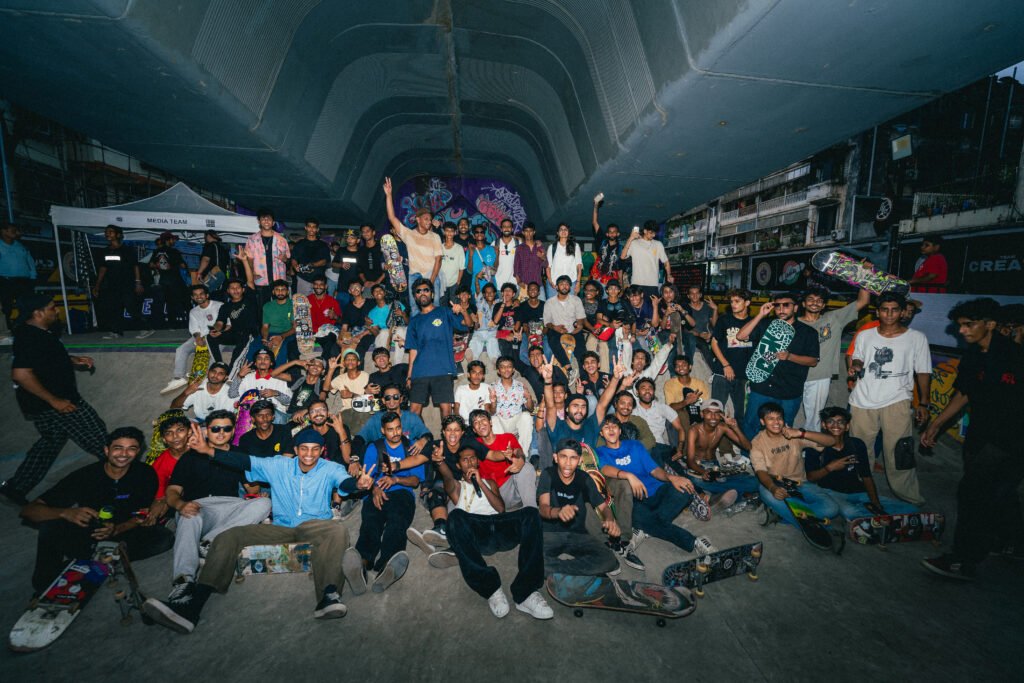
Then there is Priyanshi, an adult student whose relationship with her weekly session surprised even her. “I love it when my week begins with a skateboarding session in the morning,” she told Sameer. “It gives me the energy to get through the entire day.” She is disappointed when rain cancels class or work prevents her from attending. A skateboarding session has become, for her, something she genuinely looks forward to, rather than something she endures in pursuit of improvement.
These are not stories Sameer tells to promote the academy. They are the stories he tells to explain what he believes skateboarding can actually do in a person’s life, if the environment around it is right.
From BKC to a Growing Skate Culture
Mumbai’s skating landscape when Sameer first encountered it was small enough that everyone in it knew each other. The community gathered wherever smooth surfaces could be found. BKC City Park functioned as one of the gathering points, and it is still spoken of with a particular warmth by older members of the scene.
“When I first started skateboarding, Mumbai didn’t have a single dedicated skatepark open for skaters,” he recalls. “We would travel wherever we could find a smooth surface to skate, and the entire community was so small that almost everyone knew each other.”
That intimacy gave way, over years, to something broader. Mumbai now has more than five skateparks. Each one has generated its own community, its own friendships, its own small ecosystem of people who would not otherwise have found each other. Skateboarding’s inclusion in the Olympics shifted the way parents, schools, and local communities perceived the sport. New children started. New coaches emerged. A culture with foundations laid by earlier generations expanded into something visible enough to attract national attention.
Sameer is careful not to overstate his own role in this. He speaks of the first and second generations of Mumbai skateboarders and BMX riders as the people who built the foundation. Among those he credits from his early years: Azhar, Sagar Waghela, Akash Gandhi, Nikhil Sheletkar, and others who were part of that first generation of gatherings at BKC.
“I feel privileged to have grown up in Mumbai,” he says, “because it has played such an important role in the history of skateboarding in India.”
His own contribution sits inside that larger story, not above it.
Growing the Scene From Inside It
Sameer’s role in the Indian skating community has expanded organically, from participant to coach, from coach to organiser, from organiser to something harder to label. Communicator, perhaps. Someone who shows up and makes things work.
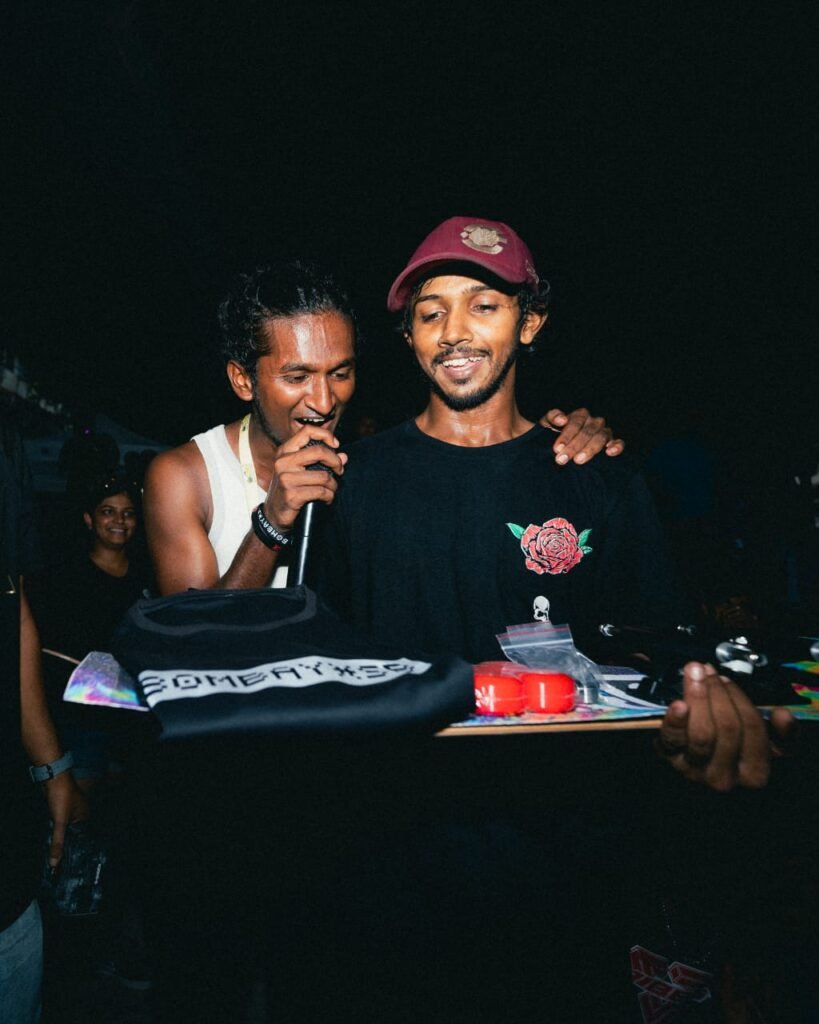
He served as the official emcee for Red Bull’s first-ever Road Gap skateboarding event in Mumbai. He emceed three-day skateboarding festivals in Gwalior. He has conducted workshops in Goa, Pune, Udaipur, Jaipur, and at IIT Bombay. He met and held a podcast conversation with professional skateboarder Brandon Turner during Turner’s visit to Mumbai.
“Every city has its own journey,” he says of the workshops, “but the passion for skateboarding is the same everywhere.”
What these experiences collectively describe is someone who moved from learning the sport to helping build the infrastructure around it: events, conversations, connections, occasions for skateboarders from different cities to encounter each other. Growth of this kind is less visible than medals or rankings. It is also more durable.
When a Student Builds Their Own Community
There is one story Sameer tells that carries more emotional weight than almost anything else in his account.
One of his former students went on to found Thirdspace in Udaipur, creating a space dedicated to giving people access to different sports. Sameer conducted a workshop there, travelling to a city where the skateboarding community had been close to non-existent, invited by someone he once taught.
“One experience that will always stay close to my heart was conducting a workshop at Thirdspace Launch in Udaipur. The space was founded by one of my former students, who is now working to build a dedicated space for people to experience different sports.”
What moves Sameer about this moment is not the recognition. It is the pattern it reveals. Someone once created an opportunity for him. He created opportunities for his students. One of those students is now creating opportunities for others. The circle does not complete itself automatically. Each person in it has to choose, actively, to pass forward what they received. His former student made that choice.
“Seeing a student become someone who is now creating opportunities for others is one of the most rewarding moments of my coaching journey.”
You Don’t Have to Compete
Formiga’s philosophy on competition is explicit, and Sameer does not frame it as a compromise. He frames it as a conviction.
“One thing that makes Formiga different is that we don’t believe every student has to become a competitive athlete. Competition is a wonderful opportunity for those who genuinely enjoy it, and we always support students who want to challenge themselves. But we also believe it’s perfectly okay to pursue skateboarding simply as a hobby, for fitness, for creativity, or just for the joy of learning.”
The pressure Sameer resists is the assumption that improvement must lead somewhere, that getting good at something obligates you to enter it into competition. At Formiga, being good at skateboarding is sufficient on its own terms. You can skate for fitness. For the pleasure of movement. For the quiet satisfaction of doing something difficult. For the community that forms around a shared practice.
“We encourage students to discover their own limits rather than feeling pressured by someone else’s expectations,” he says. “When a student chooses to step outside their comfort zone because they want to — not because they feel they have to — that growth is much more meaningful and long-lasting.”
Competition is available. It is not required. The journey belongs to the person making it.
The People Behind the Coach
Sameer is consistent on one point: no single mentor shaped him. His understanding of himself and his coaching came from many directions at once.
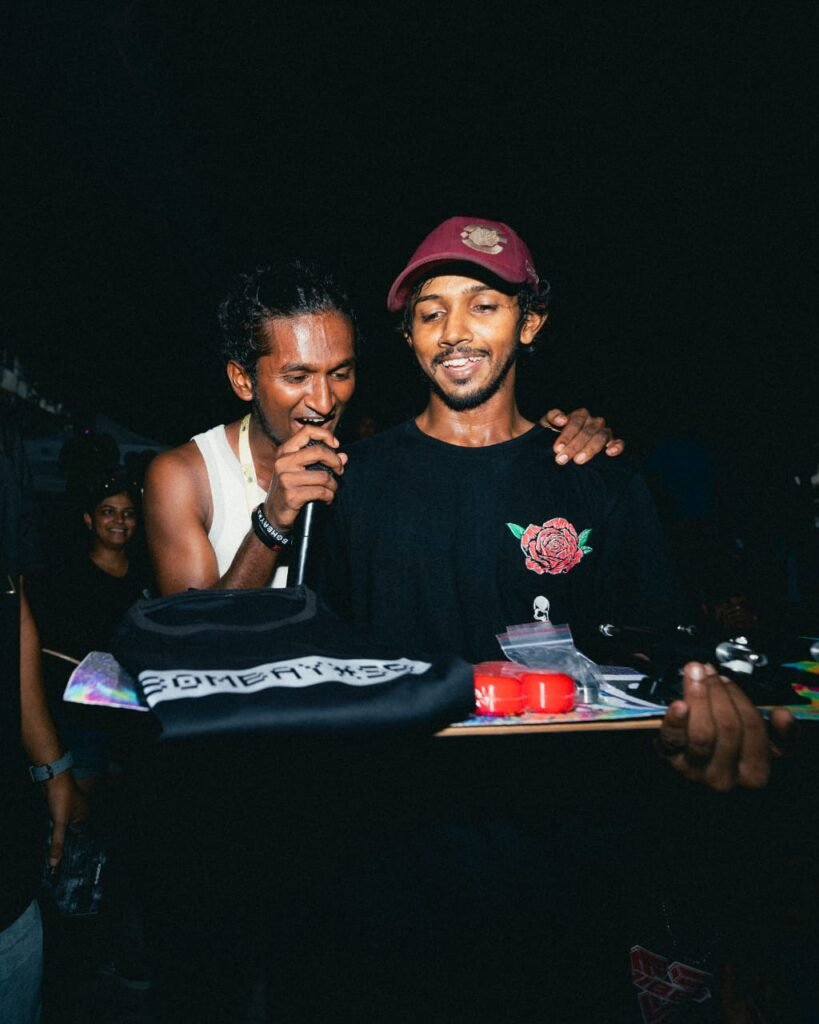
Mestre Chicote gave him the name and the foundational values. The Capoeira teachers he encountered through the NGO project demonstrated that leadership rooted in kindness and humility was not only possible but effective. His family provided something quieter and equally persistent. His parents and relatives, he says, always reminded him: “Beta, galat kaam nahi karna paise kamane ke liye.” (“Son, never do the wrong thing just to earn money.”) He carries that instruction alongside his faith, which he describes as a guide toward honesty and sincerity in everything he does.
His childhood friends have been present through every stage, celebrating his successes and, more usefully, telling him when he was getting things wrong. The early Mumbai skating community, the skateboarders and BMX riders he encountered at BKC in 2016, welcomed him without conditions. “If you had a skateboard in your hand, you were already part of the community,” he remembers.
His students and their parents continue to teach him. Many of Formiga’s clients come from professional backgrounds entirely removed from sport, and their discipline and work ethic in building their own careers have shaped how Sameer thinks about leadership and running a business.
“Learning never stops,” he says, “no matter what role you’re in.”
Leadership Means Making Space for Someone Else
The definition of leadership that emerges from Sameer’s account is not about authority or performance. It is more specific and more demanding than either.
“Building Formiga has taught me that leadership isn’t about having people follow you — it’s about creating an environment where everyone feels supported enough to grow.”
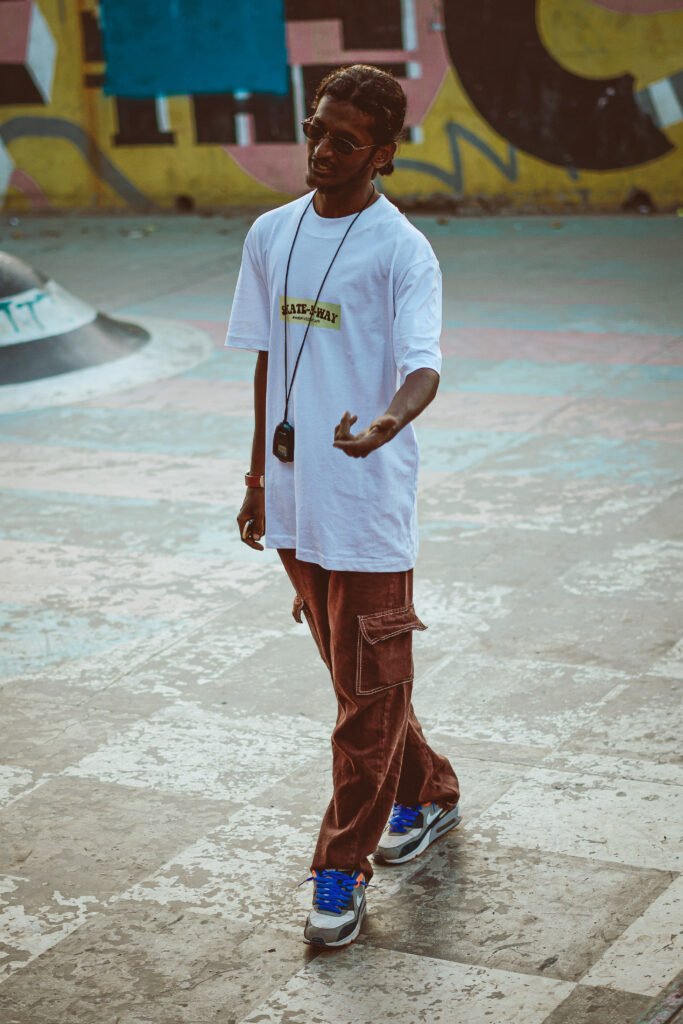
That environment is built through consistency rather than grand gestures. Being present. Keeping promises. Encouraging students who are struggling. Recognising progress, regardless of how small or how long it took. These are not dramatic acts. They are the kind of actions that accumulate, over months and years, into something people trust.
“I’ve also learned that a community is built through consistency. It’s the small things — being present, keeping your word, always encouraging students when they struggle, and celebrating their progress no matter how small — that make people stay connected to the academy.”
The values Sameer names — work hard, stay humble, respect others, enjoy the learning process — are the same ones Mestre Chicote modelled decades earlier in Govandi. They did not arrive through instruction so much as through observation. Sameer watched how his teachers led, and he decided that was how he wanted to lead too.
Giving Back Doesn’t Have to Be Big
Sameer does not talk about giving back in large, abstract terms. He is specific about what it actually looks like.
“I also believe that giving back doesn’t always mean doing something big. Sometimes it’s spending a little extra time with a student who’s struggling, helping a parent understand their child’s progress, mentoring a young coach, organising a community event, or even investing our own time and money into growing the skateboarding community.”
He follows that with a framing that feels central to how he understands his work:
“Small actions, repeated consistently, create lasting change.”
This is not an empty slogan. It describes the actual texture of what Formiga does — the weekend sessions before regular shifts, the handwritten letters, the workshop in Udaipur, the student who went on to build Thirdspace. None of those things happened because of a single large decision. They happened because someone kept showing up, kept offering what they had, kept choosing to invest time and energy in people who might one day pass it forward.
Sameer is clear about the origin of that impulse: “When I look back at my own journey, I realise that I am where I am today because so many people invested their time, knowledge, and trust in me without expecting anything in return.”
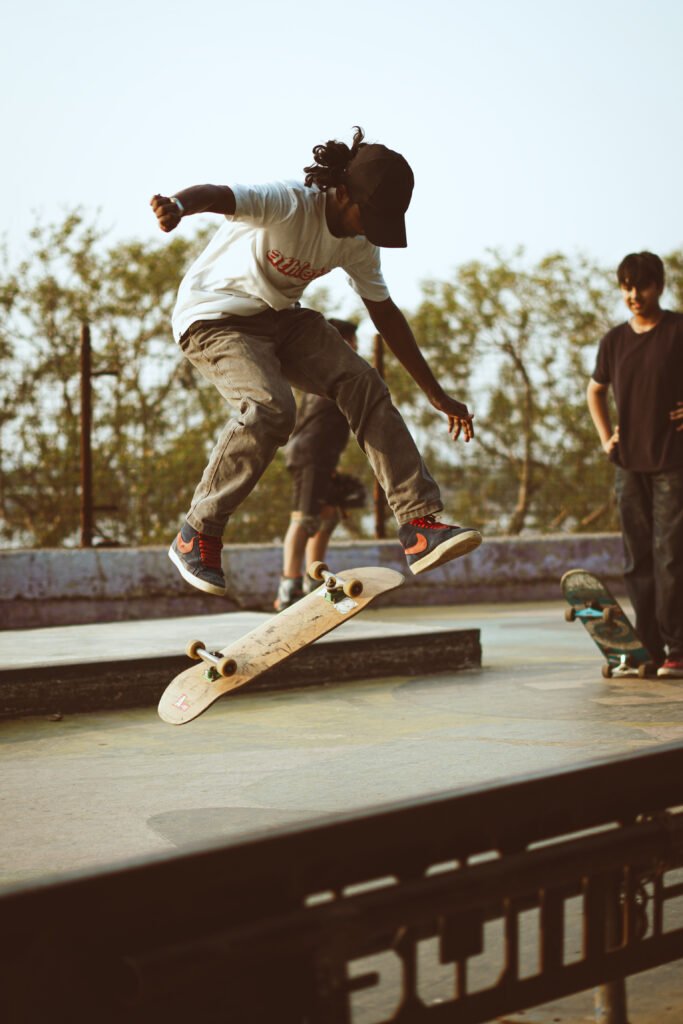
The Meaning of Formiga
The article began with a name.
In 2012, in a Capoeira class in Govandi, a French master named Mestre Chicote looked at a thin young boy from Baiganwadi and said one word: Formiga. The boy did not understand Portuguese. He asked. An instructor smiled and told him: you are thin, but you are strong. He felt, in that instant, that he belonged to something.
The name followed him. Through Capoeira and the friendships it gave him. Through Decathlon and a sideways entry into roller sports. Through nervous weekend coaching sessions and a growing community of students. Through BKC gatherings and Red Bull events and three-day festivals in Gwalior and workshops in cities across India. Through handwritten letters from children and conversations with adult students who surprised him with what they taught him.
“To be really frank, I don’t know how long I’ll continue coaching or where life will take me,” Sameer says, “but one thing I know for sure is that I don’t see myself working anywhere outside the roller sports community.”
What he hopes Formiga is remembered for is also precisely stated, and it has nothing to do with rankings or competitions or the number of students who passed through.
“I hope it’s remembered as a place where people felt welcome, discovered confidence, built meaningful friendships, and found a community that genuinely cared about them.”
More importantly, he hopes people leave with a relationship to skating that stays with them long after they have stopped attending any particular class. A love for something that becomes part of who they are, the way a word given to a young boy in a Capoeira class became part of who he is.
Someone once created that kind of space for Sameer. Formiga is his way of creating it for someone else.
“Just like many skateboarders around the world believe, I don’t see skateboarding as just a sport — I see it as a lifestyle.”
The ant keeps moving. The family keeps growing.
Follow Sameer Ansari on Instagram
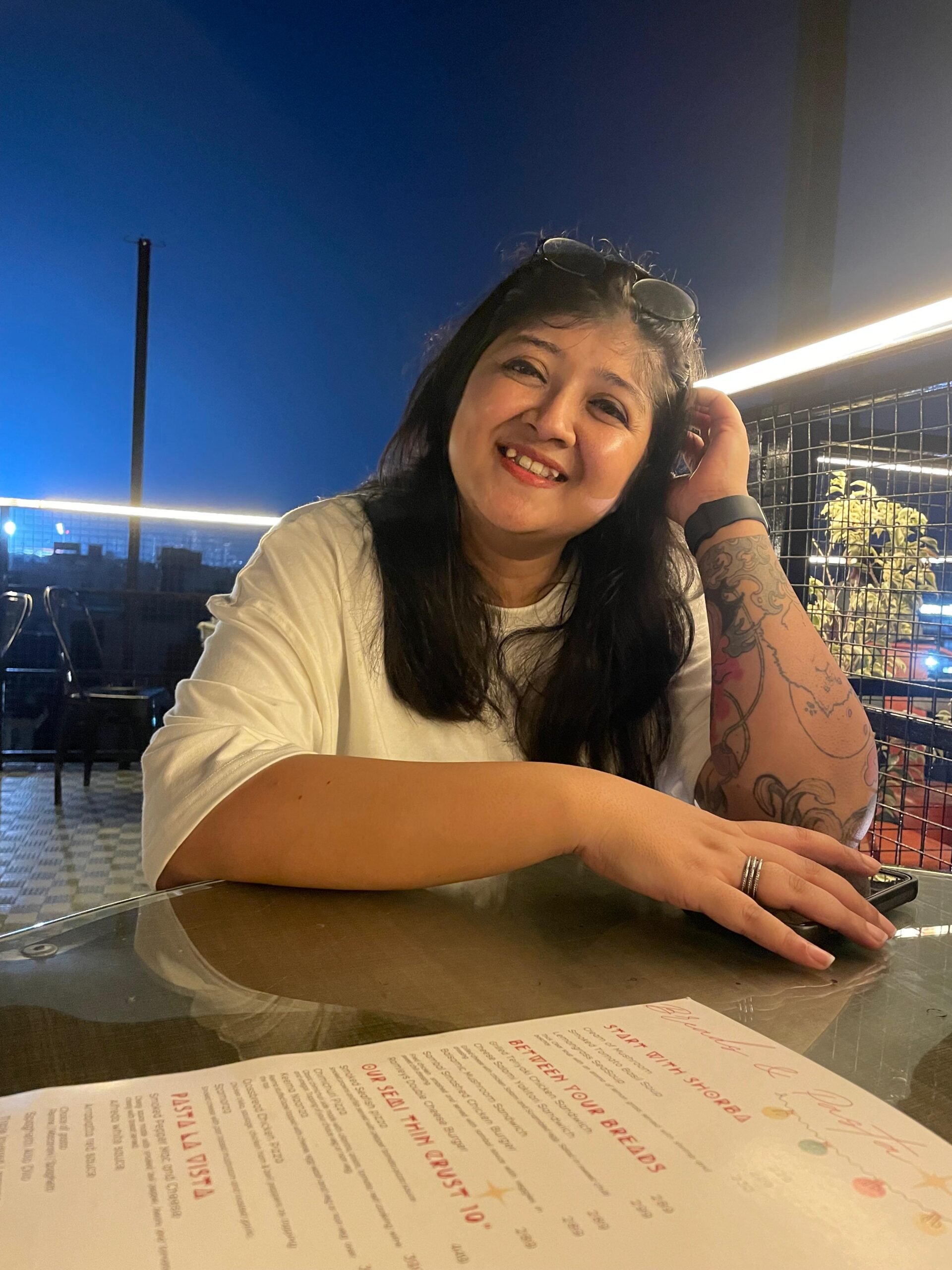
Oeshi B Lyndem is a visual artist, tattoo artist, graphic designer, and entrepreneur with a foundation in graffiti and street culture. Rooted in hands-on craft and making, her practice moves fluidly across illustration, street art, design, and experimental creative processes. With lineage from Shillong—often regarded as India’s rock capital—she carries a distinct cultural influence into her work. At Goofy Owl, she curates and leads the street and hip-hop culture segment through an intuitive, deeply creative, and entrepreneurial lens.