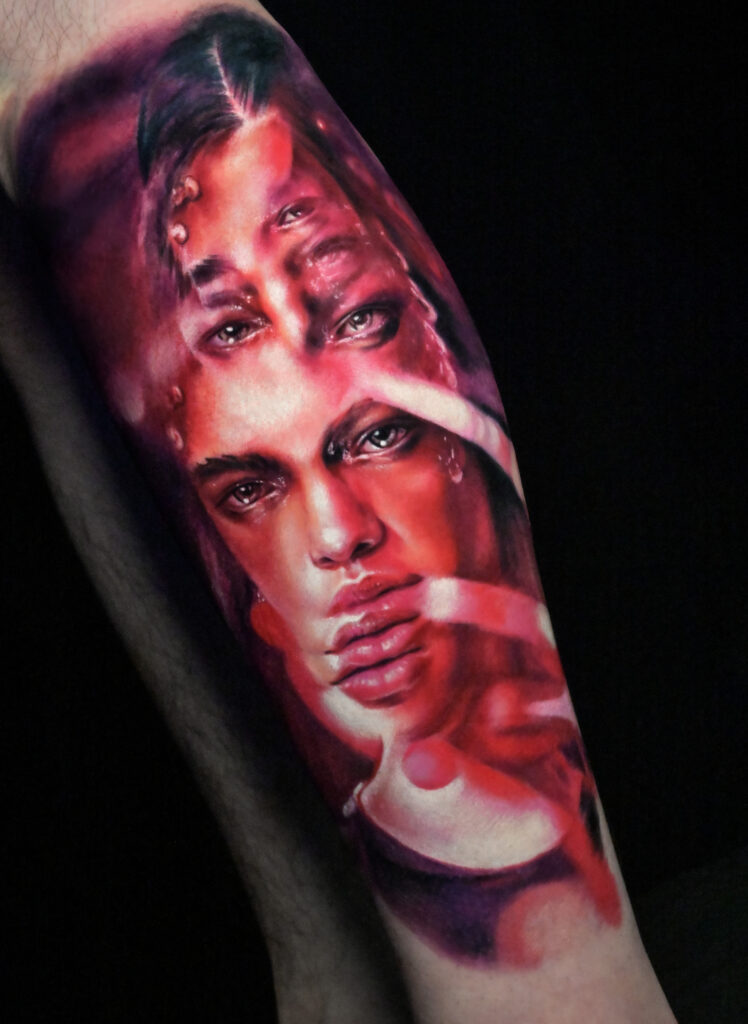
Realism in art isn’t about accuracy; it’s about feeling. While many believe it’s a matter of copying something exactly as it appears, the true art lies in bridging the gap between what looks real and what feels real. That difference is everything.
The Illusion of Detail
When artists first attempt realism, they often fall into a trap of micro-details. They stare at a reference photo and try to replicate every single pore, every tiny hair, and every minuscule shift in texture. It seems logical. If you capture all the small parts, the whole should look real.
But this approach usually fails. A hyper-focused collection of details often results in a piece that looks stiff, overworked, and fundamentally unnatural. It lacks the breath of life.
Learning to See, Not Copy
The shift from simply copying to actually creating realism requires a fundamental change in perspective. It is about understanding the underlying architecture of the subject rather than just decorating the surface.
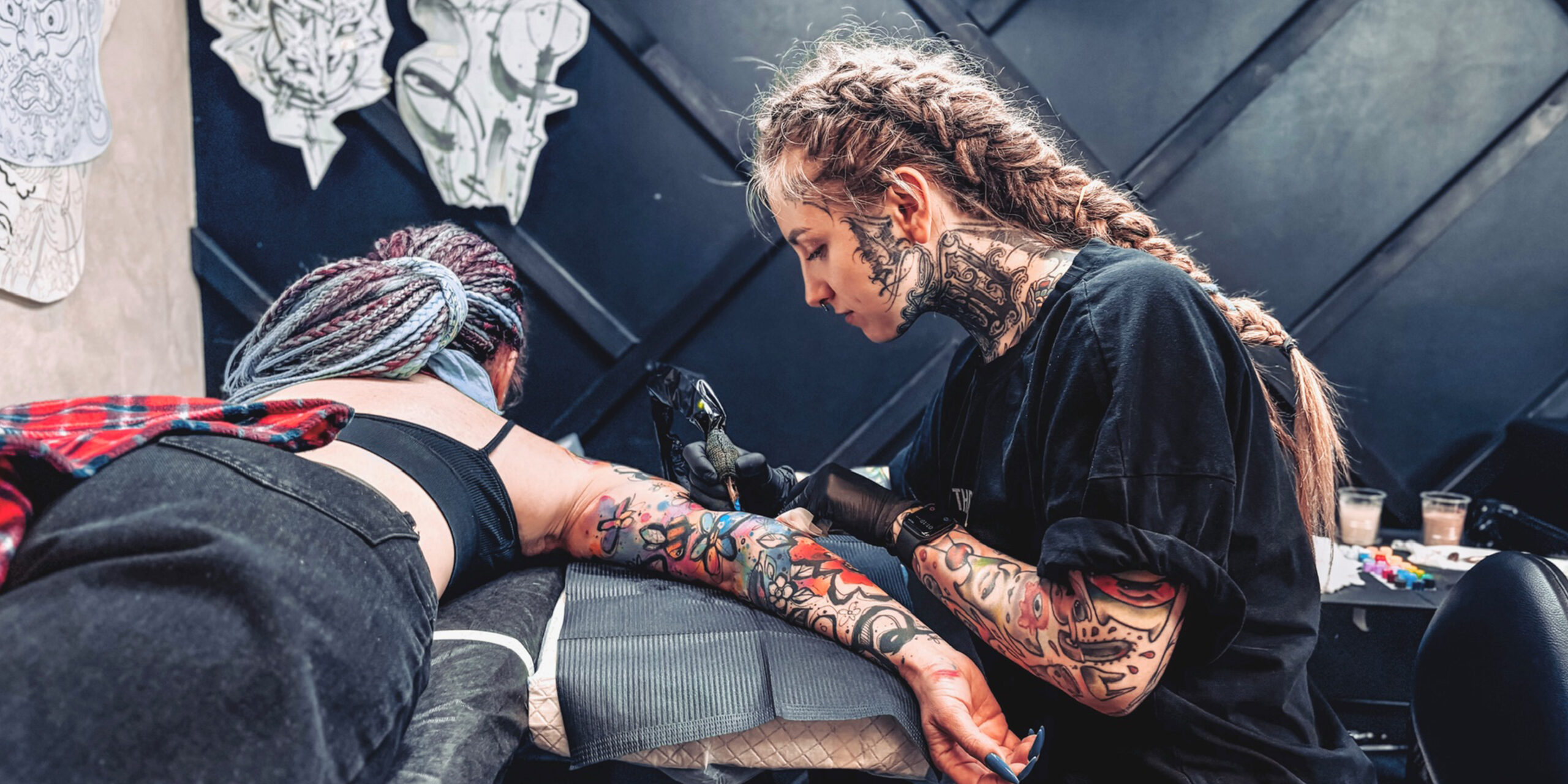
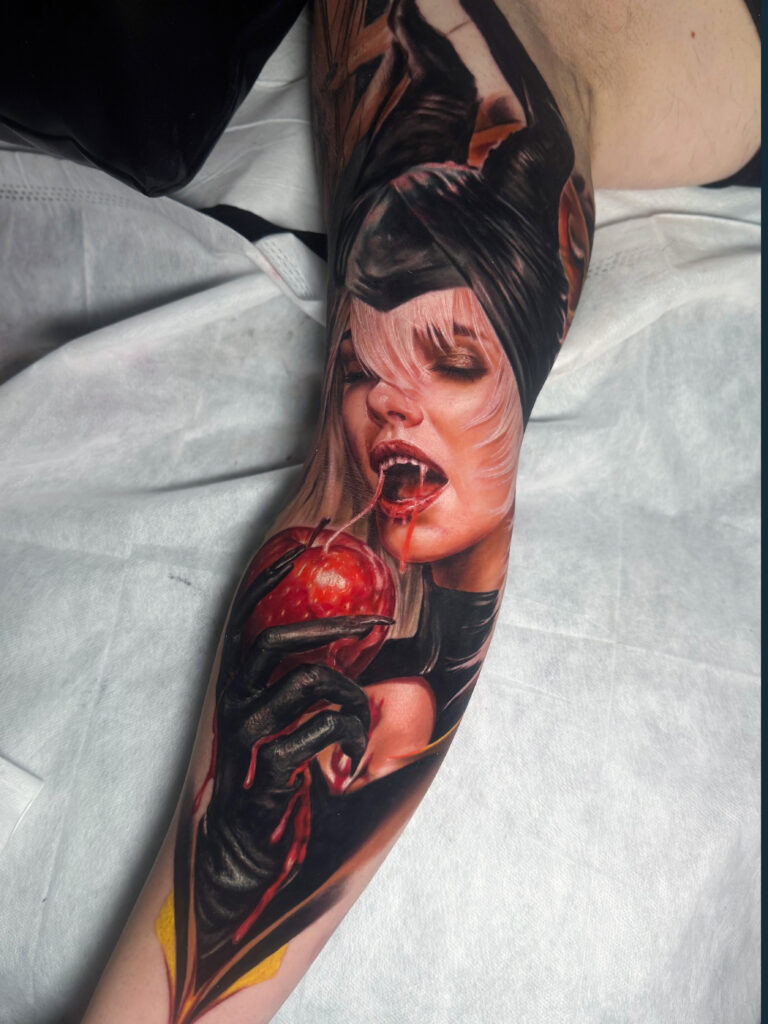
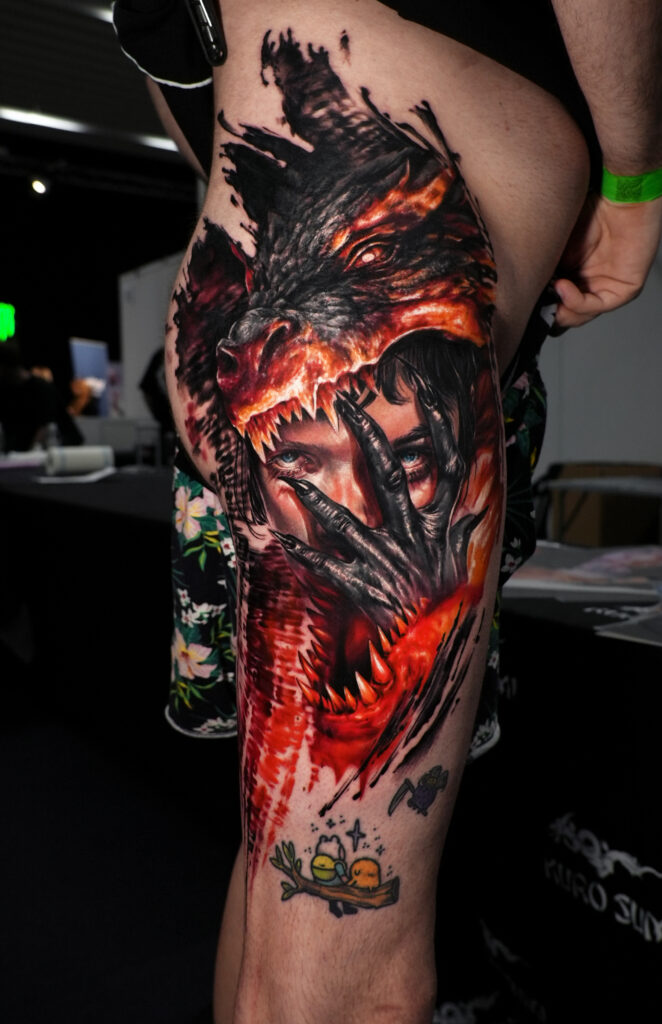
As a tattoo artist Cathy notes: “I stopped obsessing over small details and started focusing on structure and light.”
Structure and light hold the image together. They tell the eye what is solid, what is soft, and where the object exists in physical space. Once you truly understand how light wraps around a form, the small details become secondary. Structure is infinitely more important than detail.
Skin Is Not Paper
This realization becomes even more critical when transitioning from paper to human skin. A canvas is static. It does not breathe, stretch, or age.
“Skin isn’t paper — it moves, it heals, it changes.”
The medium changes everything. What works perfectly on a flat, unmoving surface can quickly become an unreadable mess on a living body. Realism on skin requires an understanding of how the body moves and how ink settles over the years. It demands adaptation, not just replication.
The Problem With Playing Safe
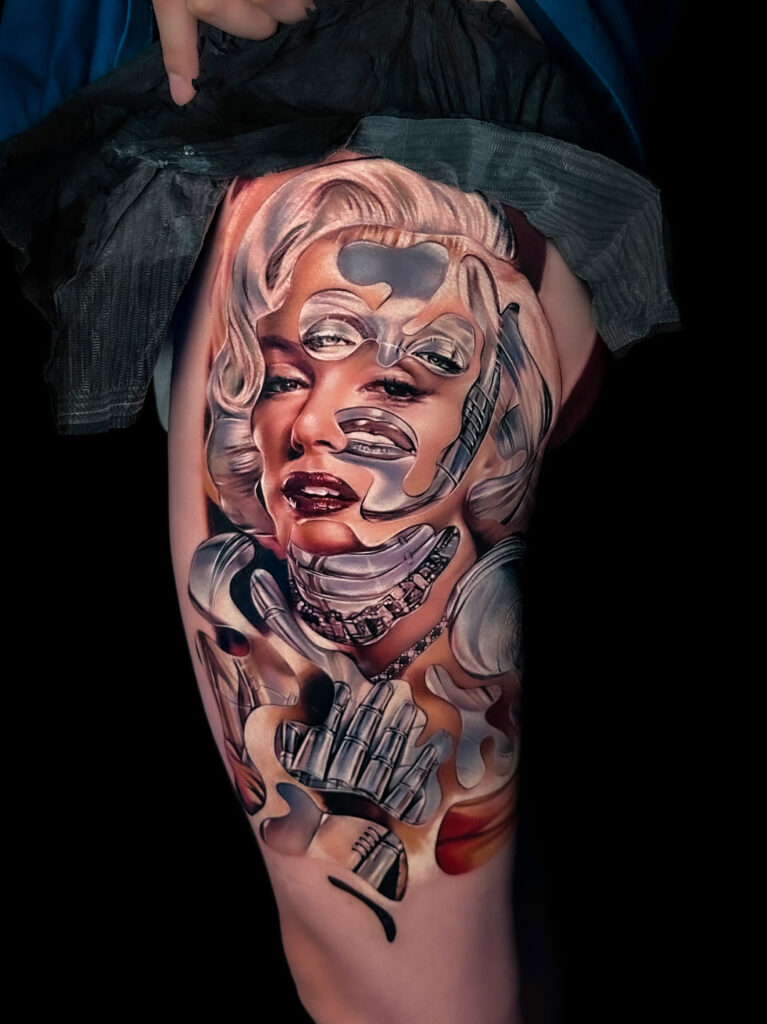
To make a piece feel real, it needs weight and presence. One of the biggest hurdles artists face is a reluctance to commit to bold decisions, particularly when it comes to shadows.
“I used to be too careful with dark tones. I didn’t push them enough.”
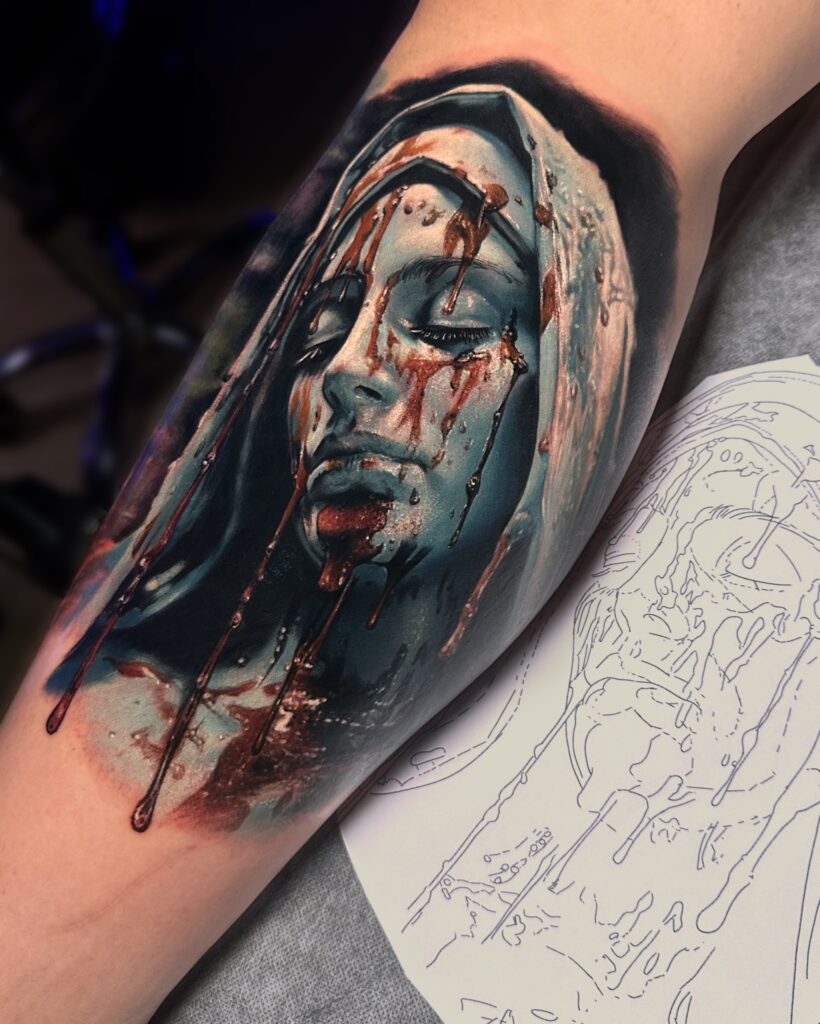
Fear kills realism. If you are afraid of making a mistake, you will naturally pull back. You will make the shadows too light and the highlights too dim. The result is a flat, washed-out image. To achieve true realism, you have to push the contrast further than feels comfortable.


Depth Isn’t Black
However, pushing contrast does not mean simply flooding the shadows with pure black ink. True depth is nuanced.
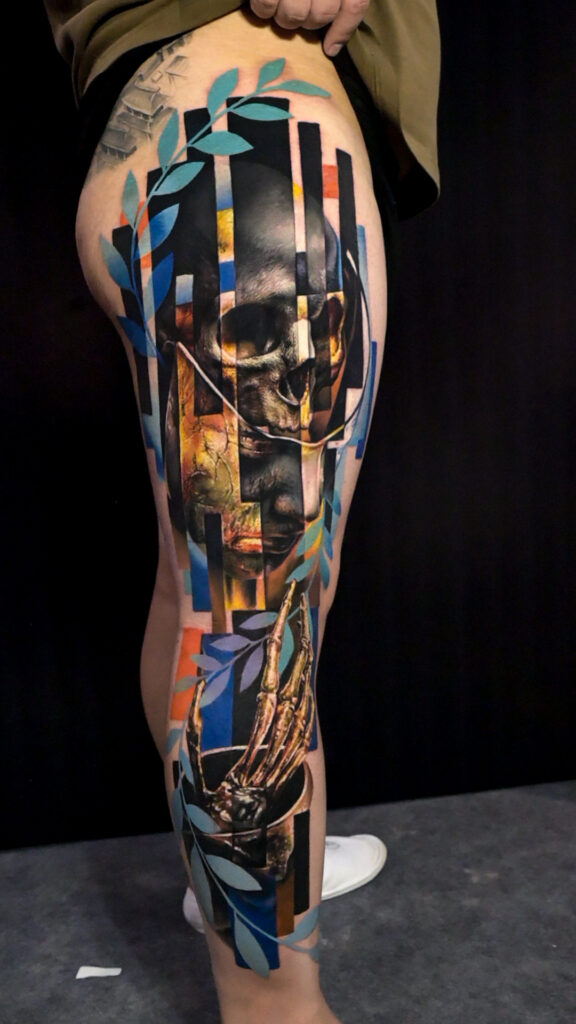
“Depth doesn’t come from just adding black; it comes from smooth transitions.”
It is the subtle gradients between the light and the dark that create the illusion of three dimensions. The transitions are where the realism lives. They tell the brain how the surface curves and bends.
Vision Before Tools
It is incredibly common for creatives to believe that better equipment will instantly elevate their work. They chase the newest machines and the most expensive inks, hoping a tool will solve a skill problem.
“Machines and ink definitely matter. But visual understanding matters more.”
Your eyes are your most important equipment. If you cannot see the subtle shifts in temperature and value in your reference, no machine in the world can put them onto the skin. If your eyes are trained, you can execute a masterpiece with the simplest of tools. Technique always follows vision.
What Different Markets Teach You
Exposure to different environments can drastically shift an artist’s perspective on what constitutes a successful piece. Different cultures value different aspects of the craft.
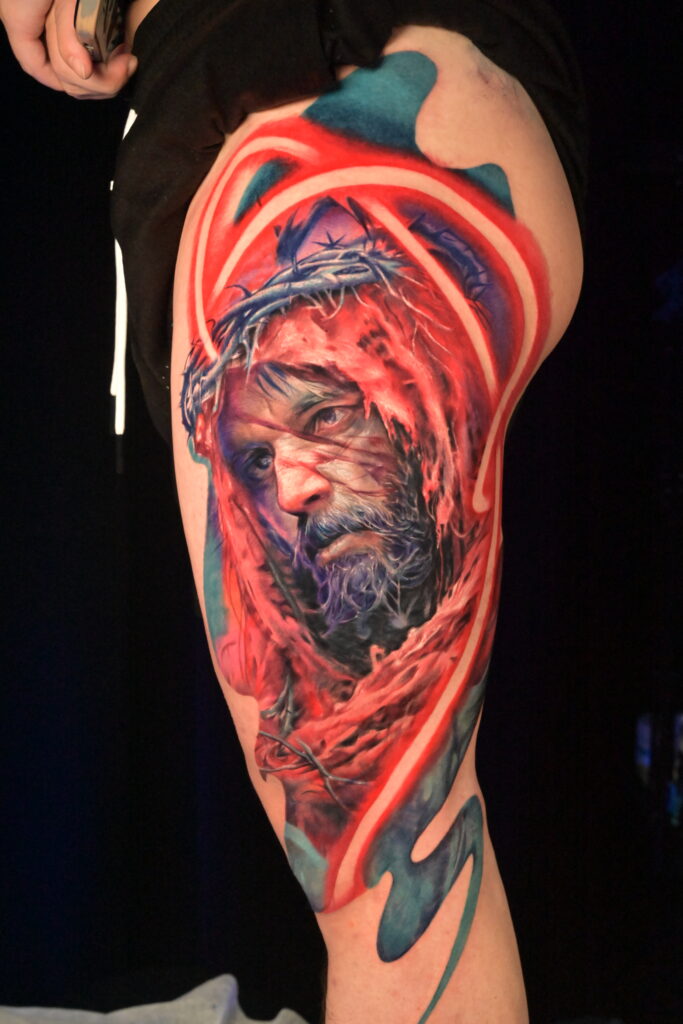
In China, the demand leans heavily toward immediate visual power. In Europe, the culture places a heavier premium on the architecture of the piece. Clients and judges prioritize composition and how the tattoo will look after it is fully recovered.
This exposure changes standards. It shifts the focus from the immediate “wow” factor of a fresh tattoo to the structural integrity required for it to last.
Designing for Time, Not Instagram
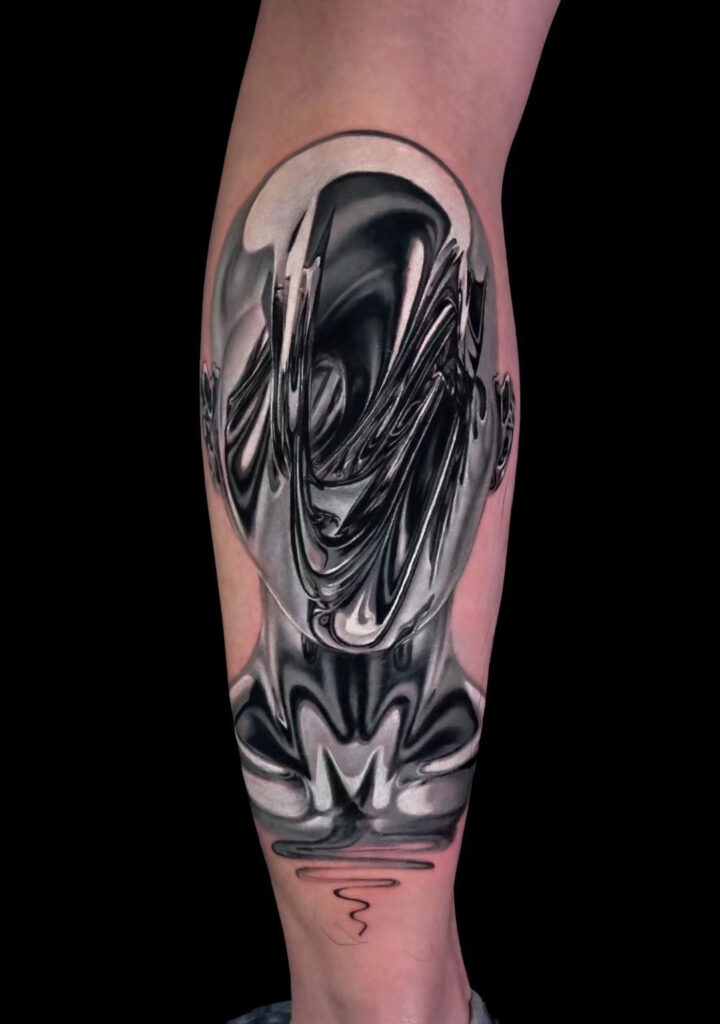
We live in a hyper-curated world where art is often optimized for a tiny phone screen immediately after it is created. But human skin is not a digital feed. Hyper-realism can age unpredictably if it is not designed with the future in mind.
“Balance is what allows a tattoo to stay strong over time.”
Longevity is more important than immediacy. If everything in a design is intensely detailed, nothing stands out, and over the years, those tightly packed details will bleed together. You have to leave breathing space. You have to design for the decade, not the day.
Training the Eye
If you want to reach this level of understanding, you cannot skip the foundational steps. The discipline required to master realism is repetitive and often unglamorous.

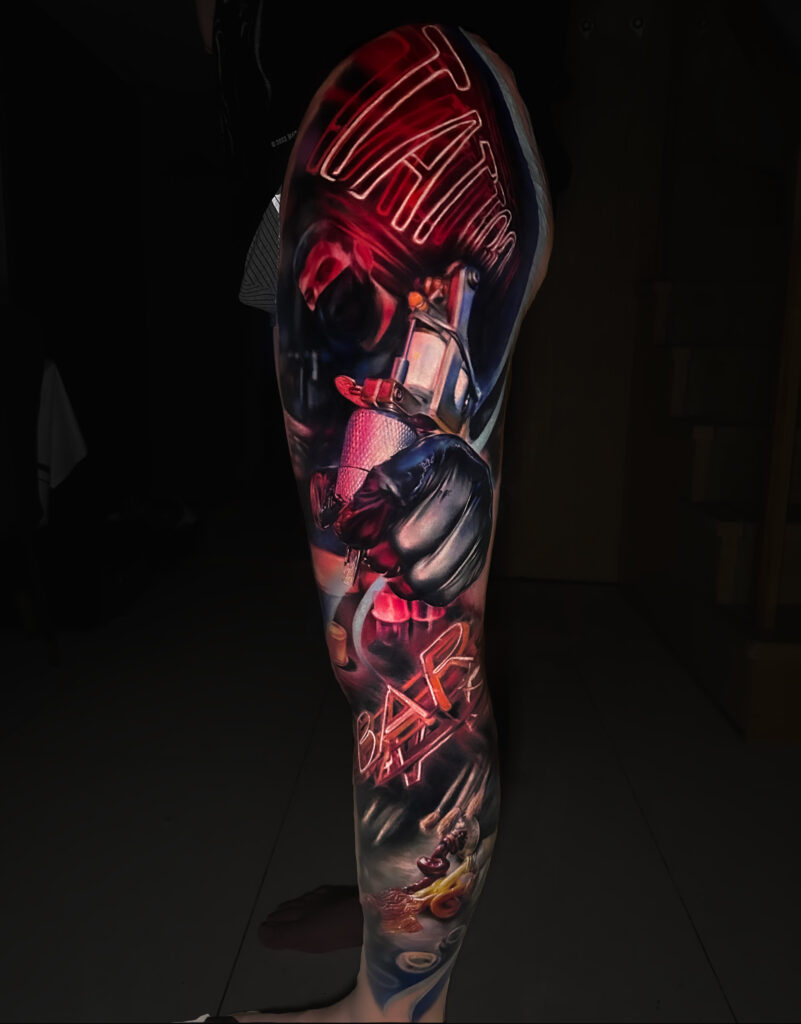
It starts with grayscale drawing. It moves to smooth shading. You must study light every single day. The fundamentals repeat. The artists who survive and thrive are the ones who never stop returning to these basic principles.
The Artist’s Real Evolution
Ultimately, the journey of an artist is not just about accumulating new skills. It is equally about identifying and shedding the habits that hold you back. True growth often looks like removing excess. It is stripping away the unnecessary details to reveal the honest structure beneath.
Realism isn’t about making something look perfect.
It’s about understanding it well enough
to let it live beyond the moment you created it.
Follow Cathy on Instagram

Lubdhak Biswas is a musician, entrepreneur and a tattoo artist based out of Kolkata (India).
He documents underground culture at the crossroads of tattooing and music.
His work focuses on craft, tools, ethics and the real working realities of creative industries.