The most interesting artists are often the most misunderstood. Not because their work is difficult to access, but because people look at the surface and decide they already know the story. They see the gleam of a luxury object, the shimmer of gold, the familiar silhouette of aspiration, and they stop there. They never ask why.
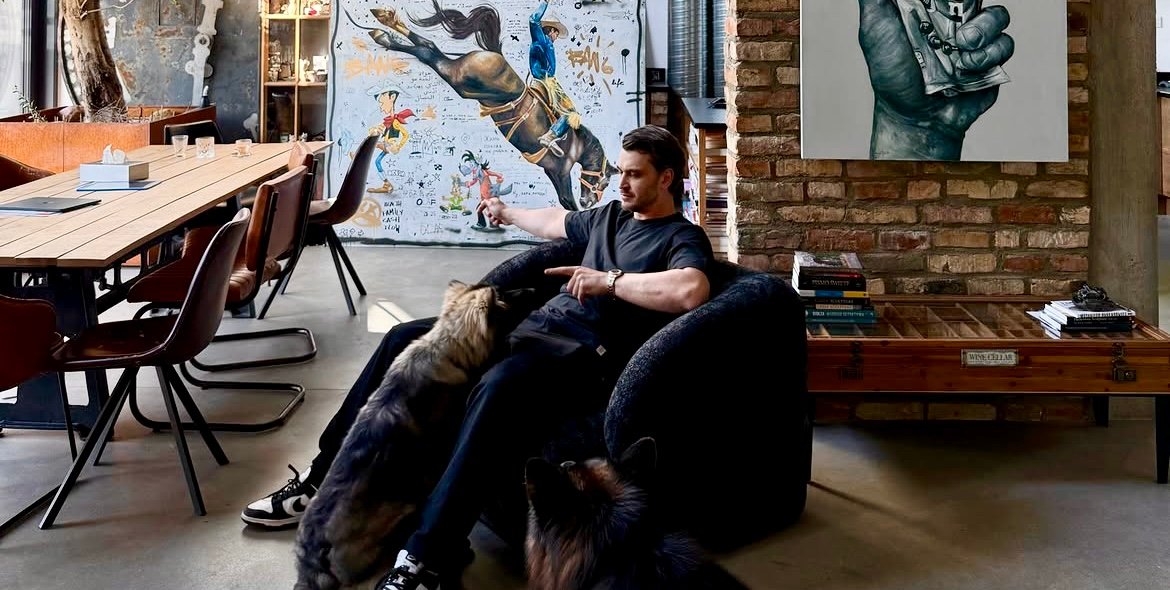
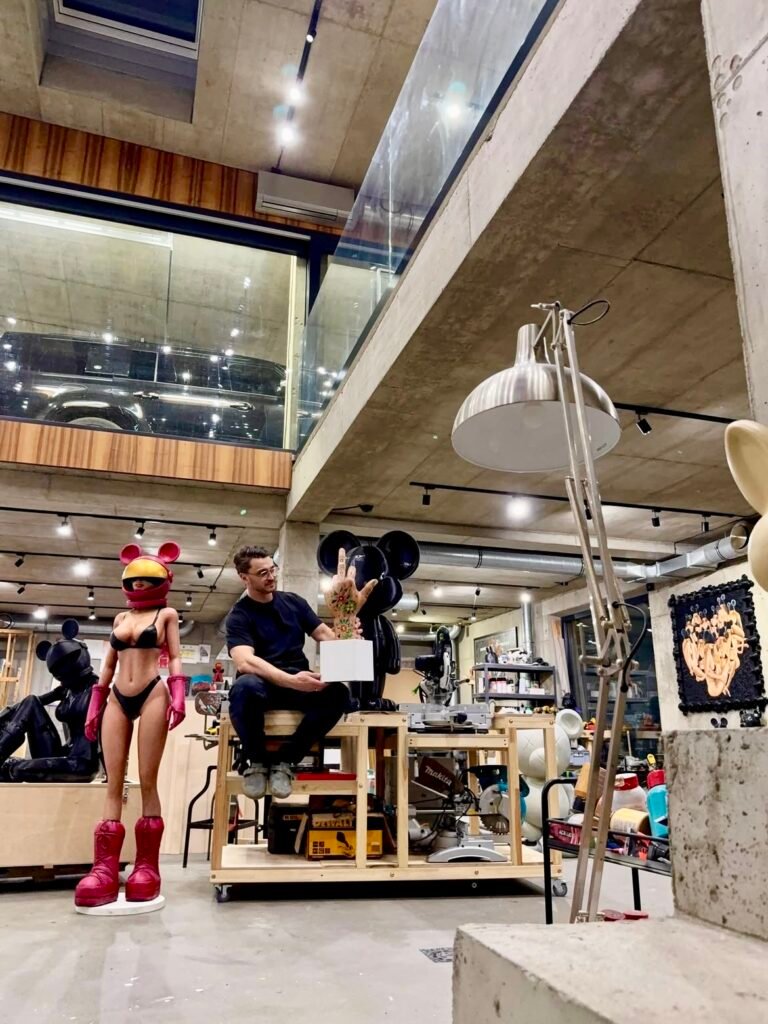
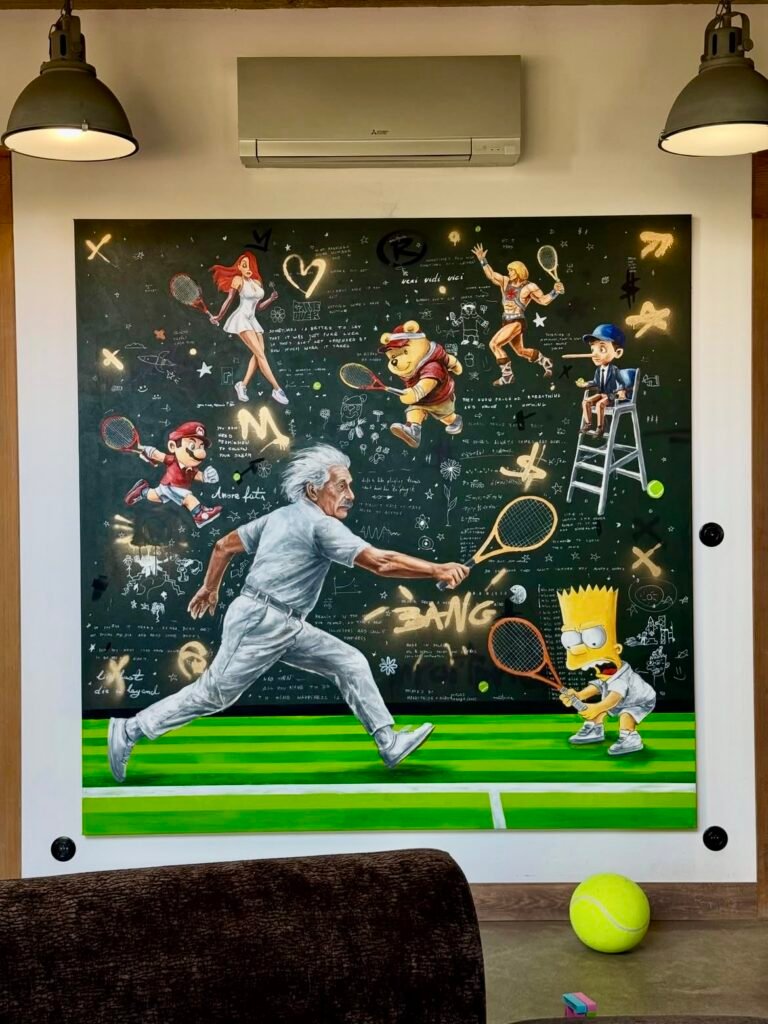
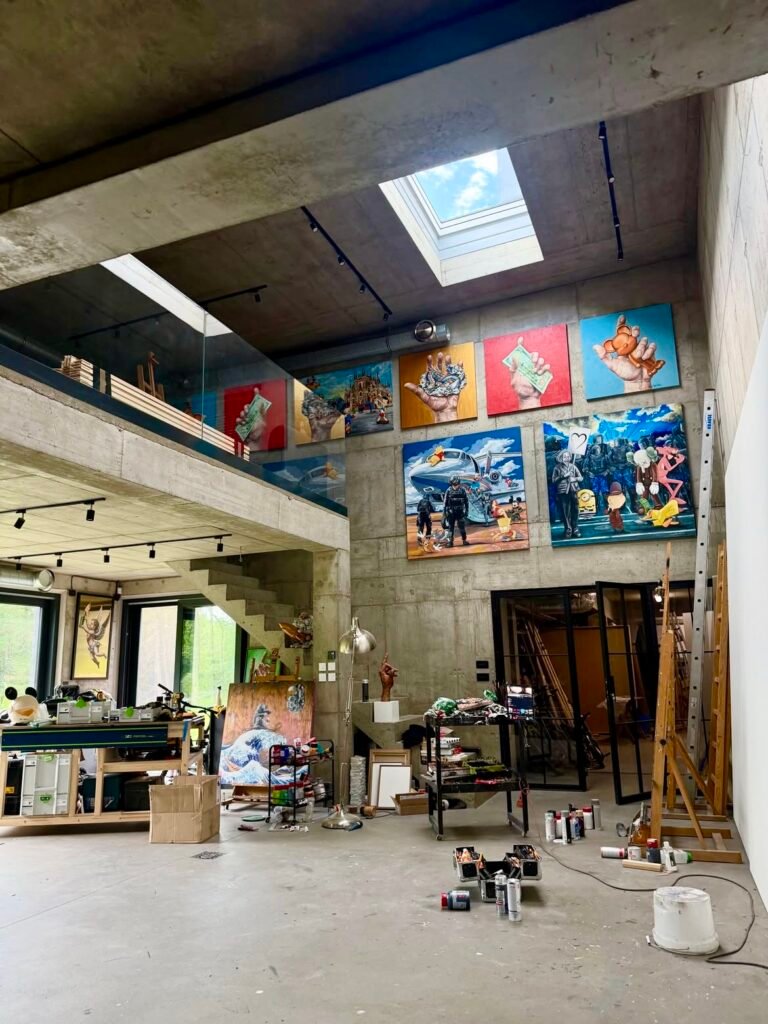
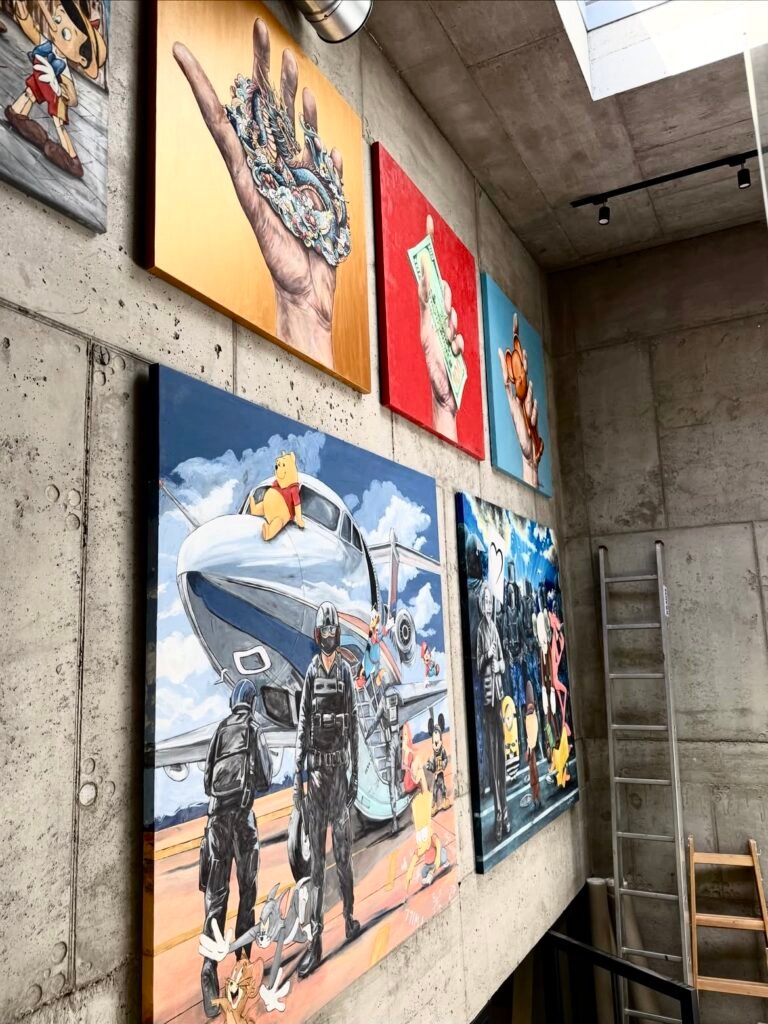
Marcin J. Rogal is an artist who has spent years navigating exactly that misreading. The Polish-born, internationally shaped founder of MrArtPride works in a visual language that pulses with colour, status symbols, and the iconography of desire. At first glance, his canvases might read as a love letter to excess. Look longer, and something more unsettling emerges. His work does not celebrate ambition so much as it holds it up to the light and asks you to decide what you see.
“I really hope the viewer finds a sense of ease and happiness while looking at what I create,” he says. “Even if the subject is heavy or challenging, it should still be pleasurable to look at.” For Rogal, that feeling does not need to be comfortable. It does not need to resolve.
Building a Practice Without a Roadmap
Rogal’s artistic development has taken shape across Poland, the United States, and Australia. Rather than outlining a geography, what this trajectory really describes is an artist who built his philosophy without institutional scaffolding or mentorship. He did not come up through the traditional pathways. He observed. He worked. He returned to the work again.
He is candid about the absence of guidance in his formative years as a creative. He never had a mentor shaping his eye or curating his influences. In his own words:
“I’ve never had a mentor or a single source of inspiration. It’s more of a collection of information, thoughts, and quotes I’ve gathered along the way.”
That absence, rather than becoming a limitation, appears to have pushed him toward a more self-determined practice. The independence that might have felt like isolation became the architecture of his artistic identity.
There is no softening the directness with which he describes what made the difference. The best advice he ever received came from a local artist in his hometown: “You gotta put the fucking work in.”
It is a statement that doubles as a philosophy. Not a motivational slogan, but a lived conviction. That consistency over twelve years of full-time creative work has produced not just a body of work, but a particular quality of confidence that is not easily rattled.
Why Desire Appears in the Work
The recurring presence of luxury symbols, wealth markers, and consumer aspiration throughout Rogal’s paintings is not accidental. These are not decorative choices. They reflect something specific about the culture he is examining, the culture he is inside of, the culture most of his viewers inhabit without much critical distance.
He speaks about aspiration with a kind of double vision.
“The world is designed the way it is, and it just so happens that I paint what many people aspire to,” he says. “However, I also try to challenge that perspective and explore different paths.”
The objects in his paintings carry the weight of what people want and, in that same moment, the question of why they want it. His work does not arrive at a verdict. That is the point. The viewer is left to sit with their own response, to notice whether they feel drawn in or uneasy, and to ask themselves what that reaction reveals.
This willingness to work with ambiguity, rather than resolve it, is one of the more disciplined aspects of Rogal’s practice. It is harder than it looks to resist the pull toward a message.
On Not Competing
One of the sharpest things Rogal says about the art world is also one of the simplest. After twelve years of sustained creative work, he no longer believes in competition between artists. Not as a philosophical position, exactly, but as something he stopped being interested in altogether.
“I’ve come to realize I don’t compete with anyone,” he says. “My work and I are unique in our own way, and I don’t have to chase or prove anything to anyone.”
That clarity did not come easily or quickly. It emerged through years of showing up, producing work, and watching what that consistency did to his sense of self. Artistic confidence, for Rogal, is not something granted by external validation. It is built through practice, accumulation, and the gradual quietening of the need for approval.
Equally, he is direct about not needing everyone to like his work. For an artist working in a commercial space, where taste and marketability can pull in opposing directions, that is not a minor statement. It is a form of protection, a way of ensuring the work stays honest rather than calibrated to an imagined audience.
Money, Creativity, and the Myth of the Starving Artist
Rogal has little patience for the romantic mythology that places financial struggle at the heart of authentic creative practice. He sees sustainability not as a compromise of artistic integrity, but as the condition that makes integrity possible. Without the means to keep working, the work stops.
“If someone dreams of being a starving artist, that’s their choice,” he says plainly. “But painting, and creative work in general, is a very expensive pursuit. I think it’s good to make money from it, if only to be able to sustain it in the long run.”
Supporting his practice financially is not a distraction from art. It is what enables the art to continue on his own terms.
The entrepreneurial dimension of MrArtPride reflects this thinking. Building structures around creative work is itself a creative act, one that Rogal approaches with the same seriousness he brings to the studio.
Why He Builds Rather Than Collaborates
Rogal’s preference for developing his own projects, rather than attaching himself to external brand partnerships, comes from a place of hard-won experience.
“I’m not really a fan of collaborations,” he says. “More often than not, brands try to convince you that doing the heavy lifting for them is somehow a great opportunity for both sides, or people simply don’t keep their word. It’s really disappointing, so I’d rather put my energy into things I’m fully responsible for.”
This is not hostility toward the commercial world. Rogal engages with it, understands it, and operates within it. But he chooses to do so on his own terms. Building something that belongs entirely to him means that when it fails, it is his failure. When it succeeds, it is genuinely his. That accountability is not a burden for Rogal. It is part of what makes the work meaningful.
The Collectors Who Become Friends
Away from the noise of gallery openings and industry networking, Rogal has found something he values more: long-term relationships with the people who actually live with his work. Over time, collectors have become friends. Real ones.
“Many of my collectors have become good friends, and I believe those relationships are genuine because we’ve stayed in touch for many years,” he says.
“I’ve had the pleasure of being a guest in some of their homes, and sometimes we meet somewhere in the world when the opportunity arises.” For an artist who has rejected so many of the conventional markers of success, this is where genuine reward lives.
There is something quietly countercultural about an artist who measures success not in critical recognition or auction results, but in the quality of the human relationships his work has made possible.
What the Creative State Actually Feels Like
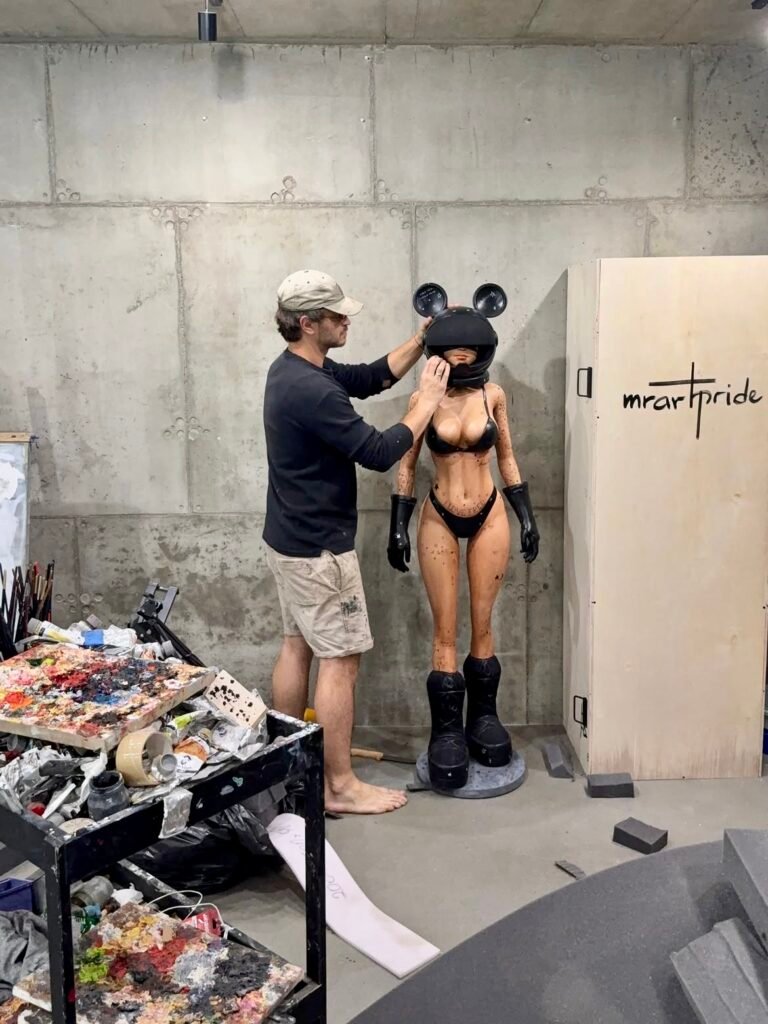
When Rogal describes what happens to him inside a sustained creative session, he reaches for the language of mental discipline. He talks about entering a kind of autopilot, a state where conscious decision-making recedes and something more instinctive takes over. The mind enters a space that is both highly focused and strangely free.
“Once the tone of a piece is established and I slip into a kind of autopilot, I often have ‘free’ mental capacity,” he explains.
“Learning how to direct those thoughts in a way that benefits both you and your work is incredibly important.” What art has taught him, ultimately, is something about the nature of thought itself. The capacity to direct where the mind goes, to stay inside the work rather than drift into distraction or self-doubt, is a skill. One that is practised rather than innate.
This is the quieter side of what looks, from the outside, like a confident and energetic creative practice. Beneath the vibrant surfaces and the bold visual vocabulary, there is a discipline of attention.
Making Work That Answers to No One
What Rogal’s practice ultimately describes is the difficulty and the value of building something that answers to no one but yourself. Not trends. Not collectors. Not the approval of an art world that changes its criteria constantly. Not the romantic idea of what an artist is supposed to look like.
Twelve years in, he is still putting the work in. Still questioning the symbols he paints. Still building his own structures rather than waiting for permission.
That kind of independence does not arrive fully formed. It is made, slowly, through every decision to keep going on your own terms, even when it would be easier not to.
Follow Marcin on Instagram
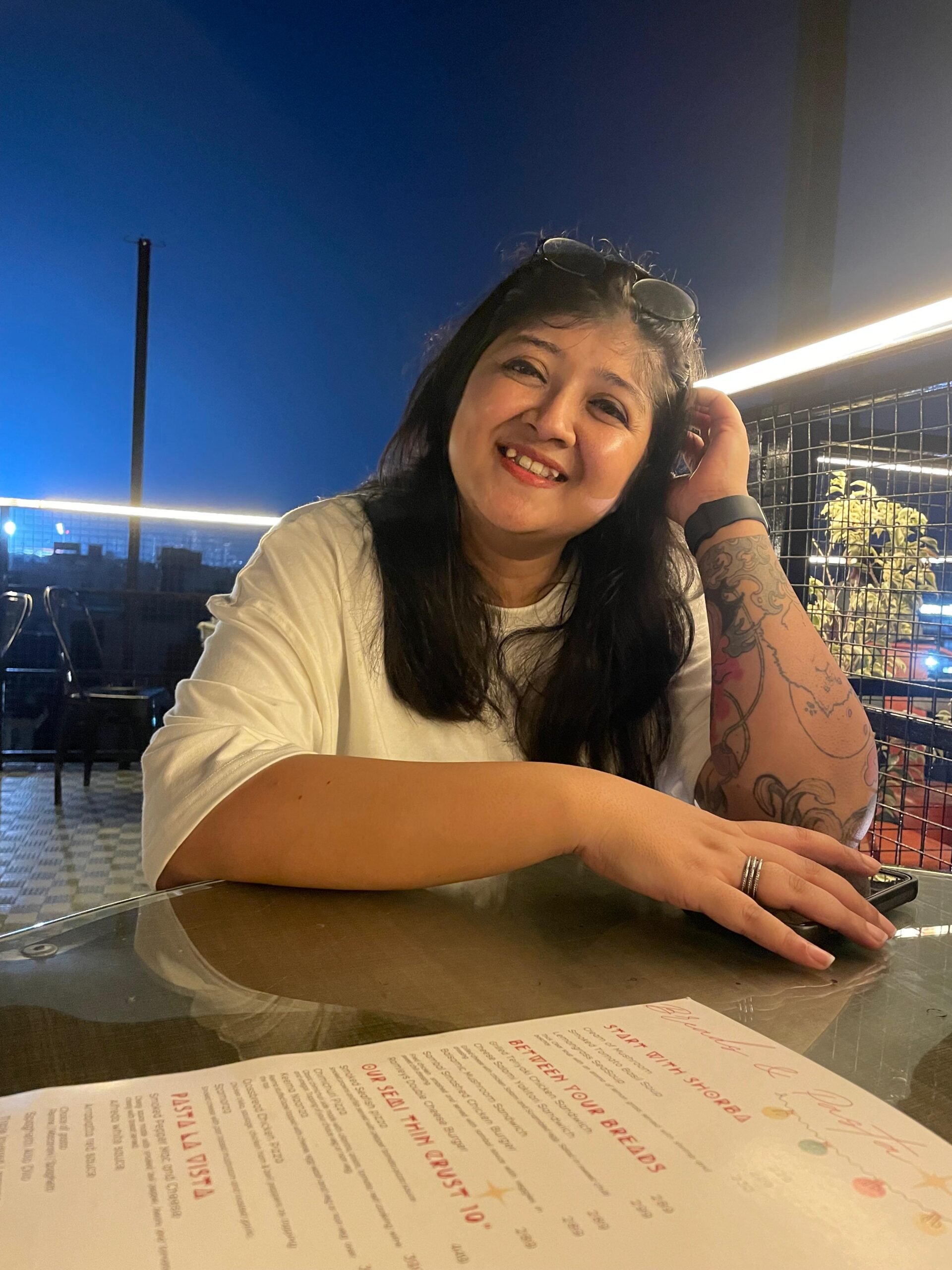
Oeshi B Lyndem is a visual artist, tattoo artist, graphic designer, and entrepreneur with a foundation in graffiti and street culture. Rooted in hands-on craft and making, her practice moves fluidly across illustration, street art, design, and experimental creative processes. With lineage from Shillong—often regarded as India’s rock capital—she carries a distinct cultural influence into her work. At Goofy Owl, she curates and leads the street and hip-hop culture segment through an intuitive, deeply creative, and entrepreneurial lens.