Most people think they are expressing themselves. We speak, post, and converse with the absolute certainty that our thoughts belong to us. But most of what we say has already been shaped for us. Algorithms feed us our aesthetic preferences. Social feedback loops define our opinions. We navigate a hyper-curated landscape, constantly adopting fragments of other people’s identities to build our own.
What does it mean to create something that actually comes from you? How do you separate the voice inside your head from the noise of the system?
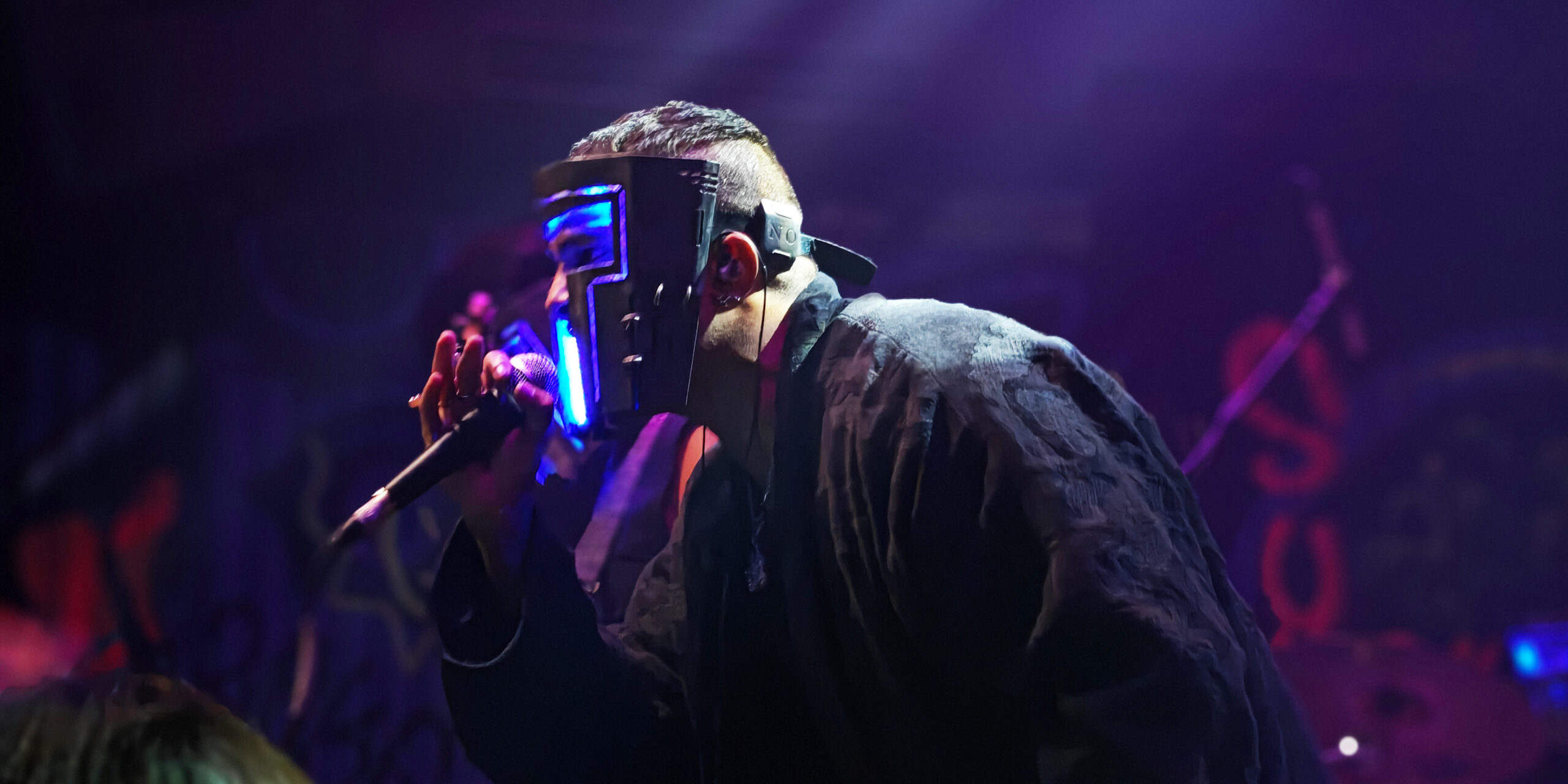
This is not a hip-hop story. This is an exploration of what happens when an artist chooses instinct over influence. By looking through the lens of writer and musician Poetik Justis, we can examine the friction between creativity and programming. It is a look at original thought in a system designed to shape you, and the quiet tension between expression and expectation.
The Illusion of Expression
Humans think they are entirely original. We want to believe our identities are completely self-made. In reality, systems shape our thinking long before we ever pick up a pen or open a microphone. The platforms we use teach us how to communicate. The cultures we belong to dictate what is acceptable to say. To find an authentic voice, you have to actively fight against the conditioning that tells you what you should sound like.
Writing Before Identity
True expression rarely starts with a grand message. Often, it begins as a mechanical pursuit. Before Poetik Justis was trying to convey deep personal truths, he was simply trying to survive in competitive online forums.
Reflecting on his early days, he notes, “it was enforced for me early on to upskill my writing since I started out as an online text battler on many different forums.”
The identity comes later. The skill must be built first. When you are forced to sharpen your tools simply to participate, you develop a foundation that eventually allows your true self to speak.
Obsession Before Meaning
Skill requires repetition. Repetition breeds a unique kind of focus. The early grind was not about finding an audience; it was about the structure of language itself.
He explains how the environment affected him: “This made me obsess over the lines I used to write, battling people made me need to be more creative about words, so it was kind of like a natural response.”
Craft sharpens instinct. By obsessing over the mechanics of words, you build a vocabulary that your subconscious can eventually use to express complex emotions.
Creating Without an Audience
We live in an era where almost everything is made to be consumed. The thought of creating something that no one will ever see or validate feels pointless to the modern mind. Yet, the strongest creative instincts are born in isolation.
When discussing his process, he shares a quiet truth: “mostly because I create for myself and nobody else.”
Creating for the self forces you to confront what you actually like, rather than what the algorithm rewards. It is the only way to build a core that remains unaffected by public opinion.
Instinct Over Influence
When you strip away the expectations of an audience, the creative process changes. It becomes less about making decisions and more about paying attention.
Asked how he chooses what deserves to be said, his answer points away from strategy:
“I don’t think I’ve ever really consciously decided.”
Art becomes an act of listening. You stop trying to force a narrative and start paying attention to the thoughts that rise to the surface naturally.
The Mind That Doesn’t Switch Off
Curiosity is the engine of original thought. You cannot program an authentic mind; you can only feed it raw information and see where it wanders.
He describes his own mental landscape simply: “I’m a really inquisitive person so I follow rabbit holes, random thoughts and daydreams”.
A programmed mind stays on the path. A creative mind follows the distraction. Those rabbit holes often contain the exact observations that cannot be mass-produced.
The Cost of Thinking Differently
Stepping away from the crowd has consequences. When you begin to notice your own programming, you also notice the programming of everyone around you. You stop blending in.
As he observes, “In a world of mass-manufactured opinions, moving closer to original thought is a gift and a curse.”
Authenticity creates isolation. You gain a clearer view of yourself, but you lose the easy comfort of fitting perfectly into a predefined box.
Success Without Numbers
We are conditioned to measure worth through data. Likes, streams, and followers have become the default metrics for human value. Rejecting that system requires a massive shift in perspective.
He dismisses this modern scoreboard: “I’ve never liked the idea that you can attach a number to an artist and say this is the better artist.”
When you detach meaning from metrics, you are left with the work itself. Success becomes a measure of time well spent, rather than attention gathered.
Anxiety, Identity, and Growth
The journey toward original thought is rarely peaceful. Breaking down your own conditioning takes a mental toll. The mind resists change, often resulting in periods of intense internal friction.
He acknowledges this reality plainly: “A lot of my writing process in the past few years has had a heavy hand of my anxiety issues. I’ve since dealt with those , but it’s most definitely been a mental spiral.”
Struggle acts as a catalyst for transformation. The friction is proof that the programming is being rewritten.
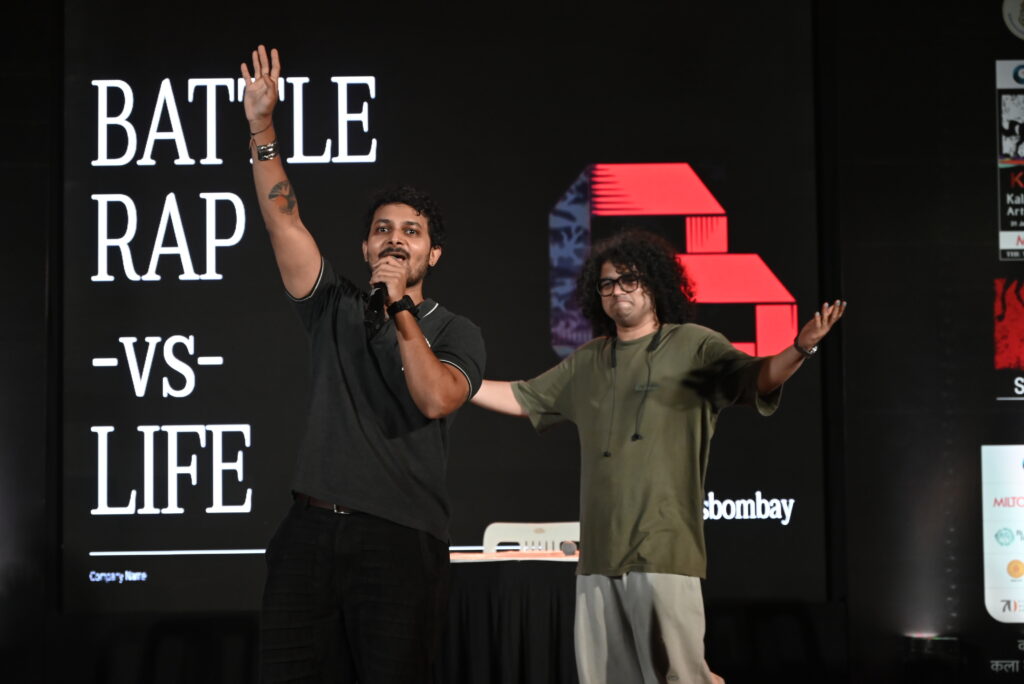
Storytelling as Nature
Eventually, the layers of influence fall away. You realize that you were not building a new identity; you were simply uncovering the one that was there all along.
Looking back, he realizes the core was always present: “I’ve always been a storyteller as far back as I can remember.”
Authenticity is revealed, not constructed. The exercises, the battles, and the anxiety were all just tools used to unearth a natural instinct.
The Quiet Pull of the Pen
When the noise fades, the numbers vanish, and the expectations dissolve, something has to keep you moving forward. You create not because you want to, but because you are compelled to.
Explaining his enduring connection to his craft, he states, “It’s just who I am”.
The Weight of the Unprogrammed Mind
We are surrounded by systems that want to do our thinking for us. They offer us comfortable, pre-packaged identities. They hand us the vocabulary we need to fit in.
The rarest thing today is not talent. Talent can be manufactured, polished, and sold. The rarest thing is originality that has not been shaped by something else. A thought that begins and ends with you. To write, to create, or to simply exist without letting the noise dictate your direction requires a constant, quiet resistance.
You can let the system tell you who you are. Or you can sit quietly, listen to your own mind, and bear the weight of finding out for yourself.
Follow Poetik Justis on Instagram
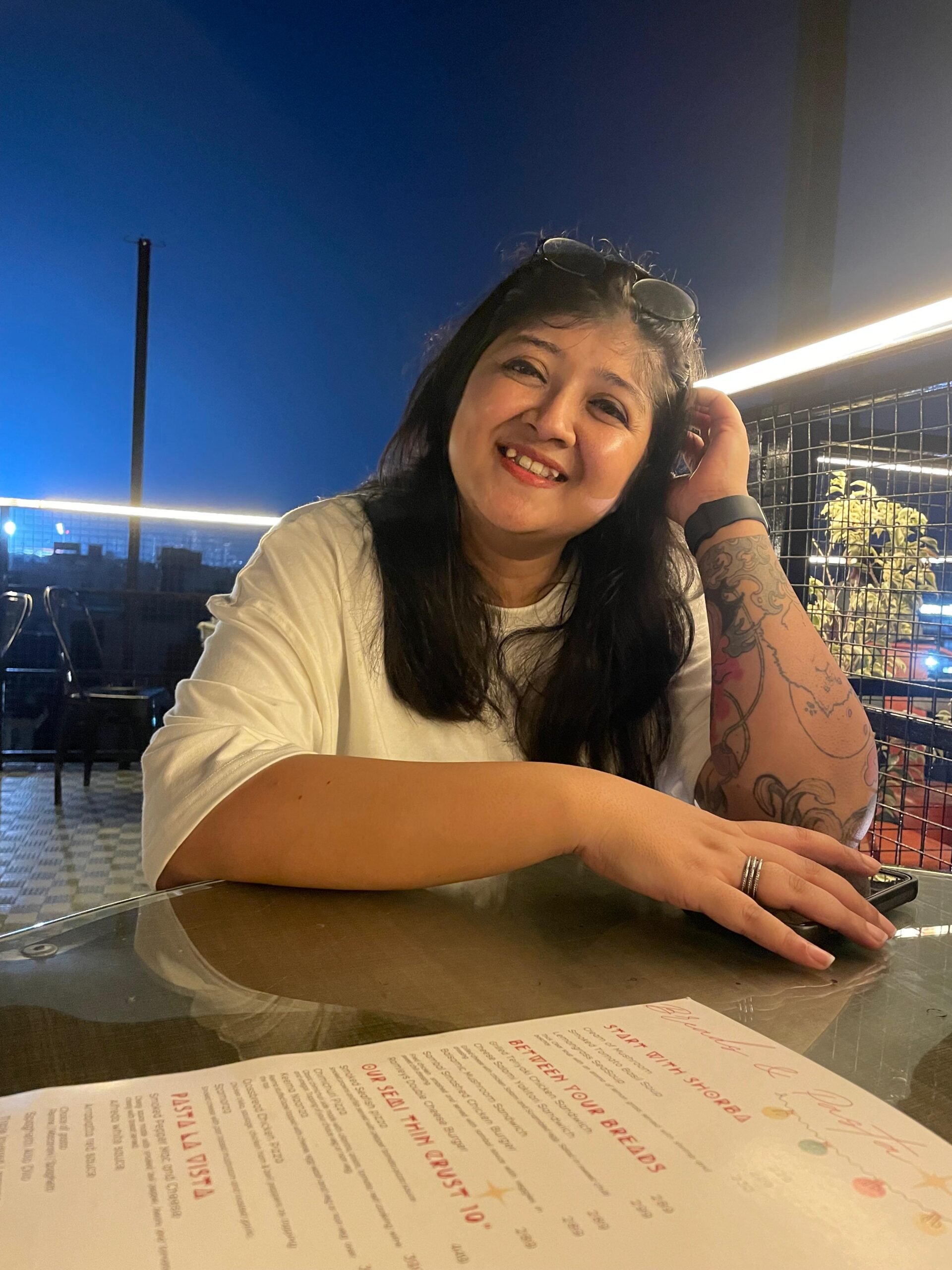
Oeshi B Lyndem is a visual artist, tattoo artist, graphic designer, and entrepreneur with a foundation in graffiti and street culture. Rooted in hands-on craft and making, her practice moves fluidly across illustration, street art, design, and experimental creative processes. With lineage from Shillong—often regarded as India’s rock capital—she carries a distinct cultural influence into her work. At Goofy Owl, she curates and leads the street and hip-hop culture segment through an intuitive, deeply creative, and entrepreneurial lens.