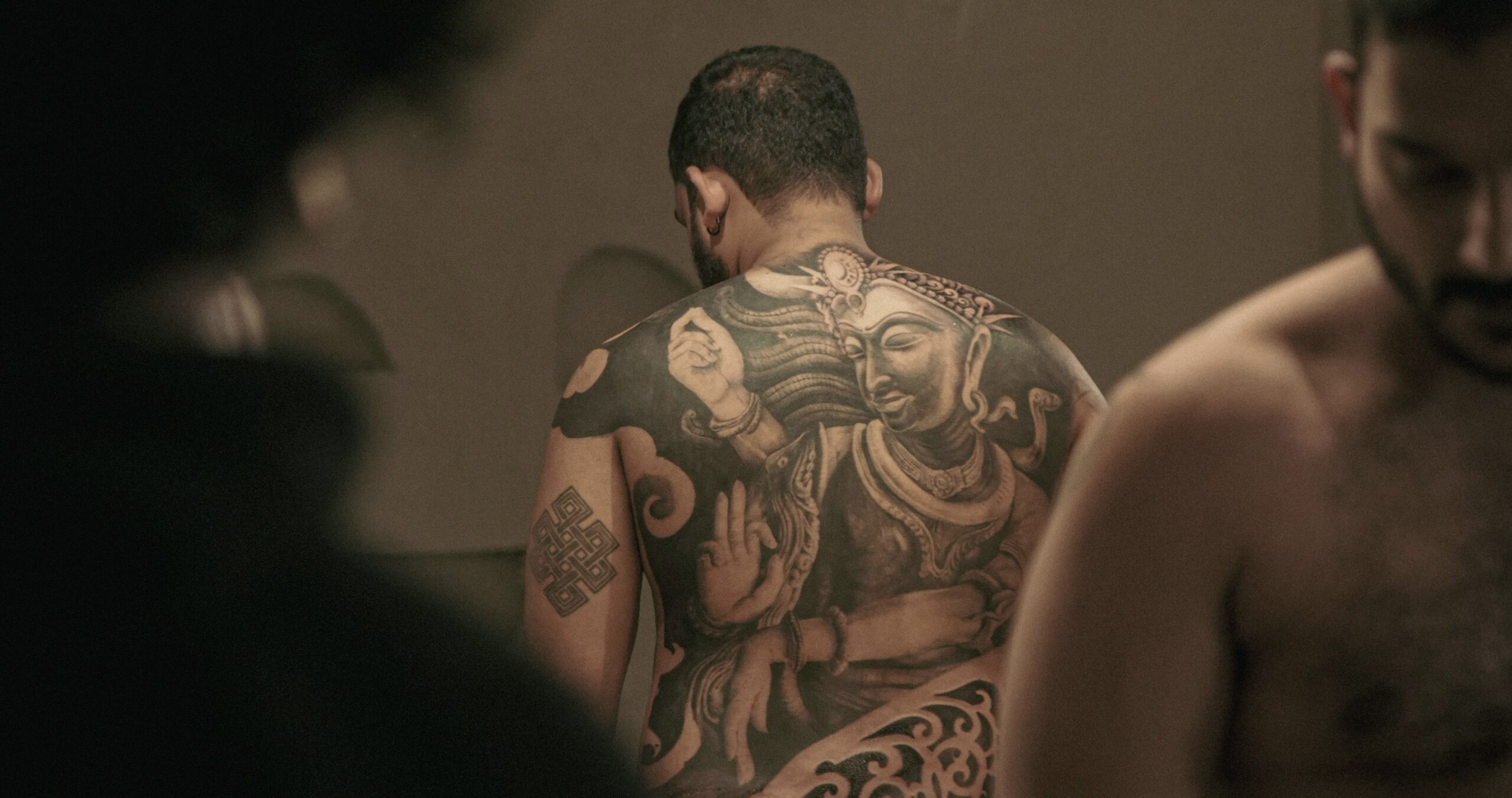
There’s a particular kind of magic in watching someone become themselves in real time. Vishnu Narayanan, the Kerala-based tattoo artist known for his bold blackwork and striking visual clarity, didn’t wake up one day with a signature style fully formed. He found it the way most of us find anything real: by messing up, paying attention, and refusing to stop.
In an industry that often rewards artists who can name their “aesthetic” in a single Instagram bio line, Vishnu’s story feels refreshingly human. There was no master plan, no mood board manifesto. Just years of sketching, experimenting, and slowly discovering what felt true.
For anyone who’s ever felt pressure to have it all figured out (your career, your identity, your “brand”), his journey is a quiet reminder that authenticity isn’t a destination. It’s a practice.
How Vishnu Narayanan Developed His Signature Blackwork Style
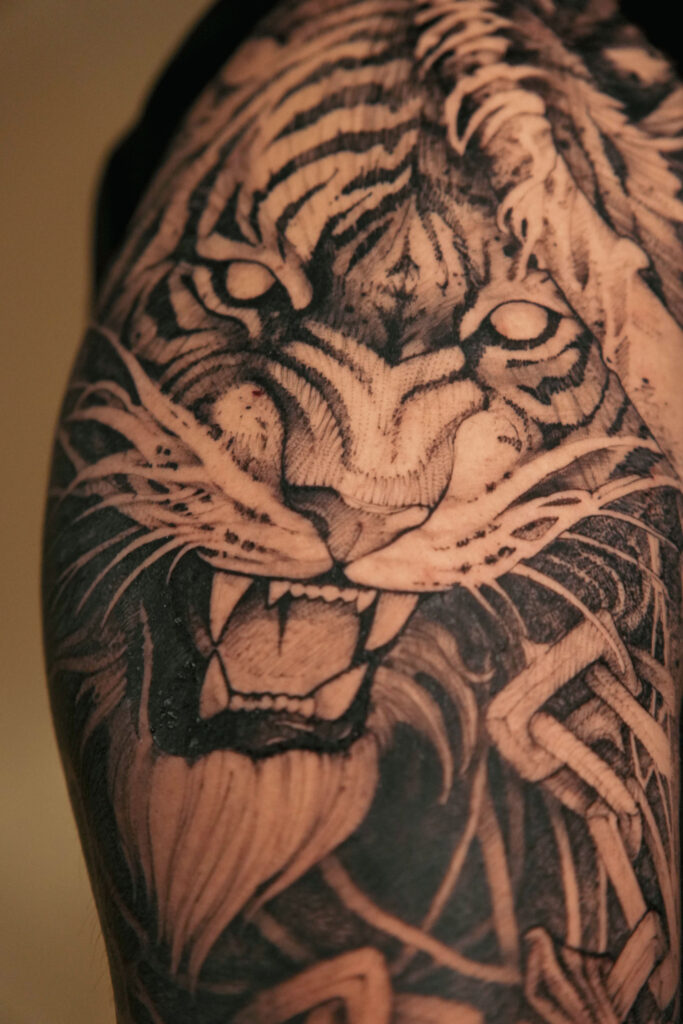
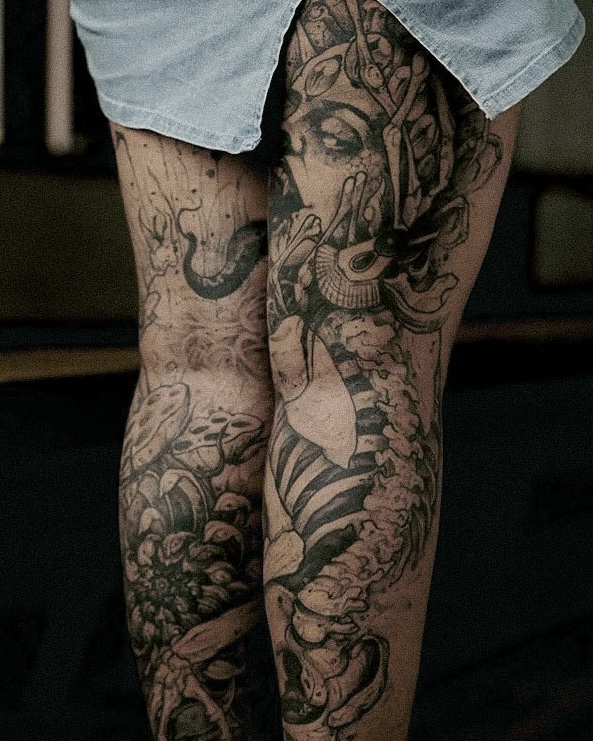
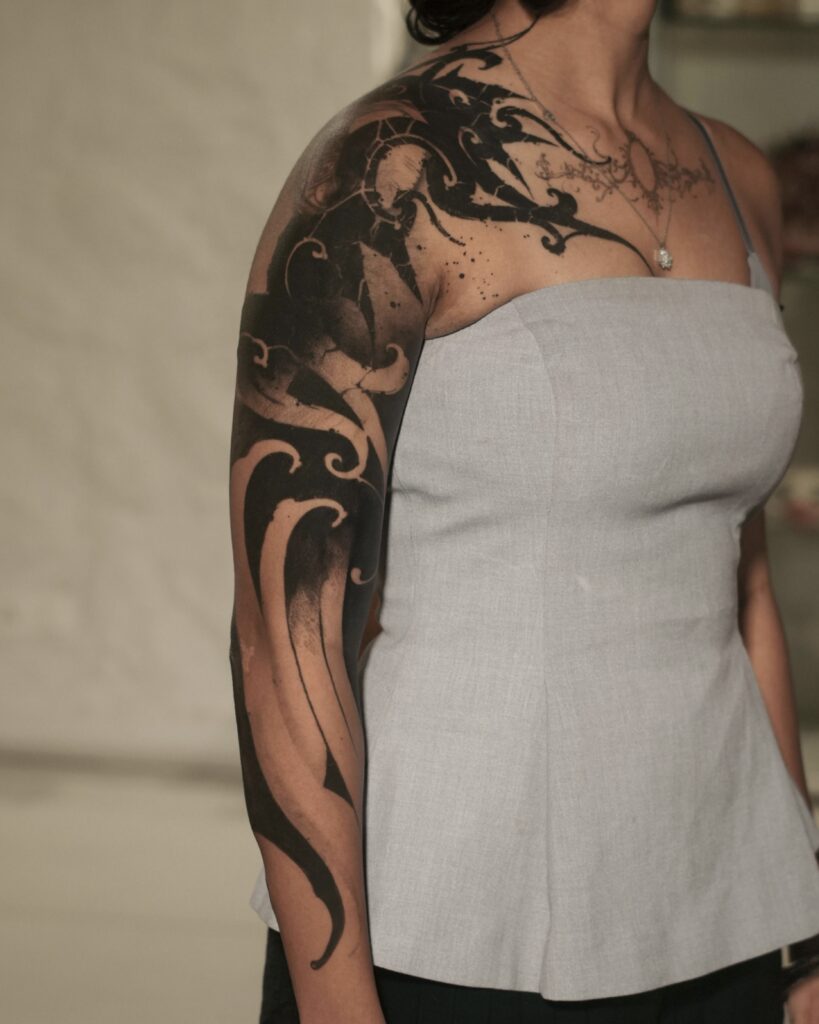
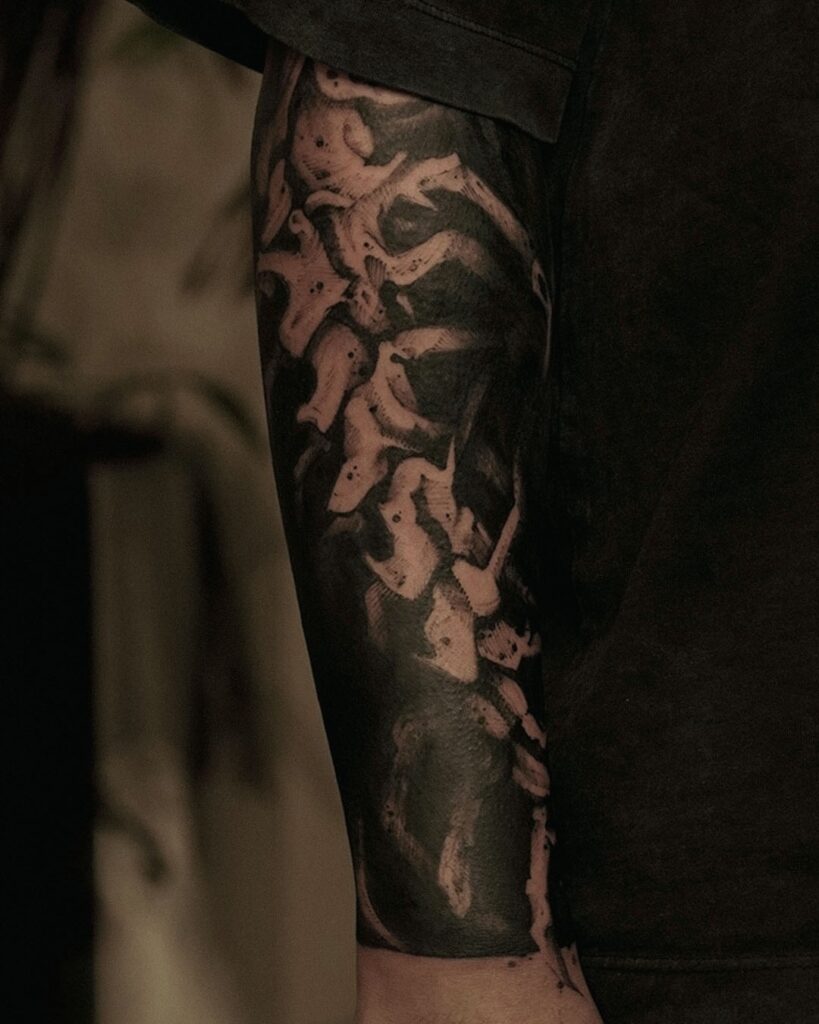
Ask Vishnu how he arrived at his now-recognizable style (heavy black lines, high contrast between ink and skin, clean negative space, compositions that read clearly even from a distance) and he won’t give you a tidy origin story.
“I don’t think there was ever a specific moment where I sat down and decided on a particular style,”
he says.
“When I started out, I was simply sketching, experimenting, making mistakes, and trying to make the work stronger.”

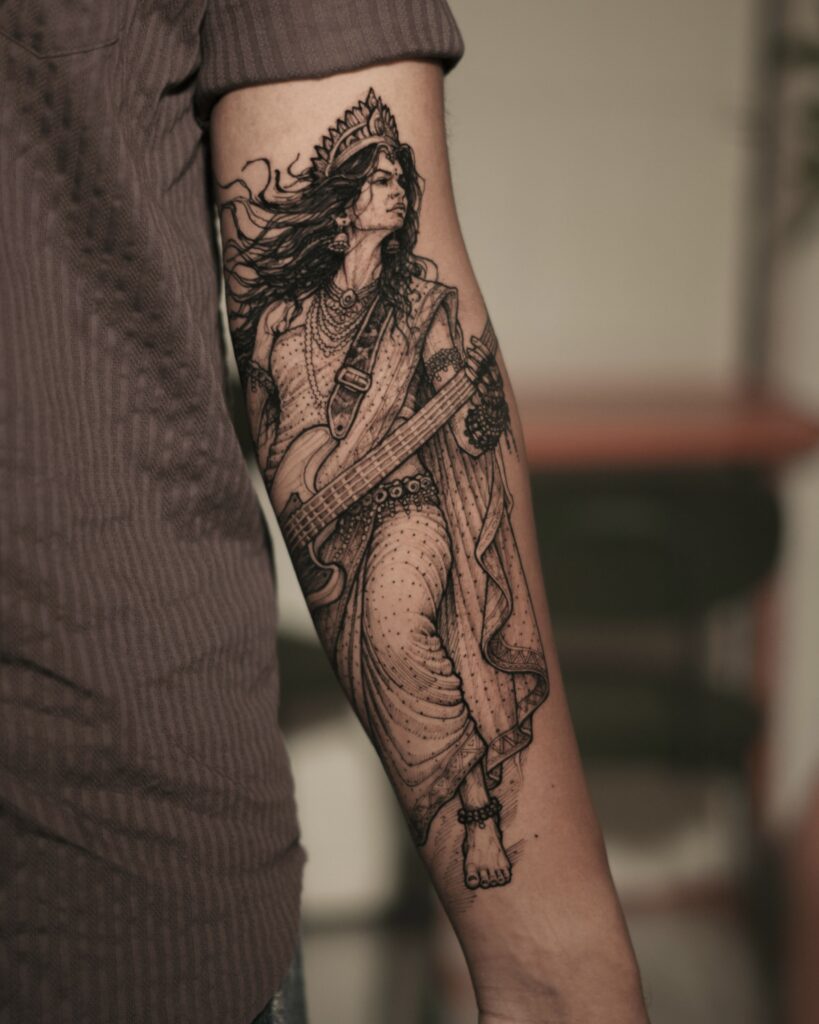
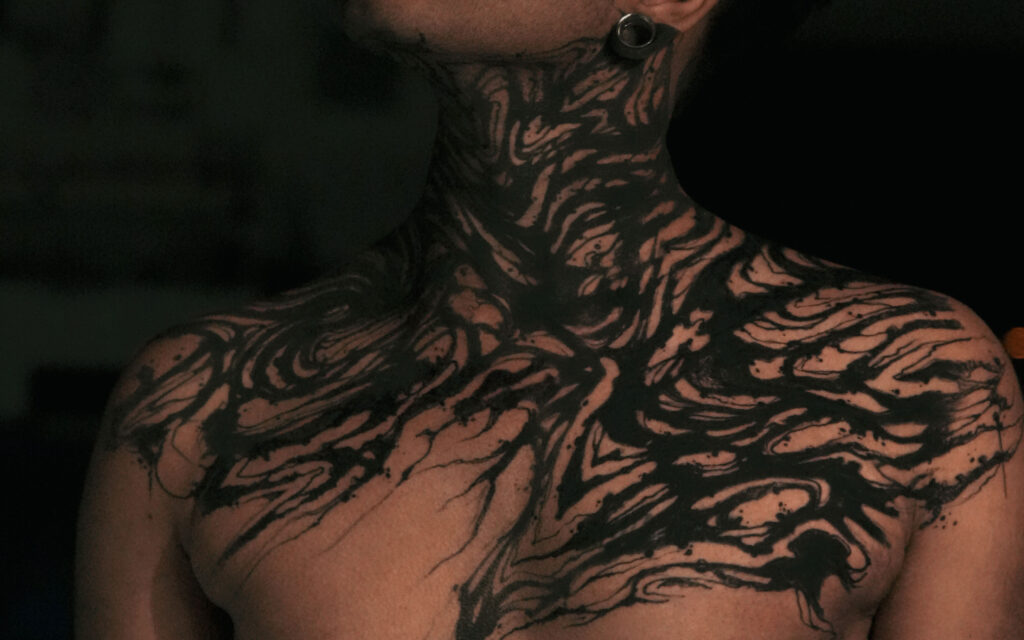
That’s it. No lightning-bolt epiphany. Just repetition, curiosity, and an evolving instinct for what felt strong versus what felt forced. Over time, certain choices kept resurfacing in his work until they became unmistakably his own.
It’s a lesson that extends well beyond tattoo machines and skin: the things we call “signature” are rarely sudden. They’re sedimentary, built in layers over years of showing up.
The Subconscious Influence of Kerala’s Cultural Traditions
Kerala’s visual heritage runs deep, from the elaborate makeup and towering presence of Theyyam to temple art and ritual performance traditions. It would be easy to assume Vishnu deliberately drew from this world when crafting his tattoos. The truth is more interesting.
“I think Kerala has influenced my work in a very indirect way,”
he explains. Growing up in a village surrounded by local festivals and cultural gatherings, two traditions left a particularly vivid imprint: Garudan Thookam and Koothu.
“The characters, costumes, makeup and gestures from those experiences stayed with me visually.”
He never set out to translate those memories into ink. But as his drawing and tattooing practice deepened, he noticed himself gravitating toward certain characters, expressions, and gestures, the same ones embedded in his childhood.
“I found myself drawn to certain characters, expressions and gestures and began exploring them through my own drawings and tattoos.”
It’s a striking example of how identity doesn’t always announce itself. Sometimes it waits patiently in the background of memory, only surfacing once we’ve built the skill to express it.

Being Self-Taught: The Hard Lessons Behind Vishnu’s Craft
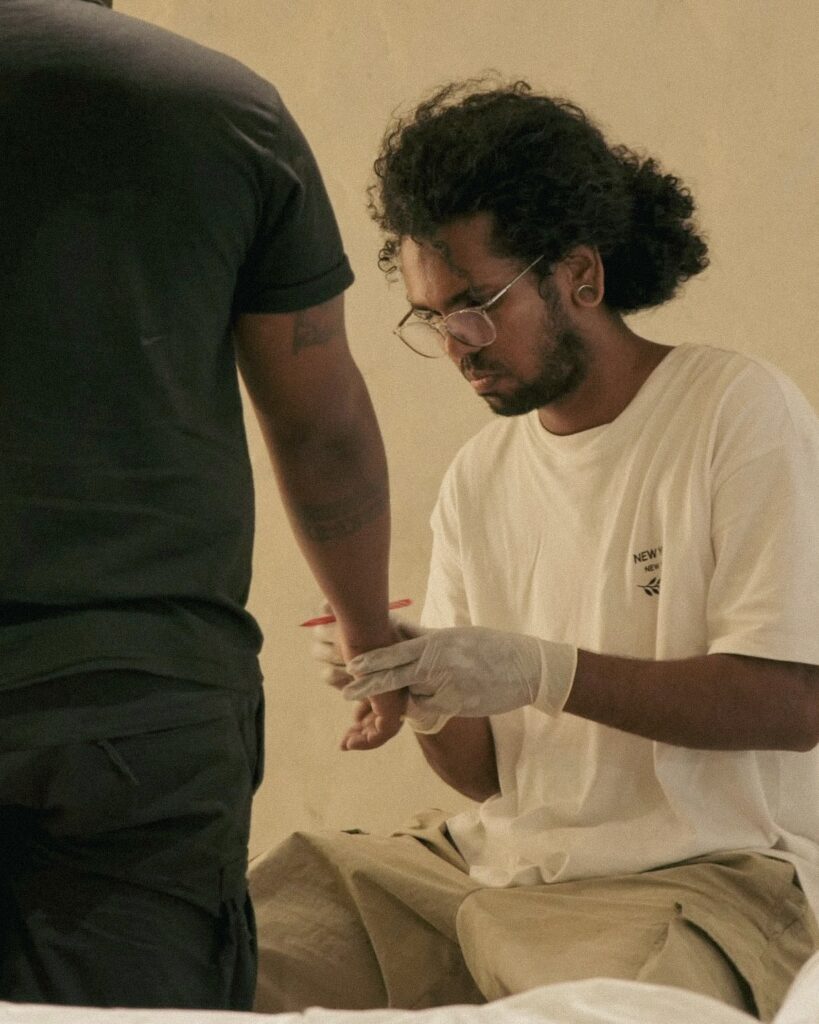
Before the clean lines and confident compositions, there was trial, error, and a serious knowledge gap. Narayanan is candid about his beginnings:
“When I started tattooing, I was mostly self-taught and had very limited knowledge of the process. I had to learn by doing, making mistakes, and experimenting a lot.”
What changed the trajectory wasn’t a single mentor or masterclass. It was connection. Talking to other artists, absorbing their experiences, and slowly piecing together what actually worked for his hand, his eye, his vision.
“That early struggle was important because it taught me to be more observant, patient, and willing to keep learning.”
There’s something validating in hearing a now-established artist admit the fumbling start. Mastery, it turns out, is rarely a straight line. It’s a series of corrections.


Balancing Client Vision With Artistic Integrity
Every creative person who’s ever worked for someone else knows the tension: how do you honor what’s being asked of you while staying loyal to your own voice? For a tattoo artist, the stakes are permanent, literally etched into someone’s skin.
Vishnu’s approach leans on respect rather than rigidity.
“Most clients come to me with an idea or a reference, and I always respect what they have imagined.”
When a client’s reference diverges from his usual style, he doesn’t reject it outright. Instead, he tries
“to understand what they really want and bring it through my own vision, while keeping the main idea intact.”

And when a client hands him full creative freedom? That’s where the real magic happens.
“That’s when the work really opens up.”
This same thoughtfulness shapes how he handles requests that fall outside his wheelhouse. Rather than gatekeeping with a hard no, he opts for honesty.
“If a request is completely outside what I do and I know it won’t turn out right in my hands, I’ll talk to the client openly and explain it to them.”
More often than not, people listen. And if they still want their original idea? He respects that too.
“It’s all about an honest conversation.”
It’s a philosophy that feels applicable far beyond tattoo studios: a model for how to stay true to yourself without shutting others out.
Why Legacy Matters Less Than Growth
In a culture obsessed with legacy (personal brands, follower counts, “building your empire”), Vishnu Narayanan’s perspective is almost countercultural. Asked what he hopes people understand about him a decade from now, he doesn’t reach for grandeur.
“I honestly don’t think much about my legacy. I’m always looking at my work and thinking about what I could have done better.”
If anything, his hope is simple:
“I’d hope people could see that I stayed true to myself.”
What Worries Him About Tattooing’s Social Media Era
Social media has undeniably expanded the tattoo industry, giving artists visibility and clients endless inspiration. Narayanan sees the upside clearly:
“People now have the opportunity to discover so many artists, different styles, and different approaches to tattooing.”
But he’s not naive about the trade-offs.
“Sometimes the presentation gets more attention than the actual quality of the work.”
His faith, though, lies in time and craft.
“I believe that, with time, genuine skill and good craftsmanship will speak for themselves.”


The Advice He’d Give His Younger Self
If a young artist picking up a machine for the first time asked Vishnu for one piece of advice, it wouldn’t be about technique or trend-spotting. It would be about focus.
“You have to keep focusing on your own work. Keep practising, learn from your mistakes, and find your own way.”
Finding Your Own Way
Vishnu Narayanan’s story isn’t really about tattoos. It’s about what happens when you let curiosity lead instead of a predetermined plan. When you trust that the influences shaping you (a childhood festival, a cultural memory, an honest conversation) will eventually surface in your work, even if you can’t see it happening in real time.
For anyone caught between who they think they should be and who they’re quietly becoming, his path offers a quiet permission slip: you don’t need the whole picture figured out. You just need to keep showing up, stay honest, and let your own version of “style” reveal itself.
Follow Vishnu Narayanan on Instagram
Lubdhak Biswas is a musician, entrepreneur and a tattoo artist based out of Kolkata (India).
He documents underground culture at the crossroads of tattooing and music.
His work focuses on craft, tools, ethics and the real working realities of creative industries.