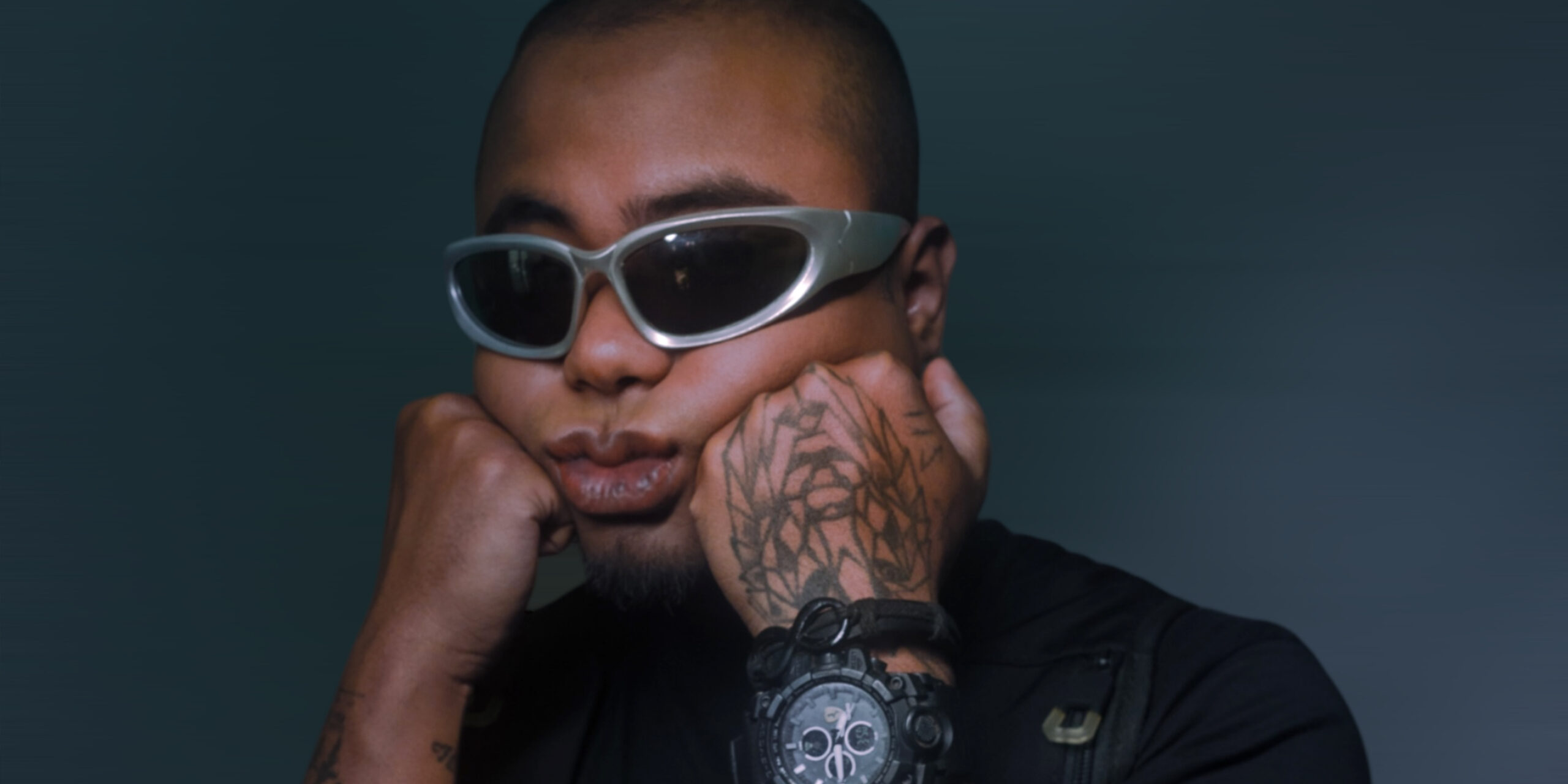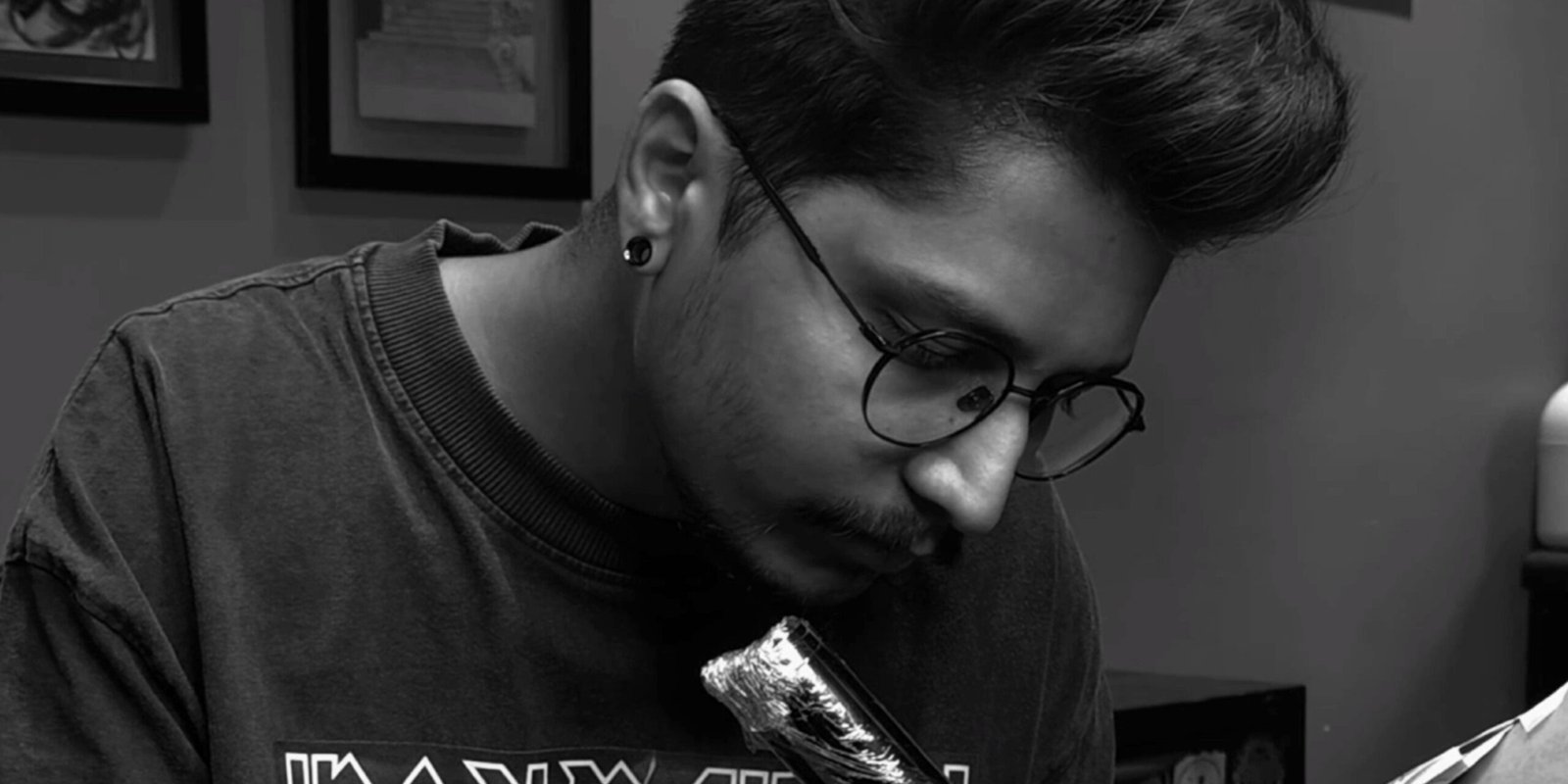
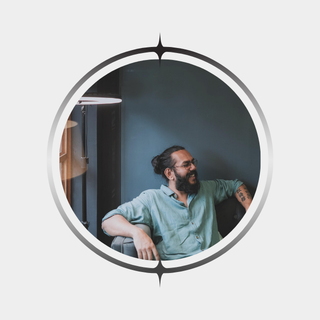
A particular kind of discipline resists the noise of the moment. It does not seek validation through volume or visibility. It builds, quietly and consistently, through patience, responsibility, and an unwavering belief that the work itself is the point. For Kaushik Panchal, tattoo artist and co-owner of Needles & Monkey, this discipline is not a philosophy he arrived at through success. It is the foundation upon which everything else was built.
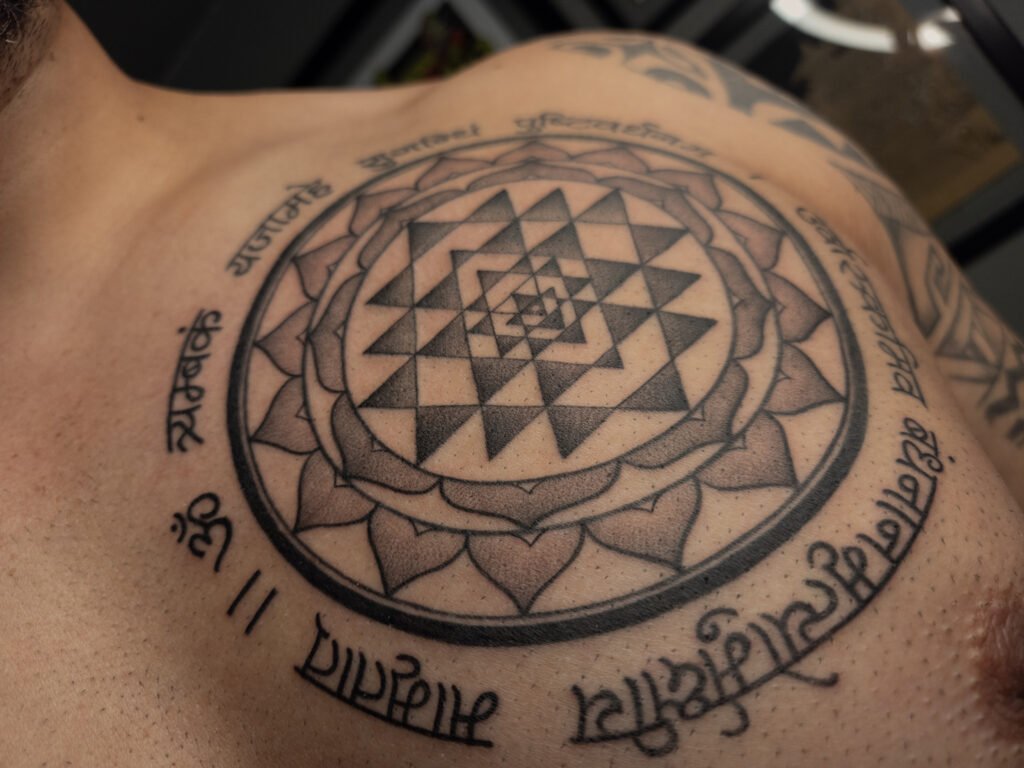
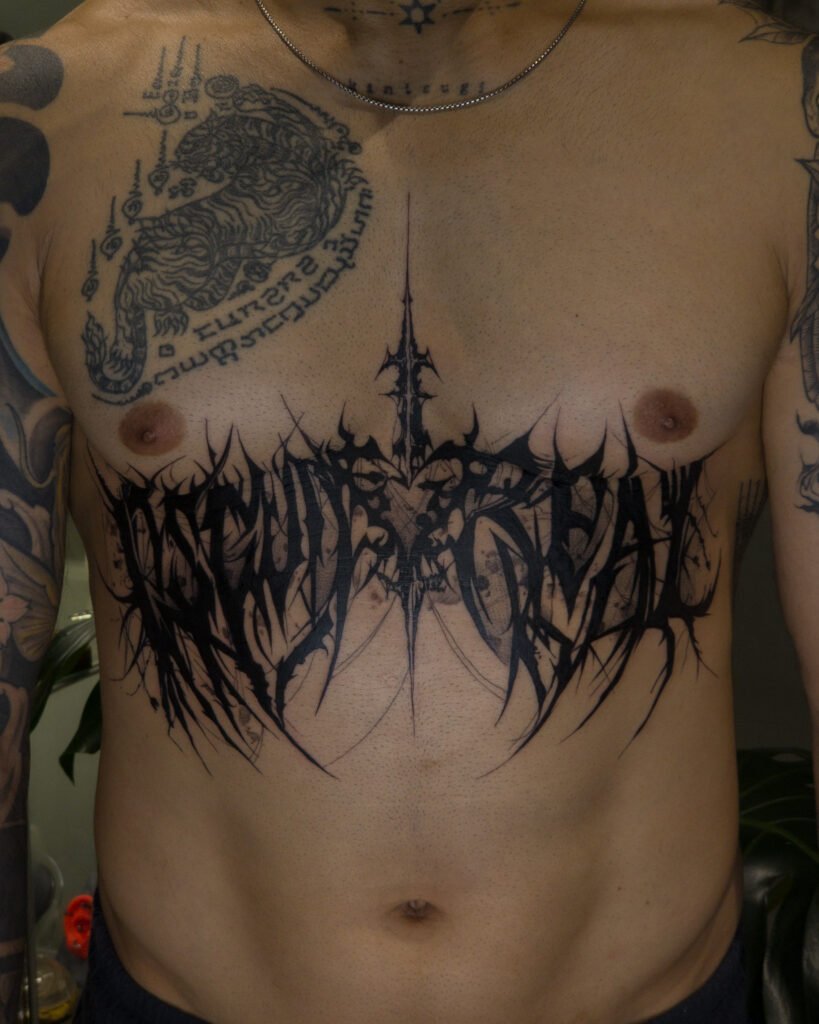
Kaushik has been tattooing since 2011. Over more than a decade, he has developed a practice that moves comfortably between black and grey realism, Japanese-influenced work, ornamental tattooing, and beyond. Yet what defines him most is not stylistic range. It is a commitment to craft that remains constant regardless of what he is making, who is sitting in the chair, or what the industry around him is celebrating at any given moment.
“Tattooing has been a part of my life since 2011, but beyond the tattoo machine I’m someone who’s always been fascinated by art mostly sketching,” he says.
That fascination with drawing, with making something from nothing, became the thread that ran through everything that followed.
From Sketchbooks to Skin
Before tattooing entered his life, Kaushik was simply someone who loved to draw. The sketchbook came before the machine. The desire to make marks, to observe and translate the world through line and form, was present long before he understood it as the beginning of a career.
The path from sketchbook to studio was not a smooth one. Kaushik speaks honestly about the early years, characterised not by momentum but by friction.
“The journey wasn’t straightforward,” he reflects. “Like most artists, I had moments of self-doubt, financial struggles, and countless hours spent learning through trial and error.”
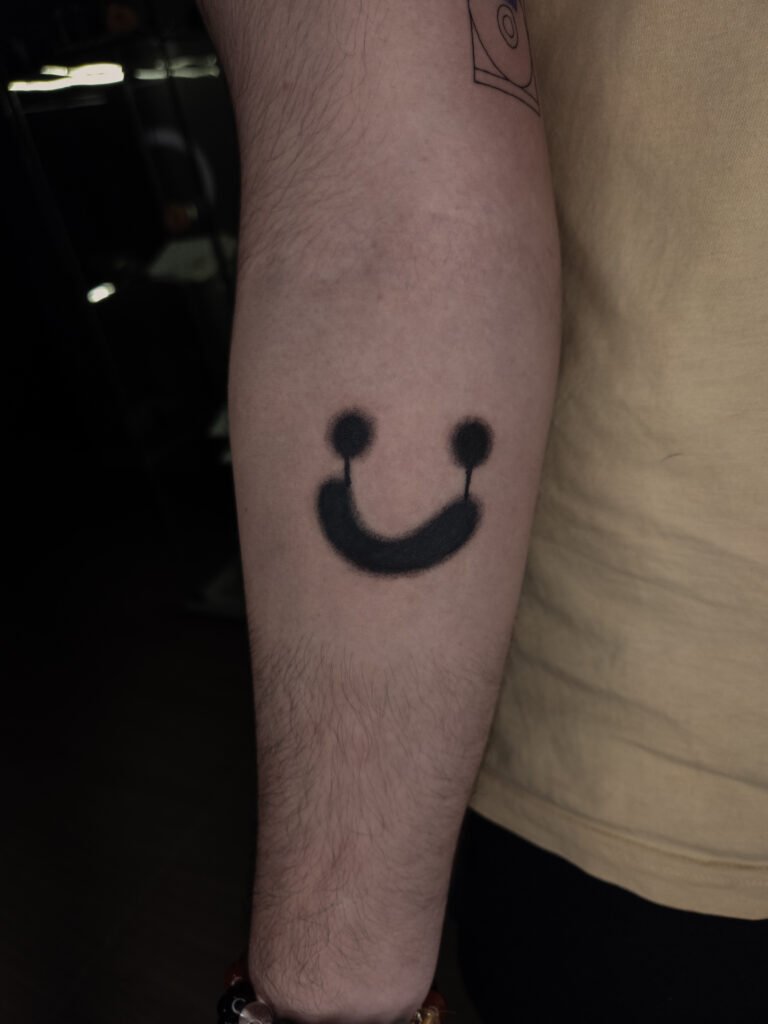
What pulled him through was not certainty but trust. The people who sat in his chair during those formative years, extending their faith before he had fully earned it, became central to his development as an artist and as a professional.
“The people who trusted me early in my career played a huge role in shaping my confidence and every client became a part of my growth.”
This is worth sitting with. In an industry that places enormous emphasis on portfolio depth and established reputation, Kaushik’s growth was funded by something less tangible: the willingness of early clients to believe in him. That experience left a permanent impression on how he thinks about the relationship between artist and client, one that would later shape the culture of Needles & Monkey itself.
Building More Than a Studio
Co-owning a studio is a different kind of challenge from being a working artist. The decisions multiply. The responsibilities extend beyond your own chair. What you build, and how you build it, affects not only your own practice but the experiences of every artist and client who passes through the door.
For Kaushik, Needles & Monkey was never conceived as simply a place to make tattoos.
“Co-owning Needles & Monkey has been another defining chapter,” he says. “It taught me that building a studio isn’t just about creating great tattoos, it’s about creating an environment where artists can grow and clients feel comfortable.”
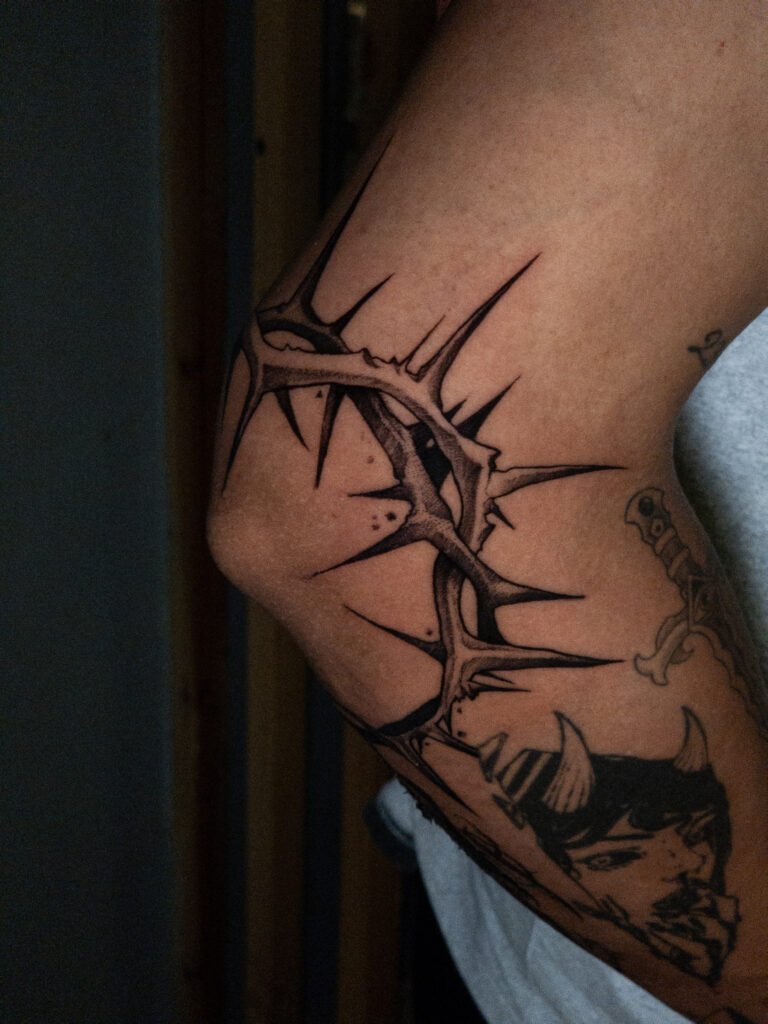
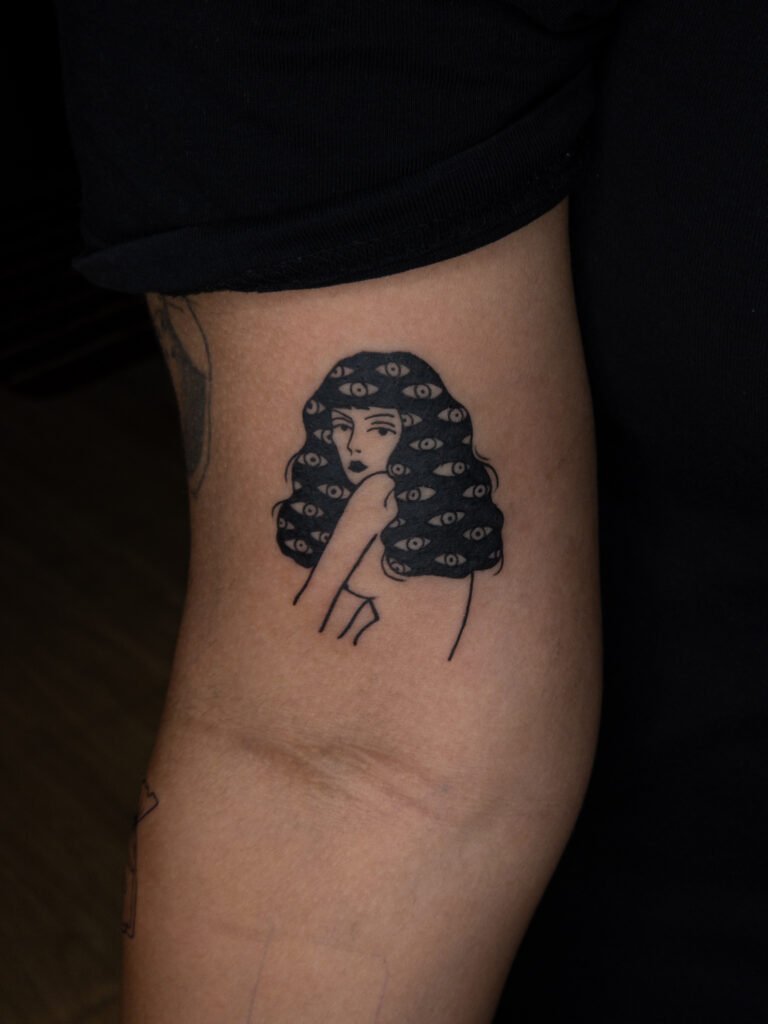
That distinction between making great work and creating the right environment matters enormously. Many studios produce technically accomplished tattoos while remaining spaces that feel unwelcoming to newcomers, or stifling to the artists working within them. Needles & Monkey was built around a deliberate alternative.
“Our philosophy is simple: quality over shortcuts,” Kaushik explains. “Every tattoo deserves the same level of attention, whether it’s someone’s first small piece or a full sleeve. We never rush the creative process because tattoos become part of someone’s identity. As a studio, we’ve always wanted Needles & Monkey to feel welcoming rather than intimidating. Respect for clients, fellow artists and the craft itself is at the center of everything we do.”
The language he uses is instructive. Respect, patience, and consistency appear not as aspirational values but as operating principles, the practical foundations of a studio culture that takes its responsibilities seriously.
Finding Freedom Across Styles
One of the more common traps for a working tattoo artist is the comfort of repetition. Once a style gains recognition, the commercial logic of staying within it becomes difficult to resist. Clients book you for what they have seen. The algorithm rewards consistency. The path of least resistance narrows into a groove.
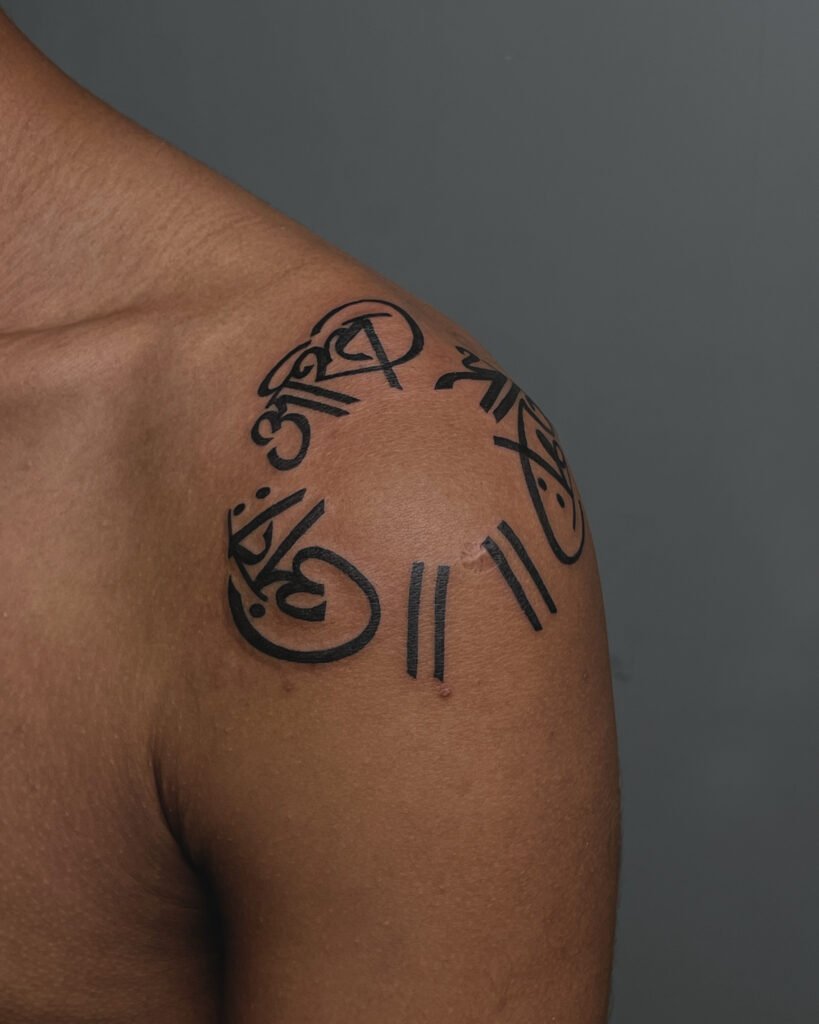
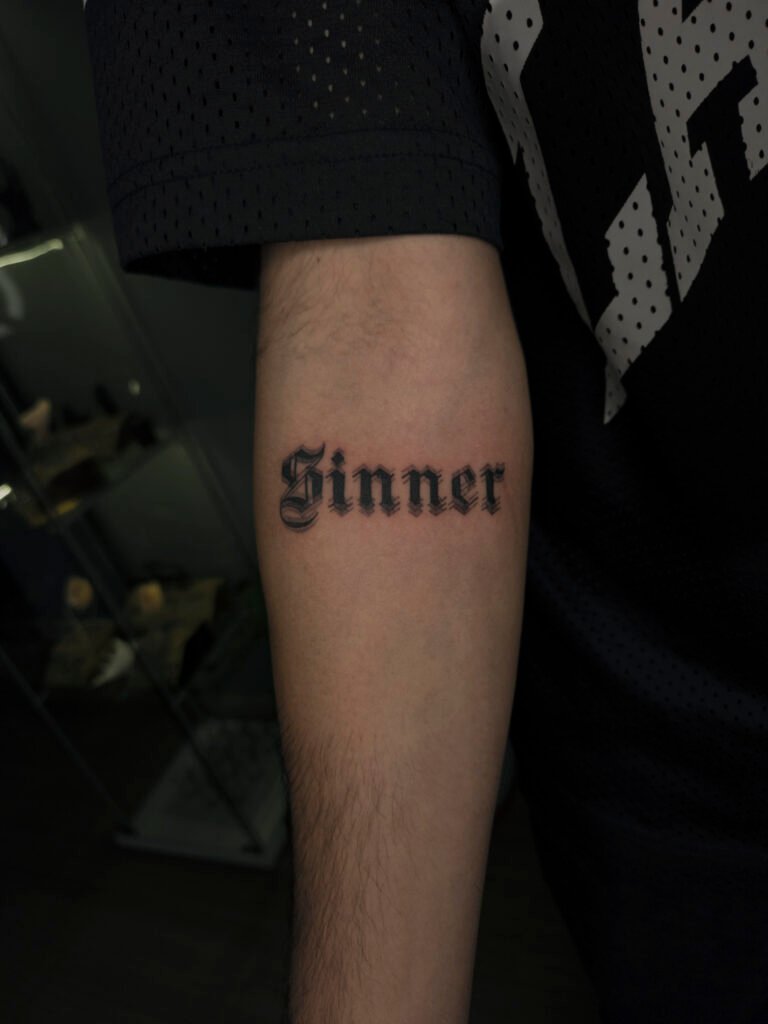
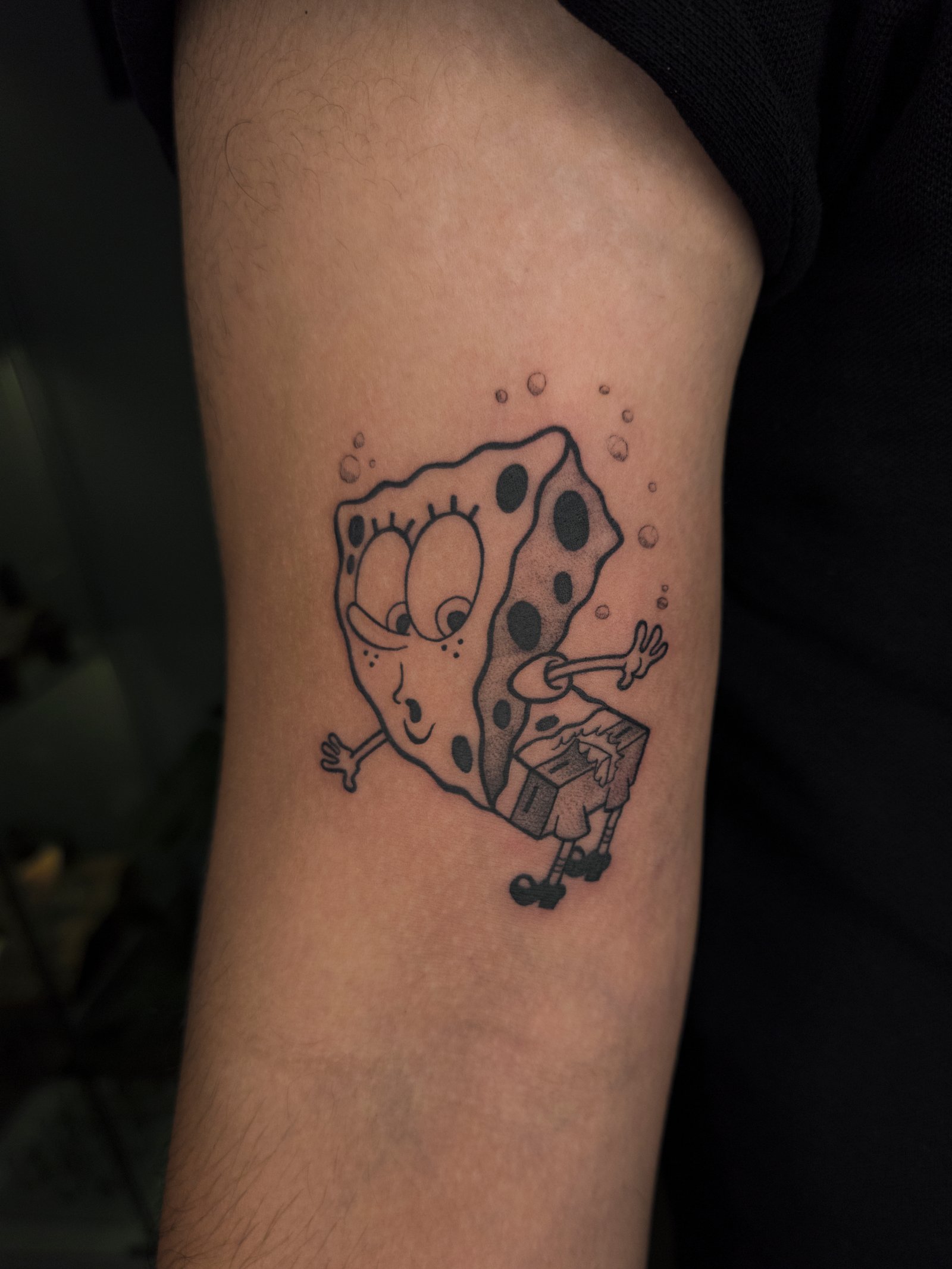
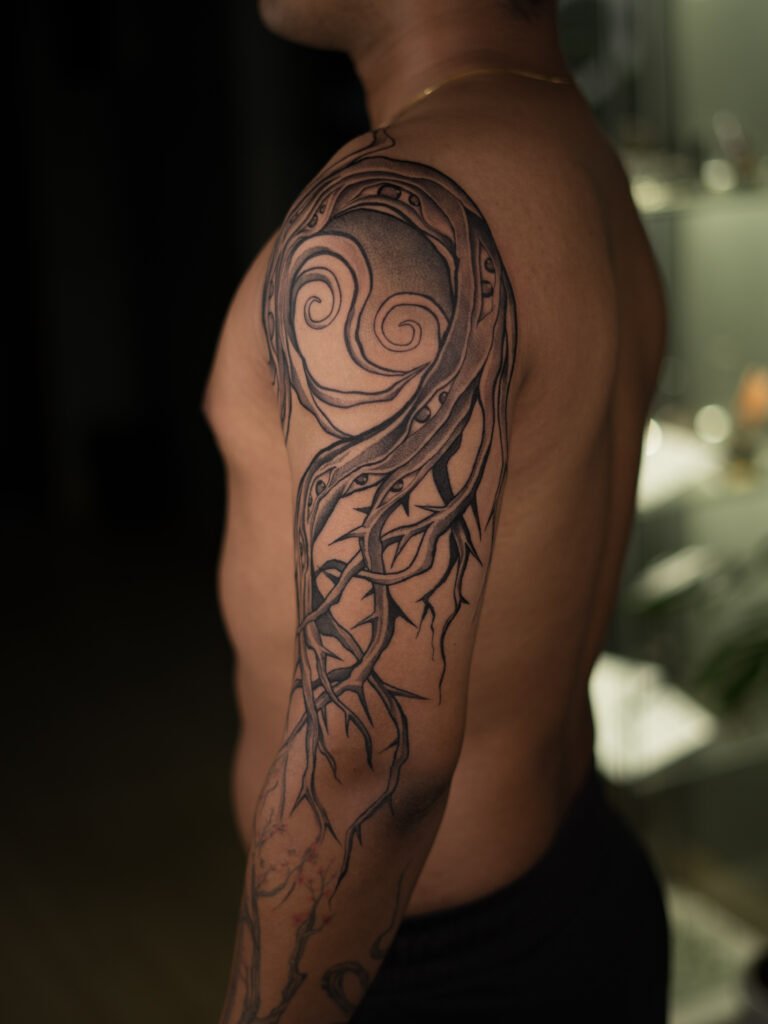
Kaushik has resisted this. His portfolio moves across black and grey realism, Japanese tattooing, ornamental work, and other disciplines without losing coherence. The range is not restlessness. It is, by his account, a conscious form of creative maintenance.
“I actually enjoy working in different styles because each one teaches me something new,” he says. “If I only did one thing every day, I’d probably get bored.”
The risk with working across styles is the loss of artistic identity, producing technically varied work that carries no recognisable voice. For Kauhsik, this tension resolves itself at the level of approach rather than subject matter.
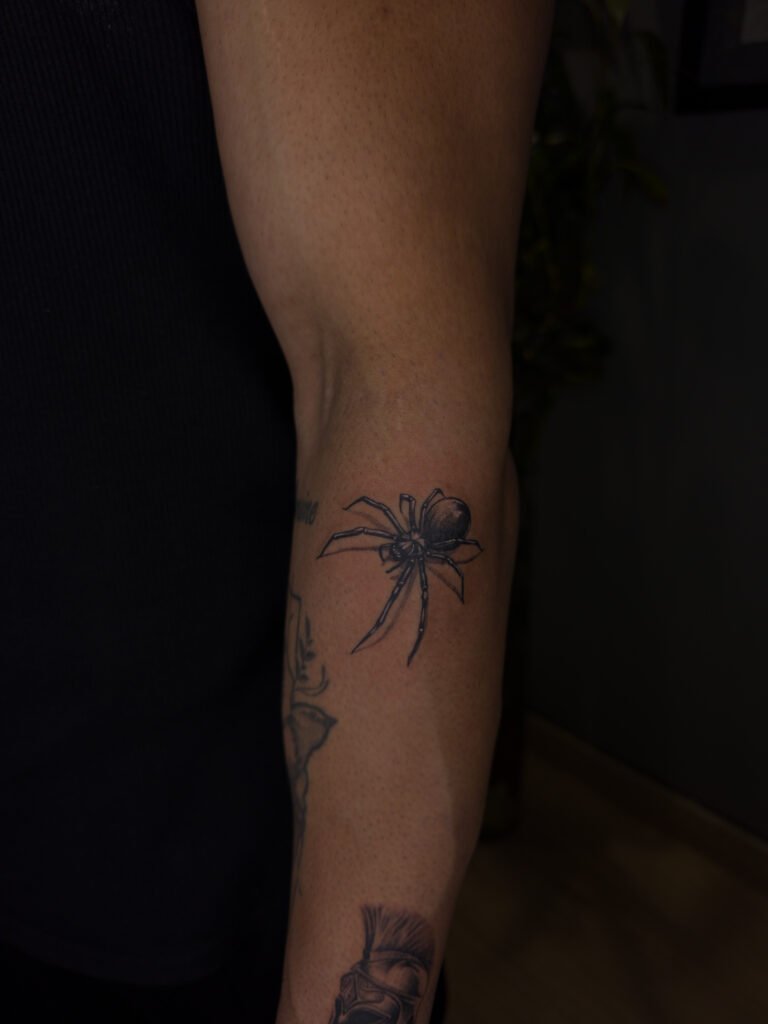
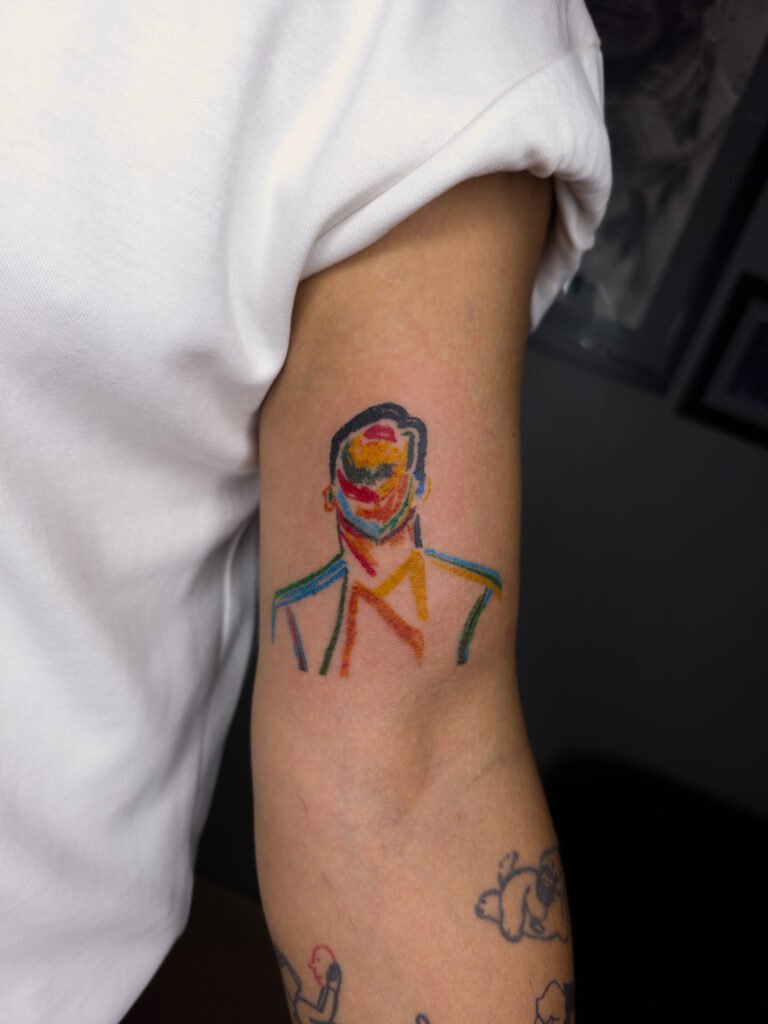
“I think every artist naturally leaves a fingerprint on their work,” he explains. “Mine probably comes from the way I compose a tattoo, the contrast I use, the technique I use or how I make it flow with the body. Even if the subject changes from mythology to Japanese work or realism the approach stays the same.”
That consistency of approach, invisible to most viewers but present in every piece, is what separates a versatile artist from one who simply produces many different kinds of competent work. For Kaushik, style is a language. The voice speaking it remains his own.
Design Begins With Listening
The most technically skilled tattoo artists often describe the consultation as the least interesting part of their process. Kaushik describes it as the most important. Before a single sketch is made, before any research begins, there is a conversation, and that conversation, he believes, determines everything that follows.
“The conversation always comes first,” he says. “I don’t just ask what someone wants, I ask why they want it. That usually tells me much more than the reference images they bring.”
The distinction between what and why is not merely philosophical. It changes the nature of what the artist is actually making. A reference image communicates visual preference. The reason behind a tattoo communicates meaning, significance, and the emotional weight the finished piece needs to carry. Working from the latter produces something genuinely different from working from the former.
Research and sketching follow. Kaushik describes a process of moving elements around, testing compositions, and thinking carefully about how the design will interact with the body itself.
“A good tattoo shouldn’t look like it was pasted onto the skin,” he says. “It should feel like it belongs there.”
This is the point at which a custom tattoo becomes genuinely original. The reference images a client brings are starting points, not blueprints. “I think the design becomes mine when I stop looking at references and start making creative decisions based on my experience,” Kaushik reflects. “That’s when it becomes an original or customised piece instead of just an idea.”
The progression from idea to original is not automatic. It requires the artist to trust their own judgement over the safety of imitation. For Kaushik, this is where the real creative work happens, and where the responsibility to the client becomes most acute.
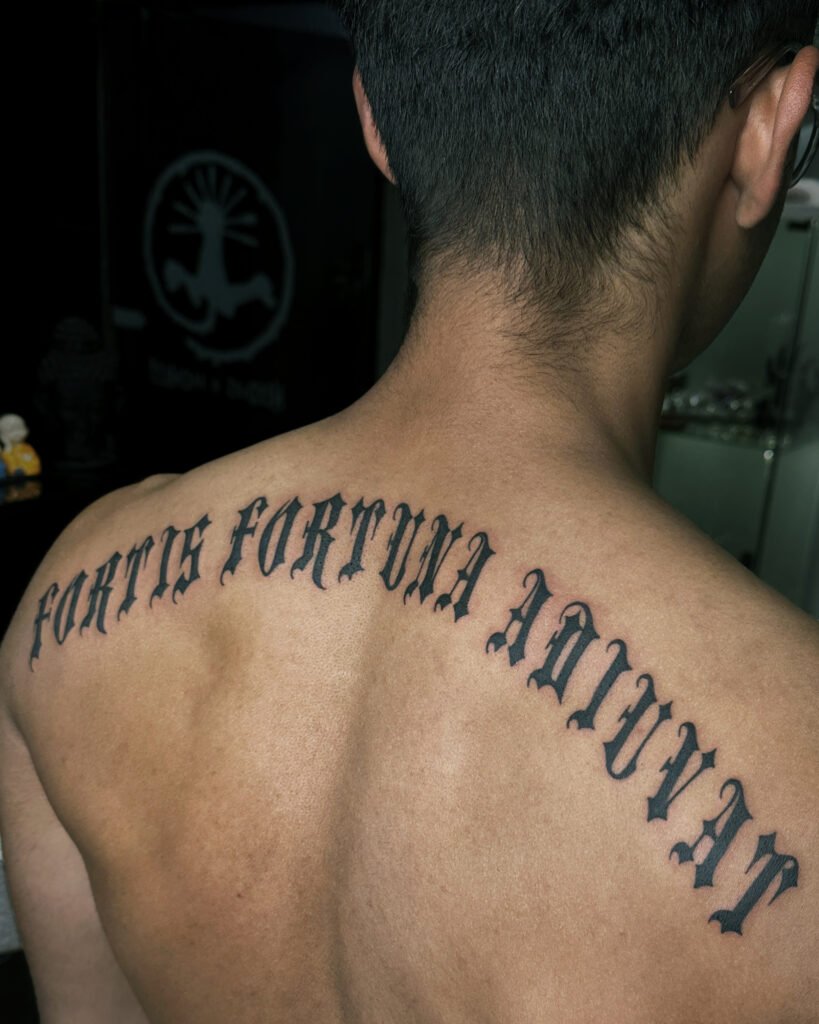
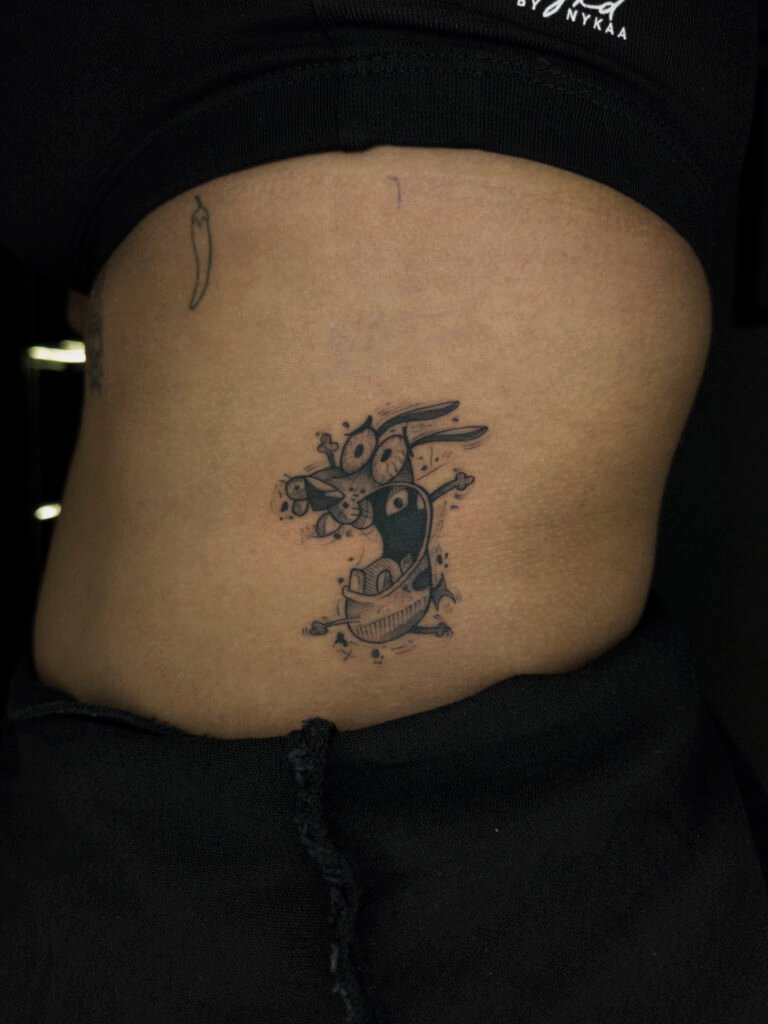
Knowing When to Stop
Technical skill, practised over years, eventually stops being the central challenge of tattooing. The hand learns. The eye sharpens. What remains, and what proves considerably harder to master, is the internal filter that tells an artist when enough is enough.
“For me, a tattoo is finished when I can’t improve it by adding more,” Kaushik says. “Sometimes knowing when to stop is just as important as knowing what to add.”
Restraint is an undervalued quality in any creative field. The impulse to continue, to refine, to add another layer of detail, is often the enemy of a finished piece. A tattoo that has been pushed too far loses balance. A tattoo that has been stopped at exactly the right moment carries a different kind of authority, one that comes from decisions made rather than additions accumulated.
Kaushik’s measure of a successful tattoo extends well beyond the moment the client leaves the studio.
“A technically good tattoo is one thing,” he says, “but the tattoos I’m really proud of are the ones that feel balanced, age well, and still make the client smile years later. That’s the goal every time.”
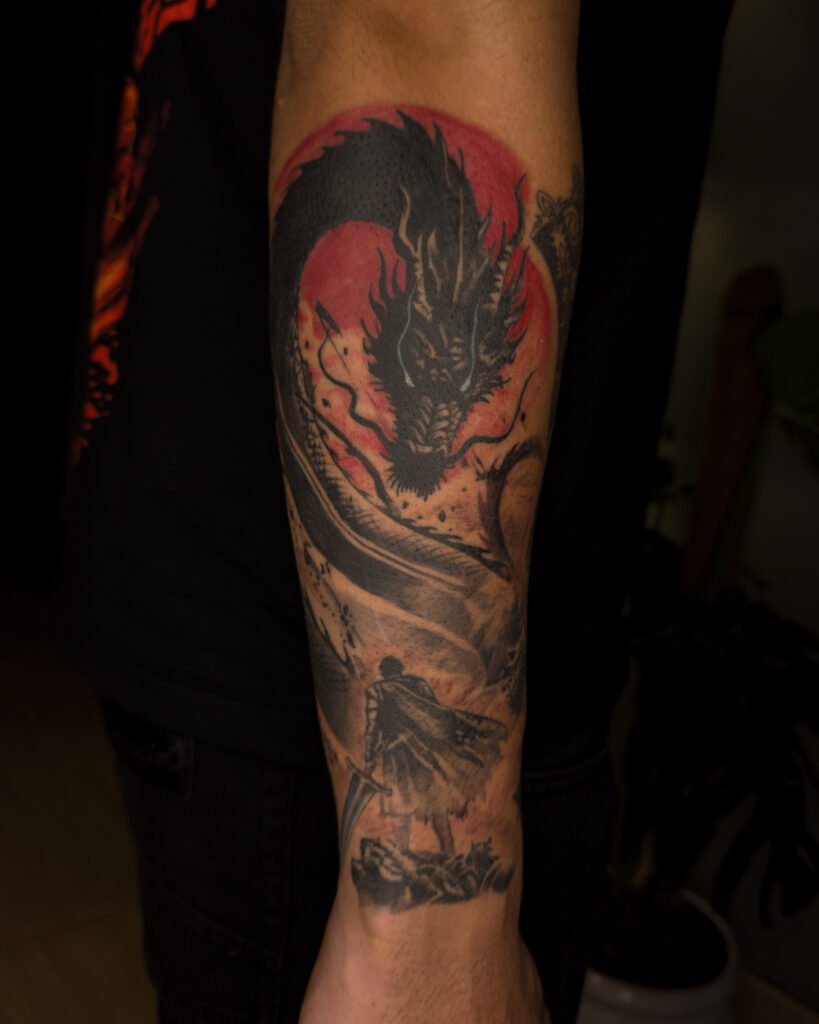
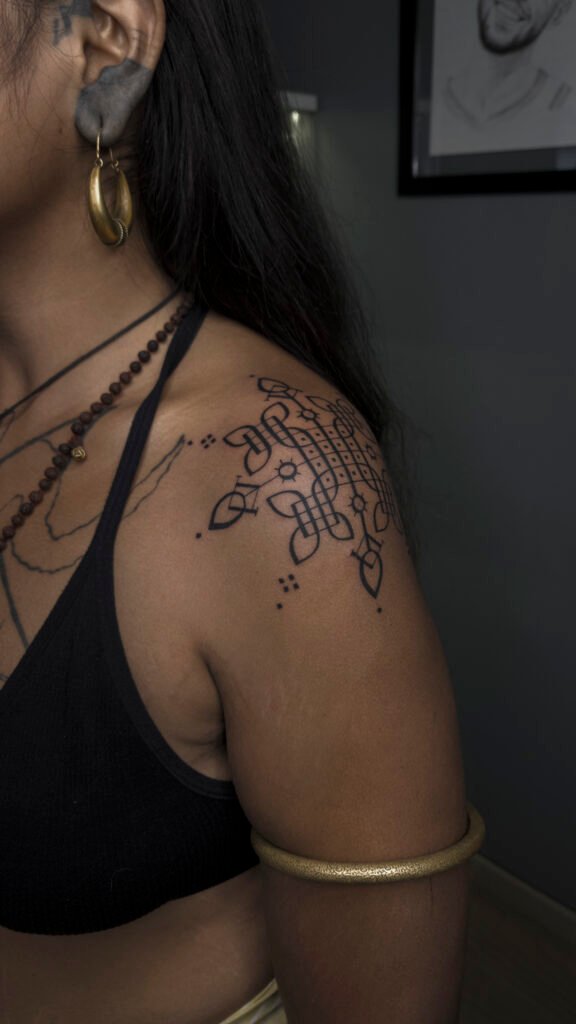
That long-term perspective, thinking not about how a tattoo looks on the day but how it will look and feel years from now, is perhaps the defining quality of his approach. It requires the artist to subordinate the desire for immediate impact to something more durable: longevity, balance, and the sustained satisfaction of the person wearing the work.
Tattooing People, Not Algorithms
The generation of artists entering tattooing today faces a set of pressures that did not exist a decade ago. Social media has transformed the industry’s economy of attention, rewarding visibility over consistency, viral moments over quietly excellent work. The temptation to chase trends, to optimise for the feed rather than the client, has become one of the defining challenges of building a sustainable practice.
Kaushik has a clear view on this. “Don’t compare your beginning to someone else’s years of journey,” he advises. The instruction is simple. Its implications are significant.
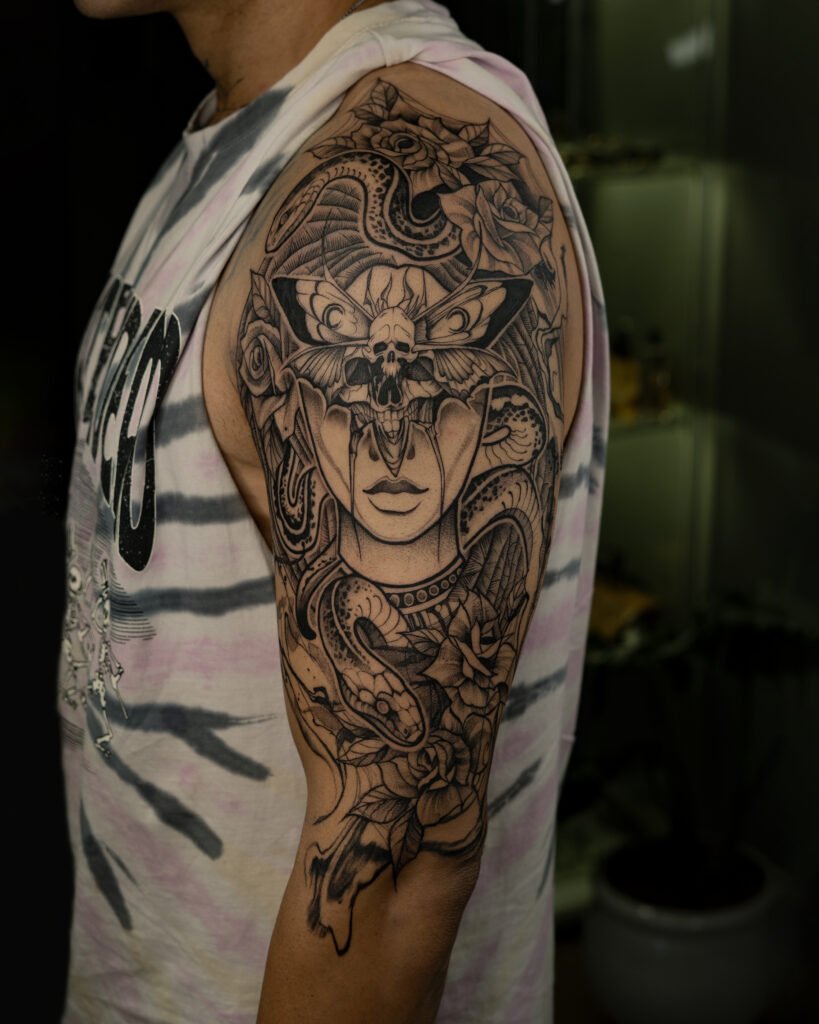
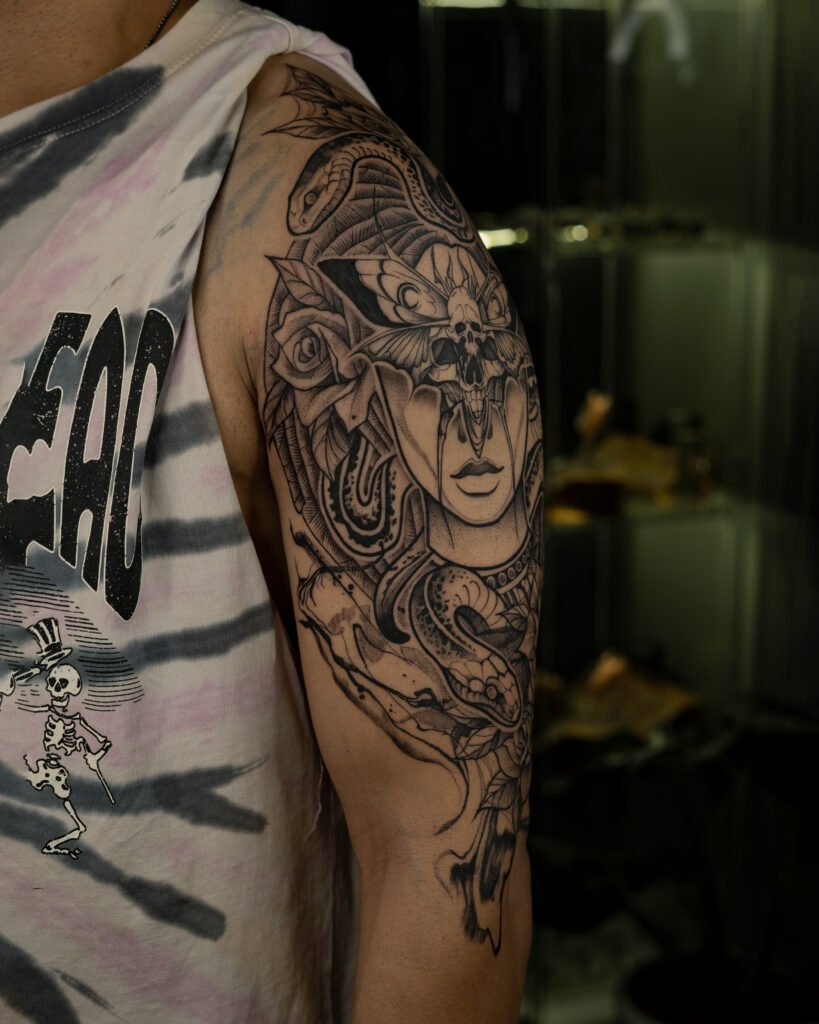
“Social media is great, but it also creates a lot of pressure to become successful quickly. The truth is, there are no shortcuts in tattooing. Your foundation matters much more than your follower count.”
The foundation he refers to is technical. It is the accumulated knowledge of how skin behaves, how ink heals, how a composition reads from a distance, how a design ages over decades. This knowledge cannot be borrowed from a trending style or absorbed through a viral video. It is built through repetition, failure, correction, and time.
Most critically, Kaushik returns to the human dimension of the work.
“Most importantly, remember that you’re tattooing people not algorithms. Trends will come and go, but a tattoo stays with someone for life.”
That sentence contains the entire ethical framework of his practice. Trends are temporary. Algorithms change. The tattoo remains. The responsibility this creates is not incidental. It is the point.
Craft Before Recognition
What Kaushik Panchal has built, across more than a decade of tattooing and the creation of Needles & Monkey, is a practice grounded in something that resists easy measurement. It cannot be captured in a follower count or expressed through the metrics that the industry’s social channels reward most visibly.
It is, at its core, a commitment to the people sitting in the chair, to the long-term quality of the work they will carry, and to the belief that craftsmanship and consistency matter more than recognition.
“Your foundation matters much more than your follower count,” he says again, and it bears repeating, because it cuts against almost everything that the current moment seems to encourage.
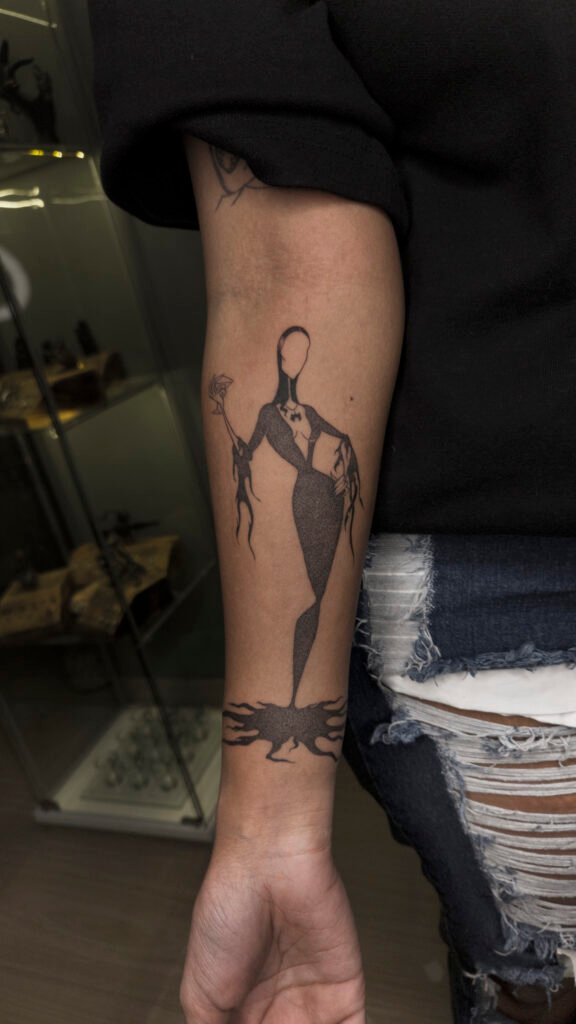
The tattoos Kaushik is most proud of are not necessarily the most photographed or the most shared. They are the ones that feel balanced, that age well, that still bring genuine satisfaction to the people wearing them years later. That is the measure he applies. That is the standard that shapes every decision from the first consultation to the final moment of restraint.
“Trends will come and go,” he says, “but a tattoo stays with someone for life.”
That responsibility, carried seriously and consistently, is what separates an artist who builds a lasting practice from one who simply follows the current. For Kaushik, it has always been the only meaningful definition of the work.
Follow Kaushik Panchal on Instagram
Lubdhak Biswas is a musician, entrepreneur and a tattoo artist based out of Kolkata (India).
He documents underground culture at the crossroads of tattooing and music.
His work focuses on craft, tools, ethics and the real working realities of creative industries.