The music industry loves categories.
Artists rarely do.
Most careers are built around becoming recognizable for one thing. One sound. One identity. One lane. There’s a certain comfort in legibility for labels, for algorithms, for audiences trying to decide whether to press play. Categories create shortcuts. They make discovery easier, curation faster, and marketing cleaner.
The problem is that some artists were never built that way.
Some artists arrive with a voice that doesn’t fit neatly into any one container. Their expression shifts depending on what needs to be said. Their intensity isn’t a brand decision, it’s a consequence of how they think, how they feel, and what they believe storytelling is actually for. These are the artists who make industries nervous and audiences curious. They resist the box not as a statement, but because the box was never built for them.
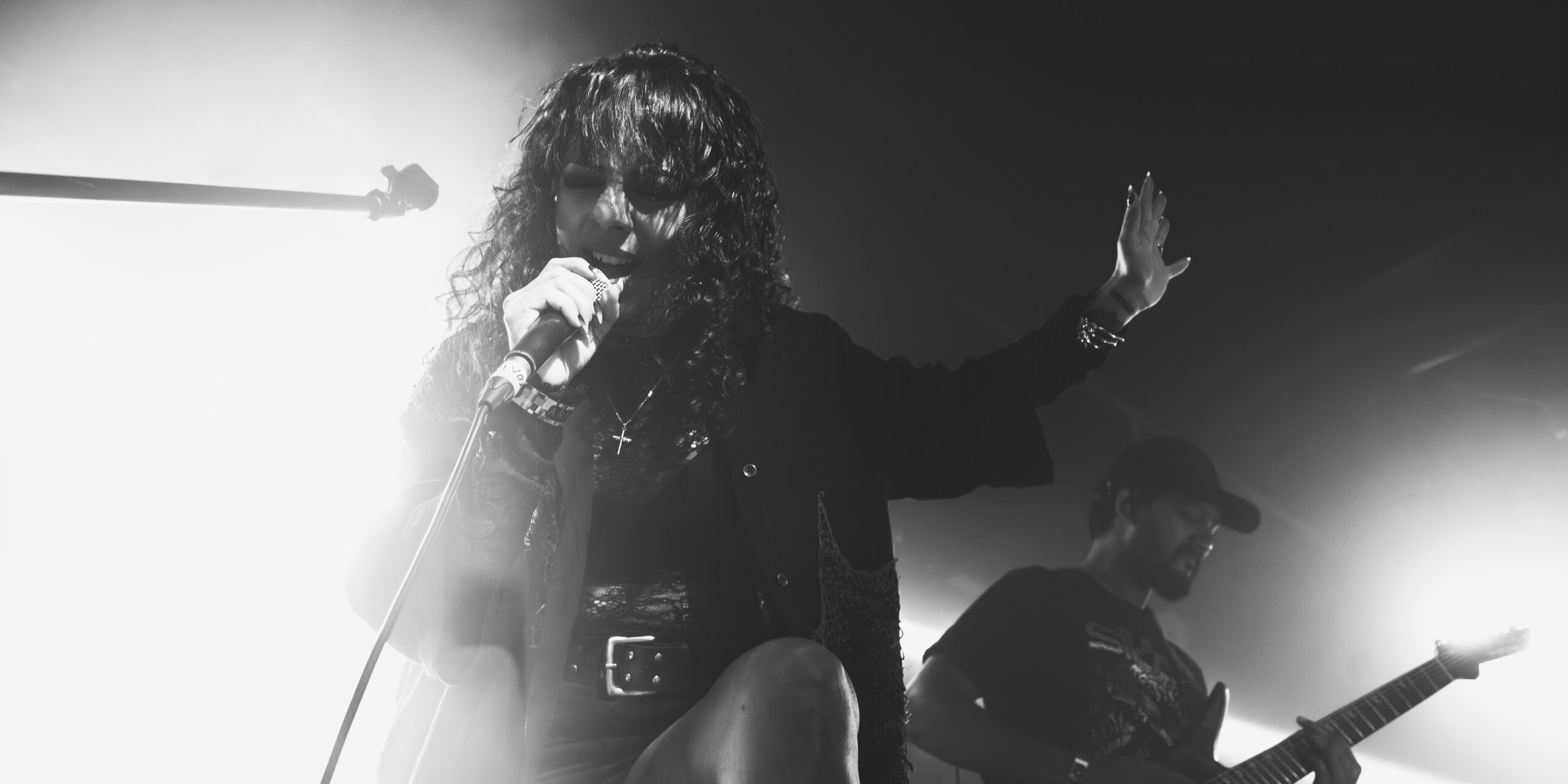
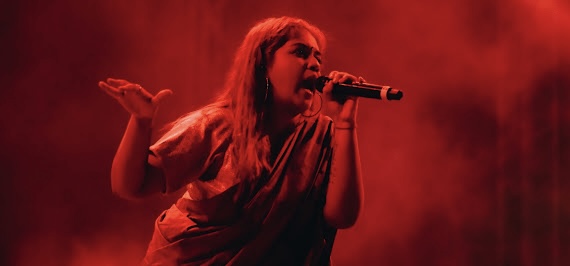
Pratika Prabhune is one of those artists.
Mumbai-born, genre-fluid, and deeply rooted in the craft of narrative, Pratika has moved through metal, hip-hop, electronic music, Bollywood background scores, and live performance across more than a decade of independent work. She has screamed, rapped, sung, and spoken her way through some of the most tonally distinct corners of contemporary music. And through all of it, she has held onto something most artists spend entire careers searching for: a clear sense of who she is.
What follows is a conversation about that identity, how it forms, how it holds, and why it refuses to be reduced to a single genre tag.
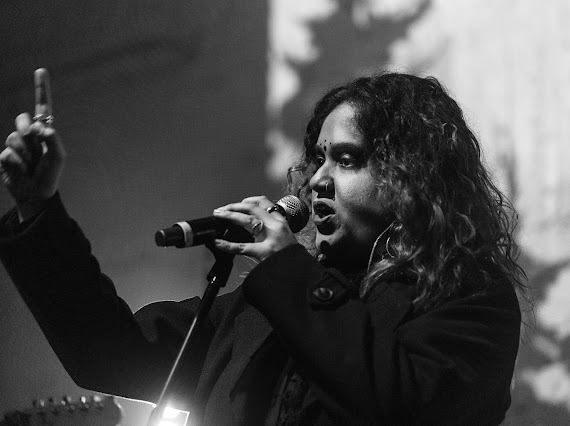
Image Credits: Visuals by Zia
Refusing The Box
Ask Pratika what she wants a first-time listener to understand about her, and the answer comes without hesitation.
“I would like them to know that I am not confined by genre,” she says, “and nobody can stop me from using my skills across a wide array of genres, from classical fusion to heavy metal!”
There’s a quiet confidence in that statement. No defensiveness, no manifesto energy. Just a clear articulation of creative sovereignty. The strongest artists often resist categorization not because they’re trying to be difficult, but because they’ve already moved past the need for external definition. The category was someone else’s framework to begin with.
Pratika didn’t build a career in spite of that refusal. She built it because of it.
One Voice, Many Forms
Genre fluidity, when it’s genuine, doesn’t feel like reinvention. It feels like translation. The same thing being said in a different language, for a different moment, to reach a different nerve.
For Pratika, the shifts between metal and hip-hop and singing aren’t identity changes. They’re tonal choices made in service of the message.
“I feel like they’re all one continuous voice because I am the same person,” she explains. “My expression changes based on what I need to express. Do I need people to listen in a fun way? Sure, I can rap. Do I need to show how pissed off I am about something? Sure, I can scream. It’s just about being a vocalist who can do and be more than a vocalist with a single talent in the vocal sphere.”
Different genres, then, as different dialects of the same artistic language. The grammar changes. The intention doesn’t.

Image Credits: Serendipity Arts Festival
Why Intensity Feels Natural
There’s a version of intensity in performance that reads as effort. You can see the work in it, the mechanics, the push, the performance of emotion rather than the emotion itself. And then there’s intensity that comes from somewhere deeper, from a story already fully formed before the first note is played.
Pratika’s intensity belongs to the second category.
“It comes from storytelling,” she says simply. “I make up elaborate narratives behind everything I’m working on, especially if it’s a longer body of work beyond a single song. When I’m onstage, I enter the world of those characters, and it keeps me hooked to emulating the emotion of the words I’m saying. It actually comes quite naturally, no extra effort or prep at all!”
Performance becomes believable when it begins with narrative. The audience feels the difference, even if they can’t name it. There’s a kind of emotional weight that only comes from an artist who has already lived inside the story before asking anyone else to.
The Storyteller Behind The Music
Long before there was an audience, there was a ten-year-old with a head full of stories.
Pratika’s music doesn’t begin in a studio or with a beat. It begins with characters, with imagined worlds, with the kind of elaborate inner architecture that most children grow out of and a rare few learn to channel into something lasting.
The songs arrive carrying that history. Layers of narrative that the listener may never fully see, but will almost certainly feel. Emotional precision built from the inside out. This is what separates a vocalist from a storyteller. One performs a song. The other performs a world.
Watching The Underground Change
Pratika has spent years inside the spaces where music moves before it becomes mainstream, the underground venues, the independent scenes, the genres that exist at the edges of cultural conversation until, suddenly, they don’t.
She’s watching that shift happen in real time, and she finds it genuinely exciting.
“I am genuinely excited about how genres that were predominantly ‘underground’ are making their way to the fore,” she says. “Hip hop has been exploding continuously, early 2000s music is back with a bang, and heavy metal has been taking many centre stages in the past 3 years, whether it’s Gojira’s grand performance at the Olympics, Knocked Loose and Poppy on Jimmy Kimmel Live! or even Spiritbox at the Grammy’s.”
The margins often become the mainstream. What lives underground long enough, with enough conviction, tends to eventually surface. Pratika has always known this. She built her practice there.

Image Credits: Shubham Sharma
What Worries Her
The excitement isn’t uncomplicated, though.
For someone who thinks in language, who builds entire emotional architectures out of words, metaphors, and the space between syllables, the current state of lyrical culture is a genuine concern.
“What concerns me is the alarming lack of meaningful lyricism in a lot of pop music,” she says, “the overall dumbing down of language and the lack of use of great rhymes and metaphors which makes it very surface-level instead of emotive, or hitting a different nerve.”
Language shapes emotional depth. When the language gets thinner, the feeling does too. Pratika’s investment in craft isn’t aesthetic preference, it’s a belief about what music is actually capable of doing to a person. Surface-level songs produce surface-level feeling. And she’s never been interested in surface.
Shock Value And Reinvention
There’s a version of this story that begins with a stage and a spotlight. But the real beginning is quieter, younger, and considerably more surprising to everyone in the room.
“I absolutely love shocking people,” Pratika says. “It’s how I started. Playing bass guitar in a metal band in a college classroom when I was 12 was the moment I knew I was full of shock value.”
Reinvention often begins with surprise, the moment when someone who wasn’t expected to do a thing simply does it. Pratika discovered early that the gap between what people assume and what she’s actually capable of is one of the most interesting places to work from. She has been working from it ever since.
Building A Career Across Worlds
Versatility, in the wrong hands, can become dilution. Spread too thin, it stops meaning anything. But when it’s rooted in genuine skill and applied with intention, it becomes something else entirely.
The work on the Bollywood film Jigra is a clear example of this. Pratika’s contribution to the background score demanded she bring everything, and she did.
“I wrote all my parts in Hindi, English AND Mandarin,” she says, “and I used everything vocal,singing, rapping, konnakol, AND screaming, different vocal emulation to suit different moments in the background score.”
The film has since won two awards for its background score, a fact Pratika describes as something that “overjoyed” her. What stands out in the way she tells it, though, isn’t the recognition. It’s the work itself the challenge of serving a story across languages, across vocal forms, across emotional registers. Versatility becomes valuable when it serves the work. Here, it clearly did.
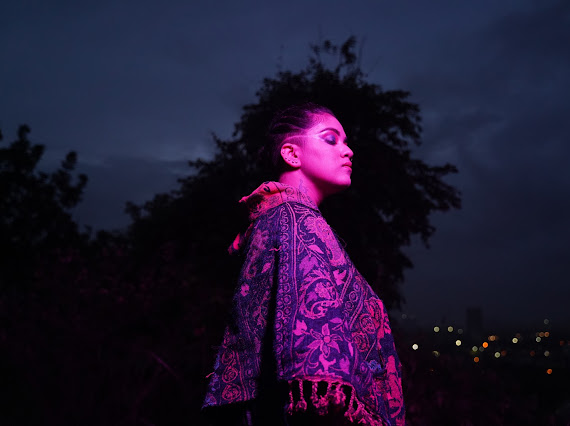
Image Credits: Iconixxx
The Amsterdam Turning Point
Growth rarely announces itself in advance. It tends to arrive disguised as an opportunity, a conversation, a moment that only reveals its weight in retrospect.
For Pratika, one of those moments came through a competition she hadn’t set out to use as a turning point.
“I think winning the JBL Music Academy contest in India and travelling to Amsterdam to Martin Garrix’s studio, along with the experience of meeting people from over 15 different countries was life-changing,” she reflects. “I understood so much beyond the borders of my country, about culture, all because somewhere whatever I was doing gave me merit enough to be flown halfway across the world.”
Then, simply: “It felt like a personal win, a step in growth, and reaffirmed my decision of leaving a 9-5 job to work on my dreams!”
Seeing your work recognized in a wider context changes something. Not because external validation is the point, but because it clarifies the stakes. Pratika left a stable career to follow something that most people would have called uncertain. Amsterdam confirmed she hadn’t been wrong.
The Dreams Of A Ten-Year-Old Storyteller
When Pratika talks about what she’s trying to express now, she pushes back against the framing gently.
“I am not trying to be or express anything,” she says. “I am simply doing what was long overdue, the dreams of a 10-year-old storyteller putting out messages to people and crowds in creative ways they’re more attracted to consume than trying to give speeches or shove down concepts and ideas I resonate with.”
There’s something worth sitting with in that. The most authentic careers often begin long before they become careers. They begin in bedrooms, in classrooms, in the private worlds of children who haven’t yet learned to second-guess their own imagination. Pratika hasn’t lost that version of herself. She’s just finally giving her the stage she always deserved.
What’s Still Ahead
After more than a decade of independent work, multilingual film scores, metal bands, rap releases, and a contest that took her to Amsterdam, Pratika is, by her own account, still just getting started.
“I’m excited to show the world the sides of me they had no idea about,” she says.
The story is still unfolding. The voice is still finding new things to say.
Maybe the point was never to choose a lane.
Maybe the point was to build a voice strong enough to travel between them all.
Follow Pratika on Instagram
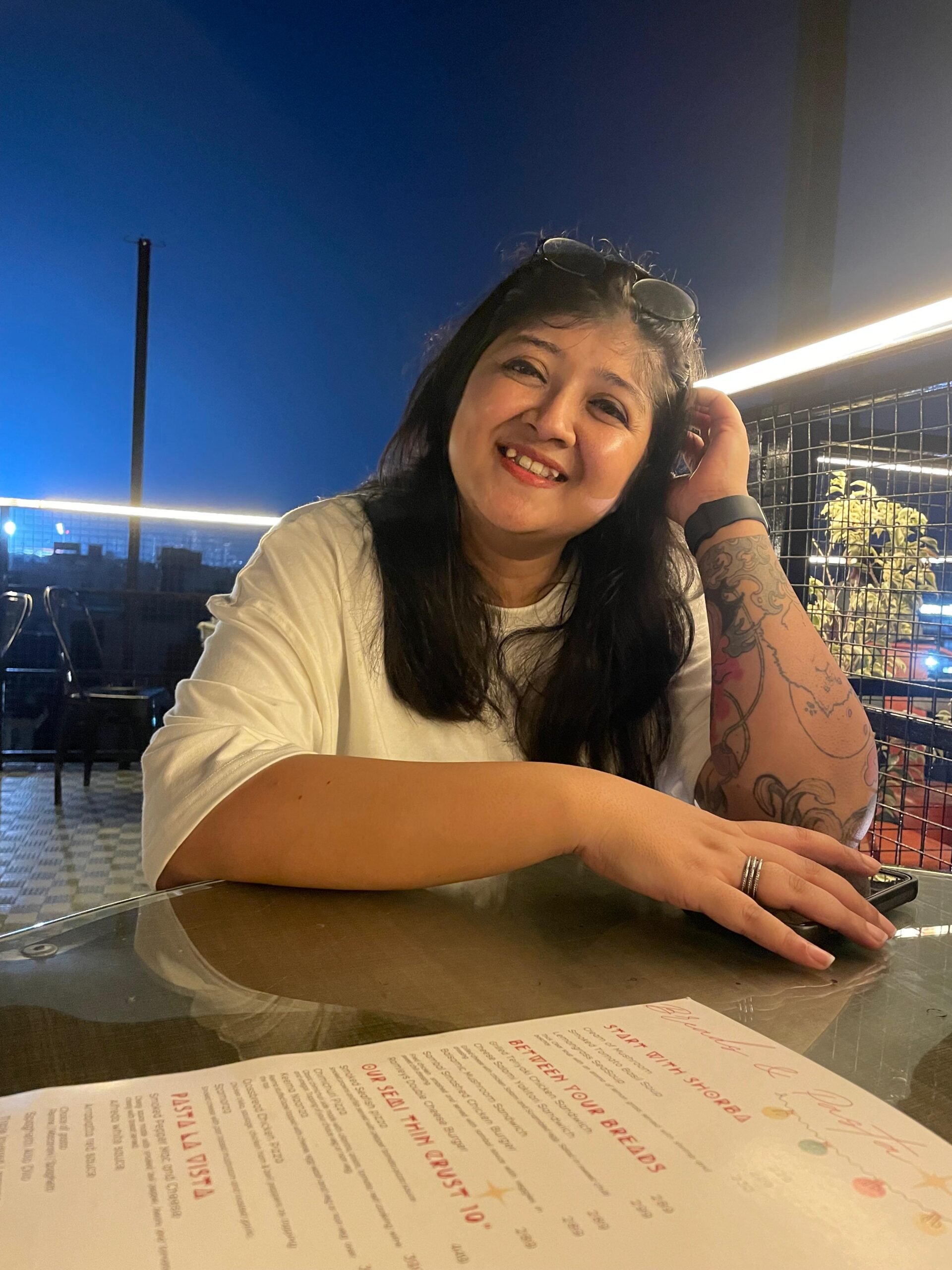
Oeshi B Lyndem is a visual artist, tattoo artist, graphic designer, and entrepreneur with a foundation in graffiti and street culture. Rooted in hands-on craft and making, her practice moves fluidly across illustration, street art, design, and experimental creative processes. With lineage from Shillong—often regarded as India’s rock capital—she carries a distinct cultural influence into her work. At Goofy Owl, she curates and leads the street and hip-hop culture segment through an intuitive, deeply creative, and entrepreneurial lens.