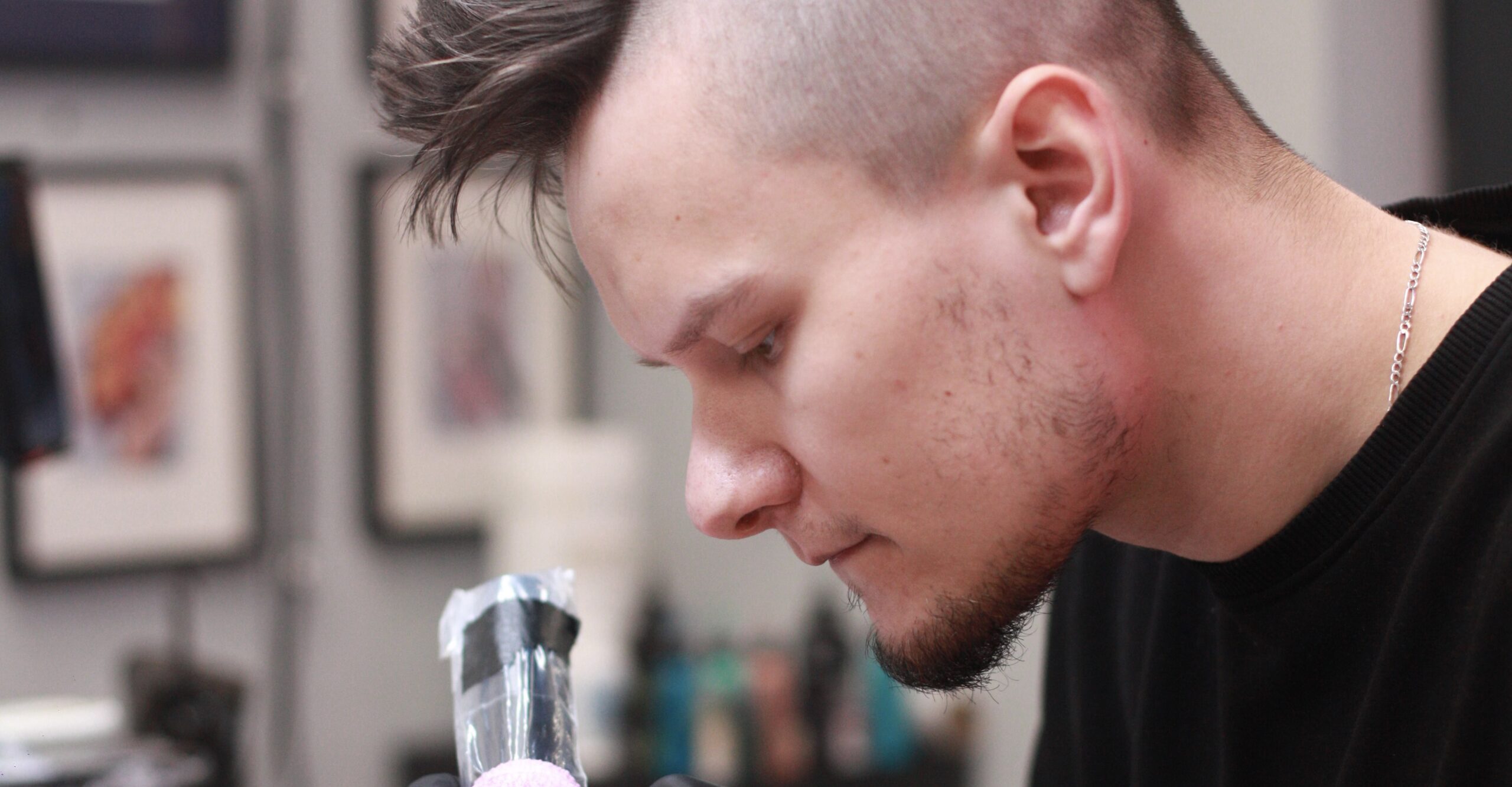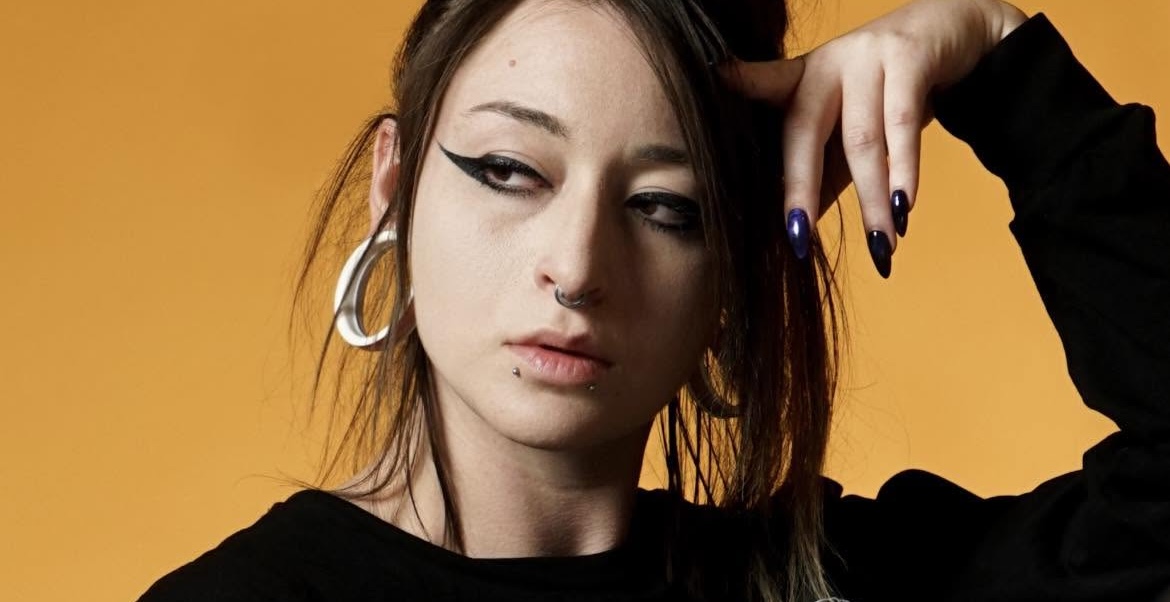
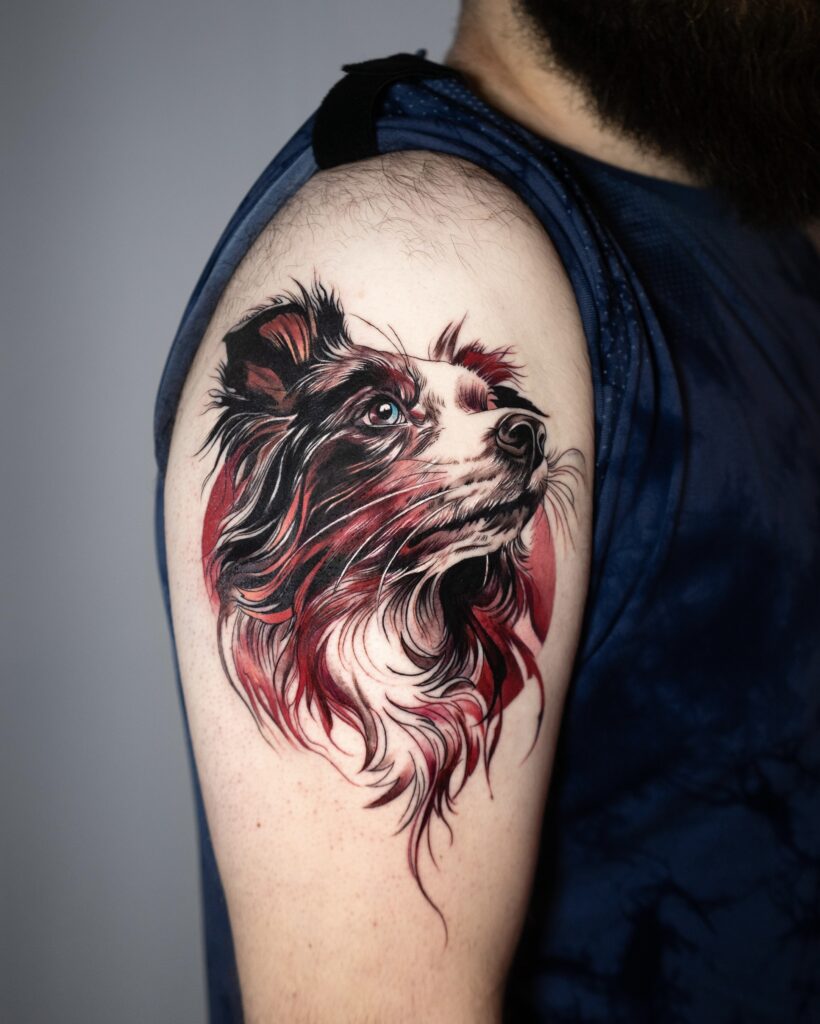
Quick answer: This feature profiles a tattoo artist known for a signature red-and-black style built on elongated forms, respect for the body’s anatomy, and a refusal to chase trends. After starting at 18, building the studio Everink at 24, and rebuilding from scratch post-COVID, Daria found her defining style through two pivotal pieces and now guards it fiercely by choosing clients on her own terms.
Some artists spend a lifetime looking for their signature. This one found it twice, once by accident and once on purpose, and built an entire philosophy around never letting anyone copy what comes next.
Daria started tattooing at 18. By 24, she had opened her own studio, Everink. Then COVID hit, the doors closed, and everything she’d built had to start over in a completely different environment. That kind of reset breaks some careers. For Daria, it became the pressure that forged something sharper.
What Does It Really Take to Develop a Signature Tattoo Style?
There’s a difference, Daria explains, between a tattooer and a tattoo artist. One does whatever comes through the door: lettering, tribal work, whatever pays. The other builds something that belongs to her alone.
“It takes courage,”
she says.
“To start developing your own unique style, you need patience, because at first, no one is interested in your product. It might even scare people or your existing clientele a bit.”
That’s the part nobody tells you about originality: it repels before it attracts. Daria had to stop chasing approval and start chasing what felt true to her own hand.
“You simply have to stop trying to please others and start searching for what is good for your art,”
she says.
“The money will come; you just need a little patience and courage.”
It’s a quietly radical idea in an industry, and a culture, obsessed with instant validation.
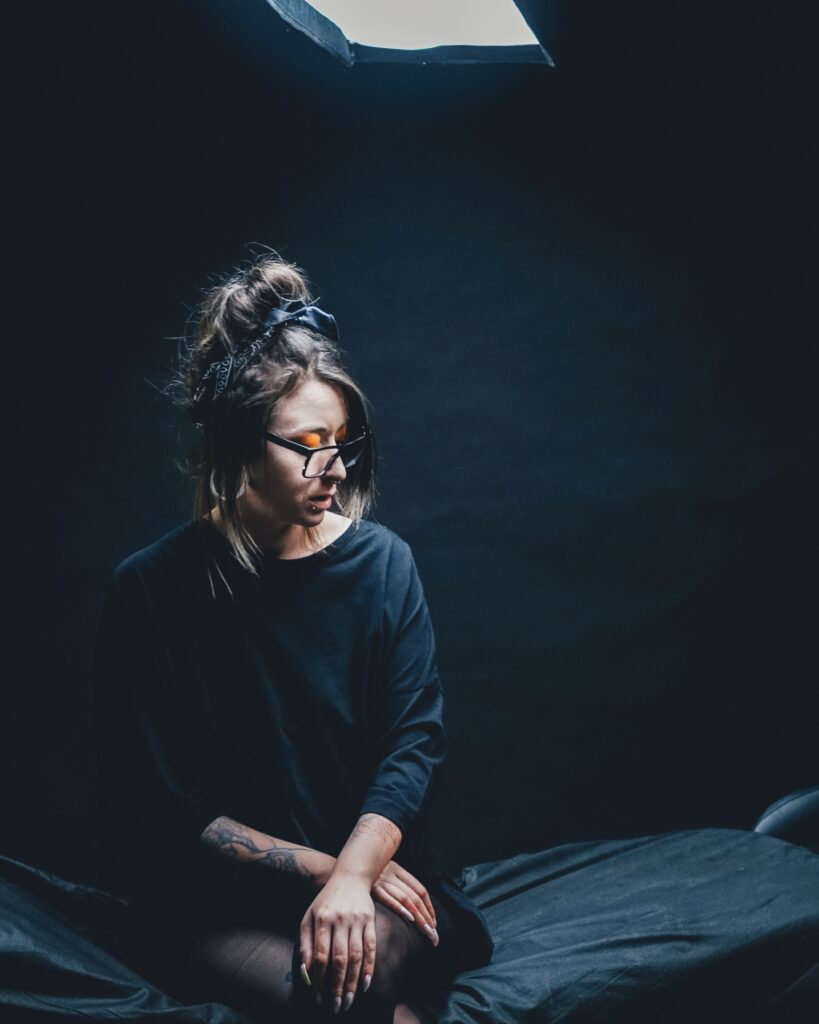
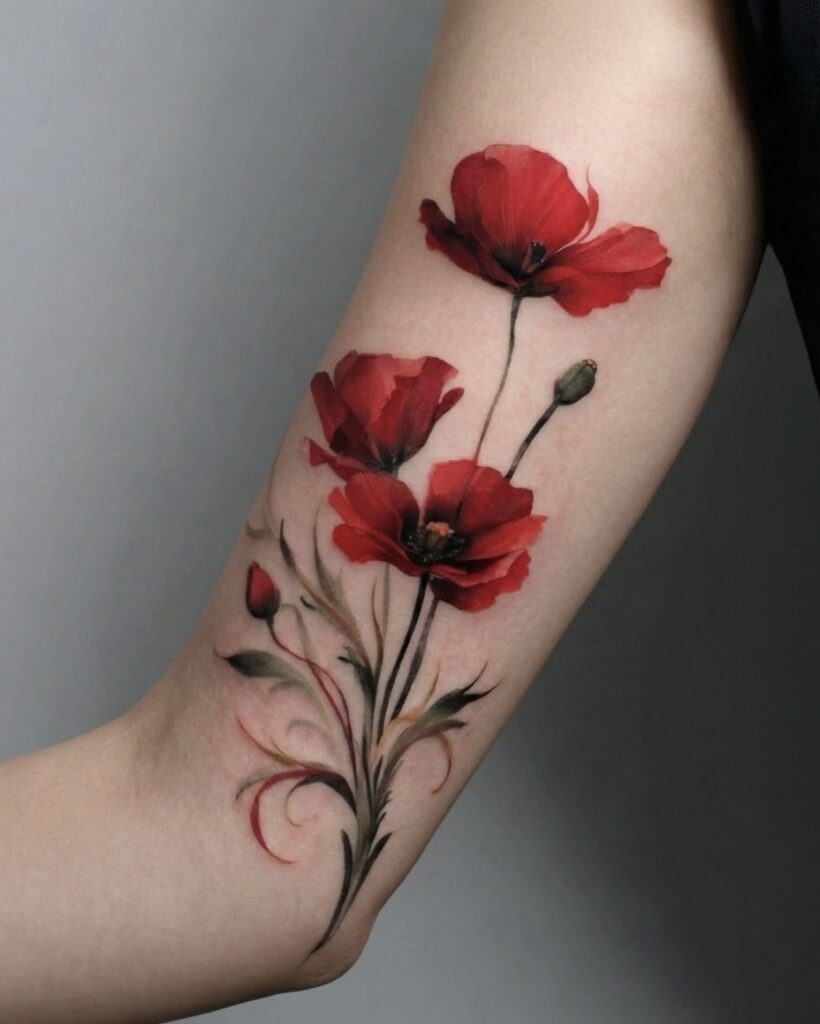
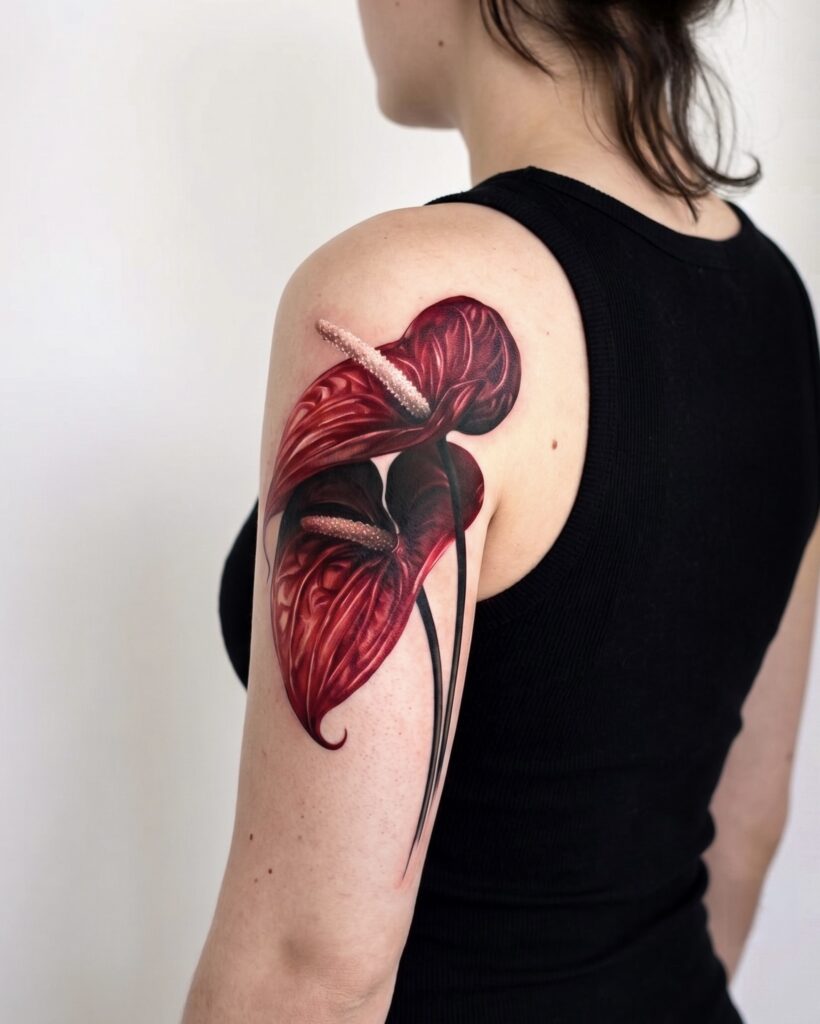
When Did Daria Know Her Style Had Finally Arrived?
Every signature style has an origin story, and this one has two.
The first came in 2022: a human body rendered with spider lily flowers in place of a head.
“It really grabbed me,”
Daria recalls. She kept circling back to it, reworking the idea, testing it on clients who connected with its strange elegance. Something about that piece refused to let go.
The confirmation came later, in November 2025, with a tattoo of a heart with an eye at its center. That’s when the decision became final.
“I made the decision right then and there: this is it,”
she says.
“I am sticking to this style, come what may.”
Two tattoos, three years apart, became the bookends of a complete artistic identity.
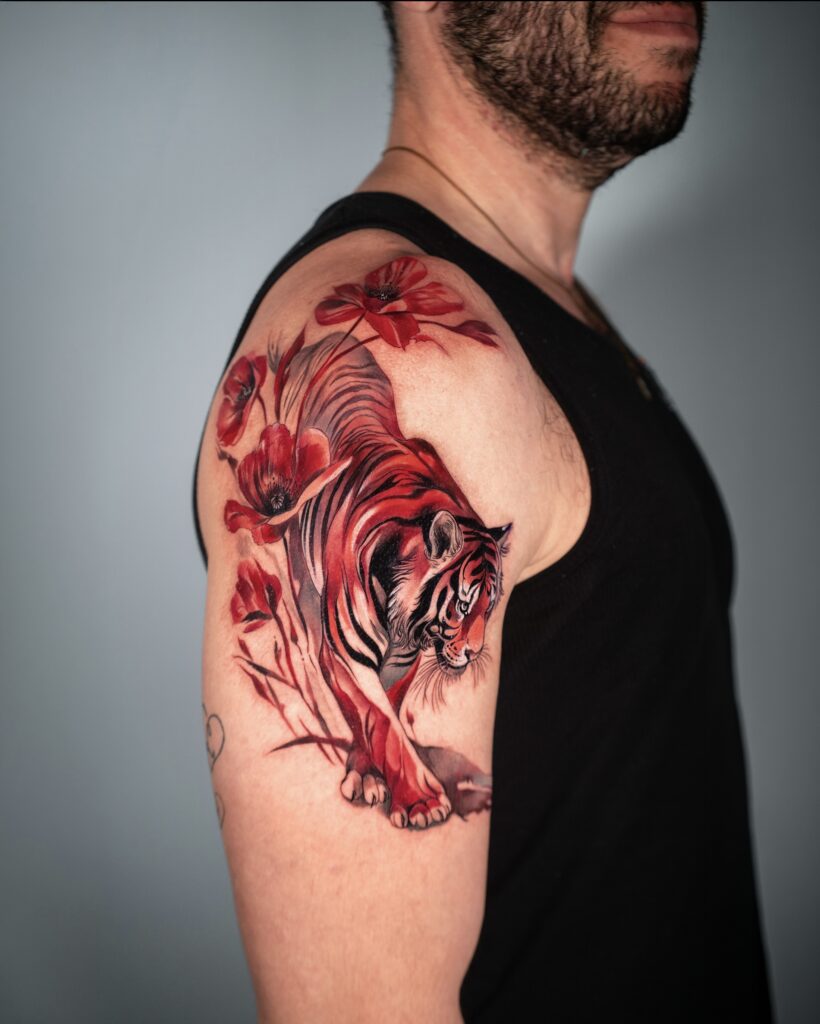


Why Red and Black? The Science and Soul Behind the Palette
Walk through this artist’s portfolio and one thing is immediate: the palette never changes. Deep blacks. Sharp reds. Nothing else.
The choice started with practicality.
“I chose these colors because they look the best on the skin,”
Daria explains.
“Over the years, their contrast doesn’t fade.”
But the deeper reason runs emotional. Red, she says, can be violent and comforting in the same breath: high contrast one moment, soft and warm the next. Locking into just two colors wasn’t a creative sacrifice. It was a liberation.
“Red and black is a limitation that creates freedom,”
the artist says.
“Because now, no matter what I draw, it will be in my style, so that’s one less thing for me to worry about.”
Constraint, used right, becomes clarity.
That same instinct shows up in her subject matter. Elongated bodies, flowing movement, imagery that feels elegant and violent at once: none of it was mapped out on a mood board.
“It emerged one hundred percent naturally,”
she says. The visual language came from years of drawing, paired with a refusal to filter the work through what might perform well online.
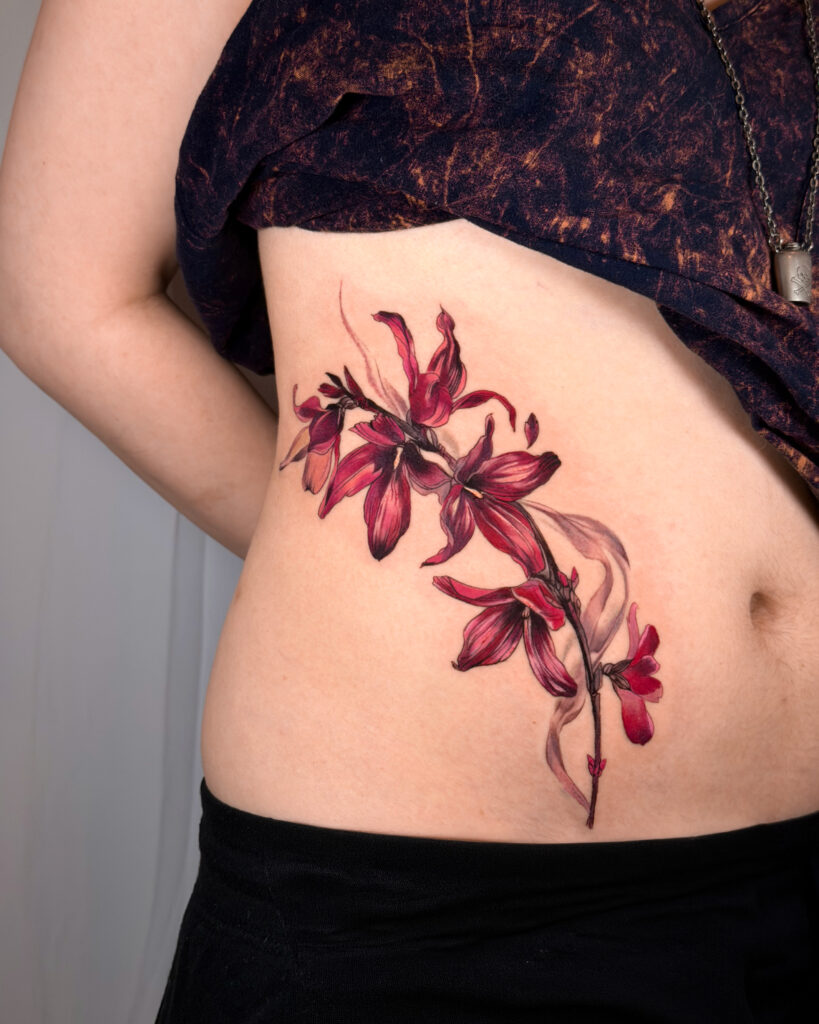


“I am a simple, genuine person, and I don’t worry about whether someone will like it or if it will gather likes on social media.”
How Does This Artist Decide Who Gets Tattooed and Who Doesn’t?
Two years of traditional apprenticeship taught the artist one lesson above all else: respect the body. Not the Instagram photo it might generate. Not the money attached to the appointment. The anatomy itself.
That principle now shapes every client interaction. If someone requests placement Daria considers wrong for their anatomy, the answer is simple: no.
“If a client wants to place something in what I consider the wrong spot, I can easily just tell them that I won’t do it,”
she says. Most clients, she adds, trust the process enough not to push back.
That same discernment extends to who sits in the chair at all.
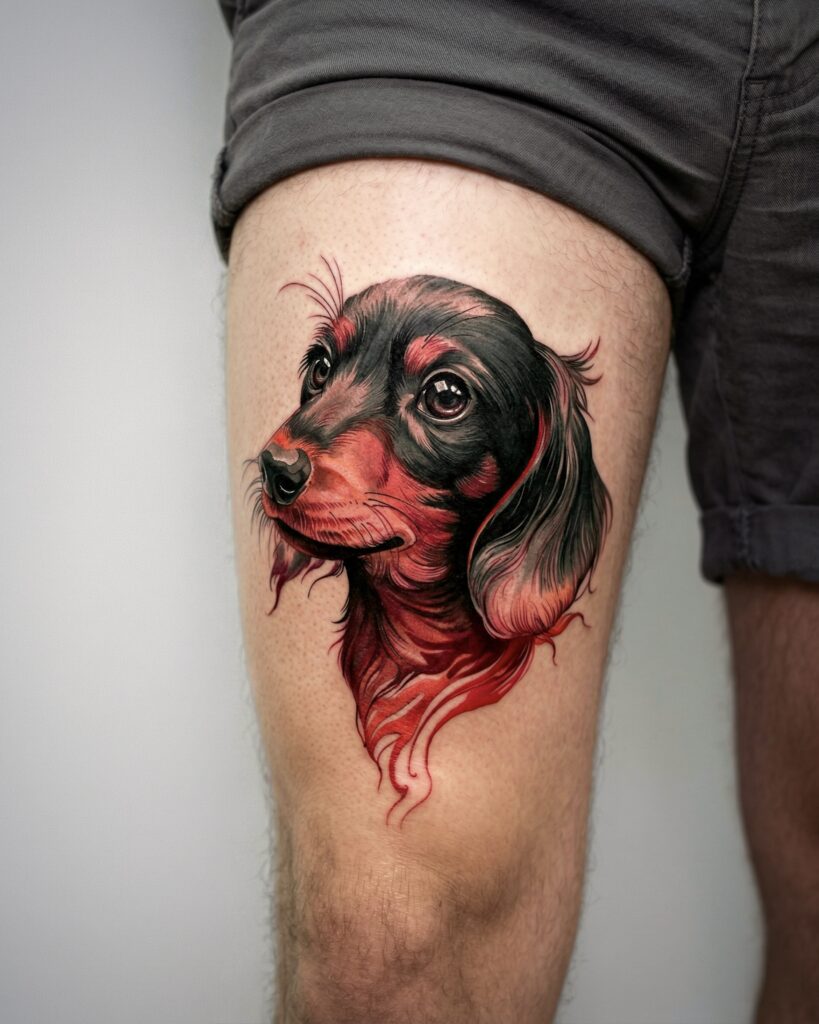
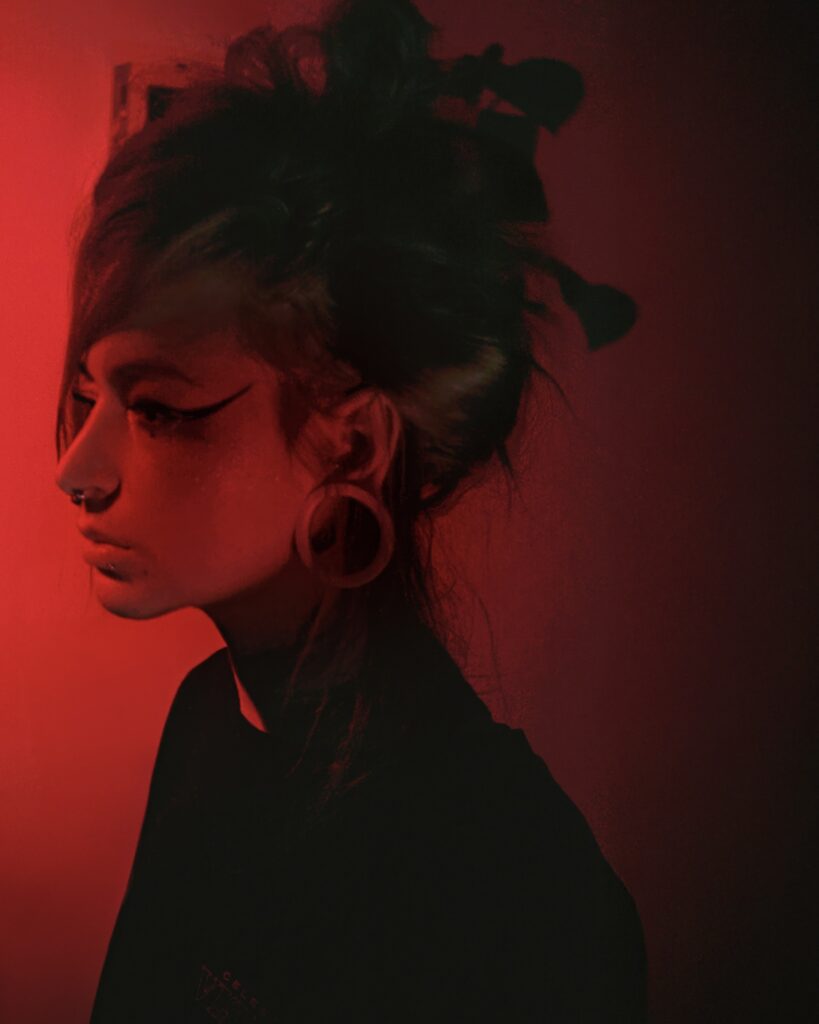

“I will not work with just anyone, unequivocally,”
Daria says.
“Just because someone has money doesn’t mean I will rush to work with them. I choose my clients today, and I am very proud of that.”
In an industry where volume often wins, this artist bet on selectivity, and it paid off in a body of work that feels unmistakably singular.
What Makes an Artist’s Work Impossible to Copy?
Here’s the uncomfortable truth for anyone chasing a trend: colors can be copied. Compositions can be traced. Techniques can be studied and replicated. Someone could, in theory, take Daria’s red-and-black palette, her elongated forms, her recurring motifs, and produce something that looks remarkably similar by tomorrow morning.
And still, it wouldn’t matter.
Asked what the one uncopyable thing is, the artist’s answer doubles as a philosophy of creative survival:
“They could copy everything from me today, but tomorrow I will surprise you all over again.”
That’s the real signature: not the palette, not the shapes, but the refusal to stand still long enough to be fully captured.


The Takeaway for Anyone Building Something Real
Whether it’s a tattoo portfolio, a creative project, or a sense of personal identity, the lesson here extends well past skin and ink. Authenticity isn’t a style you lock in once and defend forever. It’s a moving target you keep choosing, appointment after appointment, piece after piece, even when it would be easier to repeat what already worked.
Daria didn’t find her voice by chasing likes or pleasing every client who walked in. She found it by surviving a shutdown, trusting a strange idea about spider lilies, and committing fully once a heart-and-eye tattoo told her she was right. If there’s a next evolution, it probably hasn’t happened yet. And that’s exactly the point.


Follow Daria on Instagram
Lubdhak Biswas is a musician, entrepreneur and a tattoo artist based out of Kolkata (India).
He documents underground culture at the crossroads of tattooing and music.
His work focuses on craft, tools, ethics and the real working realities of creative industries.