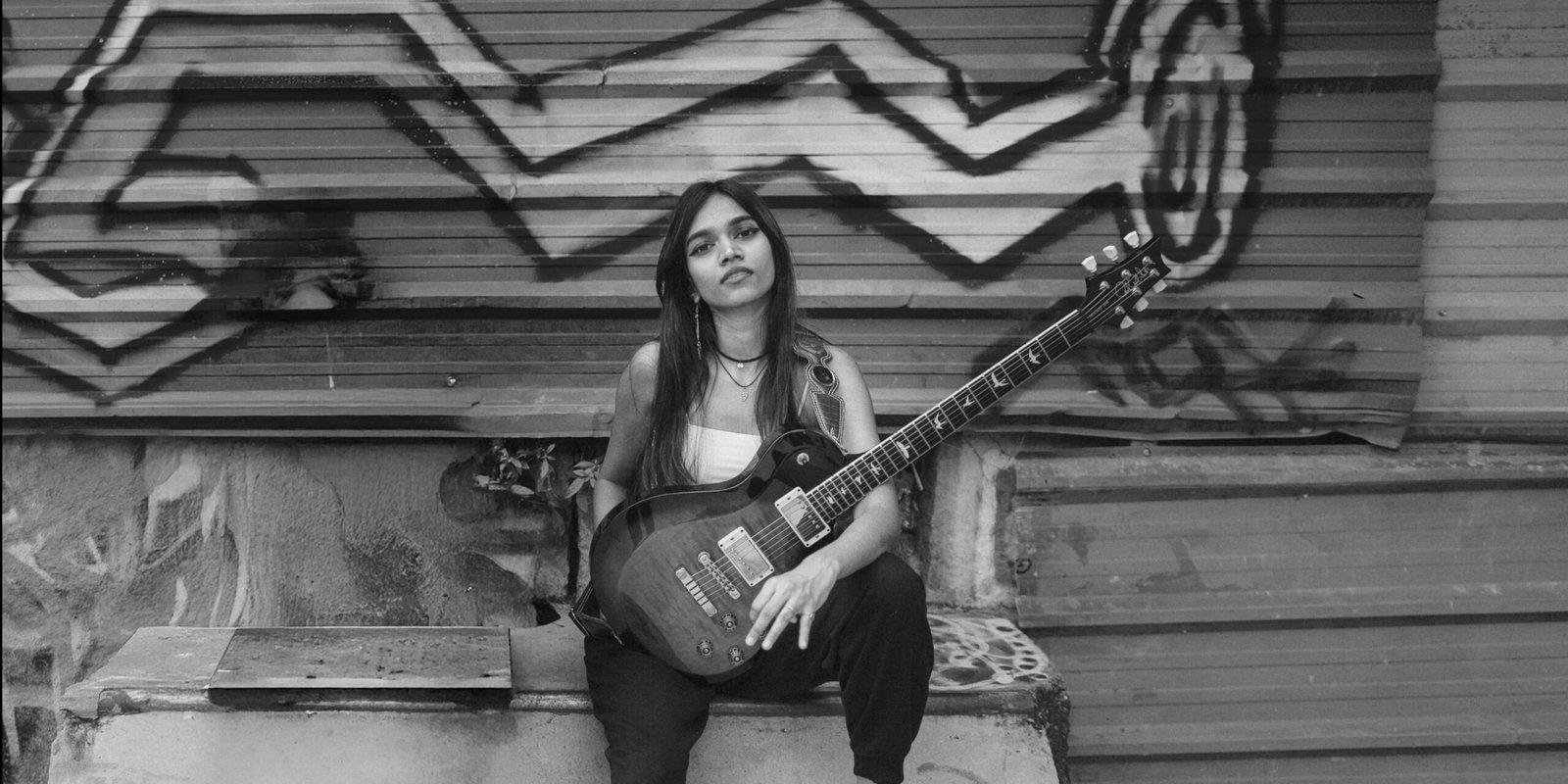
TL;DR: Niveditha Ode Linda is a Bangalore-based guitarist, drummer, and composer who picked up both instruments in the same year at age 13, co-founded Let There Be Guitar (LTBG) to champion instrumental music in India, and builds her philosophy around one core belief:
90% feel, 10% technicality.
Before she had a stage, she had a living room. Before she had an audience, she had a father who played drums and a house that never went quiet. That’s where it all started, not with a plan, but with a feeling. A slow accumulation of sound that worked its way in before she had the language to describe it. Niveditha Ode Linda didn’t set out to become a Bangalore-based guitarist, drummer, composer, and co-founder of one of India’s most intentional instrumental amusic initiatives. She just kept following what resonated.
But her story doesn’t begin on a stage. It begins at home, in the middle of someone else’s record collection, in a house that was always full of sound.
Growing Up in a Drummer’s House
Niveditha’s father was a drummer. That single fact changed the entire trajectory of her life.
The soundtrack of her childhood was Porcupine Tree, Megadeth, Dream Theater. Prog rock and classic rock filling the house like a second language, like furniture, like weather. Her father also had a deep love for guitar-centric music: Steve Vai, Joe Satriani, Yngwie Malmsteen.
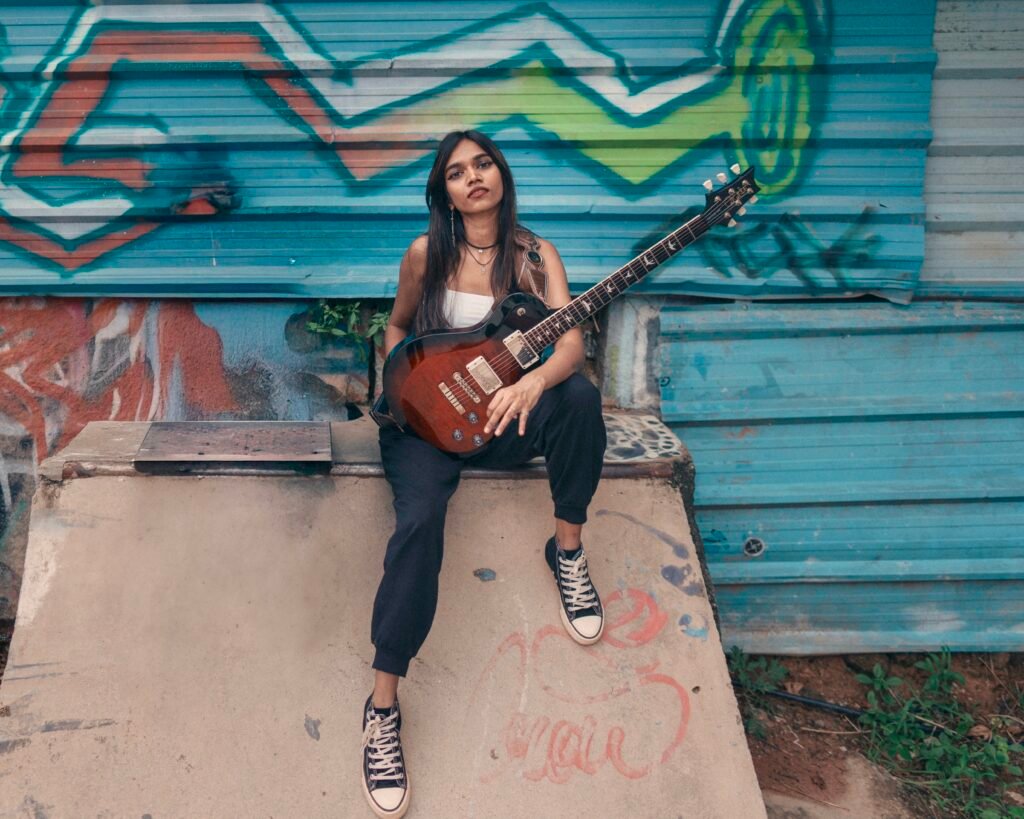
Artists who treated the guitar less like an instrument and more like a conversation, a living, breathing thing with something urgent to say.
Growing up inside that density of sound, rhythmically complex, melodically rich, technically demanding, did something to her ear long before her hands ever caught up. She was absorbing it all without knowing she was absorbing it. That’s how it works sometimes. The education happens before you even realize you’re being taught.
Two Instruments, One Year
At 13, Niveditha started learning drums. Her father’s Roland TD-9 electronic kit was right there in the house, and he walked her through the basics. From there, she went deeper on her own: YouTube, the internet, whatever she could find and follow.
Then, roughly five or six months later, she picked up the guitar. Same year. Two instruments. Most people spend years getting comfortable with just one.
For the first couple of years, drums took priority. She practiced seriously and started performing professionally. The guitar was there, present but secondary, a curiosity waiting for its moment.
That moment came when she turned 16.
A Gift That Opened a Door
A good friend gifted her an audio interface. It sounds like a small thing. It wasn’t.
That single piece of gear cracked something open inside her. Almost immediately, Niveditha fell in love with production and songwriting, specifically instrumental music. The interface
meant she could finally hear what was in her head translated into something real and tangible. Composition shifted from being a vague idea into an actual daily practice.
“I love composing the most,” she says, “because I get to put all the knowledge I have of drums, guitar, melody, rhythm, and harmony all into one.”
There’s something deeply revealing in that. Most musicians specialize, narrowing their focus until they own a single lane. Niveditha discovered that the overlap between disciplines was exactly where she wanted to live. The intersection wasn’t a compromise. It was the whole point.
Why She Swears by 90% Feel Over Technicality
Here’s where things get philosophically interesting.
You might expect that someone who plays two instruments at a high level would lean hard into technical display. The opposite happened. Learning the guitar, she says, made her want to serve the music more, especially on the drums. It gave her a perspective she hadn’t had
before.
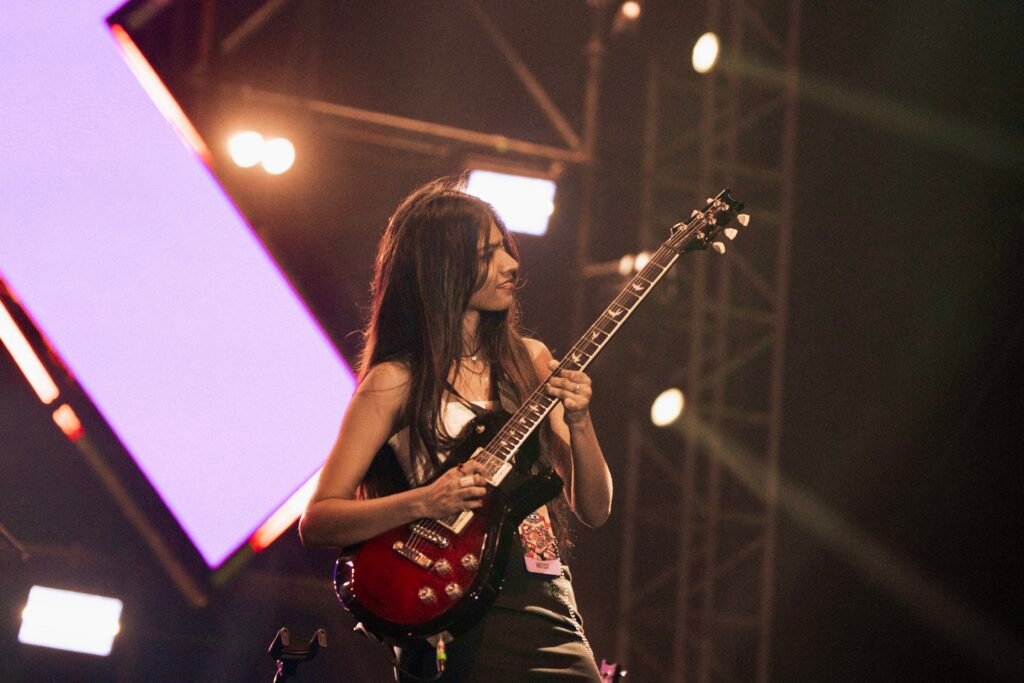
“After learning both guitar and drums to a certain level, it made me value balance more than going all out on both instruments,” she reflects. “The priority is to make someone feel the music rather than make them impressed at how technically you can play.”
When you only play one instrument, it’s easy to chase complexity for its own sake. There’s no external reference point, no other voice in the conversation. But adding a second instrument gave Niveditha a wider lens. She could hear how a drummer’s choices create or collapse
space for a guitarist. She could feel how melody and rhythm breathe together, or crowd each other out. She stopped playing at the music and started playing for it.
Her personal formula: 90% feel and melody, 10% technicality. The goal is to make someone feel something, not marvel at the mechanics underneath.
That’s a mature artistic position for any musician. Arriving at it at 16 is something else entirely.
Teaching Music Theory as a Tool, Not a Rulebook
Niveditha also teaches, and her approach to music theory as an educator reflects the same core philosophy.
Theory, in her view, is a communication tool. It helps her articulate concepts to students in a shared language, efficiently and clearly. But she’s deliberate about not overemphasizing it in the context of composition, because she’s seen what happens when it becomes a constraint rather than a guide.
“It can put you in a cage and not make you think outside of the box while composing,” she says. Her preferred method is trial and error: experiment, listen, adjust, repeat. That process keeps the creative instinct alive in ways that theory alone simply can’t.
Teaching has also kept her own theory knowledge sharp in ways that pure performance never would. There’s a quiet feedback loop between educator and student. The teacher explains
something, watches a student struggle or discover, and finds their own understanding shifting in the process. It’s one of those relationships that refines both sides over time.
Writing Without Words: A Keyboard-First Composer
Niveditha is a guitarist and drummer. So naturally, she starts composing at the keyboard.
It’s a detail that says a lot about how she thinks. Composition, for her, isn’t about showcasing the instruments she performs on. It’s about finding the cleanest possible foundation for the music to take shape on. Keys offer harmonic clarity. A chord progression can be heard without the rhythmic character of a drumbeat or the tonal texture of a guitar pulling attention in a particular direction.
Her process typically starts with a chord progression, then a melody layered on top. Or she reverses it: a melody first, then the harmony built underneath to support it. Both approaches yield different results, and she uses both with intention.
From there, everything else follows: the groove, the basslines, the ambience, the effects. Each element added in service of the whole. The result is instrumental music that tells a story without a single lyric, which in the Indian music landscape remains a relatively underexplored space.
Let There Be Guitar: Championing Instrumental Music in India
India’s music industry has long skewed toward vocals. Singers are the stars. Instrumentalists, no matter how gifted, are often framed as supporting cast. Niveditha and her co-founder,
Vishwas Karanth, started Let There Be Guitar (LTBG) partly to push back against that imbalance, to insist on a different kind of listening.
LTBG places deliberate emphasis on instrumental music, creating space for guitarists and other instrumentalists to be heard as primary artists, not background texture.
Karanth put it plainly:
“There are more incredible guitarists today in the country than ever before, and thanks to social media, it’s much easier for them to reach people. We also need to keep encouraging young players and giving them opportunities to perform. If we can build that ecosystem, I think the future of the Indian guitar scene is incredibly bright.”
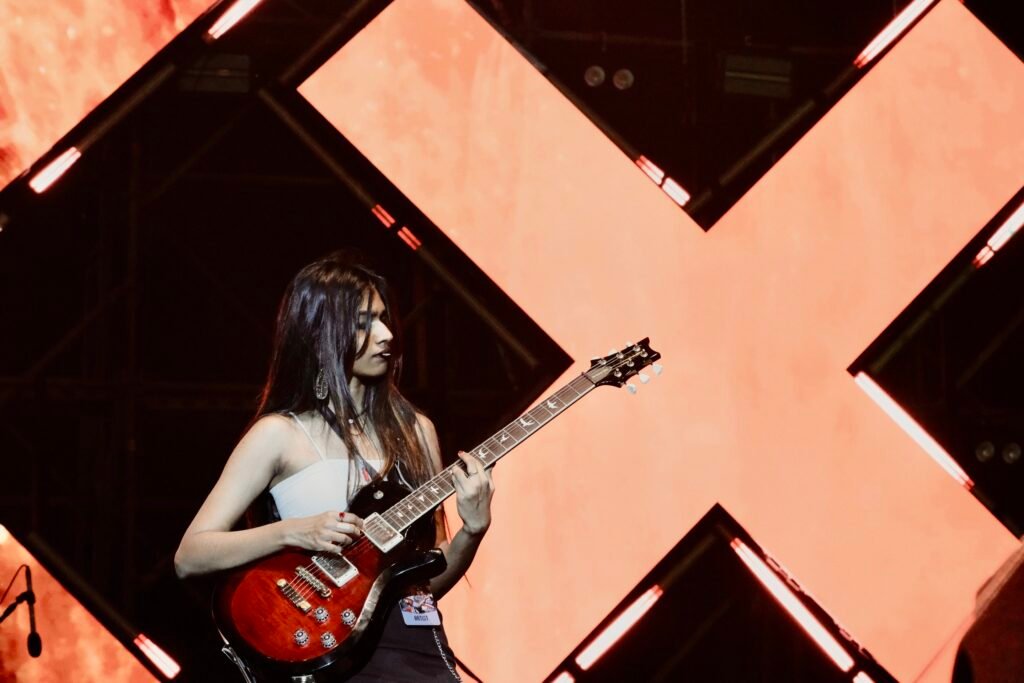
LTBG is one attempt to build exactly that ecosystem. Not just by showcasing artists, but by creating genuine infrastructure: opportunities, visibility, and community for instrumentalists who might otherwise be working in isolation, unsure whether anyone is listening.
What’s Coming Next
Niveditha has three things in the pipeline: an EP, upcoming gig dates, and production and instrumental songwriting workshops.
The workshops feel like a natural extension of everything she already is. Someone who has always believed that learning should be practical, exploratory, and a little messy. Bringing that into a structured format means more musicians getting access to the kind of thinking that
shaped her own development, the trial-and-error approach, the feel-first instinct, the willingness to start somewhere unexpected and follow where the music leads.
The EP will be the most public distillation yet of everything she’s been quietly building: the dual-instrument fluency, the feel-first philosophy, the keyboard-first compositional process.
What Niveditha’s Story Says About Staying True to Yourself
There’s a thread running through everything Niveditha does: the refusal to perform for the sake of performance.
She could easily build a career on technical display. She has the chops for it. Instead, she’s built one on something harder to fake. She composes because she genuinely loves it. She teaches because she believes theory should be a doorway, not a cage. She co-founded LTBG because instrumental music in India deserves a real platform, not just a corner of someone else’s stage.
For anyone navigating their own creative path, wondering whether to chase what looks impressive or what actually feels right, Niveditha’s answer is consistent and quiet and clear. Feel first. Everything else follows.
Follow Niveditha Ode Linda on Instagram
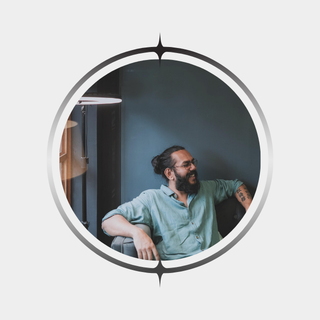
Lubdhak Biswas is a musician, entrepreneur and a tattoo artist based out of Kolkata (India).
He documents underground culture at the crossroads of tattooing and music.
His work focuses on craft, tools, ethics and the real working realities of creative industries.