Many of us are desperately searching for a spark—a moment of clarity that helps us find our authentic voice. For decades, music has been that sanctuary. It is the raw, unfiltered expression of the human experience that gives us permission to feel something real.
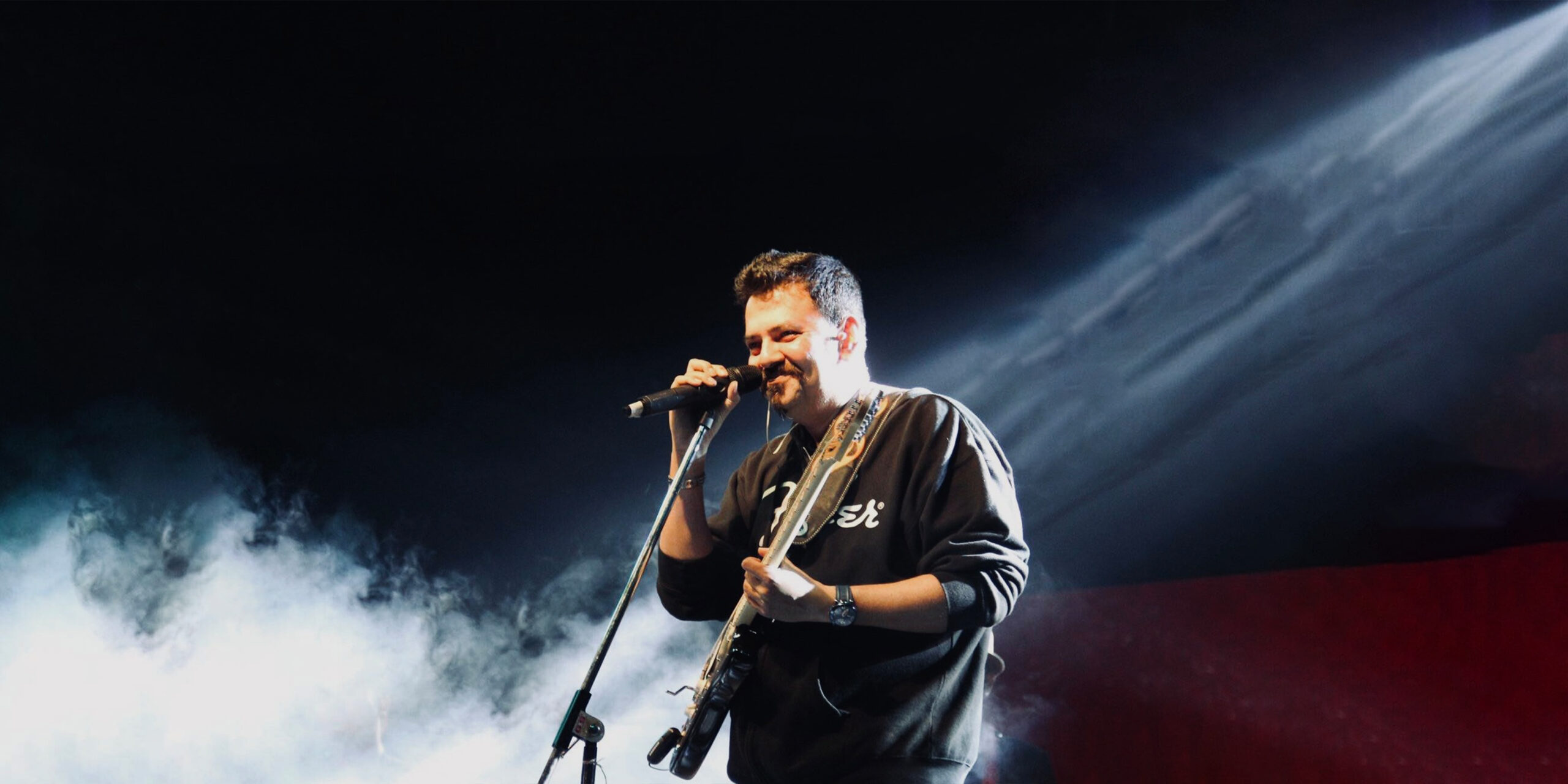
Few artists understand this profound connection better than Koco, the legendary guitarist and driving force behind the iconic Indian rock band, Agnee. Known for their deeply emotional melodies and unapologetic rock roots, Agnee has been a beacon of genuine artistry in an increasingly commercialized industry.
We recently sat down with Koco for an exclusive, interview-style conversation. We explored his personal journey of self-discovery, how he navigates the intense pressure to conform to modern trends, and what it truly takes to unlock your true potential as an artist and a human being. If you are ready to connect with like-minded souls and be inspired by real stories, dive into this unfiltered conversation.
The Pursuit of the Perfect Melody
Q: Agnee’s sound has always balanced accessibility with depth. When you approach a new composition, what is the first decision you make as a guitarist: emotional direction, tonal palette, or structural architecture?
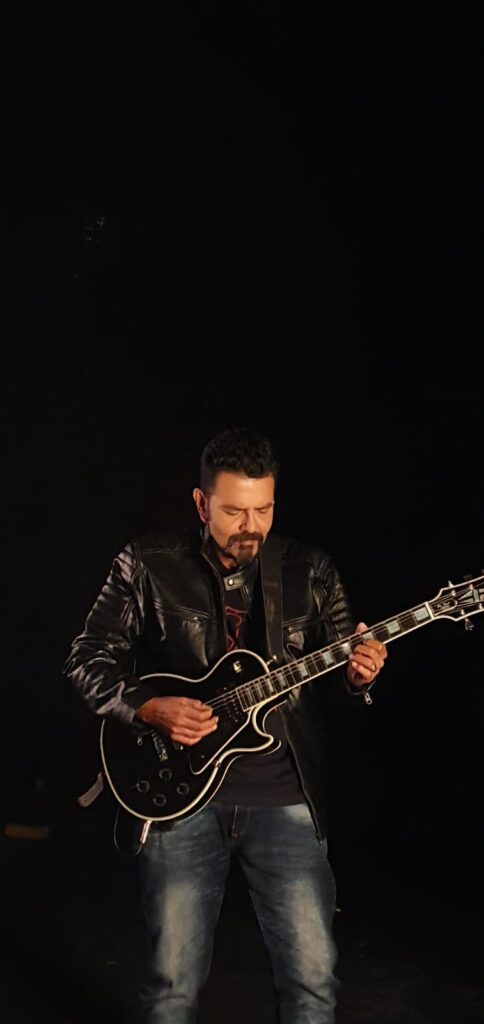
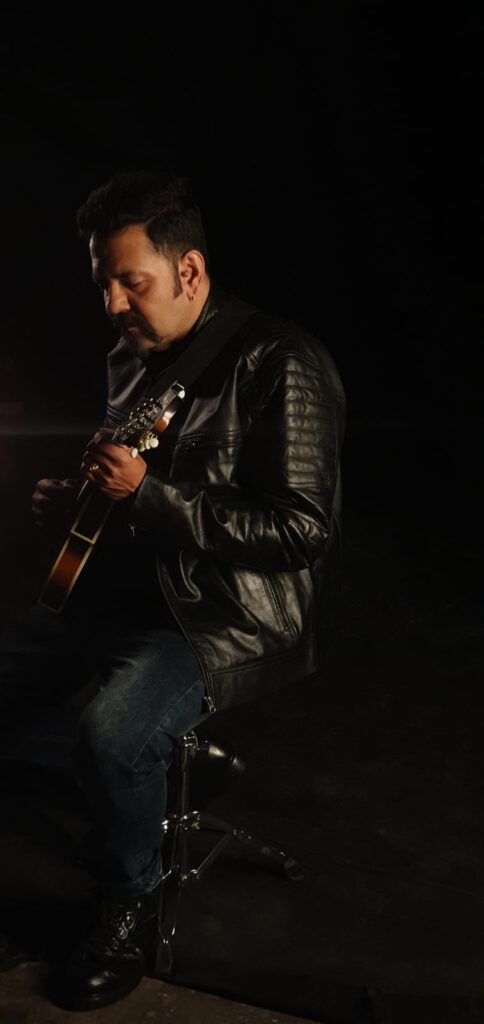
Koco: Agnee has always operated on a simple principle: the song is king. Everything begins with the melody. It dictates, directs, and ultimately shapes the sound and structure of every composition. The arrangements are there to serve the song, never to drive it.
As a composer, producer and guitarist, I always want the melody to hold its own without relying on overly complex chord structures or clever arrangements unless the song genuinely calls for it. If the melody can stand strong on its own, everything else tends to fall into place.
This approach also helps me as a producer. In a modern studio environment, with millions of sounds and possibilities available, it’s very easy to fall into option paralysis. Keeping the focus on the core melody helps narrow those choices and keeps the music honest.
Interestingly, about ninety percent of my guitar parts and solos come after the song is composed, although occasionally a song will germinate from a guitar riff. The intention has always been to keep the process as earnest and instinctive as possible, and somewhere along the way that approach naturally evolved into what people now recognise as the Agnee sound without any deliberate design.
Navigating the Evolution of Indie Music
Q: You have been part of the Indian rock ecosystem long before streaming reshaped everything. What has actually improved for serious musicians, and what has quietly deteriorated?
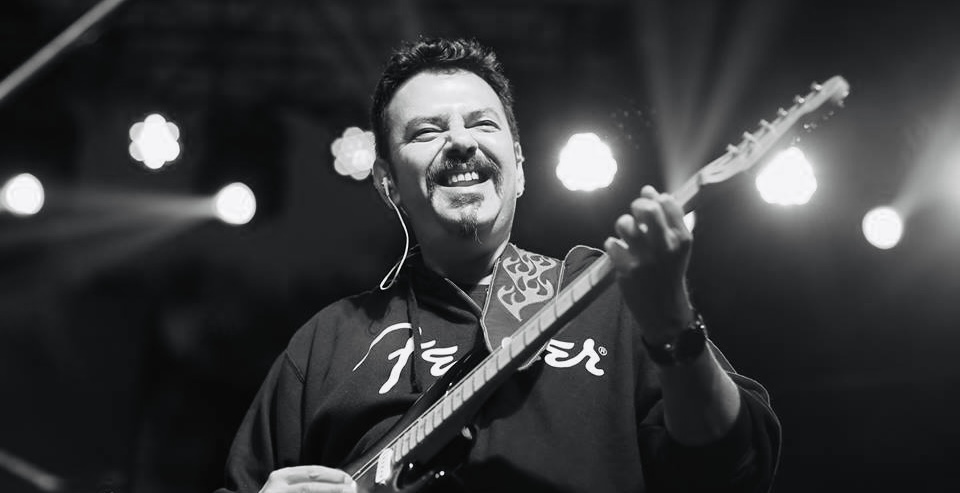
Koco: My journey with bands goes back to the mid-80s, when playing in a band essentially meant playing covers. Even bands that wrote their own music had to alternate originals with covers to keep audiences engaged.
Towards the end of the 90s things began to shift. Audiences slowly started embracing home-grown music and taking pride in their own cultural identity. Bands performing original material began gaining traction and that was really the beginning of the indie scene as we know it.
At that time channels like MTV and Channel V were still playing music, and there was a brief but exciting phase when indie videos received regular airplay. But by the early 2000s that ecosystem disappeared. Music television faded, radio focused almost entirely on Bollywood, and many serious musicians naturally gravitated towards the film industry.
Today the biggest improvement is access. With streaming and social media, musicians can reach listeners directly without relying on traditional gatekeepers. Audiences are actively discovering indie artists, and many are drawing millions of streams and selling tickets to live shows.
At the same time something has been lost. The earlier ecosystem, though limited, had clearer platforms and curators. Today the landscape is far more open but also far more crowded.
That said, I believe we’re entering another transition. A more structured independent music industry is slowly emerging, and audiences are once again discovering artists outside the mainstream.
Finding Your Voice Through Subtraction
Q: Many guitarists chase speed or complexity. Your playing often feels intentional rather than ornamental. What do you consciously remove from a riff before you decide it is complete?
Koco: I’ll admit that in my early years I chased speed like most young guitar players do. Pune, my hometown, has produced some incredible guitarists and there was always a healthy sense of competition among us.
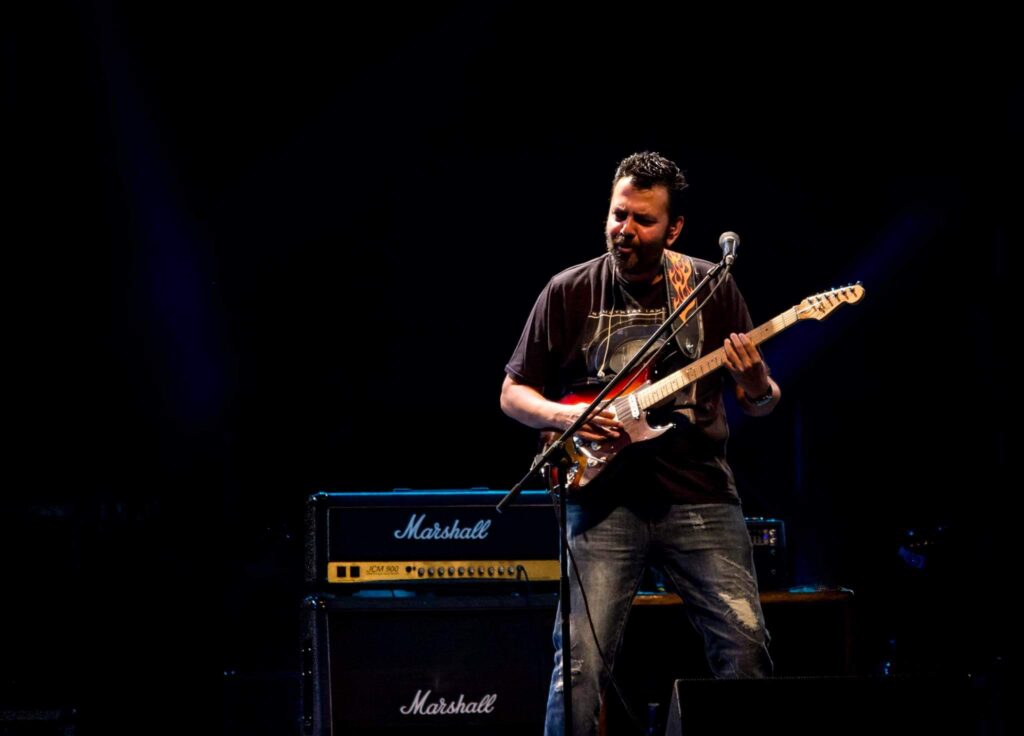
But over time I realised I wasn’t really cut out to win that particular race. What came more naturally to me was writing songs and coming up with memorable guitar ideas.
So gradually I stopped forcing myself into that space and focused on a style that felt more instinctive. I’ve always admired players like David Gilmour and Mark Knopfler — players who never chased speed but whose musical voice became instantly recognisable.
When I work on a riff today, what I usually remove is excess. If a phrase works with fewer notes, I strip it down. If something feels ornamental rather than essential to the melody or emotion, it goes.
My aim has always been to write simple, memorable melodies rather than prove myself as a virtuoso guitarist.
The Psychology of Composing
Q: Agnee has written for albums, film, and television. How does your compositional psychology shift when the music must serve a narrative rather than stand alone?
Koco: For me, the core of composition always begins with some kind of impulse in the mind. That impulse then needs a vocabulary in order to take form, and that vocabulary comes from everything a musician has consciously learned or subconsciously absorbed over the years.
Whether you’re composing for a standalone song or writing music to serve a visual narrative doesn’t fundamentally change the source of the music. The source is always your own mind and your ability to imagine yourself in a particular emotional situation.
I’ve written love songs when I wasn’t in love, uplifting music when I was personally going through a difficult phase, and sombre pieces about loss when I was actually quite happy.
The brain draws from a vast reservoir — life experiences, upbringing, influences and society. So even when you’re writing music for someone else’s story, the interpretation still passes through your own emotional lens.
In the end the music inevitably reveals something about the composer.
Tone, Gear, and True Expression
Q: Over the years, how has your relationship with tone evolved from gear fascination to philosophical intent? What does ‘your sound’ mean to you today?
Koco: Whenever I’m budgeting for a family holiday, a small part of my brain keeps calculating how much guitar gear I could have bought instead. I’ll admit it — I’m a complete gear addict.
Like most guitar players, the search for the perfect tone never really ends.
What really changed my relationship with tone was getting deeper into music production. Once you start working seriously with EQ, compression and dynamics, you begin to understand how sound actually functions inside a mix.
That shift changed my perspective. Instead of chasing an isolated guitar tone, I started focusing on tones that belong inside the mix.
A senior guitarist who has watched me play for over four decades once remarked that despite seeing me play through countless guitars, amps and processors, my tone has essentially remained the same.
That comment reminded me of something guitar players often say — tone is really in the fingers.
Authenticity Over Aesthetics
Q: In a band that blends Indian musical identity with rock grammar, where do you draw the line between authenticity and aesthetic packaging?
Koco: One of my earliest decisions with Agnee was that we would never deliberately employ Indian instruments just to emphasise our identity. I’ve always been wary of the band being perceived purely as a fusion act.
For me the Indian character of the music is already present in the melodic structure itself. Cultural identity reveals itself naturally through composition.
That’s why I’ve always preferred keeping the band format very classic — drums, bass, guitar and vocals — and letting the songs carry the identity.
With Agnee the composition has always been the hero and the instrumentation simply supports the song. We may call ourselves a rock band, but we never set out to write a “rock” song. We simply try to write a song free of genre.
Rebuilding in the Modern Era
Q: If you had to rebuild Agnee from scratch in 2026 with no legacy advantage, what would you do differently in terms of songwriting, branding, and positioning?
Koco: The songwriting itself probably wouldn’t change very much. Agnee has never chased trends and I still believe the best approach is to write music that comes naturally.
What has changed dramatically is technology. Today it’s possible to develop a song idea in a home studio and take it to nearly eighty percent of what the final recording might sound like before the band even enters a studio.
Where things would be radically different is branding and positioning. When Agnee launched in 2007 the ecosystem was driven largely by record labels and mainstream media.
In 2026 discovery happens through streaming platforms and social media. If we were starting today we would probably release independently, use digital distribution networks and focus heavily on building an online presence.
The Secret to Artistic Longevity
Q: For young guitarists trying to build longevity rather than virality, what discipline or mindset shift separates a sustainable career from a short spike of attention?
Koco: Every musician is different and what works for one person may not necessarily work for another. Each generation evolves according to the environment it grows up in.
I’m not someone who dismisses new ideas. In fact I often seek feedback from my 25-year-old son who is an avid listener and guitarist himself.
But when it comes to longevity there are a few principles I believe in.
Go all in. Remain original by being yourself. Keep educating yourself about every aspect of the craft. Value consistency whether you are a solo artist or part of a band.
And most importantly — don’t chase stardom. Chase musicianship.
Take the Next Step in Your Creative Journey
Koco’s philosophy is a deeply powerful reminder that lasting success does not come from hacking an algorithm or chasing the latest cultural trend. True longevity comes from honoring your core identity. “Don’t chase stardom. Chase musicianship.”
Follow Koco on Instagram
Lubdhak Biswas is a musician, entrepreneur and a tattoo artist based out of Kolkata (India).
He documents underground culture at the crossroads of tattooing and music.
His work focuses on craft, tools, ethics and the real working realities of creative industries.