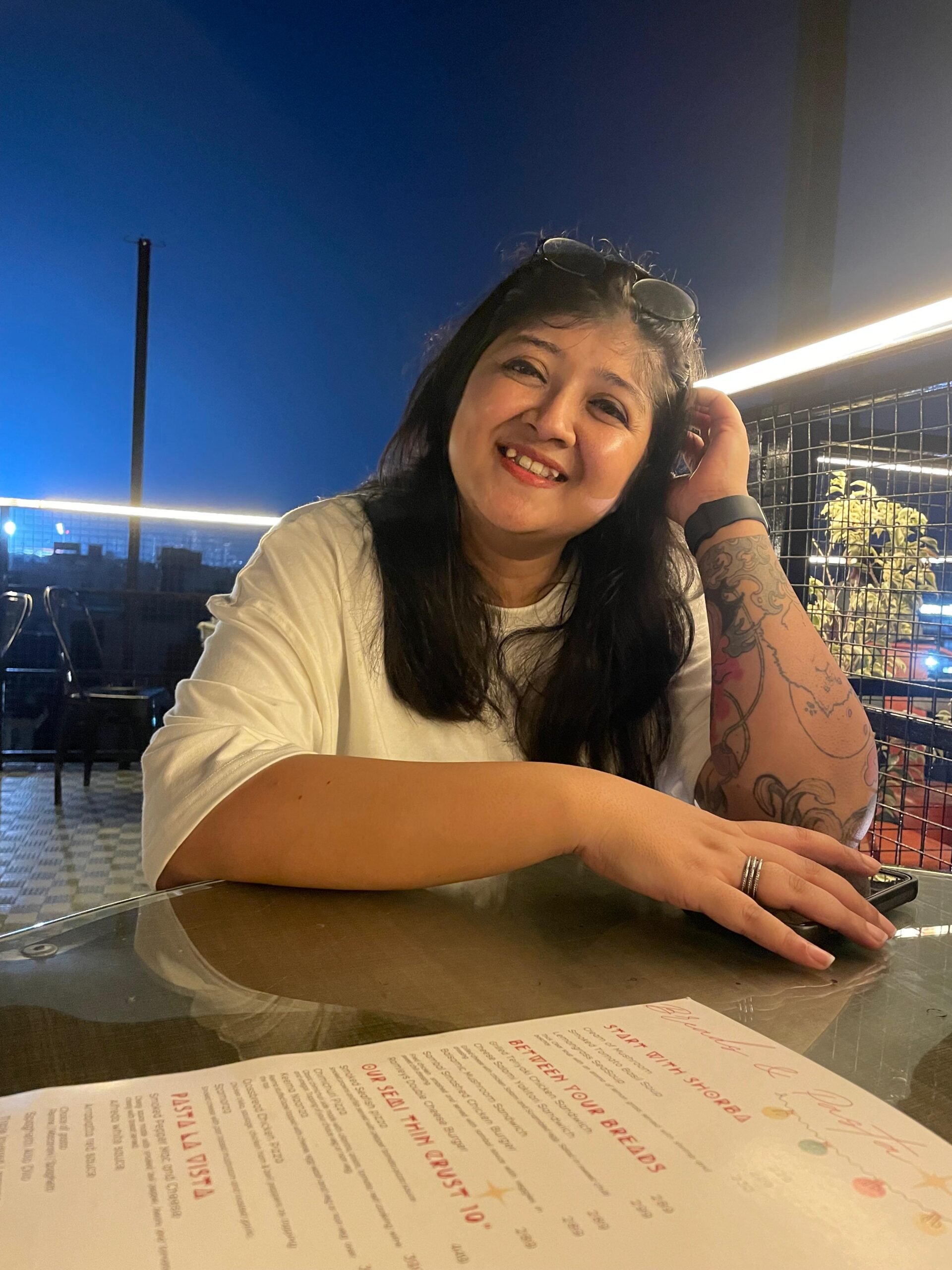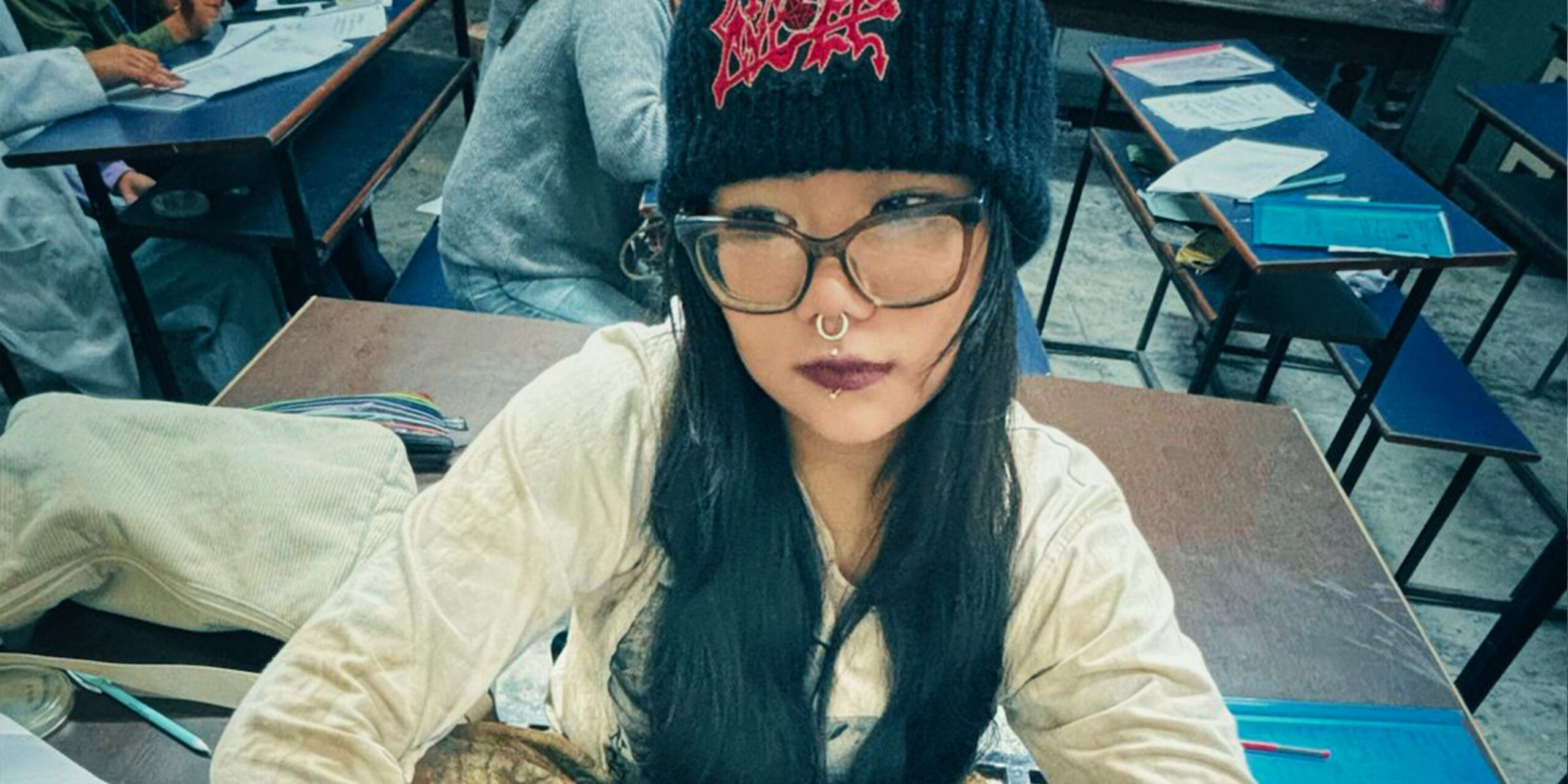
In a world that demands we move faster, scroll quicker, and consume more, there is a quiet rebellion in choosing to slow down. For Akansha Rai, known artistically as Peapounder, this rebellion is etched into skin.
Based in the misty hills of Darjeeling, Akansha is an artist navigating the delicate balance between chaos and control. Her journey isn’t just about learning to tattoo; it’s about learning to see. It’s about distilling the noise of the world into lines that hold weight and meaning.
Whether she is pulling a bow across a violin or driving a needle into skin, Akansha is searching for the same thing: presence.
From Handpoke to Machine: A Shift in Rhythm
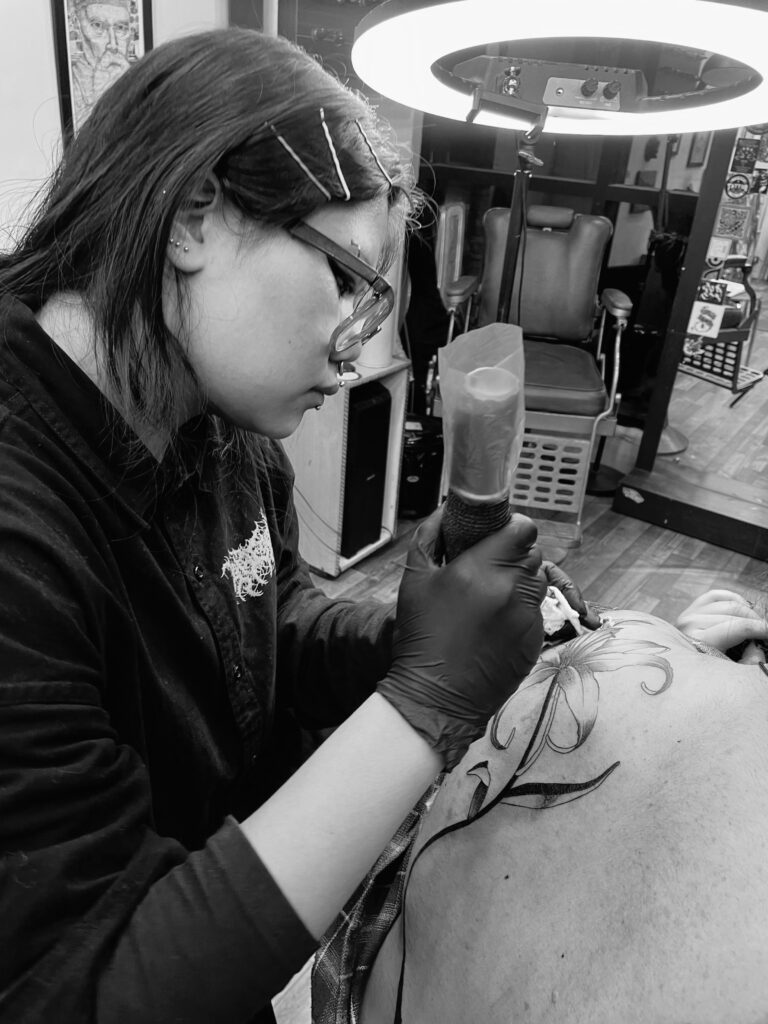
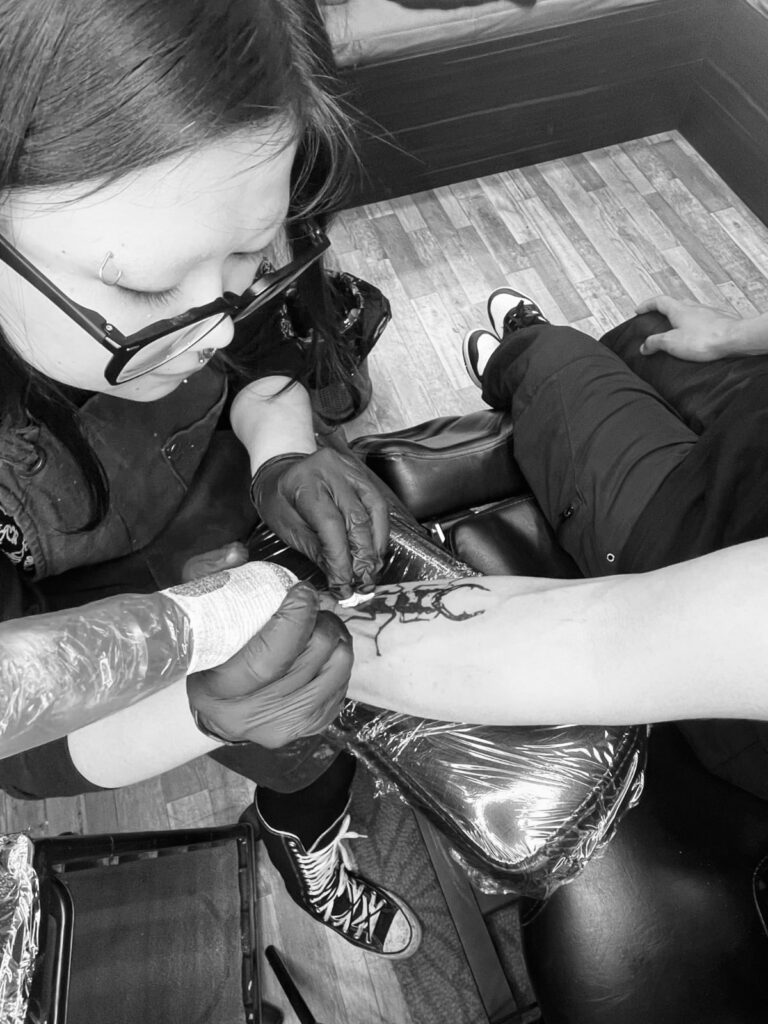
Akansha’s entry into the world of body art wasn’t through the buzz of a machine, but through the patient, rhythmic silence of handpoke tattooing. She started young, back in class 11, drawn to the intimacy of the manual process.
But growth often requires us to leave our comfort zones. Her transition began under the mentorship of Madhav at Studio Ohaana, who introduced her to the rotary machine. Later, she solidified her skills with an apprenticeship at Calcutta Ink in Kolkata.
“Coming from handpoke, transitioning to machine tattooing was a significant shift,” Akansha reflects. “Holding a vibrating machine and maintaining clean, controlled lines is challenging at first.”
It wasn’t just a change in tools, it was a change in philosophy. The machine required a different kind of discipline, understanding needle depth, shading, and the vibration that hums against your hand. It was a lesson in control.
“Most of that learning happens on skin,” she says, admitting to practicing on herself to truly understand how the ink settles. “Ultimately, it comes down to practice.”
The Darjeeling Influence: Fog, Light, and Isolation
We are often shaped by our environments in ways we don’t realize until we look back. For Akansha, the landscape of Darjeeling, its shifting fog, its sudden light, its density, has seeped into her visual language.
“The landscape is constantly shifting… and that naturally influences how I think about composition and pacing in my work,” she explains.
But there is another side to growing up in a hill station. The tattoo culture in Darjeeling is limited, almost obsolete in some circles. While some might see this as a disadvantage, Akansha sees it as a form of freedom. The absence of a saturated “scene” meant she wasn’t pressured to follow trends. Her style grew in isolation, becoming self-driven and intuitive rather than performative.
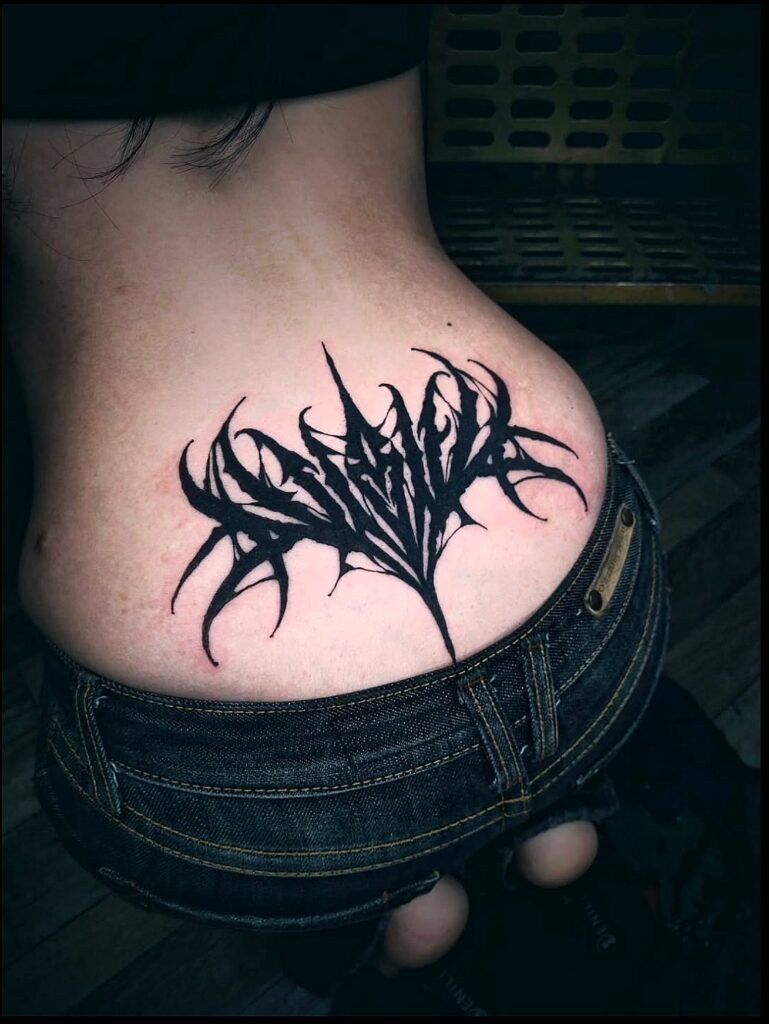
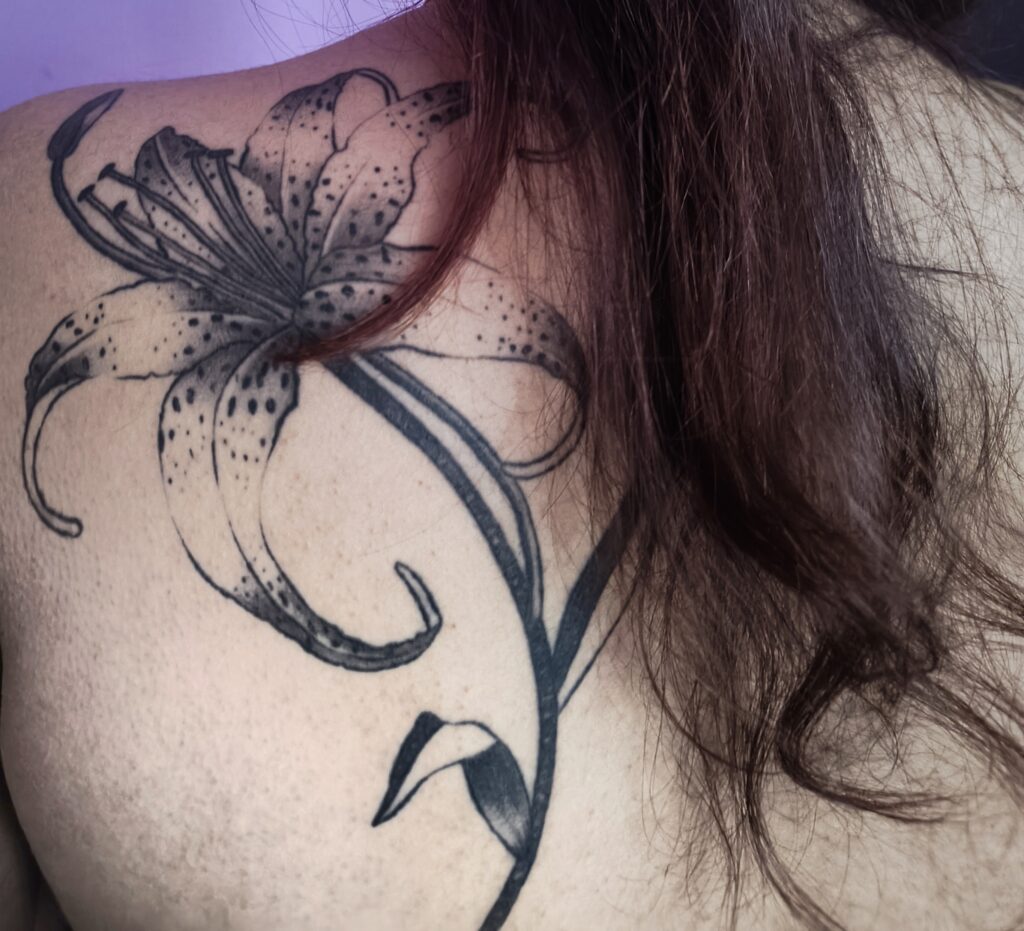
“That absence also shaped me,” she notes. It allowed her to develop a voice that feels authentically hers, influenced not by Instagram algorithms, but by the movement and stillness of the mountains.
Chaos and Control: The Violinist Who Listens to Grindcore
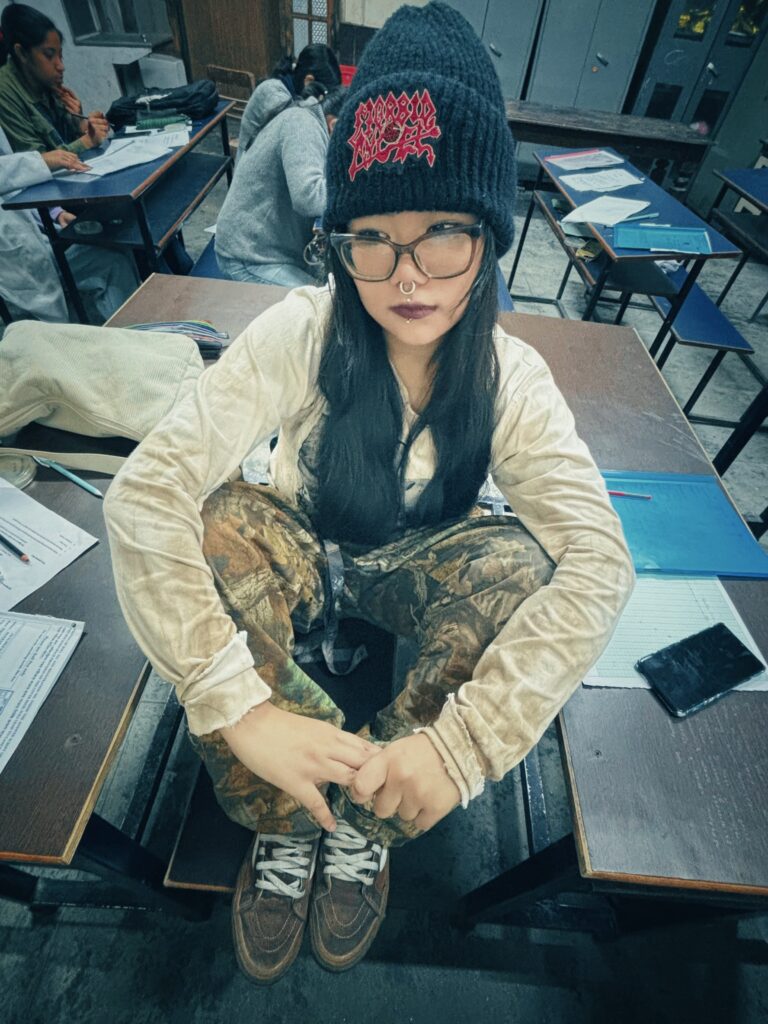
Akansha is a study in contrasts. She is a Grade 8 trained violinist, disciplined in the classical rigor of music. Yet, she finds her artistic fuel in the aggressive, chaotic sounds of grindcore, slam, and breakcore.
“The speed, repetition, and pressure in that music mirrors the way I make my ‘contrast’ decisions,” she says. “There’s a physical drive behind it, almost compulsive.”
This intensity translates into her art. Her work often pushes images to the edge, playing with density and mark-making. But it’s never just chaos. Like a violinist who must control every nuance of pitch and tone, Akansha knows that aggression needs a container,
“The aggression gives the work energy, but it still needs control,” she emphasizes.
For her, art is a way to balance her own nature, finding a middle ground between her “gregarious” social side and her need for solitude. “I could be listening to drumcorps an entire week… or Norah Jones the entire month sketching flowers everyday.”
Ornamentation as Identity
In the tattoo world, there is often pressure to have a deep, profound meaning behind every piece of ink. Akansha challenges this narrative. For her, ornamentation is enough.
“Ultimately, a tattoo becomes meaningful when it makes you feel more at home and confident in your own body,” she states. “That’s where ornamentation turns personal.”
She points to one of her own tattoos—a fish wearing pants and fishing for a skull—as proof. It doesn’t follow a grand narrative or spiritual lineage. It just represents her personality. And isn’t that the point? To decorate our bodies in ways that make us smile, that make us feel like us?
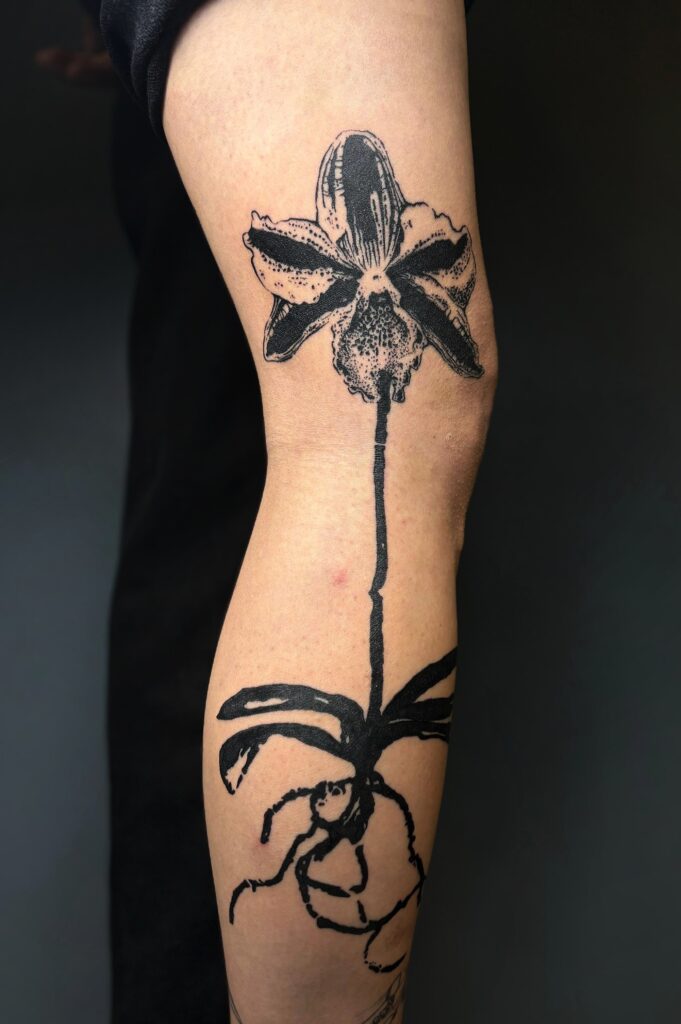
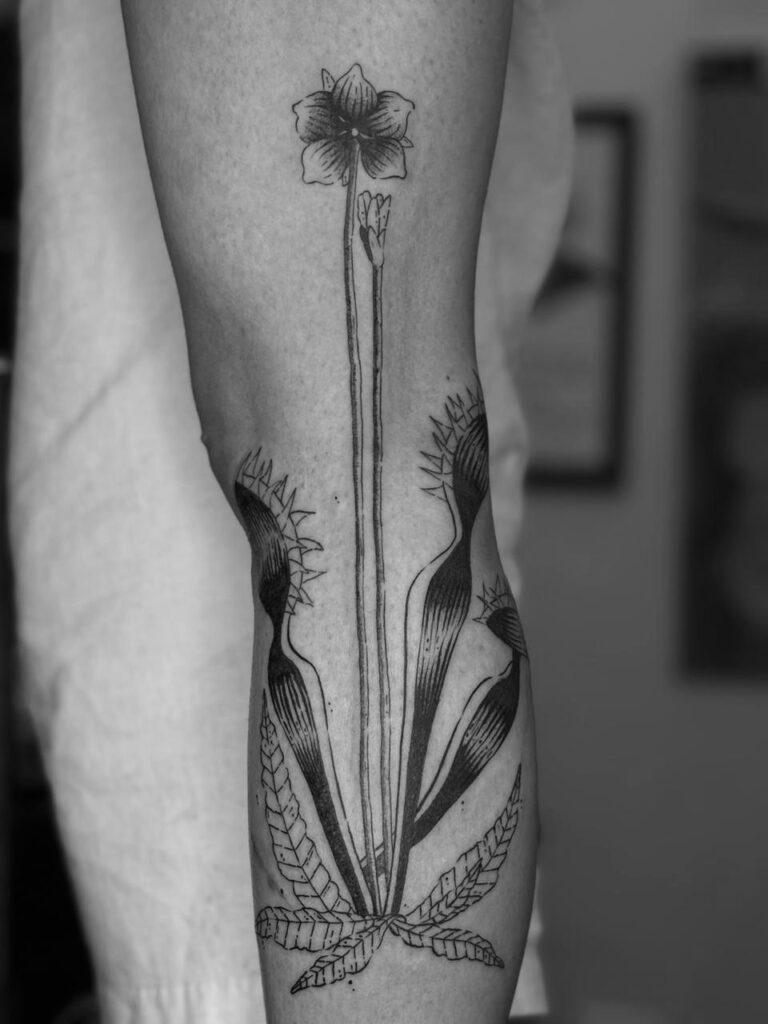
Whether a client wants a deeply symbolic piece or just something that looks beautiful, Akansha believes both are valid. The true value lies in the feeling of ownership it gives the wearer.
The Courage to Explore
As a young artist still early in her career, Akansha is refreshingly honest about her process. She isn’t trying to force a “definitive style” just yet.
“Exploration is how I stay honest with where I am,” she says. “It only becomes avoidance when it stops teaching me something.”
In a culture that demands we brand ourselves instantly, Akansha is taking the scenic route. She trusts that her visual language will reveal itself through repetition, through years of making, and through the honest pursuit of what holds her attention.
“The only real failure would be to stop making art altogether.”
Akansha Rai’s journey is a reminder that we don’t need to have it all figured out. We just need to keep showing up, keep practicing, and keep listening to the rhythm of our own lives—whether that rhythm is a classical concerto or a grindcore breakdown.

Mishuk is a digital marketer by profession and a storyteller at heart. He crafts narratives through content marketing, blending strategy with culture. When he’s not building campaigns, you’ll find him immersed in music, martial arts, and all things creative. Yes he also designed the website you’re reading right now.