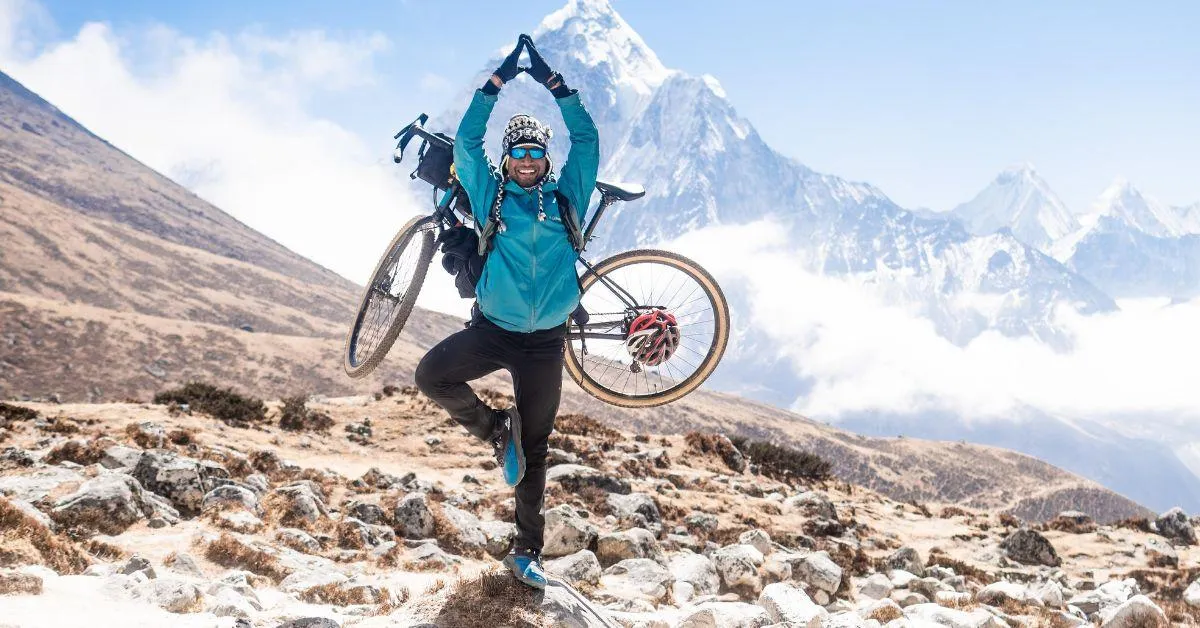
For some, adventure is a vacation. For others, it’s a calling. For Jyotishko Biswas, it’s a challenge to be conquered on two wheels. In a feat that tests the limits of human endurance, he cycled from the sandy shores of Digha Beach to the formidable altitude of Everest Base Camp. It’s a journey that speaks to the restless part of our soul—the part that wonders, “What if I just kept going?”
This isn’t just a story about a long bike ride. It’s a narrative about pushing past perceived limits, finding connection in unexpected places, and discovering that the greatest challenges often lead to the most profound self-discoveries.
The Spark of an Unconventional Dream
Why would someone choose to cycle to the foot of the world’s highest peak? For Jyotishko, the motivation was beautifully simple: the challenge itself. “We hear about these things happening a lot in foreign countries, but we don’t get to hear such stories in India,” he explains. That gap was his invitation. He wanted to prove that epic adventures weren’t confined to distant lands; they could start right here, on a familiar beach, with a single pedal stroke.
He chose a bicycle not for convenience, but for the unique experience it offered. Trekking has its own rhythm, but cycling presents a different kind of conversation with the terrain. “I knew that the terrain would be a tough one to crack and hence wanted to experience it,” Jyotishko says. He craved the specific thrill that only two wheels could provide against the demanding, upward climb.
29 Days of Grit and Grace
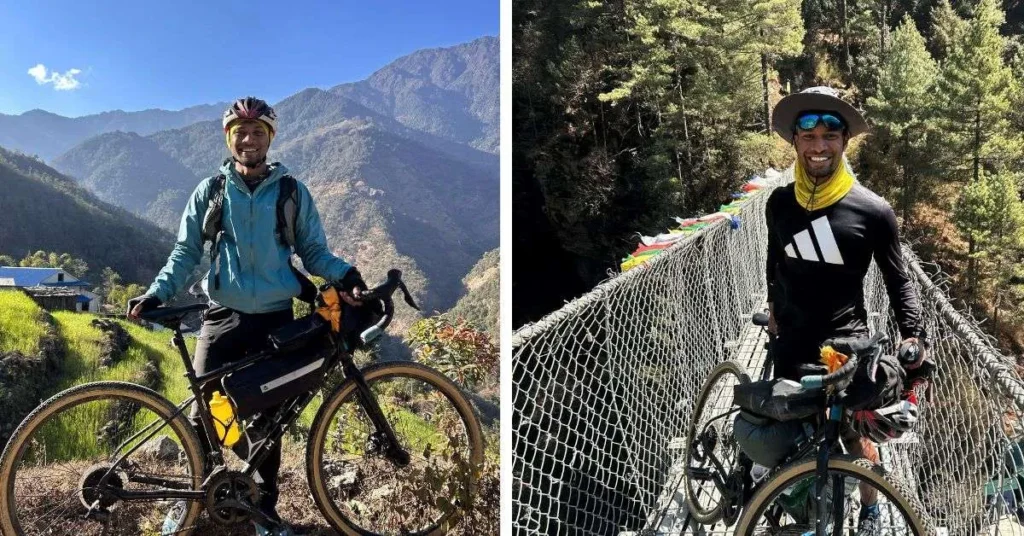
The journey from sea level to the thin air of the Himalayas took 29 days. Each day presented its own set of trials, from navigating unpredictable roads to battling the relentless pull of gravity. But after nearly a decade in the world of extreme sports, Jyotishko’s mindset had shifted. What others might see as insurmountable difficulties, he now views as possibilities waiting to be explored.
“I don’t see this as a difficulty but a possibility,” he reflects. This perspective doesn’t dismiss the physical toll, but it reframes it. The physical training is a prerequisite, a way of preparing the body for what the mind has already decided to achieve.
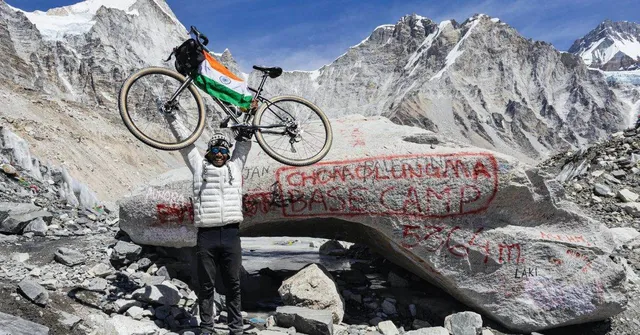
Of course, nature always has the final say. Ascending too quickly, Jyotishko experienced a bout of altitude sickness—a stark reminder of the mountain’s power. His response was measured and calm. He simply descended to a lower altitude, allowed his body to acclimatize, and then continued his journey upward. It was a lesson in listening to his body and respecting the environment he was in.
Human Connection on the Slow Road
One of the most beautiful aspects of a journey like this is the human element. Traveling slowly on a bicycle, Jyotishko had the opportunity to connect with people in a way that faster modes of travel rarely allow. Fellow travelers and locals alike were captivated by the sight of a lone cyclist pedaling his way toward the roof of the world.
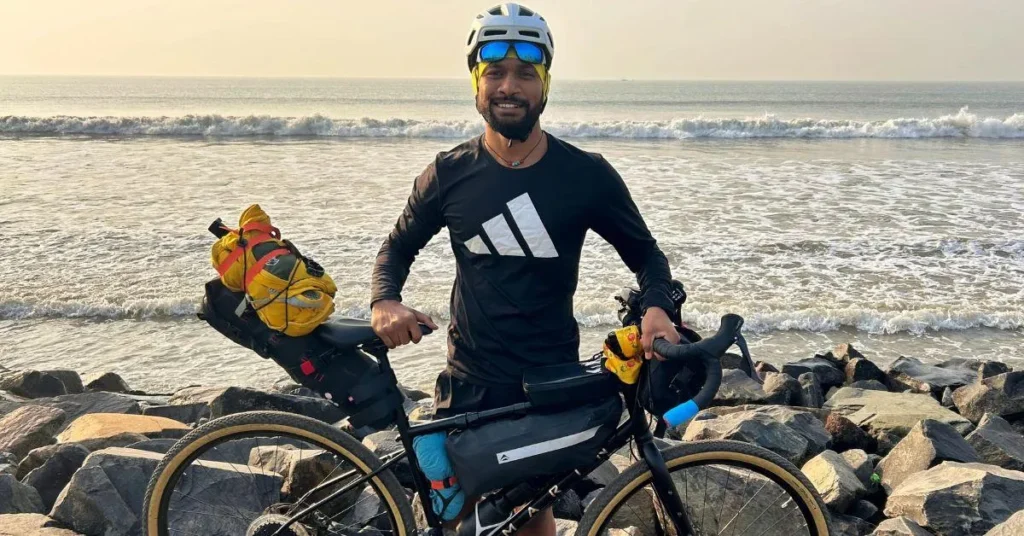
“Everyone was very appreciative,” he shares. “You understand that humans haven’t forgotten the art of appreciation when you trek or do things like this.” His journey became a point of connection. He met a German couple who were also avid cyclists, sharing stories and a mutual respect for the road. The bicycle, a simple machine most of us can relate to, acted as a bridge, making his extraordinary feat feel tangible and inspiring to those he met.
The Majestic Arrival and the Lessons Learned
After 29 days of relentless effort, the moment finally came. Reaching Everest Base Camp wasn’t just an arrival; it was a culmination. “It was pretty majestic,” Jyotishko says, the word choice reflecting a feeling that transcends simple accomplishment. The sight of the base camp, framed by the towering peaks of the Himalayas, was a reward for every drop of sweat and every moment of doubt.
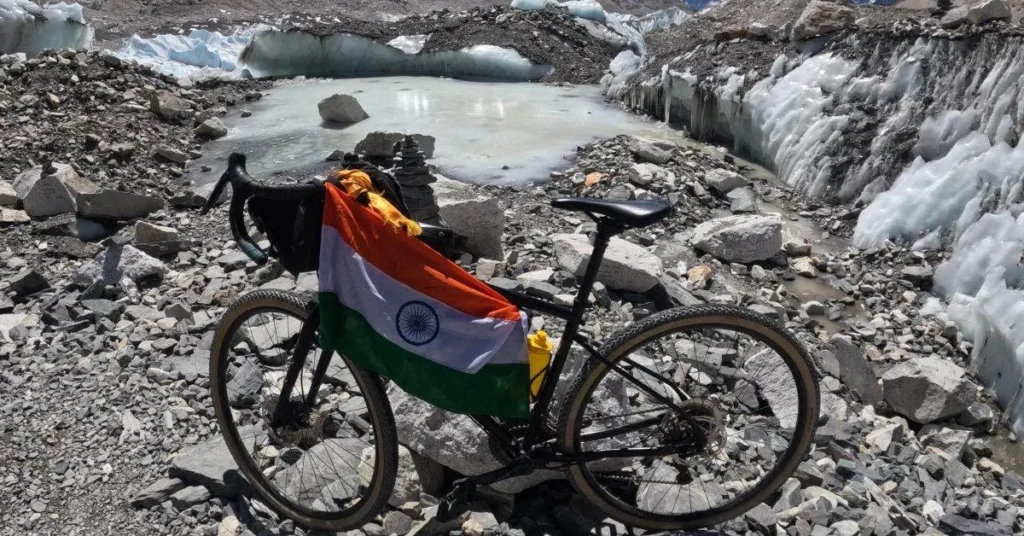
This journey, however, taught him more than just the limits of his physical endurance. It reinforced a core belief: possibilities are endless. “Since dreams are very fragile, the only thing we can do is aim for continuous progress and stay dedicated to it,” he says. The trip also underscored the necessity of sacrifice. To achieve something truly great, you have to be willing to let go of comfort, of certainty, of the easy path.
A Message for the Dreamers
For anyone sitting at home, scrolling through stories of adventure and wondering if they have what it takes, Jyotishko’s message is clear and direct. It starts with discipline. “Routine and discipline are two things that should be the guiding principle of your everyday,” he advises.
He stresses the importance of fitness and getting acquainted with the world of extreme sports, which is more accessible now than ever before. But beyond the physical preparation, the most crucial element is belief. “Everything is a possibility if you believe in it, but you have to believe in it wholeheartedly and work towards achieving it.”
Jyotishko Biswas’s journey from the sea to the mountains is a powerful testament to that belief. It’s a story that encourages us to look at our own challenges not as roadblocks, but as invitations. It reminds us that our dreams, no matter how fragile they seem, are worth the effort, the sacrifice, and the unwavering dedication it takes to see them through.
So, what’s your Everest? You don’t have to cycle to the Himalayas to find out. You just have to believe in the possibility, and take that first, bold step.

Mishuk is a digital marketer by profession and a storyteller at heart. He crafts narratives through content marketing, blending strategy with culture. When he’s not building campaigns, you’ll find him immersed in music, martial arts, and all things creative. Yes he also designed the website you’re reading right now.