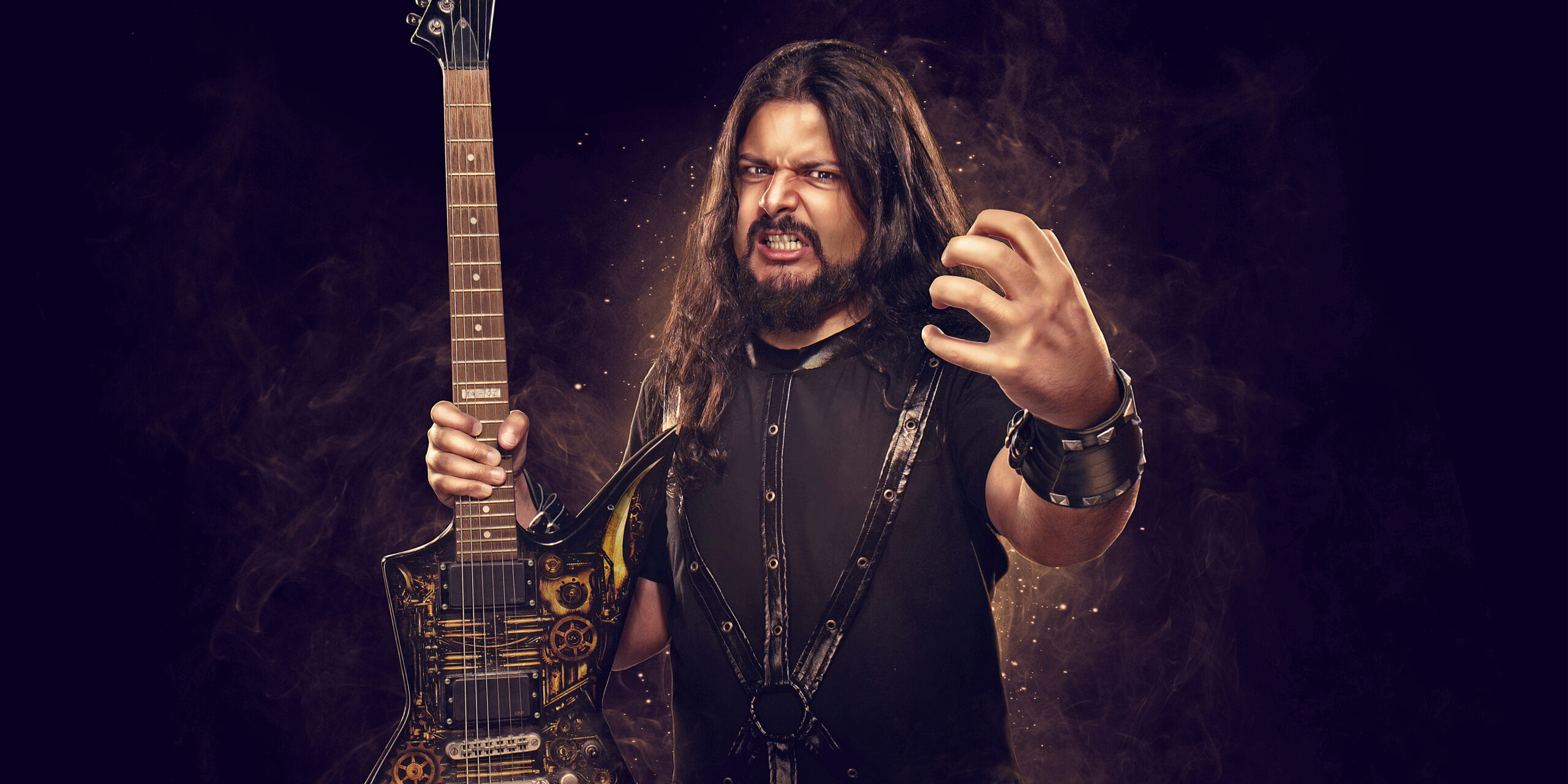
If you grew up in the Indian metal scene anytime after the year 2000, the name Sahil Makhija, or rather, his alter ego, Demonstealer, needs no introduction. For two decades, he has been the driving force behind Demonic Resurrection, a band that didn’t just play metal but helped define what Indian metal could look like on a global stage.
But Sahil’s story isn’t just about heavy riffs and growls. It’s a story of constant reinvention. From a 16-year-old kid trying to play every instrument in his bedroom to a YouTube sensation teaching the world how to cook keto, his journey is a masterclass in turning passion into a lifestyle.
The One-Man Army
It all started in school. Like many of us, Sahil got hooked on the adrenaline of heavy metal and decided he didn’t just want to listen; he wanted to play.
“Originally, my entire group of school friends were supposed to form a band together,” Sahil recalls. But as often happens with teenage dreams, most friends dropped out. Only Sahil and his friend Sunil stuck with it, forming a band called Slaves of Pain.
That early determination became the blueprint for Demonic Resurrection (DR). In the beginning, DR wasn’t a collaborative project; it was Sahil doing everything. “I think when I started DR, it was me doing everything, trying to play all the instruments on record and treating it more like a one-man show,” he admits.
This “do-it-yourself” attitude wasn’t just a choice; it was a necessity. In the early 2000s, the Indian independent music infrastructure was non-existent. There were no tutorials on mixing, no affordable home studios, and certainly no venues eager to host original metal bands. “Back when we started, the audience didn’t even want to listen to original music.
We got bottles, stones, and all sorts of crap thrown at us for playing our own songs,” Sahil says.
From Local Gigs to Global Stages
Despite the hostility, Sahil persisted. Over the years, Demonic Resurrection evolved from a bedroom project into a symphonic black/death metal powerhouse. They didn’t just survive the early days; they thrived, eventually sharing screen time with legends like Sepultura and Lamb of God in the documentary Global Metal.
Getting Indian metal heard outside the subcontinent was an uphill battle, but the world was listening. “I think just like people love Indian food once they get to taste it, as they get more exposure to metal music from the subcontinent, they get to enjoy that as well,” Sahil observes.
Today, the landscape is different. Bands like Bloodywood are selling out international venues, and the path Sahil helped clear is now a highway for a new generation of metalheads. His advice to them is simple: “Be unique, learn your craft, practice your instrument, and create your own identity.”
The Birth of Headbanger’s Kitchen
While metal was his first love, food was a close second. Before the music took over completely, Sahil dreamed of being a chef. As the internet speeds in India improved, he saw an opportunity to merge his two worlds.
He approached Srinivas Sunderrajan, the director of DR’s first music video, with a simple idea: film him cooking. Srinivas suggested adding a twist to avoid it being “boring.” Thus, Headbanger’s Kitchen was born—a show that combined heavy metal interviews with gourmet cooking.
But the real explosion happened when Sahil started experimenting with the Keto diet. “I was so amazed that I could make a pizza with cauliflower as the crust,” he says. He filmed the recipe, and the internet lost its mind. Suddenly, the frontman of a death metal band was the go-to guru for low-carb cooking.
Balancing the Riffs and the Recipes
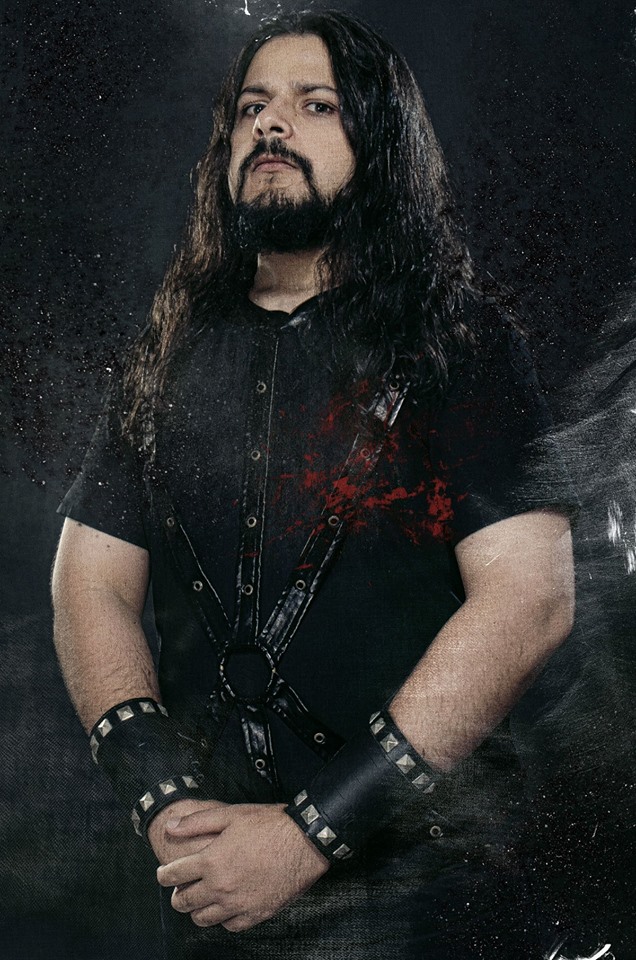
For years, Sahil has balanced these two distinct identities. On one hand, he is Demonstealer, the growling frontman commanding mosh pits across Europe. On the other, he is the friendly, knowledgeable host of a cooking channel that helps people lose weight and eat better.
It hasn’t always been easy. “Music is my first love, I live for it and I’ll die doing it. But it’s not a career sadly. It’s an expensive hobby,” Sahil states with brutal honesty. Headbanger’s Kitchen became the career that paid the bills, allowing Demonic Resurrection to exist without the pressure of financial viability.
This pragmatic approach to passion is what makes Sahil’s journey so relatable. He didn’t wait for a record label to save him, and he didn’t wait for a TV network to give him a cooking show. He just did what he needed to do. “I just do what I need to do. When I have an idea that I like, I pursue it and then I’m not afraid to see where it goes,” he explains.
The Future of the Demonstealer
Recently, Sahil achieved a 15-year-old dream: touring Europe with Demonic Resurrection. From navigating parking in Paris to witnessing the “crazy” crowds in Birmingham, the tour was a validation of two decades of grind.
But what’s next? Sahil is keeping his cards close to his chest. The tour has left him inspired, but he’s also realistic about the lifespan of content creation. “Honestly, I’m giving it [Headbanger’s Kitchen] one last heave-ho to see where it goes,” he says.
Whether it’s in the kitchen or on the stage, one thing is certain: Sahil Makhija doesn’t do things by halves. He separates his life into the onstage persona and the offstage human, but the drive connecting them is the same. As he puts it, “I’ve just followed my heart and what I want to do with my life.”
For a generation of Indian kids told to pick a “safe” career, Sahil Makhija is living proof that you can carve your own path—even if you have to scream your way through it.
Follow Demonic Resurrection on Instagram
Follow Headbangers Kitchen on Instagram

Mishuk is a digital marketer by profession and a storyteller at heart. He crafts narratives through content marketing, blending strategy with culture. When he’s not building campaigns, you’ll find him immersed in music, martial arts, and all things creative. Yes he also designed the website you’re reading right now.