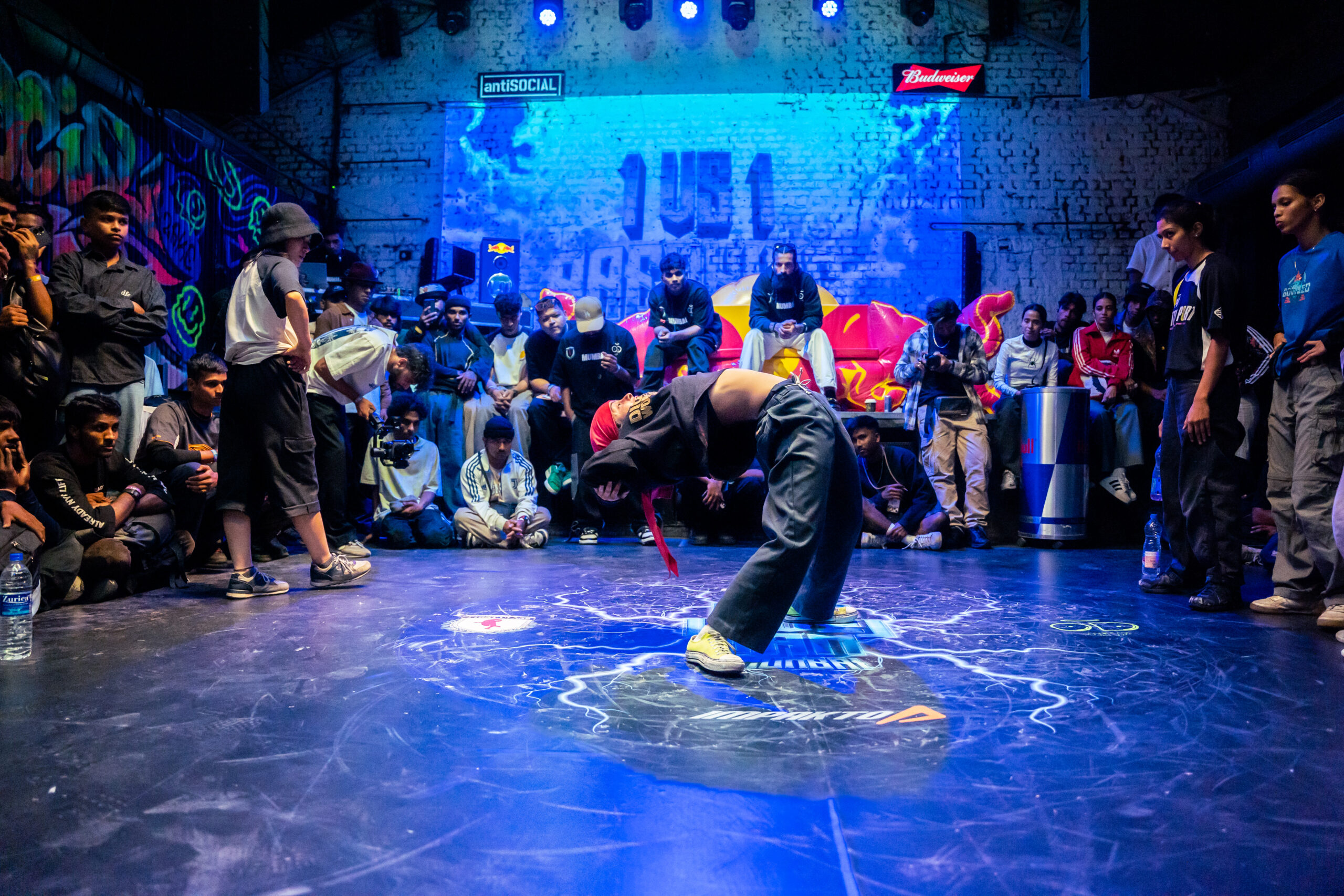
There is a moment in every artist’s life when the practice stops being just a hobby and starts becoming a lifeline. For Kolkata’s premier B-girl, that shift wasn’t subtle. It was the realization that breaking—a dance form demanding immense physical strength and mental grit—wasn’t just about movement. It was about grounding. It was about overcoming fear and anxiety to find a version of herself that felt unbreakable.
“It started giving me immense joy and satisfaction,” she recalls. “It helped me overcome fear and certain anxieties, and made me so much more grounded in real life. That’s when I knew I wanted to do it forever.”
In a world where we are constantly scrolling, filtering, and curating, finding something that physically grounds you is rare. Breaking became her anchor. But the path to finding that anchor wasn’t paved with ease; it was paved with concrete, bruises, and the relentless humidity of Kolkata.
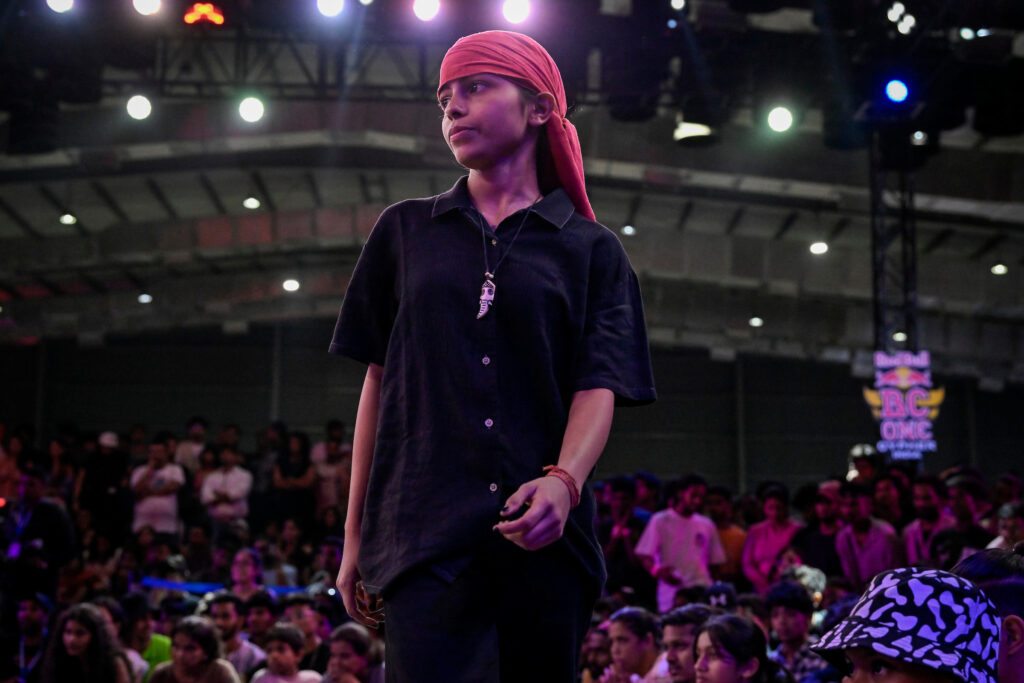
The Concrete Rose of Kolkata
When she started breaking towards the end of 2019, the Kolkata hip-hop scene was alive. It was a “golden era” of underground energy, where jams happened every weekend and dancers showed up hungry to prove themselves.
But passion often comes with a price tag of pain. Breaking is unforgiving. It demands a level of body conditioning that most of us can’t imagine. “In my starting days, I used to get a lot of injuries and scratches on my body as I used to practice on concrete floors,” she shares.
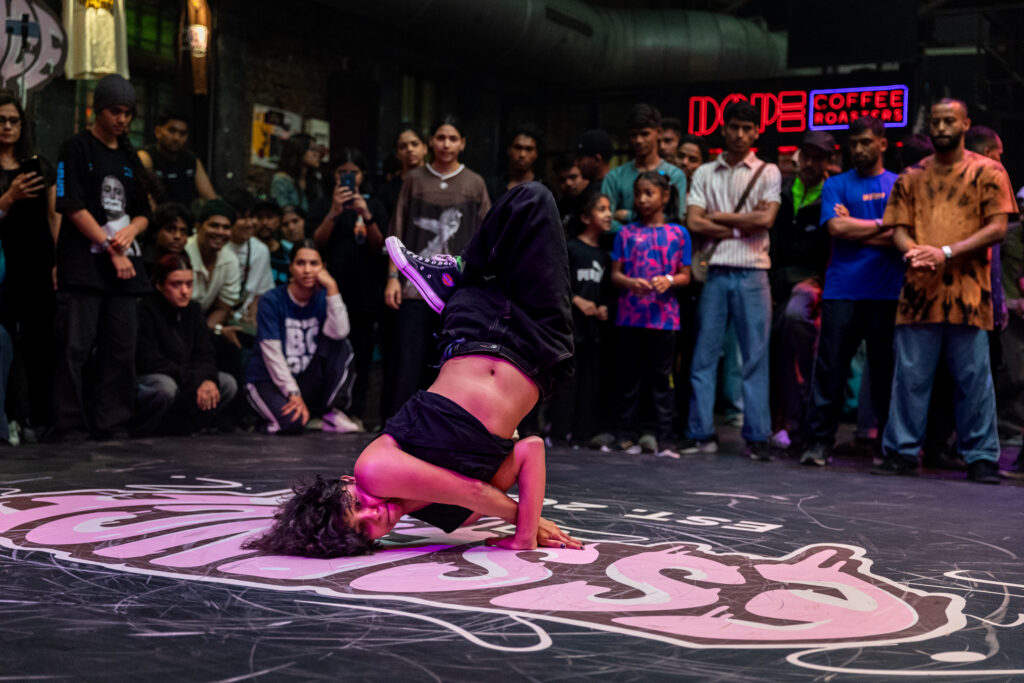
Imagine practicing headspins and power moves on solid cement. It’s a testament to the resilience required just to show up. The physical toll was the first test. If you can push through the bruises on your shins and the aches in your wrists, you might just have what it takes.
But then came the silence. Post-COVID, the vibrant Kolkata scene quieted down. Jams became infrequent. The community thinned out. Yet, she kept moving. Why? Because the dance had already transformed her.
Claiming Big Stages: Red Bull BC One East India Winner
Qualifying for Red Bull BC One Eastside was a game-changer. Taking the title for three consecutive years (2023–25) didn’t just put her on the map—it sparked a shift in confidence and mindset.
“A lot changed between my first win and the third; when I first won, the stage was new to me, but now I have experience dancing on a big stage in front of cameras and a huge audience. It also built my confidence and belief in myself. People in the scene started to recognize me more once I began representing on stages like Red Bull BC One.”
Each year brought its own lessons—from stage fright and self-doubt to feeling at home under the spotlights. By her third win, she wasn’t just performing; she was thriving, completely at ease in her role as a leader in the scene.
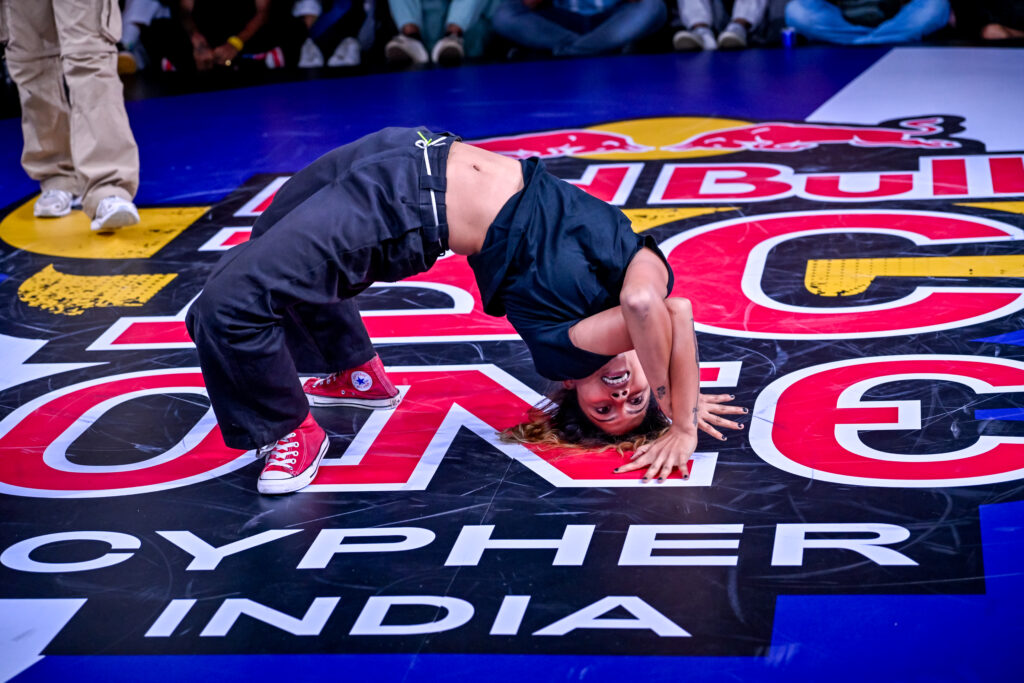
Taking Up Space in a Boy’s Club
Hip-hop has historically been a male-dominated space, and breaking is no exception. Being the only active B-girl in her city meant she didn’t just have to be good “for a girl”—she had to be good, period.
“As a woman in this male-dominated space, it is a little challenging,” she admits. “From the start, I have always competed with b-boys more than b-girls here.”
She often travels alone or with male crews to jams. While she notes that the guys have been helpful and supportive, the isolation of being the “only one” is real. It’s a lonely road to pave, but her presence is a statement. Every time she steps into a cypher (a circle of rappers or dancers), she isn’t just dancing; she is claiming space. She is proving that strength isn’t gendered.
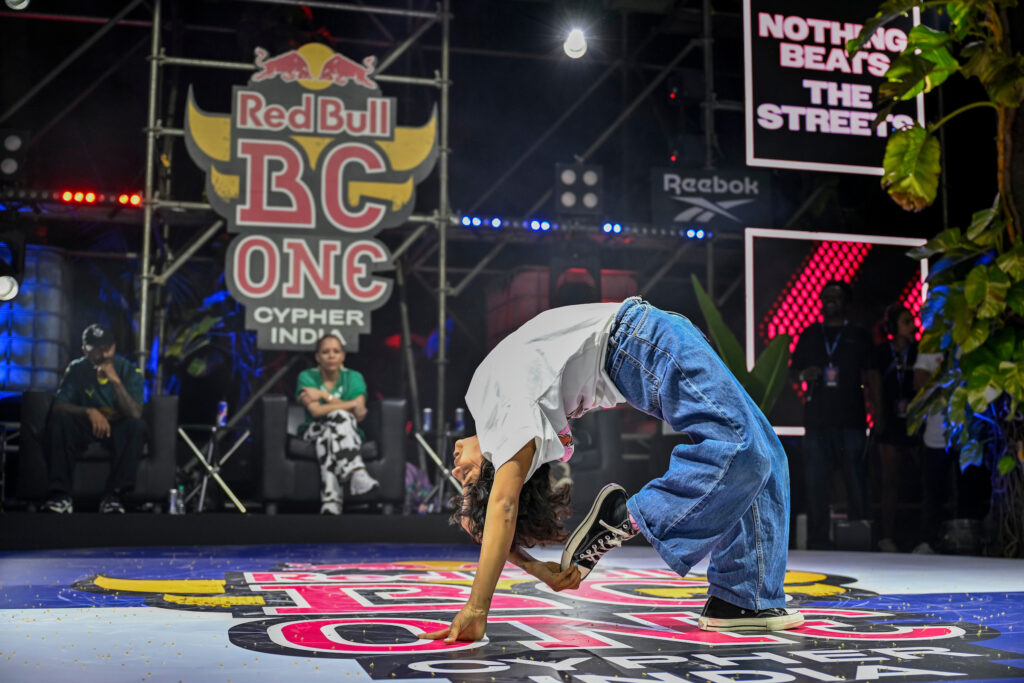
This resilience paid off in 2022 at the “Hip-Hop Elements” jam in New Delhi. It was her first time competing outside Kolkata. She was the underdog, the new girl on the block. And she won.
“I started to believe in myself that yes, I can do it too,” she says. That win wasn’t just a trophy; it was permission to believe in her own power.
Going Global: The Power of International Cyphers
Her journey didn’t stop at local or national stages. Stepping out into international cyphers—whether battling in Nepal or representing India in Siberia, Russia—meant facing the very best in the world and learning what it truly meant to own her style.
“My trip to Russia was a truly eye-opening experience, as I had never witnessed such a high level of breaking live before. It was an incredible learning opportunity, and I gained valuable insights that I can apply to my own dance. Participating in international cyphers gave me a newfound understanding of the global breaking scene and helped me assess my own skills. It became clear that having a unique style is crucial, especially when representing my country on the world stage, where every move counts and fresh perspectives are valued.”
Competing abroad forced her to reflect, adapt, and crystallize her identity—not just as a breaker from Kolkata, but as a global contender with something original to offer.
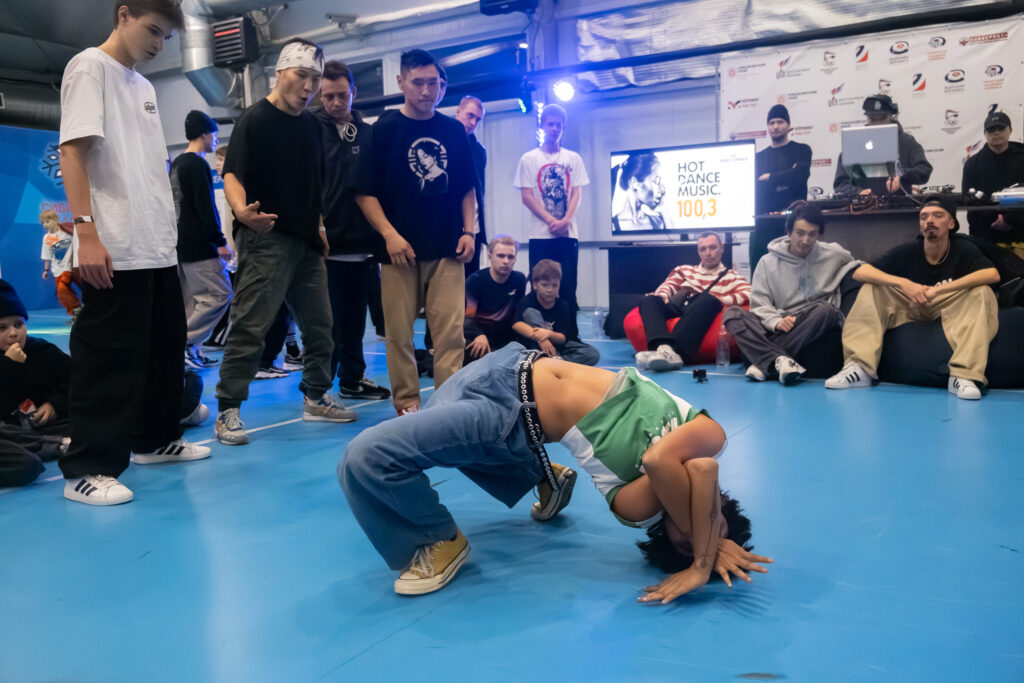
The Battle as Therapy
To the outsider, a breaking battle looks like aggression. It looks like ego. But for her, it’s therapy. It’s a meditative zone where the noise of the world fades away, leaving only the beat and the body.
“Battling on the floor helps me tap into my current emotions and release tension,” she explains. “It really helps me to release those energies inside me and share it with others.”
It’s a mental rehearsal for life. You analyze your flaws, you celebrate your good rounds, and you come back stronger. It’s the ultimate growth mindset in action. In a generation grappling with identity crises and emotional burnout, breaking offers a raw, unfiltered outlet. It’s not about looking pretty; it’s about being real.
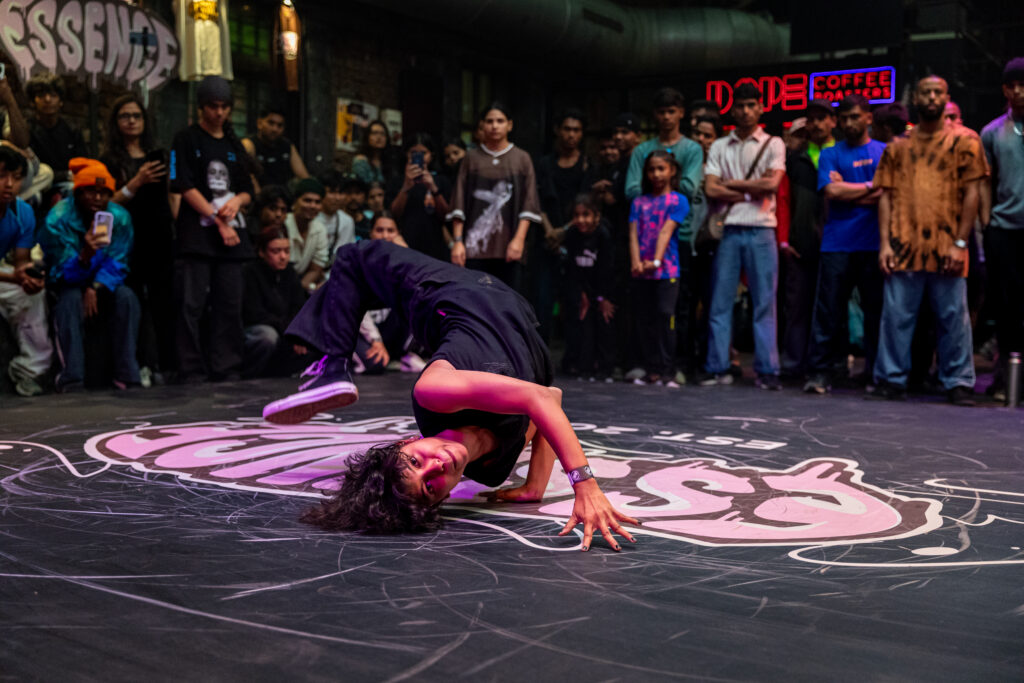
Even the city of Kolkata plays a role in her style. The “old-school charm” and slower pace of the city allow her the mental space to reflect and create. “The city’s rich art scene and vintage feels feed my soul,” she says. Her movement is a reflection of her environment—deep, soulful, and unhurried.
Building Community: Organizing ‘Show What You Got’ Jam
Beyond competing, she is actively creating space for the next wave of breakers in her city. As the organizer of ‘Show What You Got’, an annual jam in Kolkata for the past three years, her effort is all about cultivation and celebration.
“I strive to make ‘Show What You Got’ a comprehensive event, featuring international judges, attractive prize money, and an international qualifier that enables the winner to represent India abroad. This jam is a celebration of dance, bringing together enthusiasts from across India, including Delhi, Mumbai, and Bangalore, to exchange ideas and showcase their skills.”
Despite the energy and cultural connections these jams foster, organizing comes with its own challenges—especially securing enough funding to make each event bigger and better. Her commitment remains steady: building a foundation for others, even while she’s pushing her own boundaries as a competitor.
Collaborations and Brand Partnerships: Staying True to Core Values
From Impakto, a shoe brand, to Joi Farm, to campaign collaborations with UNICEF Cyber Crime, her partnerships aren’t just about sponsorships—they’re about representation and visibility.
“As the only female breaker representing them, I’m able to share my journey and inspire other girls to join the breaking community. These partnerships help me reach a broader audience, including those outside of the dance scene, and I hope to encourage more girls to get involved through my story. Impakto also helped sponsor my international trip once, which was really helpful in my journey.”
She’s selective about what collaborations mean to her, seeing each one as an opportunity to give back to the breaking community, to elevate the culture, and to show girls what’s possible.
A Message to the Sidelines
We often look at people pursuing their passions and think, I could never do that. We see the finished product, not the struggle. She admits that while earning a living through art is challenging—she works part-time as a sports teacher to fund her travel and workshops—she has never considered quitting.
“The initial motivation was never about financial gain, but about the joy it brings me,” she affirms.
Her journey is a beacon for young girls watching from the sidelines, wondering if they belong in spaces that weren’t built for them. Her message is clear: Being a B-girl in India is a statement.
“It’s not just about the dance,” she says passionately. “It’s about breaking stereotypes and showcasing strength, confidence, the way we carry ourselves… Breaking has the power to transform not just our moves, but our entire persona.”
She dreams of a future where more girls experience this magic. Where they stop shrinking and start spinning. Where they realize that the only validation they need is the rhythm in their chest and the floor beneath their feet.
In a world that tells women to be small, breaking teaches them to be big. To take up space. To fall down on concrete and get back up, stronger than before.
Follow Anjali Rai on Instagram
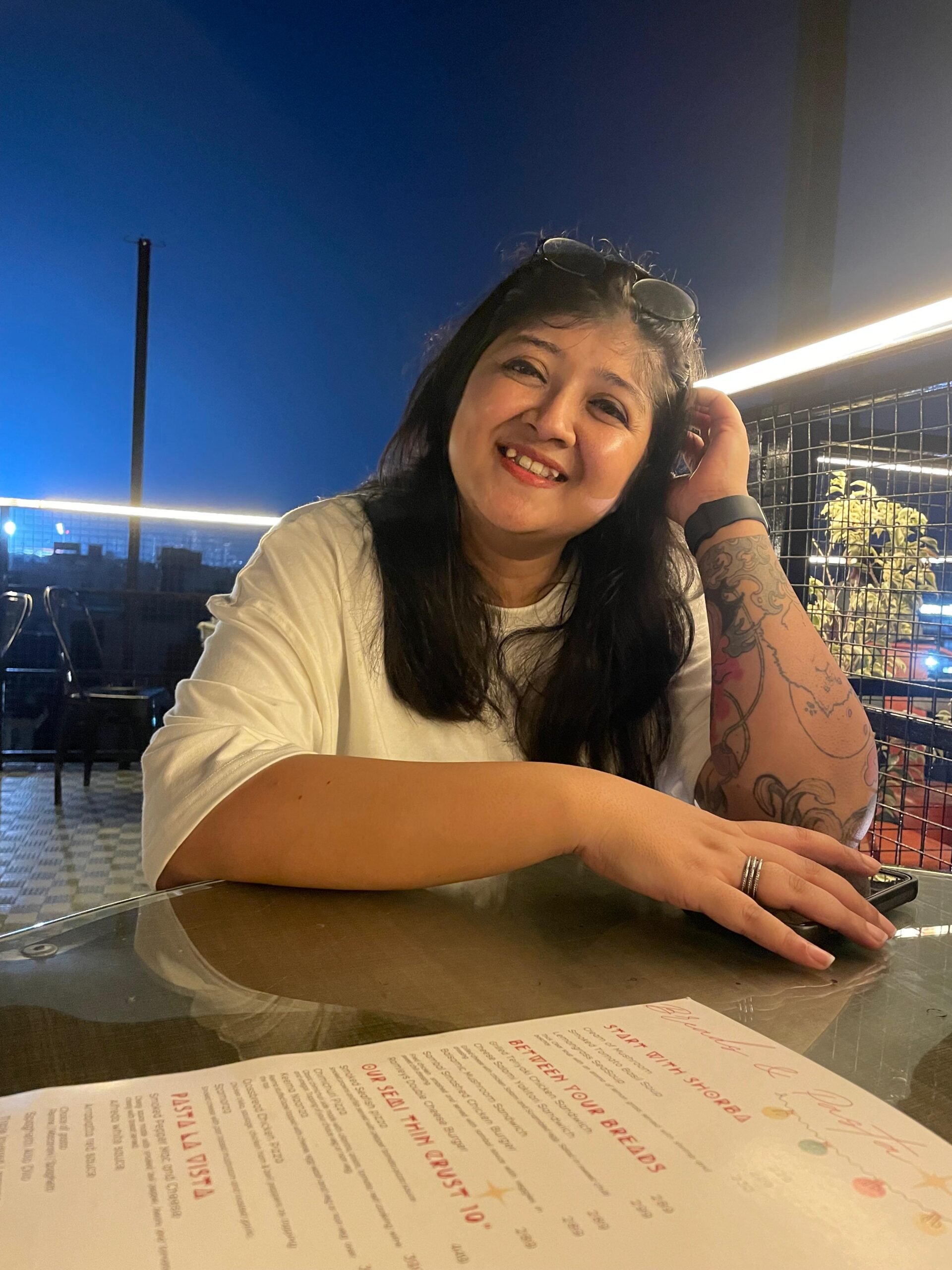
Oeshi B Lyndem is a former graffiti and visual artist, now working as a tattoo artist and graphic designer.
Rooted in craft and hands-on making, she moves fluidly between illustration, street art, design and experimental creative processes.
With lineage from Shillong, often known as India’s rock capital, she brings a strong cultural backbone to her work.
At Goofy Owl, she curates and leads the street and hip-hop culture segment through an intuitive, deeply creative and entrepreneurial lens.