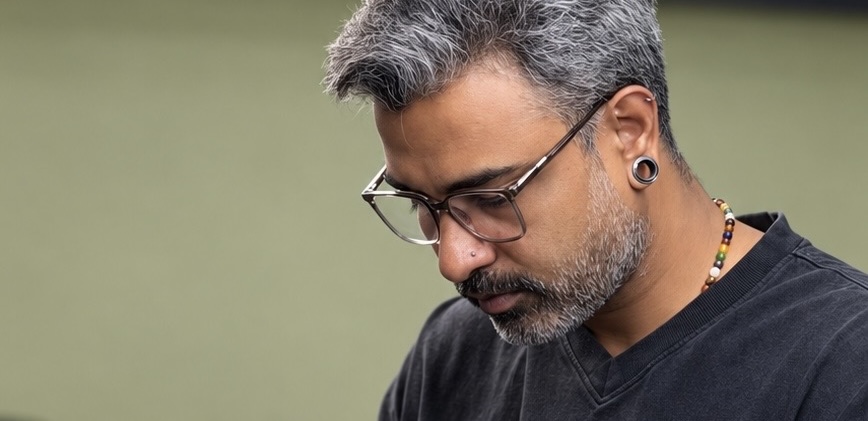
Eighteen years ago, a jewellery designer with no formal art training walked into Shoryuken Tattoo in Mumbai and asked for a chance. He didn’t know it then, but that single conversation would quietly reshape everything.
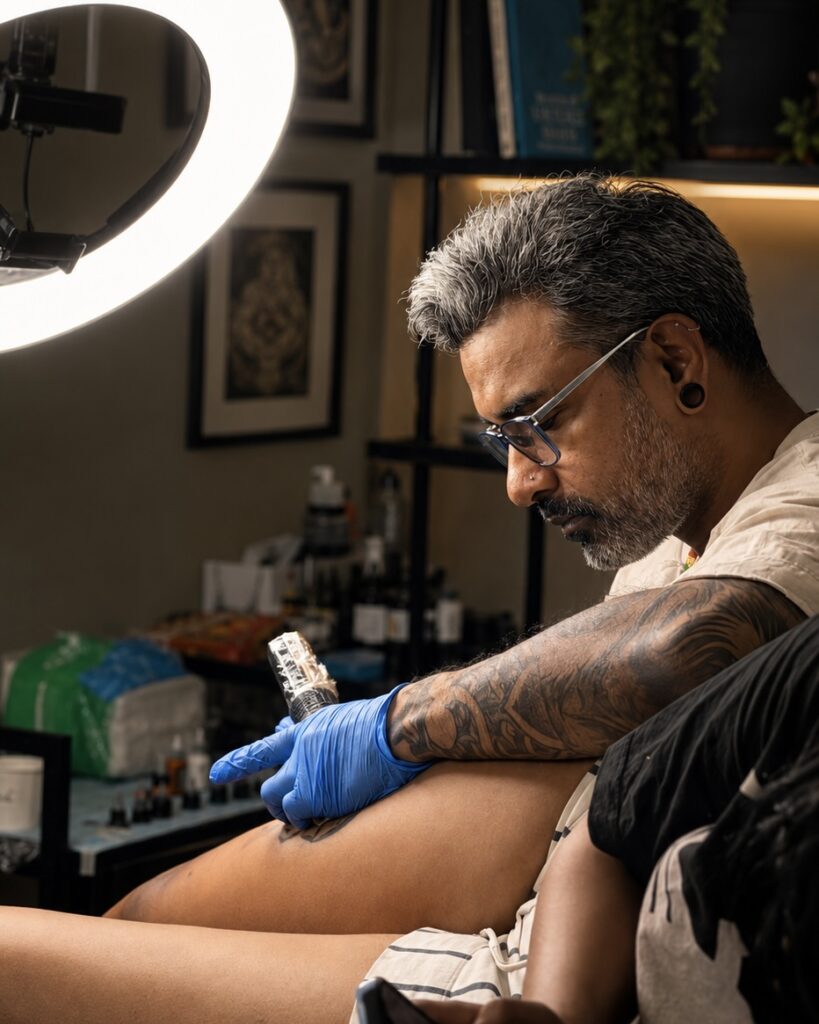
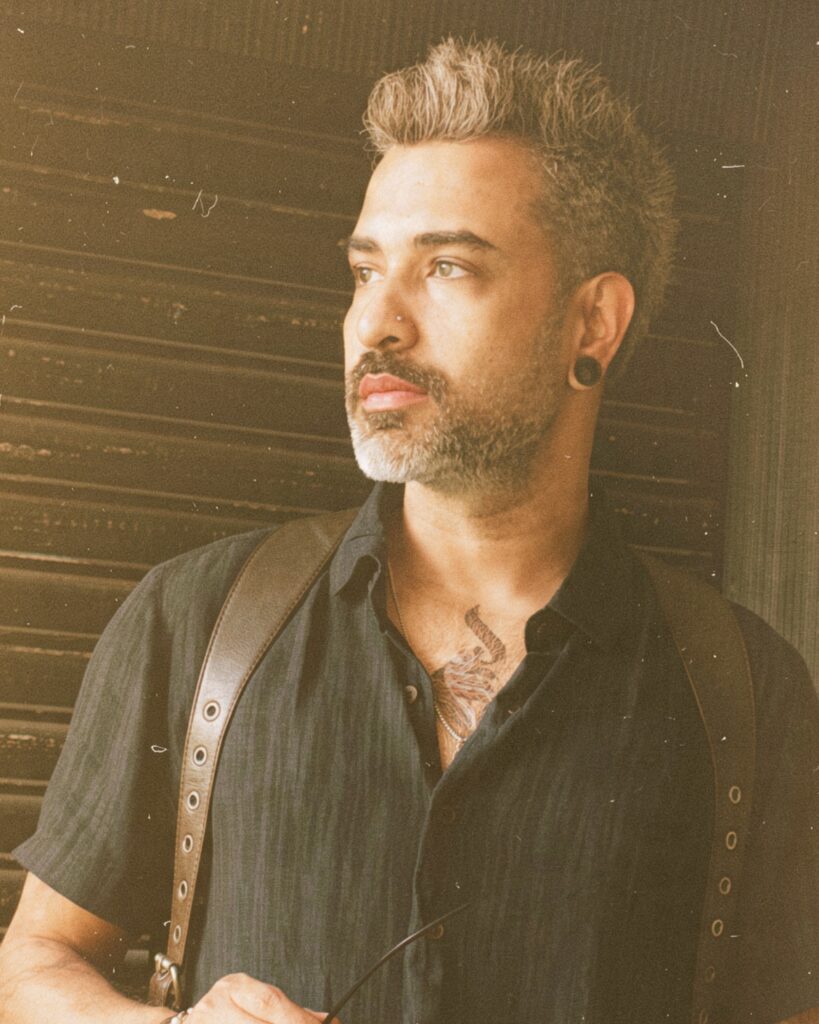
Today, Pinku Bijoy Ghosh runs InkKraft Tattoos and Piercings in Hyderabad, a studio he has built over 13 years into something that feels less like a business and more like a calling. He has mentored artists, earned the trust of hundreds of clients, and developed a signature style he calls modtribe blackwork. But sit with him long enough and none of that is what he’ll lead with. What he’ll tell you, without any performance about it, is that the whole ride has been
“soulful.”
And somehow, coming from him, that doesn’t sound like a cliché at all.
Before the Needle, There Was the Wire
Pinku didn’t arrive at tattooing through the usual routes. He was designing jewellery, learning through mentors and his own instincts, with no formal art background to his name. Art, he says,
“came naturally”
to him from a young age, even if he never had a classroom to prove it in. That quiet confidence eventually pushed him toward Kevin Andrade at Shoryuken Tattoo in 2008, where he showed up and asked to learn. Andrade said yes. And that was that.

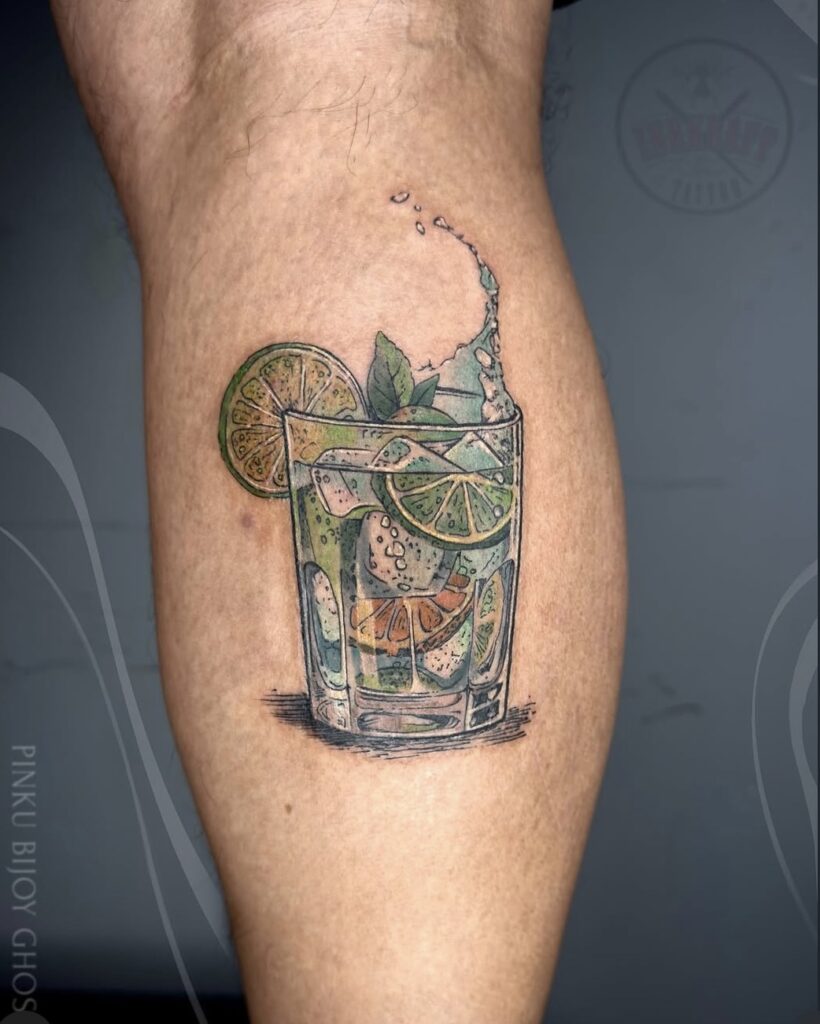

What followed was an apprenticeship at one of Mumbai’s few prominent studios at a time when the city’s tattoo scene could still be counted on one hand. There was no scrolling for inspiration back then. No mood boards pulled from Pinterest, no reference reels on Instagram. Artists made their own flash designs from scratch, building visual libraries out of research, imagination, and trial. It was slow, demanding work, and Pinku believes it was exactly that difficulty that made the craft mean something.
The Algorithm Ate the Flash Sheet
He won’t pretend otherwise about what came next: he thinks the internet kind of broke something. Not all of it, and not for everyone. But the ease of access to thousands of tattoo references online, and now AI tools that generate designs in seconds, has quietly eroded the creative hunger that used to be non-negotiable.
“It’s making the artist lazy and also killing creativity,”
he says, directly and without apology.
It’s the kind of take that only lands when it comes from someone who built their entire visual language before any of those tools existed. Pinku’s early years were defined by scarcity. You couldn’t look up what you didn’t know. You had to build it. That constraint, as frustrating as it must have been, turned out to be his greatest teacher.
The Style He Rarely Gets to Use
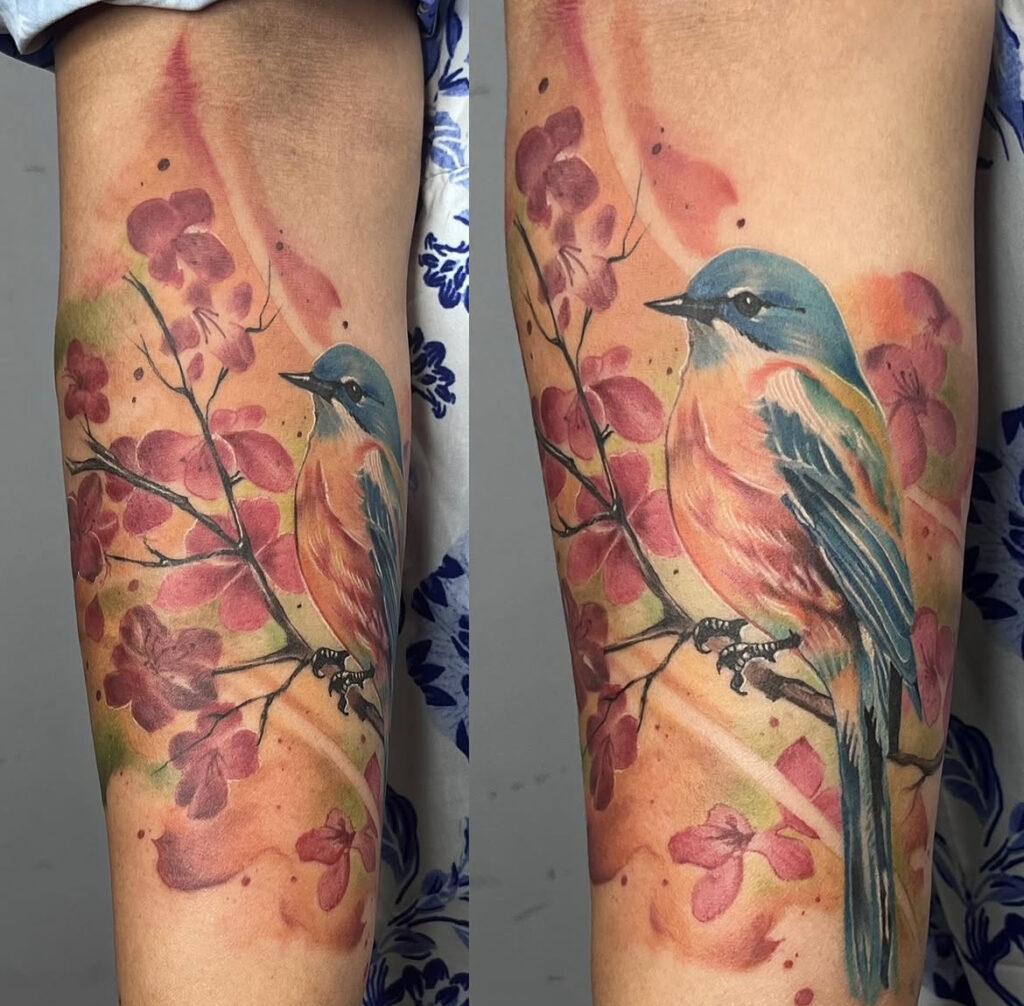
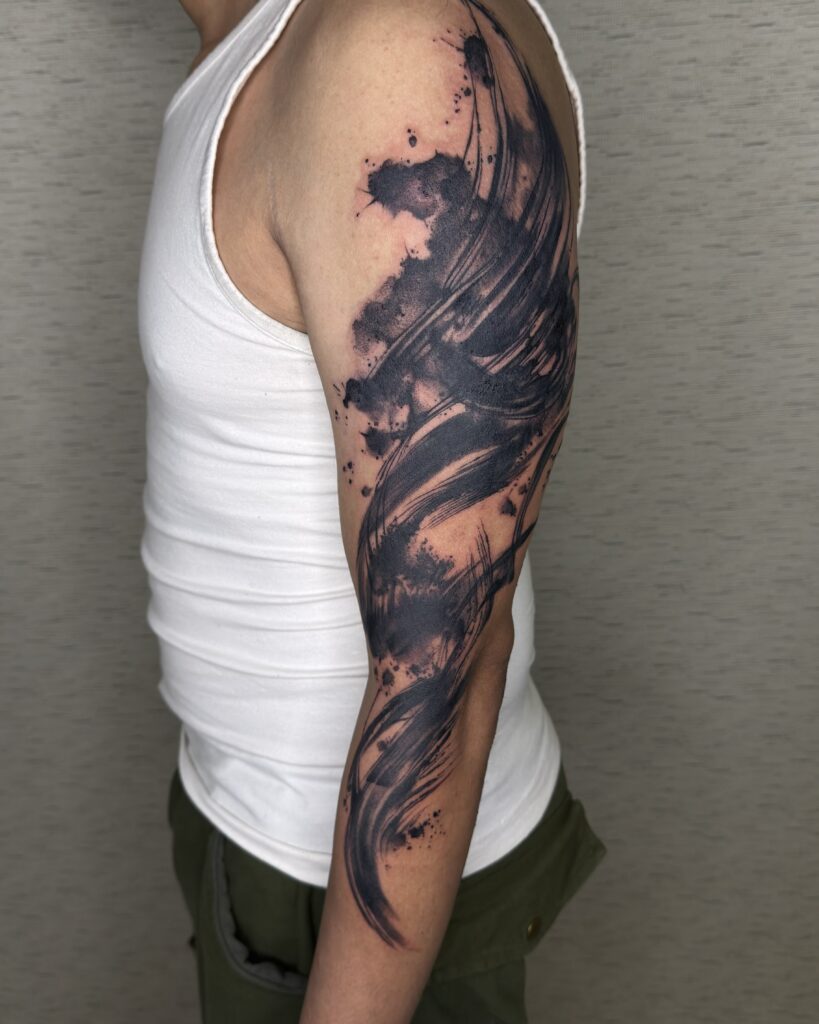
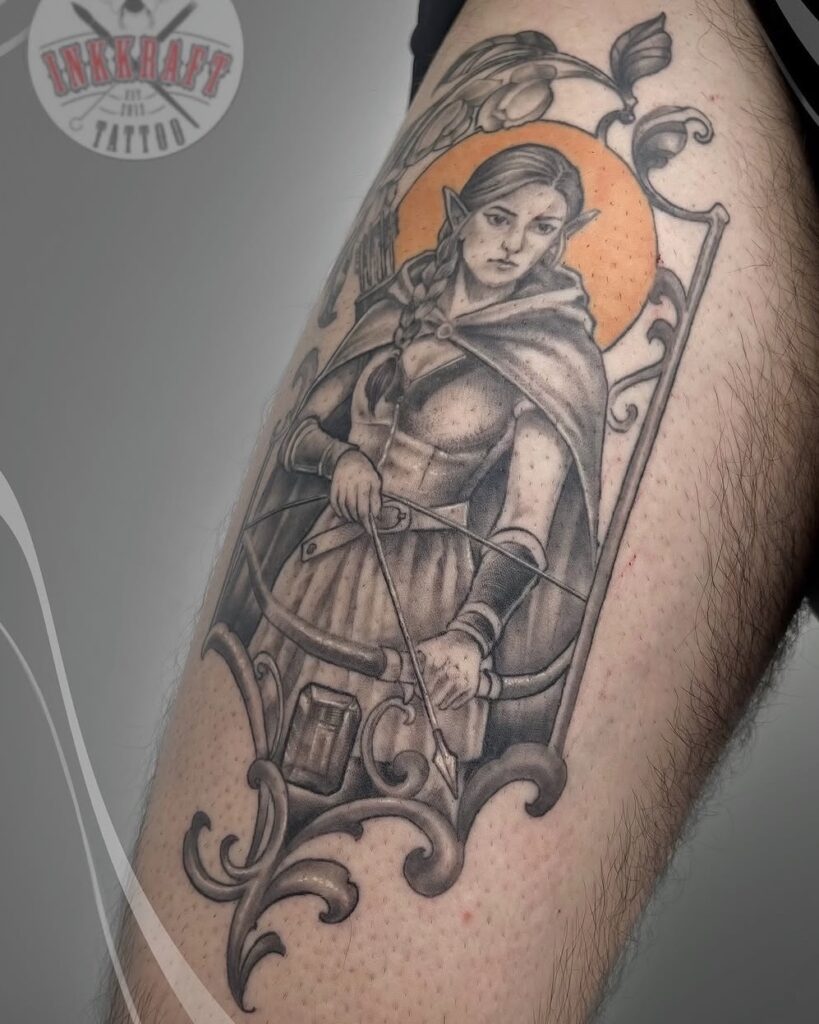
Pinku does have a signature style. Modtribe blackwork: bold, large-scale, graphic. The kind of work that turns a body into a composition. But here’s the irony. In Hyderabad, where InkKraft is based, the conditions for it rarely align. The city’s predominantly Muslim population means large-scale blackwork isn’t always the brief. So Pinku adapted, not reluctantly, but by choice. He moves across realism, black and grey, neo-traditional, ornamental, illustrative, whatever the client needs.

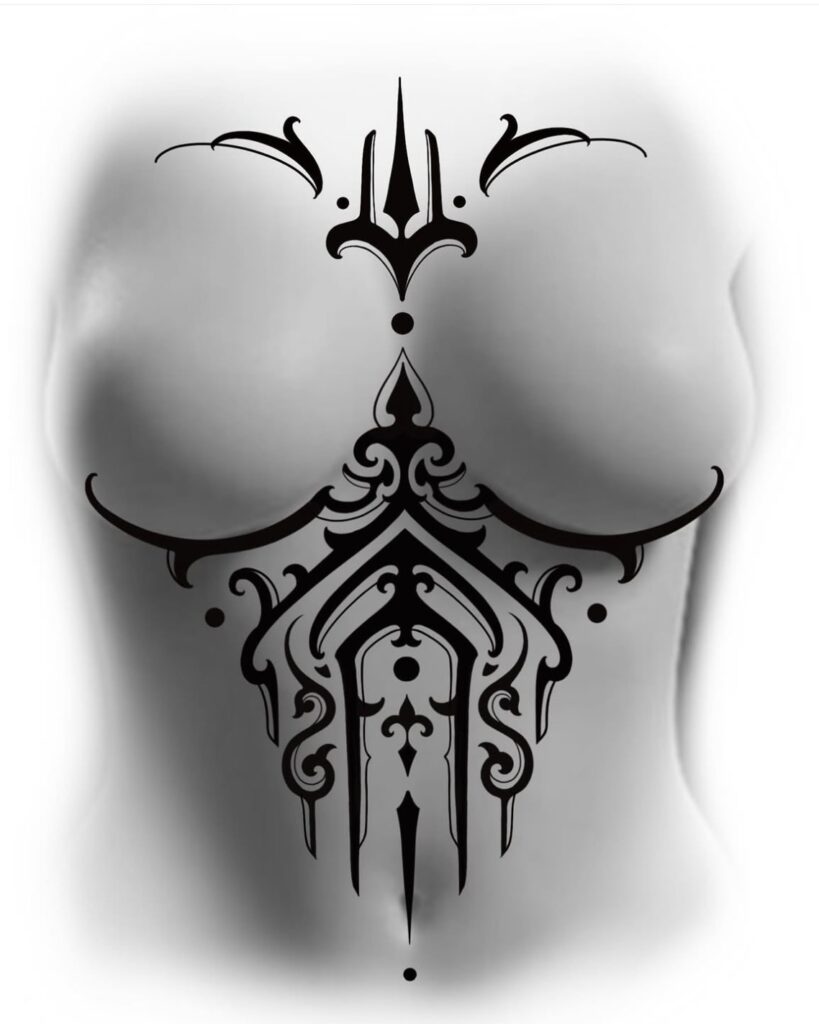
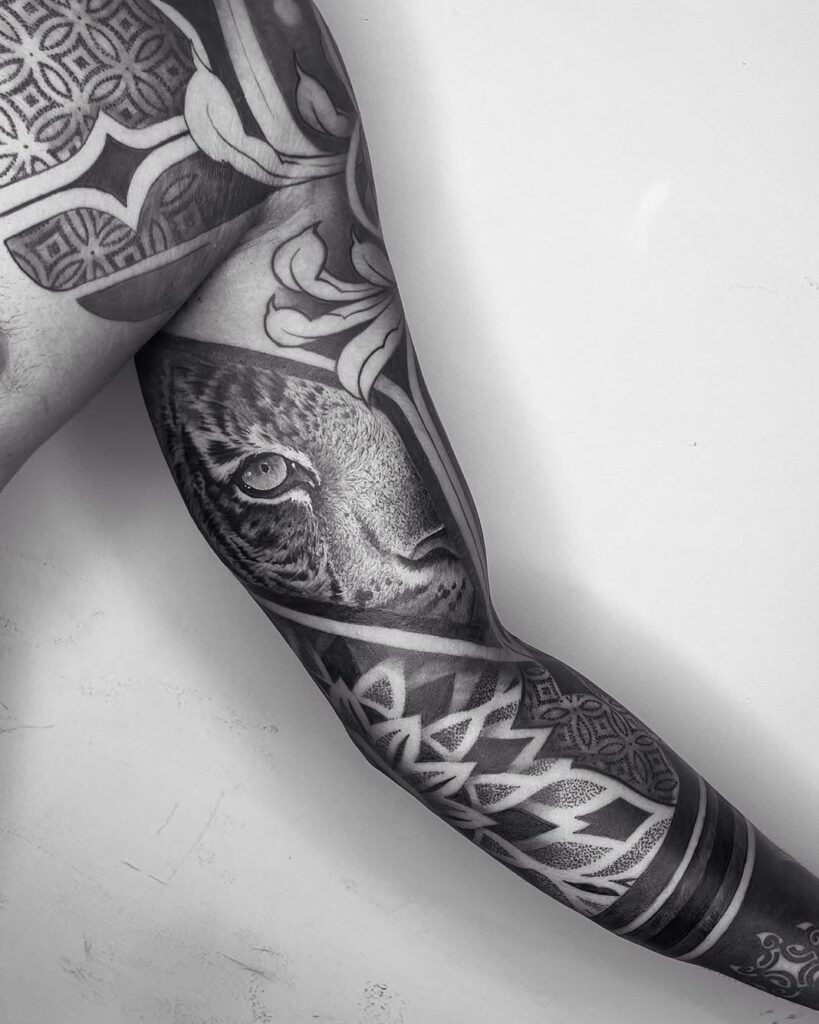
“My canvases have equal rights over the style they want to choose,”
he says. The word “canvases” is doing a lot of work there. It reflects something real about how Pinku sees the people who sit in his chair: not as customers, but as collaborators. When he started out, the idea of having a signature style wasn’t even on the table. You learned what you were taught. Flash work, realism, clean lines, strong shading, bold colour. Those fundamentals are still the foundation of everything he does today. He calls it old-school, and he says it with a kind of quiet pride.
Skin as Archive
Ask him what makes a tattoo meaningful rather than just well-made, and he doesn’t reach for anything abstract. He goes straight to responsibility.
“You tell your story through your tattoos,”
he says.
“It’s a huge responsibility for an artist to convey that story through his artwork.”
Some people arrive with something deeply personal, a grief, a milestone, a belief that has lived inside them for years and finally needs to exist on the outside. Others simply love Pinku’s work and give him room to run. In both cases, he brings the same care, and in both cases the standard doesn’t shift: the piece has to hold up as art, whatever its size, whatever its subject. That agreement between artist and client, quietly negotiated, built on trust rather than transaction, is where Pinku believes the real tattoo begins.

Study It Before You Stamp It
A lot of what appears in his portfolio carries cultural and mythological weight, imagery rooted in traditions from across the world, handled alongside his own aesthetic instincts. That combination requires serious study, something most people never think about when they look at a finished tattoo.
Pinku’s early training pushed him to learn different styles not just technically but culturally, to understand what he was working with before he put needle to skin. That hasn’t changed. Every tattoo involving mythology or symbolic imagery begins with a dedicated consultation, time to sit with the subject, research its roots, understand its meaning. Only after that does he figure out how to bring his own vision to it, keeping the work balanced between what the client wants and what the imagery deserves. He doesn’t frame this as going above and beyond. For Pinku, it’s just what the work requires.
Sacred, Not Scalable
He’s equally clear-eyed about what it means to run a studio. Being a great tattoo artist and being a great studio owner are two completely different skills. He’s spent over a decade practising both at once, and what has kept the balance is a refusal to let InkKraft become purely commercial.
“I still consider tattooing and running the shop being very sacred, and not as a business,”
he says.
That isn’t naivety. It’s a deliberate orientation. Pinku wants bonds, not transactions. He wants artists who grow with him, not just work for him. InkKraft, as he has shaped it, reflects that. It’s a space where the craft is still treated like it matters, because for Pinku, it genuinely does.
Stay in the Chair
His counsel to younger artists isn’t romantic. It’s honest in the way that only comes from having actually lived through the hard stretches. Some days are great. Some days nothing goes right. Some days the work doesn’t land the way you hoped. None of that ever made Pinku consider walking away.
“You can’t be motivated every day,”
he says,
“but what you can make sure of is you stay consistent. That’s the key.”
Keep learning. Stay hungry. Try styles that scare you a little. And never forget the thing that made you pick up a needle in the first place. That passion, he believes, is the only sustainable reason to stay in this craft for the long run.
Still Reaching
Ask him what still excites him and he doesn’t talk about technique. He talks about people. Every client who sits down brings a story Pinku has never heard before, and a level of trust that he says he never stops feeling the weight of. He’s also clear-eyed about mastery. No artist ever learns everything. The horizon keeps moving. That’s not discouraging to him. It’s the point.

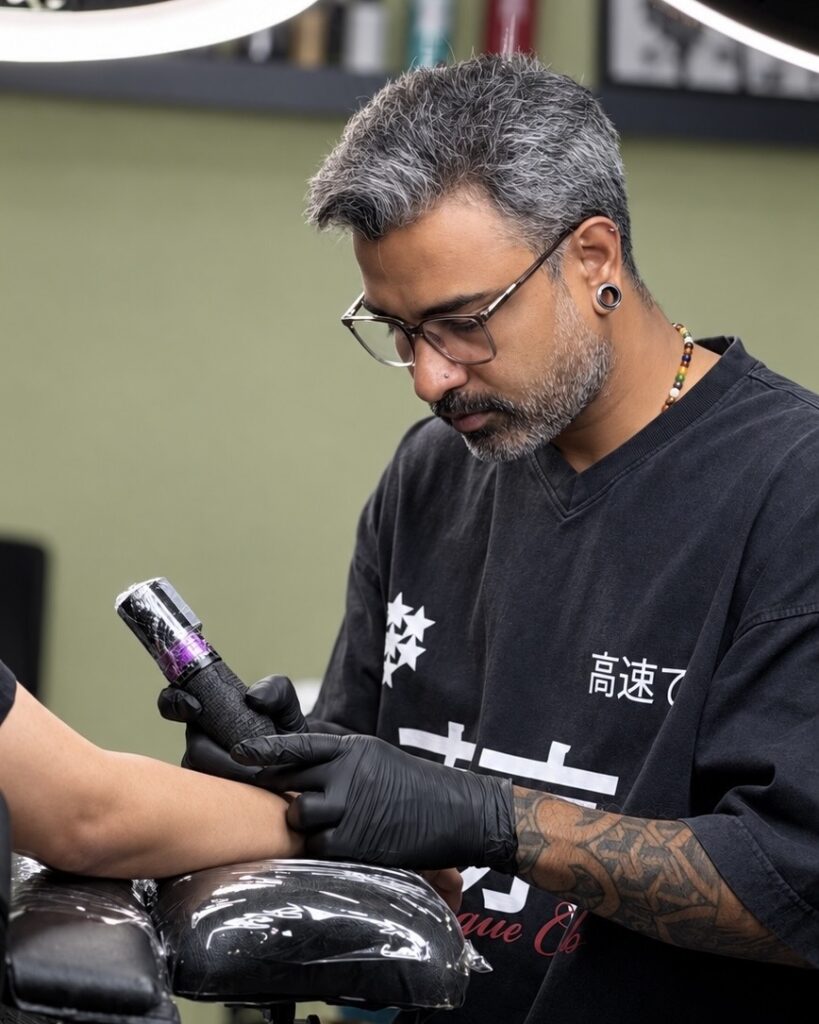
Looking ahead, he’s even considering picking up a craft with no connection to tattooing at all, DJing maybe, or pottery. He hasn’t decided. But the fact that he’s still curious, still reaching, after 18 years, says more than any portfolio could.
Pinku’s story isn’t just a success arc. It’s something deeper and more interesting than that. It’s what happens when someone decides, early on, to take the craft seriously and never really stops. No shortcuts. No algorithms doing the heavy lifting. Just the work, the people, and the patience to keep going when neither feels like enough.
Follow Pinku on Instagram
Lubdhak Biswas is a musician, entrepreneur and a tattoo artist based out of Kolkata (India).
He documents underground culture at the crossroads of tattooing and music.
His work focuses on craft, tools, ethics and the real working realities of creative industries.