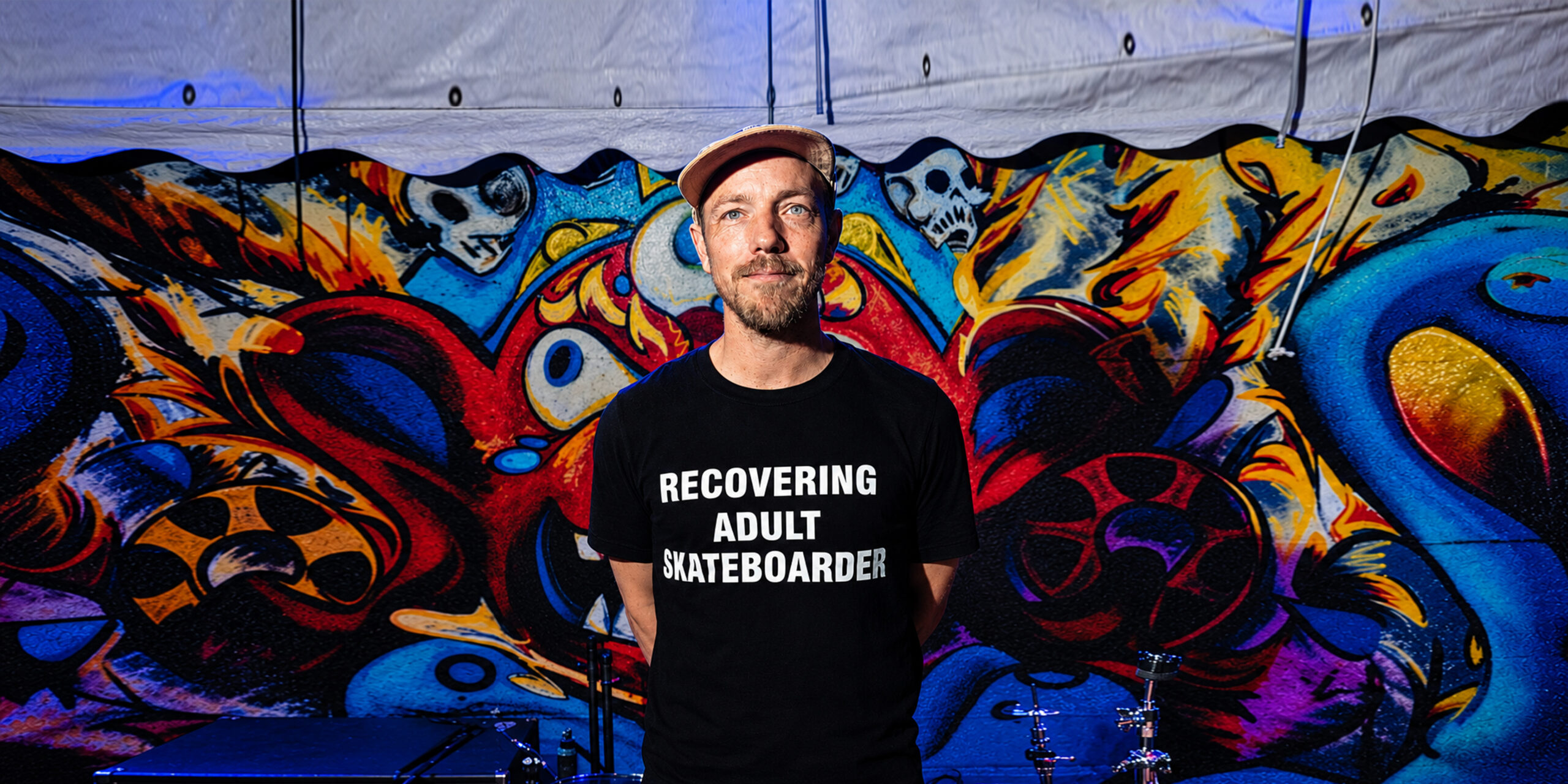
For ten years, Taylor Clark did stand-up without posting a single clip of it. No reels. No viral bits. No algorithm. Just a guy with a microphone, telling jokes to rooms full of strangers and leaving it there.
Then he posted three clips. Tony Hawk followed him.
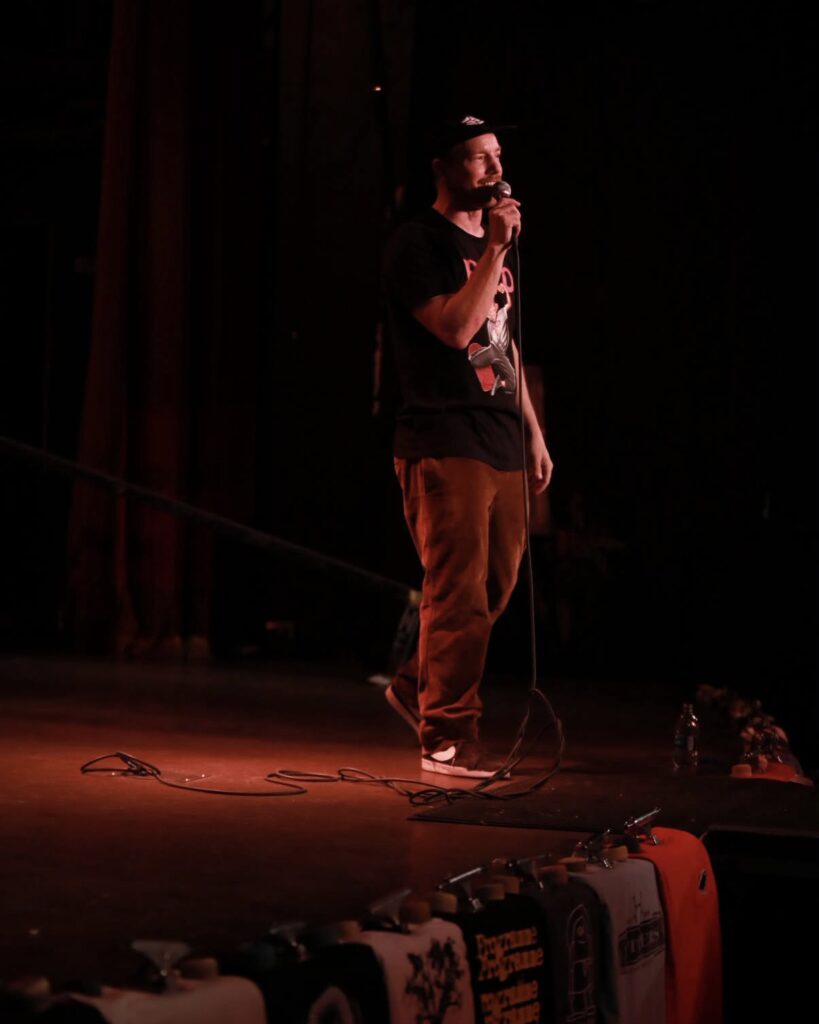
That is roughly how fast things changed for one of the only comedians who has built a career where skateboarding and stand-up meet. Taylor is a lifelong skater who has performed at skate shops and events across the United States. He teaches stand-up. He serves as Talent Director for the Seattle International Comedy Competition. He is also a dad and a recovering adult skateboarder, and he talks about all of it with the same mix of self-mockery and sincerity.
Underneath the jokes is a simple idea. You can love two very different things, and you don’t have to pick one.
The Day the Birdman Hit Follow
Most creative people never get a clean moment when everything comes together. Taylor got one, and it came with a blue check mark.
“The day Tony Hawk started following me. In ten years I’d never posted a clip of my standup online, and within my first three posts ever, half the bones brigade was following me and I was being interviewed in Thrasher Magazine.”
For anyone who grew up with skating, that sentence is close to unbelievable. The Bones Brigade is the legendary 1980s skate team that shaped what skateboarding looks like today. Thrasher is the magazine skaters have treated as scripture for decades. Getting either one’s attention is a big deal. Getting both, off three posts, after ten years of silence, sounds like a dream you’d be embarrassed to say out loud.
The follow mattered, but it didn’t create the idea. Taylor had been betting on it for years while nearly everyone told him it was a bad bet.
Everyone Said It Was a Bad Idea
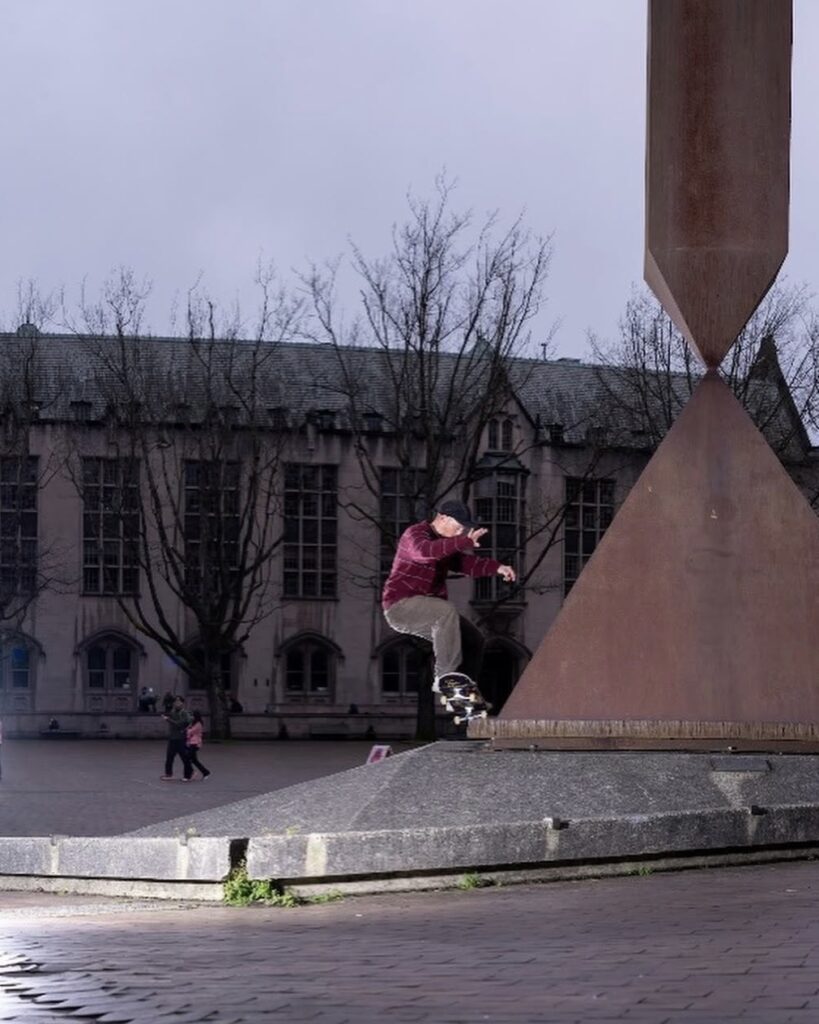
“But truly, everyone I talked to about trying to do stand up about skating thought it was a bad idea. But my plan always was to make the jokes work for general audiences, and what most people don’t realize is that all of my clips are filmed in front of crowds that are 99% not skaters, and the jokes work.”
Ninety-nine percent not skaters. That detail flips the whole story. Watch his clips and you might assume he’s preaching to a skatepark full of people who already get it. He isn’t. He’s in regular comedy rooms, talking about something most of the audience has never done, and they laugh anyway.
That is the quiet lesson here. The thing that makes you strange is often the thing that makes you worth hearing. The skill is in letting other people in.
Comedy for People Who Didn’t Order It
Comedy clubs are built for comedy. People buy tickets, find their seats, and expect jokes. A skate shop is built for buying bearings and loitering. When Taylor brings a set into one, the crowd usually didn’t come for him.
He’s honest about how that goes.
“As a comedian it sucks, but as a weird psycho who thrives on discomfort, it rocks. More than once I’ve been booked to do a show where someone in the crowd is a pro skater who I currently idolize, and more than once that pro skater didn’t plan on seeing comedy, had never have seen live comedy before in their lives, and maybe after seeing my set, will never want to see live comedy again for as long as they live.”
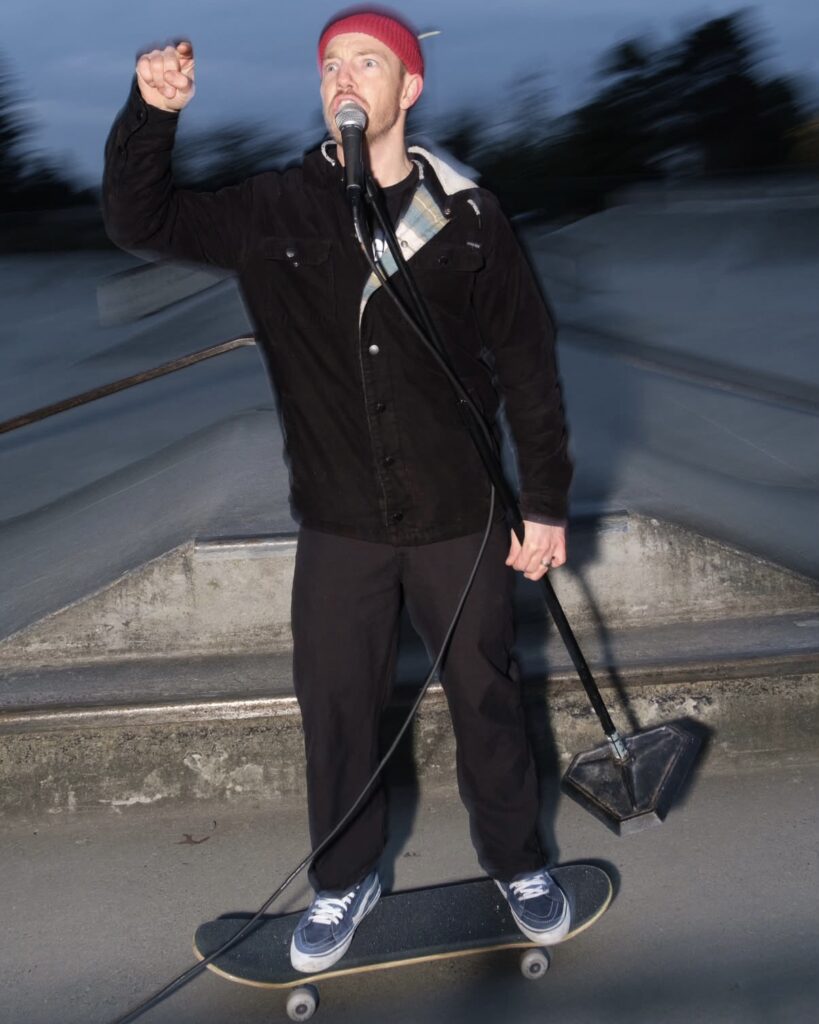
Picture it. Your hero is standing ten feet away. They didn’t come for you. They’ve never seen live stand-up. And there’s a real chance you’re about to put them off the whole art form for good.
Most of us would carry that memory around like a bruise. Taylor treats it like a prize.
“Those are my “Chef’s Kiss” of shameful moments only I might ever know. I will forever cherish them.”
There’s something freeing in that. Skaters fall constantly, and the falls are part of the sport. Taylor brings the same attitude to the stage. A set that dies in front of your idol isn’t a failure. It’s a slam you get to laugh about later.
Overthinking the Translation
Skateboarding has its own vocabulary, its own inside jokes, and its own very specific ideas about what’s cool. Turning that into material for people who have never touched a board takes real care. Taylor admits he might take too much.
“What a great question. I think I’m too conscious about it. Like I overthink it. All of my Skate jokes have to work for non skaters. I have to workshop them, and make them funny in front of regular audiences. In fact sometimes the skate audiences don’t like them as much because it’s too on the nose for them.”
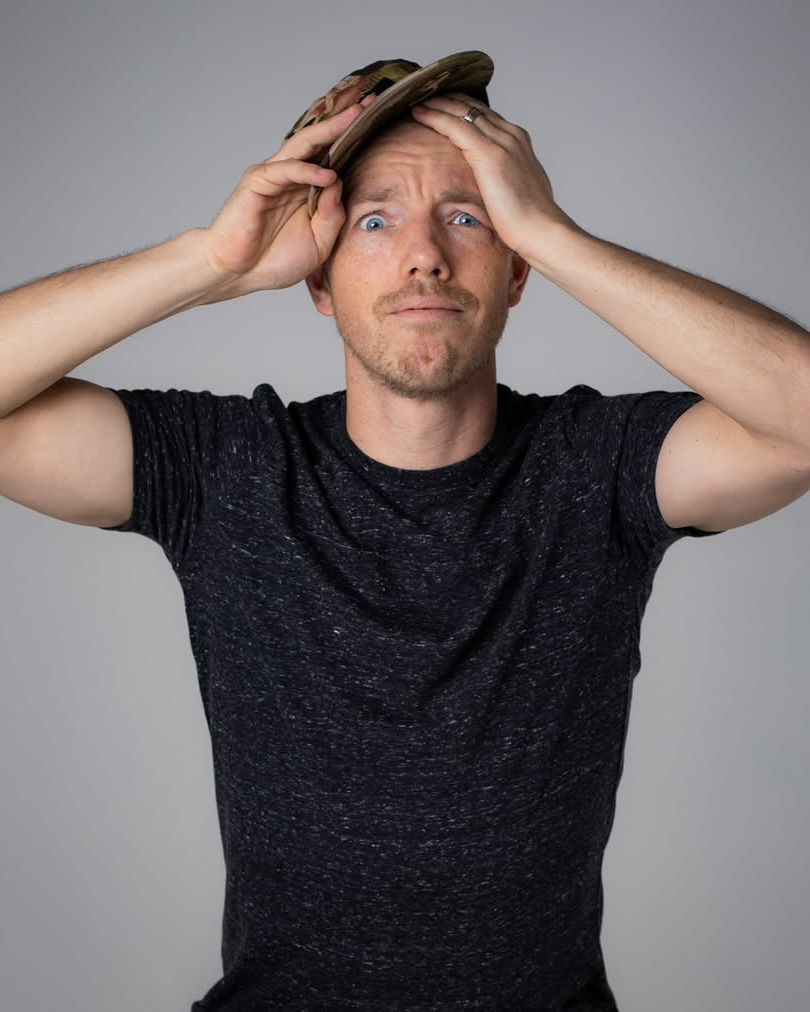
That last part is a funny little trap. Make a skate joke clear enough for outsiders and the insiders may find it obvious. Make it niche enough for insiders and everyone else is lost. Taylor has chosen the harder road: build the joke for the room that knows nothing, then live with the skaters rolling their eyes now and then.
Anyone who has tried to explain their passion to friends who don’t share it knows this balance. Say too little and they tune out. Say too much and you sound like a tour guide. Taylor works on that balance for a living.
Phantom Limb
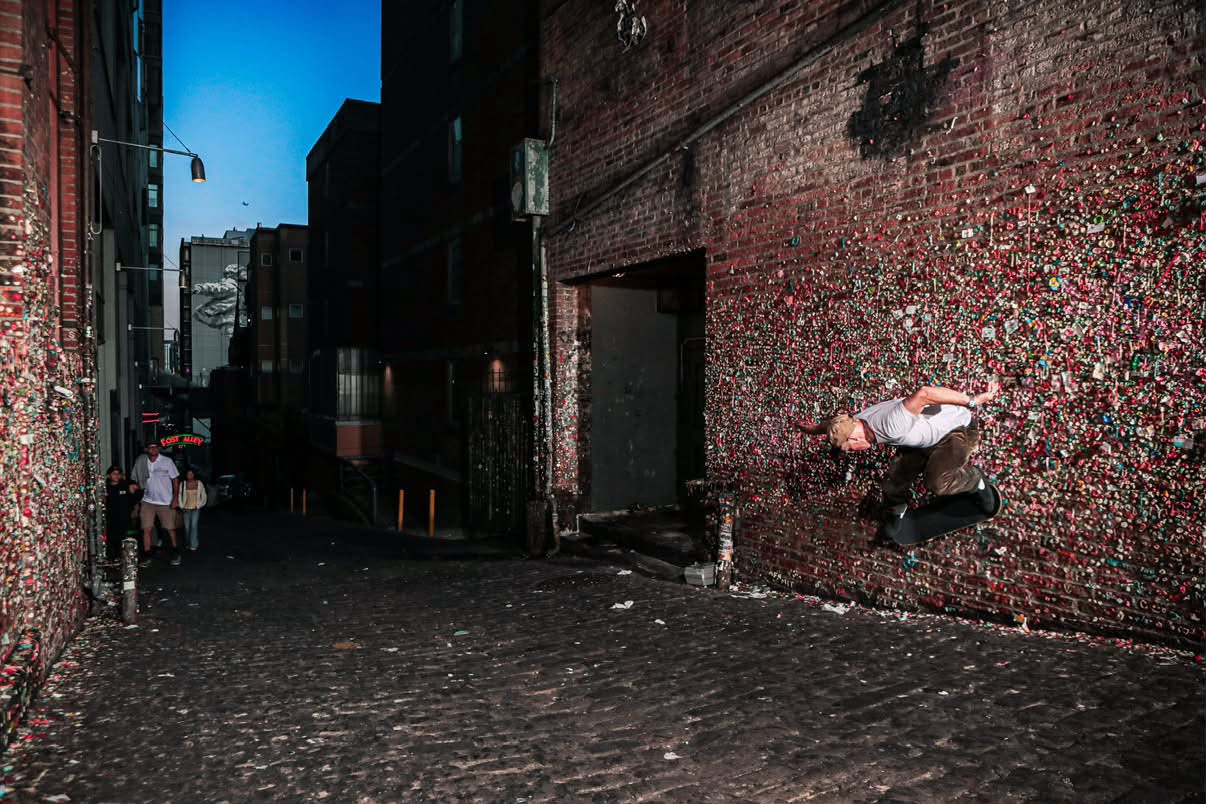
Taylor calls himself a recovering adult skateboarder, and it’s a joke with something real underneath. When he talks about what skating does for him, the comedy drops away.
“I get depressed if I dont do it. Literally. The longer I’m off the board the sadder I get. It’s like phantom limb syndrome. If I’m not skating I just feel this emptiness like a part of me is missing.”
Phantom limb. That’s a heavy comparison, and he means it. Skating isn’t a hobby he fits in around everything else. It’s part of how he stays okay.
He has also changed his life to protect it.
“Half the reason I quit drinking and smoking was to skate more.”
Lots of people quit bad habits because they’re told to. Taylor quit partly because those habits were getting in the way of the thing he loves. That’s a different kind of motivation, and probably one that lasts longer.
What may surprise people is how much he enjoys getting older.
“I like getting older though, full disclosure. I’m more grateful for every session, so I have more fun. I’m also more into the culture and the industry because it’s easier to absorb media than it is to skate all day.”
A lot of the conversation around aging, especially in youth-driven scenes like skating, is about loss. Taylor sees it another way. Fewer sessions means each one counts for more. A body that can’t skate all day still has room for videos, history, and the culture. Getting older didn’t shrink his love for skating. It made it more grateful.
Three Ways of Seeing
Fatherhood shows up often in Taylor’s comedy, and he says kids make the whole world a bit easier to laugh at. For him, though, parenting jokes are about more than cute stories.
“I think kids are just so funny it makes everything a bit easier to laugh at. It also makes parents so vulnerable and honest about themselves finding jokes around parenting relieve a different kind of stress to people who are going through it. Parents don’t feel seen a lot and comedy does a great job of making them feel seen, and forgiving them for being human.”
Forgiving them for being human. That’s a generous way to describe what a joke can do. A tired parent in the third row hears their own chaos in someone else’s set and, for a moment, feels less alone and less judged.
Then Taylor says something that may be the clearest description of his whole creative life.
“It’s changed how I look at everything though. I’m lucky to have three things in my life that have completely changed how I see the world permanently. Skating, I see the physical world completely different than people who don’t Skate. I see the potential for tricks in the landscape of everywhere I go. With Comedy, I see the social landscape full of opportunities for satire. With parenthood, I see humanity full of opportunities to connect.”
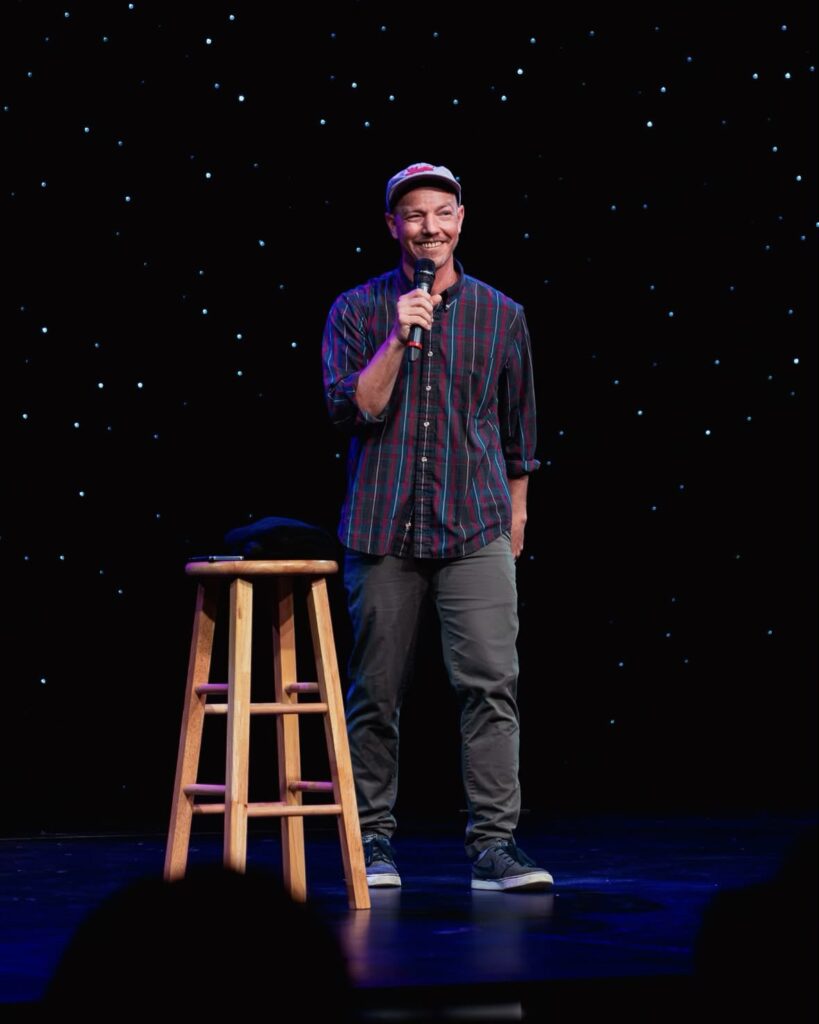
Skating turns a handrail into an invitation. Comedy turns an awkward social moment into material. Parenthood turns strangers into people you have something in common with. Three passions, three ways of seeing, and together they make up how one person moves through the world.
It’s worth asking yourself what your own lenses are. The things you love don’t just fill your free time. They change what you notice.
The North Star Named Rory Scovel
Taylor has shared stages with Hannibal Buress, Jim Gaffigan, and Louis C.K., and he went on to open for and tour with established comics. Asked which encounter stayed with him most, he doesn’t pause.
“I would say Rory Scovel. He has been the nicest to me and has had the biggest impact on me as a comedian. From the first time I saw him on stage I knew he was one of the best and he’s only evolved to be even funnier since then. He helped me find my footing when I first moved to NYC, and even helped me promote my last special.”
Scovel helped when it counted. But what Taylor treasures most isn’t the favors. It’s just watching him work.
“But I feel luckiest to have been in the crowd for so many of his sets over the years. Nobody makes me laugh as much as him, and nobody surprises me like he does. He’s a great North Star for any comedian to follow. He’s uniquely funny, unapologetically himself, undeniably good at his craft, effortlessly kind, and has a permanently checked ego.”
Read that list again. Funny, yes. But also himself, skilled, kind, and humble. That’s a full picture of the kind of artist Taylor wants to be. Talent alone isn’t the goal. Character comes with it.
The View From the Booker’s Chair
For years, Taylor was the one hoping for a spot on a lineup. Now, as Talent Director for the Seattle International Comedy Competition, he’s the one choosing. Switching sides taught him something he wishes he’d known earlier.
“It’s completely changed how I look at emerging comedians. It’s also made me realize I pursued Comedy in the slowest way possible for most of my life. I have a huge respect now for comedians with Drive to succeed where as before the only thing I respected was good jokes.”
The slowest way possible. That’s a striking thing to admit, and it leads to a confession plenty of creative people will recognize.
“I didn’t submit to a lot of things early on in my career because I didn’t feel ready. Now after seeing all of these hungry comics submitting year after year, I see now that jokes are a much smaller part of success than I thought. There are a lot of funny people out there, so as a booker, I’m gonna go with the funny people who also showcase responsibility and ambition.”
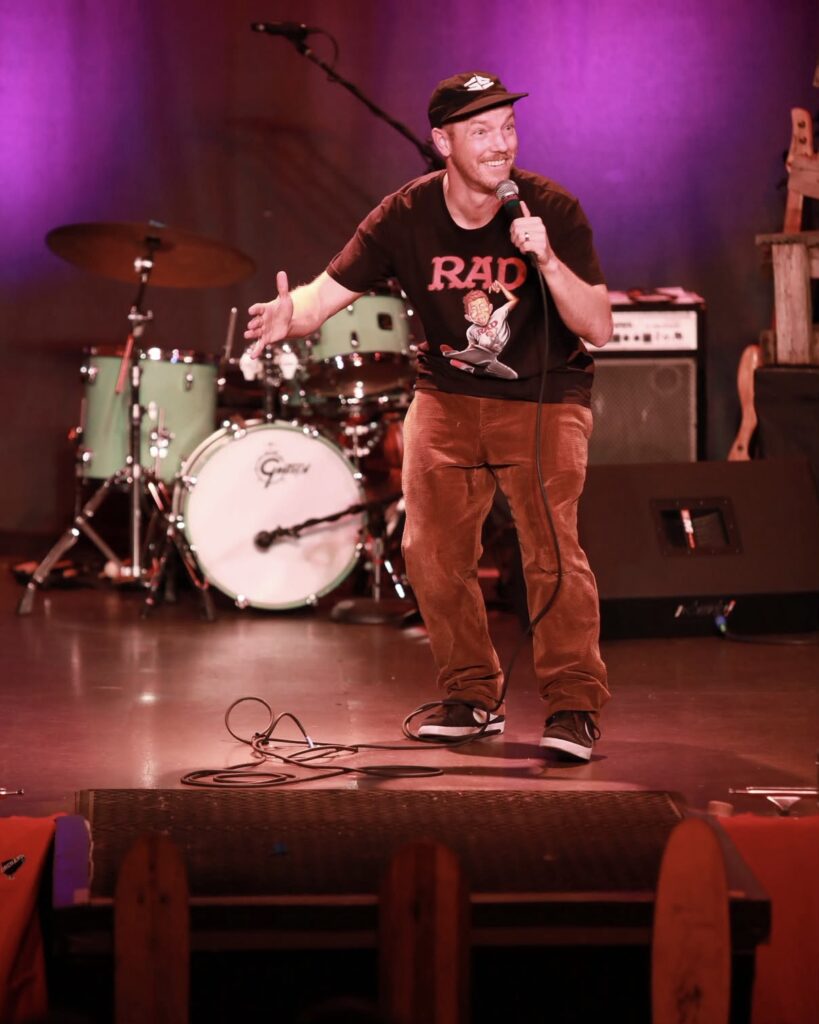
Not feeling ready is one of the most common reasons talented people wait. They polish, hold back, and wait for some imagined moment when they’ll finally be good enough. From the booker’s chair, Taylor sees the cost of that clearly. Funny is common. Funny, reliable, and willing to keep showing up is much rarer.
If you’re sitting on something because it doesn’t feel ready, this is your sign to send it in.
Have Your People Call His People
So where does a skateboarding, joke-workshopping, ambition-respecting dad go from here? He has a pitch, and it’s very specific.
“I would love to help make a rated PG comedy directed by Spike Jones. It would star Tim Heidecker, Tim Robinson, Jack Black, and myself. Co starring Maria Bamford, and Tim Meadows.”
It’s a fitting choice. Spike Jonze came out of skate culture, filmed skate videos, and went on to direct some of the strangest and most heartfelt films of his generation. A Jonze-directed comedy starring a crew of gloriously weird comedians feels less like a fantasy and more like the logical next stop in Taylor’s story.
The logline makes it even better.
“It’s like Home Alone meets Clerks, but at a gymnastics gymnasium and with a lot of skaters.”
Rated PG, so the kids can watch. Packed with skaters, so the scene shows up. Set in a gymnastics gym, because of course it is. It’s every part of Taylor in one ridiculous, lovable idea: the dad, the skater, the comedian, and the guy who still loves surprising a room.
And in true Taylor fashion, he closes the deal himself.
“Have your people call my people.”
Follow Taylor Clark on Instagram

Oeshi B Lyndem is a visual artist, tattoo artist, graphic designer, and entrepreneur with a foundation in graffiti and street culture. Rooted in hands-on craft and making, her practice moves fluidly across illustration, street art, design, and experimental creative processes. With lineage from Shillong—often regarded as India’s rock capital—she carries a distinct cultural influence into her work. At Goofy Owl, she curates and leads the street and hip-hop culture segment through an intuitive, deeply creative, and entrepreneurial lens.