Most of life passes without us noticing it. Not because it isn’t meaningful, but because we are simply too busy moving to pause. We navigate crowded streets, scroll through endless digital feeds, and rush from one obligation to the next. In this constant motion, the quiet spaces between events often blur into the background.
Yet, these hidden spaces are where life actually happens. The brief second a commuter stops to look at the sky, the quiet reflection of a solitary coffee drinker, or the unspoken glance between strangers. These fleeting experiences carry a weight that we rarely acknowledge. They require someone to stop and capture them before they fade away.
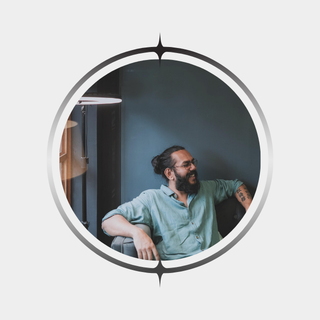
This is where art steps in as a gentle interruption. It asks us to halt our momentum and sit with a feeling we might otherwise ignore. Through his vivid and observant work, artist Sayan creates these exact interruptions. He builds worlds that reflect our own quiet experiences back to us, turning everyday fragments into lasting narratives.
The Power of a Pause
We often think of profound moments as loud and spectacular. We expect them to arrive with grand announcements. But the most revealing parts of our day are usually the ones we breeze past. Art has the unique ability to freeze these ordinary seconds and hold them up to the light. It acts as a mirror for our own hidden thoughts.
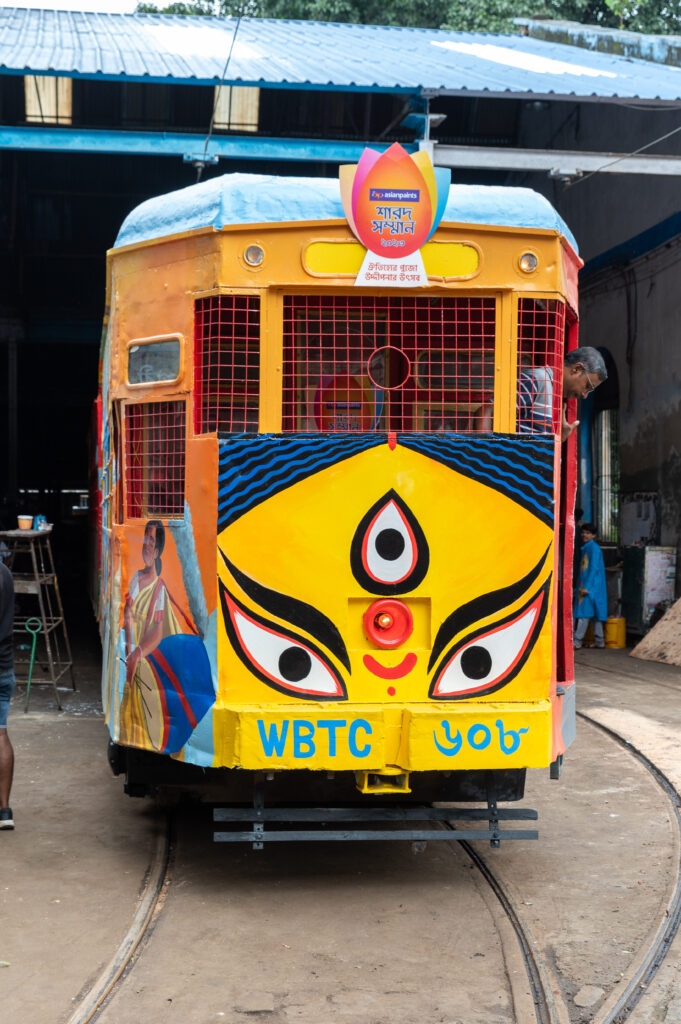
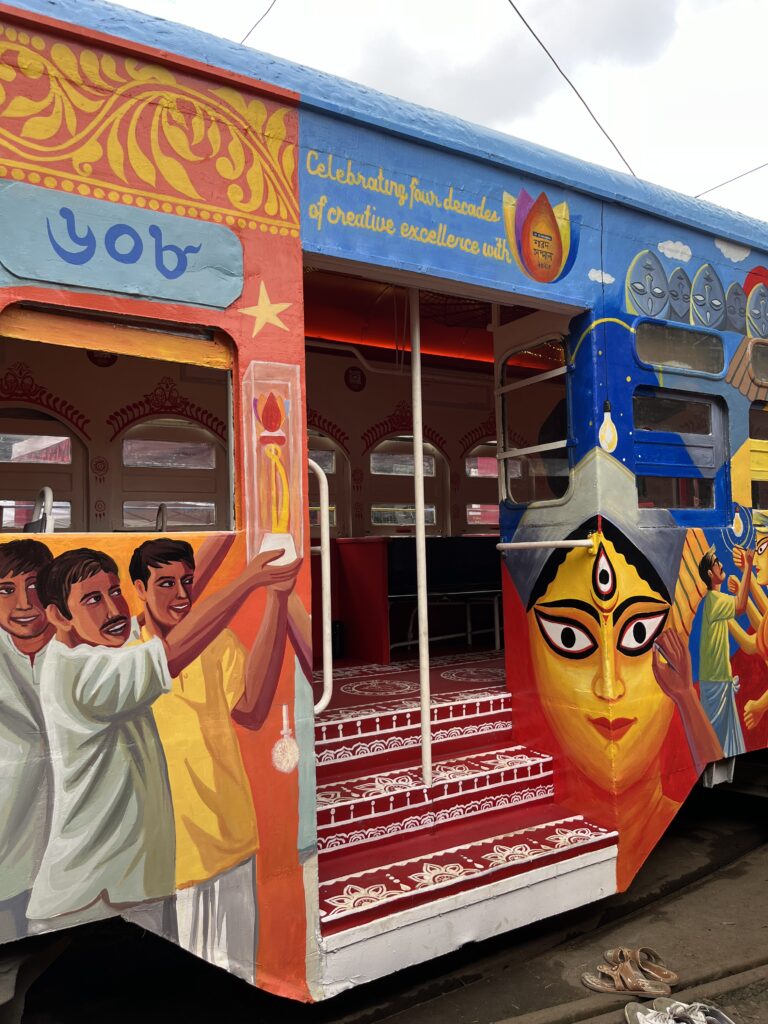
When an artist captures a quiet scene, they invite the viewer into a shared space of reflection. This is the foundation of Sayan’s visual language. He does not just paint pictures. He captures the essence of passing time.
A Story in Every Frame
Visuals hold the power to communicate complex narratives without uttering a single word. A well-crafted image can convey hope, isolation, joy, or nostalgia in a fraction of a second. Sayan understands that every color choice and character placement serves a larger purpose.
As he explains his core motivation, he notes,
“Every image I create is meant to tell a story.”
The visual becomes a narrative device. It is an open invitation for the observer to step inside the frame and complete the tale using their own lived experiences.
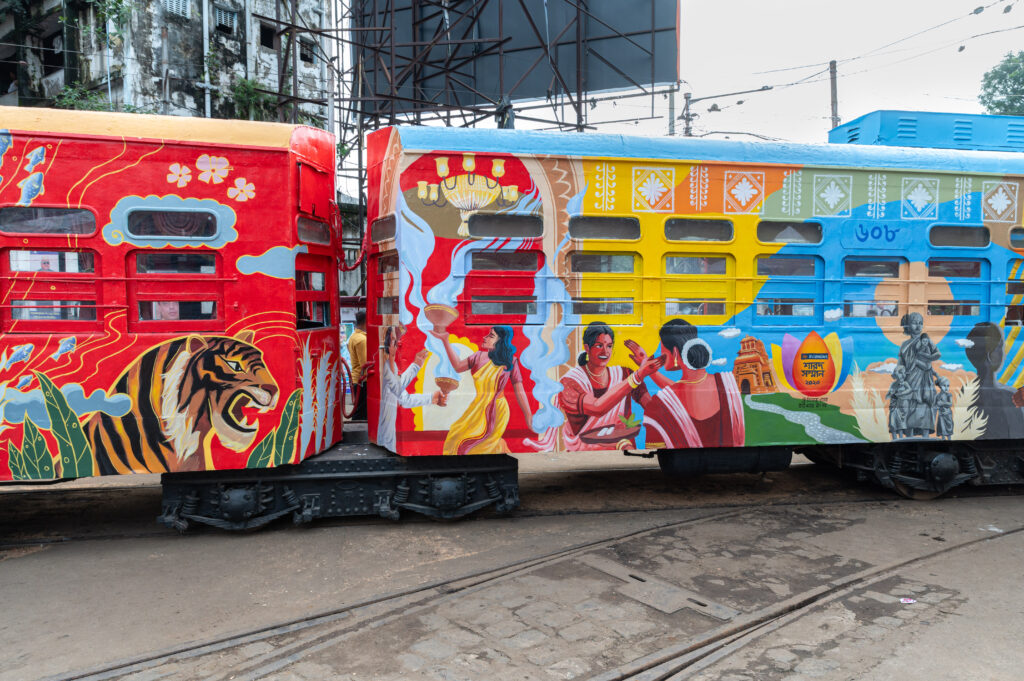
Finding Honesty in In-Between Moments
There is a distinct vulnerability in stillness. When we are not performing for a crowd or actively engaging in a task, our true selves briefly surface. Sayan focuses his attention directly on these vulnerable, unguarded fractions of time.
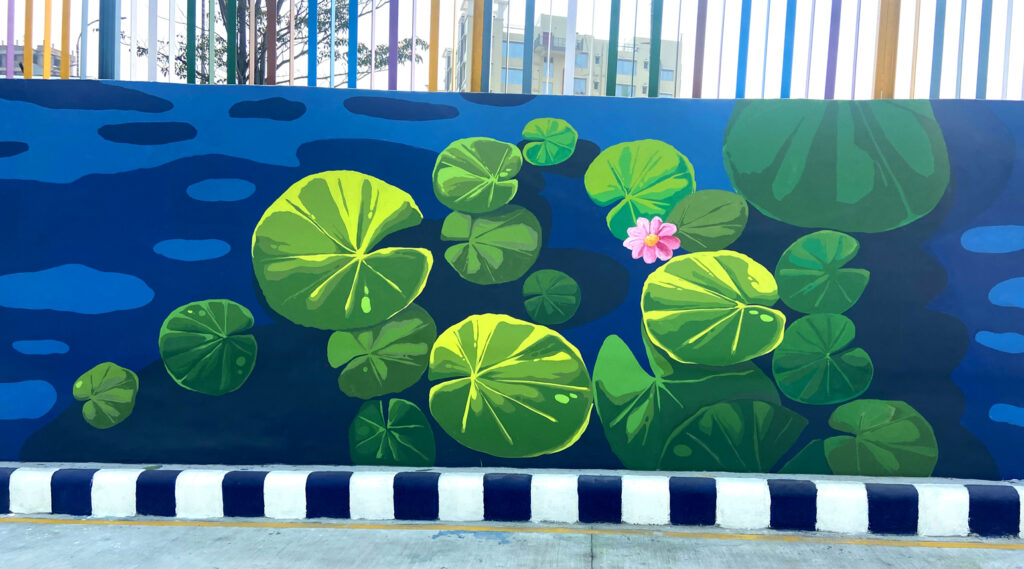
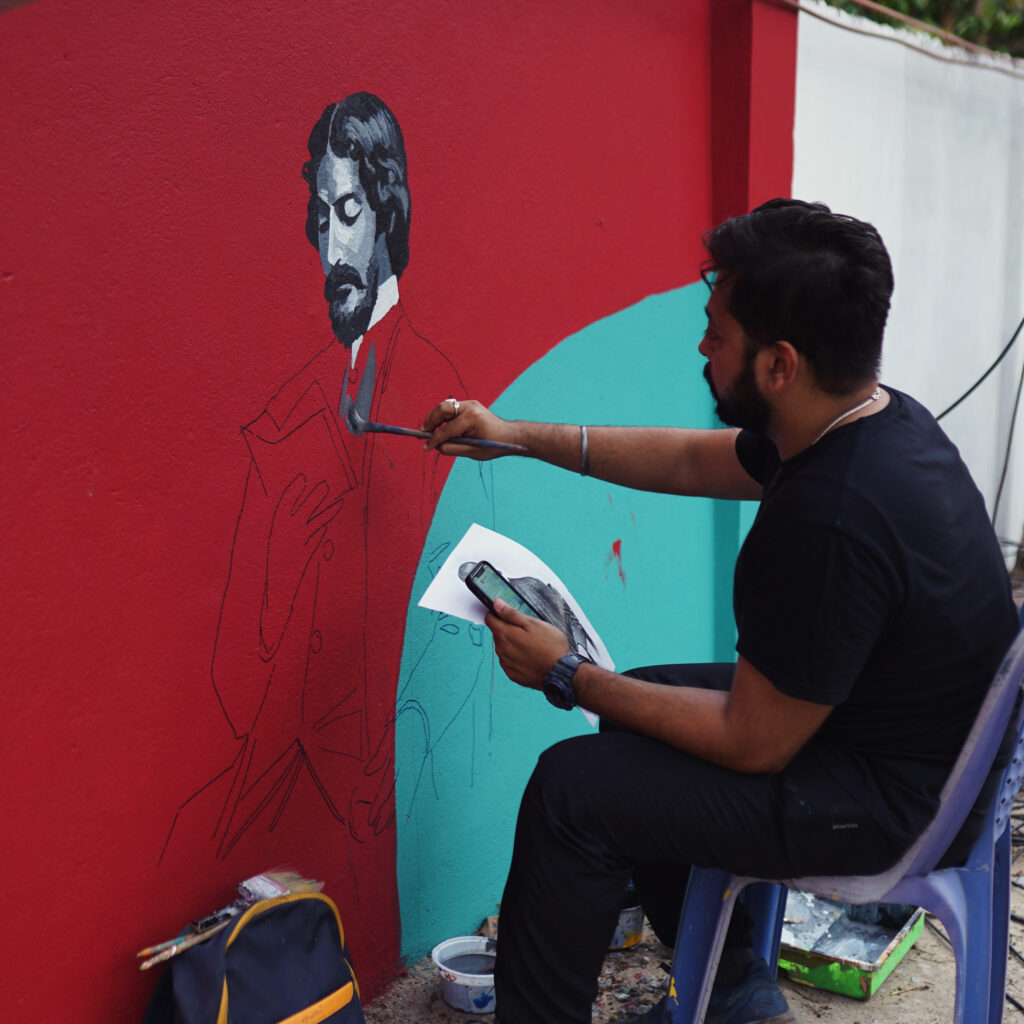
Speaking about his fascination with these fleeting scenes, he points out, “that’s where people are most honest with themselves.” The stillness reveals a truth that motion often conceals. By highlighting these moments, the artwork connects us to the universal reality of human existence.
From Private Thought to Public Conversation
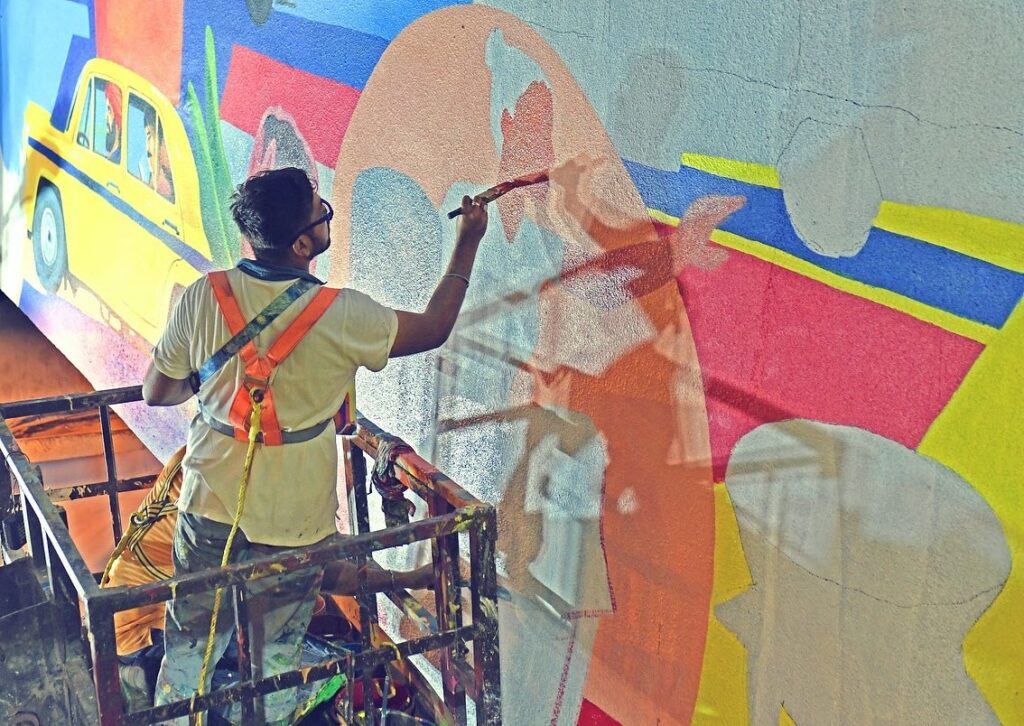
The context in which art is created deeply influences its final form. An artist’s sketchbook is a private sanctuary. It is a place for raw emotion and unfiltered experimentation. However, when art moves from a personal notebook to a massive public surface, the entire dynamic shifts.
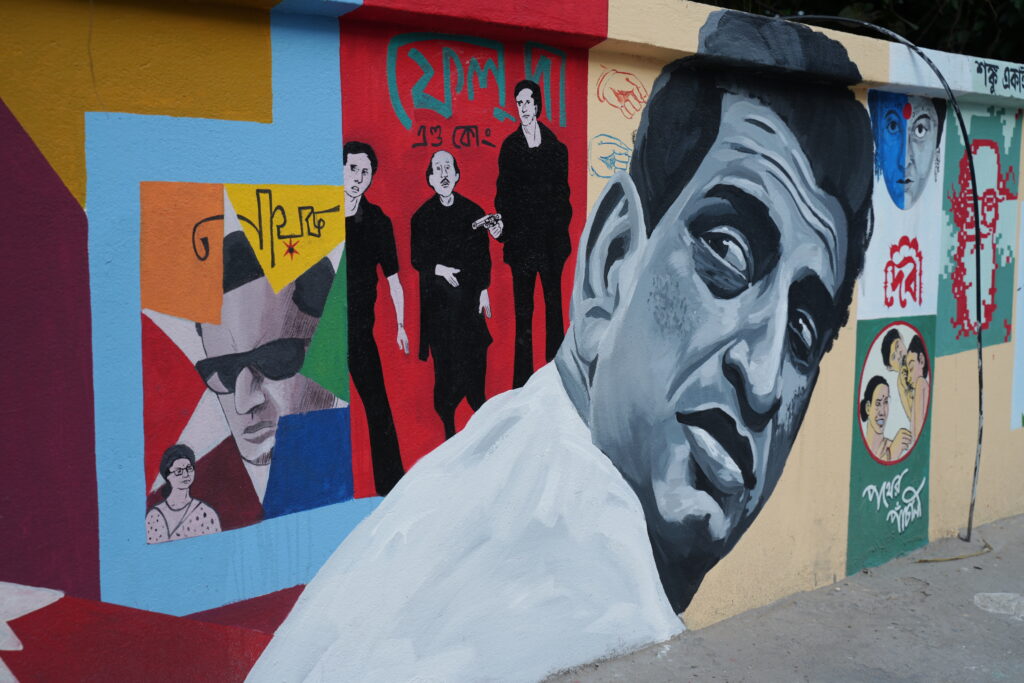
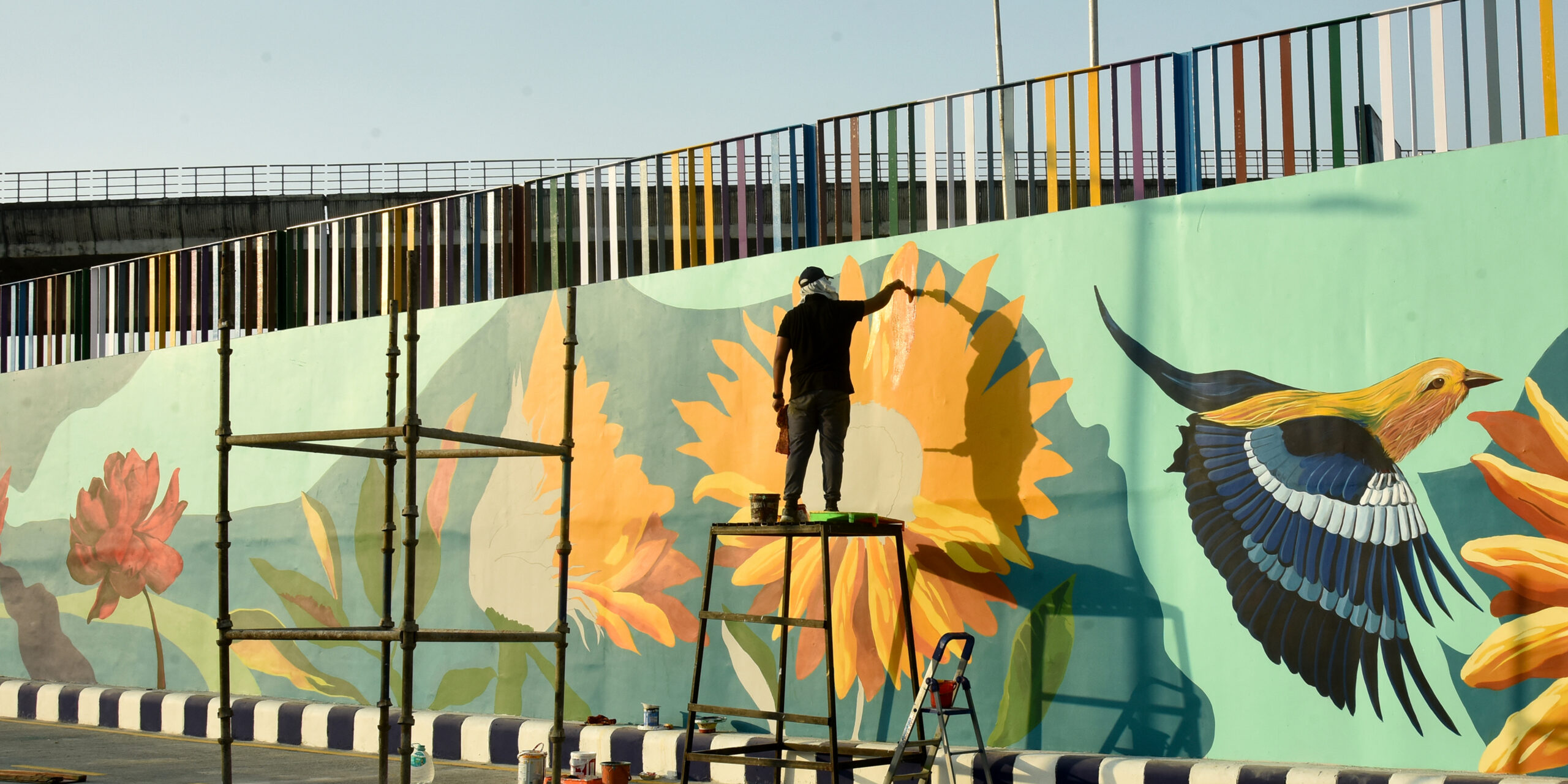
Sayan experiences this transition whenever he works on a new mural.
“When I’m working in my sketchbook, it’s instinctive and unfiltered,” he observes. But the public sphere demands a different kind of awareness. “But when I move to a public wall, the approach shifts completely. The storytelling becomes more intentional.” Art fundamentally changes when it transforms from a solitary thought into a shared community dialogue.
Holding Your Voice Across Scales
Navigating different types of projects can easily dilute a creator’s distinct voice. Jumping from a small personal illustration to a massive corporate collaboration requires immense flexibility. The challenge lies in adapting the scale without losing the soul of the work.
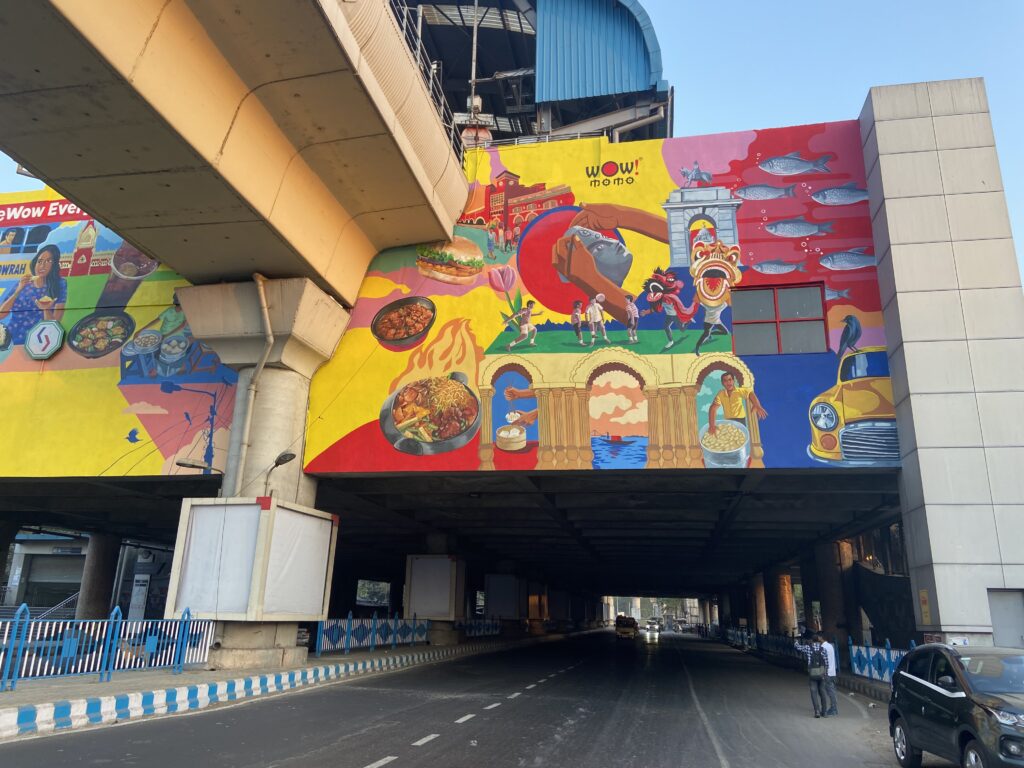
For Sayan, the solution is always returning to the core concept.
He navigates this by stating, “I begin with an idea and build a story around it.”
The idea acts as an anchor. It keeps the work grounded and authentic, regardless of how large the canvas becomes or who the collaborator happens to be.
Unlearning Without Losing Yourself
Our past experiences shape our creative output, even if we eventually move in a completely different direction. Before stepping fully into his current artistic path, Sayan spent time navigating the world of advertising. While that industry is often viewed as rigid, it provided a structural framework that still informs his practice today.
Instead of rejecting his past, he utilized it. “In many ways, my days in advertising actually gave me a strong foundation. It taught me how to think through ideas, how to build a concept, and how to push it further within a creative process.”
The discipline required to execute a commercial campaign translated directly into a sharper, more focused approach to personal storytelling.
Where the Work Lives Changes Its Meaning
The environment surrounding an artwork is just as important as the artwork itself. A piece viewed on a glowing smartphone screen evokes a different reaction than one painted across a towering brick wall in a busy neighborhood. The physical space dictates how the viewer physically and emotionally interacts with the piece.
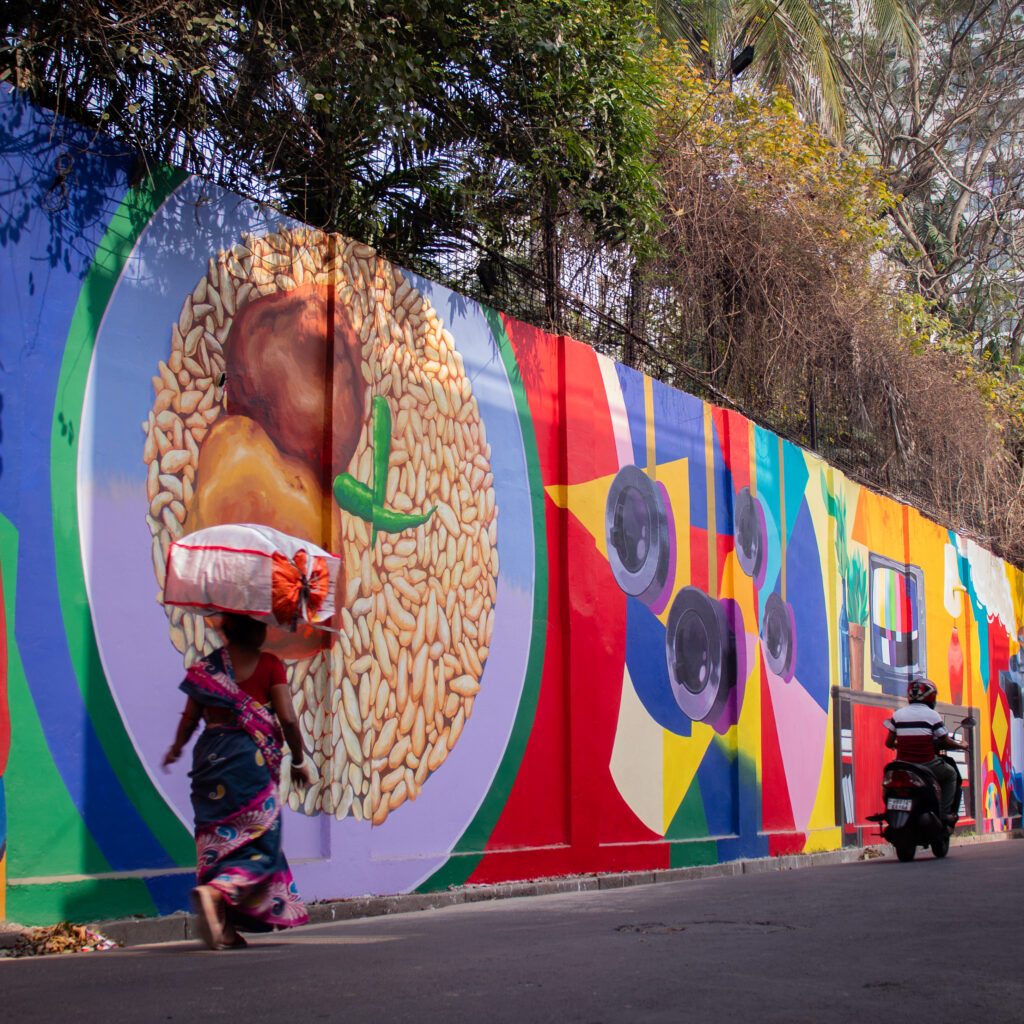
Sayan recognizes this relationship intimately. When discussing his public pieces, he notes, “the space becomes a crucial part of the story.” The context shapes our perception. A mural must communicate with the concrete, the light, and the pedestrians, becoming a living part of the city’s daily rhythm.
When Work Challenges You Back
Sometimes a project requires an artist to look beyond their own immediate surroundings and capture a much broader cultural sentiment. Working on highly visible platforms forces a creator to dig deeper and question their initial assumptions.
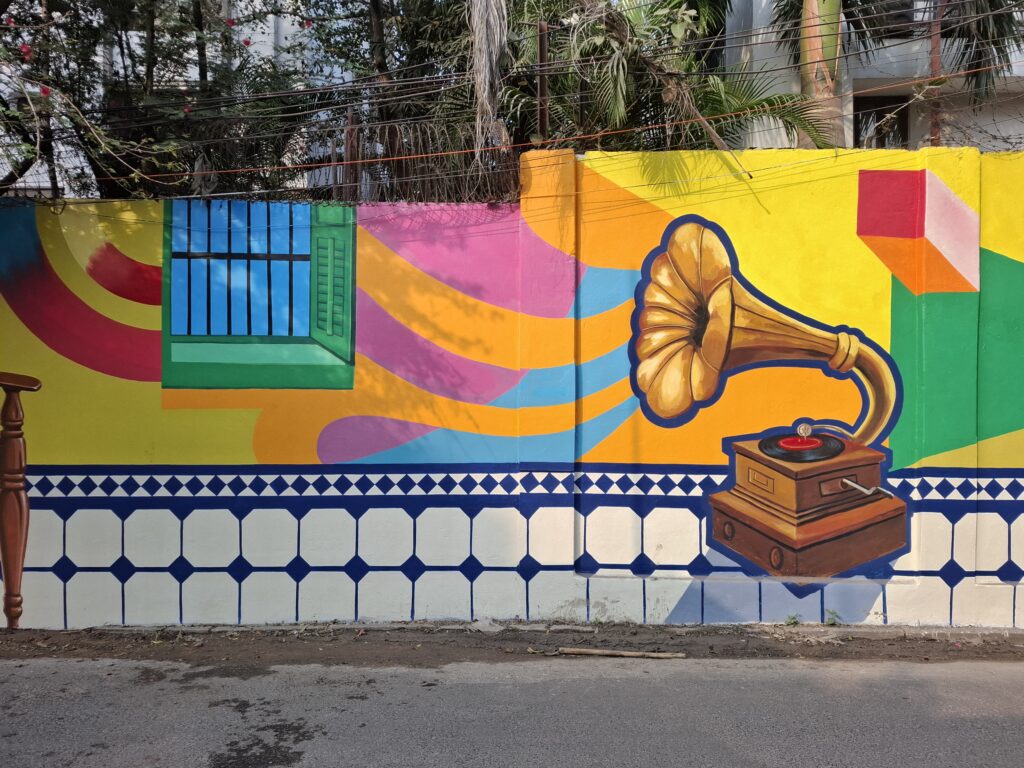
When working on a Google Doodle celebrating India’s independence, Sayan had to find a visual theme that resonated across a massive, diverse population. He found his answer by observing how people move and celebrate together, focusing on “how dance across regions and cultures, becomes a unifying thread.” The work pushed him to find a connection that felt deeply rooted in human tradition.
The One Thing That Never Changes
Techniques evolve, tools change, and trends fade away. A creative journey is marked by constant adaptation. But beneath the shifting surfaces, the underlying philosophy of an artist must remain steady.
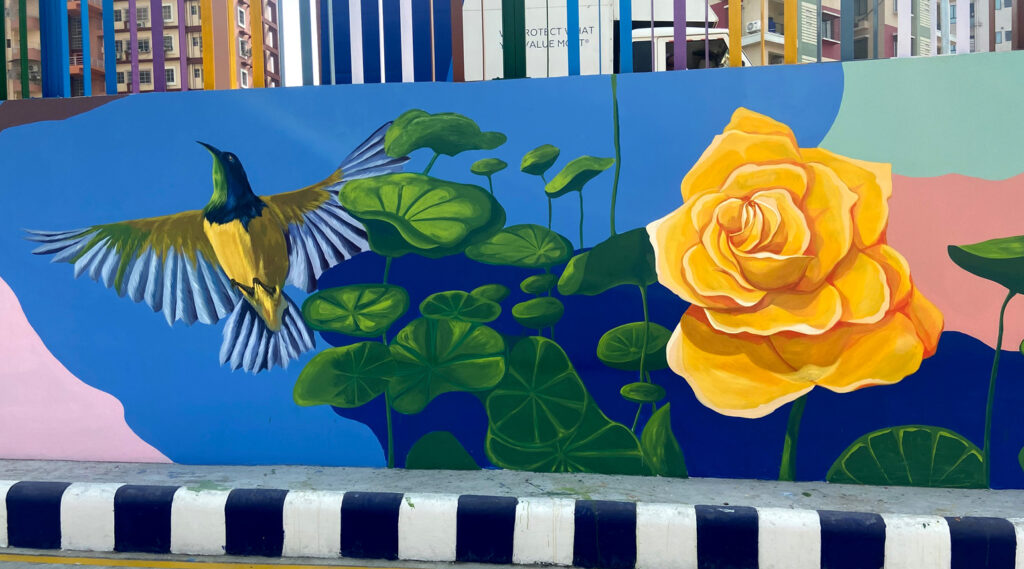
For Sayan, the foundation of his work is entirely immune to changing formats. “it’s always the idea that stays constant for me,” he reflects. The concept will always remain greater than the execution. As long as the central idea is honest, the artwork will continue to resonate.
Some art asks to be seen.
Some art asks you to stop.
And sometimes, that pause is the whole point.
Follow Sayan on Instagram
Visit: sayanart.com
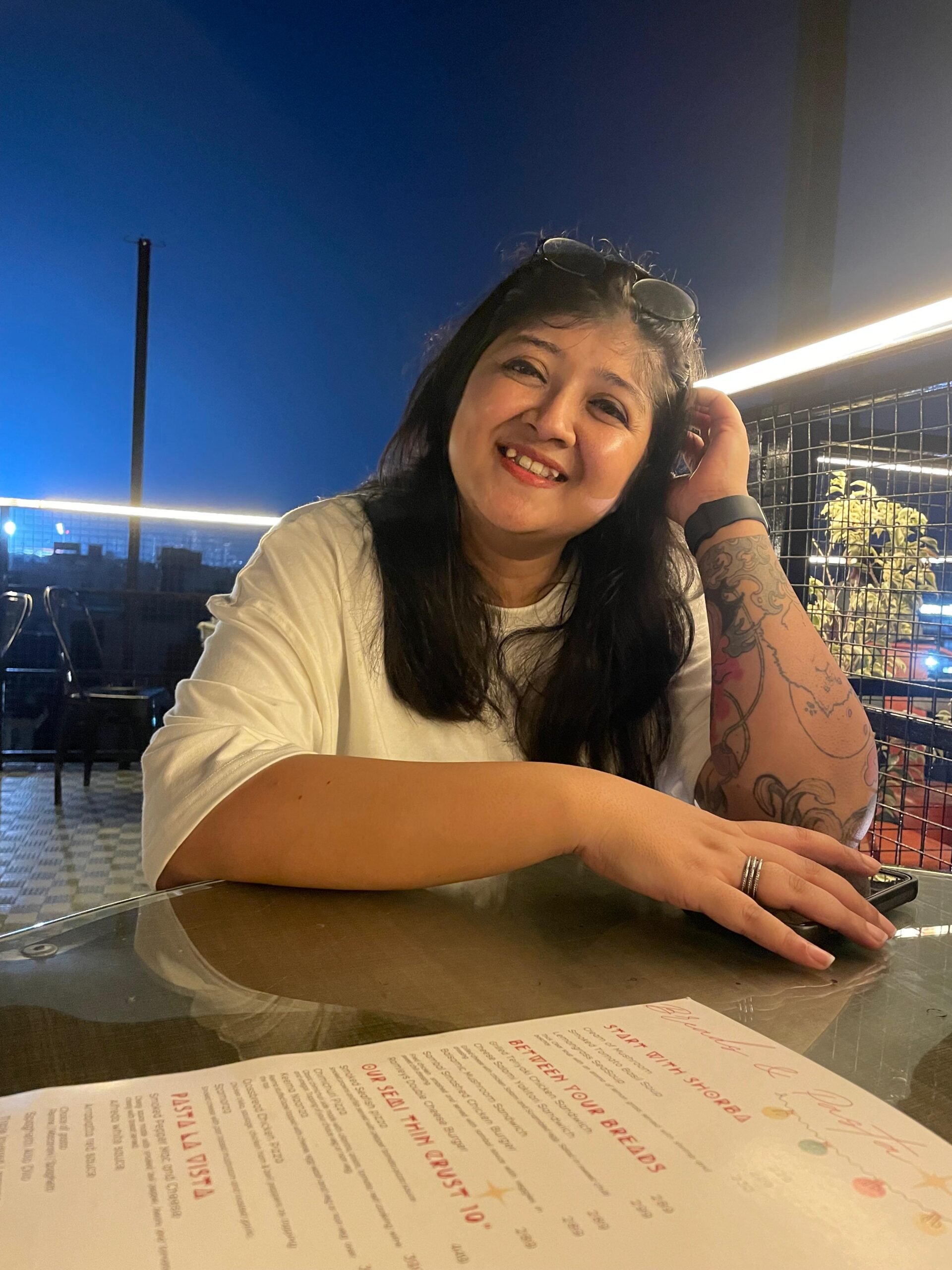
Oeshi B Lyndem is a visual artist, tattoo artist, graphic designer, and entrepreneur with a foundation in graffiti and street culture. Rooted in hands-on craft and making, her practice moves fluidly across illustration, street art, design, and experimental creative processes. With lineage from Shillong—often regarded as India’s rock capital—she carries a distinct cultural influence into her work. At Goofy Owl, she curates and leads the street and hip-hop culture segment through an intuitive, deeply creative, and entrepreneurial lens.