There’s a very specific kind of fatigue that comes with modern heavy music, the kind where everything sounds right until it doesn’t. The riffs land. The production is pristine. And then the lyrics drift into territory you’ve already heard, dressed slightly differently.
Tsunami Sea sidesteps that. Cleanly.
This isn’t a breakup record. It’s a pressure system.
From the opening stretch, Spiritbox operate like a band that understands restraint is the new brutality. The riffs don’t just chug—they coil. The electronics don’t decorate—they destabilize.
And Courtney LaPlante doesn’t just switch between clean and harsh vocals; she uses them like contrasting states of mind. Control versus collapse.
Where most bands chase payoff, this record delays it. Where others escalate, this one compresses.
That tension—held, stretched, then released—is the entire game here.
The Sound
Sonically, Tsunami Sea feels like metal that’s finally caught up to the streaming era without selling its soul.
- Djent-adjacent grooves that don’t feel like math homework
- Industrial textures that creep in rather than scream for attention
- Moments of near-pop clarity that make the heavy sections hit harder
Tracks don’t explode. They erupt. Slowly. Inevitably.
There are passages here where the band pulls everything back to a near-vacuum. Just ambience and fragile vocals, before the instrumentation skams back in with intent.
You hear this immediately on “Fata Morgana”, which sets the tone for the entire record. It doesn’t rush into heaviness, it prepares you for it. The tension builds in slow, sharp layers, not volume.
Then on “Black Rainbow” and “Perfect Soul”, the guitar work leans into that low-tuned, but avoids becoming predictable. The riffs don’t just sit in palm-muted patterns, they shift accents mid-phrase, creating a push-pull feel rather than a locked headbang. It’s subtle, but it keeps the ear and your head engaged.
“Soft Spine” is where the band really flexes restraint. Instead of stacking guitars for
density, they strip things back and let tone and spacing carry the weight. The result is a controlled explosion.
Drumming across the record follows that same philosophy.
On “Tsunami Sea” and “A Haven With Two Faces”, the kick patterns lock in with the guitar phrasing but never overpower it. There’s a noticeable restraint in the double-kick usage. When it shows up, it’s intentional, not habitual.
More interestingly, the groove often feels like it’s slightly dragging behind itself—especially on “No Loss, No Love”. The snare placement and cymbal work create a sense of tension without increasing tempo. It’s not speed, but rather, it’s weight distribution.
By the time you get to “Ride The Wave” and “Deep End”, the band leans fully into dynamics. Sections open up, close in, and shift without obvious cues. No telegraphed breakdowns. No easy drops.
When the heaviness lands, it doesn’t feel like a moment.
It feels like the structure finally giving way.
Lyrical Direction
Where Tsunami Sea really distances itself is in its writing, but more importantly, in how the vocals carry that writing.
There’s no reliance on relationship drama as narrative scaffolding. No predictable arcs of betrayal or abandonment. Instead, the themes circle identity, perception, and internal instability—and that comes through directly in the delivery.
On “Perfect Soul”, Courtney LaPlante’s clean vocals sit almost too steady—controlled to the point of unease. There’s a restraint there that feels intentional, like the emotion is being held back rather than expressed. When the harsher layers creep in, they don’t explode—they fracture.
Then on “Crystal Roses”, the vocal layering does something more subtle. Instead of a clear lead-front dynamic, you get this slightly blurred stack—clean lines, faint harmonies, and textures sitting just behind the main vocal. It creates that sense of internal dialogue, like multiple versions of the same thought overlapping.
Even on heavier sections—like parts of “Black Rainbow”—the screams don’t feel like
release. They feel contained. Controlled aggression, not catharsis. That distinction matters.
Because the album isn’t trying to purge emotion. It’s trying to sit inside it.
That’s why the lyrics don’t resolve in the traditional sense. They don’t build toward closure. They hover in that space of uncertainty—half-formed thoughts, shifting identity, unstable footing.
Standout Moments
- A mid-album stretch that leans into electronic unease before folding into one of the heaviest sections—without telegraphing the shift
- Vocal layering that feels disembodied, like overlapping internal dialogue
- A closing movement that refuses resolution, choosing instead to dissolve under its own weight
The Verdict
Spiritbox aren’t trying to out-heavy the genre anymore.
They’re doing something more difficult removing the excess.
In a scene crowded with repetition and emotional shorthand, Tsunami Sea feels deliberate. Controlled. Uninterested in easy catharsis.
And because of that, it lingers.
Score (if we must): 8.7 / 10
Translation: Heavy music that trusts tension more than noise—and wins because of it.
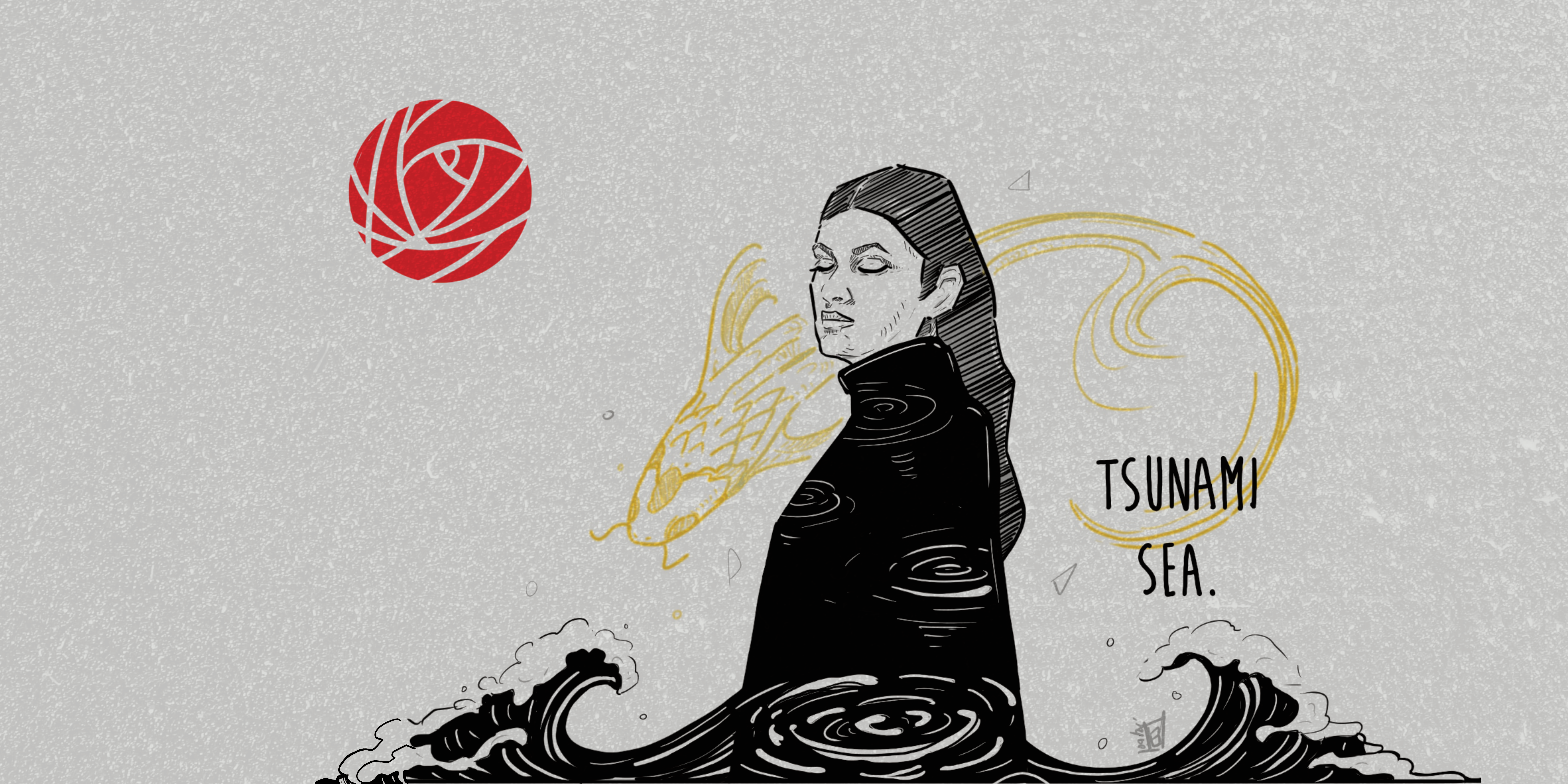
Artwork By: Lubdhak Biswas

I write about music, culture, and whatever rabbit hole grabs me. Usually with opinions and the occasional rant. I overthink just enough to keep it interesting, not complicated. I’m here for good ideas, better conversations, and anything off the beaten path. Noise is only welcome if it’s music. Off the page, I’m chasing ideas, building them, or figuring life out — with killer playlists and the odd existential side quest.