The Riffs are There. The Magic, Mostly.
I was nineteen, maybe twenty, the first time I heard Redneck blasting out of a friend’s speakers. I didn’t know what hit me. Took me a few seconds to pick my jaw off the floor and another few years to fully recover. But it was Ashes of the Wake that made me a lifer, and then Killadelphia on DVD sealed it completely. Watching those Richmond guys absolutely demolish a live crowd, I understood that Lamb of God weren’t just a metal band. They were a force of nature with a ticking clock. Every riff felt like it had consequences.
That’s a hard standard to live up to twenty years later. And Into Oblivion, their tenth album, mostly understands that. Mostly.
Where They’ve Been
For those of us who grew up on Laid to Rest, Now You’ve Got Something to Die For, and Walk With Me in Hell, records that felt genuinely dangerous, the years since Sacrament have been a mixed bag. If you haven’t seen Killadelphia, do yourself a favour and fix that. The Sturm und Drang era was bloated. The self-titled reboot was fine, in the way that a reliable sedan is fine. Omens felt like the band rediscovering their footing. Into Oblivion is them walking steadily on it, occasionally breaking into a jog.
What Works
The title track opens the album and it’s the best thing here. A churning, mid-paced groove that locks in immediately and doesn’t apologize for anything. Parasocial Christ keeps the momentum going, and Sepsis is ugly in exactly the right way, the kind of track that makes you nod your head without realizing you’re doing it, which is mildly concerning if you’re driving. The Killing Floor and Blunt Force Blues hit with the chugging, bruising physicality that made this band worth following in the first place. St. Catherine’s Wheel is one of the faster tracks on the record and a welcome shot of adrenaline. Bully, A Thousand Years and Devise/Destroy are decent enough, heavy and chuggy, but they don’t leave much of a mark once the album moves on. Forgettable in the nicest possible sense. El Vacío is the most interesting track on the record, the one reaching hardest for the slow-burn weight of Vigil. You can hear exactly what it’s going for. It doesn’t get there, but the attempt is earnest and you respect it for trying. Like watching someone attempt a Michelin star dish and producing something that’s still better than most restaurants in town.
Art Cruz deserves a mention. The man is a serious drummer, full stop. Chris Adler who?
Where It Falls Short
Here’s the thing though. When I go back to Vigil, or sit with Laid to Rest for the hundredth time, there’s a hunger in those recordings that Into Oblivion doesn’t fully replicate. It’s not that the album is bad. It isn’t. It’s that Lamb of God set a standard in the mid-2000s that was almost unfair to themselves. Those early records had a ferocity and a desperation to them that’s hard to manufacture once you’re a headlining institution playing arenas and releasing tenth studio albums. Into Oblivion is a very good metal record. It is not Ashes of the Wake. Nothing really is. We’ve made our peace with that.
The back half loses some steam too. The album is lean at 39 minutes, which is the right instinct, but a couple of tracks toward the end feel like they’re filling a slot rather than demanding one. Tight is good. Tight but uneventful is still just uneventful.
The Verdict
Into Oblivion is Lamb of God writing for themselves, unbothered by trends, and largely delivering. For a band this deep into their run, that’s worth something real. The highs, the title track, Sepsis, The Killing Floor, St. Catherine’s Wheel, are genuinely excellent. The lows are never embarrassing, just occasionally forgettable, which for a tenth album is practically a victory lap.
They’ll never again be the band that made me sit up straight the first time I heard Ashes of the Wake. But they’re still Lamb of God. And on their best days here, that’s more than enough.
Rating: 7/10
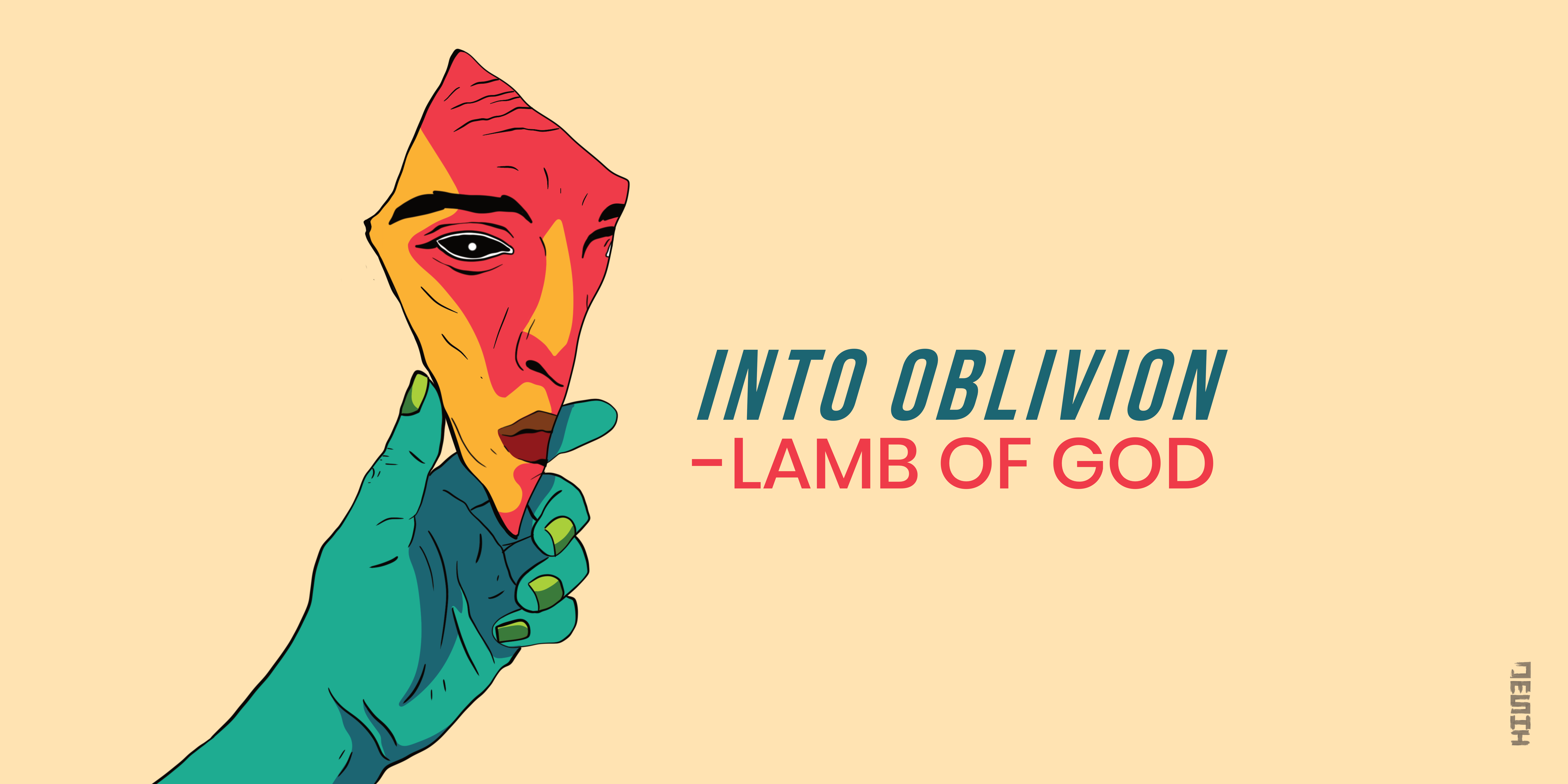
Artwork by Oeshi B Lyndem

Souvik Dey writes at the intersection of music, memory, and modern life.
A consultant by training and a storyteller by instinct, he explores how culture shapes identity and longing.
His work blends introspection with sharp observation, often lingering in silences others overlook.
When not writing, he is usually reading, listening, traveling or gaming.