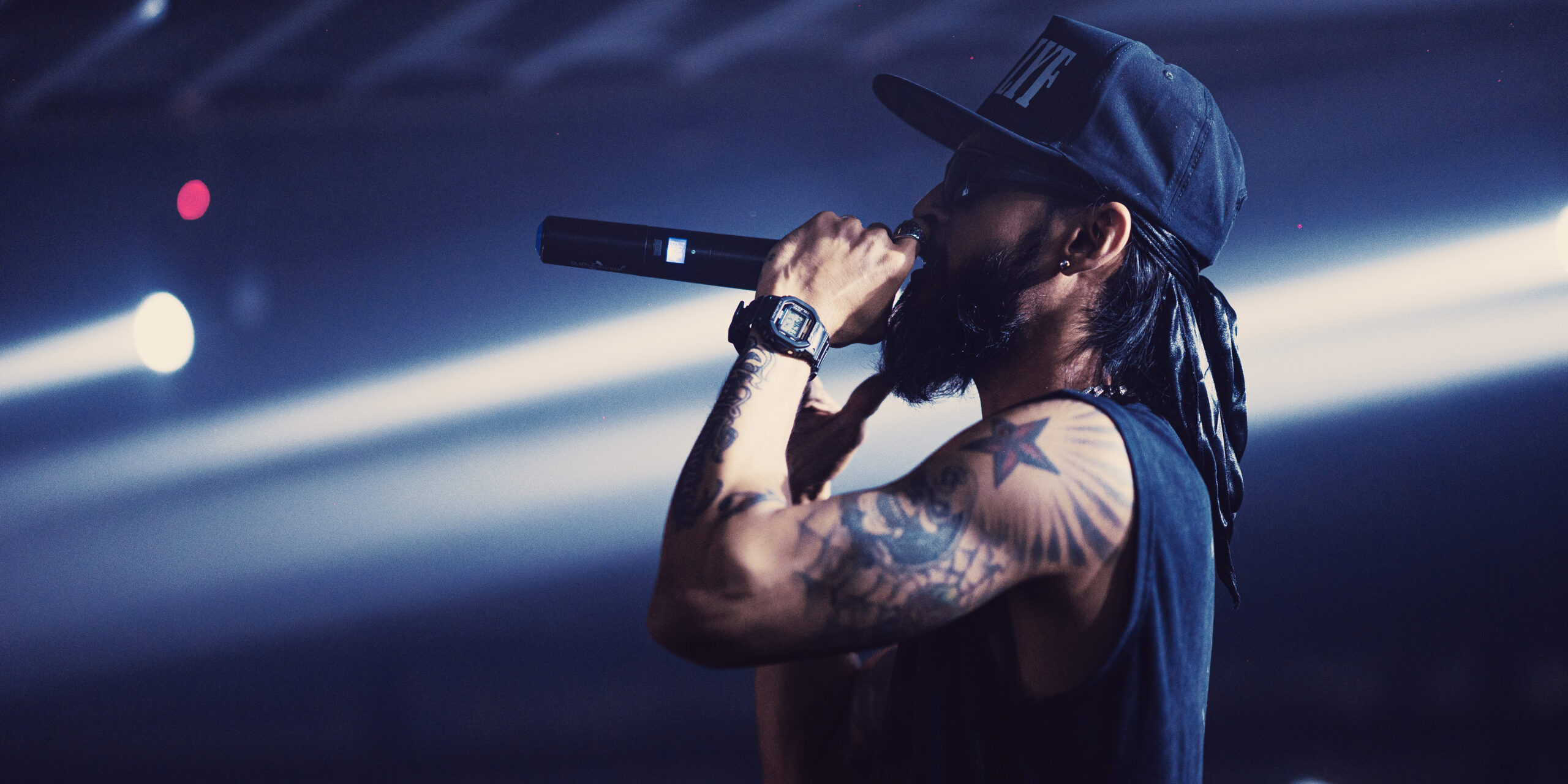
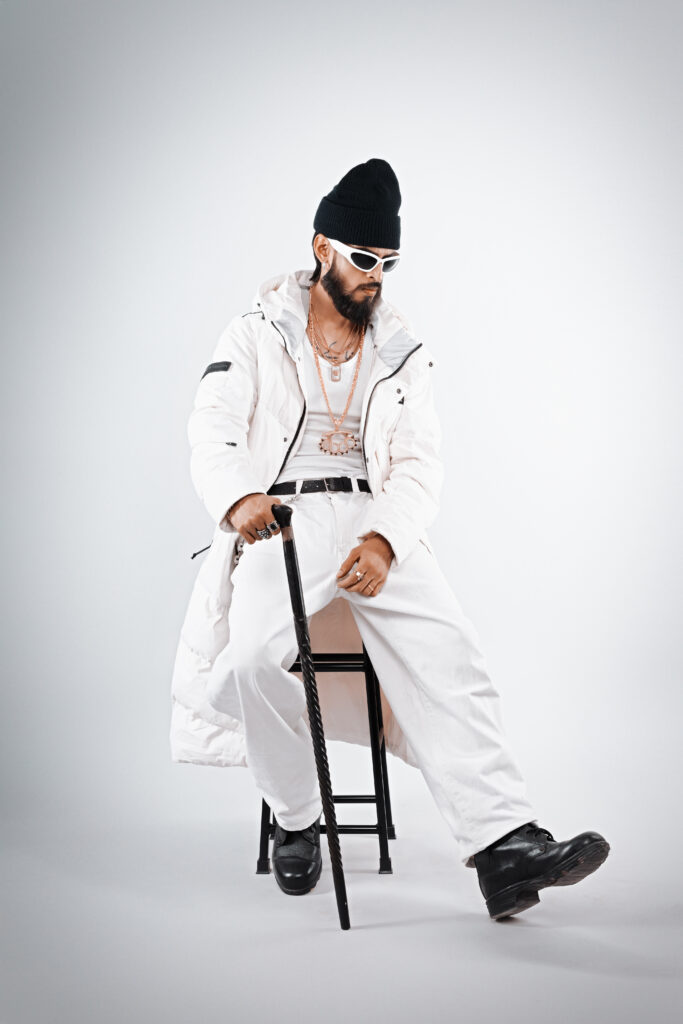
Hip-hop doesn’t just start with a beat; it starts with a feeling. It’s the rhythm of a city, the pulse of a protest, the raw, unfiltered voice of a generation finding its footing. For Shaikhspeare, one of India’s most respected emcees, that journey began not in a state-of-the-art studio, but with grainy televised clips of Eminem and the simmering energy of a Mumbai that was just starting to find its own hip-hop identity.
His story is a masterclass in authenticity—a journey from a small town in Bihar to the cramped, chaotic streets of Nala Sopara, all while absorbing the core tenets of a culture born thousands of miles away. Shaikhspeare isn’t just a rapper; he’s a modern-day poet, an activist, and a historian of the streets, proving that the truest art comes from living your truth, no matter how unpolished.
The Making of a Voice
Before he was Shaikhspeare, he was an introverted schoolboy in Bihar, his knees shaking as he read a news article in front of the school assembly. The journey from that nervous kid to the confident artist who commands stages today was forged in the fire of hip-hop’s foundational principles.
“I got to know that the core of hip-hop resides in a blend of poetry and activism,” he explains. His early education wasn’t just about rhyme schemes; it was about history. He dove into the discographies of N.W.A., Tupac, and Dead Prez, internalizing the culture’s role as a voice for the voiceless. The fight against social injustice and racial crimes in the Black community became his blueprint. These values weren’t just influences; they became the DNA of his artistry.
He moved to Mumbai after the 10th grade, landing in Nala Sopara—an area he describes as a “really cramped up space,” a starting point for countless immigrants chasing a dream in the city of dreams. Mumbai’s burgeoning hip-hop scene became his university. “The hustle culture of the city, Nala Sopara, Virar and the city’s vibe became my vibe and what started reflecting in my music,” he recalls. The city didn’t just shape his sound; it shaped his soul. The artist in him grew up in Mumbai.
Punches Wrapped in Silk: The Writing Process
There’s a raw, immediate power to Shaikhspeare’s lyrics. They hit hard but flow with a poet’s grace. This unique style wasn’t born from painstakingly writing lines in a notebook. It was born from the cypher.
“Before making music, I was just freestyling. I was going to cyphers, I was doing battle raps, understanding how to make up rhymes in your head and just go with it,” he says. That high-pressure environment of instant creation became his training ground.
Today, his process remains rooted in that spontaneity. He’ll put on a beat and just freestyle, letting the melody and rhythm guide his thoughts. “Most of the lyrics that are final do come up in the initial freestyle,” he reveals. He then jots down those raw ideas, refining and flipping words until every line lands with intention. He demands that his words do more than just rhyme; they must evoke emotion, hit hard, and carry weight.
The Power of Language
Language is an artist’s most powerful tool, and Shaikhspeare’s toolkit is exceptionally diverse. Growing up in Bihar with an English-medium education, learning Sanskrit in school, and being taught Urdu by his grandmother at home gave him a vast linguistic repertoire.
Initially, he rapped in English. But he soon realized the power of connection. “I understood that I would reach and connect to more people if I switched the language and migrated to writing in Hindi,” he explains. This wasn’t just a strategic choice; it was about identity. The dialect you speak and the stories you tell reflect your culture and where you come from. This multilingual fluency gave him a unique edge, allowing him to navigate the evolving Indian hip-hop scene in a way many of his peers couldn’t.
One couplet that continues to resonate deeply with him and his audience encapsulates this fusion of identity and art: “Zuban ka pukka Jalauddin Akbar, Hip-hop mera mazhab aur mein pura kattar.” (True to my word like Jalaluddin Akbar, Hip-hop is my religion and I am a fanatic.)
From Shady Clubs to the Silver Screen
Every artist has a “first time” story. For Shaikhspeare, his first time holding a mic in a professional capacity was at a small, shady hookah parlor in Mumbai around 2008. But unlike his nerve-wracking school assembly experience, this was different. He was doing something he loved.
“Since I was doing something I really enjoyed, I was very confident with it,” he remembers. The overwhelming response from the small crowd was a validation. It was the moment he knew this was something he had to stick with.
That confidence has since taken him to incredible places. He became a founding member of the iconic crew Bombay Lokal, a movement that holds a special place in his heart. He cherishes the memories of their early days—freestyle cyphers on flights and buses, creating music all night in their “Karkhana Studio,” and trekking up a hill to watch the sunrise together.
His journey even led him to a feature in the blockbuster film Gully Boy, a milestone that brought his street-certified artistry to the mainstream. Yet, through it all, his goal remains the same: to inspire and promote unity through the culture of hip-hop.
The Stage Is a Kingdom
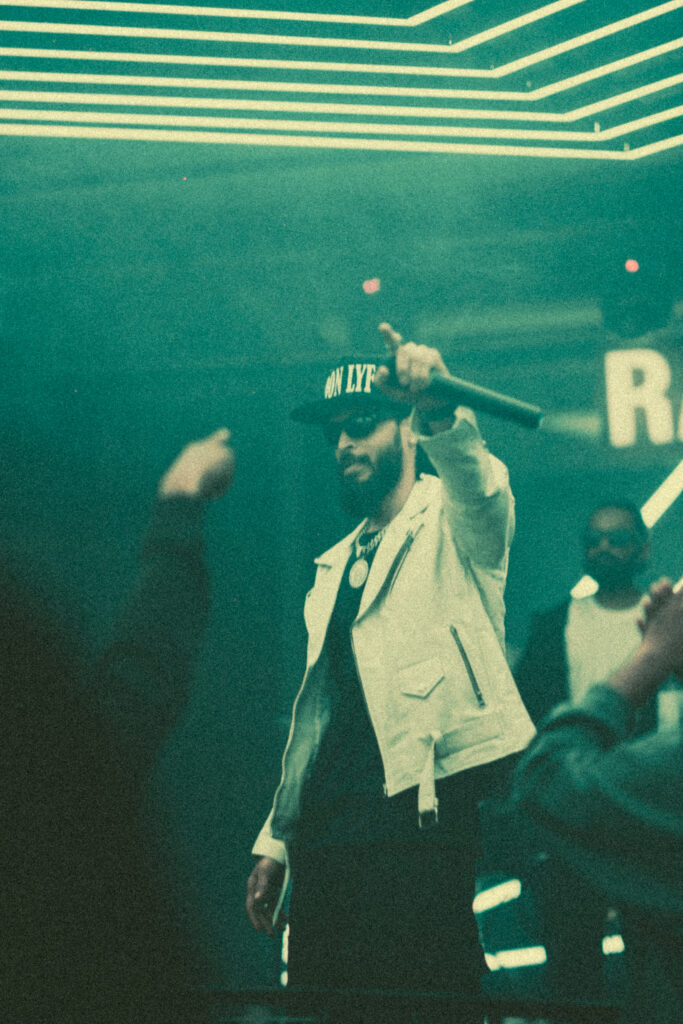
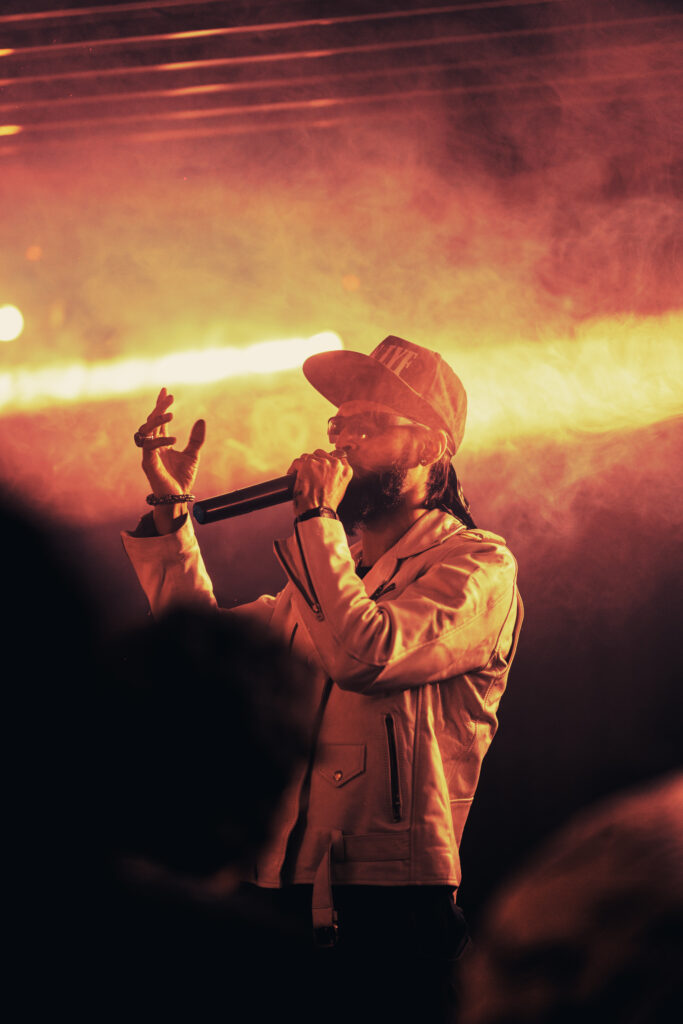
Watching Shaikhspeare perform is an experience. He doesn’t just recite lyrics; he commands the space. He studied the greats—Tupac, Nas—learning how they handled the mic and engaged with the crowd.
“I have realized that on stage you have to feel like a King,” he says. That regal energy is what connects him to his audience. But the stage is a fluid space. Drawing from his battle rap days, it can be a boxing ring. When conveying deep emotion, it becomes a temple. And when he’s just having fun with his crew, it’s a playground.
This ability to be raw, real, and adaptable is how he thrives in a world that often rewards polish and pretense. “I try to be myself,” he states simply. “Polish and pretense don’t stick for too long… the best way is to be yourself.”
As he works on a new collaborative EP that reintroduces his core hip-hop sound, Shaikhspeare continues to evolve without ever losing sight of his roots. He is a living embodiment of hip-hop’s core mission: to reflect the society around you, to speak truth to power, and to turn the struggle of the streets into poetry.
Follow Shaikhspeare on Instagram
Follow Bombay Lokal on Instagram
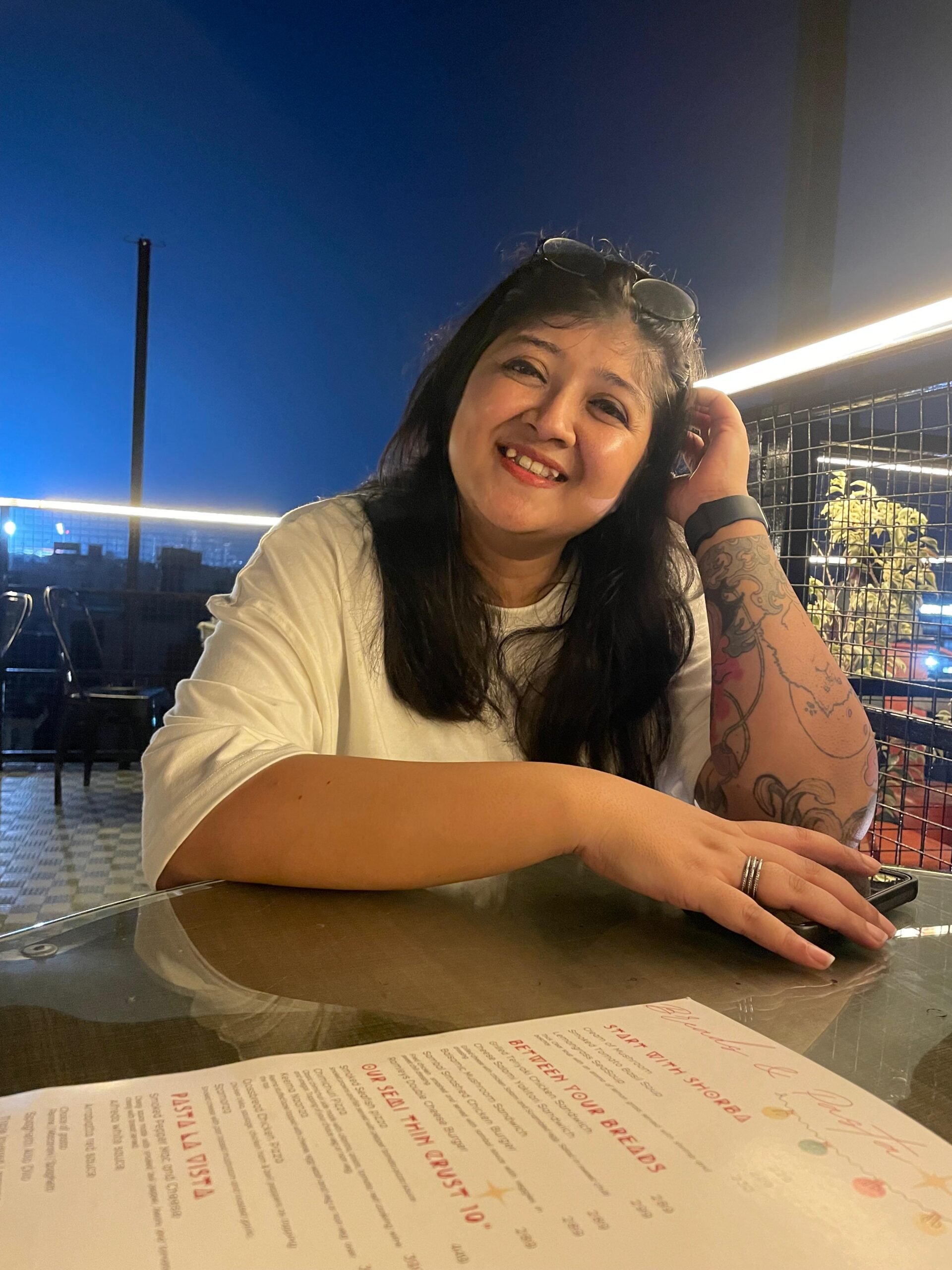
Oeshi B Lyndem is a visual artist, tattoo artist, graphic designer, and entrepreneur with a foundation in graffiti and street culture. Rooted in hands-on craft and making, her practice moves fluidly across illustration, street art, design, and experimental creative processes. With lineage from Shillong—often regarded as India’s rock capital—she carries a distinct cultural influence into her work. At Goofy Owl, she curates and leads the street and hip-hop culture segment through an intuitive, deeply creative, and entrepreneurial lens.